Archive for the ‘herbs’ Category

The Greens of Summer: greens bruschetta

If you’re interested in making leafy greens an enjoyable part of your diet, I highly recommend Paula Wolfert’s book Mediterranean Grains and Greens. My favorite greens recipe, however, does not come from that book but from another of her books, Paul Wolfert’s World of Food. She calls it “marmalade of spring greens,” and it is intended as a spread for bread. I find it wonderful stuff to have tucked in the refrigerator, where it will keep for several days and makes great impromptu lunches and snacks. I have made it so often for so long that my recipe has morphed into something a little different from hers, as tends to happen with recipes that really work for me.

First, catch your greens. See my earlier blog post about greens options and about cleaning them. Right now I am mostly using mixtures of amaranth leaves ( the polite term for common pigweed), lambs quarters, purslane, sweet potato leaves, and New Zealand spinach, because those are the plants that are doing best in our summer heat. Gather about a pound of assorted greens. If you are using store bought, a mixture of Swiss chard or Tuscan kale and spinach will work well. I avoid the baby spinach that comes in cello bags. It doesn’t have enough flavor for use as a cooked green. If you enjoy bitter greens you can add several dandelion leaves (I am referring to the store bought kind, not the wild kind, which are too bitter to use at this time of year.) Or you can add a small bunch of watercress to add a little bit of snap. But don’t worry too much about this, because the seasonings will add the extra kick as long as the greens are good.

1 pound of mixed greens

One Shallot

Two cloves of garlic, fairly large

1/4 cup of olive oil

10 to 12 kalameta olives, finely chopped

2 tablespoons capers, preferably salt packed, washed of salt and soaked in cold water for an hour

Pinch of red pepper flakes

Salt and pepper to taste

Bring a pot of water to a boil, add the greens, and cook uncovered for one minute, just until they are thoroughly wilted. Drain and press out any excess moisture. Turn them out on the chopping board and chop them thoroughly in both directions, so that you retain some texture (you don’t want a paste) but all stems and leaf ribs are cut up into small pieces.

Chop the garlic and shallot quite finely over medium heat in the olive oil until cooked through but not brown. Add the chopped olives and the capers, either chopped or whole as you prefer. Sauté for a few minutes, then add the chopped greens, the red pepper, and a little salt. Cook over low heat, stirring occasionally, for about 15 minutes or until the greens are tender. Taste, season with salt and pepper as needed, and spread thickly on toasted or grilled bread. Top with some grated Parmesan cheese and a handful of toasted pine nuts.

Many variations are possible, and I seldom make this dish the same way twice. I may add several cloves of confited garlic instead of two cloves of fresh for a deep mellow flavor. A mashed filet of anchovy or a dash of colatura added at the saute’ stage give an especially rich flavor- this is very close to the Wolfert original. A generous spoonful of roasted tomato sauce added toward the beginning is a nice touch. A half teaspoon of Spanish smoked paprika, Pimenton de la Vera, gives a faint smoky edge as if you had cooked it over a wood fire.  A good sprinkling of fresh thyme or chopped oregano or marjoram leaves over the top just before serving gives a lovely whiff of its Mediterranean origin.  A poached or fried egg plopped on top makes it a hearty meal. You can serve the greens at room temp on a bed of fresh ricotta, drizzled with your best olive oil, and serve the bread on the side.

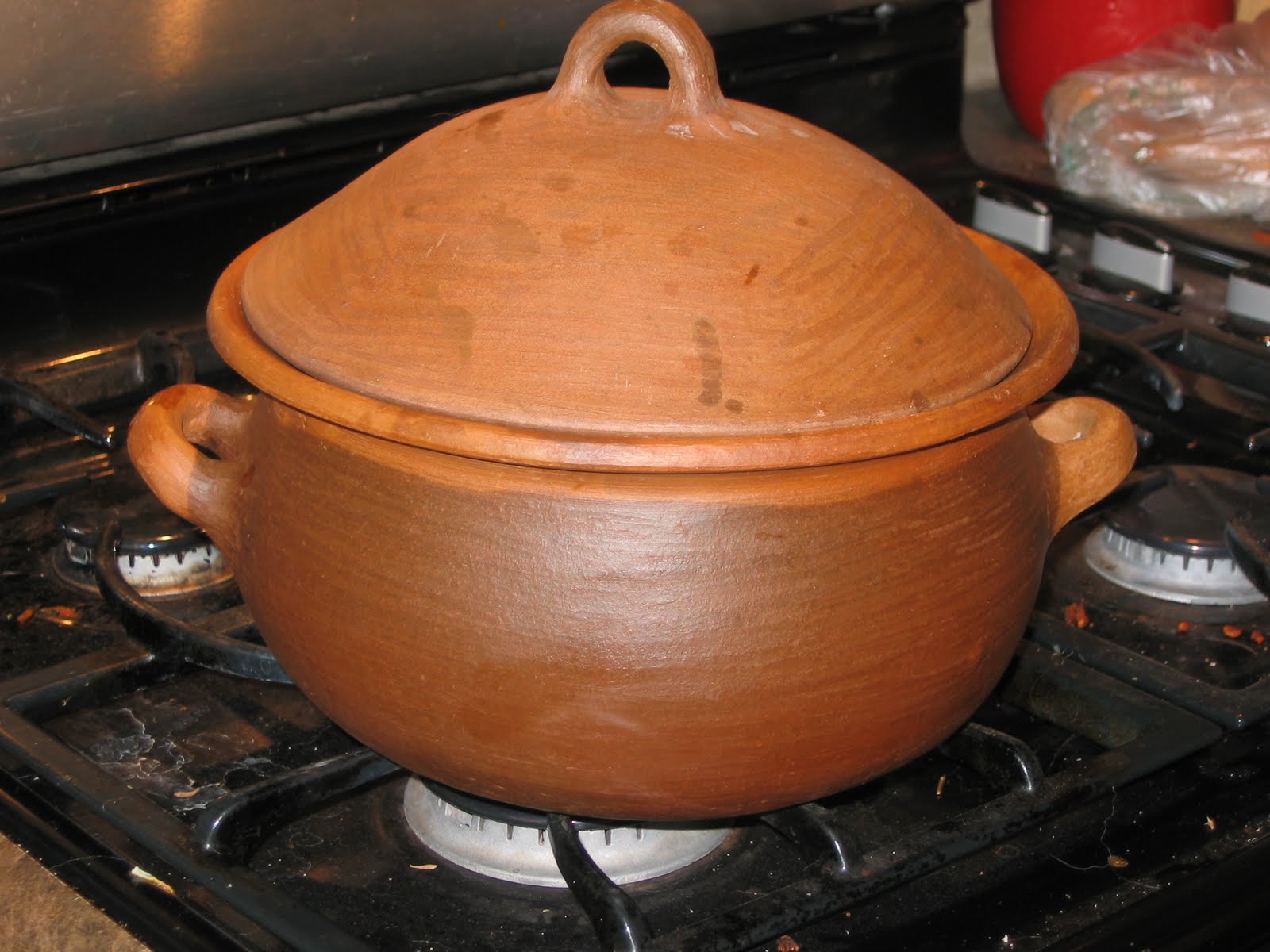
I should add that, like so many other things, it seems to taste best if cooked in clay. I tend to use either an unglazed clay bean pot or a Spanish cazuela, after doing the initial blanching of the greens in an ordinary pot. A Chinese sand pot works well too. If you’re curious, do read another of Ms. Wolfert’s books, Clay Pot Cookery, which contains everything you might want to know about cooking with clay.
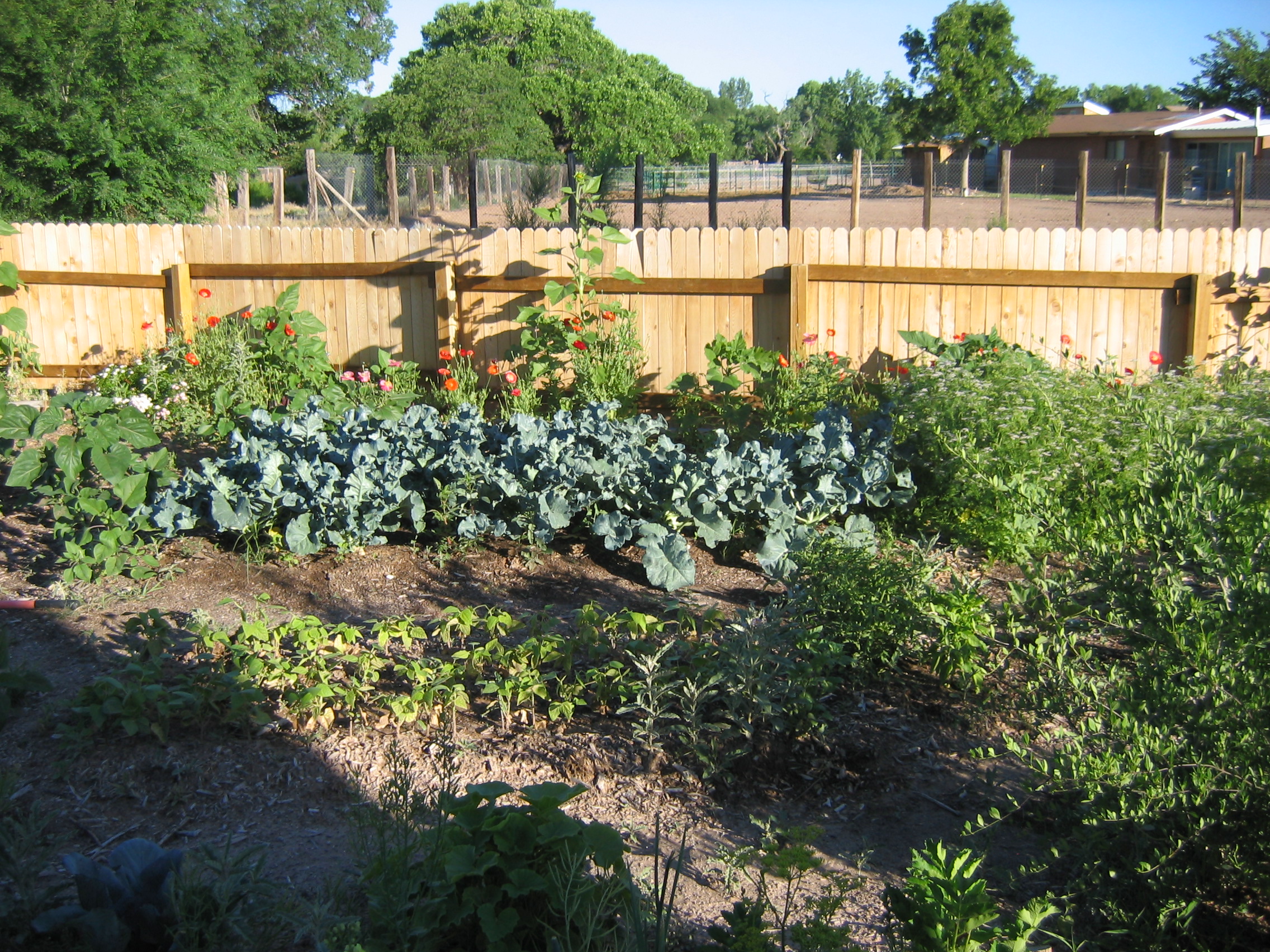
Before and after: the first six months


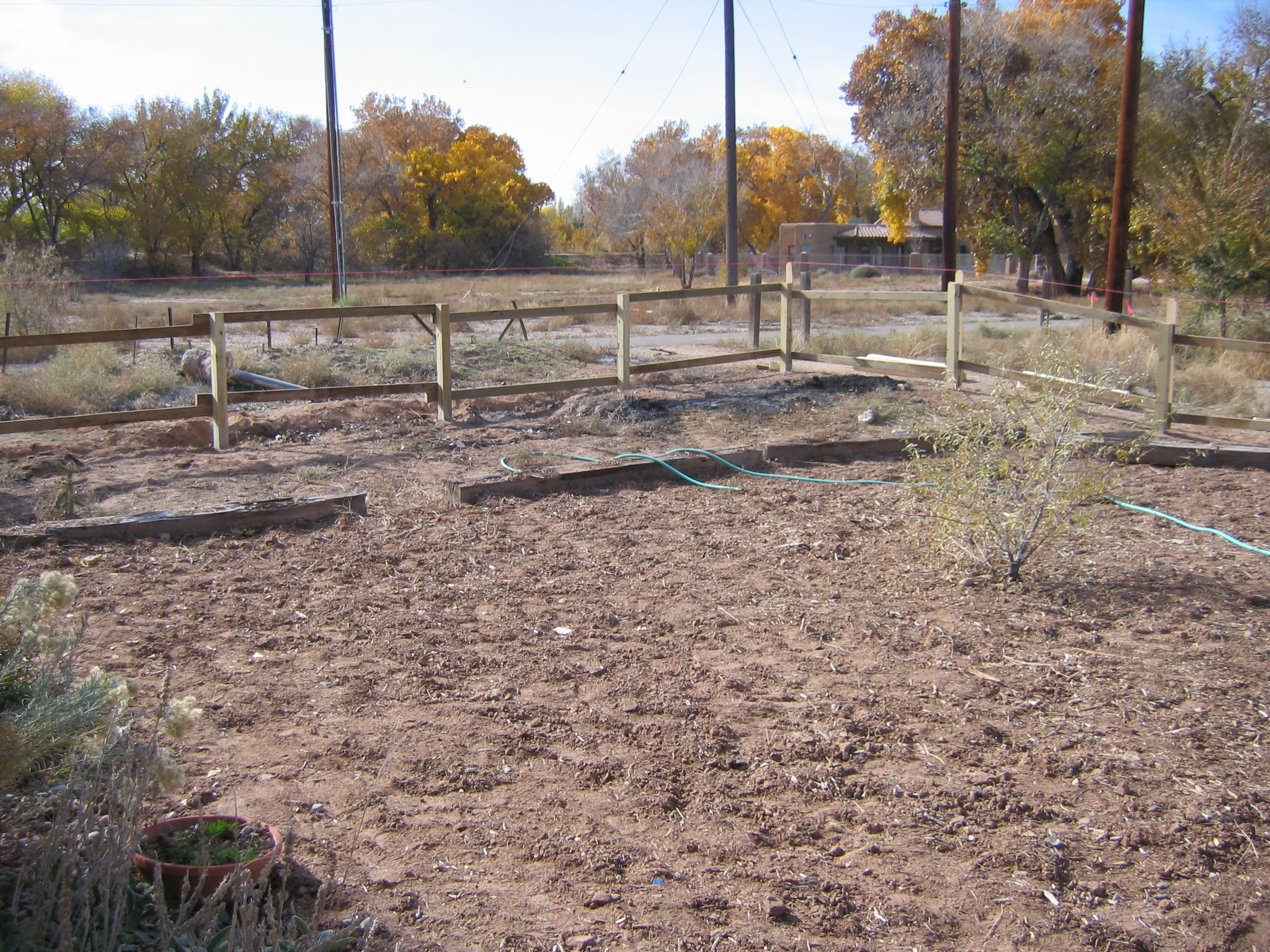
Too often, when I look at my garden I concentrate on what needs to be done or what didn’t turn out as hoped. The recent intense heat spells have been hard on garden and gardener alike, and it’s easy to fall into frustrated negativity. So today, as I look out my front door at the view above, I want to remember what it looked like when we took possession of the property six months ago:

Okay, not everything prospered, but we eat a lot of vegetables from our own yard every night, birds and butterflies and skinks abound, and every now and then I see a neighbor or two hanging over the fence admiring the view. Amazing what compost and stubbornness can do.
Please, please, use the DH oil spill as an opportunity to think about some ways to reduce your own footprint. “Yard farming” is the most healthful and pleasurable way I know to do that. If you grow any food in Albuquerque, please consider registering with the “2012 gardens by 2012” project. Go to www.albuquerquebackyardfarms.com and click the “2012 Gardens” tab. Sustainablity and greater self-sufficiency are great causes.

Planning Your Garden: the Weed Patch, and more on the Peruvian Purple Potato

Those of you who have been following my blog for a while know about my interest in useful weeds, ie plants which thrive on neglect, spread rapidly, and are often overlooked, but offer good eating. Now that I’m planning a brand-new garden from scratch, I’m planning a “weed patch” as part of it. This will be out of the path of garden traffic so that I can have milk thistles and nettles, and screened from the rest of the property with a row of sunflowers so that nobody but me has to look at it much, and there all my favorite edible thugs can slug it out together. If you have room for a weed corner, you might consider some of these:

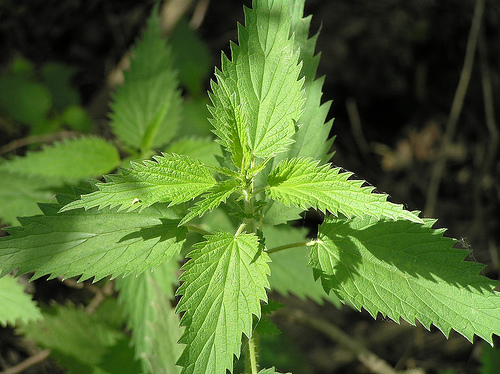
1. Stinging nettle. The nettle offers some of the best early-spring greens to be found. You can start them from seed (try Johnny’s Selected Seeds) or from plants (Richter’s is the only source that I know of.) They spread like wildfire, so underground barriers or a spot that you can mow all the way around are essential. See my post for harvesting and cooking details, and treat this plant with great respect, because the sting is pretty painful.
2. Curly Mallow. I like the leaves as part of a mix of greens, and it thrives on heat and doesn’t need too much water. I got the seeds from Nichols Garden Nursery years ago, and it’s been happily self-seeding ever since.
3. Milk thistle. THis will be a new one for me, but I’m told that the young shoots make good cooked greens when the prickles are trimmed off, so I’ll give it a try.
4. Sorrel. This might not seem like a weed, but it’s a healthy, vigorous, weedy-looking plant, so it can stay in the weed patch, out of the way. You can get seed almost anywhere, even from seed racks. It’s best to let it grow the first year, just removing flower stalks as they appear, and then start harvesting in early spring the second year.
5. Curled dock. This comon roadside weed is sour and bitter at most stages of development, but in the late fall and very early spring it’s one of the best greens around. Like its relative sorrel, it turns brownish-green when cooked, so I use it in mixtures of cooked greens rather than by itself. I don’t know of any source for the seeds. I picked mine by the roadside years ago, and this robust perennial has been with me ever since.
6. Dandelions. Like dock, they are actively distasteful most of the year, but in very early spring they offer delicious lightly bitter leaves which give a wild tang to a mixed salad or a little zip to a cooked greens mixture.

An alert reader let me know recently that the source I gave for the Peruvian Purple Potato no longer offers them. I save my own starter potatoes from year to year, but you can get the Peruvian from Ronnigers. They also have a splendid assortment of garlics, and some other plants of interest.

My Southeast Asian Summer: Turmeric

_Media Card_BlackBerry_pictures_IMG00146

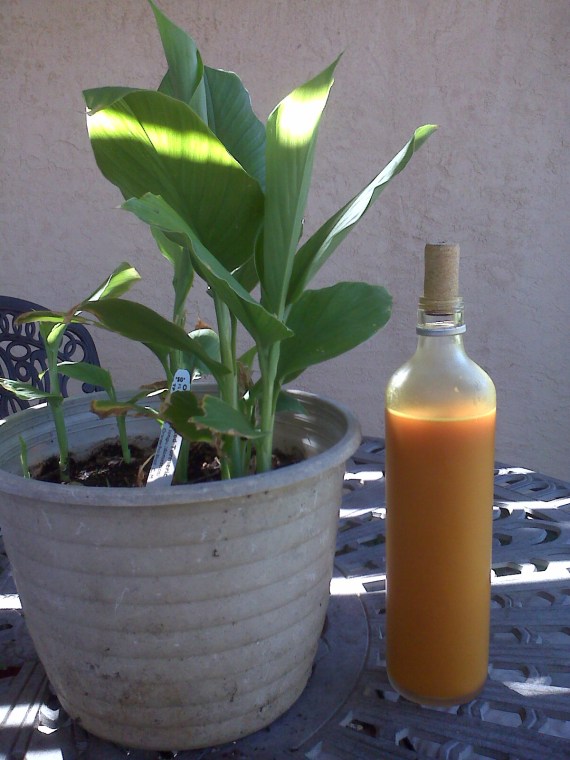
      Turmeric and its constituent components the curcuminoids, a complex of antioxidant and anti-inflammatory compounds, are getting attention and medical research dollars these days. But this blog is not about disease treatment or medical research, it’s about healthy and delicious food, and turmeric is here for its culinary qualities.  Both the roots and the leaves are a common seasoning in many parts of southeast Asia, and the leaves are impossible to buy in this area, which led to my experiments in growing them. It’s a tropical and needs to be brought indoors when the nights start to cool off, and during the summer it needs light shade and plenty of moisture. Initially I bought plants from an herb supplier, but since then have done better with plants I started at home.

       You need some roots from the store to get started. Put them on top of a pot of good organic potting soil and press them into the soil. Put in a warm place (a seed-starting warming mat will really speed things up,) keep moist, and within a month you’ll see small buds growing off the roots. In another month or so, you’ll have turmeric leaves to use.  It will prosper in a sunny window over the winter, but does best if it can go outdoors in the summer. Remember, part shade is important.

     To begin with the root, it can be grown in a pot but you are unlikely to get enough to use it freely. I don’t recommend the dried powder for most applications; to my palate if lacks the fresh vibrancy of the fresh root. I advise buying organic root, and you can often find it among the other fresh vegetables at La Montanita Co-op. Ask the produce manager if you don’t see it. It’s used in a lot of the seasoning pastes that I make for my southeast Asian cooking, so you’ll notice it in several of the recipes on this blog (use the search function to find them). But one of my favorite ways to use it is as a brilliant yellow-orange “juice” concentrate which I keep in a corked bottle in the refrigerator and add to water to make “sun juice.” The color alone is irresistible and cheers me up just to look at it.

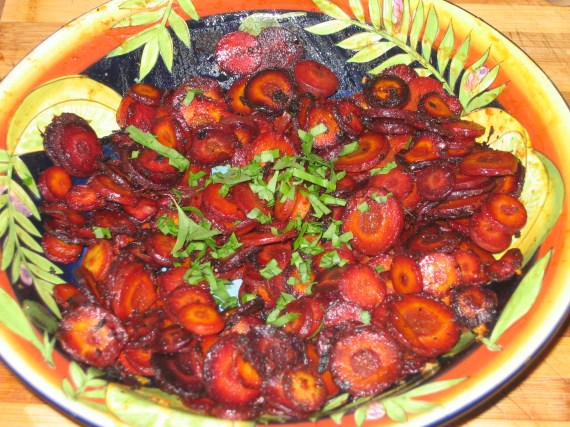
     The leaves are large, glossy and handsome, and look attractive when the pot is brought indoors for the winter, but remember that any plant you’re always snipping at for kitchen use won’t look great for long. When cut they smell very like a fresh, sweet carrot, and I love to season carrots with them. Clich the link below the picture for recipes.

august 09 007

Click here for recipes! Continue reading