
Stinging nettles are a pernicious weed in damp parts of the country. The sting is painful and the plant is weedy-looking. So why did I make an effort to have them here in New Mexico? Well, because the greens are delicious and extremely nutritious and they come up with no effort once established.
I had no luck starting from seed, and bought plants from Richter’s in Canada. They are a wonderful source for rare herbs, and well worth knowing about. The plants arrived last spring. I put them in a piece of waste ground where nothing much would grow and where they would be prevented from excessive spreading by walls and mown paths . This is very important, because once established, they turn their forces toward world domination. I watered them deeply once a week and mulched them heavily.
This spring, each little plant from last year is surrounded by dozens of offspring. They sting fiercely, so don’t go near them without gloves and long pants. When they’re about six inches high, use heavy gloves and a pair of scissors to harvest them. Wash in a few changes of water, using wooden spoons to swirl them in the water and lift them out to avoid the thousand tiny painful injections of formic acid that they are trying to give you. Until they are cooked well, they can sting. Now cook them any way you like. My favorite way to cook the first batch of spring is to put them in a hot skillet with some water still clinging to them, add a knob of good butter and a little salt, turn the heat down, and saute’ until cooked. Turn out on a cutting board, chop well (I hate long stringy stems in greens, and since nettles have stringy stems, I strongly recommend that you don’t skip this step) and serve with a little more butter on top. They are a startling deep iron-green and very, very good. Later in the season, I use them in greens mixtures and boreks and all the ways I love to eat greens. For more of my favorite greens recipes, visit my website’s recipe page.
Within six weeks of the first picking, they will be coarse and no longer taste good, and their texture will become gritty and unpleasant. This is why you want them in an obscure spot. Control their spread, avoid being stung, let them do their weedy thing, and turn your attention to other vegetables. Early next spring, when you’re sick of cold winds and desperate to reconnect with the awakening earth,they’ll be there.
Posts Tagged ‘urban homesteading’
9 Mar
The Greens of Spring: Stinging Nettles
5 Feb
Foraging: wild mustard
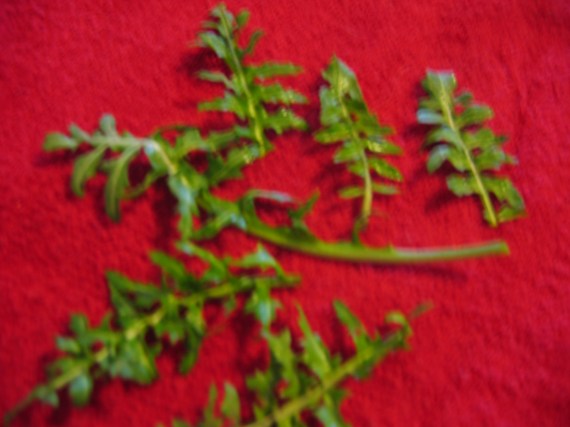
Right now, the wild mustard is free for the picking in our region. I find it in unexpected places in my yard, including the middle of the lawn, and along acequias closer to the river. Needless to say, you don’t want to pick any that’s growing where it’s exposed to walking dogs, or where chemical spraying may have taken place.
When the weather is still very cold and the wild mustard is still young, it’s a great green to spice up a salad, adding a wasabi-like heat when combined with milder greens. Taste it, and if it’s too hot for salads cook it, which lowers the heat. I love to mix it with spinach, chard, or other mild greens about half and half: saute’ some chopped garlic in olive oil in a skillet, add the well-washed greens and a couple of tablespoons of raisins, and braise over medium heat until done. Garnish with toasted pine nuts, and eat.
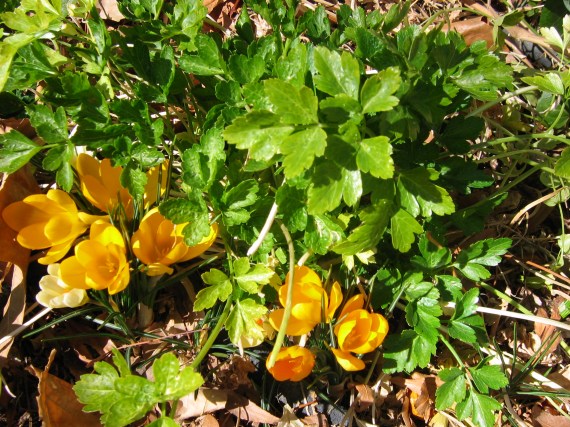
These potent, highly flavorful greens were the “spring tonic” of our ancesters, and today we still need those vitamins, minerals, and antioxidants. We may not be recovering from a winter without fresh vegetables, but we still need the connection with the awakening earth that its first green shoots can provide. If you were thinking ahead last fall, you made sure to have plenty of herbs, and now you can sprinkle your cooked greens with the shoots of parsley and fennel that are coming up from last year’s plants. They’ll shoot to seed soon, so use them up now.
28 Dec
winter salads
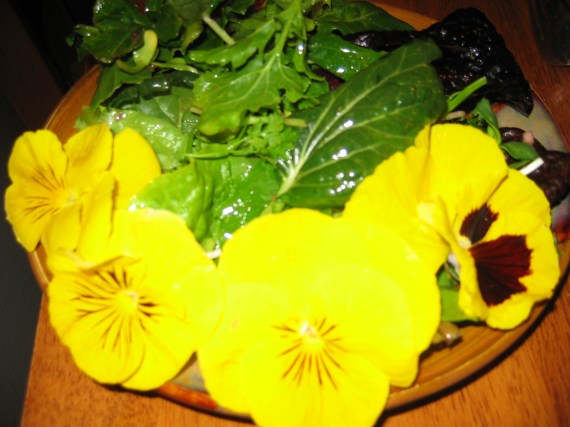
As part of our Christmas dinner, we had salads made entirely from our own yard produce. I had not used any season-extending devices at all, and we’d had cold weather and a few light snows, so these are the greens that thrive on cold and neglect. The “trim” is a ring of pansies, which I wrote about in an earlier post. The greens included arugula (see the post before this one,) pansy leaves (cool, tender, and delicious,) chervil, a few nasturtium leaves still surviving in a sheltered corner, my new favorite lettuce, and sunflower sprouts.
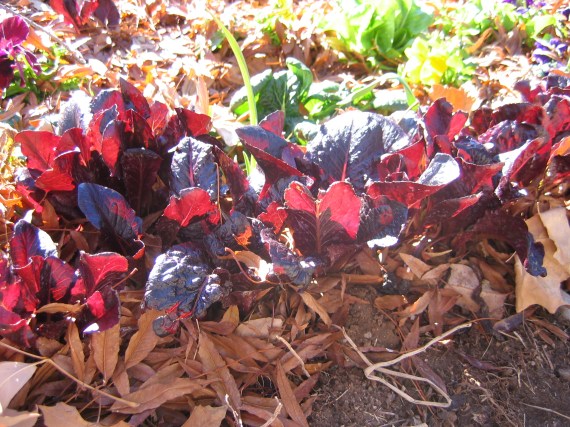
The lettuce that I’ve enjoyed most this year is a gorgeous deep red romaine called “Marshall.” I think I got my seeds from Territorial. the color is a dramatic foil for almost anything else, and it doesn’r get bitter in our sudden hot springs. It’s beautiful in the garden, too. You can see it poking up through a light mulch in the photo below.
The other photo shows my sunflower sprouts, and I wish I had known earlier how delicious they are. The first taste is pleasant and mild, but a delicious nuttiness rapidly reveals itself. These are the only sprouts that I’ve enjoyed eating out of hand, but they’re even better in a good mixed salad.
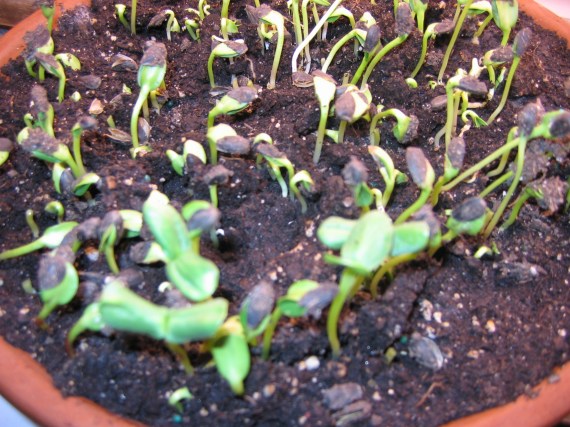
Sunflower sprouts seem to be best when soil-grown, and they need a little light. I have a grow-light for my spring seedlings, and it usually goes unused in the winter, so I used it to grow the sprouts, but a sunny window would be fine.
Start with a large flat container. I used a terra cotta saucer intended to hold a large potted plant, just because I had one sitting around. Put in an inch of good organic soil. Scatter raw organic sunflower seeds (in shell) very thickly on top, touching each other. Pat them into the surface, cover with another 1/4 inch or so of soil, water well but don’t make the soil soggy, and wait a few days. The books say to presoak the seeds, but I didn’t and they did fine. When they start to emerge, begin giving them light, and harvest when they are green and are trying to shed their shells. I snap them off at soil level with my thumbnail, flick off the clinging shell, rinse well and dry, and start snacking. They go well with spicy mesclun mixes but can also give depth to a simple lettuce salad. Grow lots, so that you can use them lavishly.
 My urban homestead