Posts Tagged ‘nettles’

Perennial Saag Paneer


Yesterday I wrote about making Paneer with my grass-fed goat milk. Today I’ll talk about making saag paneer, one of my favorite dishes, and for a permaculture twist I’ll make it with perennials as much as possible. If you don’t have a weed patch, you can use a bunch of spinach. You will also need fresh ginger, cumin seeds, garam masala, heavy cream, and butter.
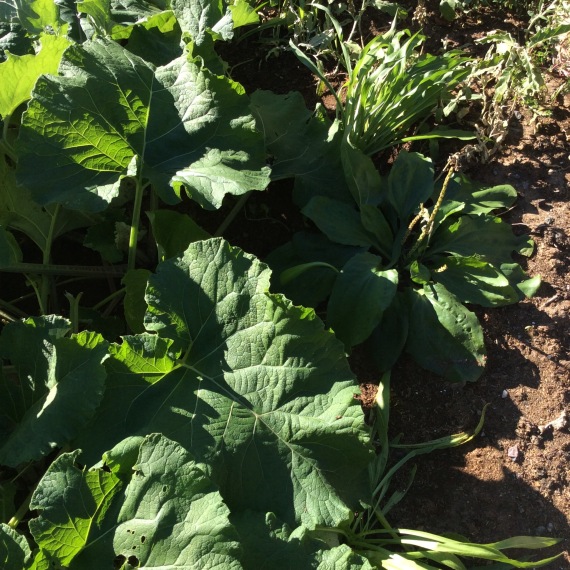
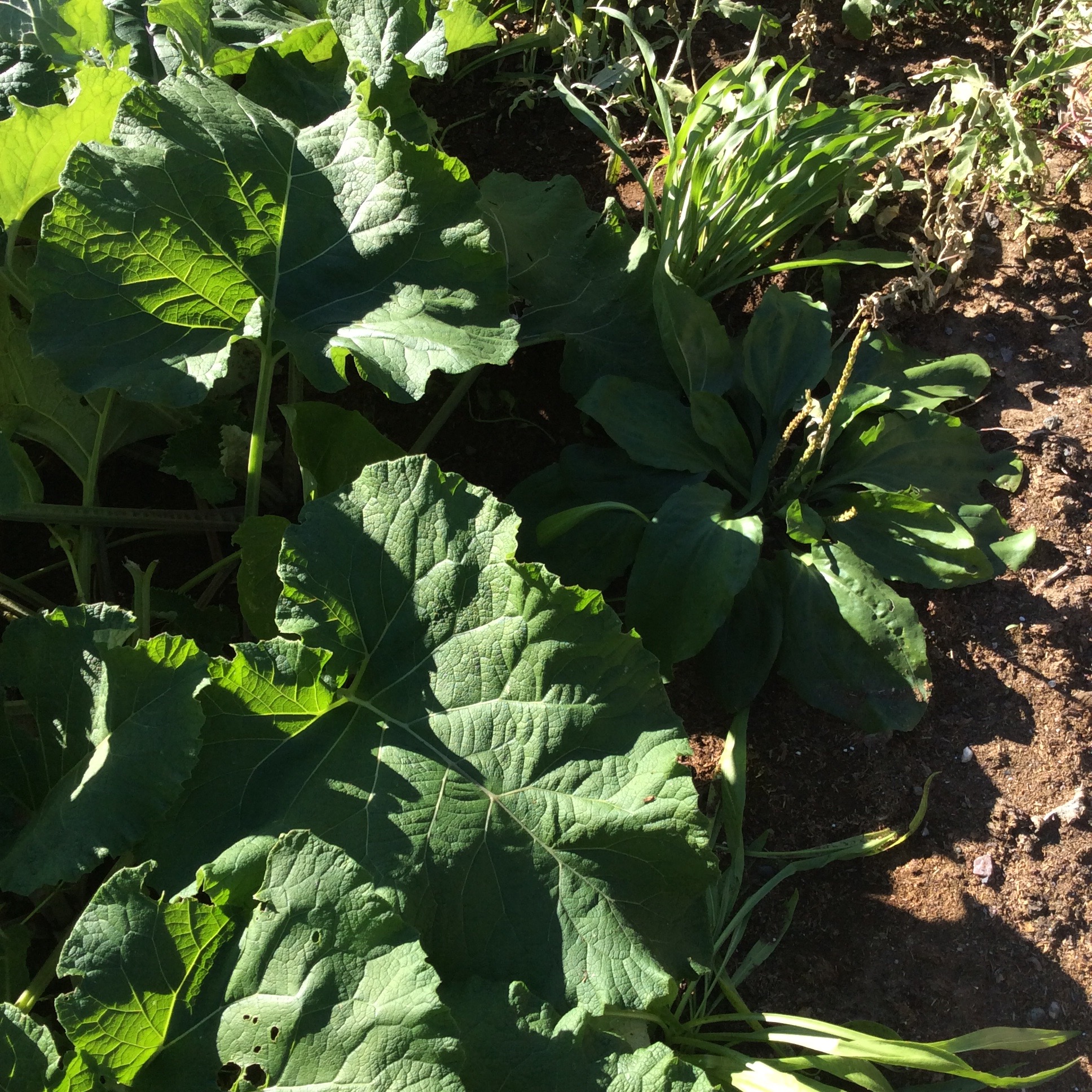
Assuming that you have the paneer, the next step is to catch your greens and alliums. I used equal parts each of nettles and bladder campion, and 4 stalks each of green garlic and perennial Welsh onions. The nettles and bladder campion were blanched for about 90 seconds so that the nettles could be handled easily, then drained, pressed, and chopped. The alliums were cleaned, trimmed, and sliced in 1/4″ cross section.

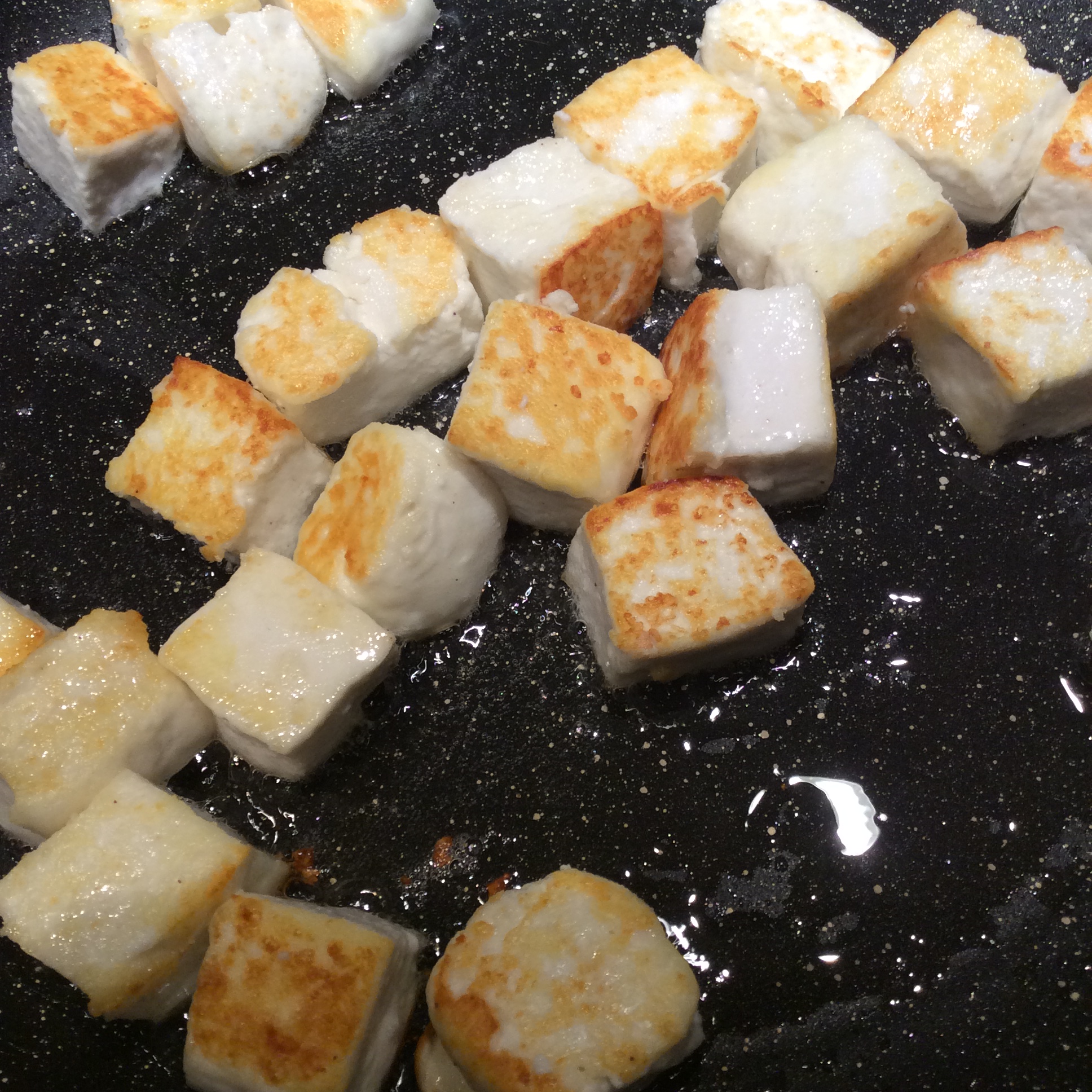
When ready to cook, heat a nonstick skillet, cut the paneer in 1″ cubes and salt it, and fry in mild oil of your choice (I like Macadamia nut oil) until browned. Set aside.


Chop a piece of fresh ginger about an inch square finely, and have ready a teaspoon of whole cumin seed and a heaping teaspoon of garam masala.
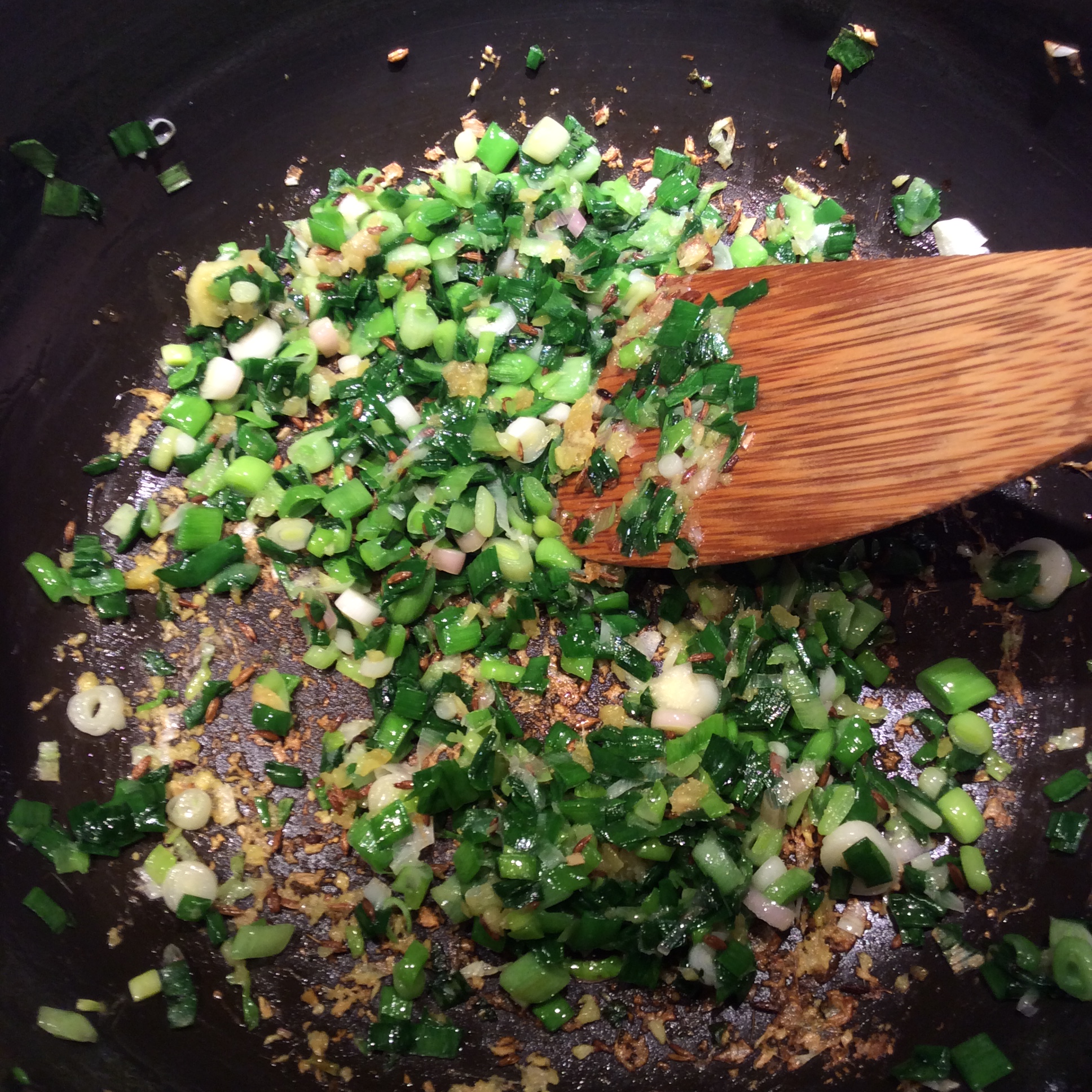
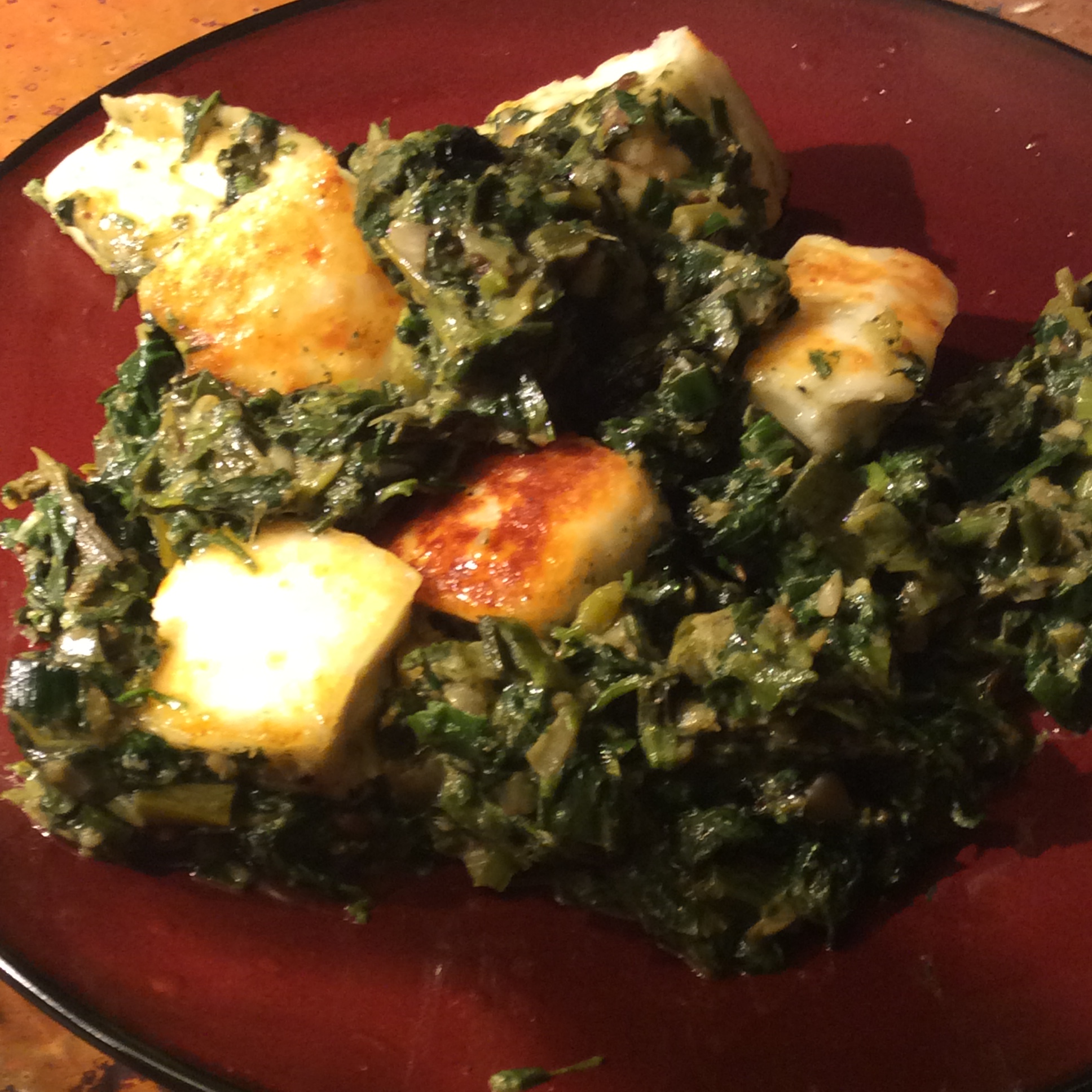
Heat a saucepan, put in a couple of tablespoons of mild oil, and fry the cumin seeds briefly until they darken a couple of shades. Immediately add the chopped ginger, stirfry furiously until it is cooked but not browned, and add the chopped alliums and lower the heat to medium-low. Add a half teaspoon of salt and sauté the alliums until they are softened, lowering the heat if necessary to keep them from burning. Add the garam masala, cook another minute or two, and add the cream. Add the blanched chopped greens and cook over low heat until they are thoroughly cooked, probably about another 10 minutes. Put the paneer cubes on top, pushing them into the greens mixture a bit, and cook over low heat until they are heated through. Serve with rice or, if you are a low carb eater, gloriously naked on the plate. Drizzle some melted butter or ghee over the top.

I was taught to make this dish a few decades ago by an Indian woman in Manhattan, and I am pretty flexible about the greens used as long as they’re mild. No bitter green has a place in this dish. The green garlic and onions are great in season, but chopped garlic and onion are traditional.  I’m very rigid about the seasoning, though. Sometimes I add a chopped hot pepper but that’s my only variation. The whole cumin seeds fried quickly in hot oil are not negotiable, and burning or scorching any of the seasonings or alliums  means you need to start over, so work carefully.

Late in the Garden Year

img_4881

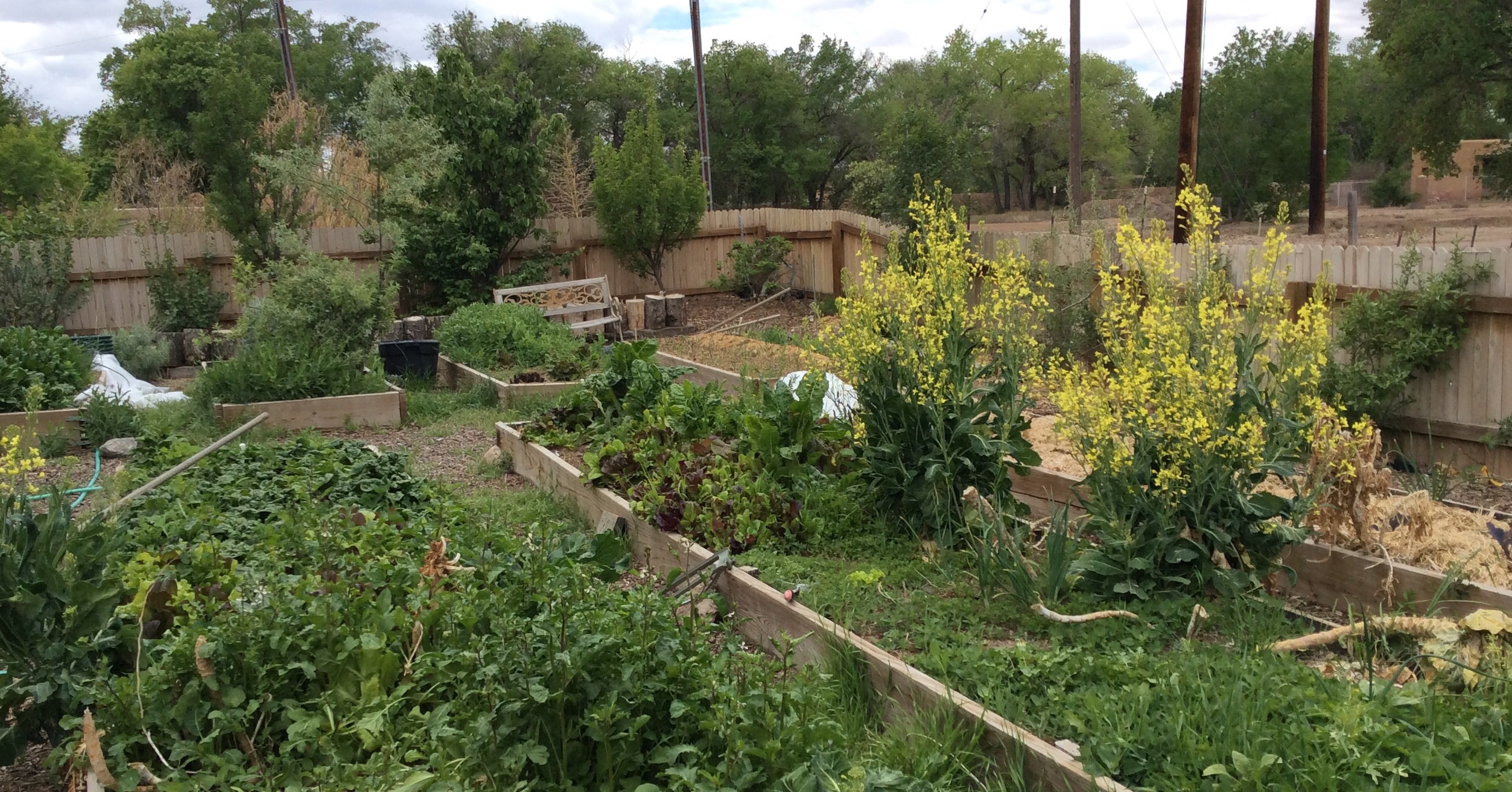
Here in central New Mexico our garden year is slowly drawing to a close and the first frosts have blasted the tenderest plants but the days are still warm and lovely.  I have been out in the woods gathering wildlings but they are shutting down for the year. So it’s a good time to start summing up the season.  I hope to write in more detail about all these things over the winter, but life being the uncertain business that it is, might as well get started now.

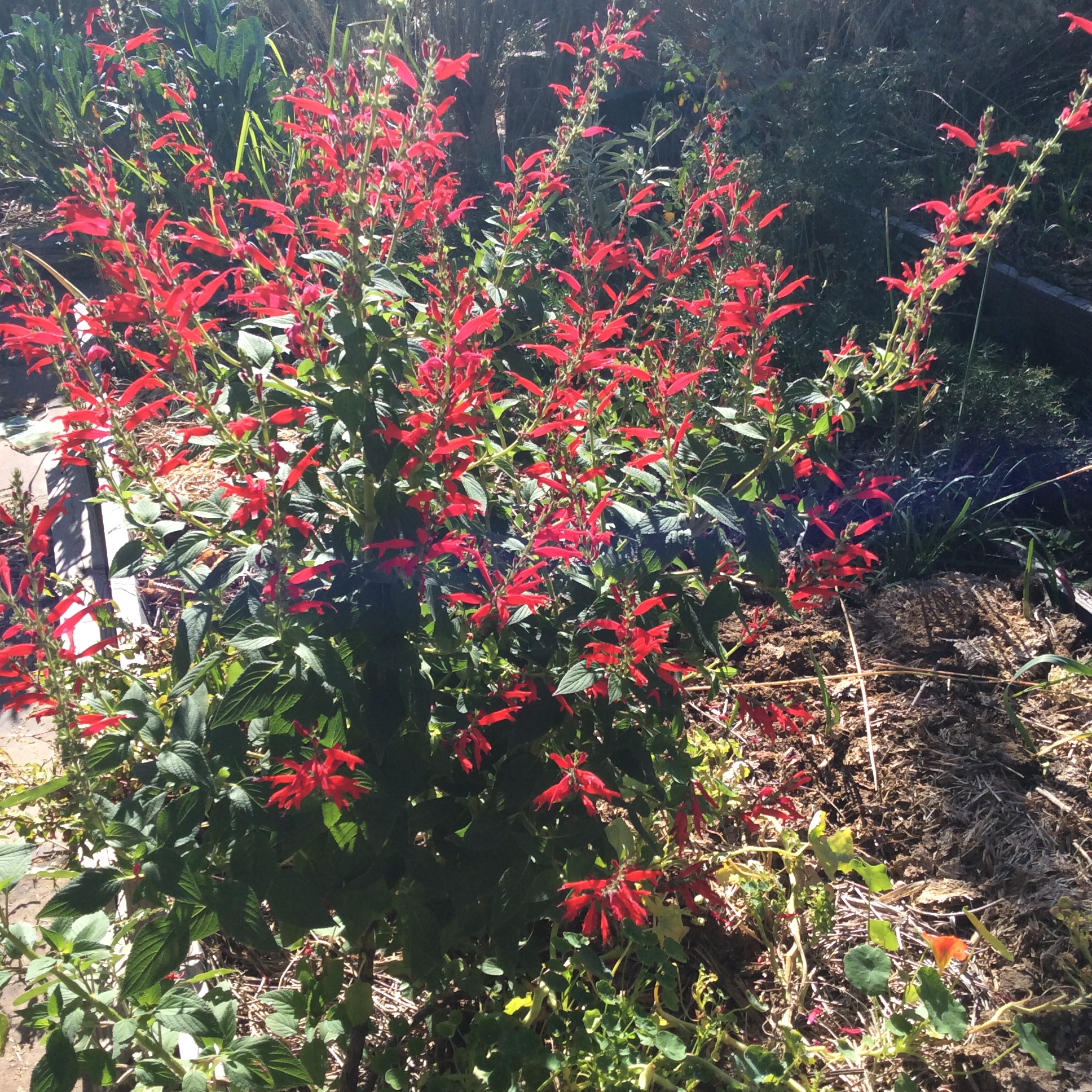
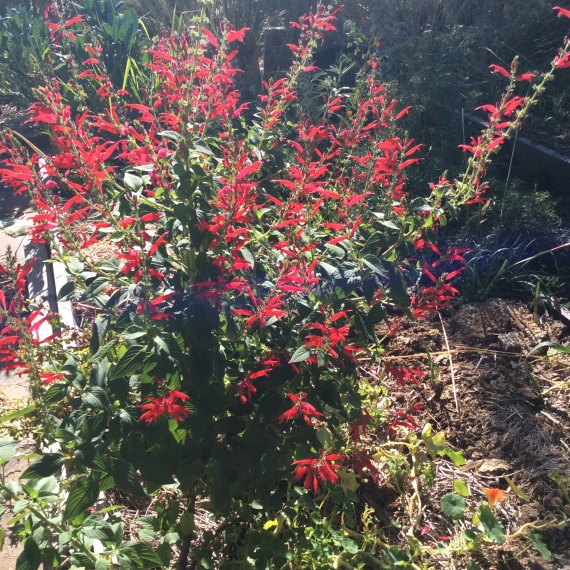
First, beauty. In October, the tender tropical pineapple sage covers itself with red flower spikes and is one of the loveliest sights the garden can offer at this season, so every spring I buy a plant and stick it in somewhere. It makes a good last hurrah for the bees. I make tea from it occasionally during the summer and I’m experimenting right now with tincturing the leaves to make a cordial. More on that later.
img_4888

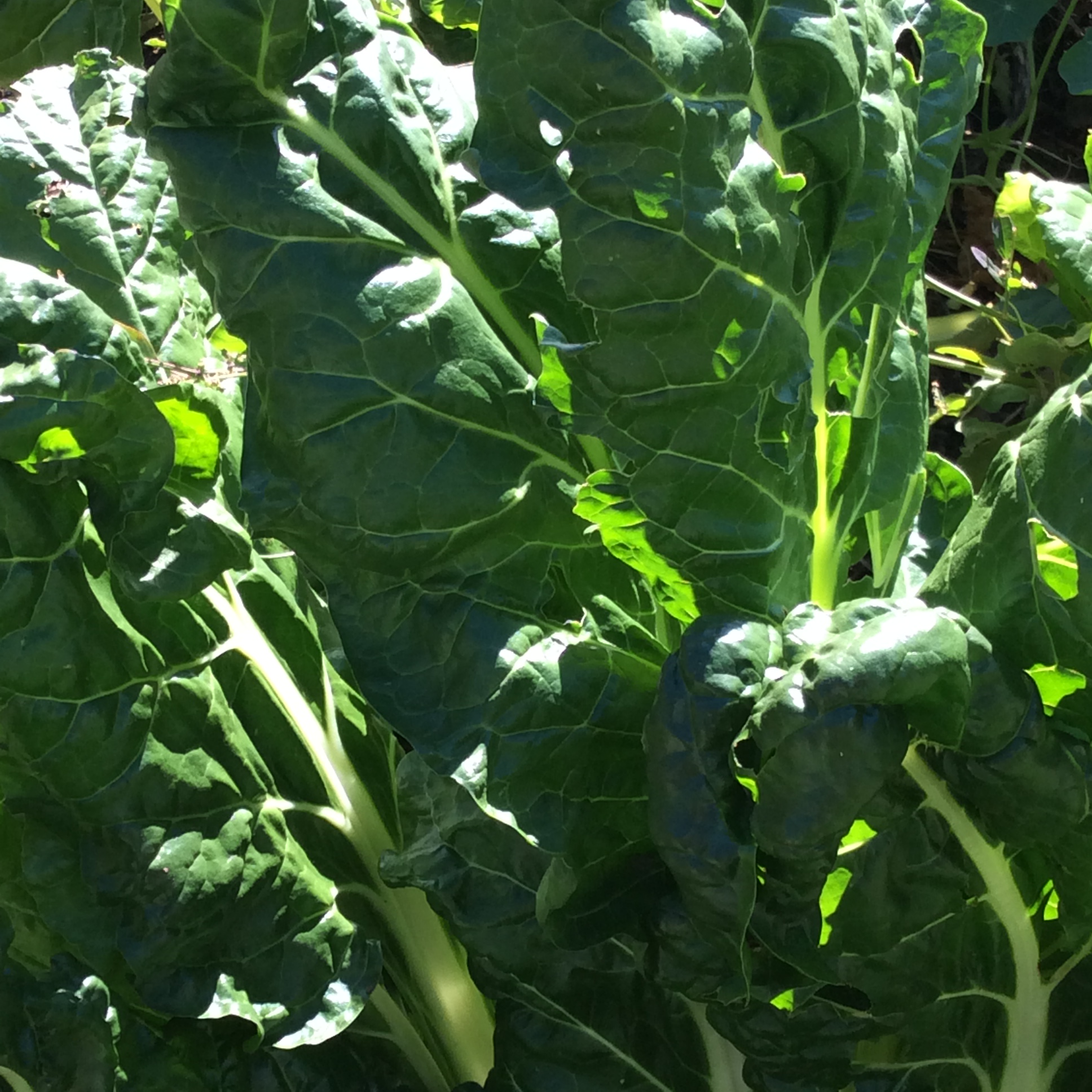
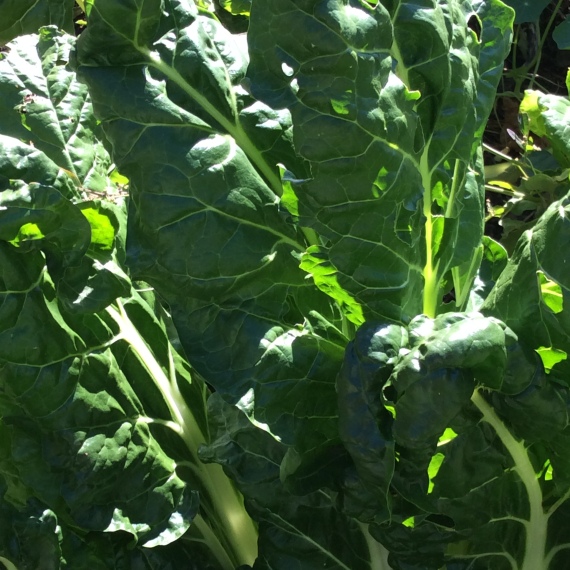
This is chard’s second-best season.  In late spring and summer there are other  greens that I prefer, so I plant my chard in June and in October it is covered with lush green leaves and ready to harvest, when most other greens have given up.   Then I leave the plants in place over the winter and in the spring they send out a burst of leaves that are thick, meaty, tender, and utterly delicious. Remember to harvest the spring leaves before the central stalk starts to form, because as soon as the plant begins to shoot to seed, the leaves become dirty-tasting.  Pick all the fall leaves that you want, since this does not seem to affect the ability of the plant to live through the winter. Blanch some for winter greens if you don’t already have enough in the freezer.
img_4850

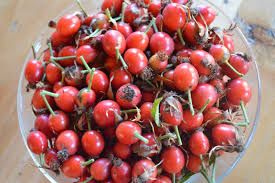
All my garden fruits except the quinces are finished for the year, but rose hips are easily found. I am  busy making extracts and cordials from them as a source of vitamin C, flavonoids, and pleasure over the winter.
img_4882

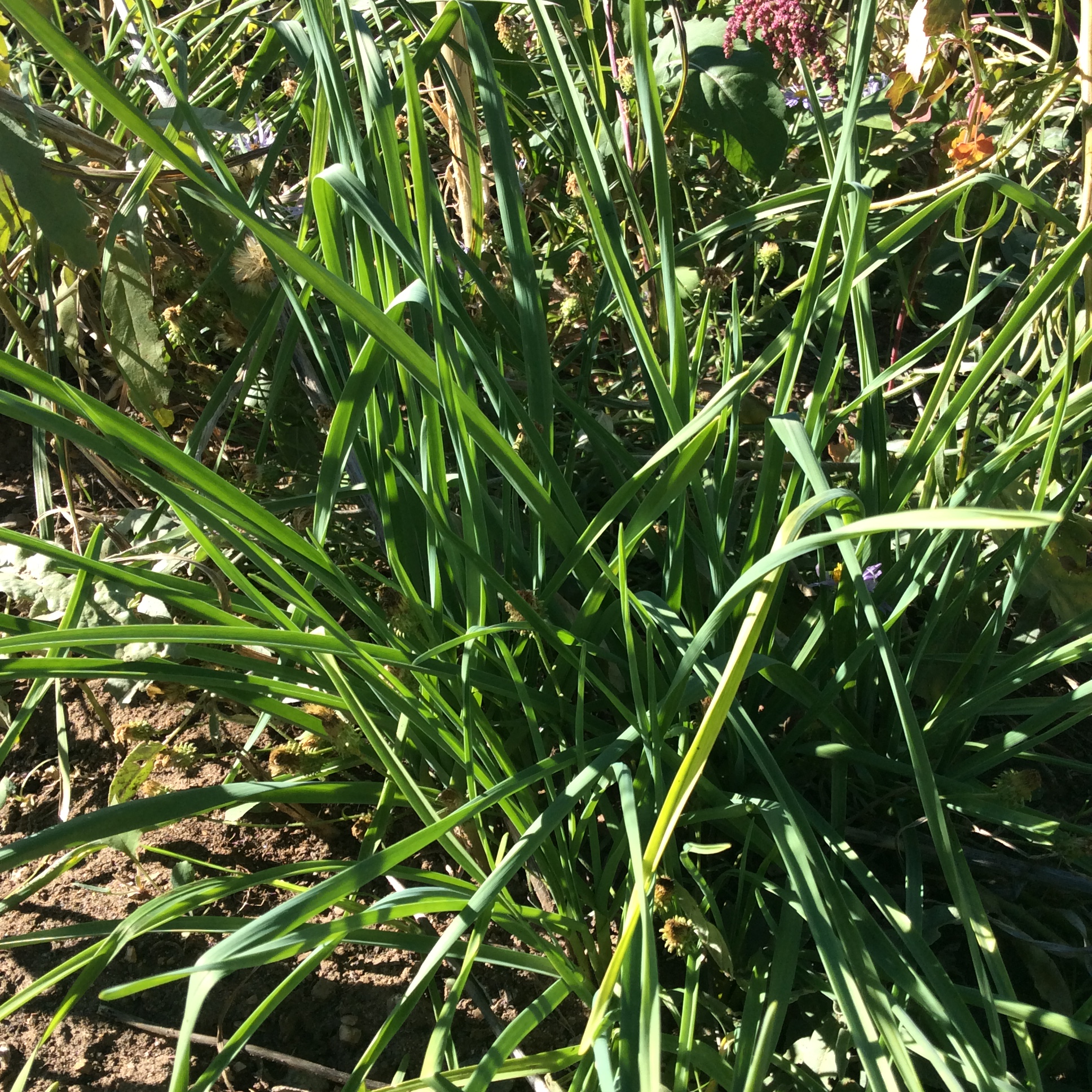
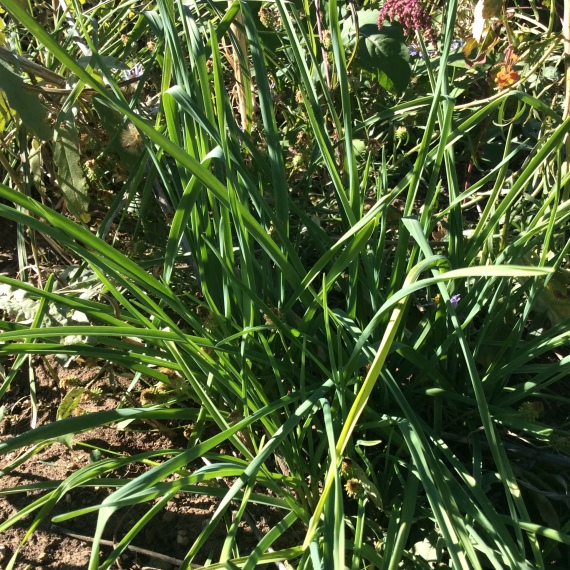
The perennialized section of elephant garlic is making clusters of thin tender leaves that are delicious  snipped up for garlicky chives.  I don’t care for the bulbs, and think that the greens are the best part of this leek relative,  so I cut all that the plants will produce as I need them.  The thin chive like greens shown here come from the tiny bulbils that are found around the outside of the bulbs. I plant them in handfuls to get a thick growth of greens as shown here.
img_4880

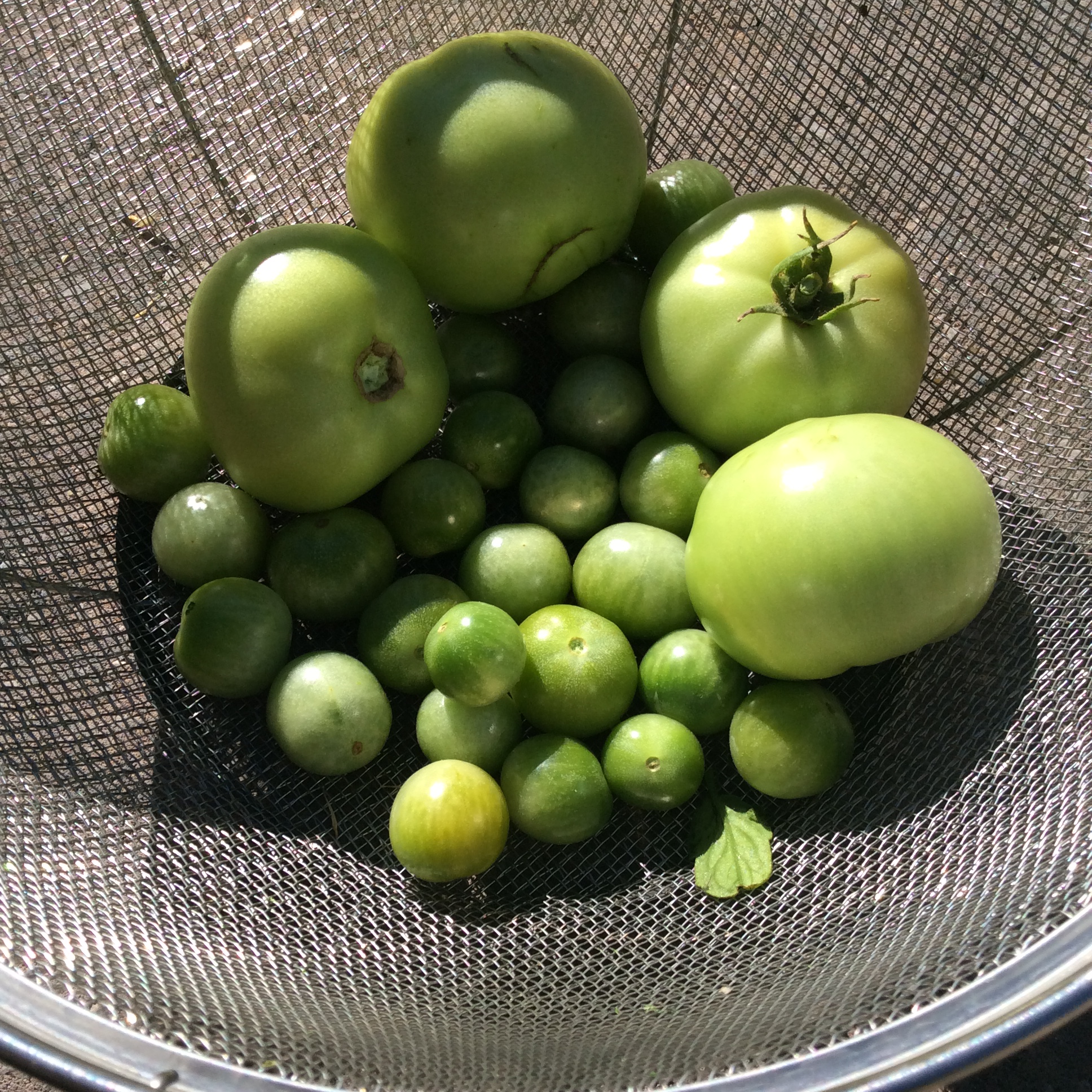
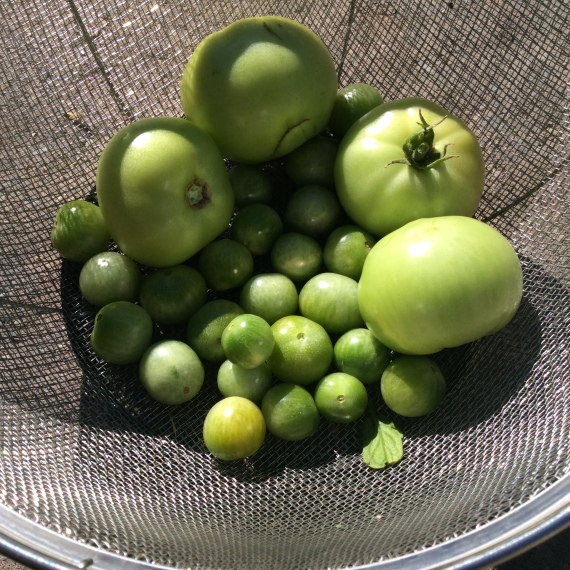
Those last green tomatoes make a wonderful sweet tangy chutney.
img_4891

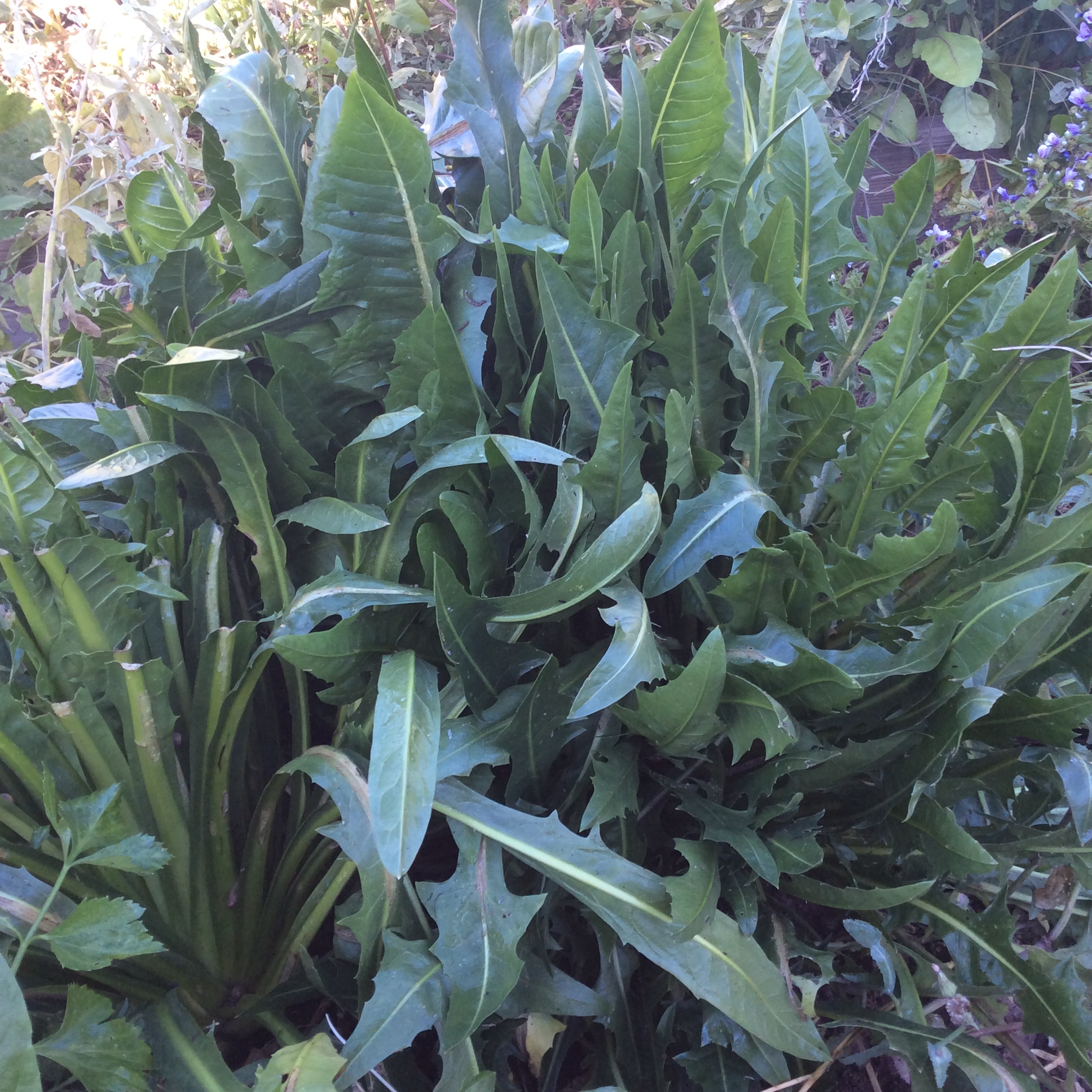
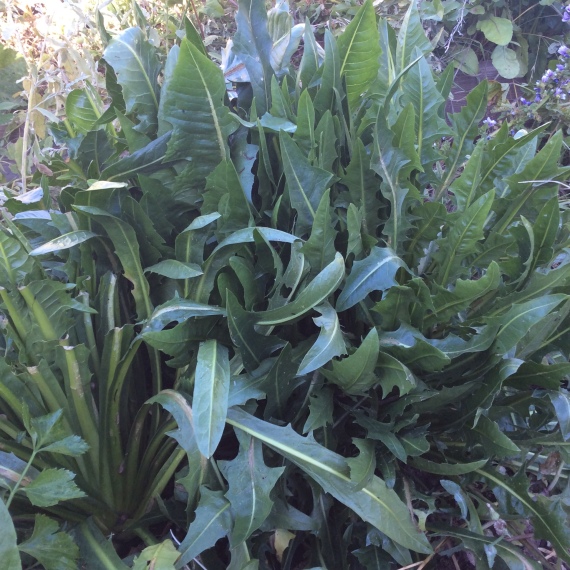
I have a clump of perennialized chicory,  and it languishes in hot weather but produces a vigorous crop of deep greens in the fall.  The lower half of the leaf is mostly stalk, so I tend to cut off the upper halves for cooking. Chicory is a bitter green, much like dandelion.  It responds wonderfully to sautéing  with bacon or pancetta, garlic, and some red chili if you like it. It is also very good for adding savor to mixed greens that include blander species such as chard.
img_4892

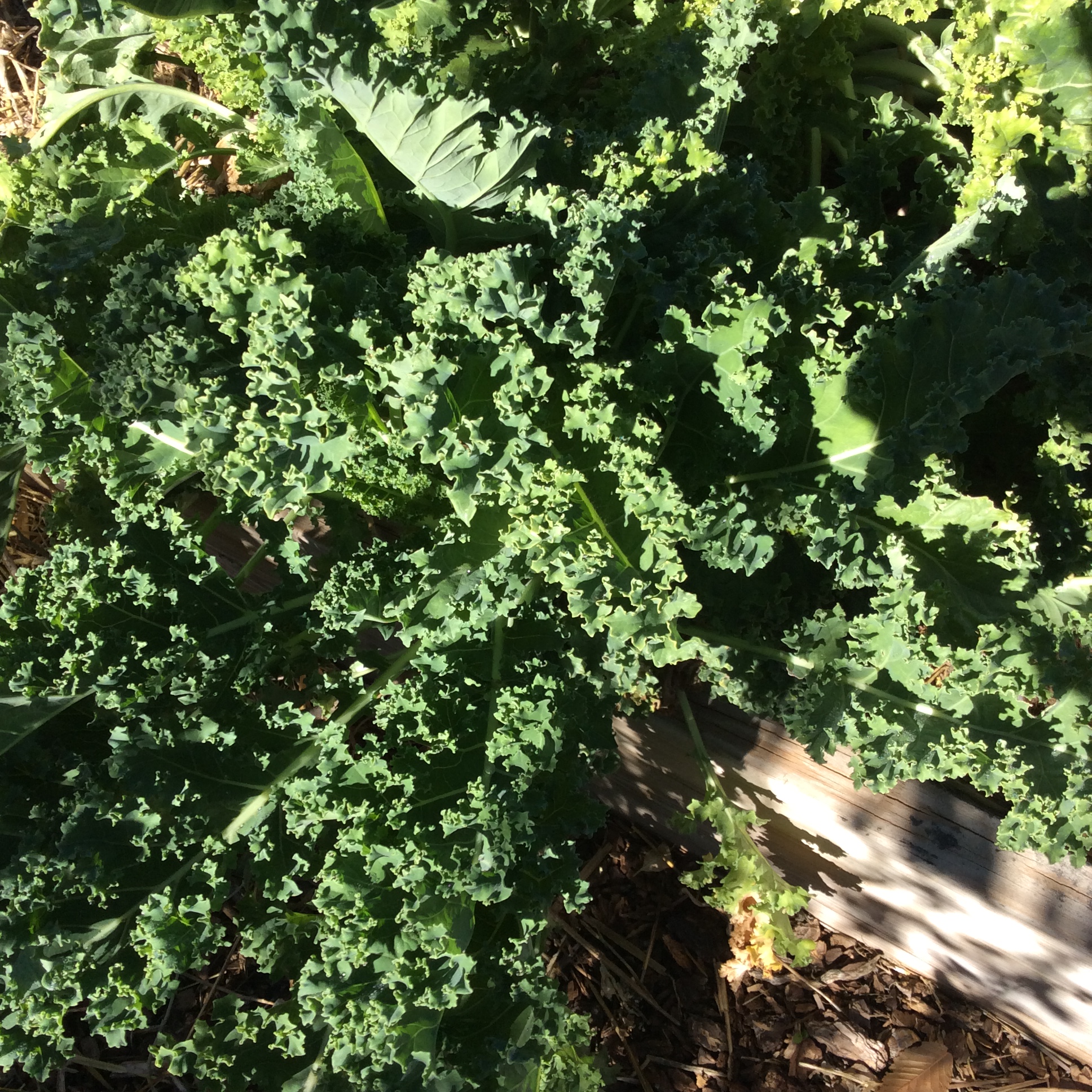
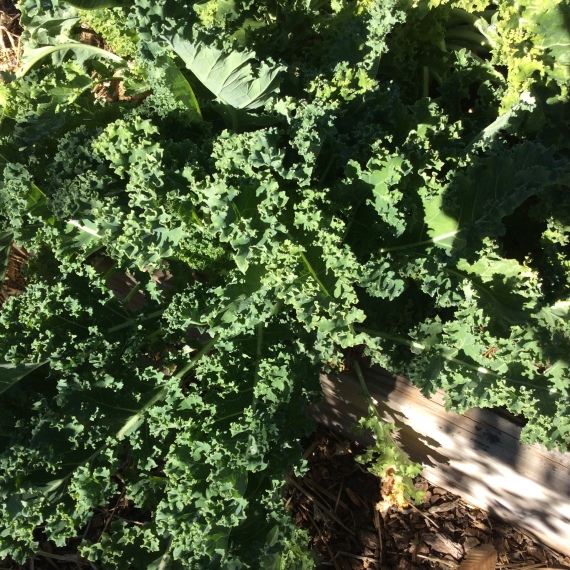
Kale is at its best this time of year, and becomes more tender and sweet after a few frosts. The Tuscan kale will winterkill sooner than the others, so eat it first.  In climates with snow cover, curly kale will last throughout the winter, but in our very dry and windy winters with very little snow it seldom survives in any sort of edible condition.  Covering it with a frost blanket might well preserve it, but is more trouble than I really care to go to.  There are plenty of other things to eat.
img_4890

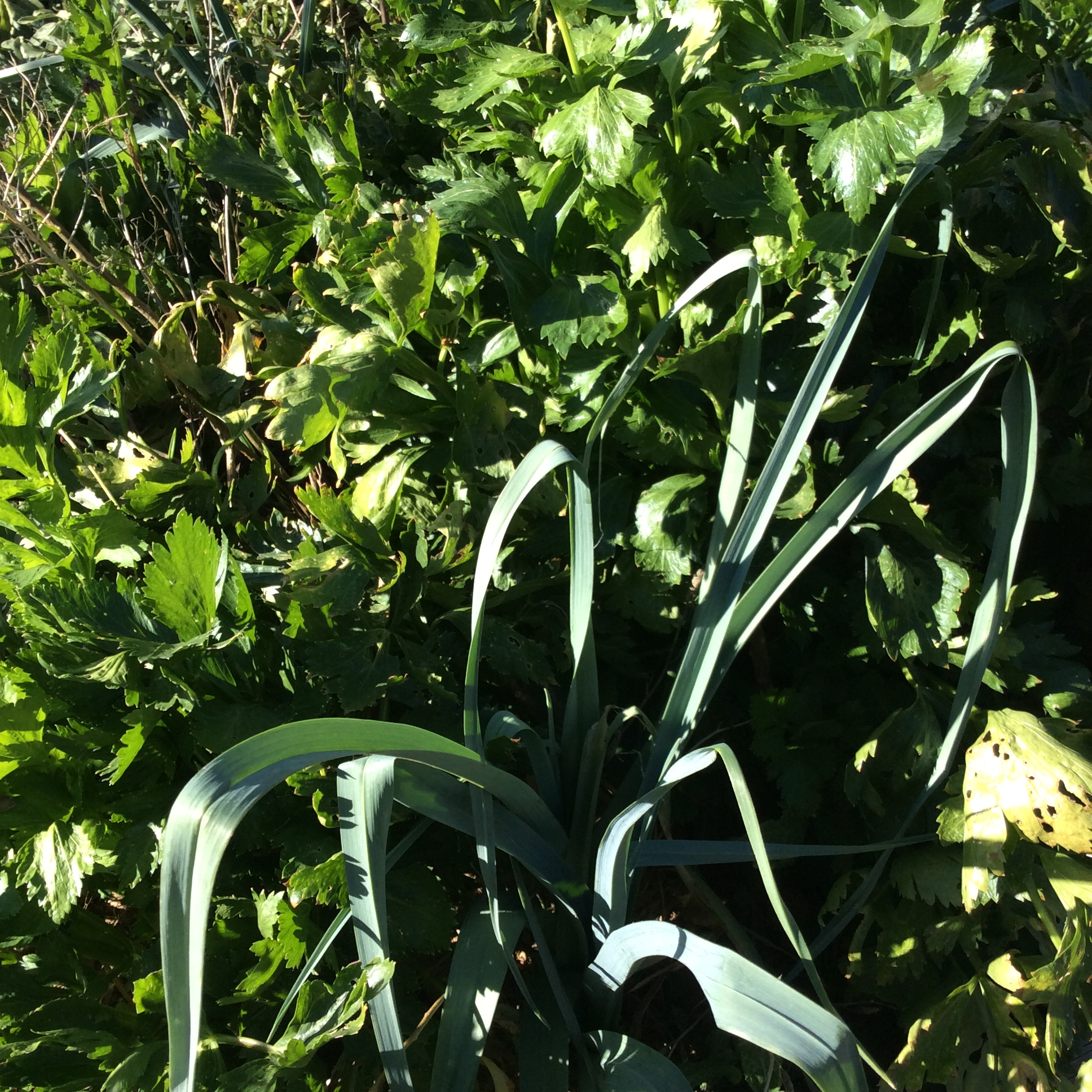
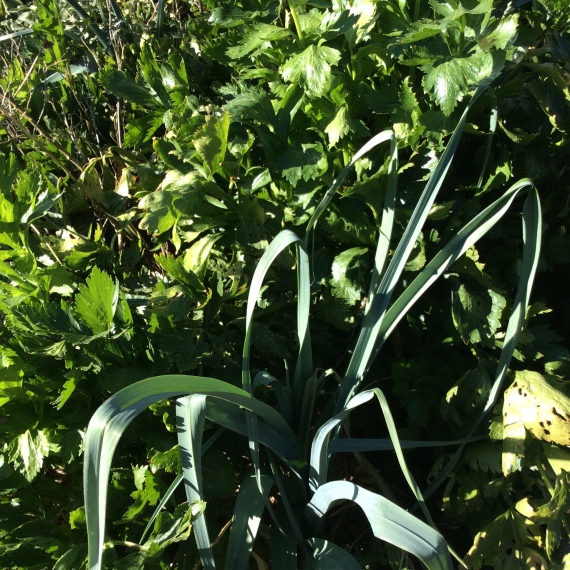
Celery and leeks need to be kept well supplied with water, and will still be fresh and good in the first week or two of November.  I usually buy leek plants in the spring, and none of the hardiest varieties are available as plants. There are very hardy varieties that will hold perfectly in the ground over winter, but to have them you have to remember to plant the seeds in midwinter, and I always forget.  Maybe this year I’ll remember.

img_4885

img_4884

Now we come to the perennial weed patch.  Nobody who lives or gardens in the east will ever believe how much trouble I have taken to get burdock, milkweed, nettles, pokeweed, plantain, and scorzonera to grow in my area.  Burdock provides a good root in the fall from first year plants, makes large coarse leaves that my goat adores, and produces a flower stalk that is supposed to be the best part of the plant for edible purposes. I only got it to germinate this year, so I have not tried the stalks yet, but will be digging my first roots soon. Some people say the leaves and leaf stems are edible, but they are so stringy in texture and coarse in flavor that I’ve never been that desperate for something to eat.

The plantain is the Rugels variety which is rumored to be less stringy and have a better flavor than common plantain. I haven’t tasted it yet but will report back.

Milkweed can be eaten in many ways in many seasons.  As far as I know, our desert native milkweeds are largely inedible, but I have finally gotten the common milkweed to germinate and grow strongly. So next spring I hope to have edible shoots, buds, and pods. Read master forager Samuel Thayer’s books for excellent sections on the uses of milkweeds.

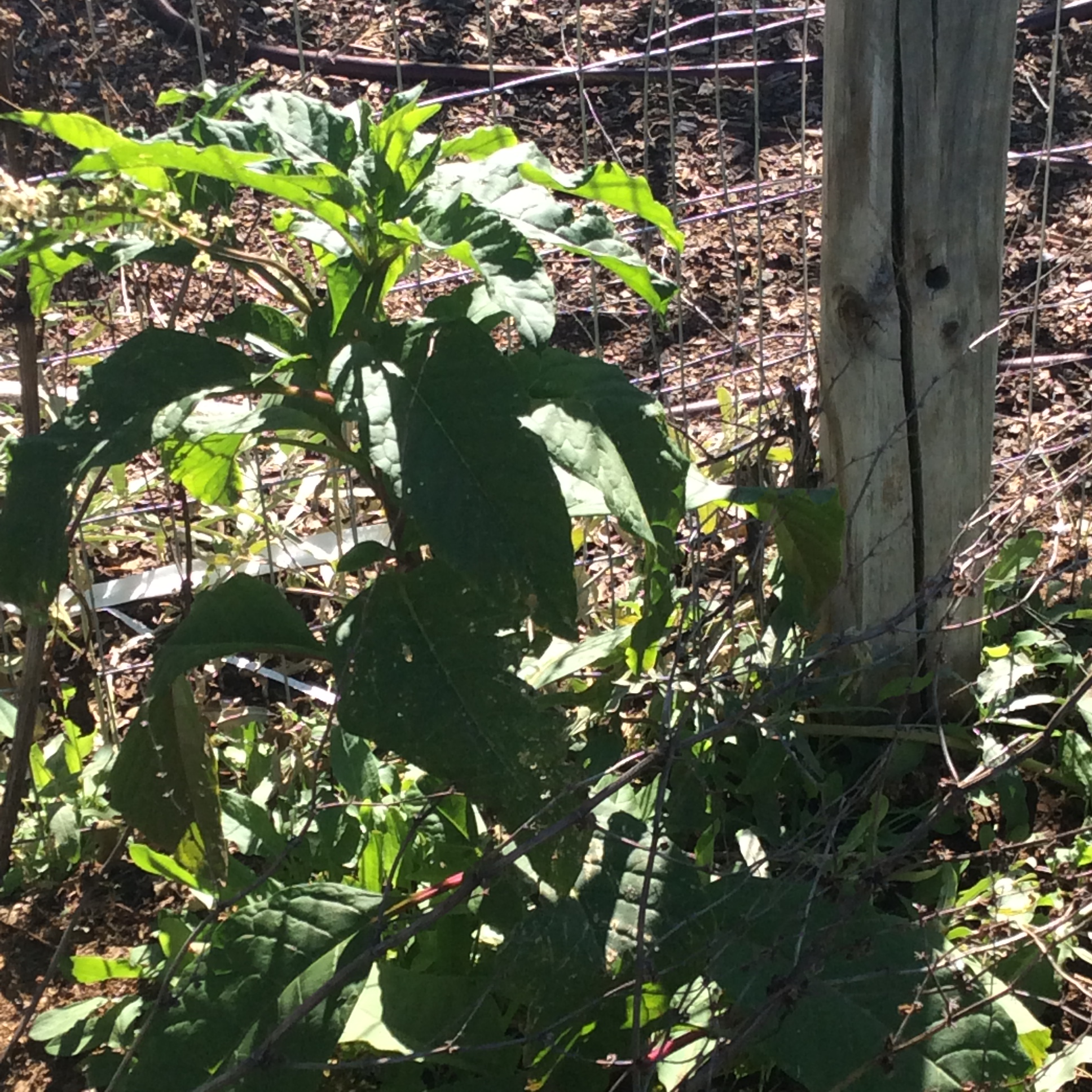
Pokeweed can be a giant nuisance but the spring greens have a great savor.  Or at least that’s what I remember, although I haven’t tasted them for 25 years and couldn’t swear to it.  If you decide to try them, remember that  only the young shoots about 6 inches high are edible and boiling in two changes of water is not optional. It is necessary to remove toxins. I hope to harvest my first shoots next spring.

Nettles and dock are two superb spring greens that seldom occur wild in my area, but grow very nicely in my weed patch.  They provide some of the earliest and most nutritious greens of the spring, and in late fall they produce some new greens that are well worth having at that season.  Every year I swear that I will remember to cut down the nettle patch in late summer so that the new greens can grow up unobstructed, and every year I forget and have to harvest the new greens with elbow length grilling gloves. But they are worth it.  Try to keep the nettles separate from the other plants, or you will have a tough time harvesting everything around them. The sting is pretty fierce.

I give my weed patch a periodic shallow mulch with mixed alfalfa and goat manure. They might grow well enough with no attention to fertility, but if you want your produce to be as nutritious as possible, the soil needs feeding.

If you wonder why it is worth having a weed patch, remember that these are some of nature’s wonder plants, among the most nutritious greens in the world. In addition, they taste really good.   Also, with perennials, once established the only work you have every year is harvesting and cooking them.  Once adapted to an area, they are unlikely ever to desert you. Permaculture also avoids soil disturbance. These plants are not classically attractive and need an inconspicuous spot, but they have a superbly healthy rough-and-ready vigor that is bracing even if it isn’t beautiful.
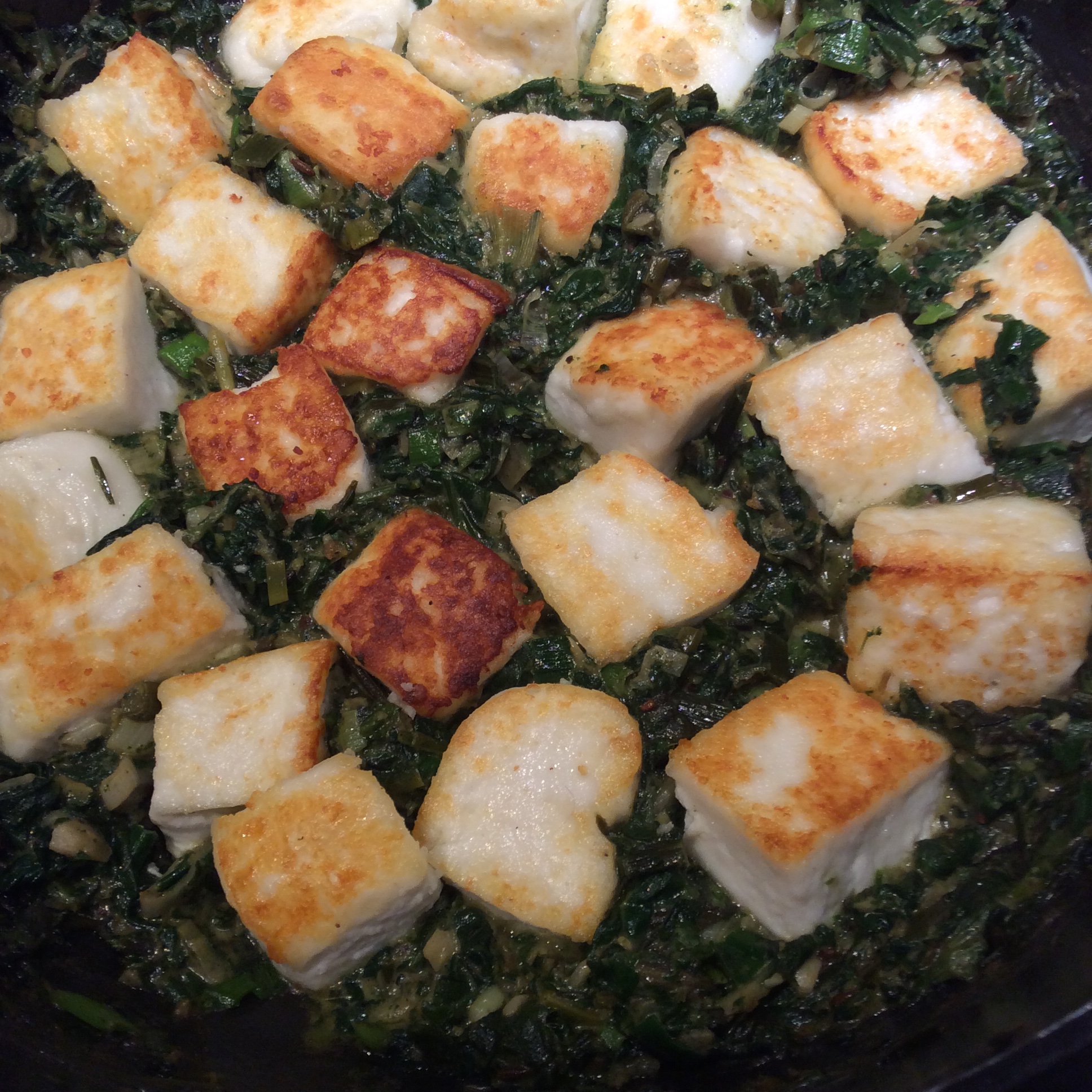
 

A Glory of Greens, and notes on Turkish greens soup

image


There is nothing more vibrant than a garden full of greens in the spring, all growing like mad, offering you a million healthy possibilities. During the two unfortunate years that I couldn’t garden, I did at least rogue out all the weeds that weren’t edible, and now nearly everything that sprouts in my beds is delicious, whether I planted them intentionally or not. And everybody, every one of us, would do well to eat more greens. Our health would improve and we would feel so damn good. Remember, the REAL Mediterranean diet, the one that was originally studied on Crete and that produced a long-lived and healthy population, was based on a huge variety of cultivated and wild greens.

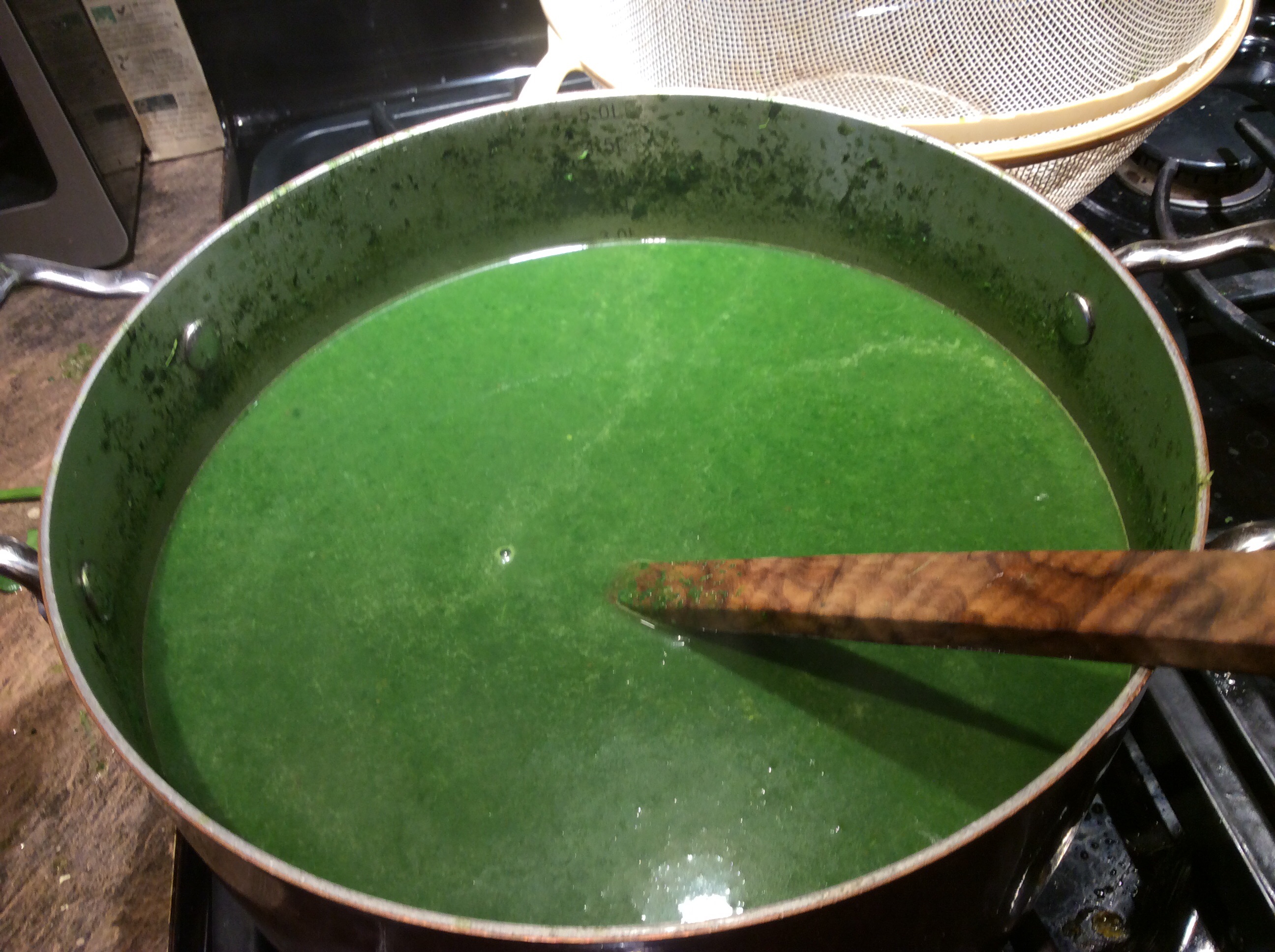
Today I noticed nettles, spinach, and lambs-quarters that needed to be harvested pronto. I also had lively green garlic ready to harvest. I picked a three-gallon pail to the brim, but loosely filled as I threw the bounty in, not packed down. I washed them ( it goes without saying that when nettles are in the mixture, you use gloves whenever handling them and stir in the washing water with a big wooden spoon, not your hand,) and decided to make a Turkish greens soup for dinner.
image
This is a soup that I have been making variations of since a lovely trip to Turkey nearly thirty years ago. It is based roughly on a soup that my guide described his wife making, but it’s interpreted by me and changes every time I make it, so I don’t vouch for its authenticity. This time it was a thick velouté; other times it’s a rough potage, and sometimes it resembles gumbo z’heirbes. So here’s how this one happened:
Prepare and wash three gallons, loosely packed, of assorted greens. No bland store-bought baby spinach! If you don’t have a garden, consider chard, adult spinach, and Tuscan kale, one bunch each.
Pull a quart of good rich chicken stock out of the freezer (it is in there, isn’t it?)or procure a quart of good chicken stock from somewhere.
Set the chicken stock to melting over medium heat in a gallon pot.
Chop three large stalks of green garlic, stems, leaves, and all, and sauté them in a quarter cup or so of excellent olive oil in a sauté pan. OR use a small onion and two cloves of garlic, chopped, for the sauté step. Make sure they are cooked through, and soft but not colored, before proceeding.
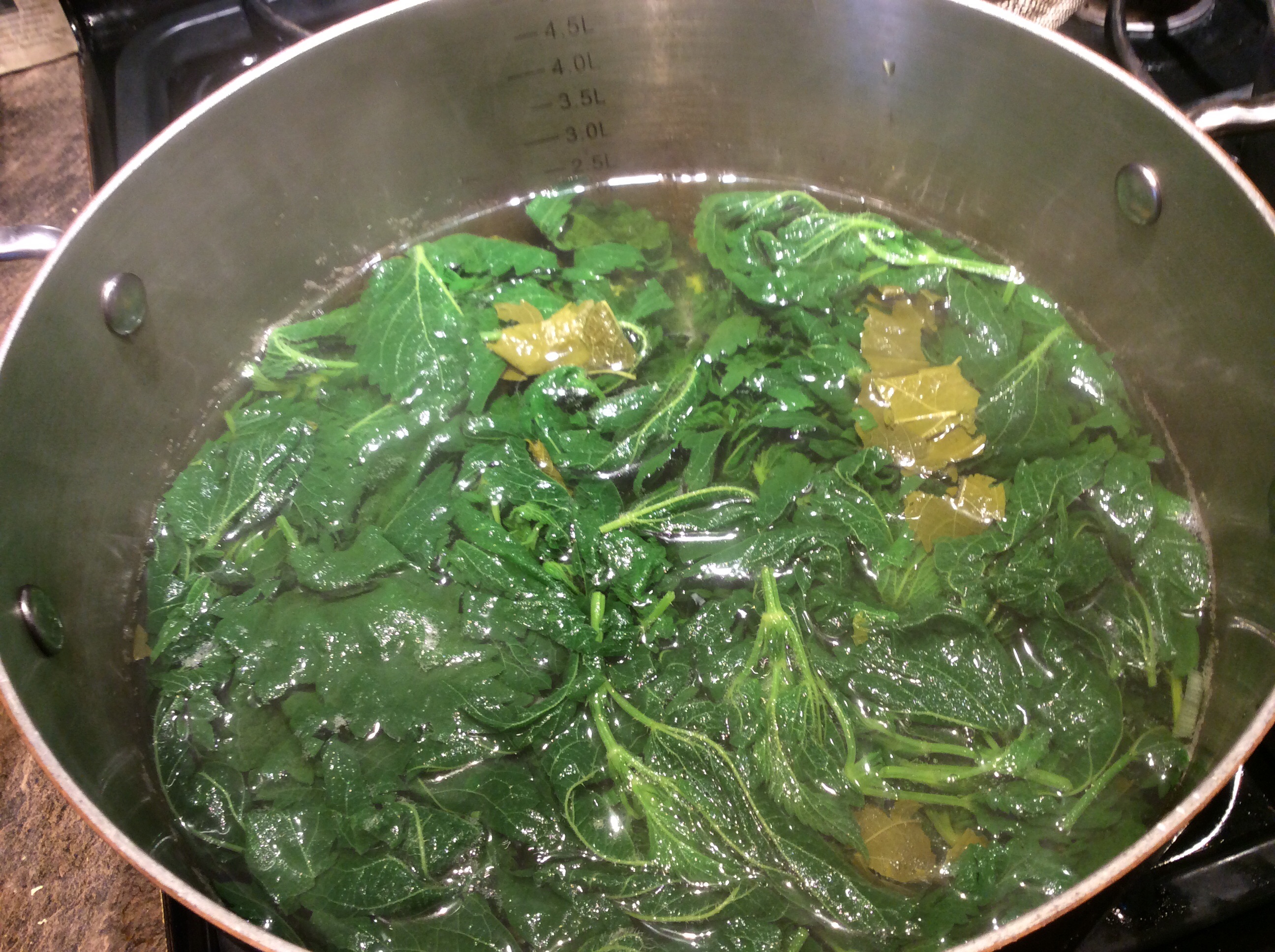
When the garlic mixture is ready and the stock is boiling, begin adding the greens to the stock, stirring, and remembering not to touch those nettles. Boil for about a minute after the last of the greens is added. Now add the garlic mixture to the soup pot and simmer for five minutes.
Now purée with a stick blender. Add salt to taste (I think it needs to be on the salty side)and add a teaspoon of Urfa pepper flakes, Aleppo pepper flakes, or mild red pepper flakes. I like a bit of oregano and thyme. Taste and correct the seasoning carefully.
Mix some full-fat Greek yogurt with salt to taste and have it ready.
Put six egg yolks in a bowl, whisk them up, and slowly add a cup of the hot soup, whisking furiously all the time. Slowly pour the egg mixture into the soup over lowest heat, and whisk another minute or two until it’s lightly thickened and smooth.
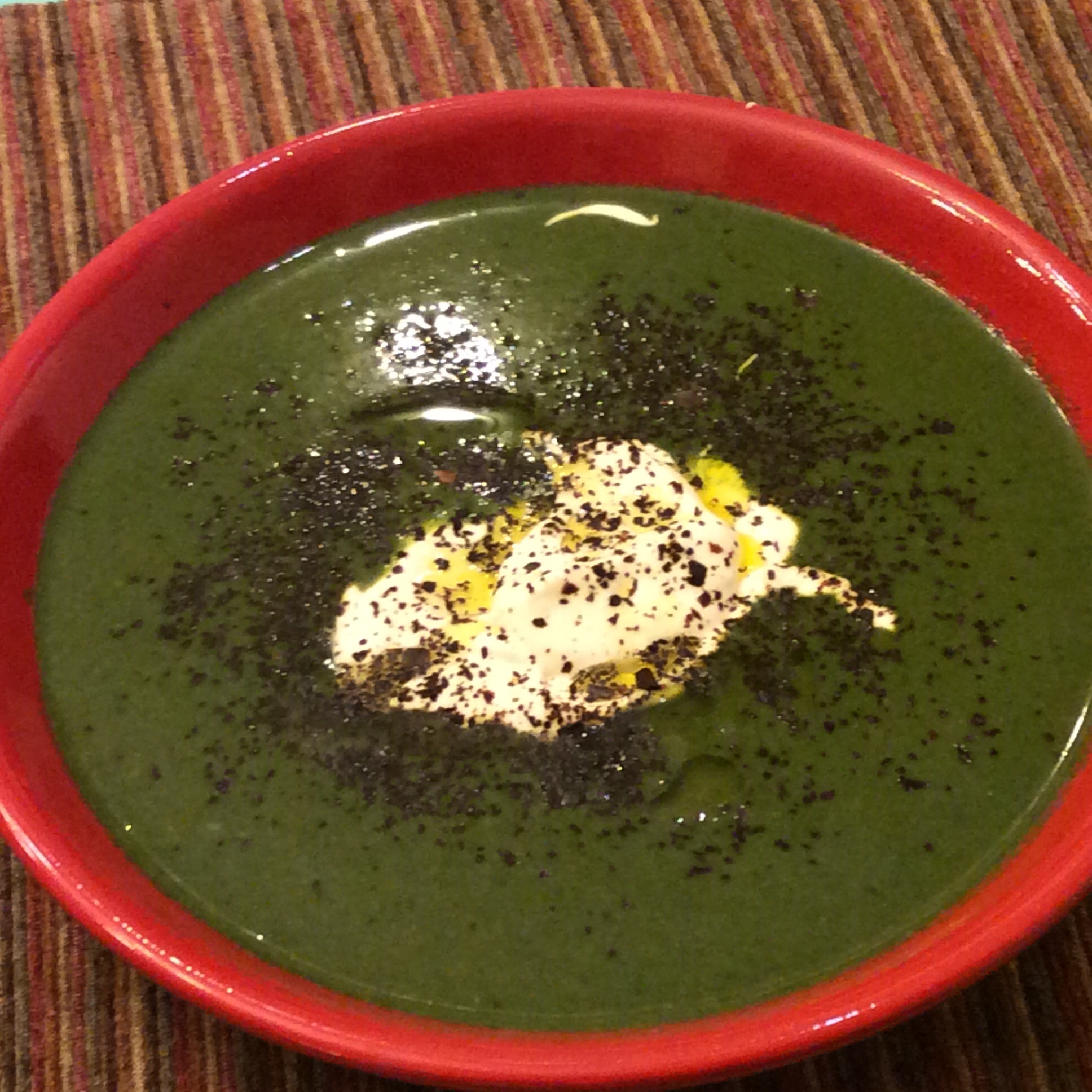
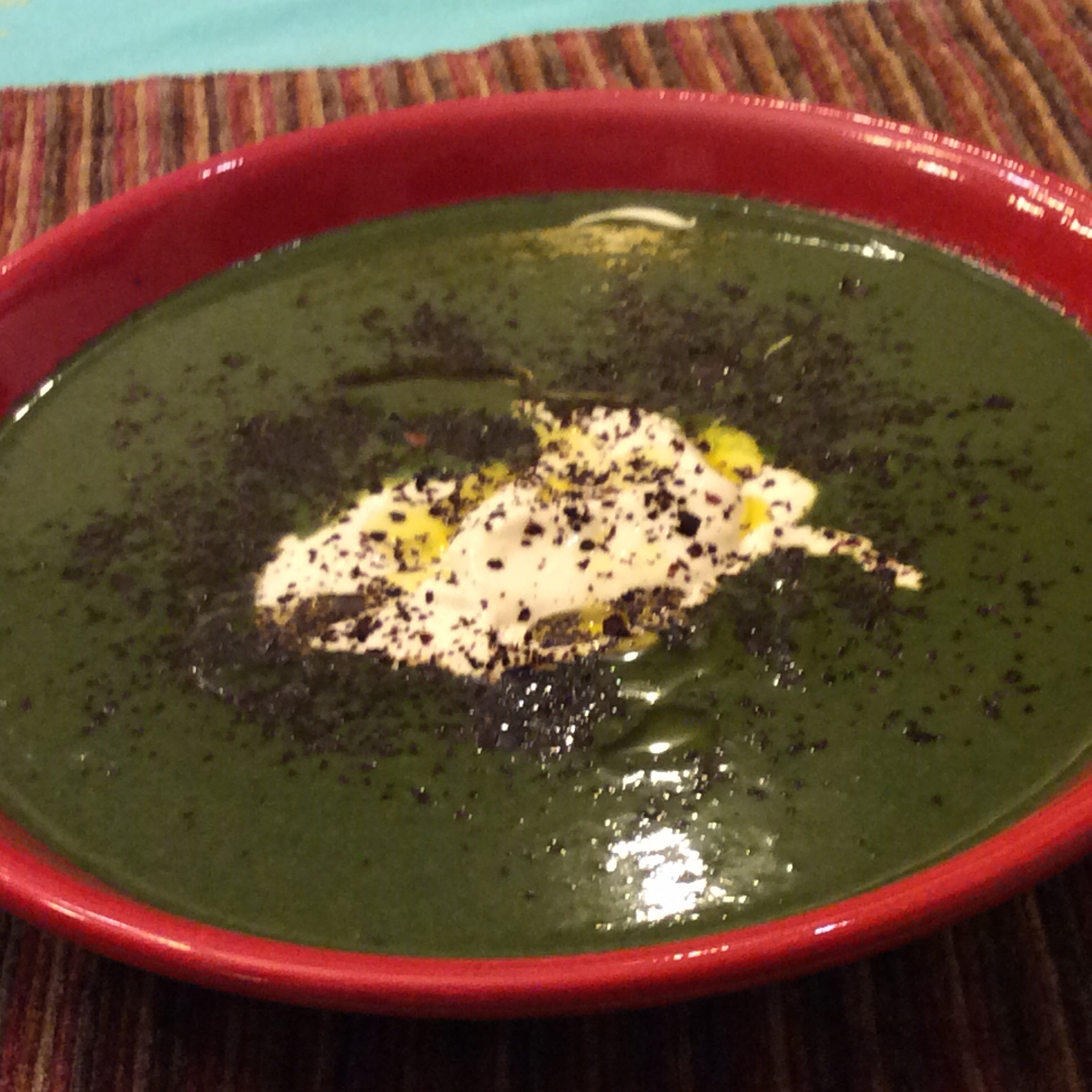
Serve into bowls, pile a half cup of salted yogurt in each bowl, drizzle lavishly with your best olive oil, and sprinkle heavily with more Urfa or red pepper flakes. Eat, and flourish.
image

image

image

image


Filling the Hunger Gap

image
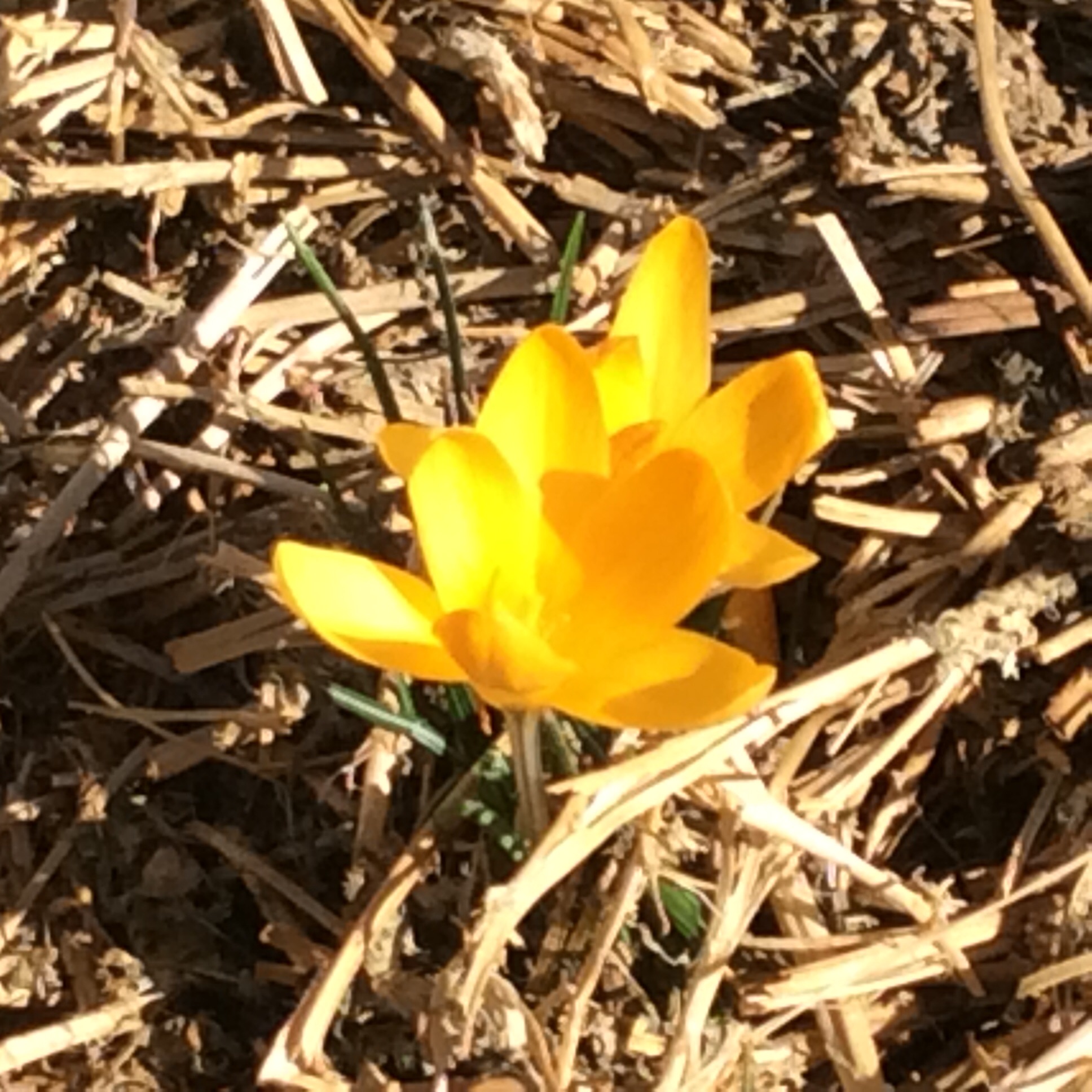
Our recent sunny warm days have brought the happy little Crysanthus crocuses up, and when they bloom I know that I’ve survived another winter and we are well on toward spring. But we are still in the time of year called the “hunger gap,” when in leaner times you would have eaten most of your preserved and stored food and fresh food would be a distant memory. In those days, just about the time that scurvy threatened, there would be a precious few fresh foods that would come through for you. I am no longer that interested in eating preserved foods, so the fresh greens of the hunger gap are increasingly important to me.
image
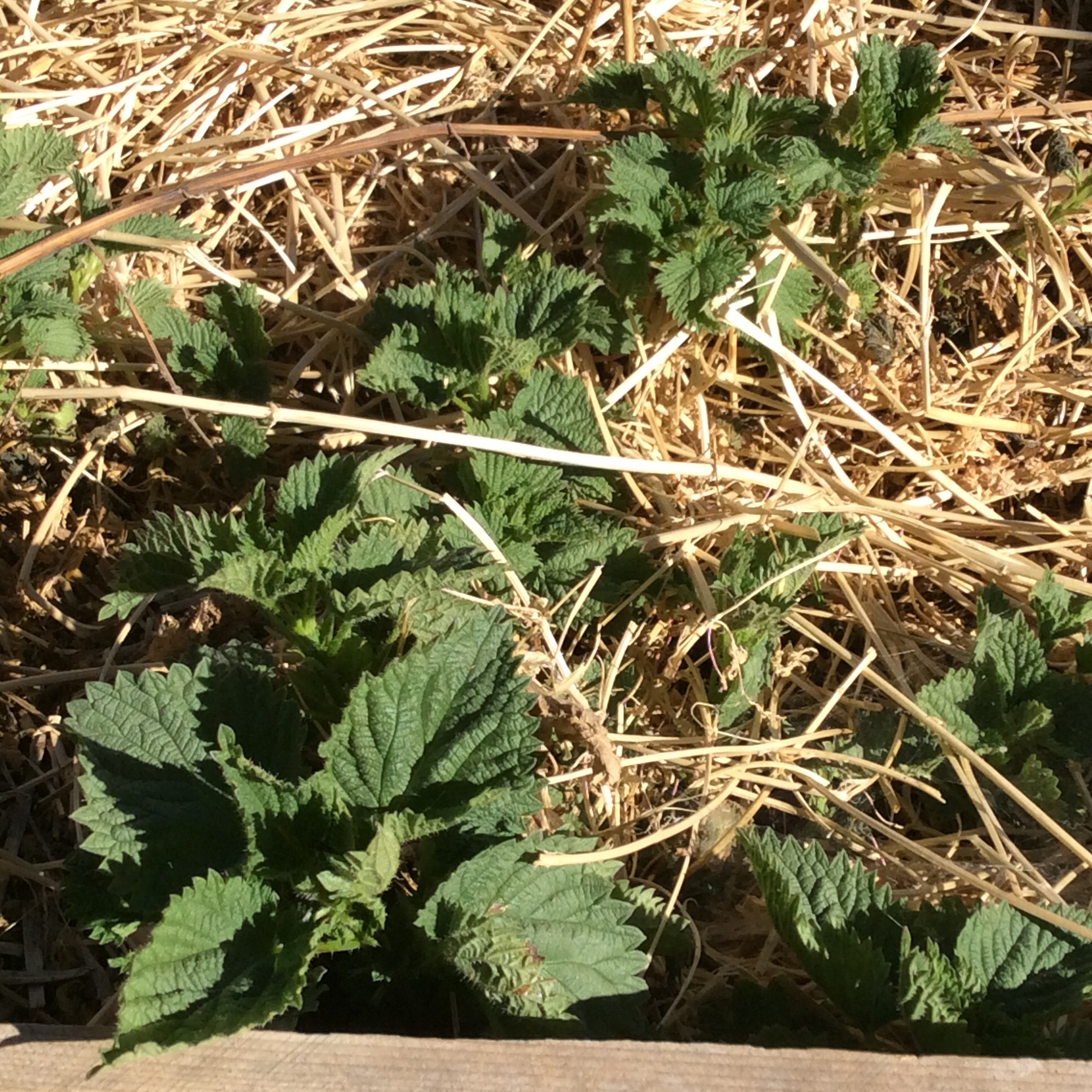
Stinging nettles are not just a fresh green in earliest spring, they are a nutritional powerhouse. Vitality and well-being seem to course through your body as you eat them. Also, they’re delicious. They don’t occur naturally in Albuquerque, and I had to buy plants in order to have them, but I have two nice patches now. They need some water and mulch in our desert area, but given those they spread rapidly, so be ready to control them by digging out excess roots when they spread too far. They sting fiercely at any age, so don’t plant them near paths and have good heavy leather gloves (they sting right through fabric) ready for harvesting. Pick any time after they reach about 5-6 inches high, harvesting the top 2 or 3 inches. You will have about a month to harvest before they get tough, gritty, and nasty. Keep your gloves on while you wash them and drop them into boiling water. Once blanched for 1-2 minutes, their spines are softened and their venom is broken down, and you can treat them like spinach or any other mild green. I love them in omelets or just blanched and chopped with some butter and cream. Be aware that the raw nettles can sting animals as well as people, and severe allergic reactions to the sting are possible, so please do site them responsibly.
image
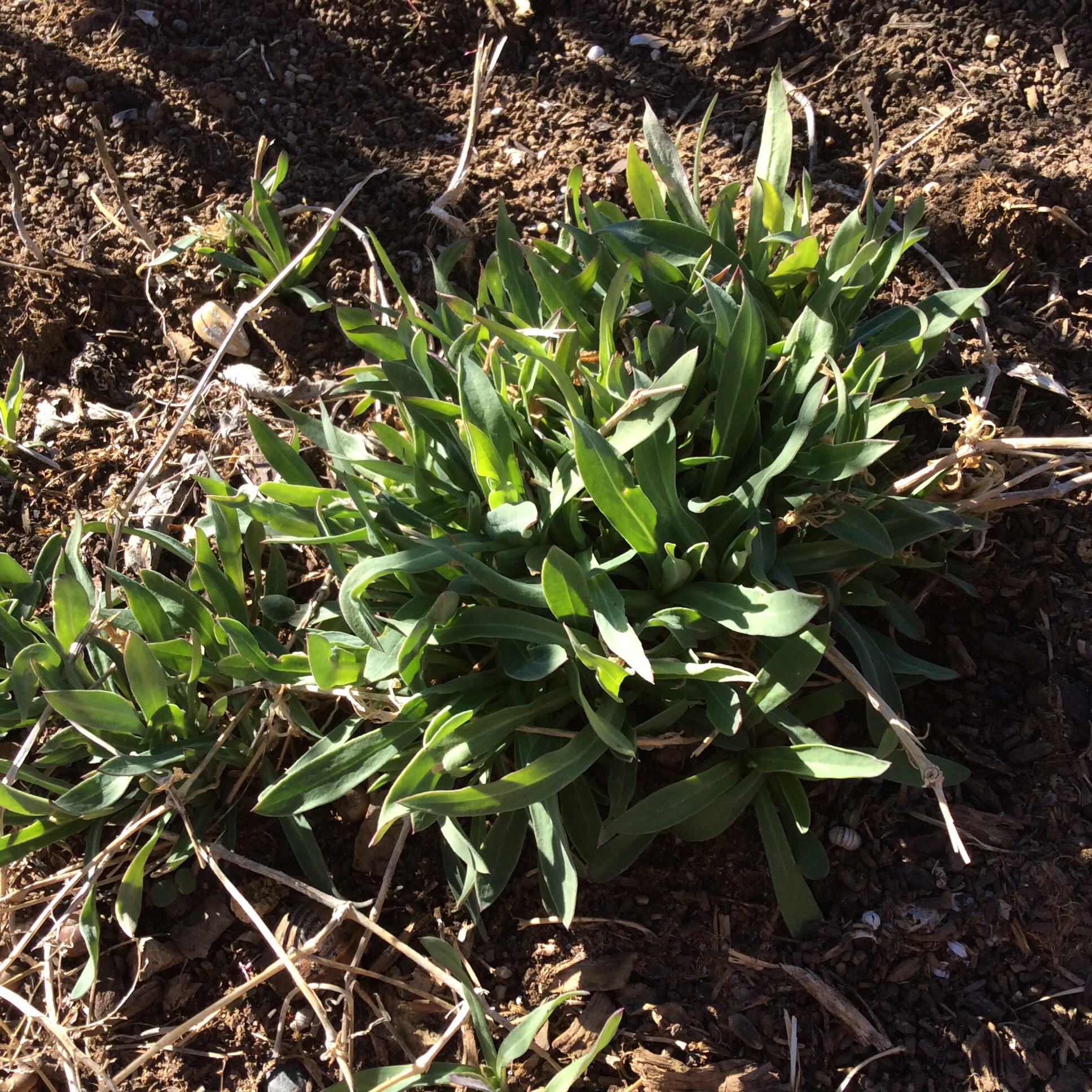
Bladder campion is another weed that doesn’t occur naturally in central New Mexico. I bought seeds from an herb supplier. Sprinkle them in a place that you can keep watered in late winter. In hot sunny areas they will appreciate a little shade. They will be scant and spindly the first year, and there won’t be anything to harvest. The second year you can pinch off the tips when they are 6-8 inches tall to add to salads, and by the third year you should get enough to cook. They are among the tenderest and mildest of wild greens, and I prefer them in salads, but a quick sauté in a little good butter is nice too.
image
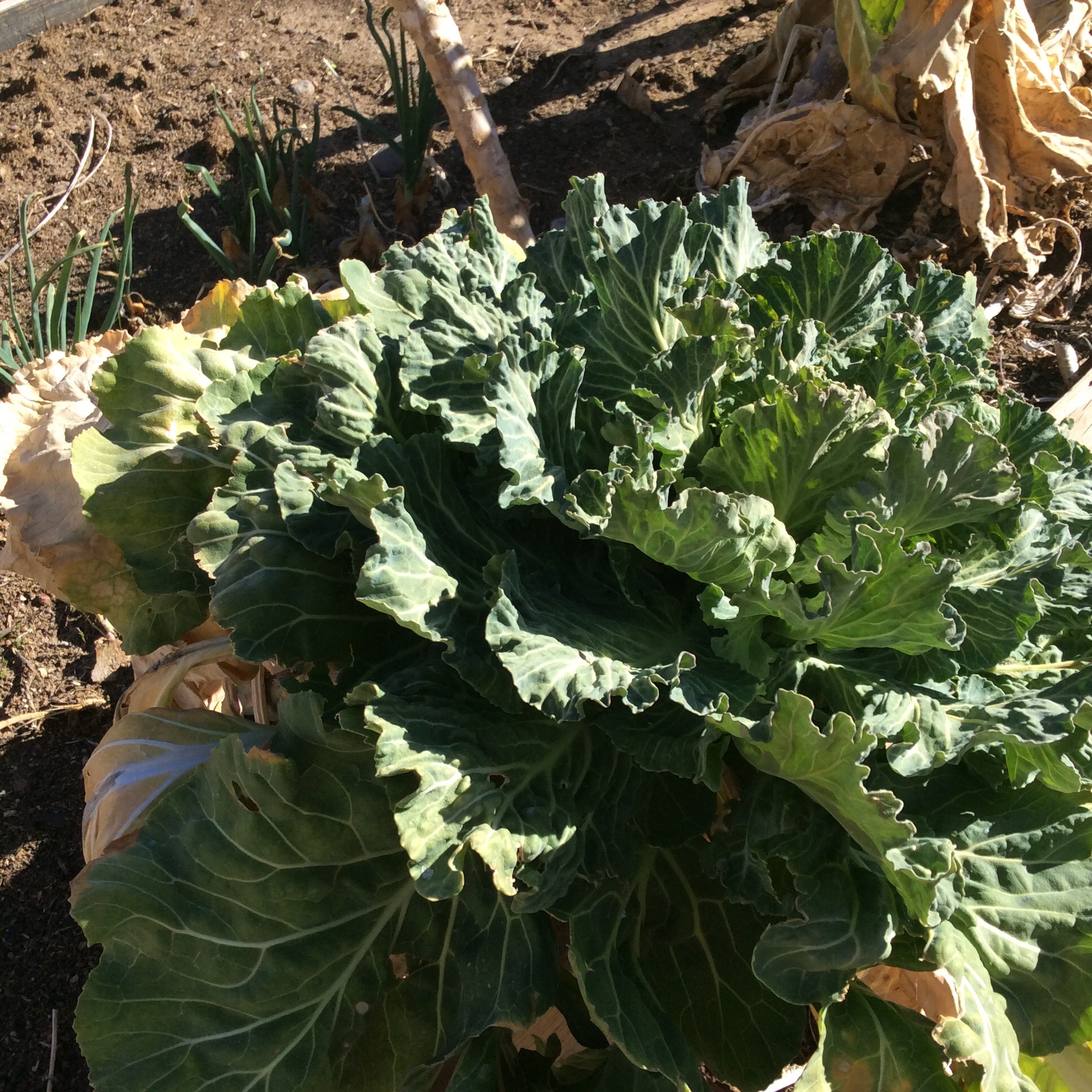
Tronchuda is not a weed, but a Portuguese kale with a cabbagey but mild flavor and enough vitamins, minerals, and antioxidants to make you crow. I bought my seeds from Nichols Garden Nursery a couple of years ago, and am selecting the ones that live through the winter for my Hunger Gap crop. You plant them in the spring, harvest the huge leaves for greens in summer and fall ( my chickens appreciate them too), and then leave the stem and the tuft of leaves at the top over the winter. They won’t survive if you don’t leave some leaves on. Those that survive will begin to leaf out again in February and provide you with thick, substantial leaves for stir-fries and cooking by early March. They are biennial and begin to shoot to flower by late March, and you can harvest the buds as a broccoli-like vegetable. Do bear in mind that if you want to save seed, you have to leave plenty of clusters to go to flower. Bees love the flowers and they are a nice early source of nectar. Collect the seed, dry them, and start the cycle over again.