Archive for the ‘vegetable gardening’ Category

The Greens of Fall: Nasturtiums II

image

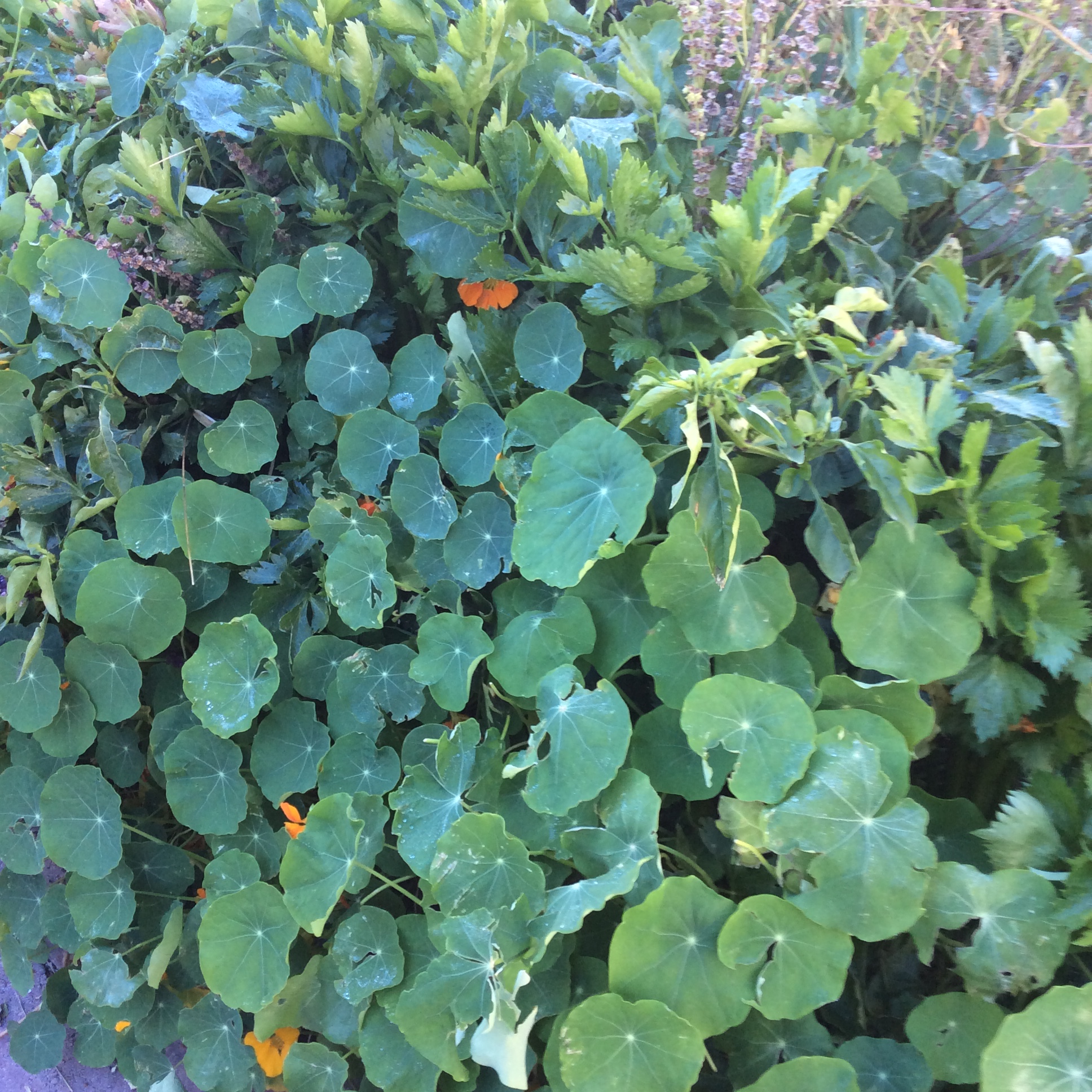
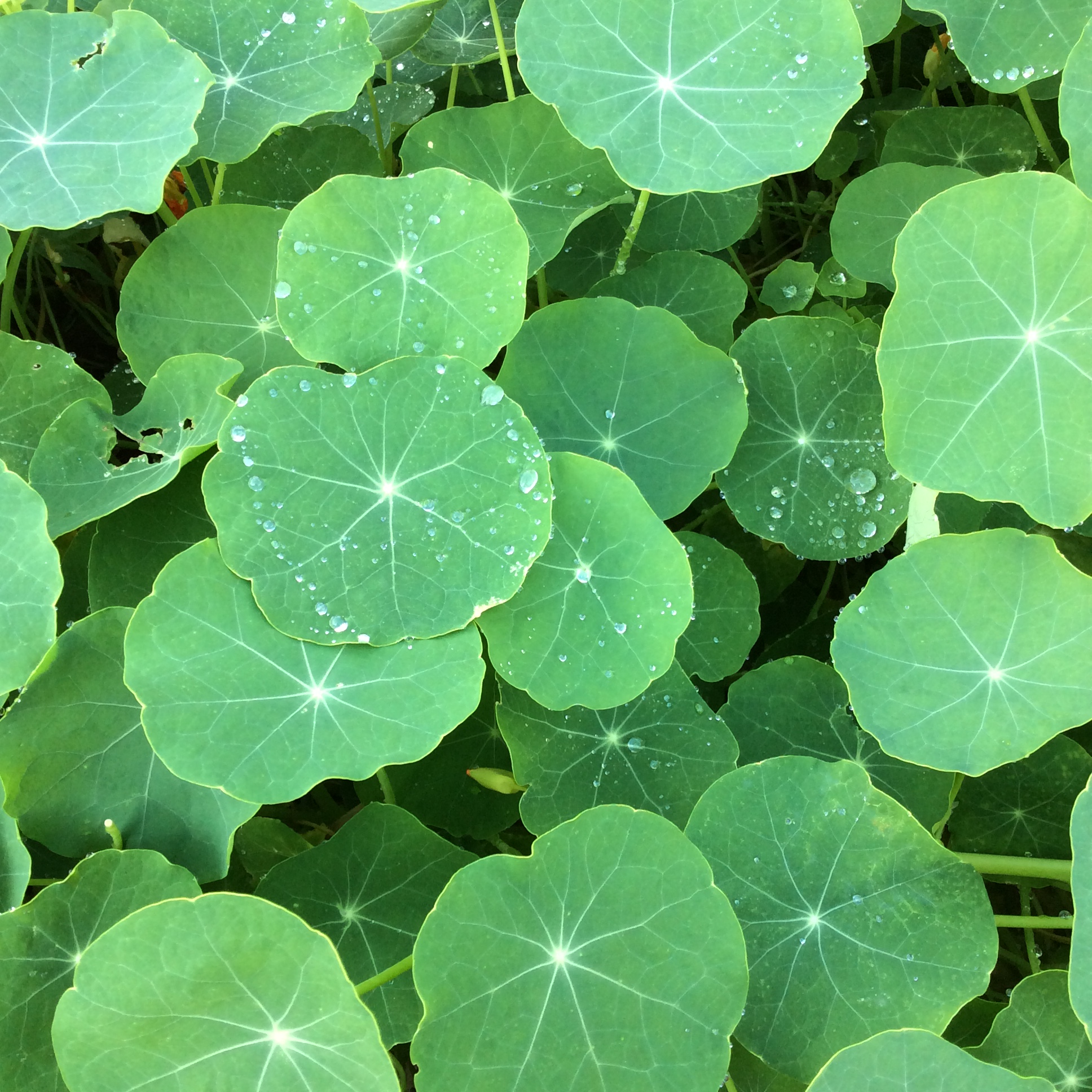
After several light frosts and a couple of hard frosts, the nasturtiums in my front yard are still holding their leaves in good condition, and still blooming a bit.  They won’t last much longer though, so this is the time to take advantage of them.  They are always good in salads or used to make hand rolls as suggested in my last post, because they combine a snappy watercress peppery flavor with a tender texture.  Cooked, they lose a lot of their sharpness but remain delicious.
image

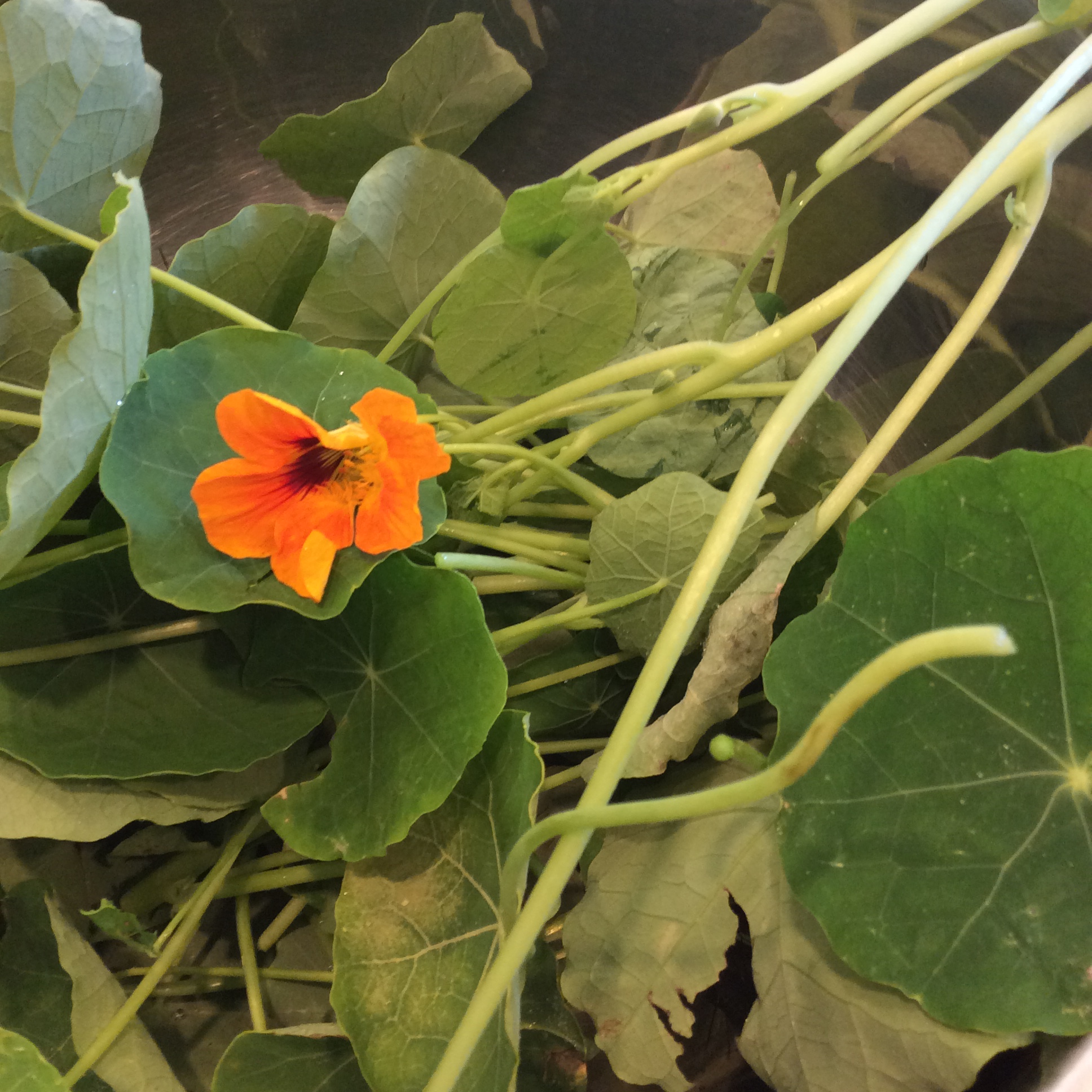
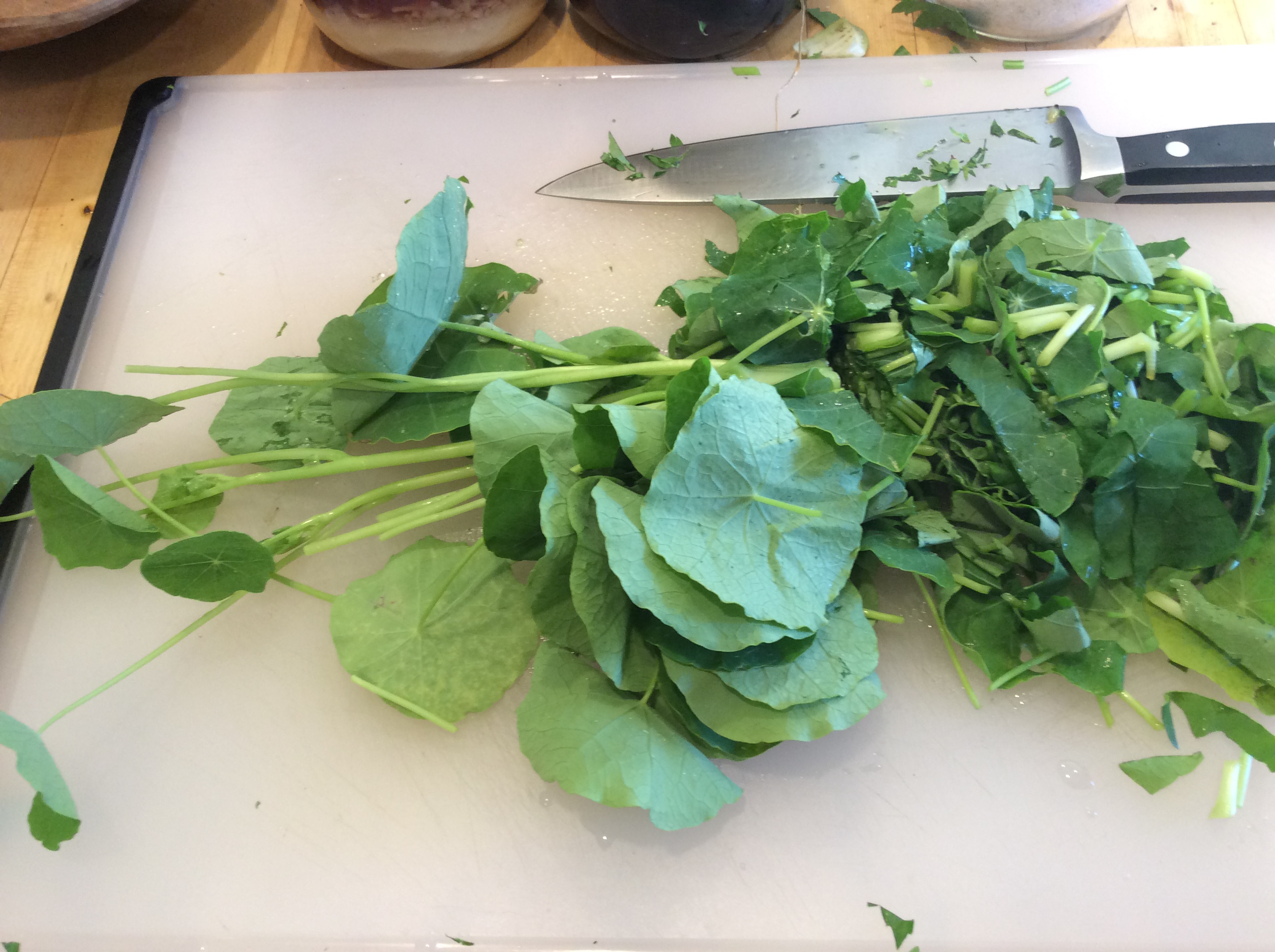
I grow the trailing nasturtiums that wind so nicely among other things in the bed, and at this time of year I grab about the last foot of stem. I snap them off wherever the stem snaps cleanly, which is usually while they are still smaller than a pencil. I take everything above that into the kitchen  for cleaning. I wash them and lay them out on the cutting board. The flowers are devoured on the spot as a cook’s treat, or can be saved for the top of a salad.  What remains is cut crosswise into half-inch segments. It’s important to keep them out about this length, or the stems can seem fibrous.
image

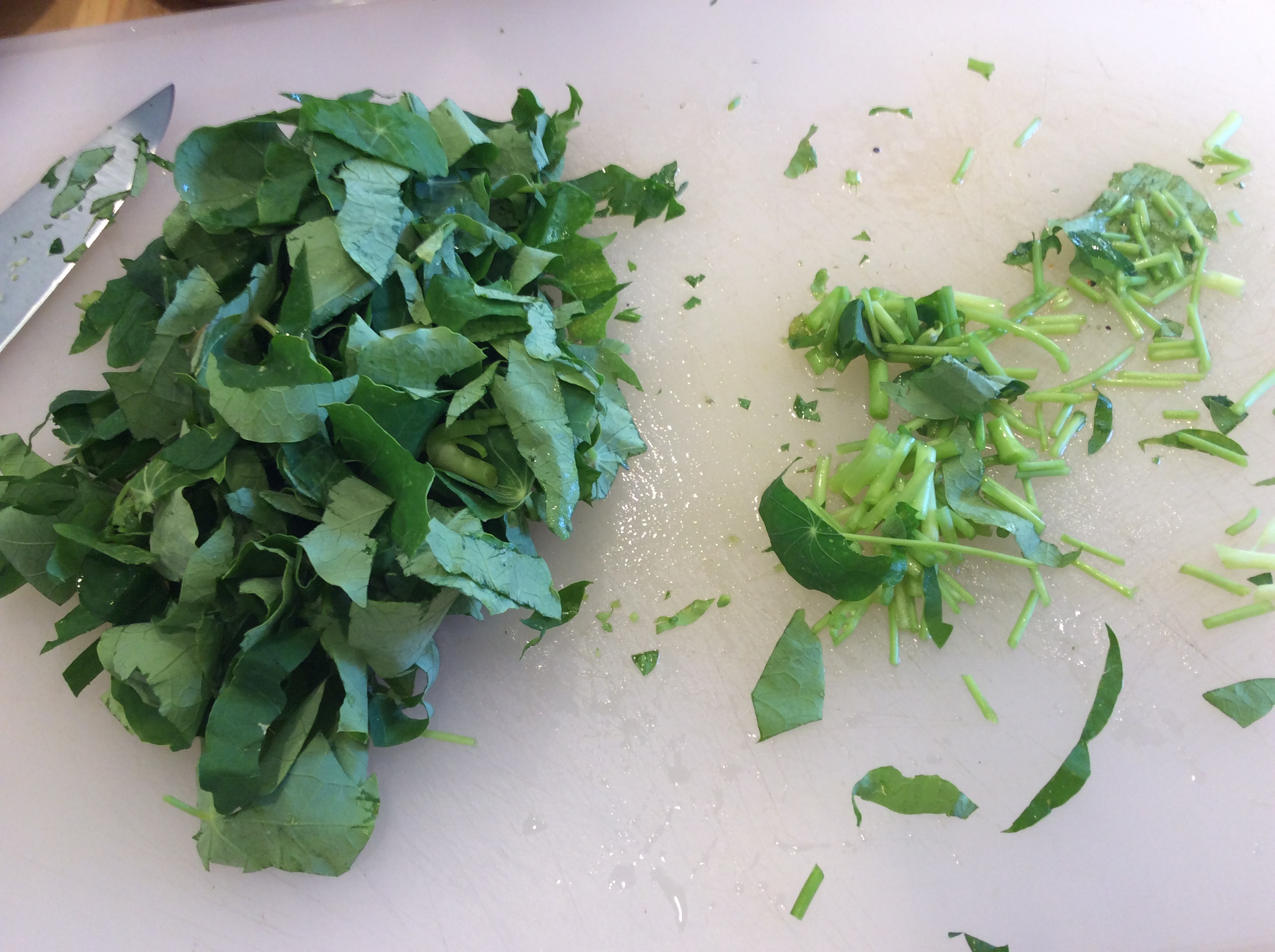
Now  stir the sections around a bit with your fingers, then lift off the leaves which are mostly on top and set them to one side, leaving most of the stem segments on the other. There will be a few of each item in the pile of the other, and it doesn’t matter.  This step is so you can give the stems a bit more cooking than the leaves.
image

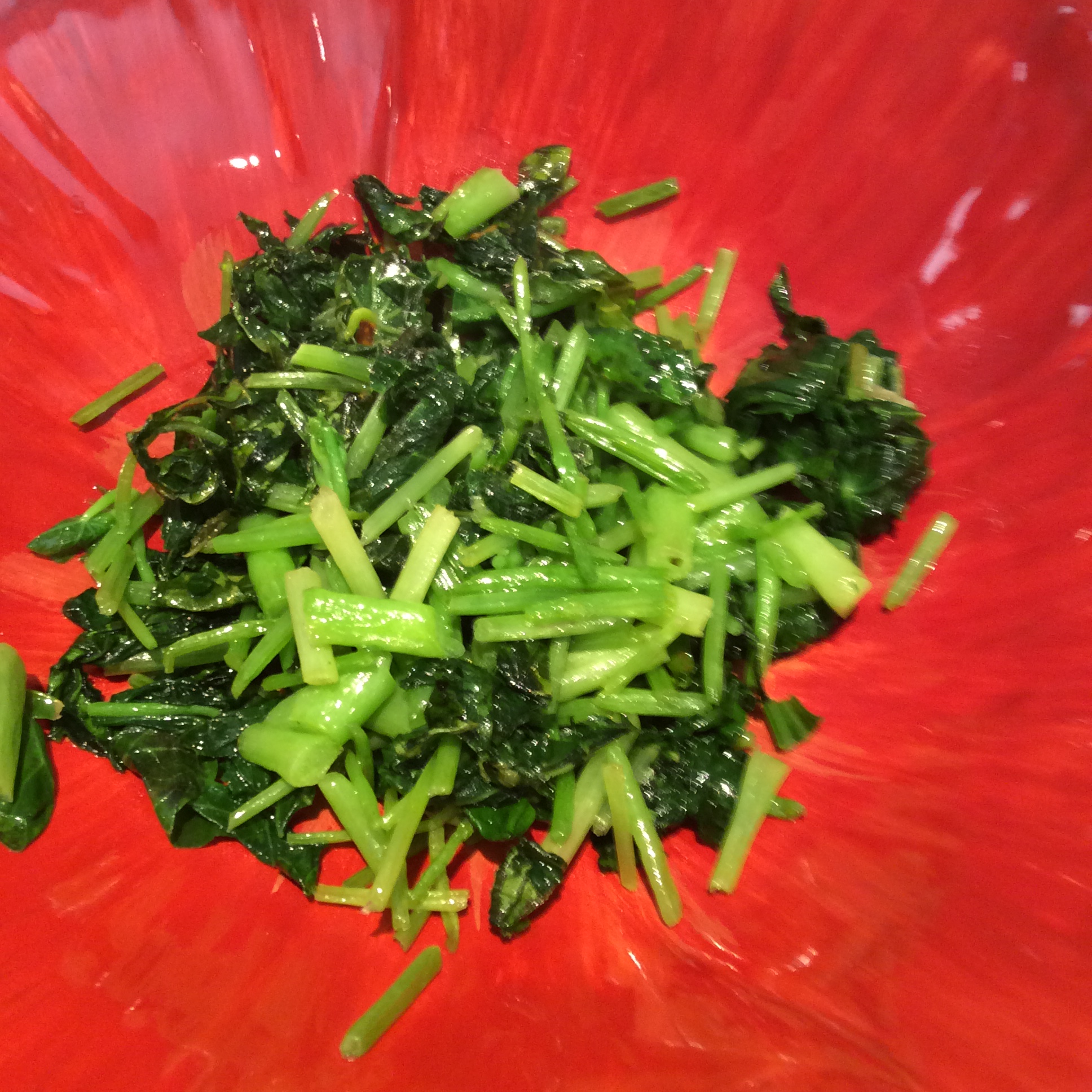
Now, cook them in any way that you would use other greens, cooking the stem sections for a couple of minutes longer than the leaves. I have two favorite ways. One is to sauté them fast in a tablespoon or so of hot flavorful olive oil, putting the stems in, sautéing for two minutes, then add in the leaves and sauté in for another minute.  Serve with salt and freshly ground pepper. Simple and good.
image

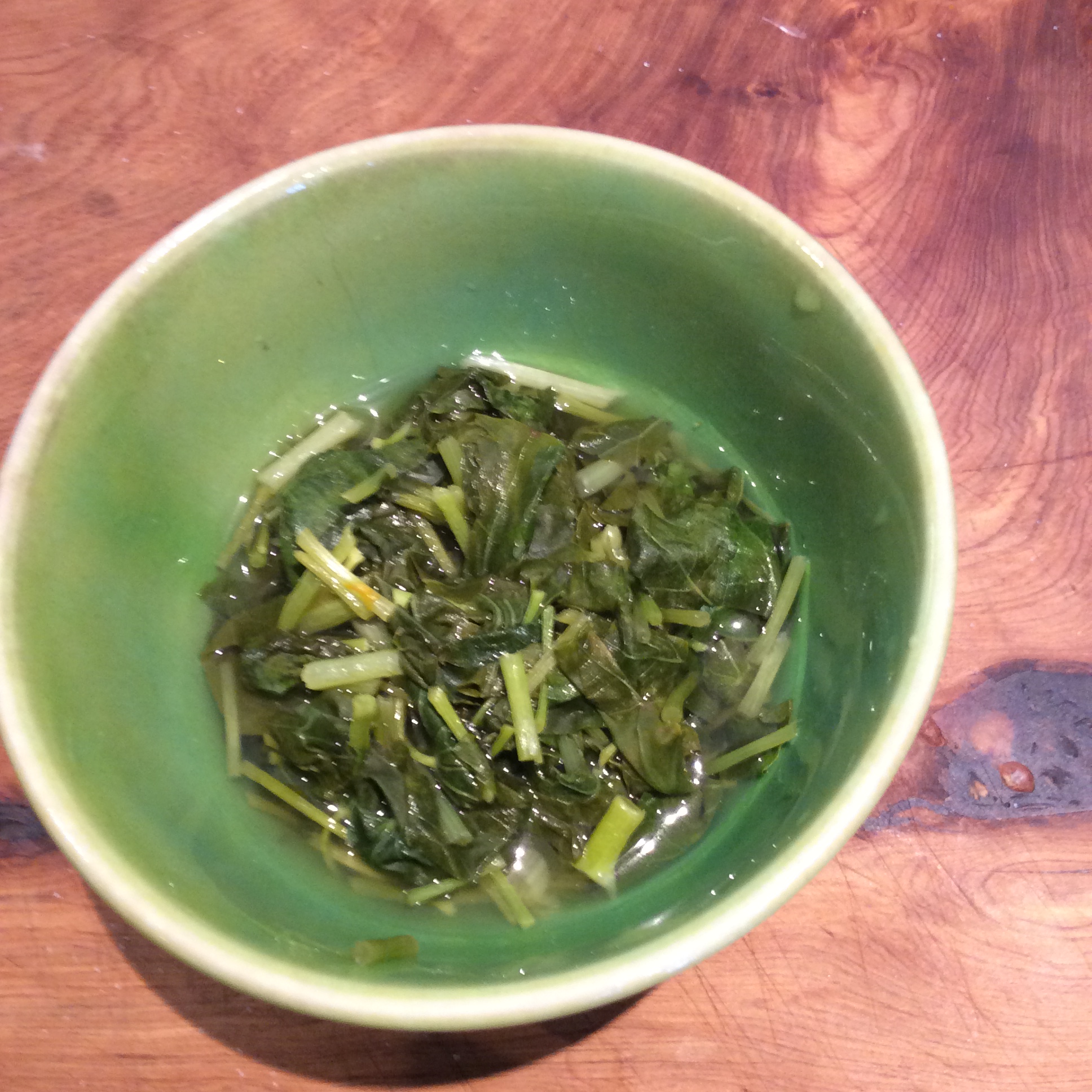
My other favorite use for them is a quick sort of sweet and sour pickle, which I like with grilled meat or dishes in the Japanese fashion.   For a heaping a handful of chopped nasturtium, eat half a cup of water in a small saucepan with 2 tablespoons of rice vinegar and 1 tablespoon of sugar or to taste, or you can use artificial sweetener if it is one that does well with cooking.  And a scant teaspoon of salt and bring to a boil. When it is boiling, put in the stems, boil for about two minutes, and the leaves, and take off the heat immediately and let it sit in the “pickling liquid” until room temperature.  serve immediately or keep in the refrigerator for a day or two.
image

For my taste the flavors in this quick “pickle” are too strong to use it as a side dish, but you could always use less vinegar and sweetening and salt, and use it as a side dish if you prefer that. When I was growing up in the south, collards were sometimes cooked this way, and I seem to remember that they were good.

Some people think highly of the nasturtium as a medicinal herb. If you wish to research this, please keep in mind that the nasturtium flower we are dealing with here is Tropaeolum majus, while  Nasturtium officinale is actually watercress.  This is why we use botanical names; in the long run, it avoids a lot of confusion.   In my view, the fact that they are green and lovely in cold weather and taste good is reason enough to eat them.
 

The greens of fall: Nasturtium

image
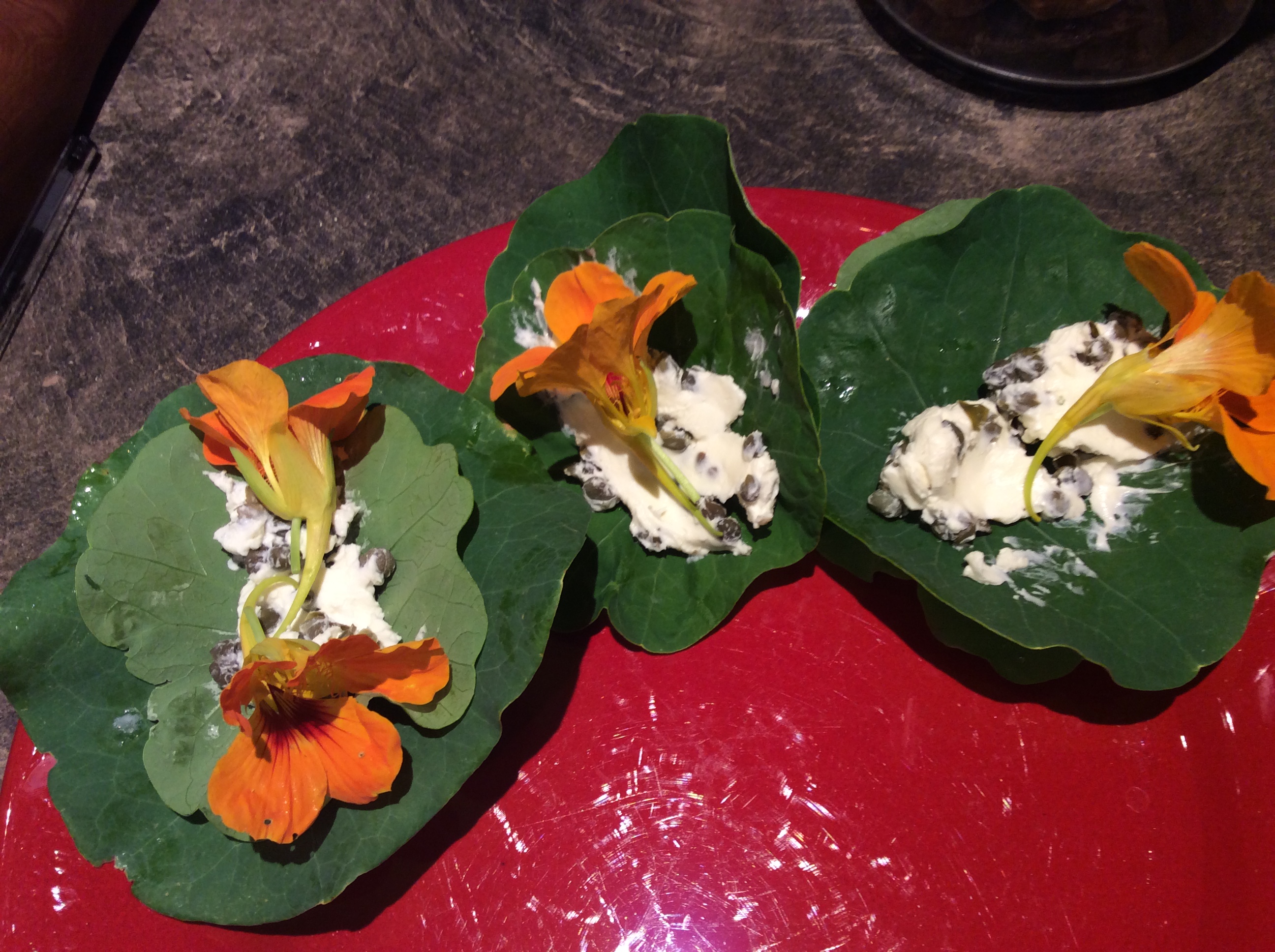
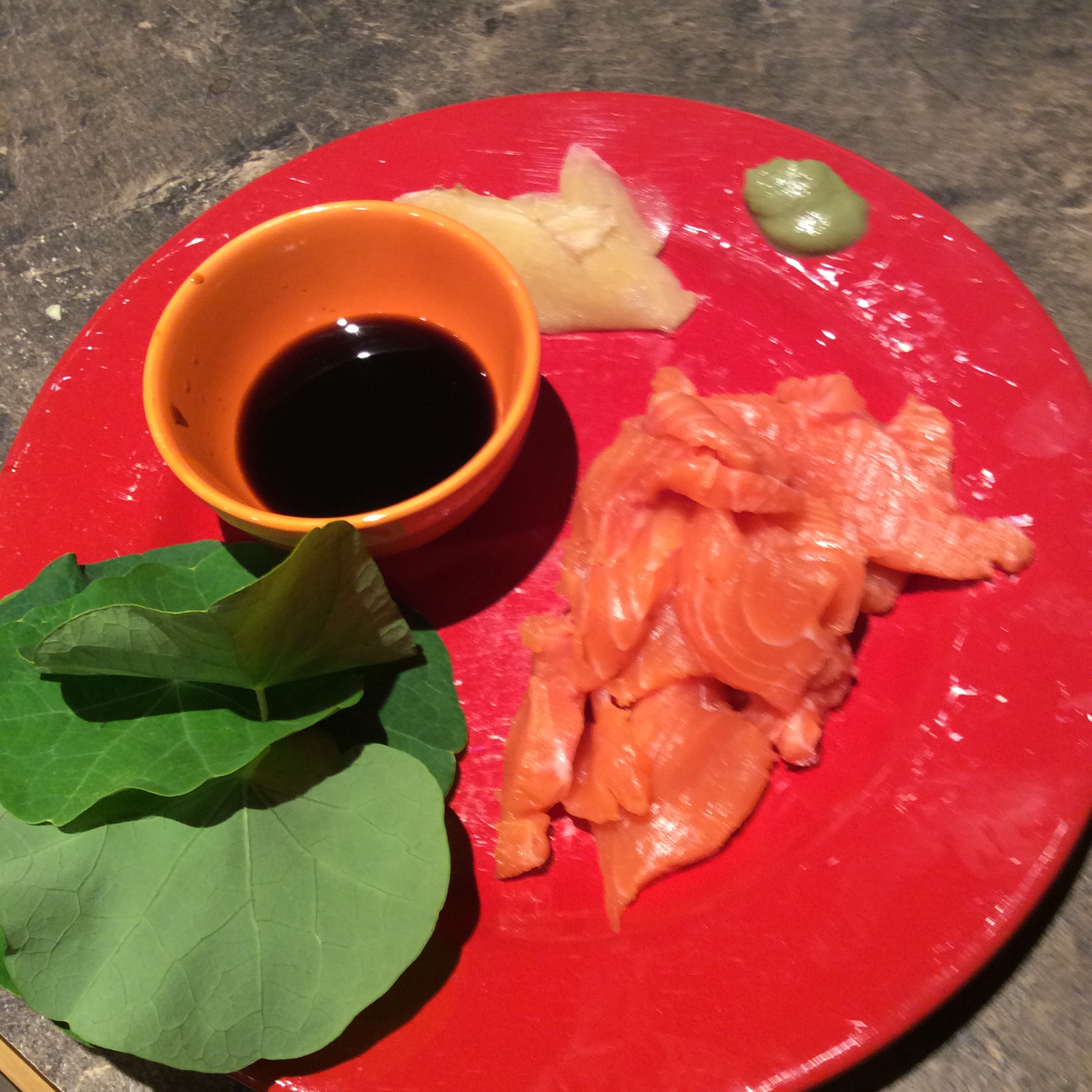
With the first frost behind us, there are parts of the garden that are just getting into full swing. This is the second great greens season. During the summer I enjoy the beauty of nasturtiums and put the flowers in salads frequently, as well as using the leaves here and there. After a frost, flower production slows way down but leaf production increases, and this is the time to use these wonderful tender leaves with the flavor of watercress. I use them fairly simply. The largest ones always become hand rolls, and my favorite things to put in them are cream cheese with capers and some of their own blossoms, slivered sushi salmon with pickled ginger and other accompaniments, and smoked salmon. I use two leaves stacked to make up each role so that you get a good watercressy flavor in each bite.
image
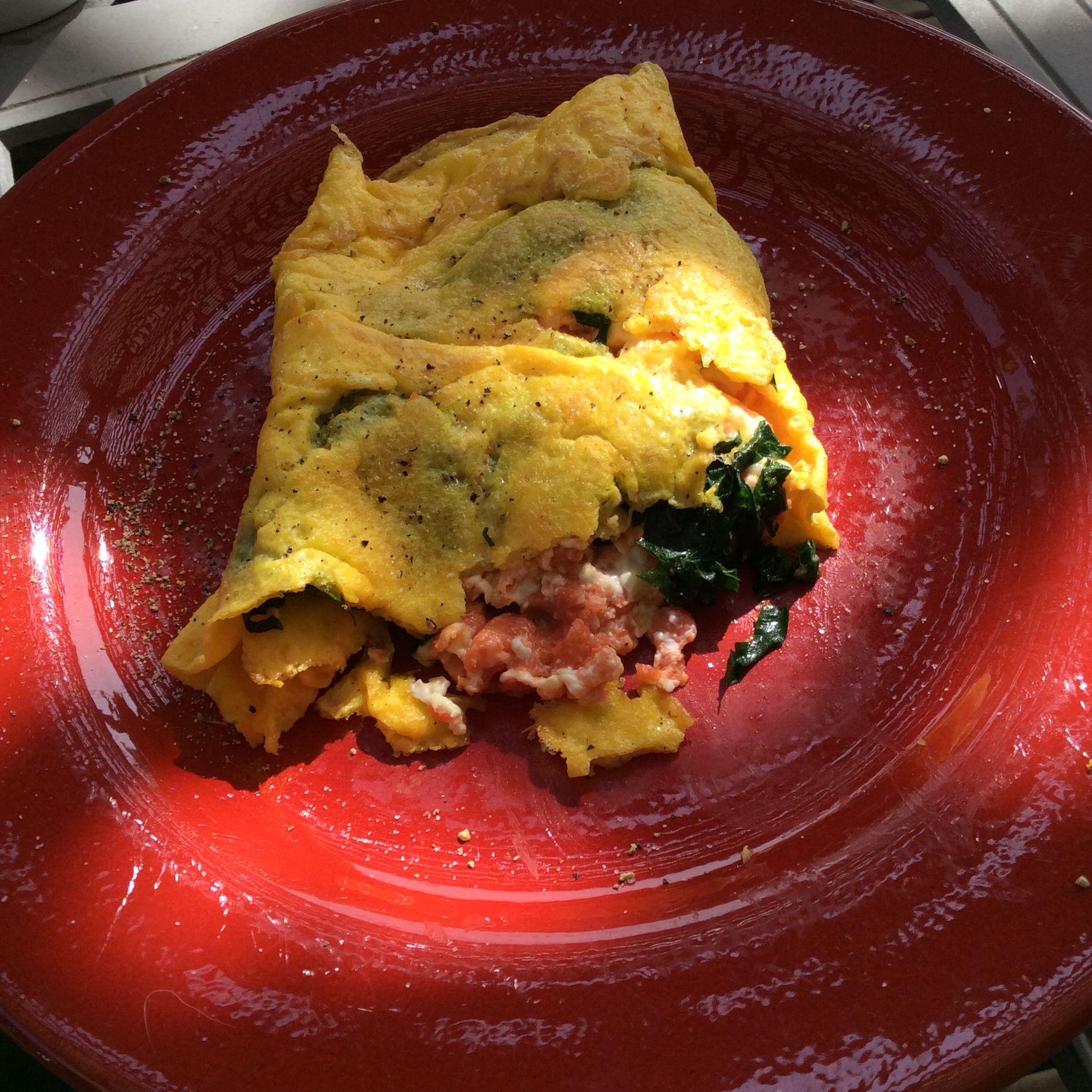
The smaller leaves go into quickly sautéed mixtures of greens and herbs that flavor omelettes. Green garlic is available again this time of year after the summer hiatus, and I like to chop up a small stalk of it leaves and all, chop up a packed pint of the smaller nasturtium leaves and a celery leaf or two chopped fine, and sauté them together quickly in butter and put them in an omelette of eggs from my own hens. Delicious. If you care to gild the lily by adding slivered smoked salmon and bits of cream cheese to the filling, it only gets better. If you can eat outside in the clear October sunlight, that’s best of all.
image
image

Pork Belly and Eggplant

image
Recently I scored a big chunk of local outdoor-raised pork belly and have been gleefully cooking with this delicious cut for about a week. First I seasoned it with salt and pepper, let the seasoning sink in overnight, then sous-vided the piece at 143 degrees for 24 hours, finishing with a rapid sear on both sides over hardwood charcoal. That was delicious, but today’s planned-overs are the best pork belly so far. This dish uses the eggplants that my garden is pumping out right now.

You will need:
6 slices across a half pork belly (raw or cooked, but salt if raw) about 1/4-1/3 inch thick. In effect, you have six very thick slices of unsmoked bacon. Cut the slices crosswise into pieces about 2″ long.
4 Japanese long eggplants cut into chunks 2″ long and then quartered, salted liberally and set aside to drain.
3 tablespoons fermented black beans, rinsed, soaked, and drained (you can find salted fermented black beans in bags or bulk at good Asian groceries. DON’T get the unfermented kind.)
Half a cup or so of my Quasi-Korean Sauce I have this in the refrigerator all the time.

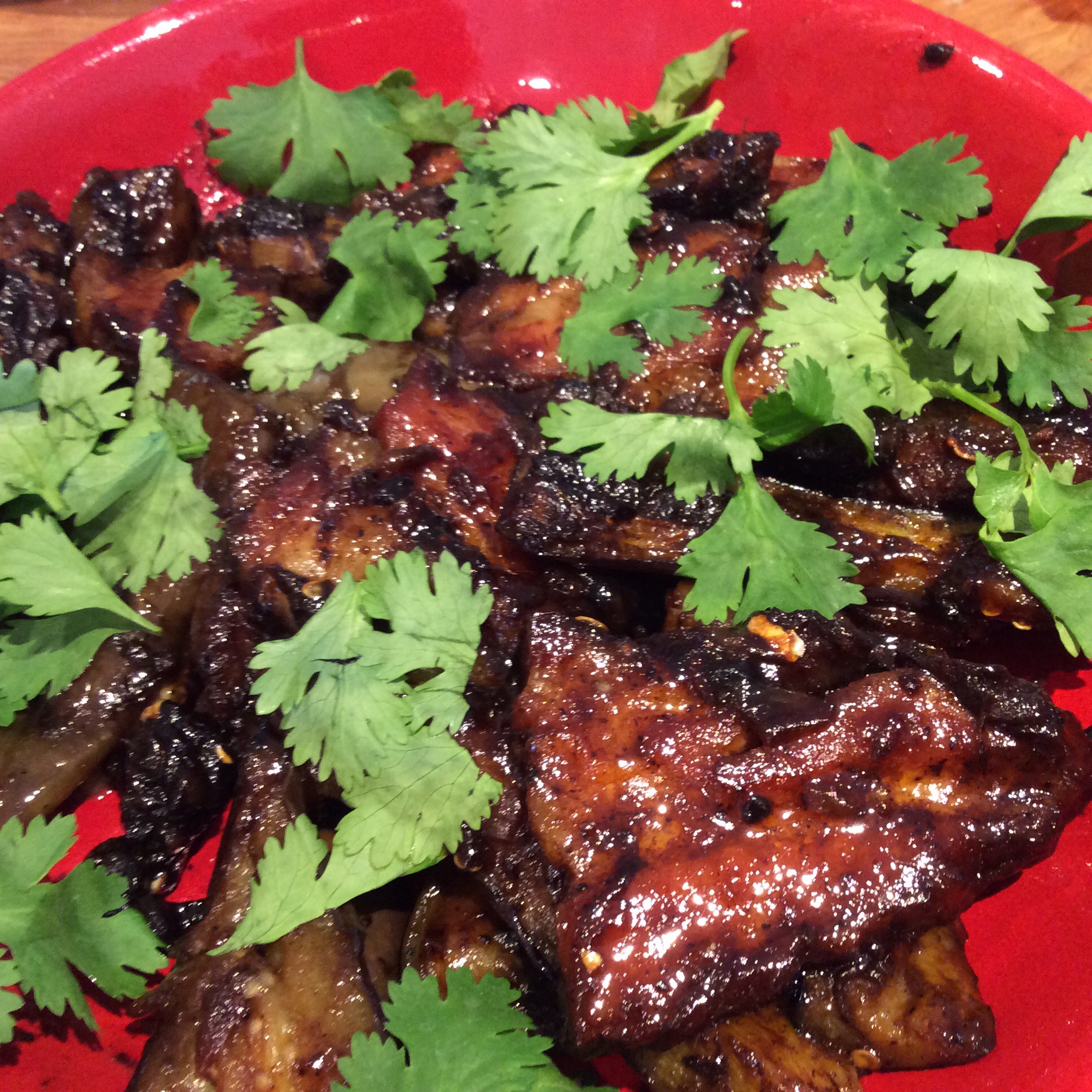
Press the salted eggplant pieces hard with your hands in a clean towel to get out as much moisture as possible. Lay the pieces of pork belly flat in a hot skillet and fry them good and brown and crisp on both sides, but don’t burn. Set them aside on paper towels and pour most of the fat out of the pan, leaving a few tablespoons. Put the eggplant pieces in to fry, keeping the heat medium-high and turning with a spatula. They should be browned on the cut sides and pretty soft. Meanwhile, mash the fermented black beans with your mortar and pestle or grind them in a mini-prep. Add them to the Quasi-Korean sauce. When the eggplant is cooked add the sauce to the hot pan, stir and flip to coat the eggplant well and cook it in the sauce a minute, add the pork belly chunks, and stir to coat them thoroughly. Serve forth with suitable green bits on top. I used cilantro, but slivered green onions would have been better. Serves two. If you aren’t a ketogenic eater, you will want some white rice with this, and it will serve three.

Now, my rant about pork. Pigs are intelligent animals and the conditions under which they are kept in factory farms is heartbreaking and disgraceful. They go insane, as would we under similar circumstances. Please seek out a local farmer who raises pigs humanely and buy from him or her. Often local food co-ops are sympathetic to your quest and can either help you get the meat or direct you to farmers. Go to farmers markets or look on Craigslist. If you have no other source, ask meat dept. managers at Whole Foods. They may surprise you.

A Hopeful Sign

image
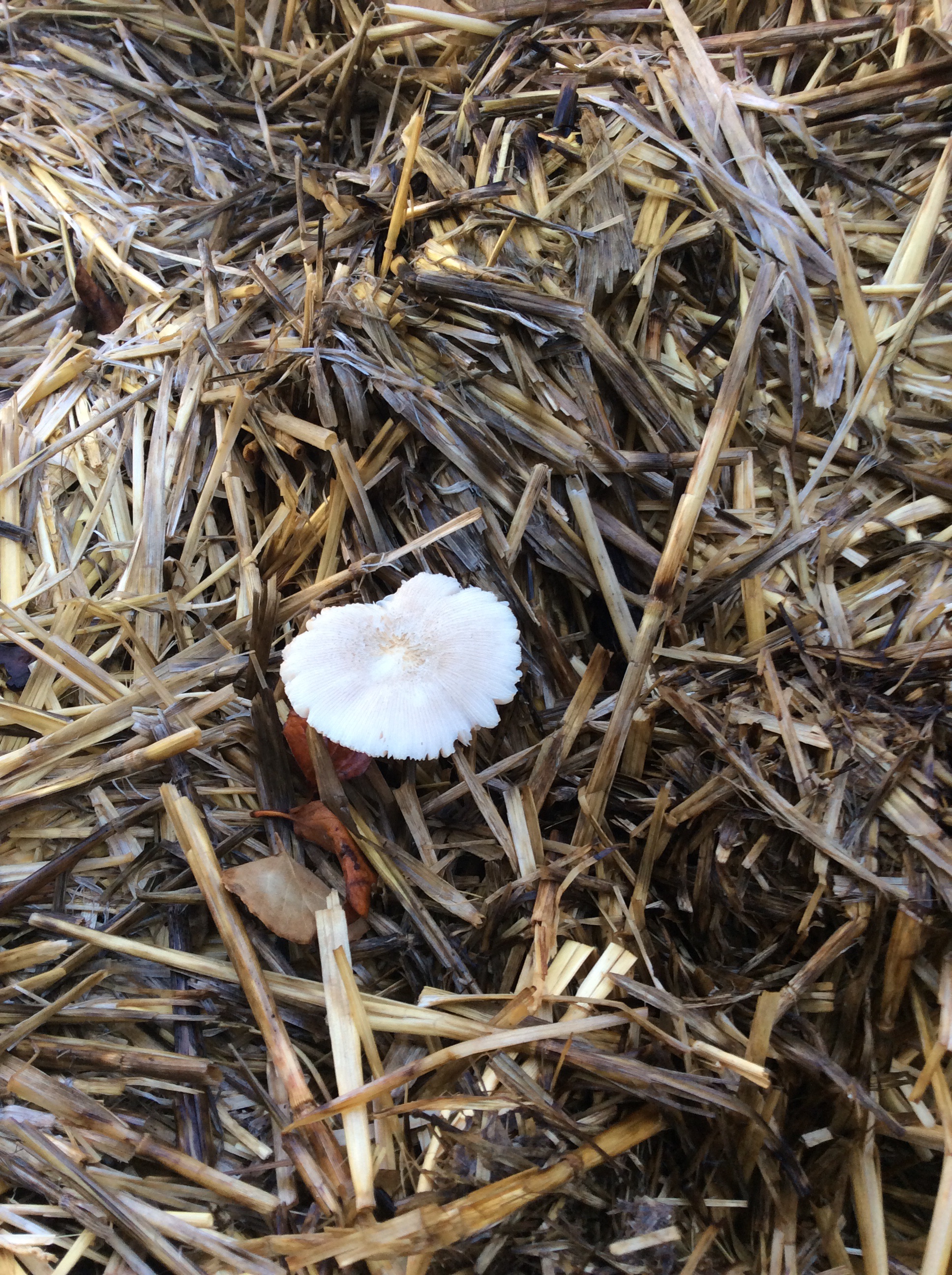
Early this spring I was mulling over the issue of a long narrow patch of ground that gets water from my garden sprinkler but doesn’t produce anything. I decided to try outdoor mushrooms. It was a fairly foolish idea because the area is fully exposed to our desert sun, but I do not lack for the damnfool quality. So in March I covered the strip 10″ deep with loose straw, wet it down, spread a bag each of oyster and King Winecap spawn, and paid it no further attention. The oyster spawn produced nothing, unsurprisingly. But this morning I found a tiny baby Stropheria putting a head up to have a look around.
I hope it goes without saying that you don’t eat any mushroom without carefully identifying it, even if you planted mushrooms in that very spot. Get at least 2-3 good mushroom field guides and don’t eat unless you are 100% confident of your ID. A mushroom-loving writer once remarked that ” There are old mushroom eaters and there are bold mushroom eaters, but there are no old bold mushroom eaters.” Take it to heart. Anyway, unless I get more mushrooms I will let this one go to spore rather than picking it.
Even if I never harvest any mushrooms the project is worth it, because the presence of a small fruiting body above ground indicates the presence of a large mycelium entity that you don’t see. I can’t encourage people enough to read Mycelium Running by Paul Stamets to understand the importance of this.
My spawn came from Fungi Perfecti. They have a fascinating array of kits if you want to stick your toe into mushroom growing, and they offer a wide variety of spawn and instructional books if you want to produce mushrooms on a bigger scale.