Archive for the ‘vegetable gardening’ Category

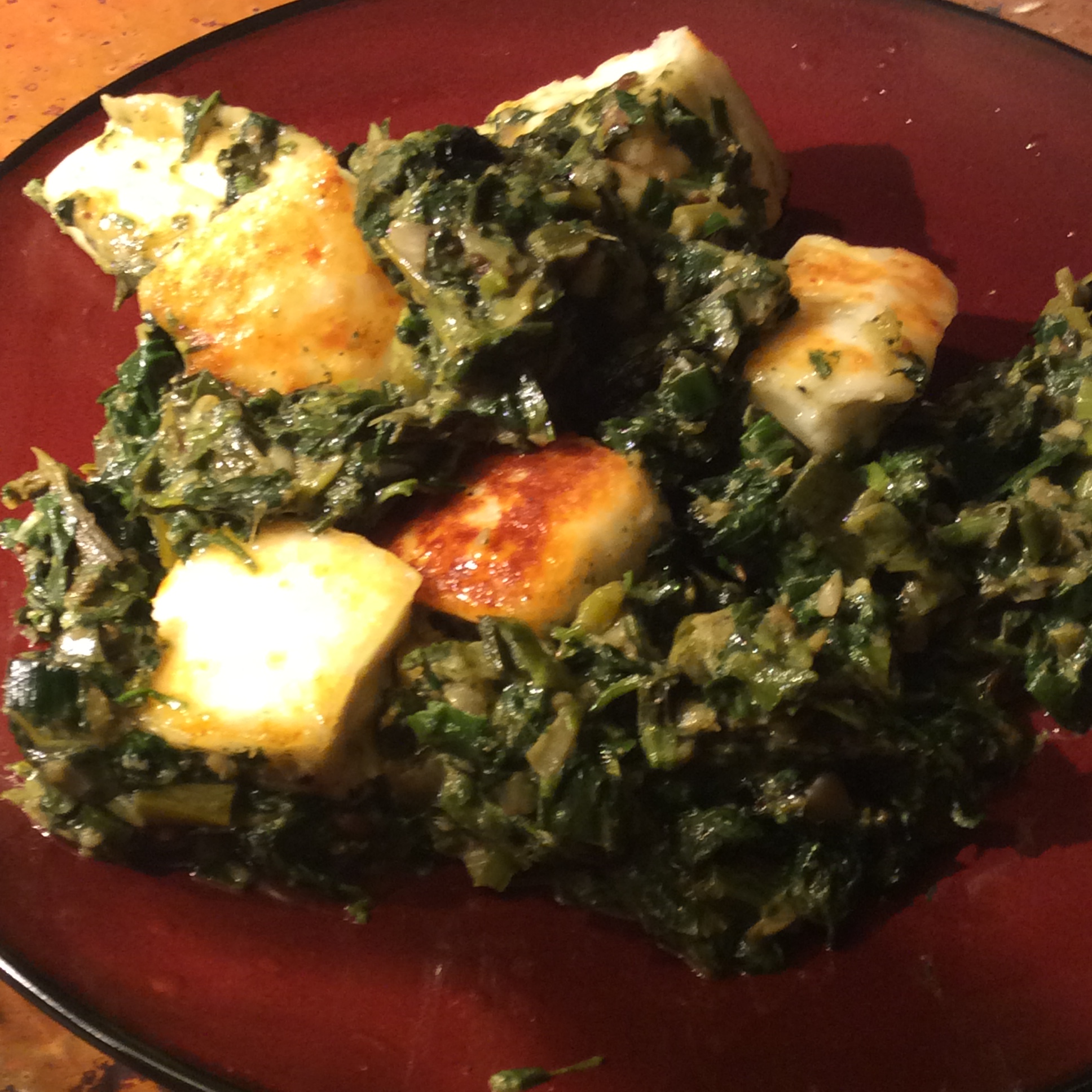
Perennial Saag Paneer


Yesterday I wrote about making Paneer with my grass-fed goat milk. Today I’ll talk about making saag paneer, one of my favorite dishes, and for a permaculture twist I’ll make it with perennials as much as possible. If you don’t have a weed patch, you can use a bunch of spinach. You will also need fresh ginger, cumin seeds, garam masala, heavy cream, and butter.
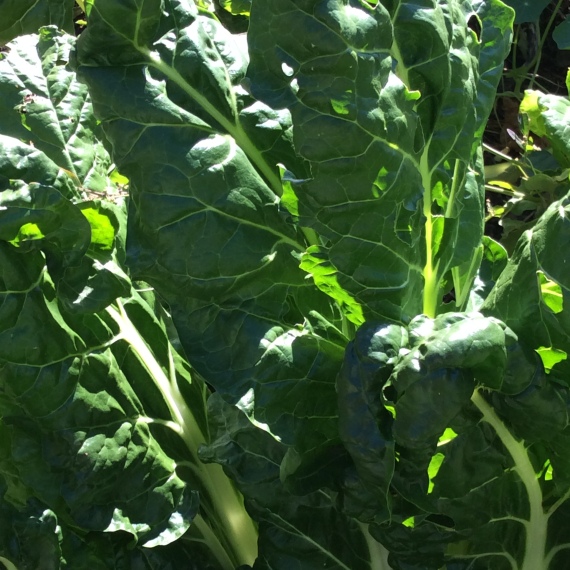
Assuming that you have the paneer, the next step is to catch your greens and alliums. I used equal parts each of nettles and bladder campion, and 4 stalks each of green garlic and perennial Welsh onions. The nettles and bladder campion were blanched for about 90 seconds so that the nettles could be handled easily, then drained, pressed, and chopped. The alliums were cleaned, trimmed, and sliced in 1/4″ cross section.

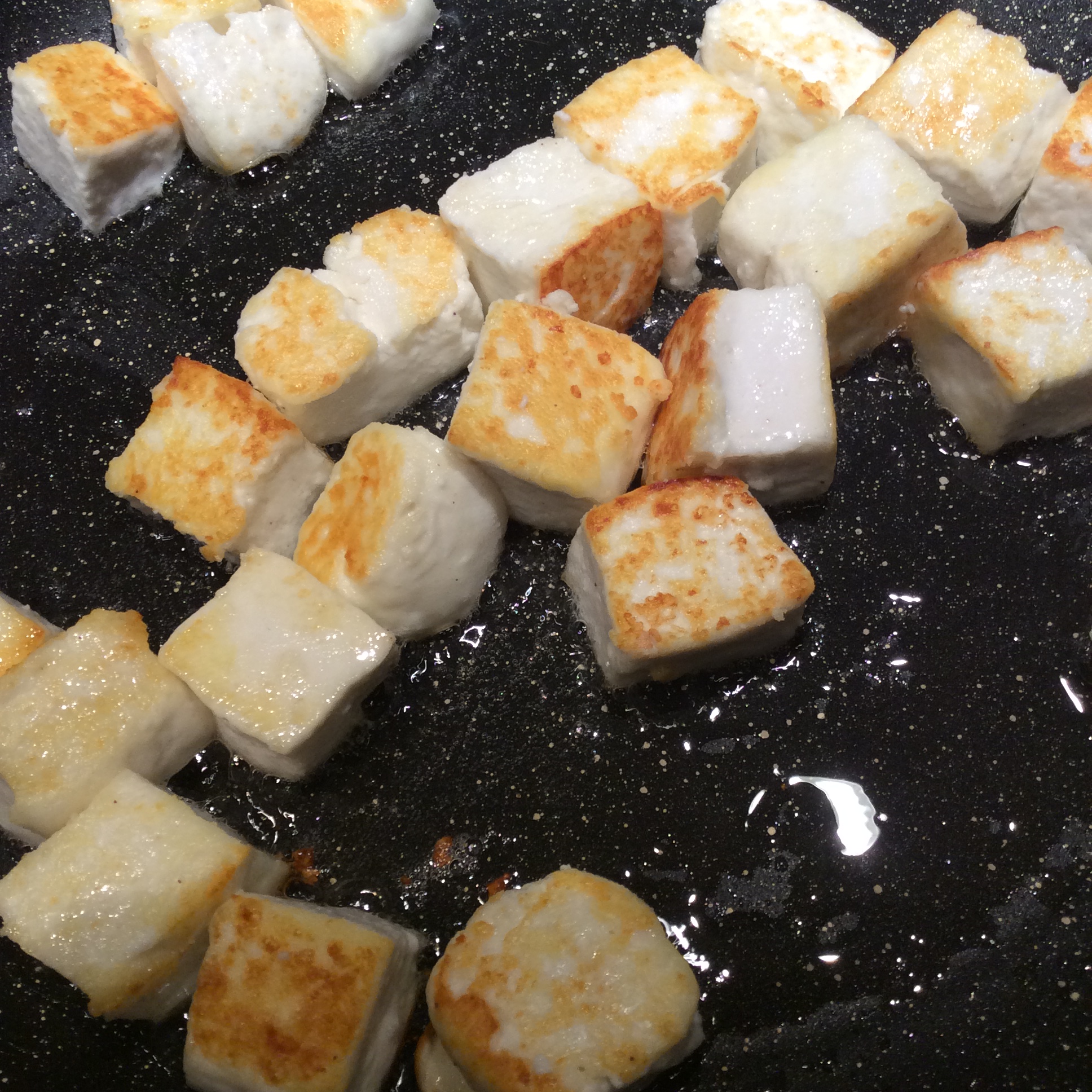
When ready to cook, heat a nonstick skillet, cut the paneer in 1″ cubes and salt it, and fry in mild oil of your choice (I like Macadamia nut oil) until browned. Set aside.


Chop a piece of fresh ginger about an inch square finely, and have ready a teaspoon of whole cumin seed and a heaping teaspoon of garam masala.
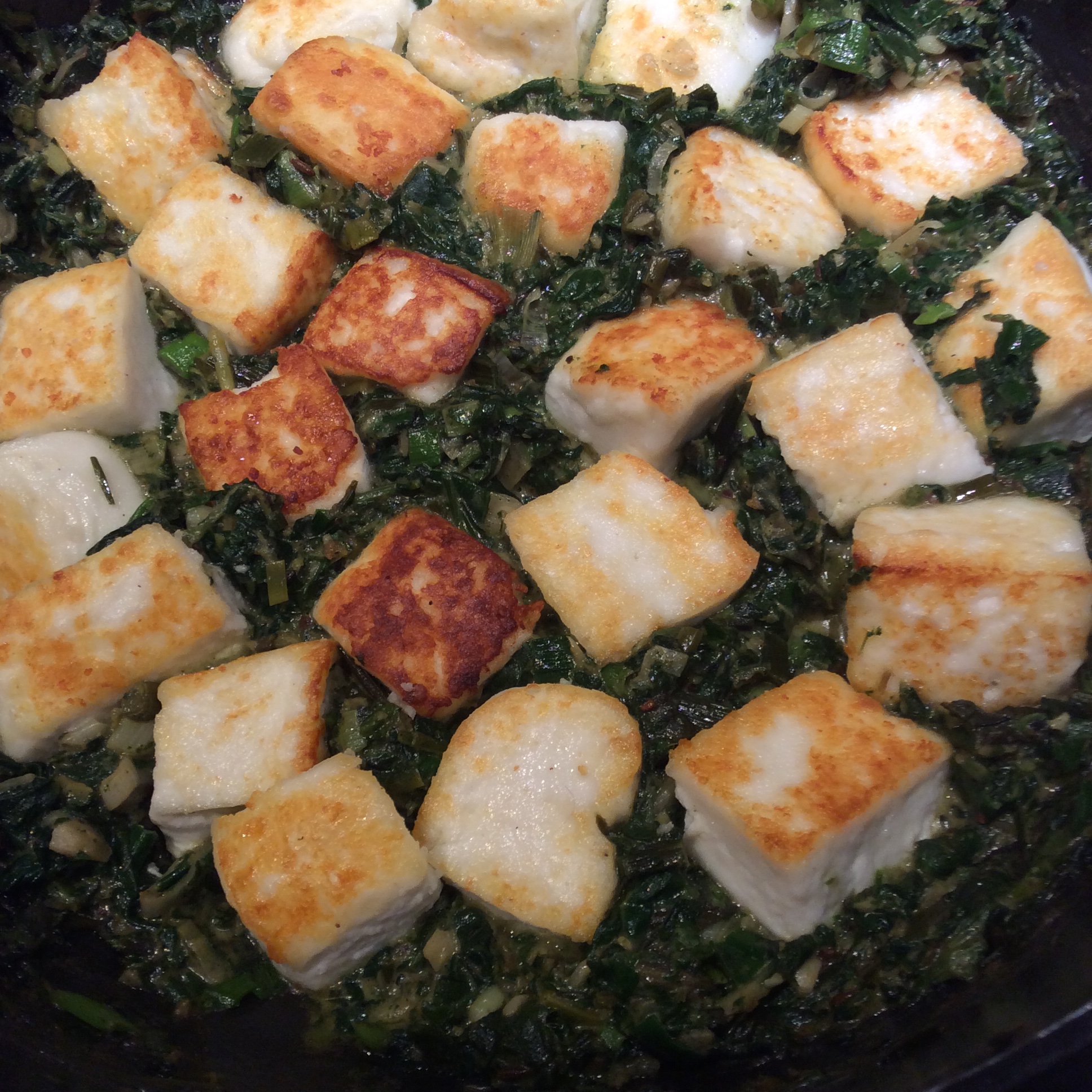
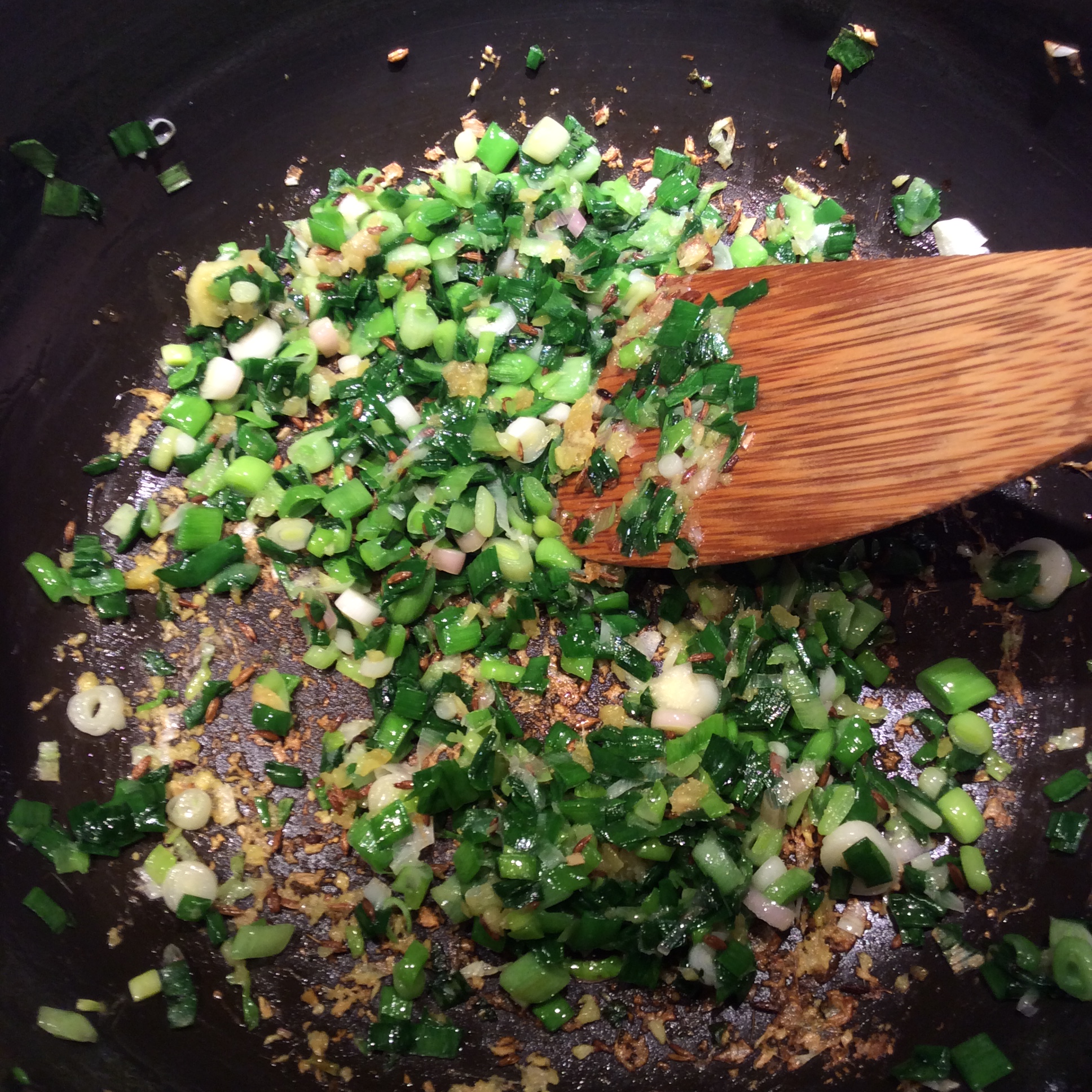
Heat a saucepan, put in a couple of tablespoons of mild oil, and fry the cumin seeds briefly until they darken a couple of shades. Immediately add the chopped ginger, stirfry furiously until it is cooked but not browned, and add the chopped alliums and lower the heat to medium-low. Add a half teaspoon of salt and sauté the alliums until they are softened, lowering the heat if necessary to keep them from burning. Add the garam masala, cook another minute or two, and add the cream. Add the blanched chopped greens and cook over low heat until they are thoroughly cooked, probably about another 10 minutes. Put the paneer cubes on top, pushing them into the greens mixture a bit, and cook over low heat until they are heated through. Serve with rice or, if you are a low carb eater, gloriously naked on the plate. Drizzle some melted butter or ghee over the top.

I was taught to make this dish a few decades ago by an Indian woman in Manhattan, and I am pretty flexible about the greens used as long as they’re mild. No bitter green has a place in this dish. The green garlic and onions are great in season, but chopped garlic and onion are traditional.  I’m very rigid about the seasoning, though. Sometimes I add a chopped hot pepper but that’s my only variation. The whole cumin seeds fried quickly in hot oil are not negotiable, and burning or scorching any of the seasonings or alliums  means you need to start over, so work carefully.

Green Alliums Madeleine

img_5210

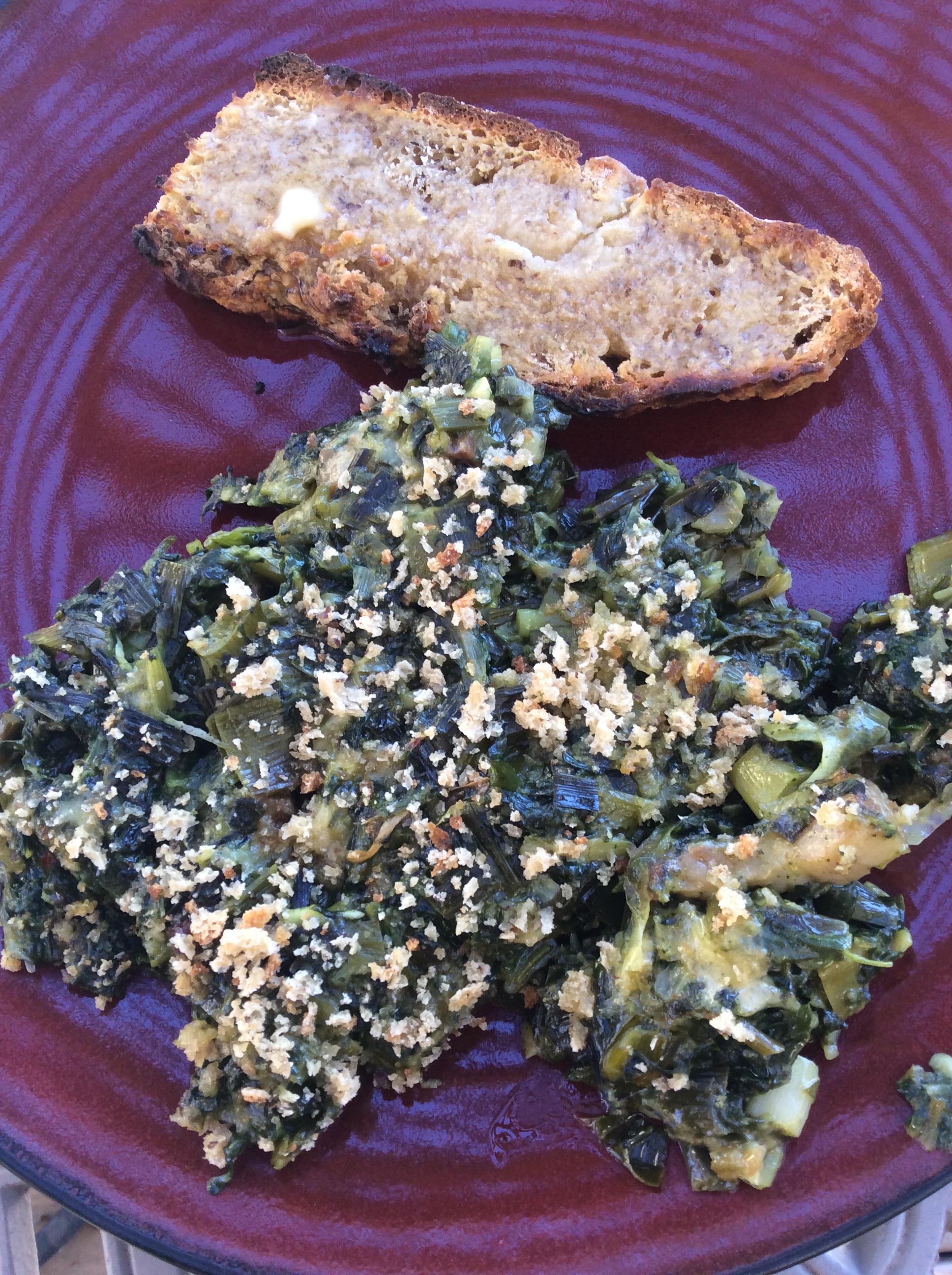
In my home state of Louisiana there is a popular dish called Spinach Madeleine. It combines spinach, bacon, onions and garlic, flour, cream, and (no kidding) Kraft Jalapeño Cheese Rolls, back when those existed. True Louisiana cooks now use Velveeta Mexican cheese instead. It’s really delicious, a testimonial to the Cajun ability to bring gastronomic harmony out of any degree of chaos. I use a mild grass-fed cheddar instead. I never tire of this dish, which made the River Road Cookbook go viral back before the Internet existed.

Recently I found myself interested in the lovely warm flavor of sautéed green onions and green garlic, as well as being interested by their high health benefits, and decided to try giving them the Madeleine treatment. My freezer is full of sautéed green alliums, so this was a quickie dish for me, made with equal parts of sautéed green onion and green garlic. If you’re starting from scratch, you will need about 10 ounces of spinach and three standard bunches of green onions, chopped in 1/4 inch slices and sautéed in 1/3 cup of olive oil until tender.

Other ingredients:

1/4 lb bacon

1 clove garlic, chopped

1 tablespoon flour or porcini flour

1/3 cup cream

2 cups grated mild cheddar, preferably grass-fed

1/2 teaspoon ground chipotle chile (optional)

1  pinch (no more) grocery-store chili powder

Cut  the bacon in strips or lardons and fry brown in their own fat over medium heat. When done, add the chopped garlic to the pan, stir a minute, and add the flour or porcini flour and stir for 1-2 minutes. Add the green onion mixture and cook over medium heat until heated through. Stir in the cheese and seasonings and stir just until the cheese is melted. Turn into a buttered baking dish. Top with buttered bread crumbs if you like them. Bake at 350 for about 25 minutes, and brown the crumbs just a touch if you used them. Yum.

If you want a look at the original recipe, it can be found here: http://www.jfolse.com/recipes/vegetables/sidedish45.htm

The Greens of Winter: Soup Base

img_5098

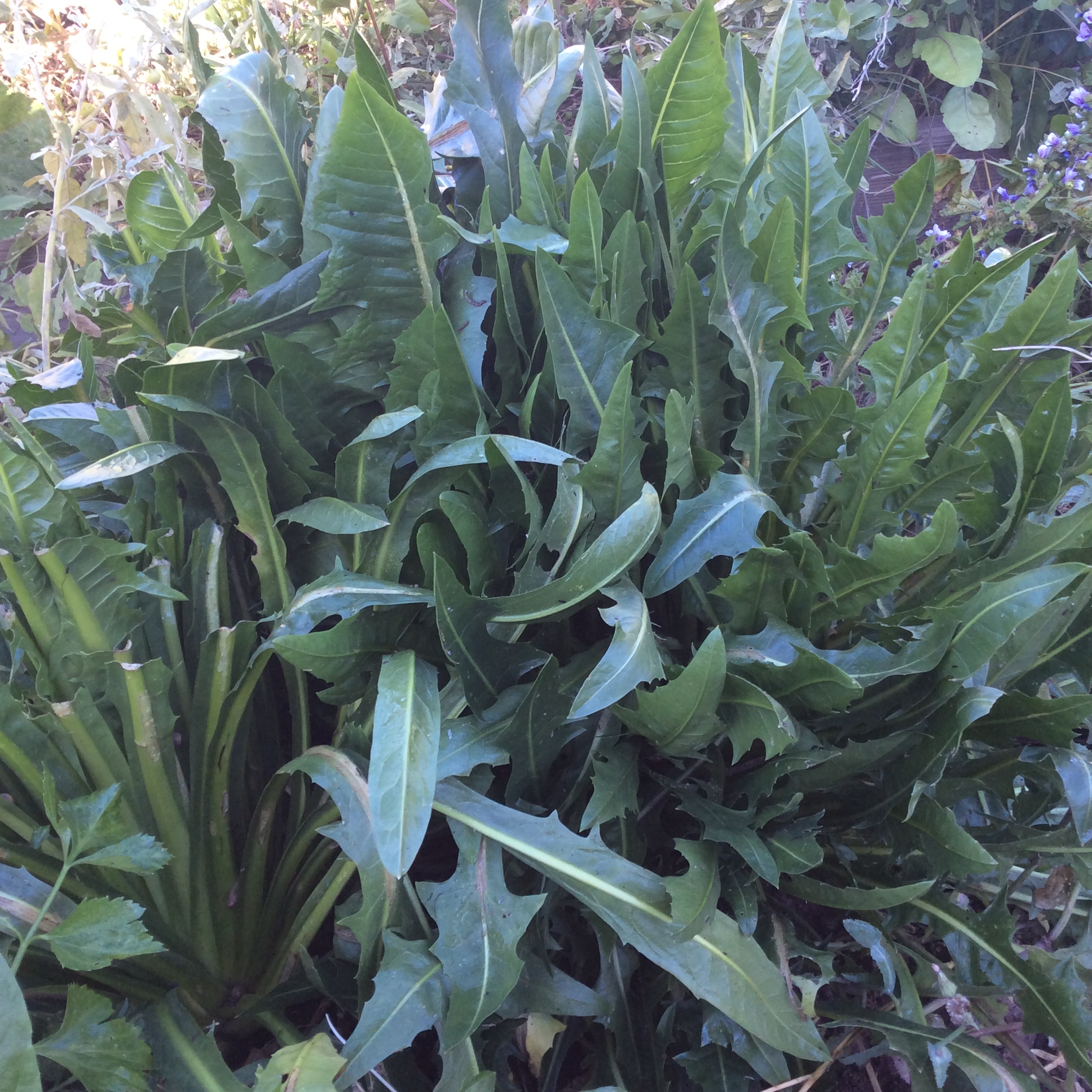
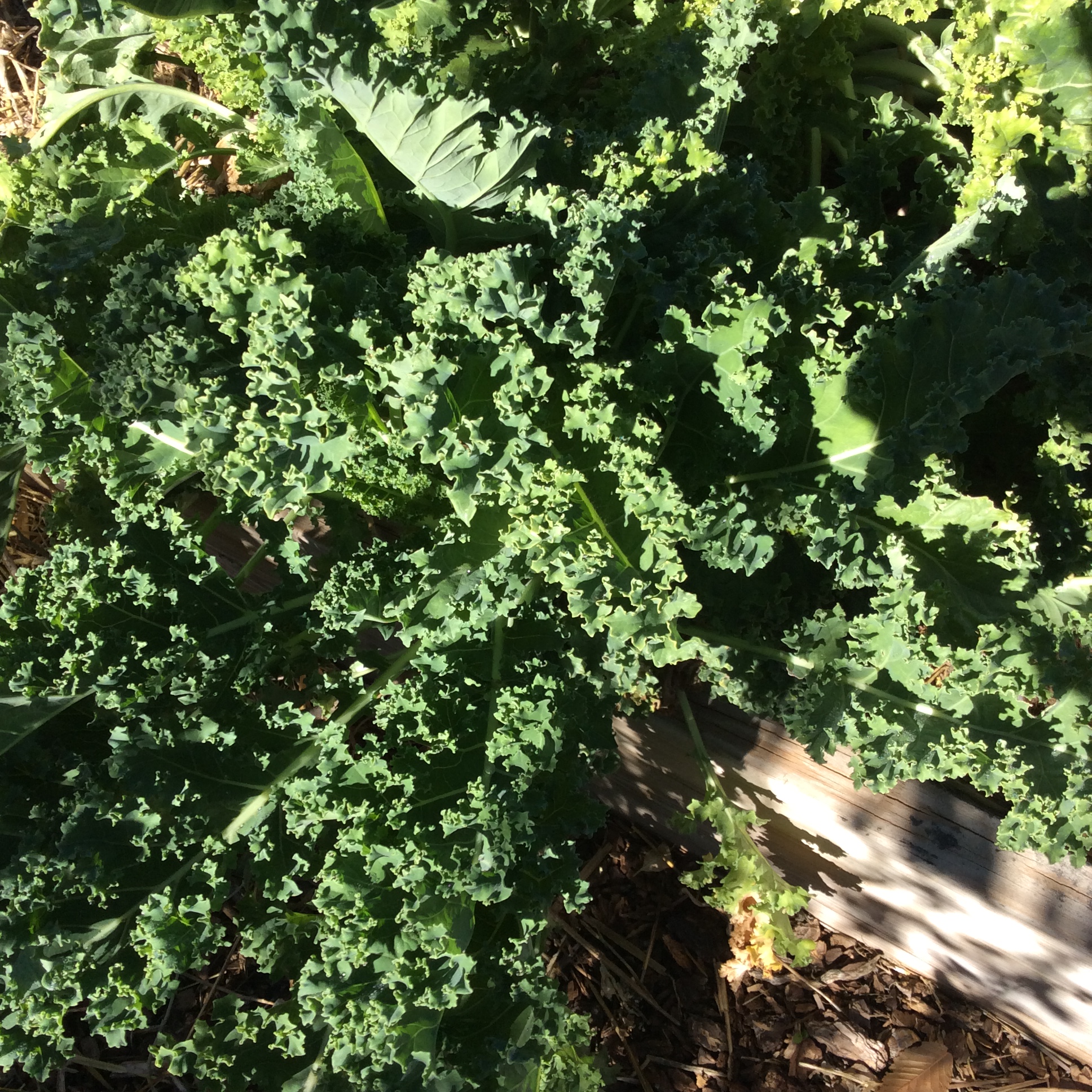
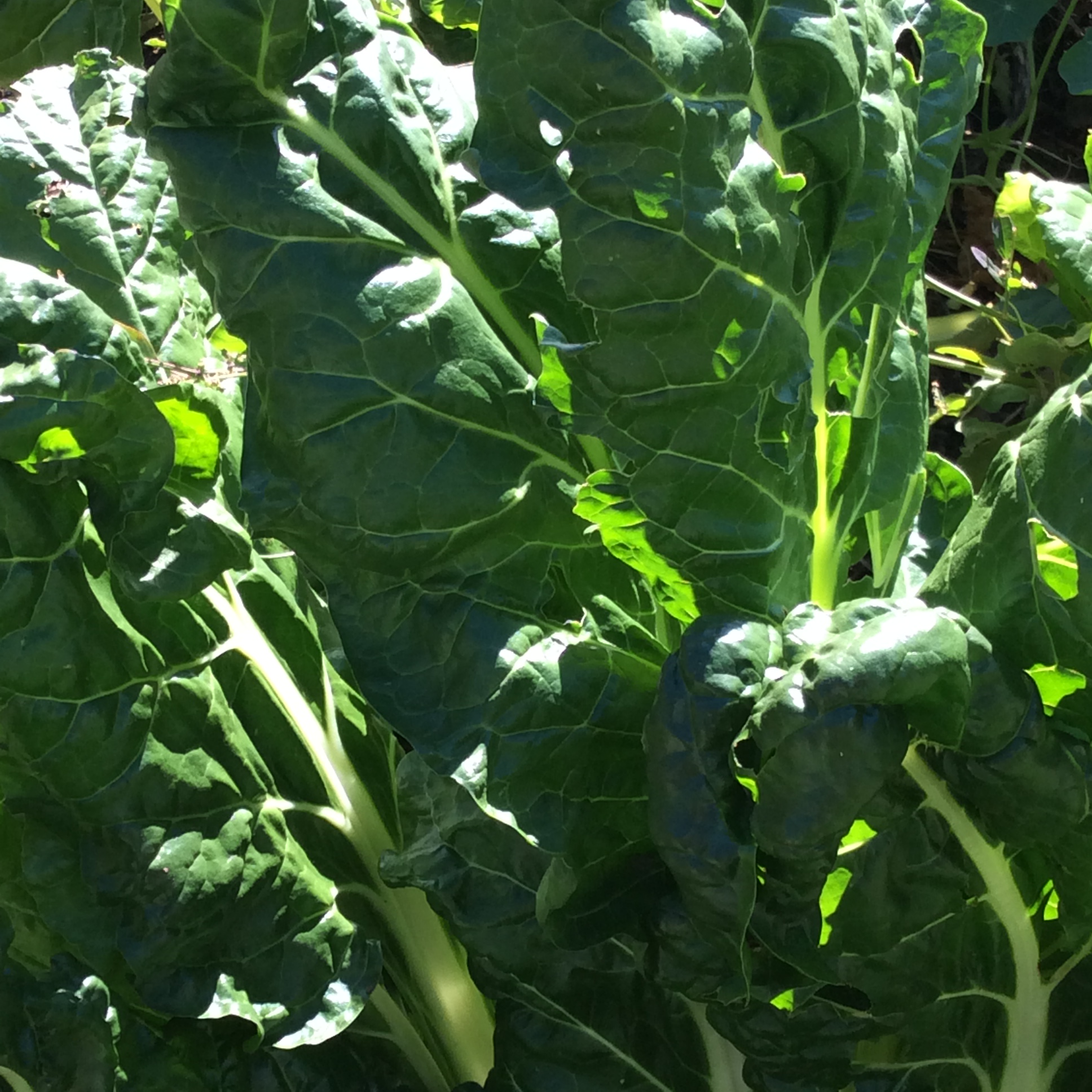
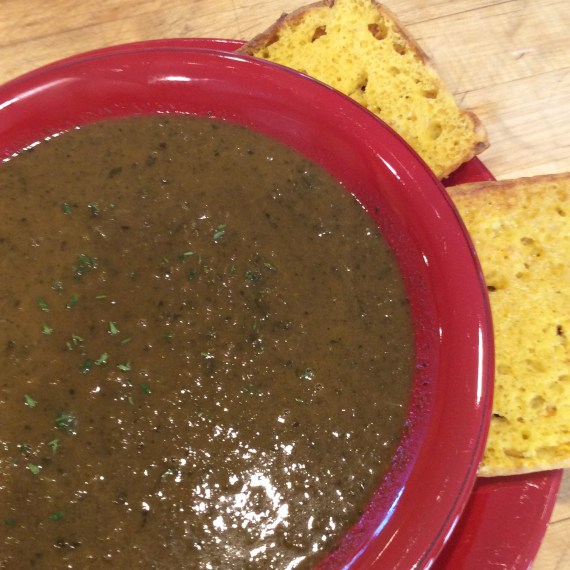
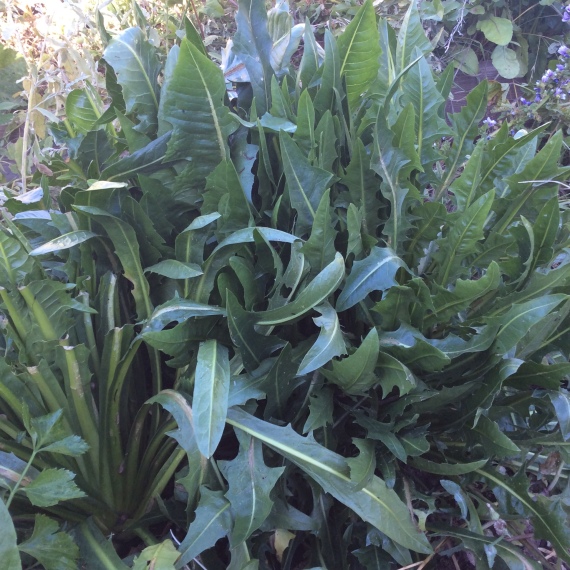
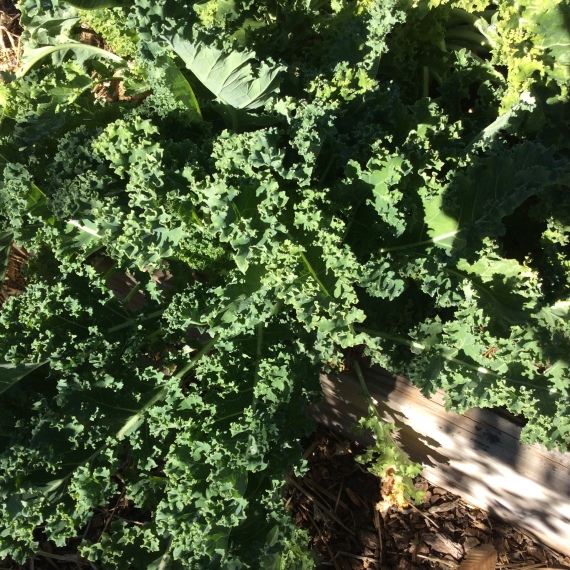
Earlier this week I walked through my frost-killed garden to see what was left. For the most part I don’t make any special effort to protect my garden in the fall because after a long summer I’m ready to move on to the things I do in the winter, so the pickings were slim, but I found lots of chicory, dandelion, chard, broccoli leaves, alfalfa tips, celery, and kale, along with green garlic and green onions, and some of the herbs were still in fine shape. I decided to make soup, and since I had a lot more greens than I remembered planting, it occurred to me to make a soup base that could sit in the freezer, ready at any time to be turned into soup in a hurry. To the garden ingredients I added a large onion and a largish handful of sun-dried tomatoes from earlier in the summer. You could also use a jar of dried tomatoes in oil, drained.  The celery was used from base to leaf tip. I used roughly equal volumes of all the greens types, about the equivalent of a medium-sized supermarket bunch of each.

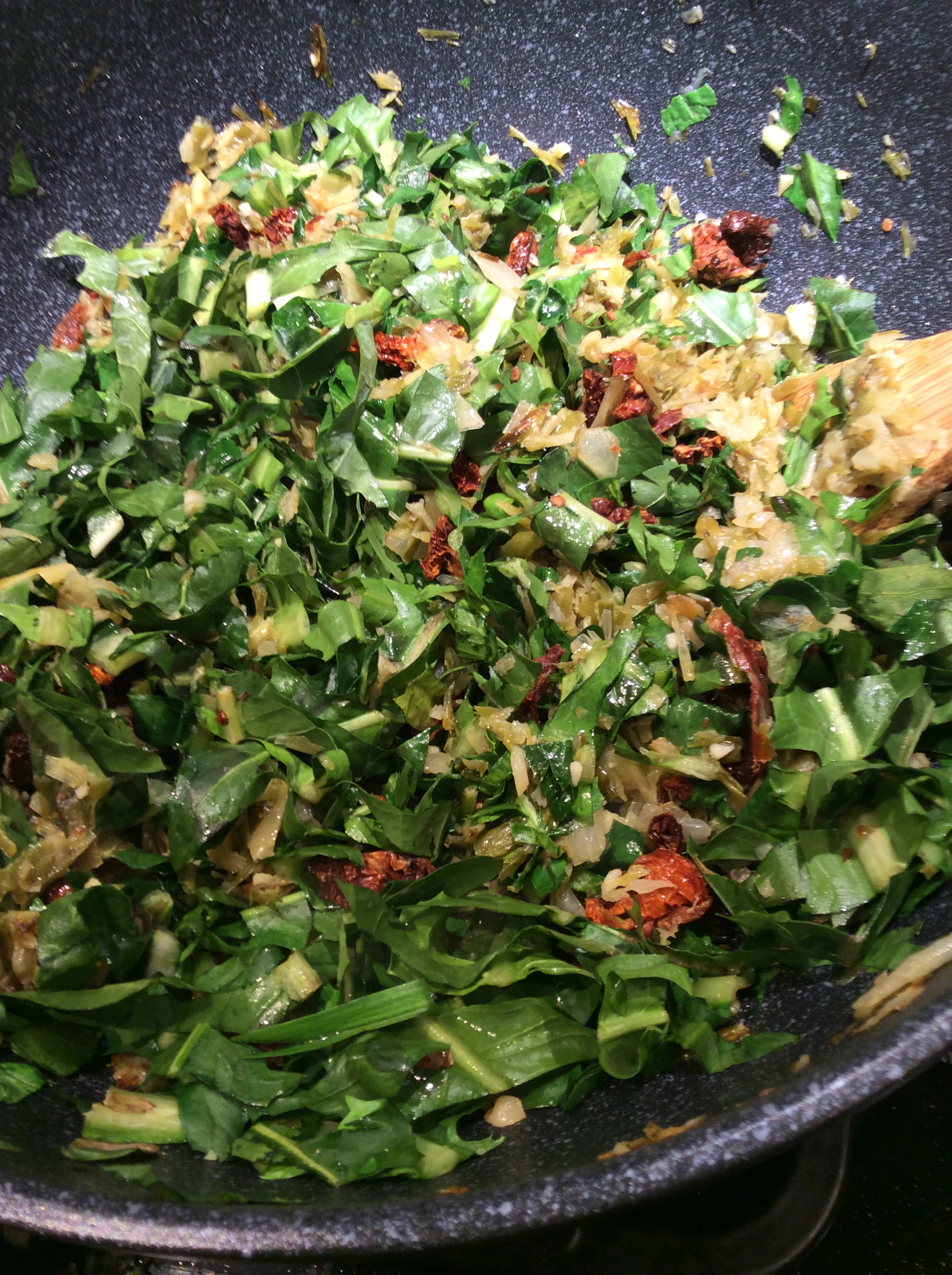
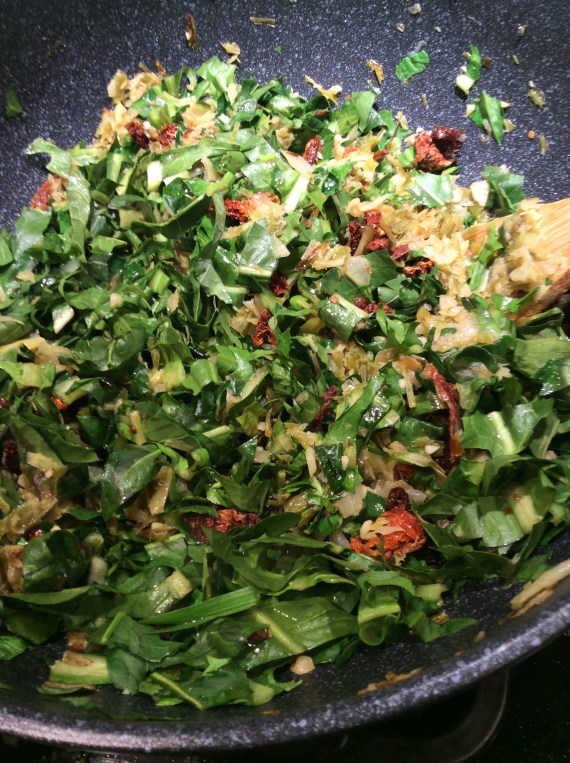
The onion was sliced thinly and sautéed very slowly in olive oil while I washed and prepared the greens. I was aiming for a rich caramel color, which meant low heat and frequent stirring, which is no extra trouble if you’re in the kitchen anyway. I used my wok because I knew that the volume of sliced greens would be considerable. First the green garlic and green onions were cleaned, finely slivered, and held separately, then everything else was washed and midribs removed and cut in cross section into roughly 1/2″ slices.
img_5084

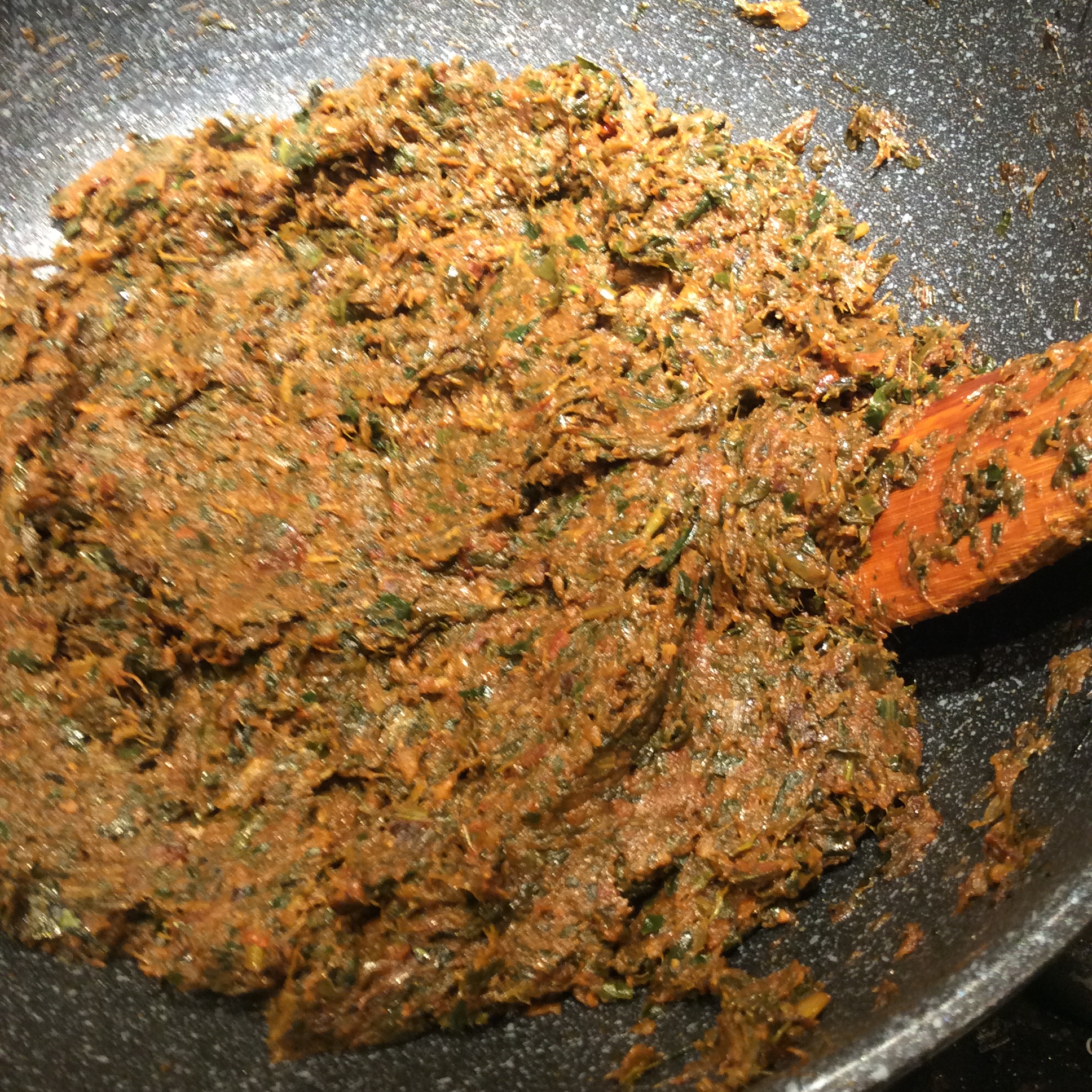
When the onion was a nice toffee color I added the chopped green alliums, cooked about another five minutes, then added the other greens and some more olive oil along with about a teaspoon of salt. Don’t stint on the olive oil. You want sautéed flavor, not steamed flavor.  The heat was turned up to medium and the whole mass stirred and turned with a wide wooden spoon about every five minutes to keep it cooking evenly. As soon as the greens were in the pan I ground the sun dried tomatoes into small powdery chunks in the blender and added them to the wok. They rehydrated well enough in the moisture from the leaves.  Keep cooking until the greens are soft when chewed.

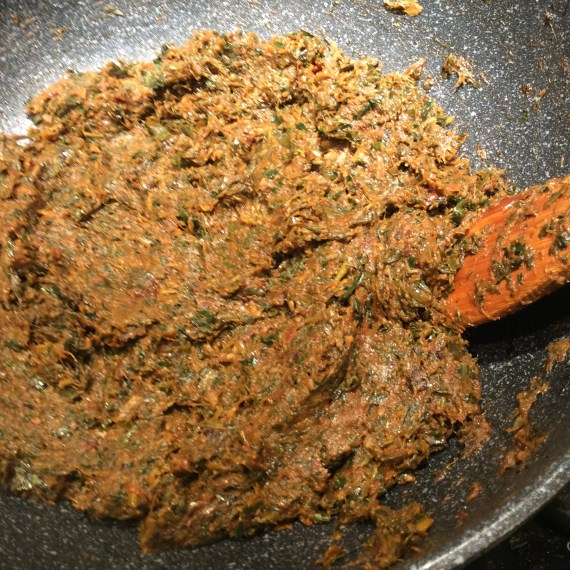
When you have a darkened dense mass of soft greens, put the whole business in the food processor and grind to the finest paste that you can achieve. Taste. You want it on the salty side, because that helps with preservation and it’s going to be diluted later. Add more salt if needed. I prefer to use fish sauce rather than salt to season at this point because it adds a wonderful rich savor. I used about a tablespoon. Don’t use this if you might be serving vegetarians.
img_5085

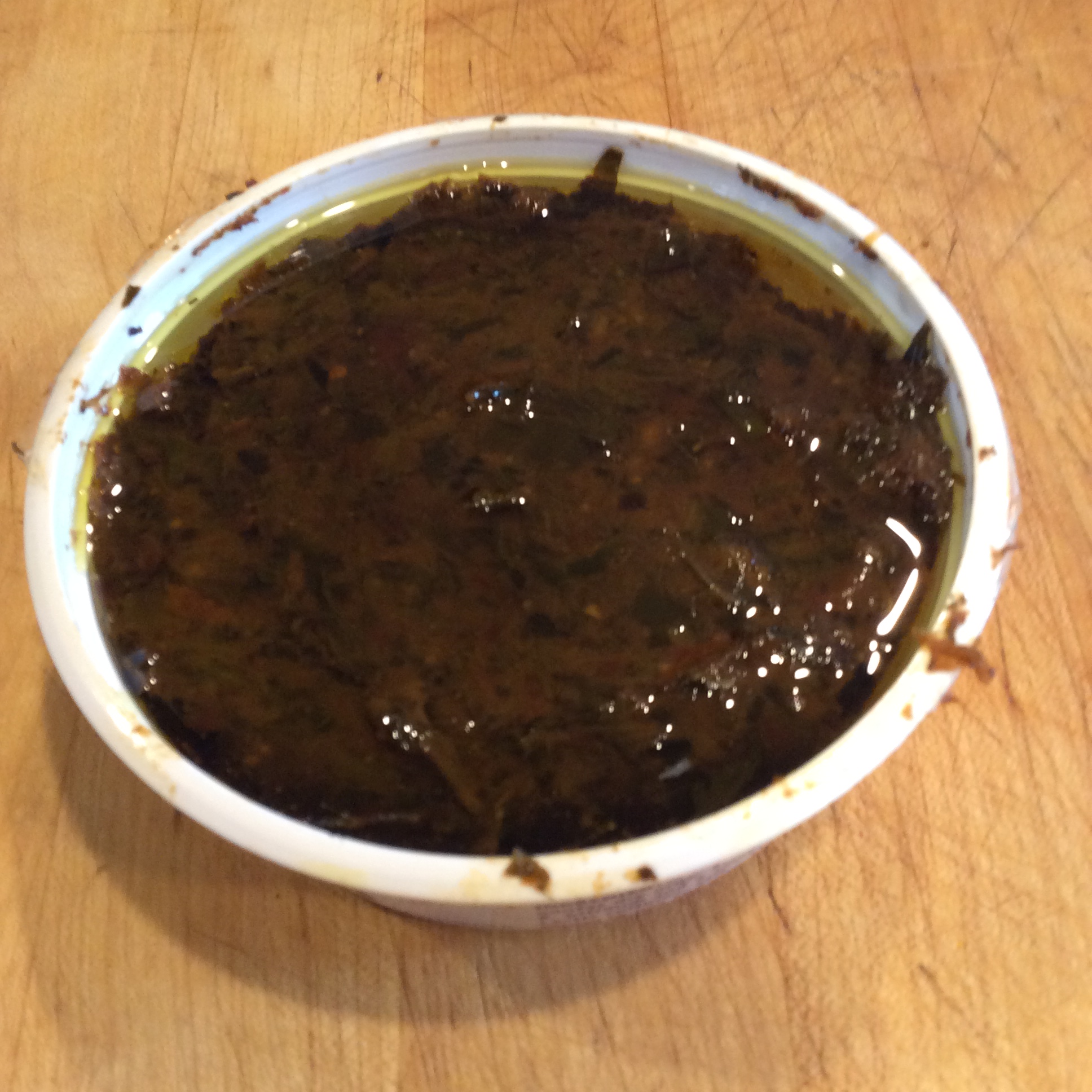
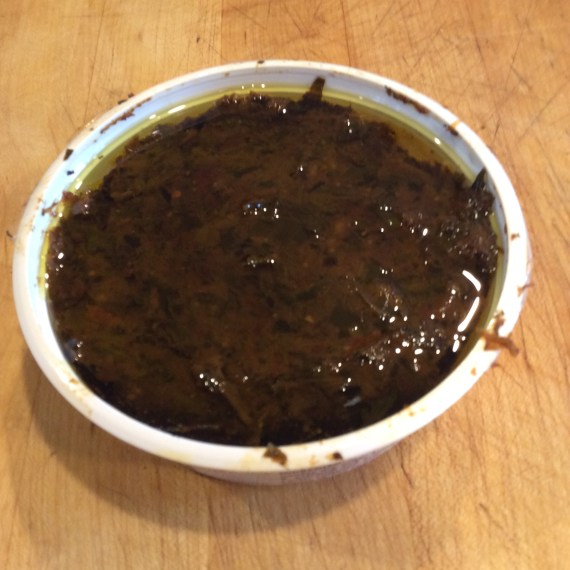
Now cool your soup paste and pack it into one-cup containers, each of which makes about a quart of finished soup. Coat the top with olive oil, push lids on tightly, and freeze.
img_5091

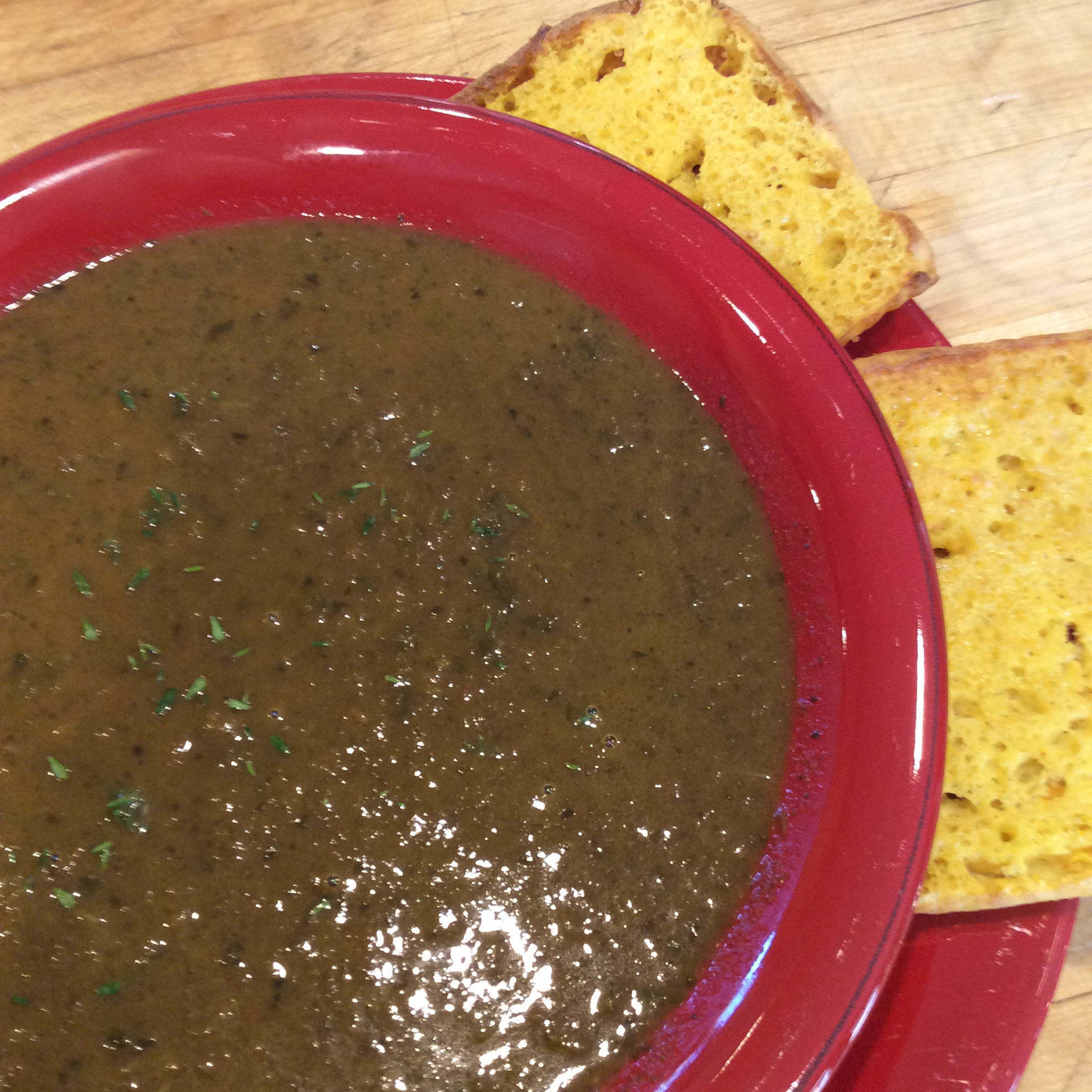
When ready to use, put a quart of any kind of salt-free or low-salt broth you like in a saucepan, add a cup of soup paste, and simmer until thawed. Correct the texture with a stick blender if it needs smoothing out. Taste for seasoning and adjust in any way you like. The caramelized onions, deeply sautéed greens, and fish sauce gave a meaty-umami flavor to the potful I made for lunch today, so I salted to taste and added a swirl of fat from my homemade bacon and a generous sprinkling of thyme leaves, a meaty-umami herb if ever there was one. Yum. With toasted buttered slices of my low-carb fake-o cornbread, it made a perfect light healthy Thanksgiving brunch to lead into the excesses to come at dinner.

This basic formula can be varied endlessly according to what you like and have available. If you serve vegans at your table, using some miso rather than fish sauce and good olive oil for the final swirl with water or vegetable broth as the liquid would suit their needs while fully satisfying the omnivores. If you don’t like the brownish color, leave the tomatoes out and it will be more green. Pan-grilled small oyster or other mushrooms would make a good garnish. A fried or poached egg adds tremendous heft to soup if you want a richer meal, or some bacon lardons fried crisp would satisfy any ardent carnivore with a minimum of actual meat. You can add cow or coconut cream for a cream soup (try a toss of chopped fresh tarragon for the final garnish,) or some leftover tomato sauce for interesting tartness, or finish it with a handful of good freshly grated Parmesan along with olive oil and let the cheese dissolve in the hot soup. For a more Cretan effect, use crumbled feta and olive oil on top.  There are a hundred possibilities and you can get any of them from freezer to table in well under 20 minutes. Serve any kind of bready stuff that suits your diet alongside, and you and your table mates will be full. I say that a quart of soup is two servings, but I understand that normal people can serve three or four with a quart. Know your family’s tastes.

In my opinion the celery is necessary rather than optional, and I strongly advise including at least a small portion of bitter greens (dandelion and chicory in this case.) When making mixed greens, I’ve often noticed that a savory-meaty element is lost if I don’t include some bitter greens. The proportion is small and the final product isn’t bitter and is enjoyed be people who don’t like strong greens in other contexts. Besides, they’re so damn good for you.
img_4891

img_4892

img_4888

Oyster Mushrooms Redux

img_5078

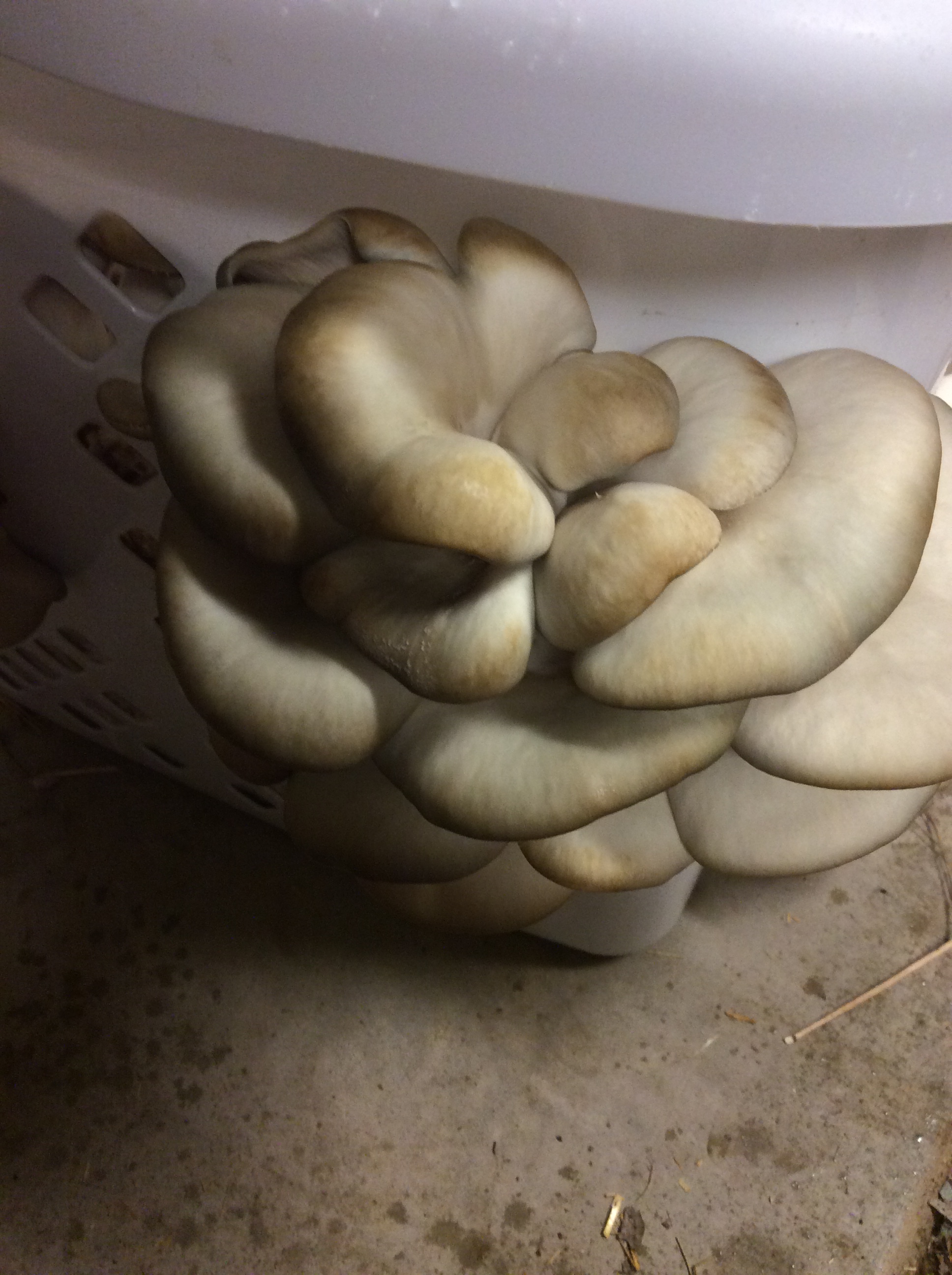
In a post this summer, I wrote about the delicious oyster mushroom and my own irritation that I was not able to grow them. My luck has recently changed, as shown above.

Ironically, this was by far my least scientific effort. There are many good books on mushroom growing if you want to learn how to do it properly. But here’s the very improper way I did it:

1. You will need a gallon of concentrated hydrogen peroxide for the sterilization step. I got mine at a pool supply store. It is 27% and I diluted it about 1 to 10 with water to make a nearly 3% solution. I used half the bottle to make about 5 gallons of solution for a total cost of $15.00.

2. Have ready a laundry basket that you won’t need for a while, a large clear plastic bag like a clear garbage-sized bag, a bucket to mix the H2O2 solution, a large bin (a clean plastic garbage bin is fine) for soaking the growing medium, and a source of spawn. You can order sawdust spawn from Fungi Perfecti or a host of other sources. This was an impulse effort for me, and I used a small home oyster growing kit on sale at a farmers’ market and just crushed up the little sawdust log inside to serve as “seed. ” Don’t do the crushing until you are ready to mix it into the moist substrate.

3. Collect junk mail, newspaper, and cut-up cardboard until you have your bin nearly full. Remove any plastic wrappers. I omitted anything with bright pictures etc. to avoid introducing unknown inks.

4. When ready to proceed, throw into the bin a few handfuls of something high in nitrogen for nourishment of the mycelium. I used waste alfalfa because I have a lot of it around, but you could just use organic soy meal or something similar. I can’t be more exact than “a few handfuls” because that’s how I measured it.

5. Pour in your 1 to 10 hydrogen peroxide solution and let it soak a few hours. If you just cover your substrate mix, it should all soak in. Add a little more if needed, but you want it thoroughly damp, not wet.

6. Line the laundry basket with the clear plastic bag. Crush up the hyphae or spawn source if needed. Pile the damp substrate into the basket, adding a layer of sawdust spawn every couple of inches. Pull the bag shut at the top, tie closed, and use a knife to make punctures in at least 10 of the open spaces on each side of the basket.

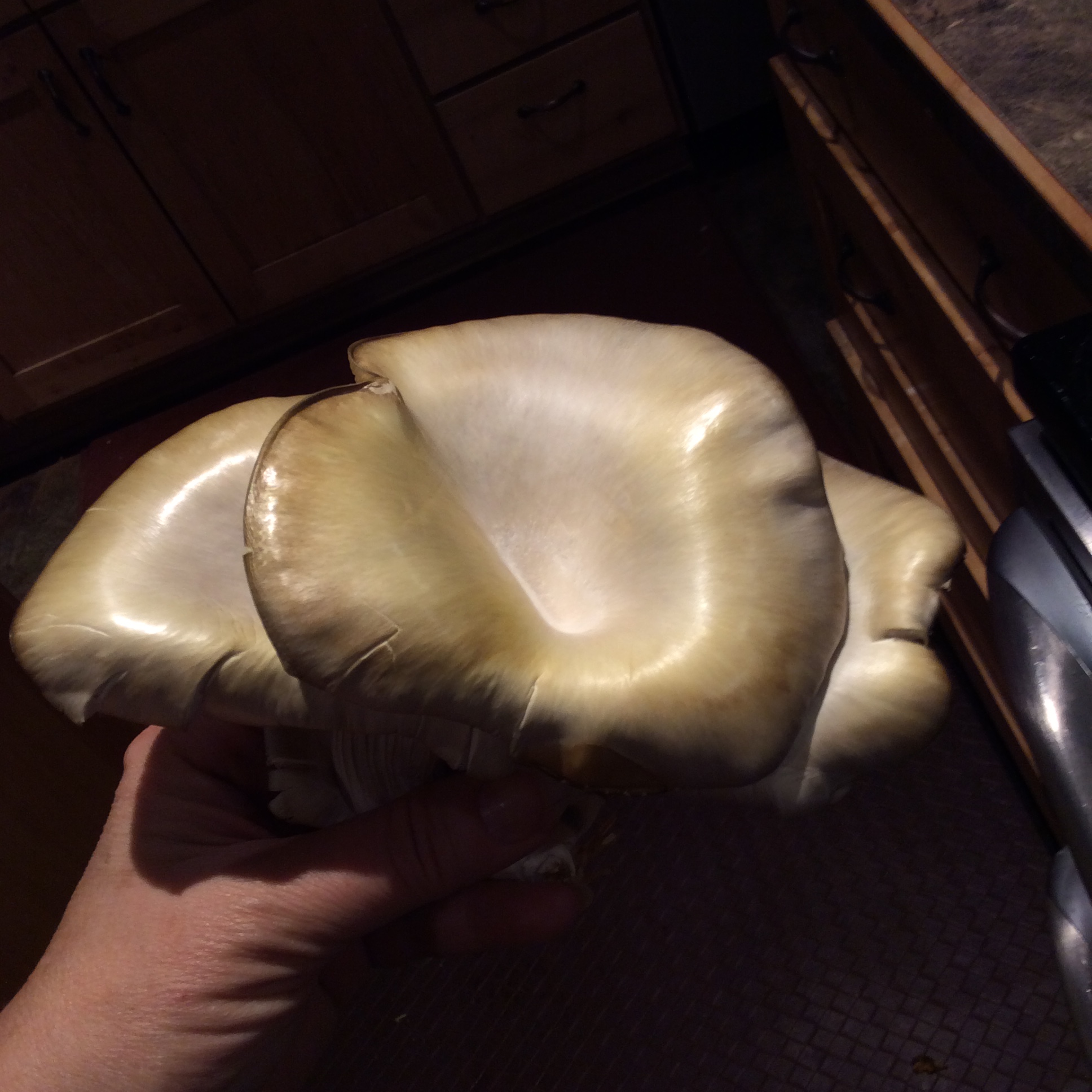
7. If you want to duplicate my procedure exactly, you now plop the whole rig in an unused and unswept corner of the garage, stride away muttering that you have wasted a few more hours trying to grow mushrooms, and forget about it for 5 weeks or until your spouse informs you that giant mushrooms are popping out and you should go take a look.  Better results will no doubt be obtained if you do it right, which is to hang a sterilized plastic sheet as a humidity tent, not letting it touch your growing rig, and provide air circulation and a humidifier, or mist multiple times daily. Suit yourself. But I got close to 3 pounds of mushrooms at the first flush with no attention at all beyond assembling the growing basket in the first place.

So, I will try this haphazard method again, especially because it should break down my junk mail enough to make it possible to incorporate it into the garden. If you are a better and more detail-oriented grower than I am, please comment and let my readers know how you do it.

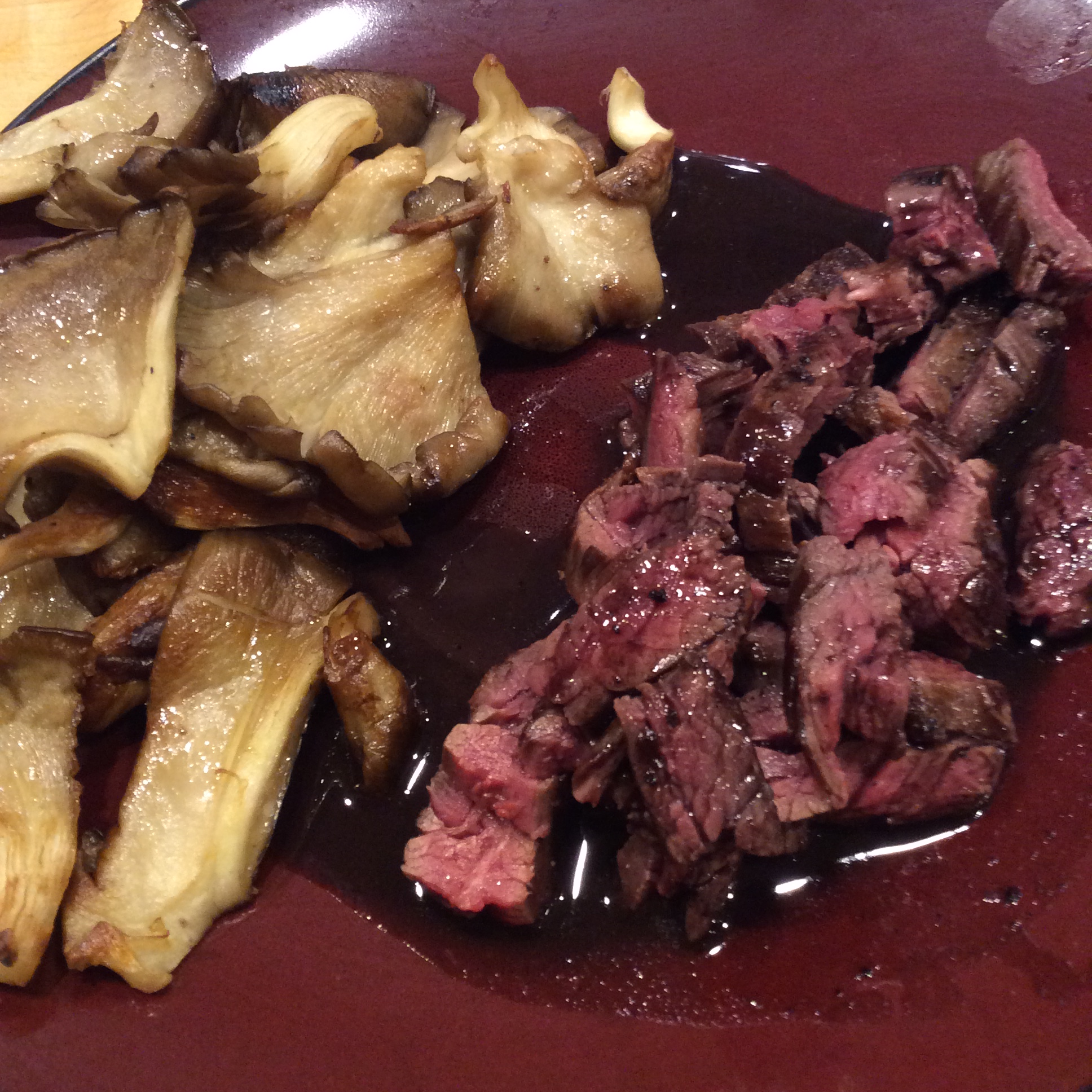
ADDENDUM: Had to add a picture of the proof of the pudding.

img_5095

img_5087