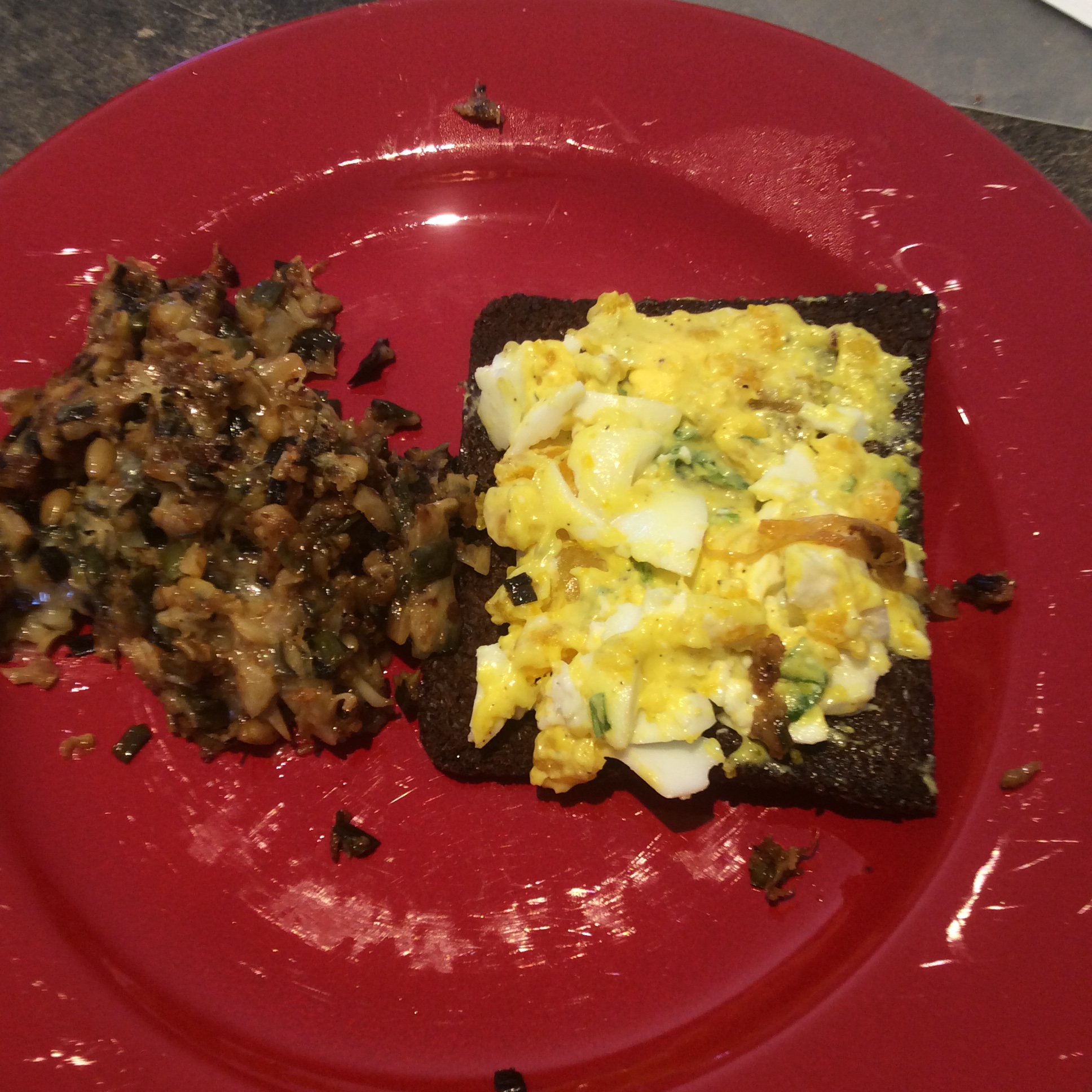
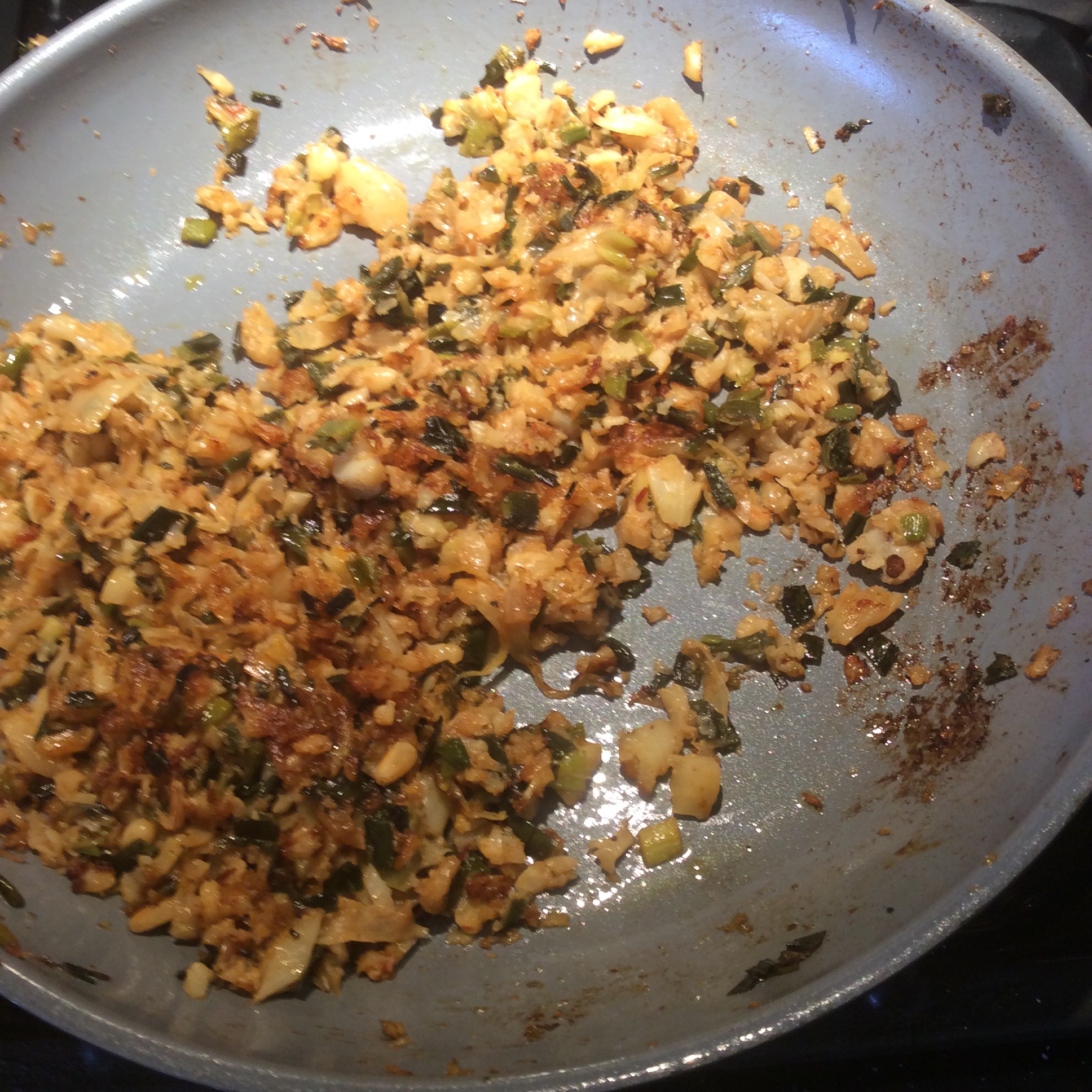
My last post was about a low-carb version of the classic peasant dish colcannon, and I suggested making plenty because there are lots of uses for it. Today I was surfeited with delicacy and wanted a punchier flavor. Easy. I threw a pint of leftover colcannon (intended to serve two) in a skillet with a bit of bacon grease and a chopped canned chipotle chile in adobo, seeds pulled out, a spoonful of the adobo added too. I fried this mixture over medium heat, going for some browning. The vegetables in the colcannon will brown easily because of the milk proteins in the butter and cream that you used when you originally cooked it. When as brown as you like, throw in a handful of grated cheddar, stir another half minute until the cheese softens, and serve with plenty of ground black pepper on top. I needed a very filling meal, so added a quick egg salad with sliced hard-boiled eggs, homemade olive oil mayonnaise and fresh chopped tarragon (just up this week!) on a slice of flaxseed bread. If I had been less hungry, I would just have sliced half an avocado alongside.
Cauliflower and cabbage are both chameleon vegetables and will take on almost any flavor that you care to give them, within reasonable limits. So keep pushing their limits. I’m still debating what to make with the rest of the leftover colcannon.
Archive for the ‘Ketogenic diet’ Category
26 Mar
Colcannon II
13 Mar
Low Carb Colcannon
A few decades ago when I owned a sheep farm, I grew a lot of potatoes and made a lot of colcannon in the winter. This old Irish dish combines smashed boiled potatoes with milk and cream, and incorporates other vegetables according to your fancy. Onion and cabbage are traditional favorites, herbs and greens are common, and others are possible.
These days I want low-carb vegetable dishes, but I still want my easy accommodating colcannon and I have a ton of green garlic and green onions around, so I started there. I write a lot about green garlic and green onions because they are so easy to grow and have available for earliest spring, so chock-full of allacin and various antioxidants, and so very tasty. If you grow no other vegetable, put some small organic onions and at least a few dozen garlic cloves in among your ornamentals in fall (as long as you don’t use pesticides,) and next spring you will have these sweet and delicious vegetables to work with.
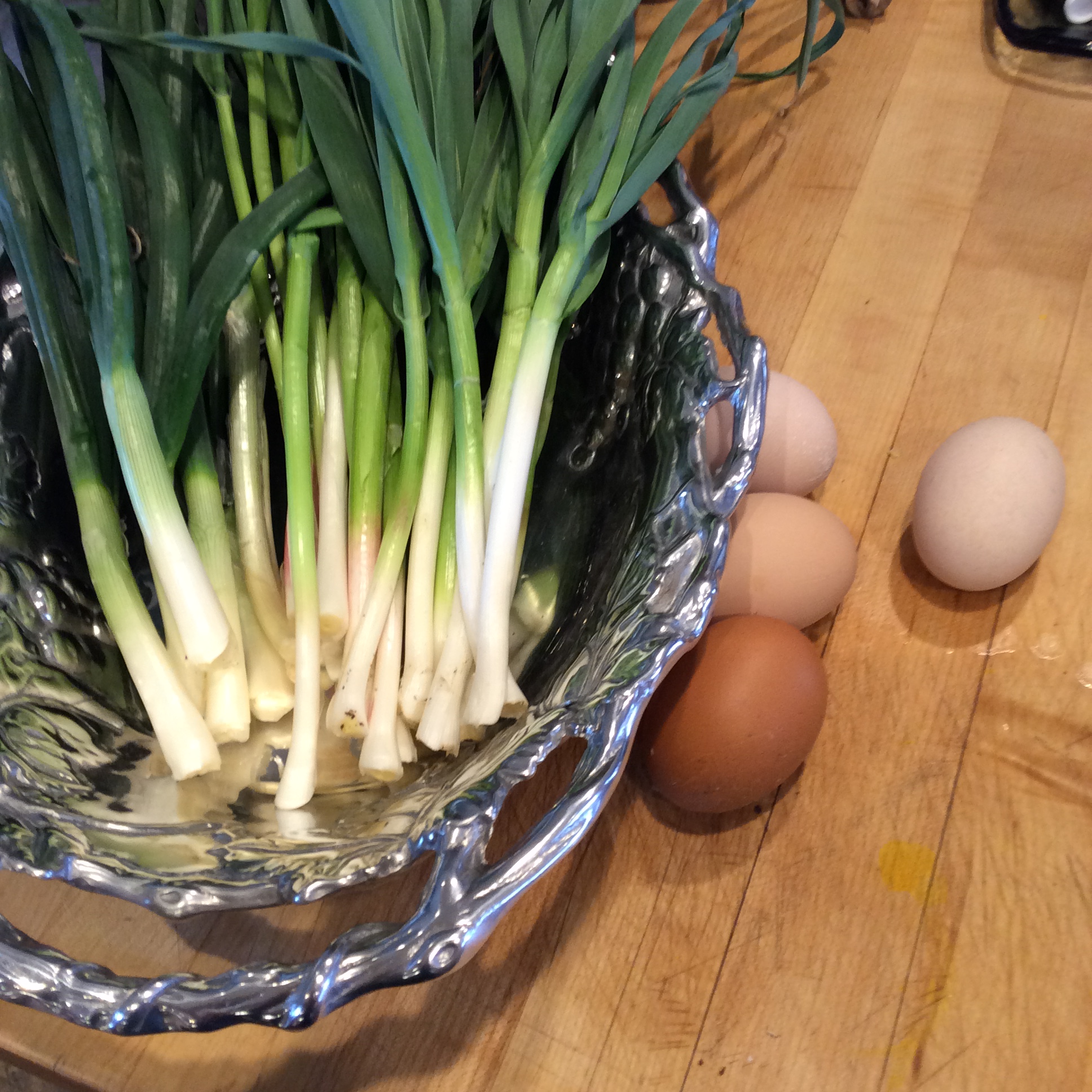
I started with six big green onions, a dozen stalks of green garlic, a head of cauliflower, half a head of cabbage, and butter and cream.
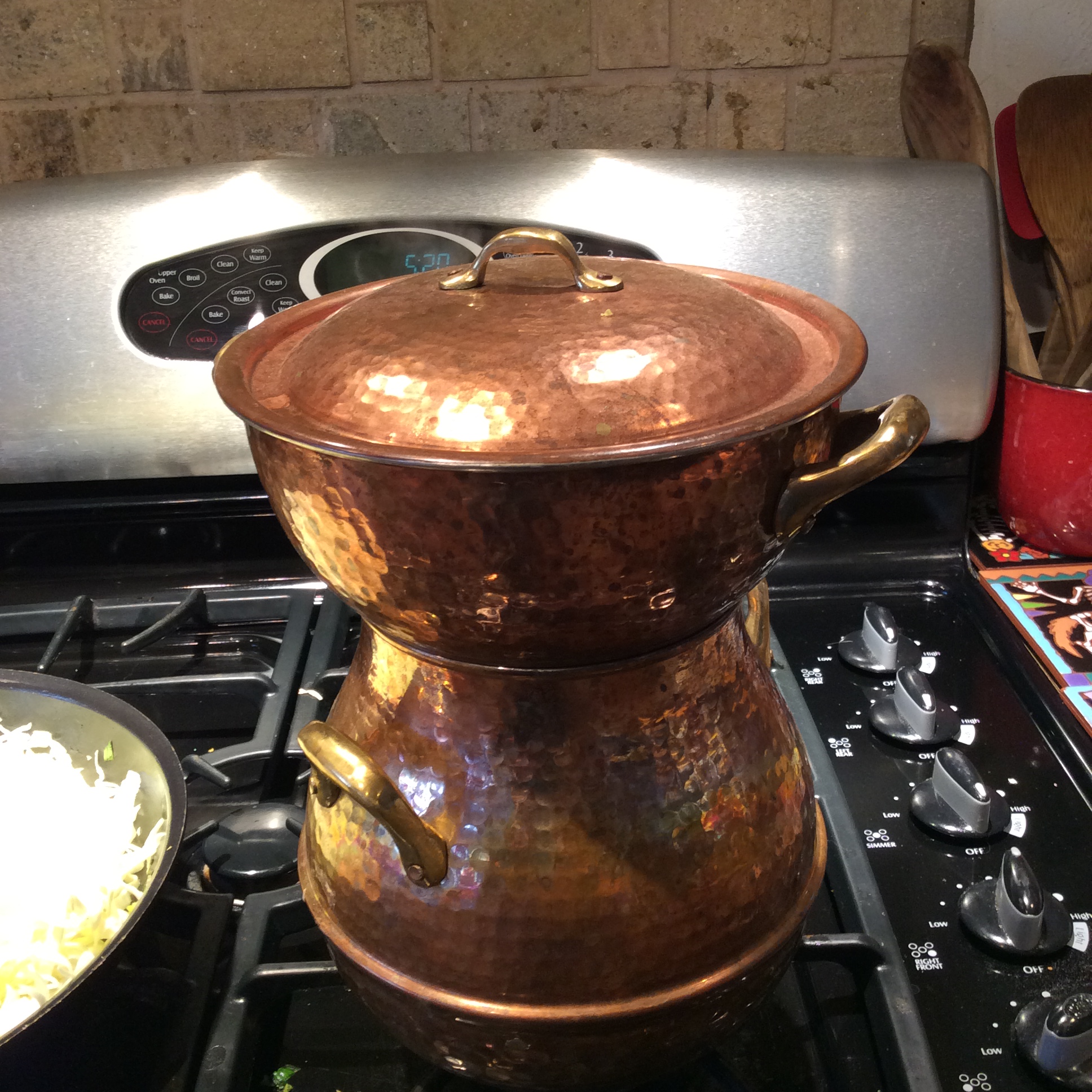
First, cut the florets off the cauliflower and put them in the steamer for half an hour. They need that much steaming time to be soft and smashable. I use my old couscousierre to steam veggies because I like to look at it, and incidental pleasures are half the fun of cooking.
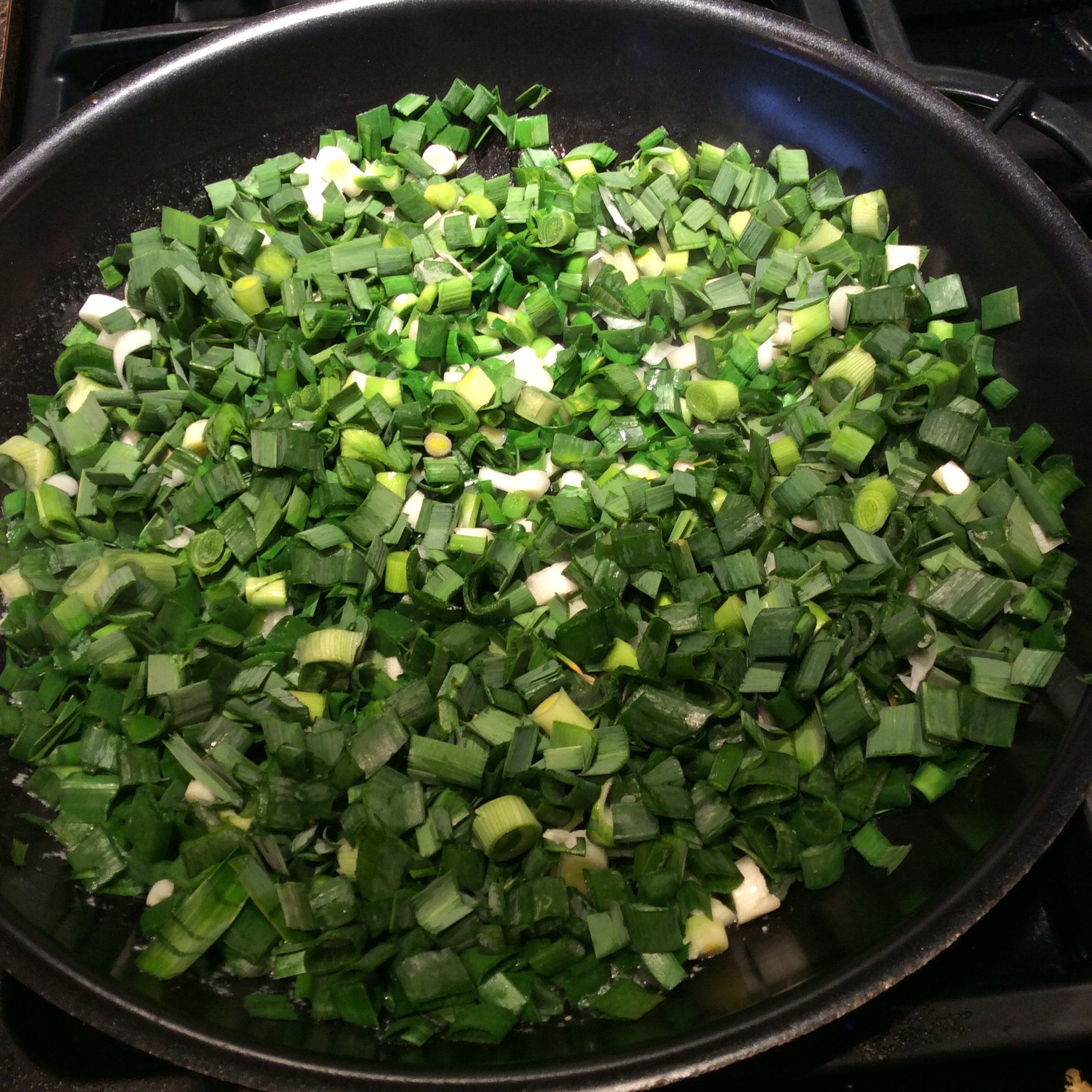
Wash the green alliums and trim off any yellowing or dry-looking leaf tips. On a large cutting board, slice the washed and trimmed green onions and green garlic into quarter inch cross-section slices.
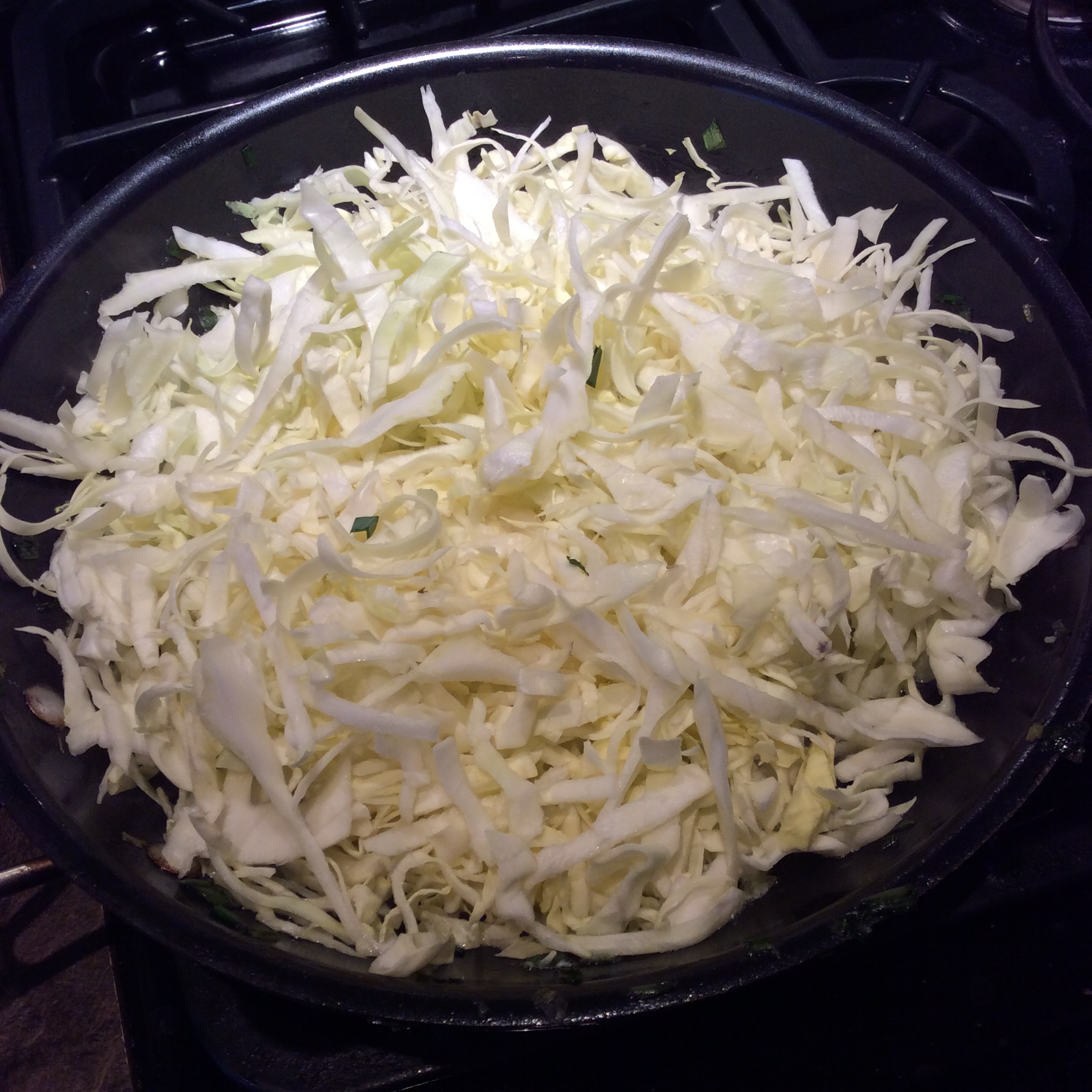
 Heat a large skillet over medium heat, put in about 3 tablespoons of good butter, and sauté the greens over medium heat, adding some salt and stirring frequently, until thoroughly cooked, soft, and sweet. Meanwhile, slice the cabbage into very fine slices, discarding any thick ribby pieces. When the green alliums are cooked, scrape them into a bowl, return the skillet to the heat, add another good-sized knob of butter, and put in the cabbage shreds. Cook them over medium heat with some salt, stirring frequently, until very thoroughly cooked and sweet. This takes a while, and you need to keep an eye on the time and open your steamer when the cauliflower has cooked for 30 minutes.
When the cabbage is cooked, put in the steamed florets and start smashing them with the back of a big wooden spoon. When thoroughly smashed, add half a cup of heavy cream and the cooked green garlic and taste the mixture for salt, correcting to taste. Cook over low heat for another half hour, stirring occasionally, to let the flavors amalgamate. Stir in a generous amount of freshly ground pepper and serve.
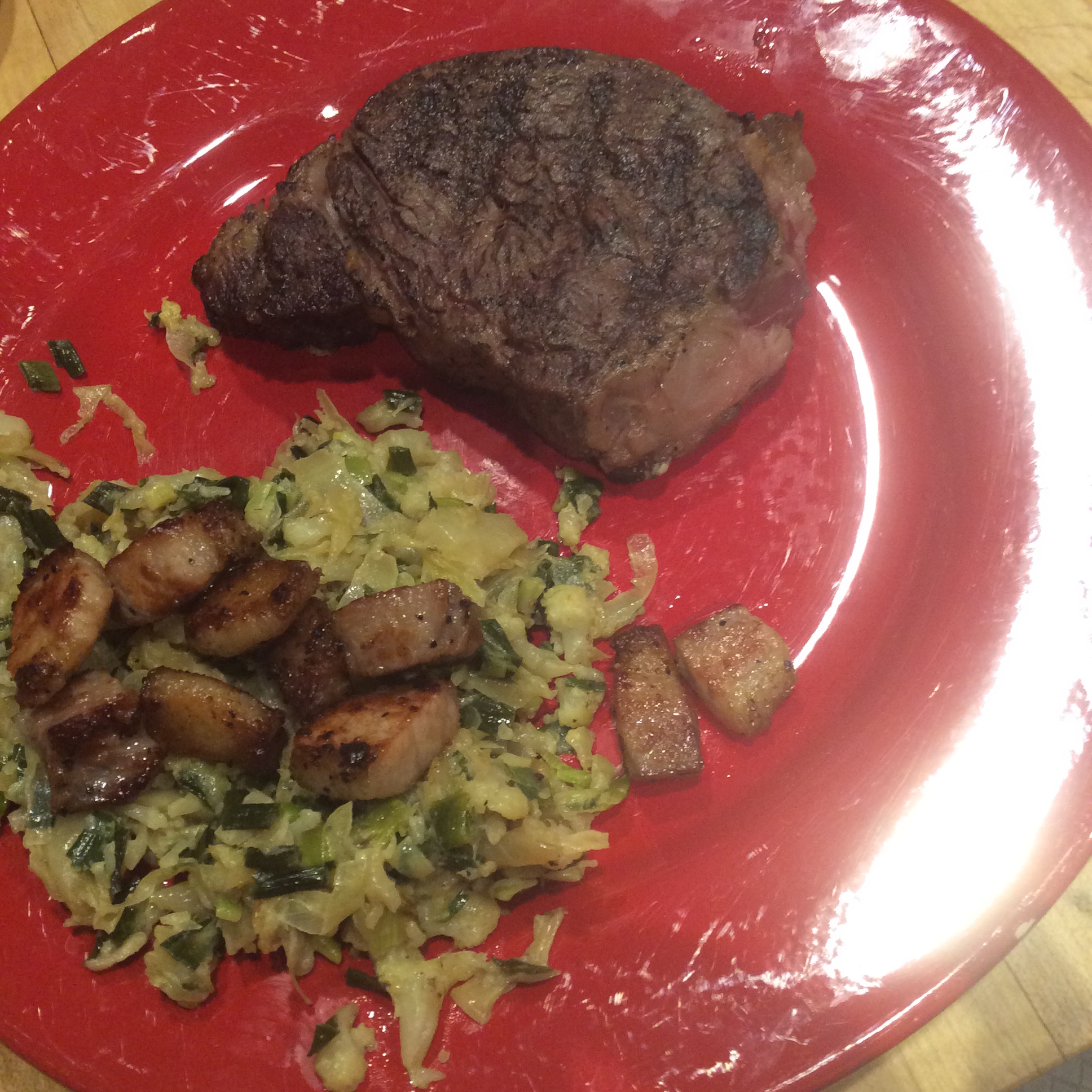
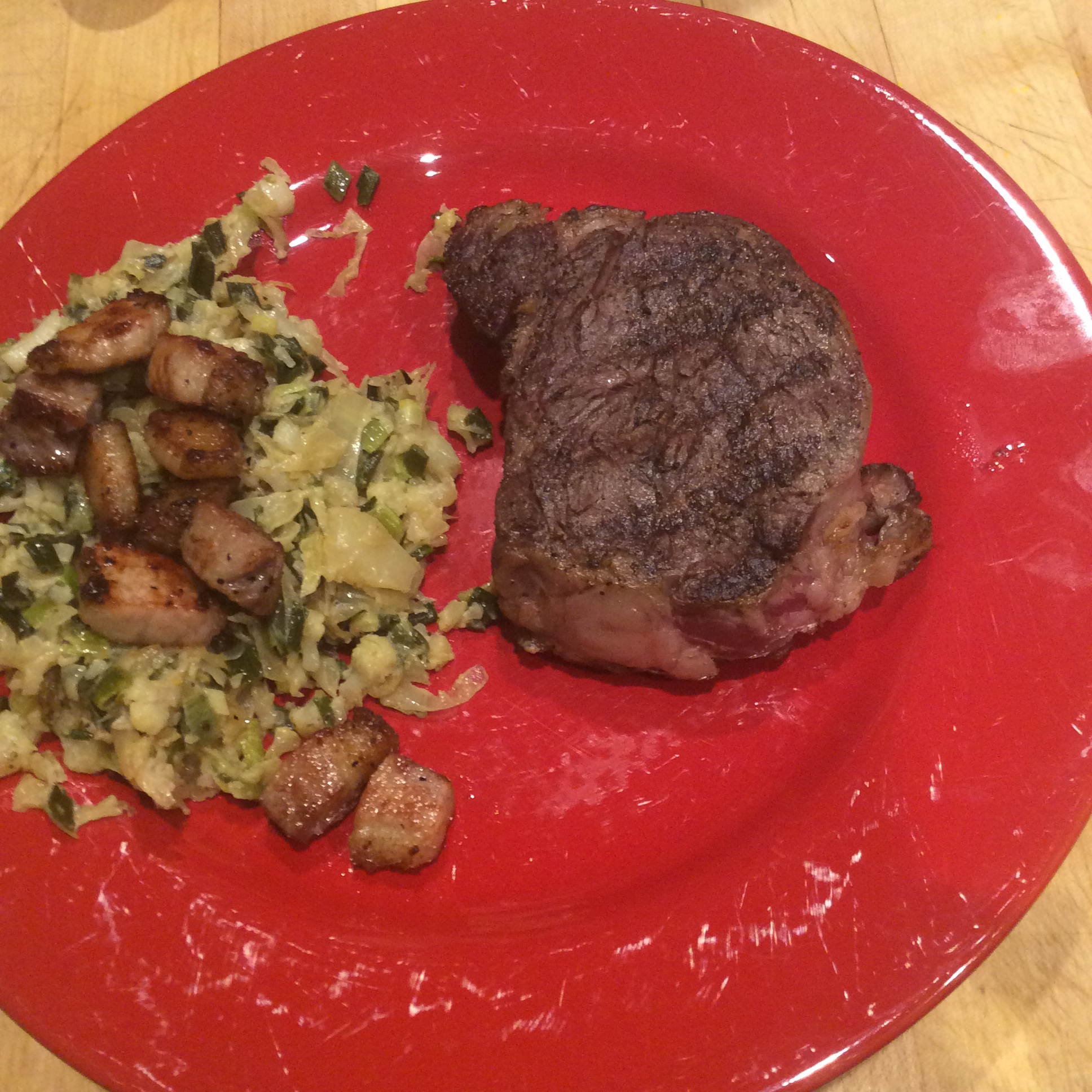
This is the fun part. Serving possibilities are endless. I pan fried some lardons of mild bacon to top it off and put a small steak on the side. It’s so filling that I didn’t eat more than a bite or two of the steak, so now I have leftover steak to plan another meal around.
Unlike potato colcannon, which can get gummy if reheated, the cauliflower version is even better when left over. You can top it with sautéed greens, or a fried or poached egg, or both. A bit of mild cheese could be grated in or gratineed on top, or this could accompany a roasted chicken. It is a wonderful basis for meals in mixed omnivorous-vegetarian crowds, because the vegetarians will find it satisfying on its own or with an egg and the omnivores can have meat on top or alongside and will probably not eat much meat because it isn’t needed.
I do think it’s wise to respect the essentially sweet and delicate nature of this dish, and keep seasoning simple. If you take your time with the sautéing, and use butter, the cabbage and green alliums develop wonderful depth of flavor. Heavy cream is essential in my opinion, and it has a lovely sweet flavor of its own. I also think a key step is to add some salt during the sautéing process so that it cooks into the vegetables well. Just not too much. This all takes some time, about an hour from bringing the green alliums in from the garden to finished colcannon, so there is no point in making smaller quantities. It will get eaten.
10 Mar
Low Carb Easy: The Clay Pot Bake

When I’m having special friends over for dinner and want to have plenty of time for serious conversation, my favorite weapon is a 14″ Spanish cazuela that I got at a Spanish import store many years ago. Any large clay baking pan would do just as well. The idea is to be able to roast chicken and vegetables together in chosen seasonings and have a veggie-rich low-carb meal come out of one pan without a lot of fuss, and be able to bring the baking dish straight to the table fairly attractively. Dark meat of chicken is ideal for a “mixed bake,” and if you don’t grow your own, get the best pastured chicken that you can lay hands on.
Decide on your seasonings. One of my favorites is a loose paste of a few cloves of garlic, about half a cup of oil-cured black olives, a little salt ( half a teaspoon or so, since the olives are pretty salty,) a sprig of rosemary chopped, the juice of half a lemon, and enough olive oil to form a runny paste in the food processor. Work this paste over eight pieces of chicken thighs and legs and set them in the refrigerator overnight.
Then choose your vegetables. A head of cauliflower cut into florets is top of the list for me because it takes up the seasonings so beautifully. Leave out all the stemmy center, which is a nice break for your backyard goat. I always add a cup of thickly sliced celery and a lemon sliced thin, peel and all. You can put in 7-8 chopped stalks of green garlic at this time, or if you already have some cooked green garlic in the refrigerator, it can go in later with the chicken. Have your veggies prepped in a bag in the refrigerator.
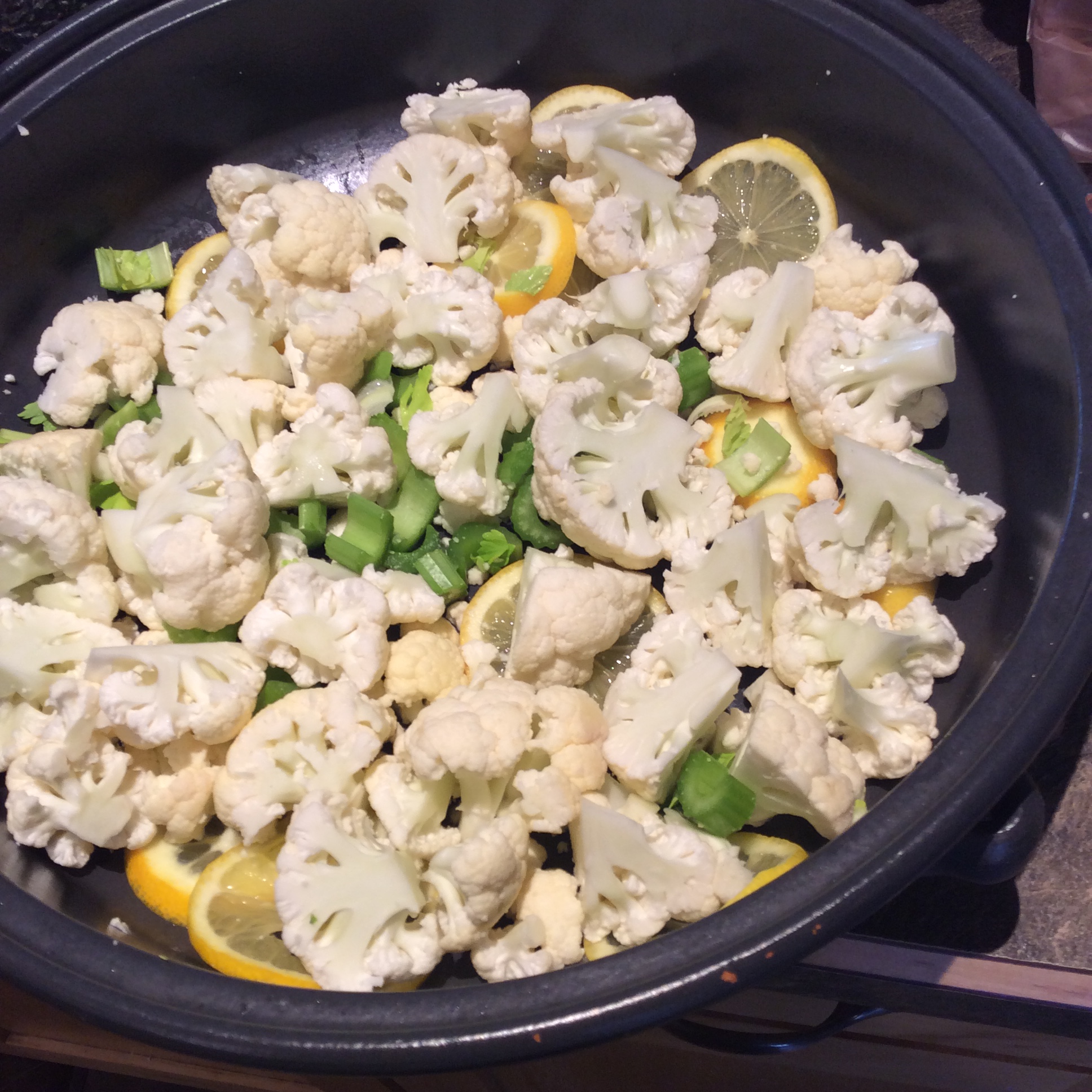
About forty-five minutes before you want to serve, preheat your oven to 425. Spread the lemon slices in the bottom of the dish and put the other veggies on top. Sprinkle lightly with salt but for the most part they will be seasoned by the chicken. Stick in the oven and roast about 20 minutes. Meanwhile, enjoy some wine and nuts or other nibble with your company. Pull the pan out and arrange the chicken on top of the veggies skin side up. If you like (and I do,) you can also add several stalks’ worth of green garlic at this time before putting in the chicken if you have green garlic waiting, pre-sautéed, in the refrigerator. Glop any remaining seasoning paste on top and pour in about half a cup of rich chicken broth to prevent burning. Return to the oven and roast until the chicken is done, put the pan on a trivet on the table, provide a large serving spoon and a pepper mill, and eat. That’s all there is to it.
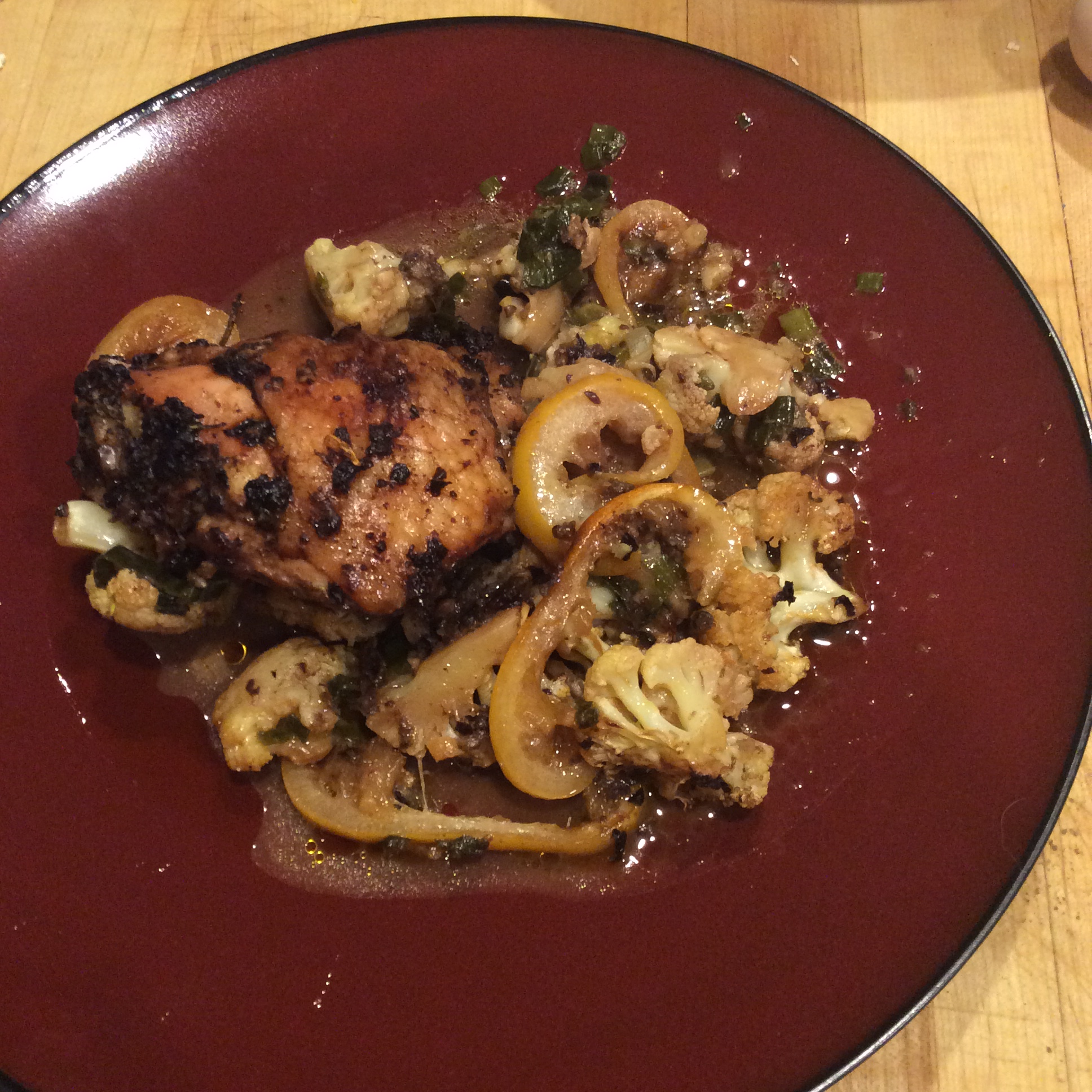
I find the softened, slightly caramelized lemon truly delicious and include a bit of it in each bite, but dubious guests can shove it to the side of their plate if they prefer and still get the flavor. I only suggest doing this with organic lemons.
Even people who don’t usually eat low-carb will find this a satisfying meal, but you can provide some toasted sourdough bread if you want to make sure.
Berries or dark chocolate or both make a good finish.
14 Feb
Animals, Waste, and the Urban Homestead
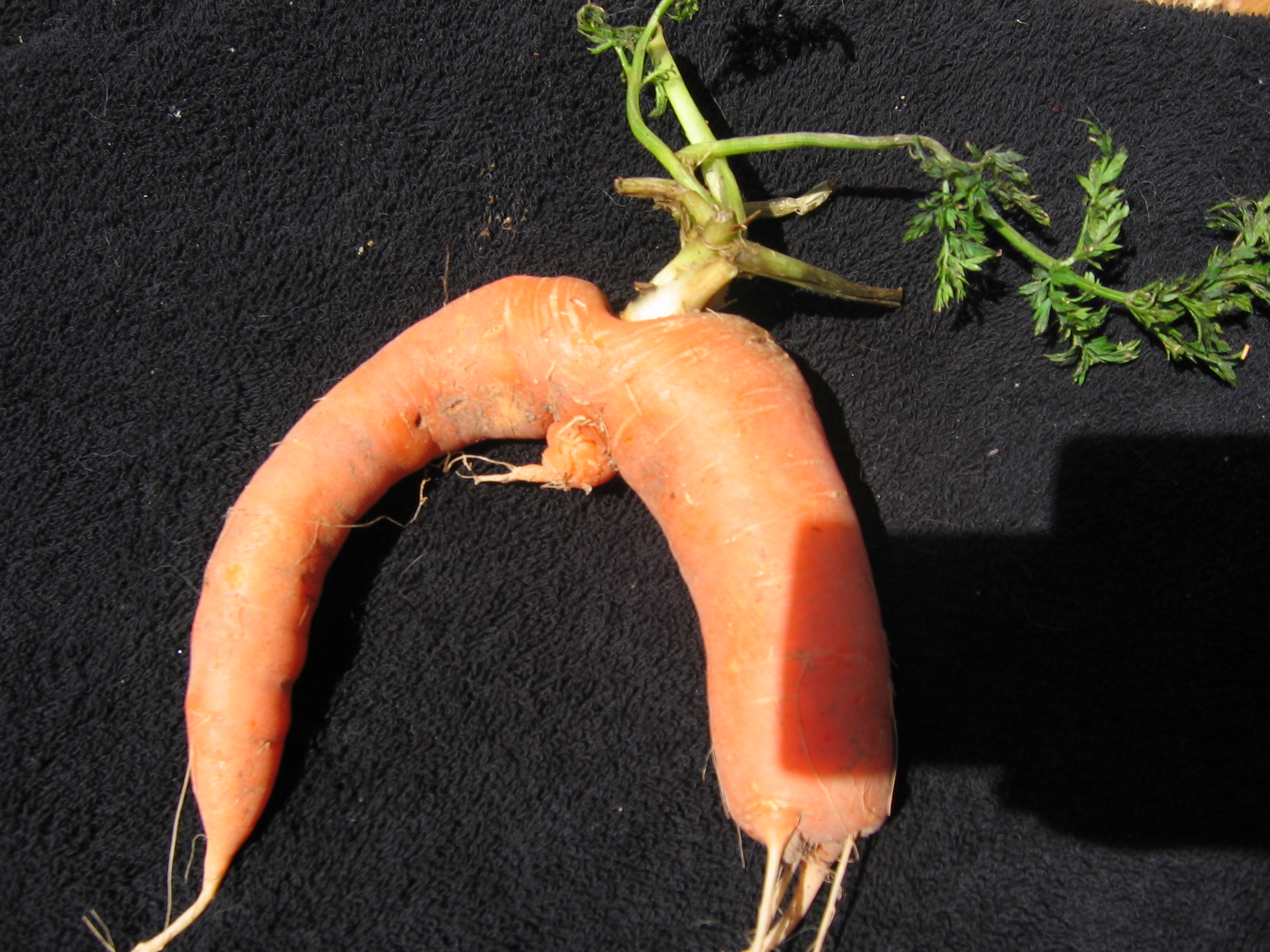
Many years ago now, in one of my earliest blog posts ( hard to imagine that I’ve been doing this for eight years now,) I posted the picture above of a carrot from my hard soil, because I thought it was funny and I had little else to talk about that day. Now, I think that my ardent carrot is part of a much bigger picture, and that picture is the ugly landscape of food waste.
Globally, unbelievable amounts of food are wasted, enough to feed a lot of hungry people, and you can read about that and about what one lively activist is doing about it in this article.
My own interest in the subject is smaller and more local. What can be done to reduce waste around our homes and neighborhoods? Start with the carrot above, and with imperfect produce in general. Are you willing to buy it and eat it? If your favorite grower at the farmer’s market sold imperfect stuff at a somewhat reduced price, would you buy it? Let them know.
When you are the grower, the task can be more satisfying, and small livestock can help. Eat what you can yourself, and share with others. People have been so market-conditioned to demand perfect produce that I can end up giving my friends the most perfect specimens and eating the imperfects myself. Get yourself a good nose-to-tail vegetable cookbook to help you eat and like the “nasty bits” of your veggies. Then look at what’s left and who will eat it, because a lot of it isn’t ready for the compost yet.
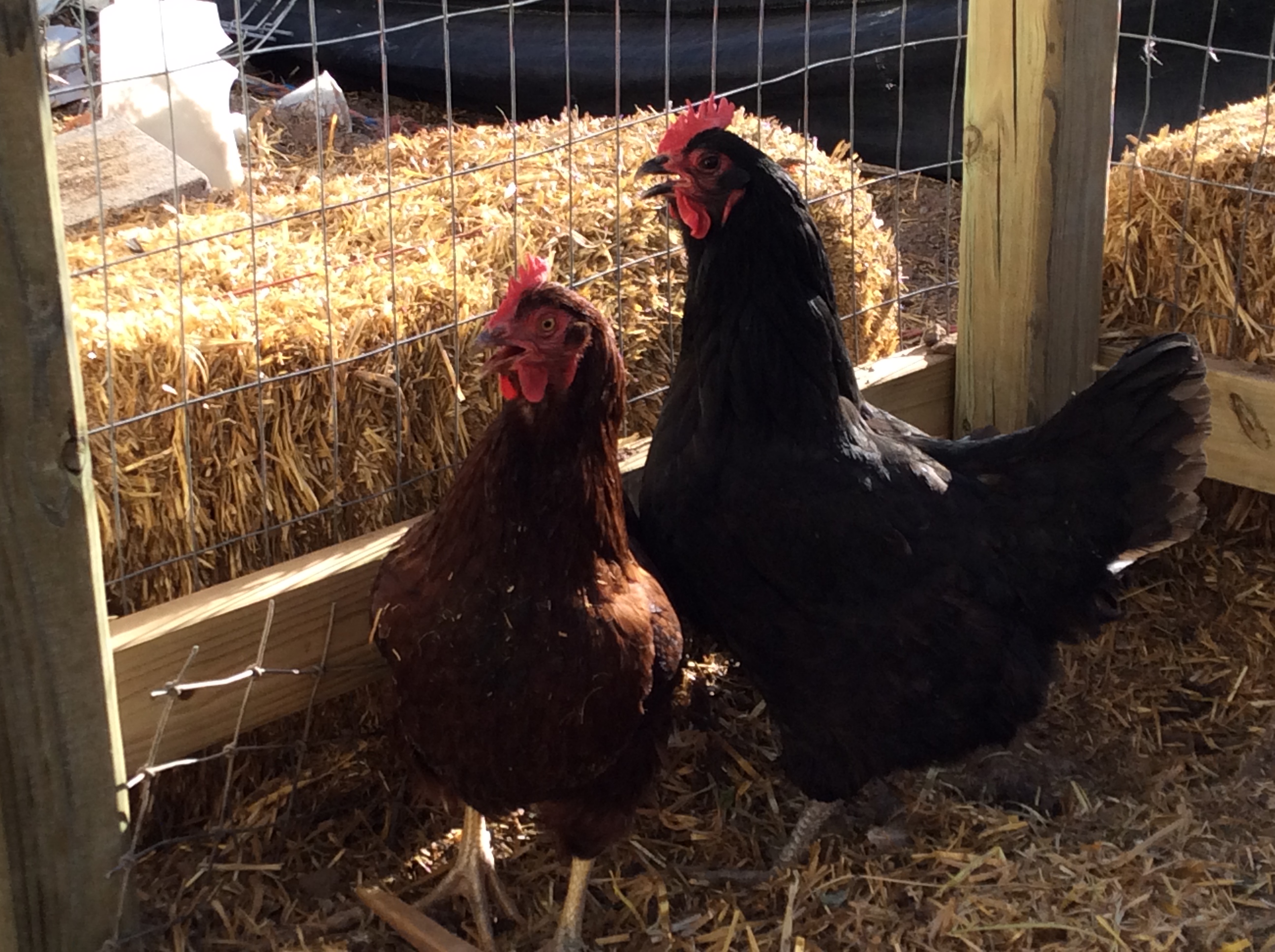
Chickens are your best friends when it comes to reducing waste. They will eat and relish greens in huge quantities, and will eat carrots, winter squash, and other chunky things if they’re cooked soft or ground in the Cuisinart. They love the residue out of the juicer, and will dispose of most of your table scraps if they are chopped finely. Personally I do not limit my chickens to a vegetarian diet because chickens are among the most profoundly omnivorous animals around, along with pigs and we ourselves. Any arguments that feeding them “garbage” is inhumane are absurd when said “garbage” was on my own plate and would have gone down my own gullet if my appetite had lasted a bit longer. They scratch over, poop on, and compost what they don’t eat, providing you with increased bounty down the road. I have read the argument that feeding them in this informal way malnourishes them, and can only reply that as long as extra calcium is supplied, my little flock shows admirable vigor and my hens lay industriously through age 4. A good laying pellet is available to them free-choice.
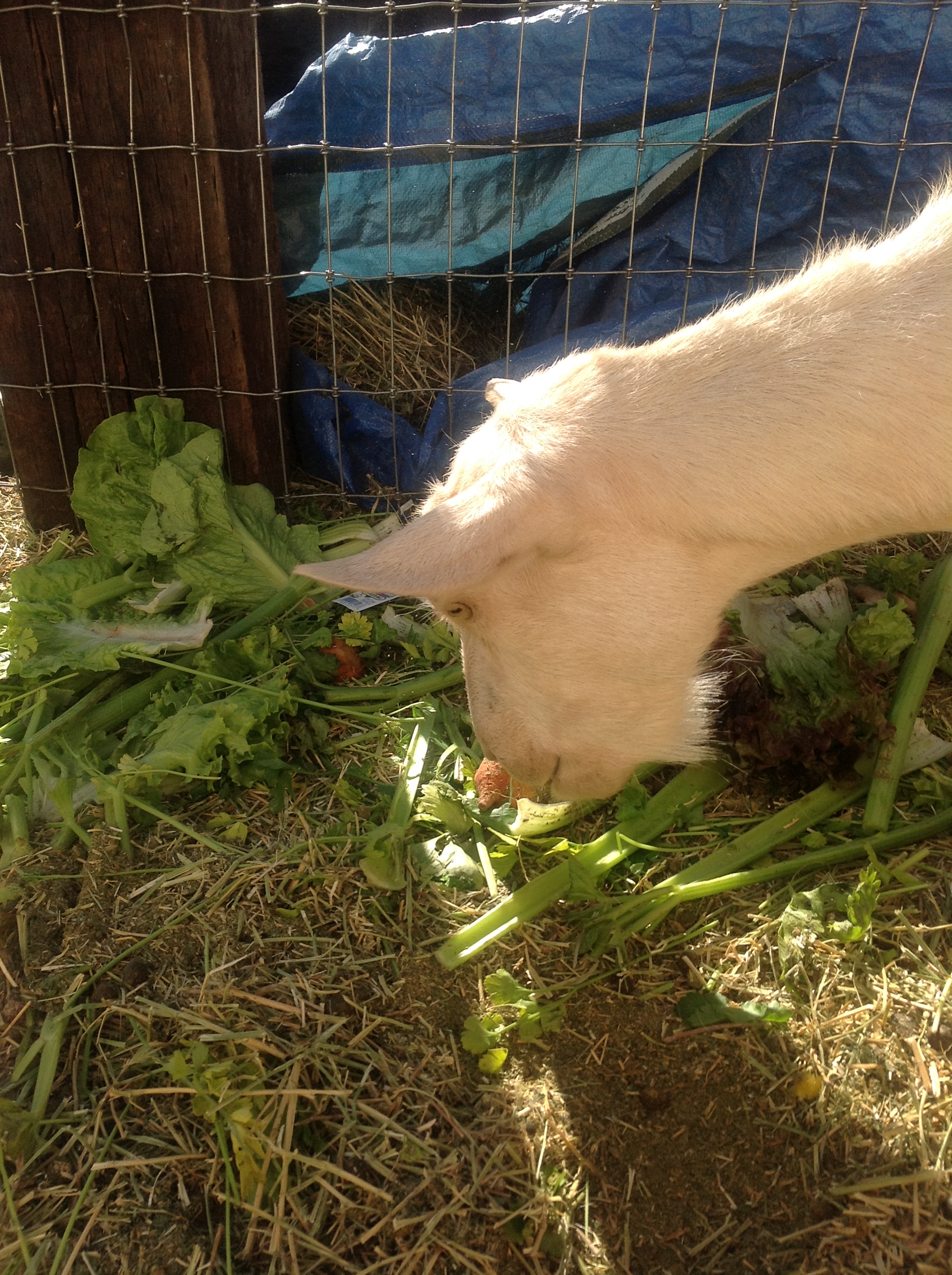
Goats occupy a different place in the waste-eating structure. Contrary to general belief they are fussy eaters and will nose at and play with anything but will only eat things that are choice in goat terms. Goat treats include anything that’s woody and fresh, which is why you don’t keep them loose in your yard: all trees and shrubs will be killed in short order. It is also why they effortlessly absorb things that you have no other use for, such as rose prunings (unsprayed, of course.) My goat loves rose trimmings, corn stalks, carrots, pumpkins, celery and other things that the chickens have no use for, eats all my fruit tree trimmings and some excess fruit, gnaws every edible bit off broccoli stems and other large coarse plants that are otherwise hard to dispo, and will eat some large coarse weeds but only the ones that she personally selects. Amazingly, she rejects kale, lambs-quarters, and other things that I consider delicious. We do have a major trash tree in my area, the Siberian elm, and she adores them, so I cut down the ones that are growing where I don’t want them and leave the stumps in place, coppicing them for future goat food. She also eats a lot of expensive alfalfa, so believe me when I say that there is no such thing as a free goat. On the contrary.
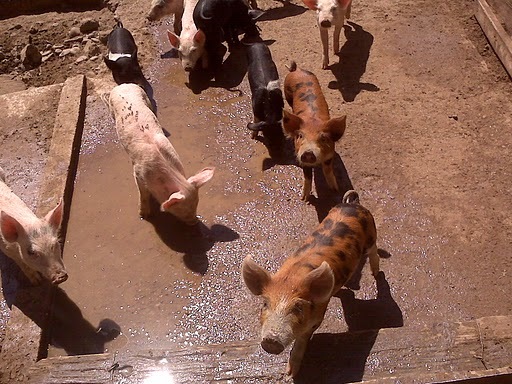
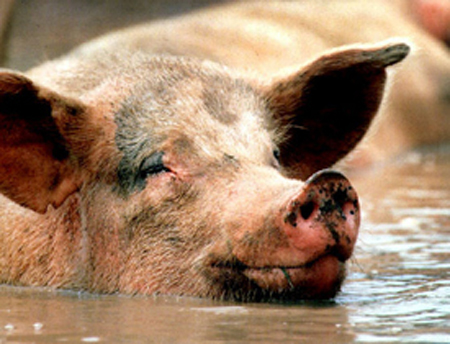
Pigs are among my favorite animals, and throughout the third world they are prized for turning waste into human food. I wish that I could recommend them for the urban homestead, but they smell too bad when kept in small areas and get too big. A full-grown hog of breeding age is practically the size of a dining room table but stronger and more determined. Urban Farm Online has a good brief summary of why they don’t recommend pigs. I have heard it suggested that the much smaller Vietnamese pig might be good for urban bacon, but I don’t know anything about that and don’t know if anybody has tried it. If it could be made to work, it could be interesting.
I would not want any of the above to be taken as saying that you can feed animals free on household scraps. If you have animals, you can plan to spend plenty of money on feed. You will also spend time learning to care for them, and then attending to their daily needs. But they will utilize some garden and kitchen leavings and supply you with a nice end product.
 My urban homestead