Archive for the ‘Ketogenic diet’ Category

“Processed” Food

IMG_5298

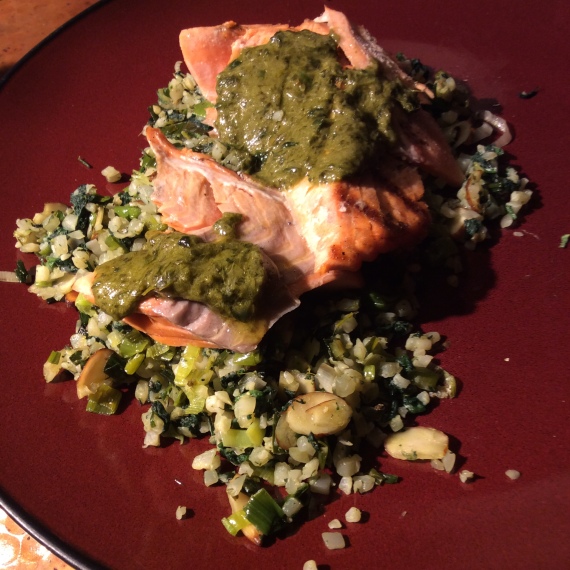
Like everyone else who works, I have a lot to do when I get home and some nights I need help to get a healthy dinner on the table. I eat a ketogenic (low carbohydrate) diet and don’t have pasta and rice and bulgur to fall back on. For those nights I keep some “fast food” in the freezer, like riced organic cauliflower. If I’m thinking ahead, I leave a bag out to thaw in the morning. More often I didn’t think ahead and need to thaw it quickly in the microwave. Either way, if you just cook it as is, you are going to have a rather damp mess on your hands, in my opinion anyway. So take the thoroughly thawed cauliflower, bundle it in a dish towel, and squeeze the water out of it. You’ll get a surprising amount out. Now you can throw it in a skillet with some salt, sliced green onions, chopped herbs, olive oil, and sliced almonds, and cook over medium heat for about 20 minutes with regular stirring. Don’t add water back. Cauliflower loves to go soggy if it gets a chance. It’s done when the cauliflower grains are done to your preference. I like mine a bit on the firm side, holding their shape briefly to the tooth without any hint of raw crunch.  Check whether it needs more salt before you serve. Meanwhile, grill some salmon as shown here, or warm up leftover chicken thighs, or slice up some warmed leftover meat. Land it on your cauliflower pilaf and flavor it with finishing butter (Montpellier butter with green garlic is shown here) which also lives in the freezer in convenient individually wrapped portions, or just drizzle with your best olive oil.
Some would say that I should grow, grate, and freeze the cauliflower myself if I’m going to use it, and when such people get hold of me, I always suggest that they invite me over for a meal 100% produced from their yard so that I can write about it😉. So far, those invitations haven’t arrived. I am not a believer in making the perfect the enemy of the good, and we are not full-time yard farmers and have to make our modern lives work. Besides, grating cauliflower is one of the few kitchen jobs that I hate and one that I outsource whenever possible. I grow things that are unobtainable at markets or distinctly better when home-grown, and cauliflower is neither. So let somebody else do the work for you.
Regarding the finishing butter above, I am used to horrified shrieks of “It’s GREEN!” Indeed it is, and so are a lot of other good things. Expose yourself (and your family and friends) to green food until you get used to it, and your health will benefit. After all, nobody has ever looked at wild-caught Alaskan salmon at my table and said “Ugh, it’s PINK!” Good food is good food. Close your eyes if you really must, but getting over biases about green is better.
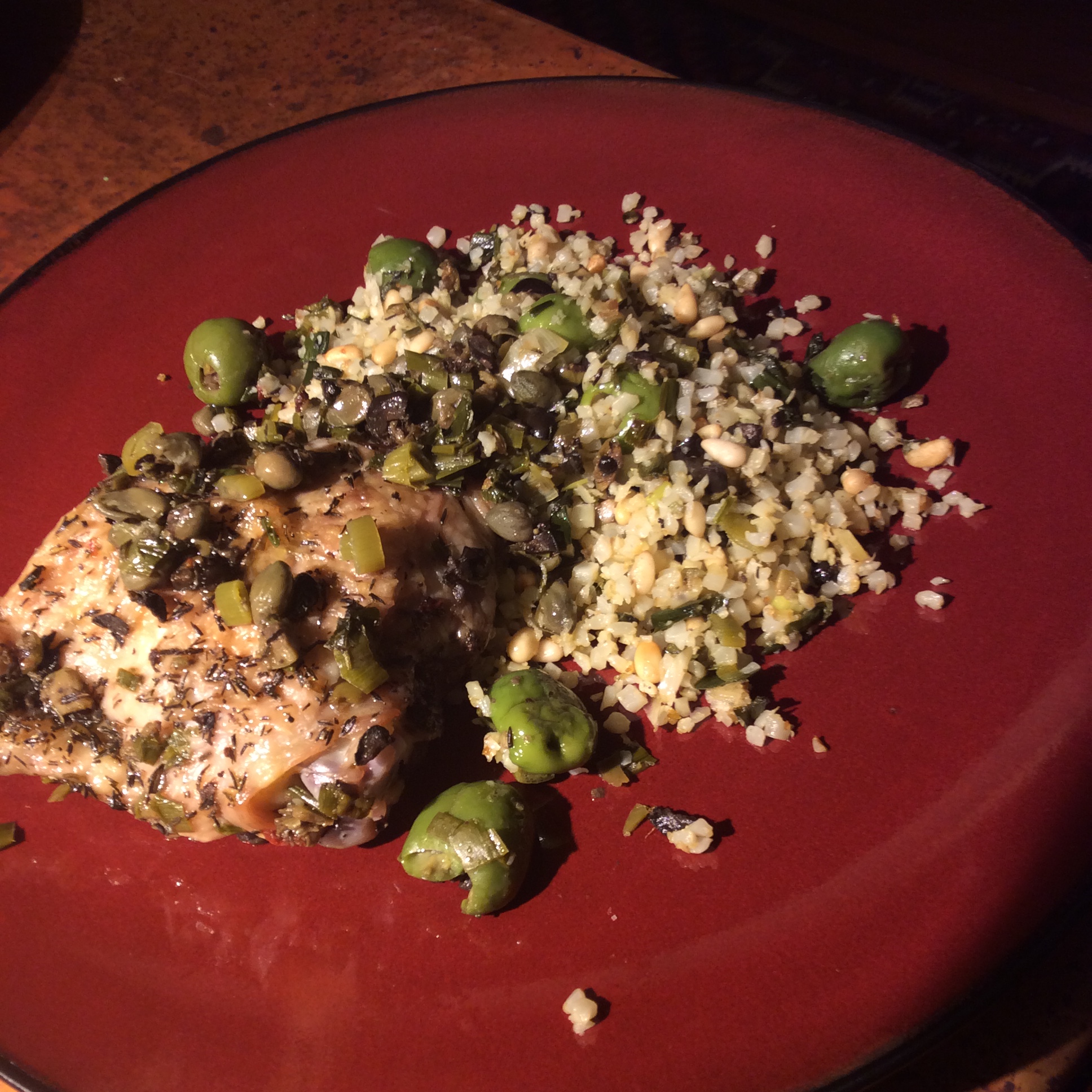
Here’s another version tricked out with capers, green garlic, thyme, pine nuts, and castelvetrano olives.
Full Flavors: Hop Shoots and Goat Chops

“”Boy, I could go for some goat right now” said no American ever. But I have no idea why that is. If you are an urban or rural  homesteader you have probably considered goats because they are hardy, compact, dual-purpose, remarkably productive for their size, and extremely friendly. But you have probably thought, or been told, that the meat is strong-flavored and unappealing.

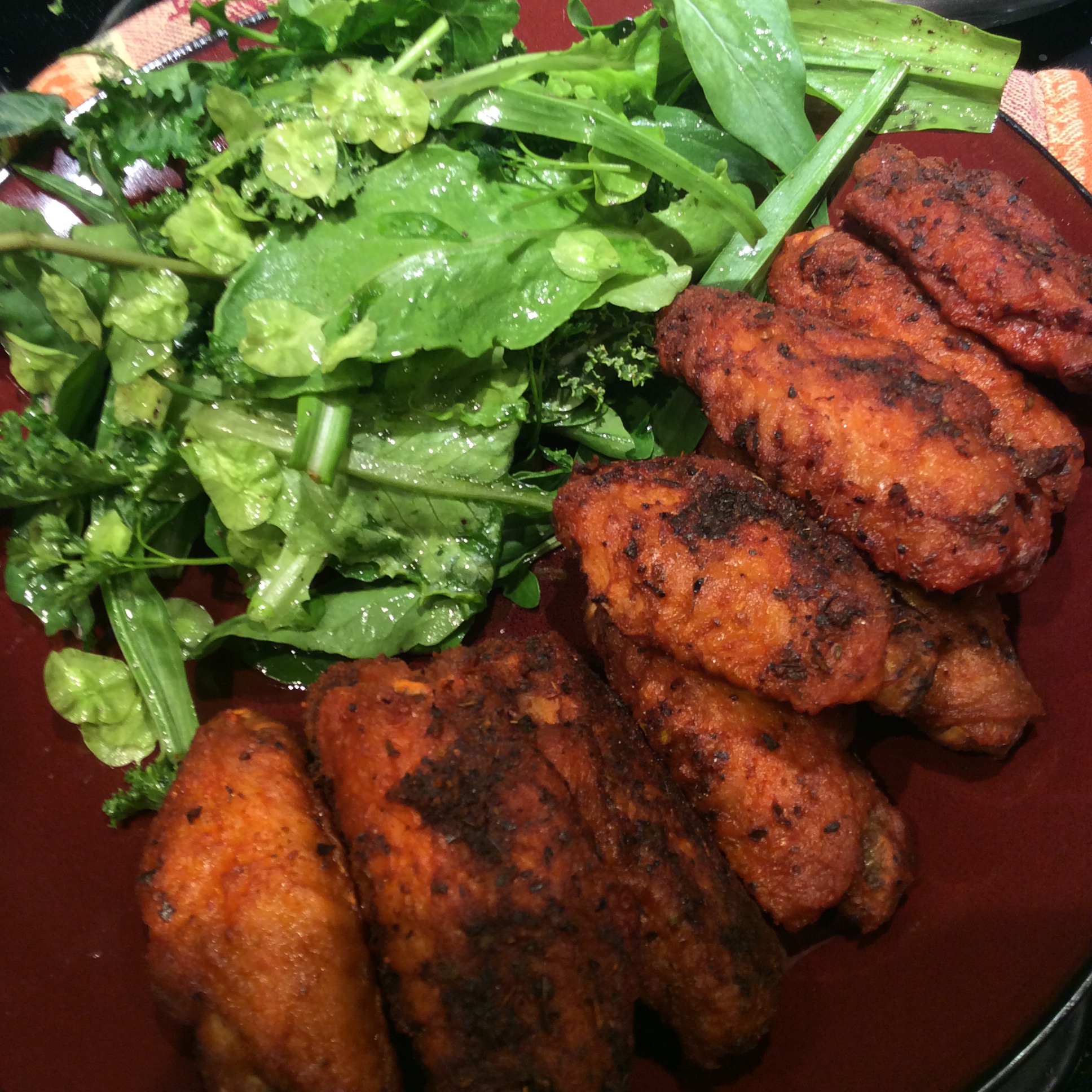
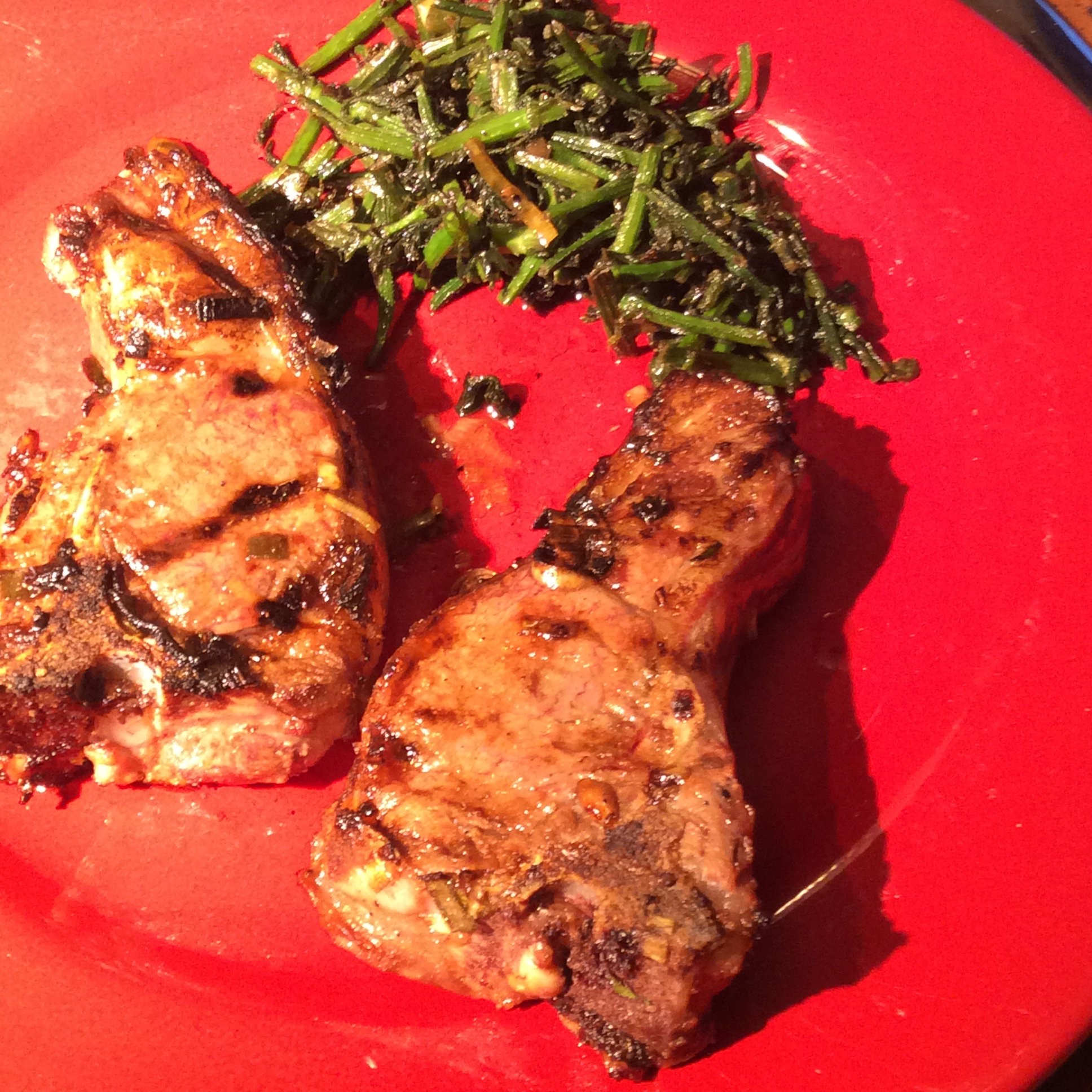
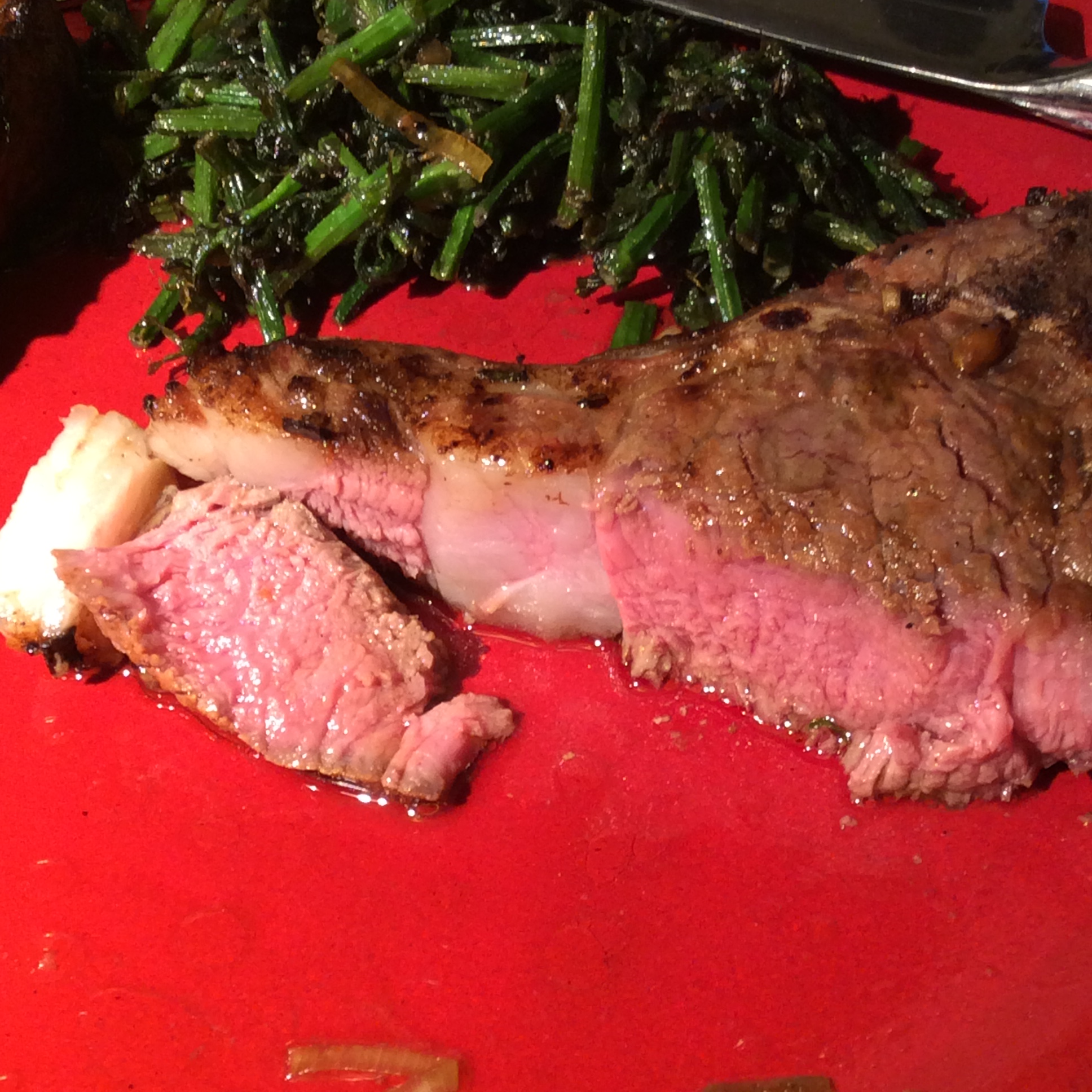
If you are dealing  with an old goat, this is certainly true, but I can’t imagine butchering an old goat. Goats under a year old are delicious, with a full robust flavor that people who shop at the supermarket can hardly imagine, but nothing that can fairly be described as gaminess. The ones that I occasionally produce for our household are 100% alfalfa-fed. If you are lucky enough to have access to such meat, cook it with respect. For the chops, that means marinating with garlic and herbs and grilling medium-rare because the meat gets tough if allowed to dry out. If you can’t get young grass-fed goat, apply the same principles to lamb chops, another meat that has not yet had the flavor bred out of it. Sear on the grill to medium-rare, let rest in a 200 degree oven for 10 minutes, and serve with a veggie that works with robust flavors, such as the pan-grilled hops shoots shown here.

I sometimes think that the direction of mainstream American agriculture is to eliminate anything that has a distinctive flavor. It’s only relatively recently that we’ve rediscovered dry-aged beef and gotten away from chicken breast, which (unless you raised it yourself) is the most tasteless and cottony part of a tasteless and cottony bird. I have tasted prime-grade beef that had no discernible beef flavor, just a fatty faint sweetness.   Spinach is sold in the baby-leaf stage when it has no intrinsic flavor. Corn is as sugary-sweet as cotton candy, with no “corn” flavor to speak of.  It makes me grateful beyond words for my tiny patch of land where I can grow hops shoots and chicory and grape leaves and wild weeds and herbs of all kinds to feed my desire for food that tastes of itself.

By the way, I cook hops shoots a lot in the spring and after trying several methods, I’ve decided that the only one worth pursuing is to cut the shoots in lengths about 1.5 inches long and stir-fry  in a hot pan with some very good olive oil, a hefty pinch of salt, and nothing else. Continue to cook, stirring intermittently, until there are browned spots and the little nascent leaves are fried crisp. This gives them the richness to accent their slight wild bitterness and makes them truly delicious. Like good goat chops, they are a feral and flavorful treat

I mentioned marinating goat and lamb, and my favorite marinade is the one that my mother used when I was growing up, with a tweak or two from me. It’s great for goat, lamb, and beef.  Tinker with it as you see fit, but at least once  try it as written here, with the finish described:

Red meat marinade:

1/2 cup good olive oil

1/2 cup soy sauce

2 tablespoons Worcestershire sauce

1 tablespoon Red Boat fish sauce or 2 mashed fillets of anchovy

2-3 crushed cloves of garlic (I prefer 3) or a couple of stalks of green garlic, sliced fine and then crushed in a mortar and pestle

a small handful of celery leaves, chopped

Mix all ingredients and let sit half an hour, then pour over chops in a dish and let marinate at least four hours and preferably overnight in the refrigerator.

Finish: remove from marinade and salt lavishly on both sides with alder-smoked salt. Sear on a hot grill to produce the ultra flavorful Maillard reactions. Lower heat and grill until done, but no more than medium-rare. Rest in a low oven. Eat and weep. The alder salt makes the meat jump into deliciousness. It’s a case of robust meeting robust and the flame of love being kindled.

If you get interested in producing a bit of your own meat or supporting a farmer who does, study the book “Goat” for more cooking inspiration. Goats and sheep produce milk and meat from land that wouldn’t support crop agriculture, and their meat still has its own distinctive and wonderful flavor. This book was published years ago but, regrettably, there is still nothing else like it.


Permaculture Salad, and Notes on the Siberian Elm

Spring on the urban homestead is so beautiful and bountiful that I can hardly believe it, and I spend more time than I care to admit just wandering around dazed with the wonder and joy of it all.  But there is a practical aspect to my trance, because while giving thanks to the cosmos for the life that surrounds me, I am noting what can go in the salad bowl that evening.

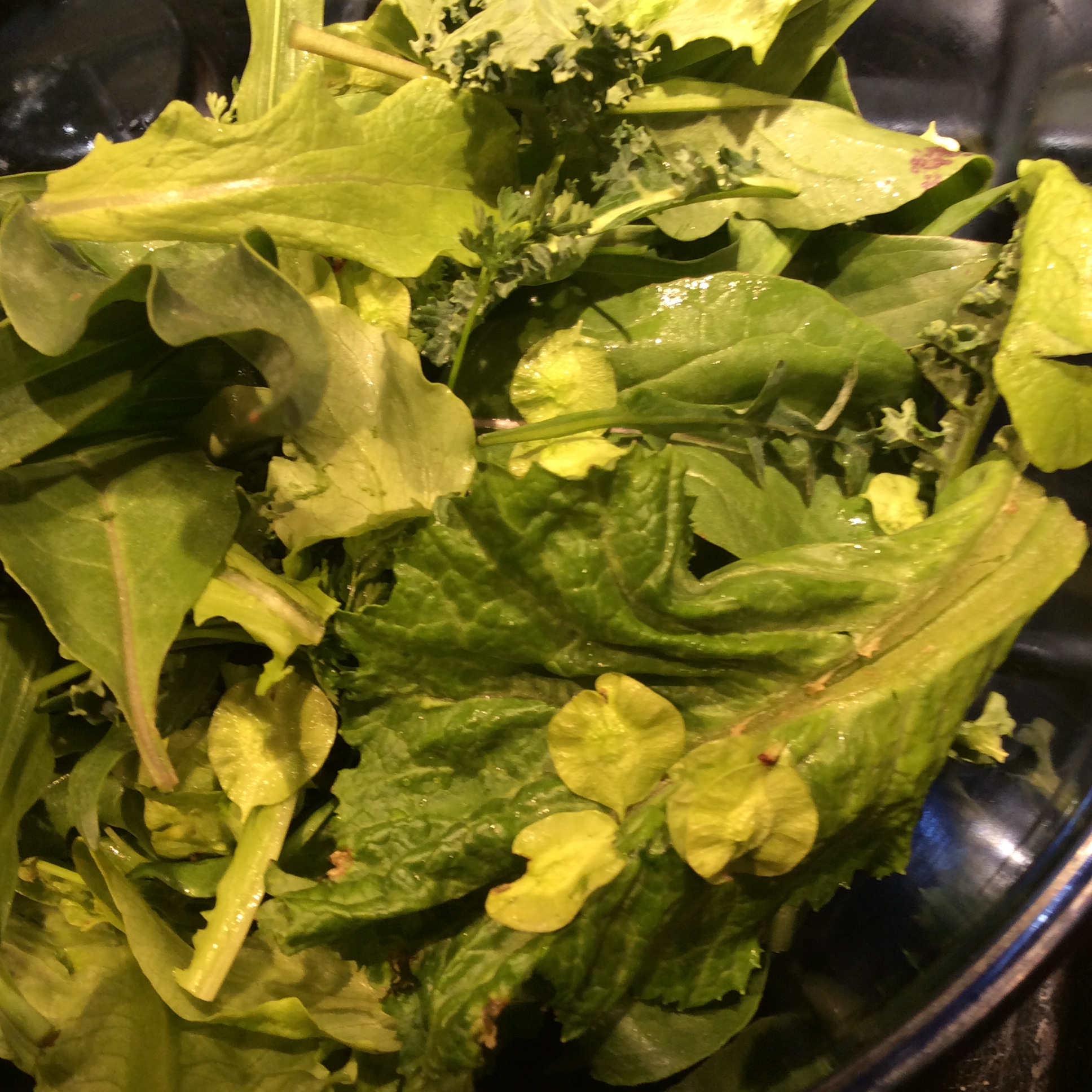
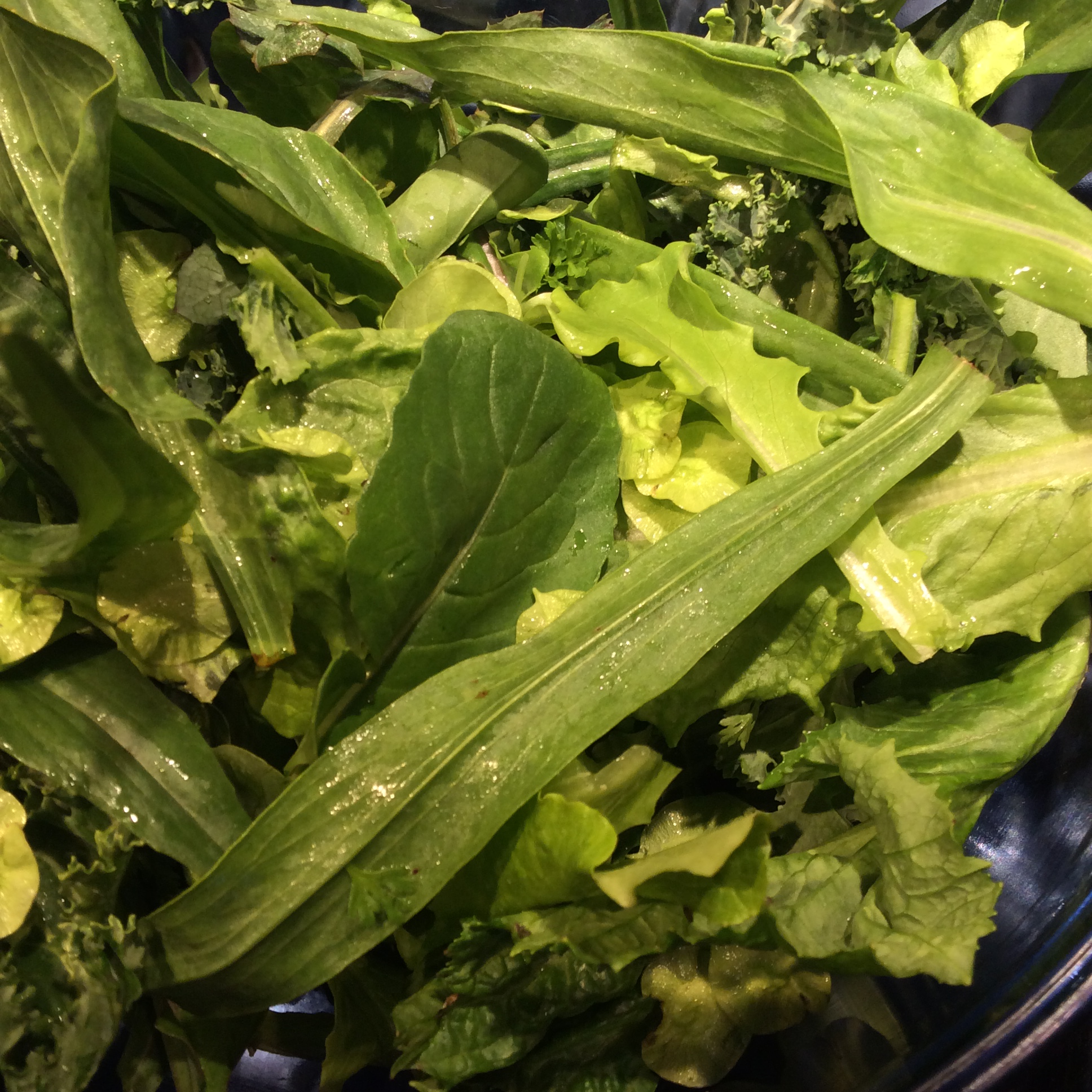
The salad shown above is a pretty typical urban homestead salad. It contains a handful of lettuce, some early arugula, and a lot of biennials and perennials that wintered over and got an early start.   Tiny leaves of curly kale that began to leaf out as soon as the weather got warm are good salad material, still sweet from night frosts, although I don’t like older kale in salads.  There is a little chervil because I threw the seeds around in warm spots last fall.

So here’s the species list for tonight:

Lettuce

arugula

chervil

scorzonera

salsify

wild lettuce

sow thistle

dandelion

Siberian elm samaras

Bladder campion

tarragon

mustard (one Southern Giant plant overwintered somehow)

Green perennial onions

A few further notes on the ingredients: in the past I had tried cooking scorzonera greens and thought they were fairly uninteresting, but for some reason I never tried them as salad material until this year. They are very mild in flavor and have a nice slightly substantial and tender texture, and I am using them a lot now.  They make a good base for some more flavorful greens like dandelion and mustard and arugula.  I have written in the past about how much I love the elongating flower stalks when pan grilled in olive oil, so this is a very good dual purpose vegetable. I plan to plant more of it.

In the past I have mostly used Siberian elm samaras as a “hand salad” eaten spontaneously on walks when  they presented themselves.  They are too mild to be of much interest cooked, although I do use them in greens mixtures sometimes, but I have found that I like them in salads in rather substantial amounts, probably a cup of washed samaras in a salad for two.  There is something about the texture that I enjoy, provided you pick them at the right stage, when they are about the size of a dime and the edges are still fresh green and have not yet grown at all papery.  They need a little bit of cleaning, but most of the debris can be floated off once you have broken up the clumps with your fingers, and 15 minutes of preparation is not too much for a vegetable that cost you no effort or money whatsoever in the growing.

Have a  look at what’s available to you in field and forest and in your own yard.  Learn how to make a really good vinaigrette. Use common sense, and don’t eat plants unless you are completely sure that they are edible.

Perennial Saag Paneer


Yesterday I wrote about making Paneer with my grass-fed goat milk. Today I’ll talk about making saag paneer, one of my favorite dishes, and for a permaculture twist I’ll make it with perennials as much as possible. If you don’t have a weed patch, you can use a bunch of spinach. You will also need fresh ginger, cumin seeds, garam masala, heavy cream, and butter.
Assuming that you have the paneer, the next step is to catch your greens and alliums. I used equal parts each of nettles and bladder campion, and 4 stalks each of green garlic and perennial Welsh onions. The nettles and bladder campion were blanched for about 90 seconds so that the nettles could be handled easily, then drained, pressed, and chopped. The alliums were cleaned, trimmed, and sliced in 1/4″ cross section.

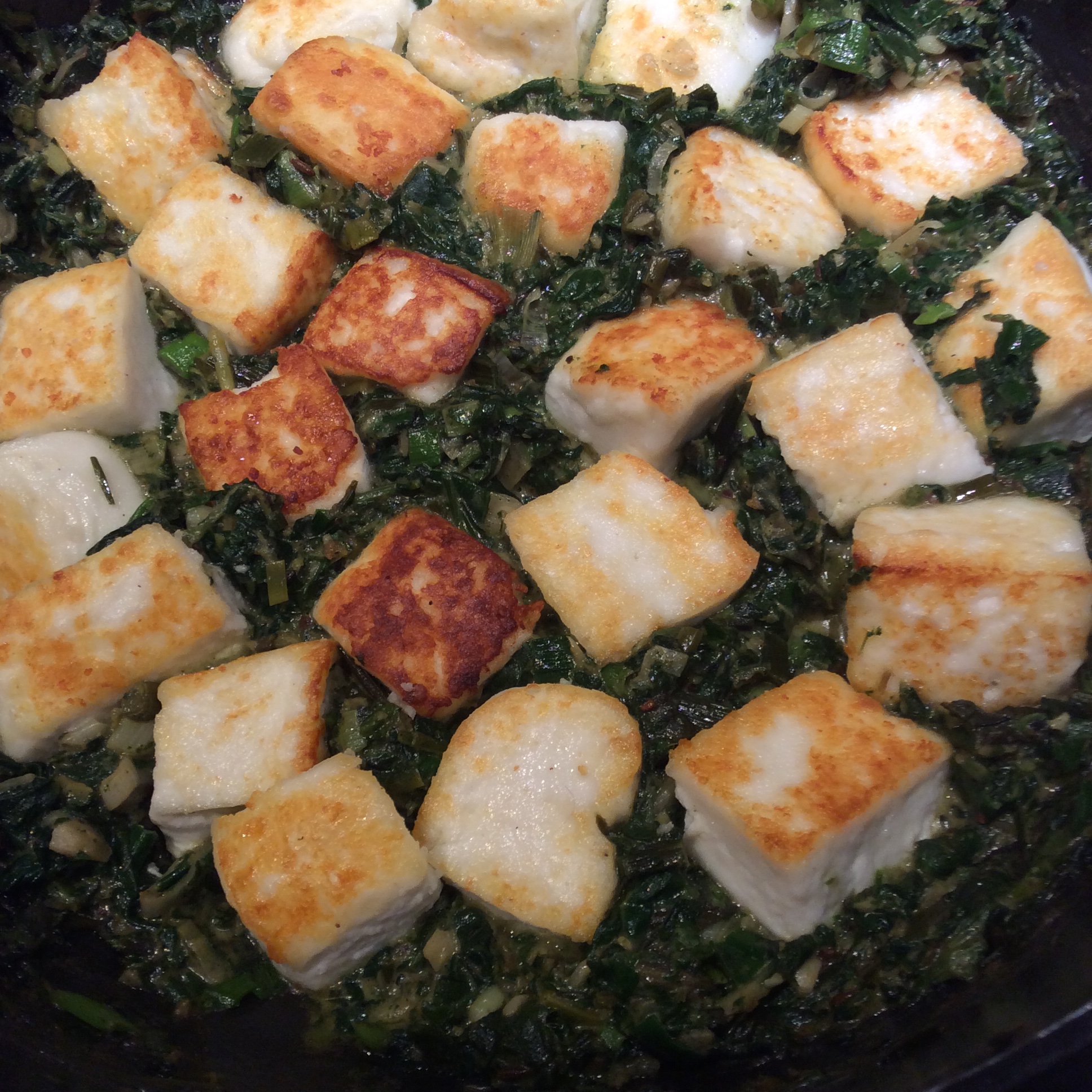
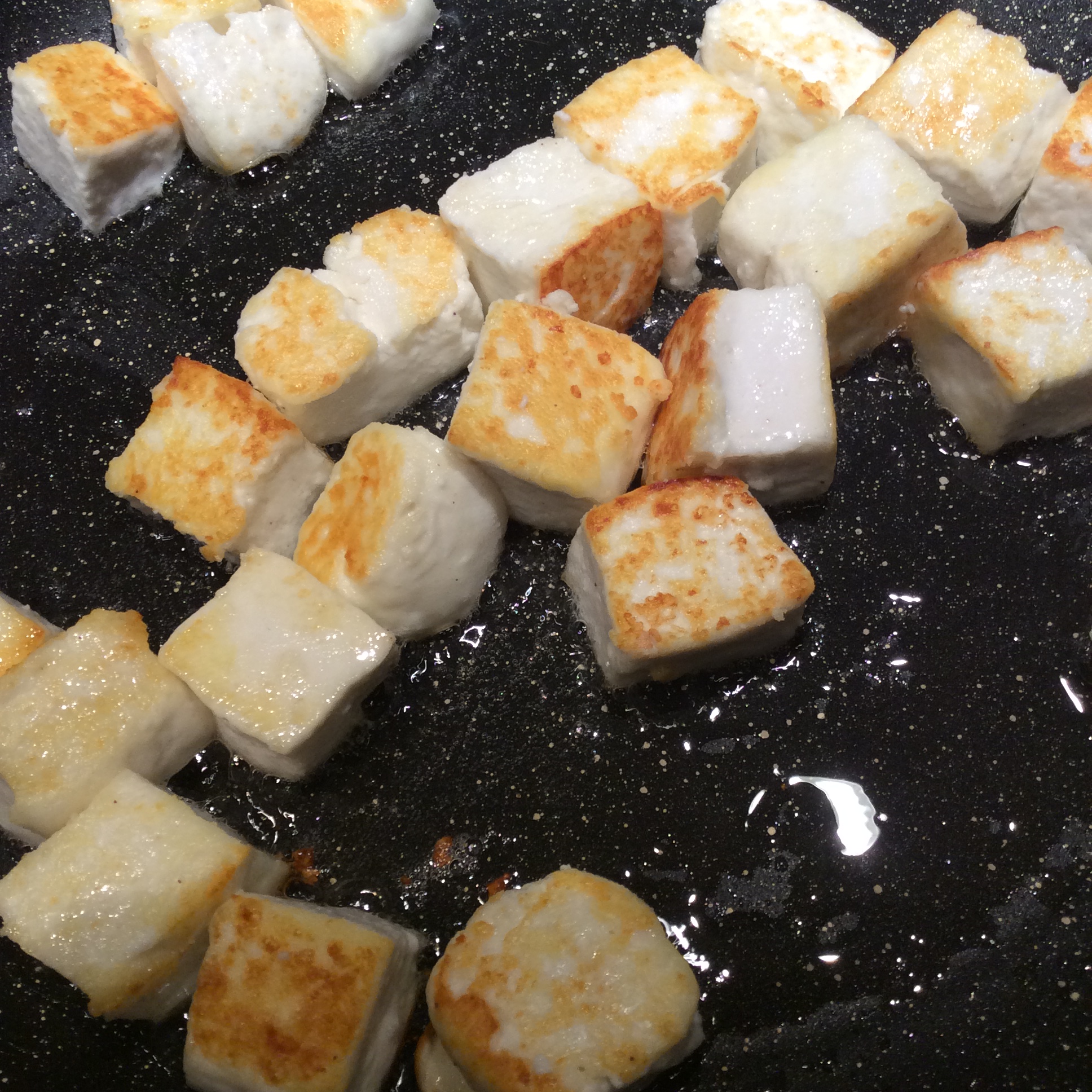
When ready to cook, heat a nonstick skillet, cut the paneer in 1″ cubes and salt it, and fry in mild oil of your choice (I like Macadamia nut oil) until browned. Set aside.


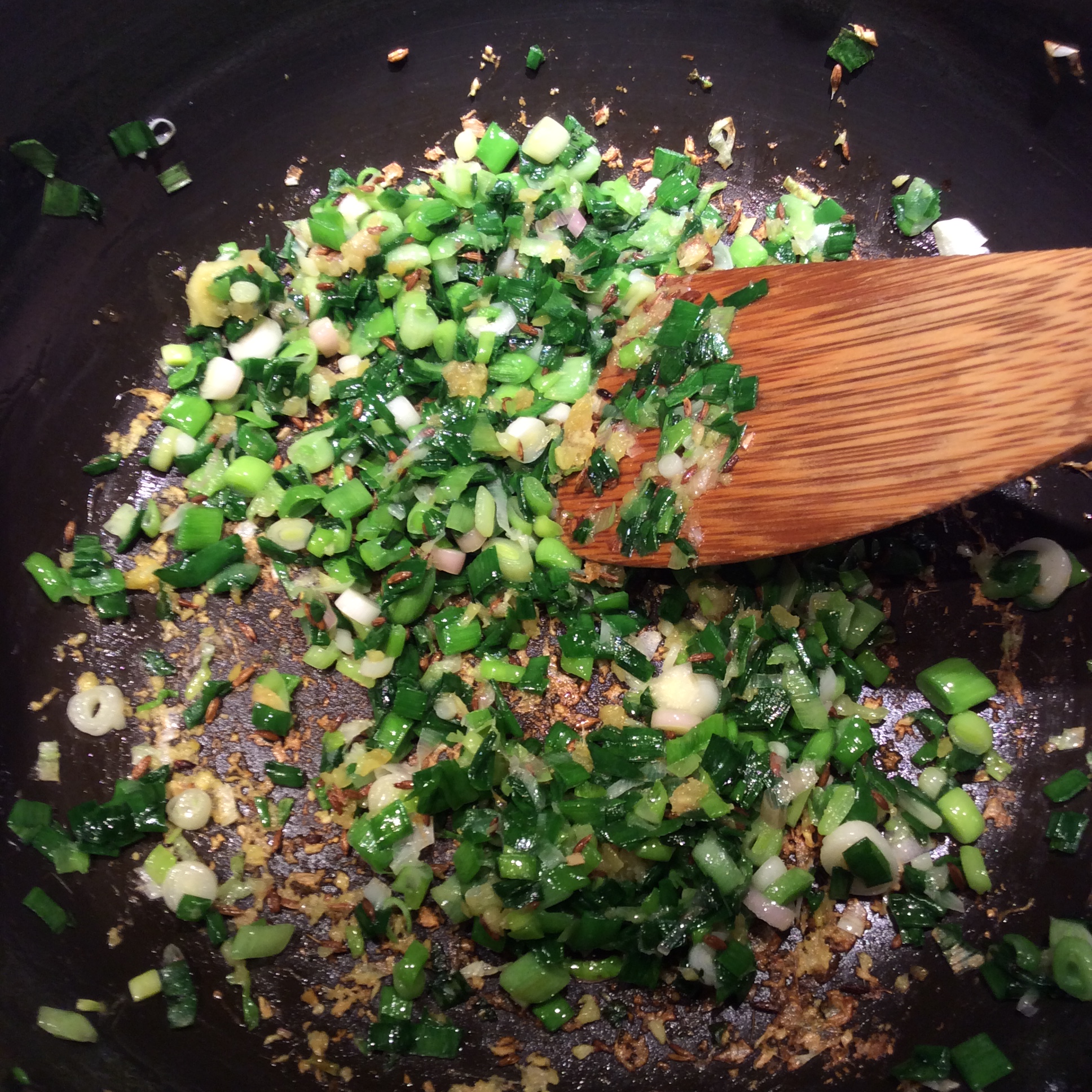
Chop a piece of fresh ginger about an inch square finely, and have ready a teaspoon of whole cumin seed and a heaping teaspoon of garam masala.
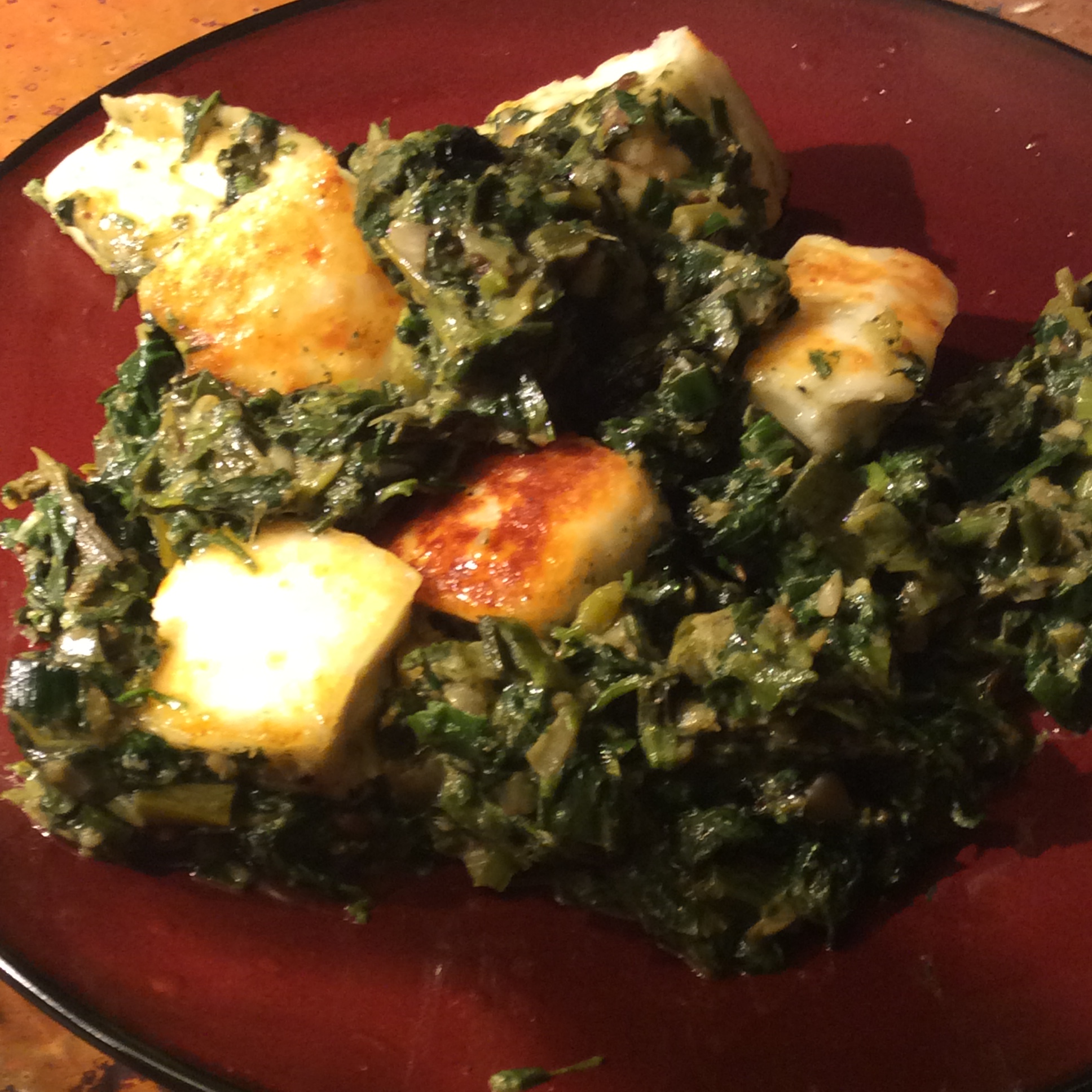
Heat a saucepan, put in a couple of tablespoons of mild oil, and fry the cumin seeds briefly until they darken a couple of shades. Immediately add the chopped ginger, stirfry furiously until it is cooked but not browned, and add the chopped alliums and lower the heat to medium-low. Add a half teaspoon of salt and sauté the alliums until they are softened, lowering the heat if necessary to keep them from burning. Add the garam masala, cook another minute or two, and add the cream. Add the blanched chopped greens and cook over low heat until they are thoroughly cooked, probably about another 10 minutes. Put the paneer cubes on top, pushing them into the greens mixture a bit, and cook over low heat until they are heated through. Serve with rice or, if you are a low carb eater, gloriously naked on the plate. Drizzle some melted butter or ghee over the top.

I was taught to make this dish a few decades ago by an Indian woman in Manhattan, and I am pretty flexible about the greens used as long as they’re mild. No bitter green has a place in this dish. The green garlic and onions are great in season, but chopped garlic and onion are traditional.  I’m very rigid about the seasoning, though. Sometimes I add a chopped hot pepper but that’s my only variation. The whole cumin seeds fried quickly in hot oil are not negotiable, and burning or scorching any of the seasonings or alliums  means you need to start over, so work carefully.