Archive for the ‘Cook’s treat’ Category

Early Harvest: Green Garlic

image

Other than herbs and alfalfa tips for my chickens, green garlic is always the first thing that I harvest from the garden.  In my climate, which is more or less USDA zone seven, I plant in October and nearly always harvest green garlic the first week of March.  The part of the garlic patch that I plan to harvest green is planted very closely, about 2 inches apart each way, which is plenty  of room for this purpose.  Every year I plant more. It is really good stuff. For a long time I thought that it might not really be worth the trouble, because I was harvesting and eating only the white stem and incipient bulb and composting the greens.  Duh. The greens are the best part, as well as being full of allacin and other antioxidants, and any part that is bright green rather than yellow or brown can be used. You can grow a useful amount in a few square feet if your soil is rich, and it is harvested and out of the way in time to plant something else for the summer.

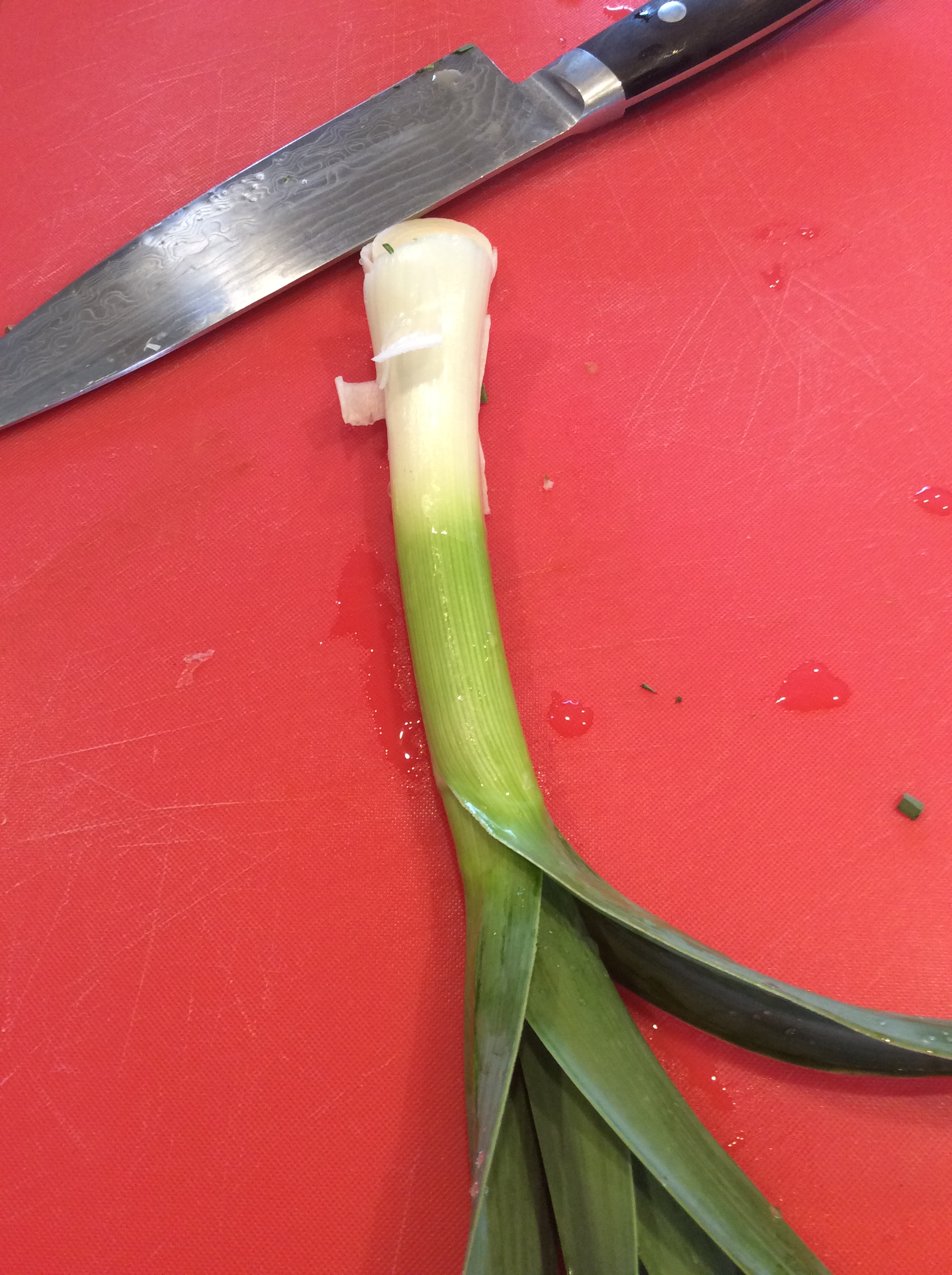
In the picture above you see a stalk of green elephant garlic, which is really a leek relative rather than a true garlic.  It is typically a foot or more tall and an inch or so in diameter at the green stage.   It has a slightly different flavor from true green garlic but is equally delicious.  I once bought green garlic at a farmer’s market that was bitter, but I have never tasted any other that was bitter. It may have had to do with growing conditions or variety. I have heard of people chopping garlic leaves into salads as a seasoning, but personally I don’t care for the taste raw and only use them cooked.

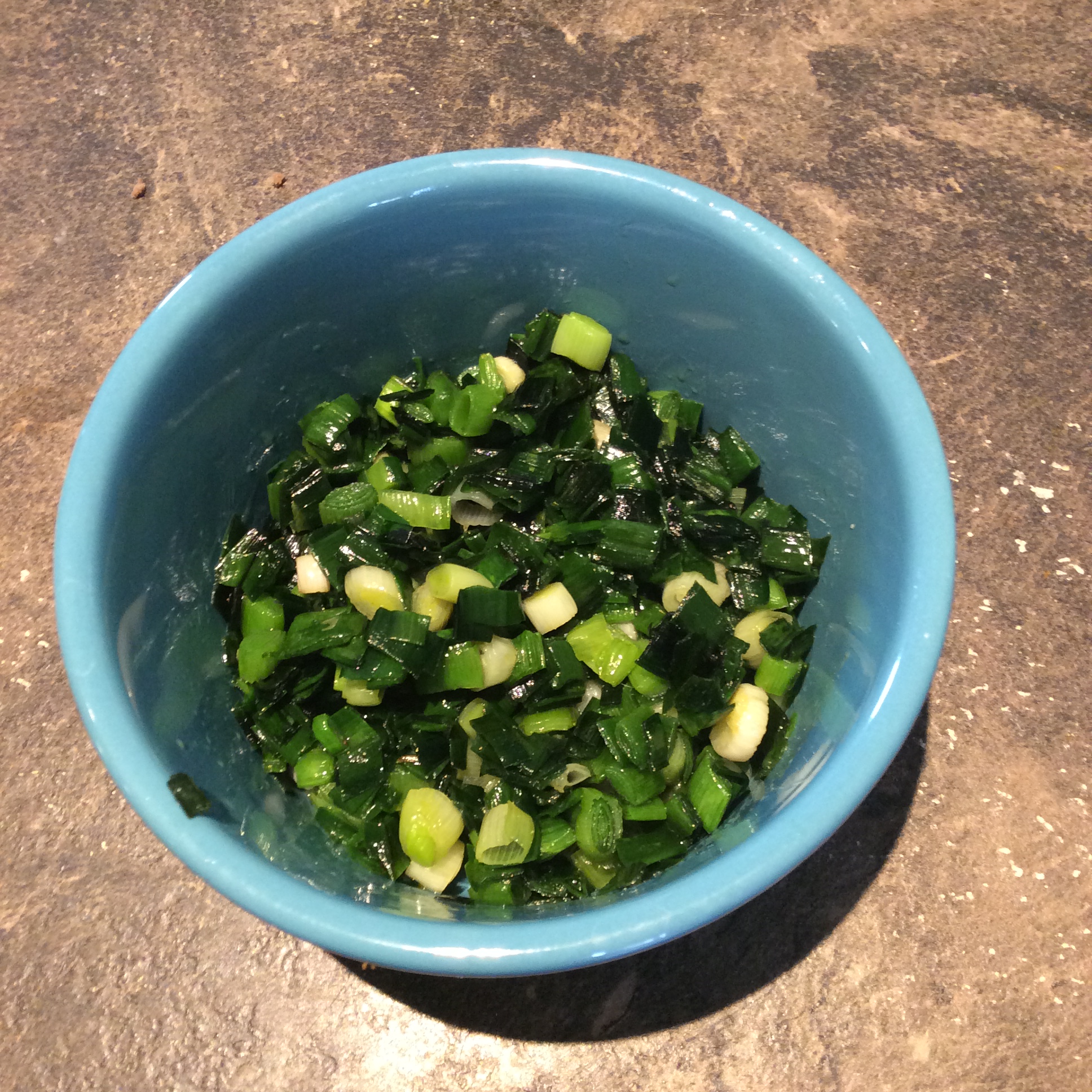
With all green garlic, I trim the roots and leaf tips and wash, then line them up and cut them in cross-section into slices about a quarter inch thick.  I sauté  in either butter or olive oil, whichever will suit the rest of the meal, slowly until the greens are tender. A little salt is thrown in along the way. They become soft and sweet and delicious, and I enjoy eating them as a vegetable on their own.  They also go very nicely into all kinds of other vegetable dishes.  If you are a carb eater, they would be delicious with fresh handmade egg pasta, butter, and a discreet amount of Parmesan, or tossed with new potatoes and butter. I love them in mixtures of cooked greens, too, and they are a lovely complement for fried eggs.  I plan to make a cream of green garlic soup  at some point this spring.  A few stalks sautéed in your smallest skillet while you are cooking other things also make a very nice cook’s treat  to eat standing in the kitchen, as a sort of tapa for one. After all, the laborer is worthy of her hire.
image

Like all the rest of us, green garlic will lose its youthful bloom sooner rather than later.  When the bulb is swelling and the leaf tips are turning progressively more yellow, it is past the point of being worthwhile to eat green.  In its brief season I harvest 10 or 12 stalks whenever I have some free time, clean and sauté them, and have them waiting in the refrigerator.  If I haven’t use them within a day or two, I vacuum seal them into neat little packets and keep them in the freezer to go in summer dishes.
My 200th post: Celery, Nose to Tail

image
My WordPress dashboard brought to my attention that I have been yapping endlessly about home food production for 199 posts. Naturally, I decided to make my 200th post about a green vegetable, the very thing that I am forever droning on about.
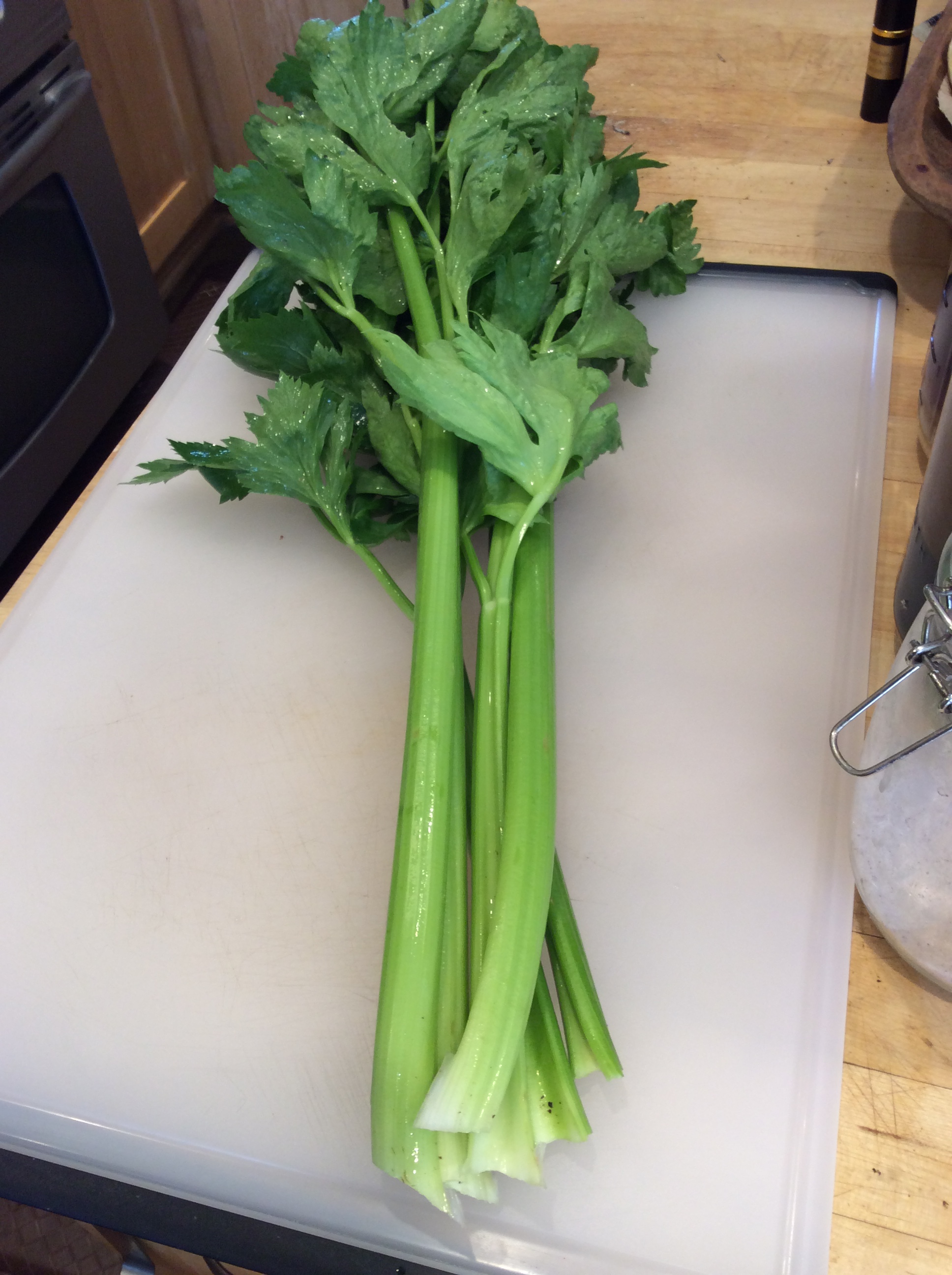
I never tried growing celery because I never ate that much of it. I crunched an occasional stalk, and as a homegrown Louisiana cook I cooked it in the mirepoix that begins so many Cajun dishes, but a bunch a year pretty much met my needs. Then last spring I noticed that a supplier had celery plants at the same time that I noticed I had a bed about to be empty. So I ordered a dozen plants as a lark.
As it turns out, celery is highly versatile in the kitchen as well as easy to grow. It needs your best soil and some elbow room, and here in the desert it has to be watered regularly. Given those conditions it will grow into a wonderful mound of greens.
For general snacking, stalks can be harvested as soon as they’re big enough. Break or cut near the base, but don’t damage the plant. The stalks are a little less tender than grocery store celery, and also a lot less watery and have a full delicious flavor of their own. I snacked away about four of my twelve plants and had eight big plants left by fall. After several frosts when the rest of the garden was over, the celery was green and robust and I finally got around to harvesting it. I never blanched the plants. Blanching produces lighter, yellower, and more tender stalks, but it is also a fair amount of trouble and I am as lazy a gardener as there is.
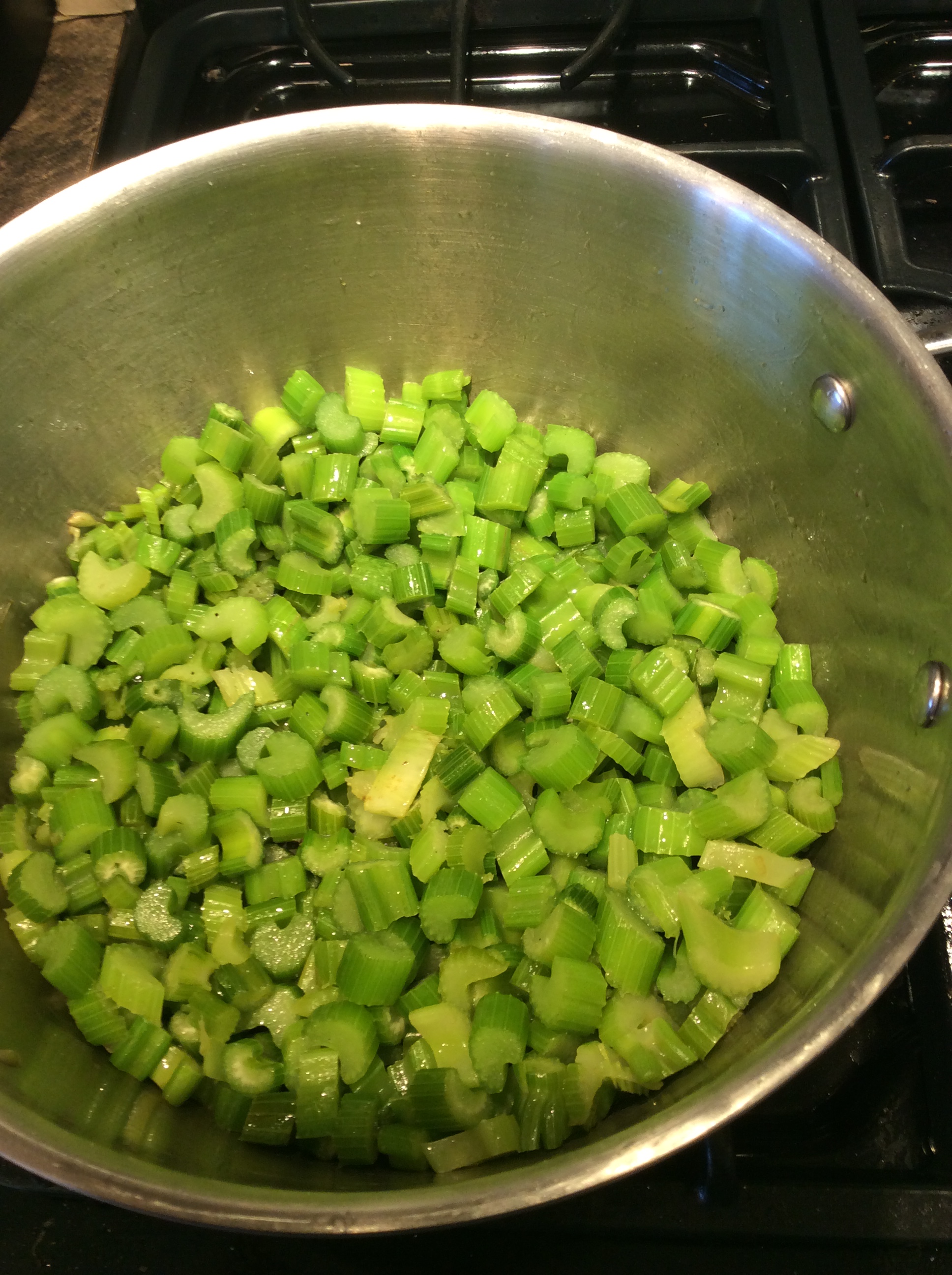
I cleaned the stalks thoroughly and cut them in 1/2″ cross sections and sautéed them in batches in very good olive oil. I thoroughly enjoyed eating them as a green vegetable, with salt and bits of fried guanciale on top. I froze a lot in vacuum-sealed bags to eat this way and to use in mirepoix and soup all winter.
image
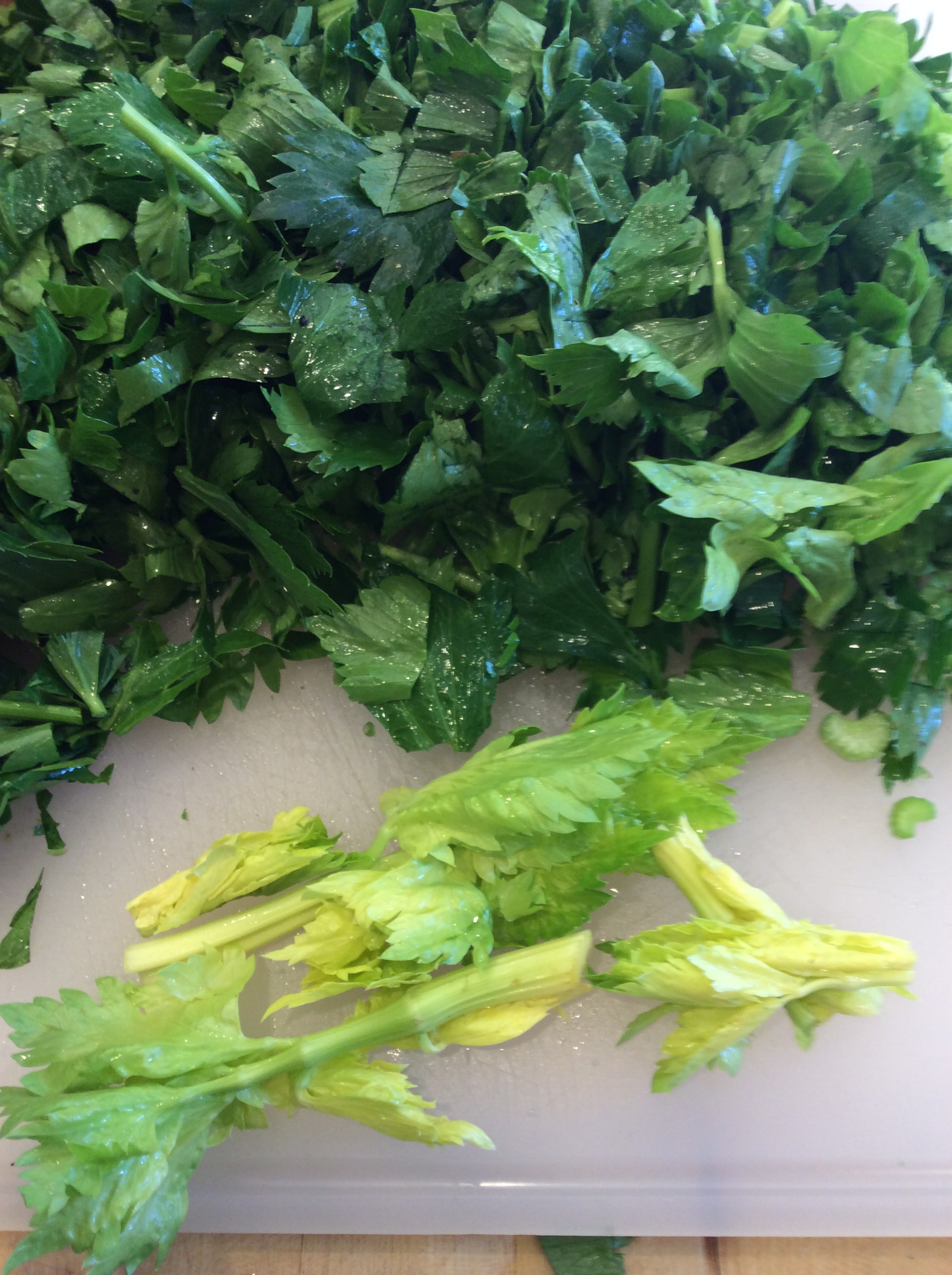
I was left with a counter full of the upper halves of the plants, all thin stalks and dark green leaves. I sorted out the pale self-blanched leaves in the middle, ate some dipped in olive oil as a cook’s treat, and refrigerated the rest for use in salads.
image
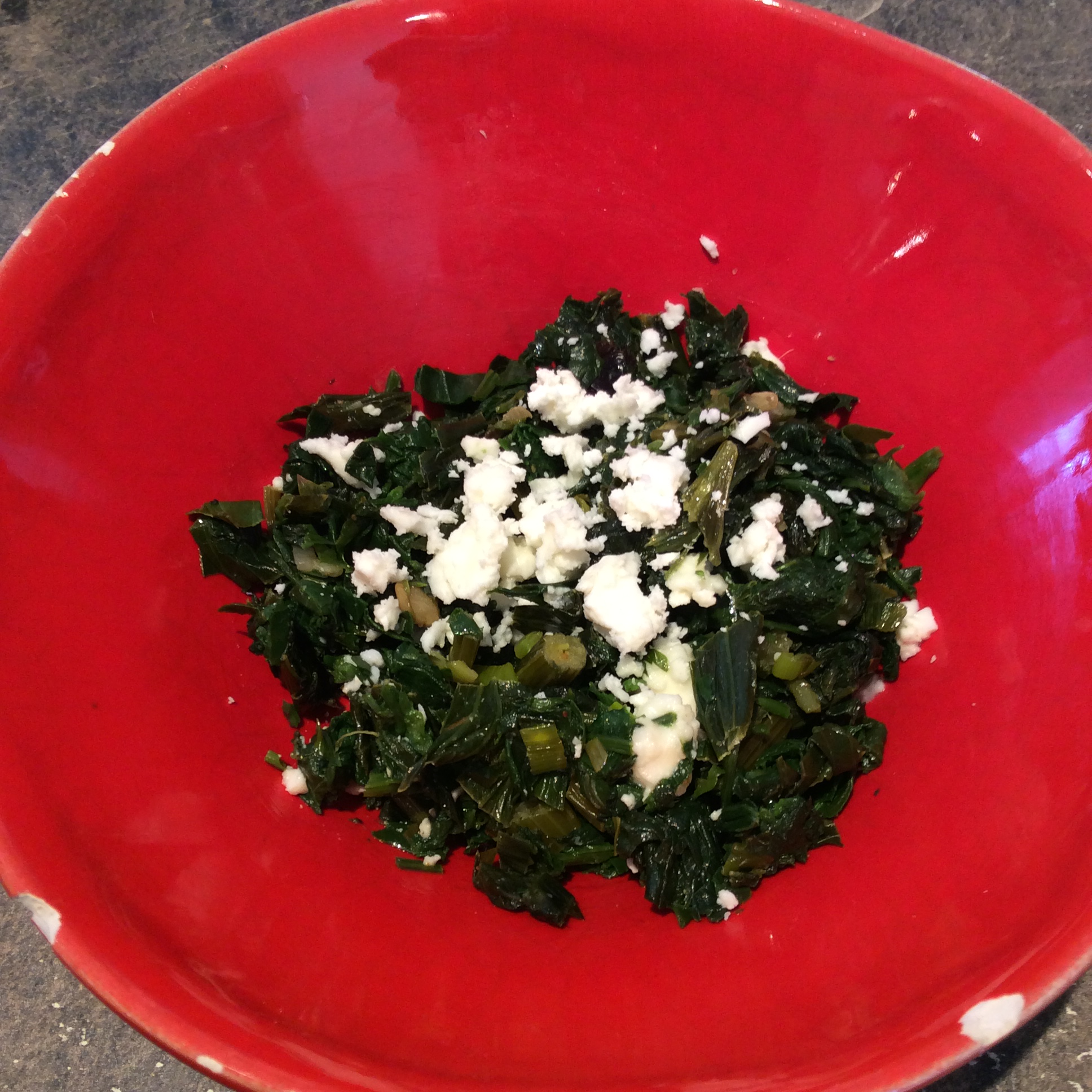
I was left with heaps of dark leaves like the ones toward the top of the picture above. I am not one to waste leafy greens, so I cut them in the same half inch cross sections, leaves and all, and sautéed them in olive oil until cooked. I put a bit of the cooked tops in a skillet with more olive oil and added a chopped clove of garlic, some salt, several chopped black oil-cured olives, and a squeeze of lemon to make a Horta of pure celery leaves. I ate it with crumbled feta and greatly enjoyed it, but have to say that this is a bitter green and probably only real greens-lovers will enjoy it. But when I made a horta with celery tops as about a quarter of the total greens and used milder greens to make up the bulk, I was surprised how much the bitter leaves added to the savory nature of the dish.
image
I sealed and froze the rest of the cooked tops and am using them with my frozen lambsquarters and amaranth to make horta that meets with general approval. I think that a bit of the pure celery-top horta would be good as a sort of herb salad next to roast duck to cut the richness, but I haven’t tried it yet.
I want to say once again, when cooking leafy greens, don’t be afraid to cook them. I often find the stronger greens tough and revolting when lightly cooked but delicious with 10 or 15 more minutes on the stove. As long as you are sautéing there is minimal nutritional loss. The thing I no longer ever do is blanch them and toss out the blanching water. If a sauté method isn’t appropriate, I blanch in a very small amount of water with frequent stirring, sort of half-steaming in effect, and drink the bit of water after it’s been drained off and cooled.

Just as a point of interest, a phytochemical found in celery called luteolin is being studied for neuroprotective effects. If true, one more reason to eat your celery, and your green veggies generally. You can find an abstract here.

The Greens of Fall: Nasturtiums II

image

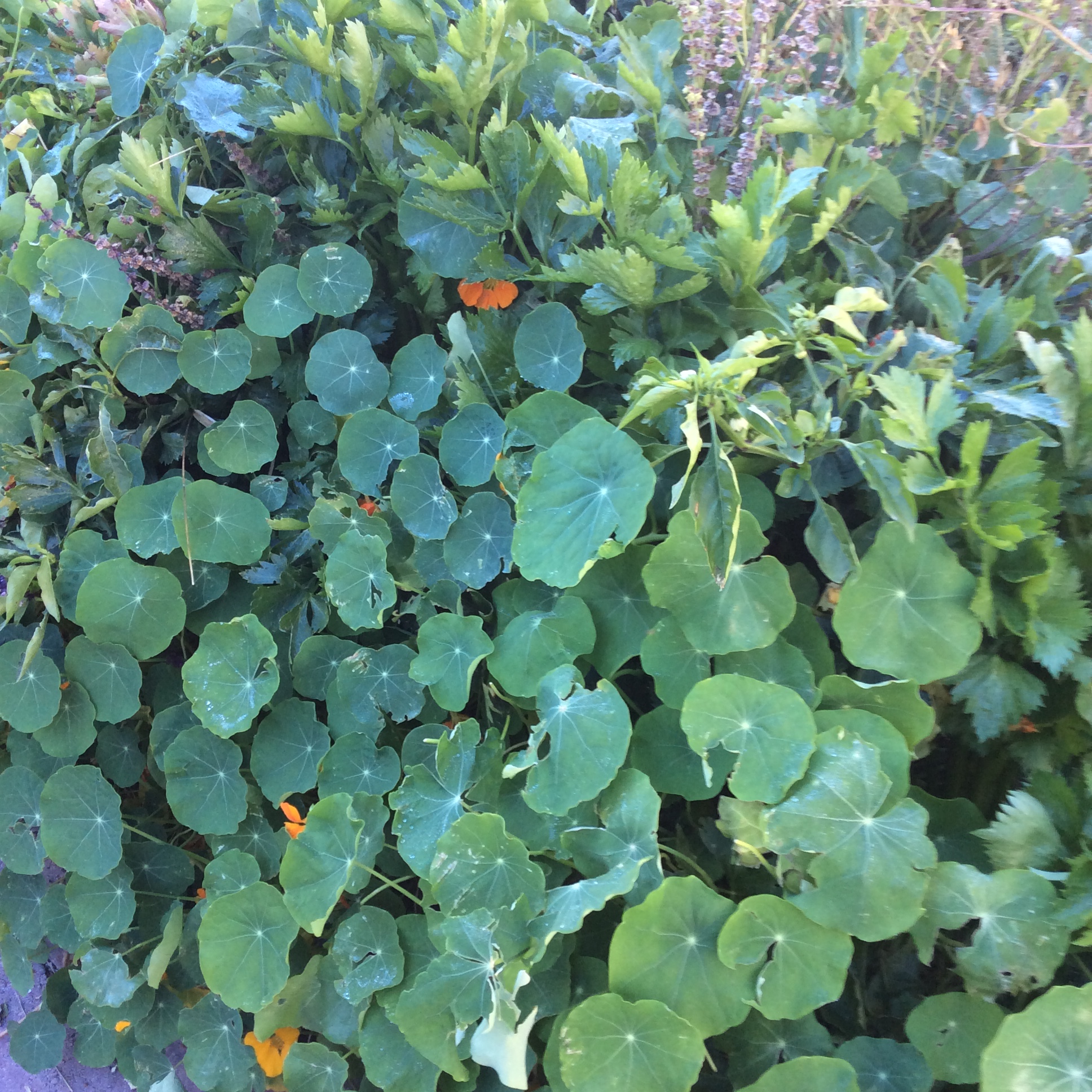
After several light frosts and a couple of hard frosts, the nasturtiums in my front yard are still holding their leaves in good condition, and still blooming a bit.  They won’t last much longer though, so this is the time to take advantage of them.  They are always good in salads or used to make hand rolls as suggested in my last post, because they combine a snappy watercress peppery flavor with a tender texture.  Cooked, they lose a lot of their sharpness but remain delicious.

image

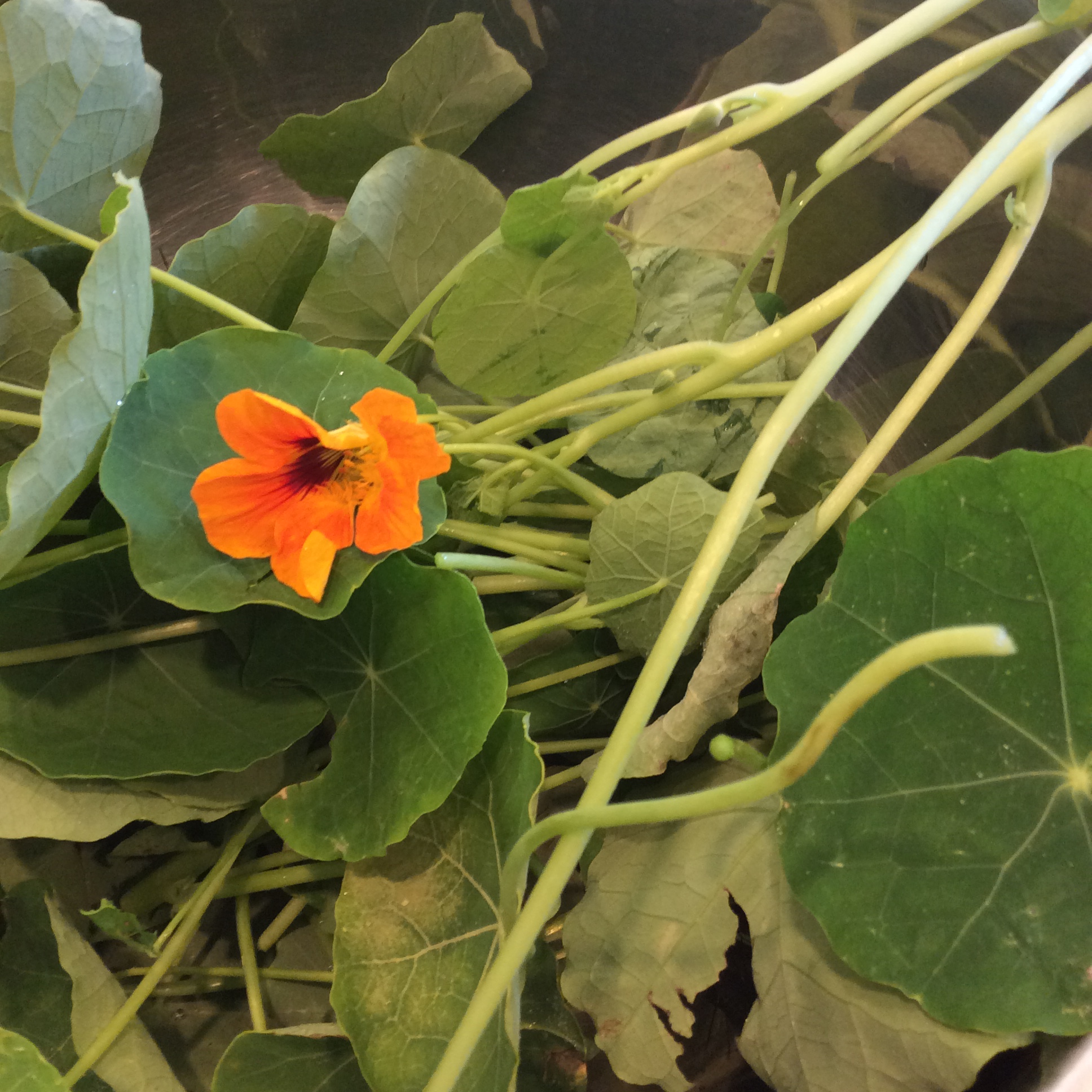
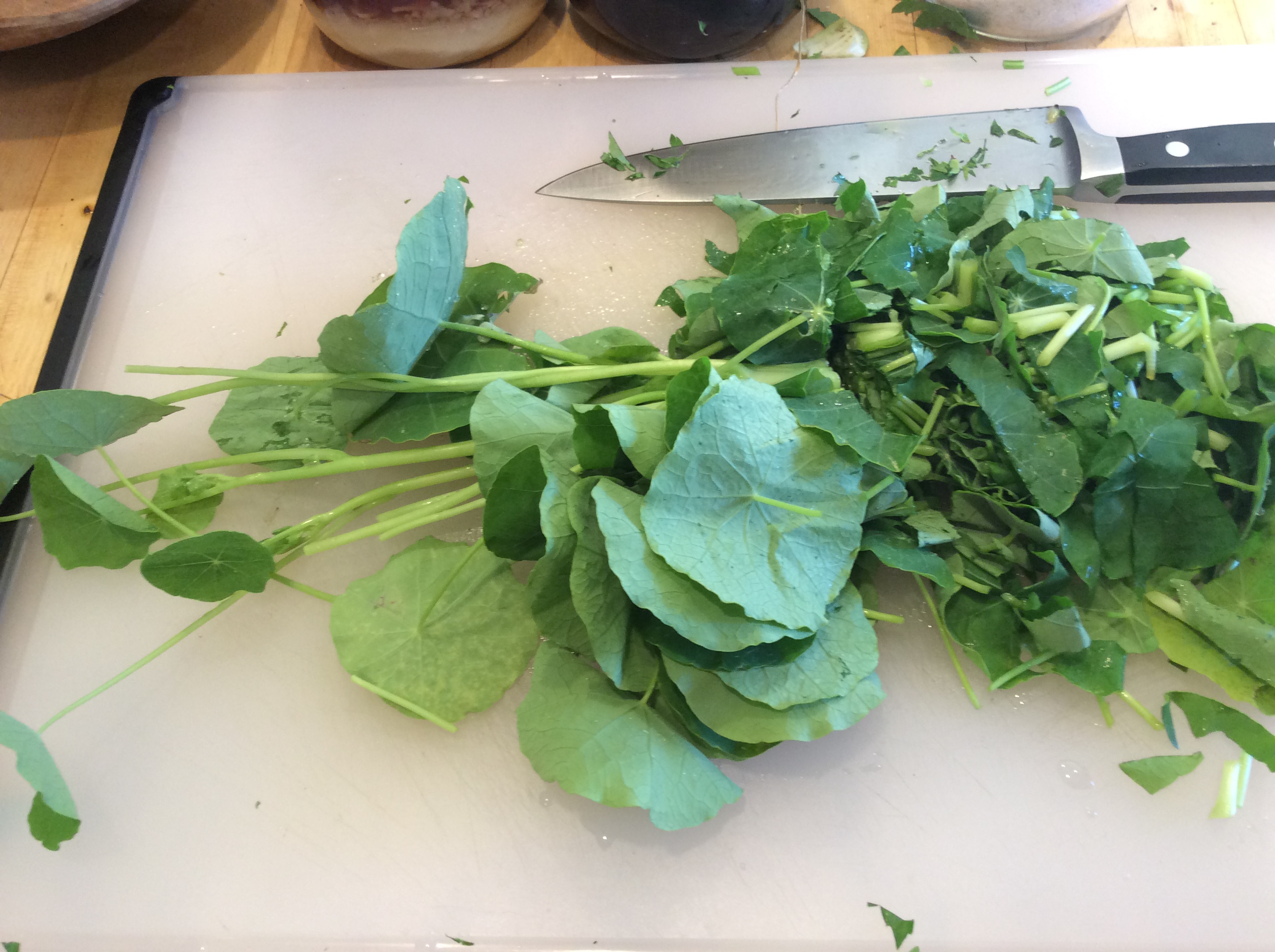
I grow the trailing nasturtiums that wind so nicely among other things in the bed, and at this time of year I grab about the last foot of stem. I snap them off wherever the stem snaps cleanly, which is usually while they are still smaller than a pencil. I take everything above that into the kitchen  for cleaning. I wash them and lay them out on the cutting board. The flowers are devoured on the spot as a cook’s treat, or can be saved for the top of a salad.  What remains is cut crosswise into half-inch segments. It’s important to keep them out about this length, or the stems can seem fibrous.

image

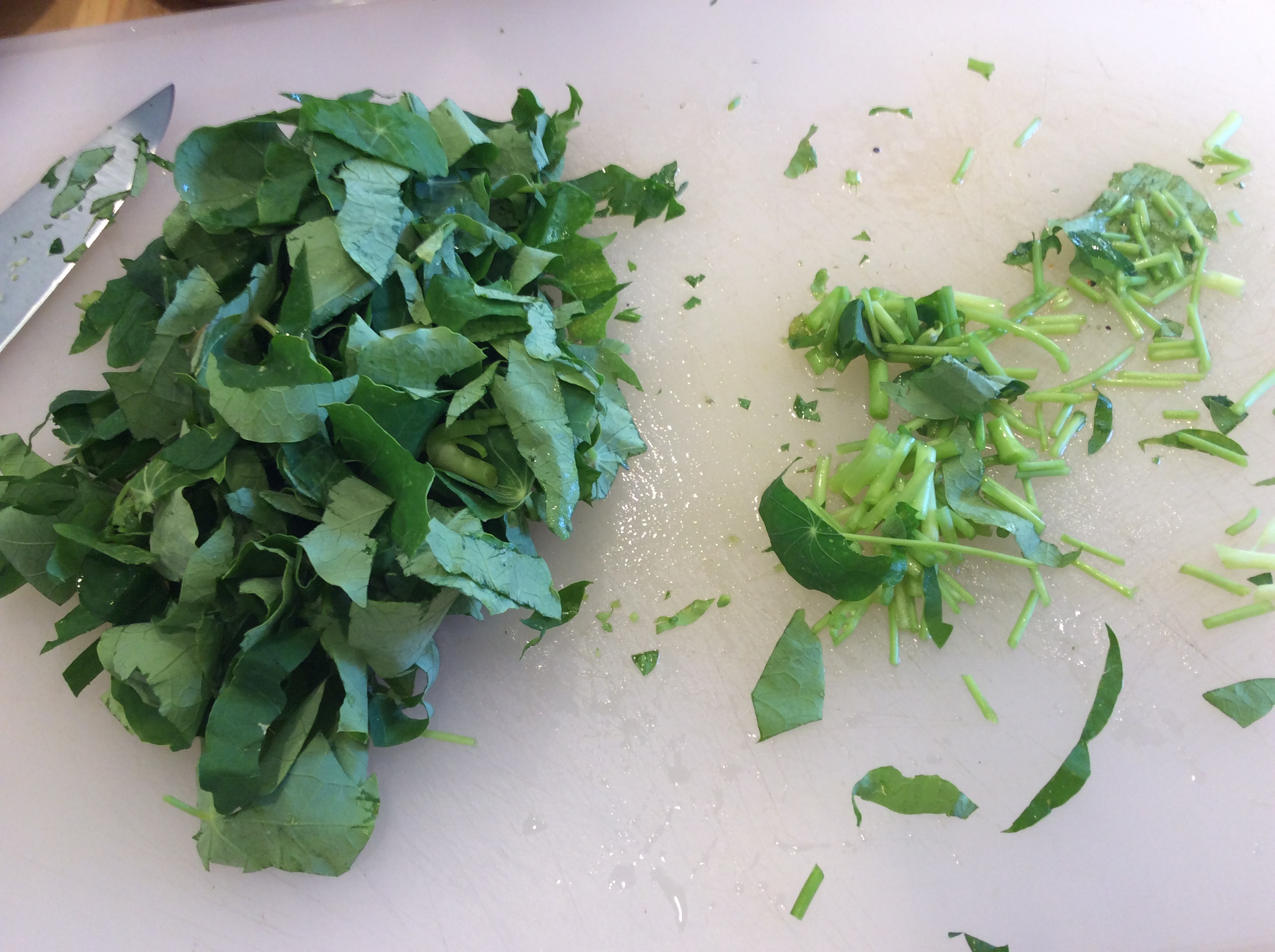
Now  stir the sections around a bit with your fingers, then lift off the leaves which are mostly on top and set them to one side, leaving most of the stem segments on the other. There will be a few of each item in the pile of the other, and it doesn’t matter.  This step is so you can give the stems a bit more cooking than the leaves.

image

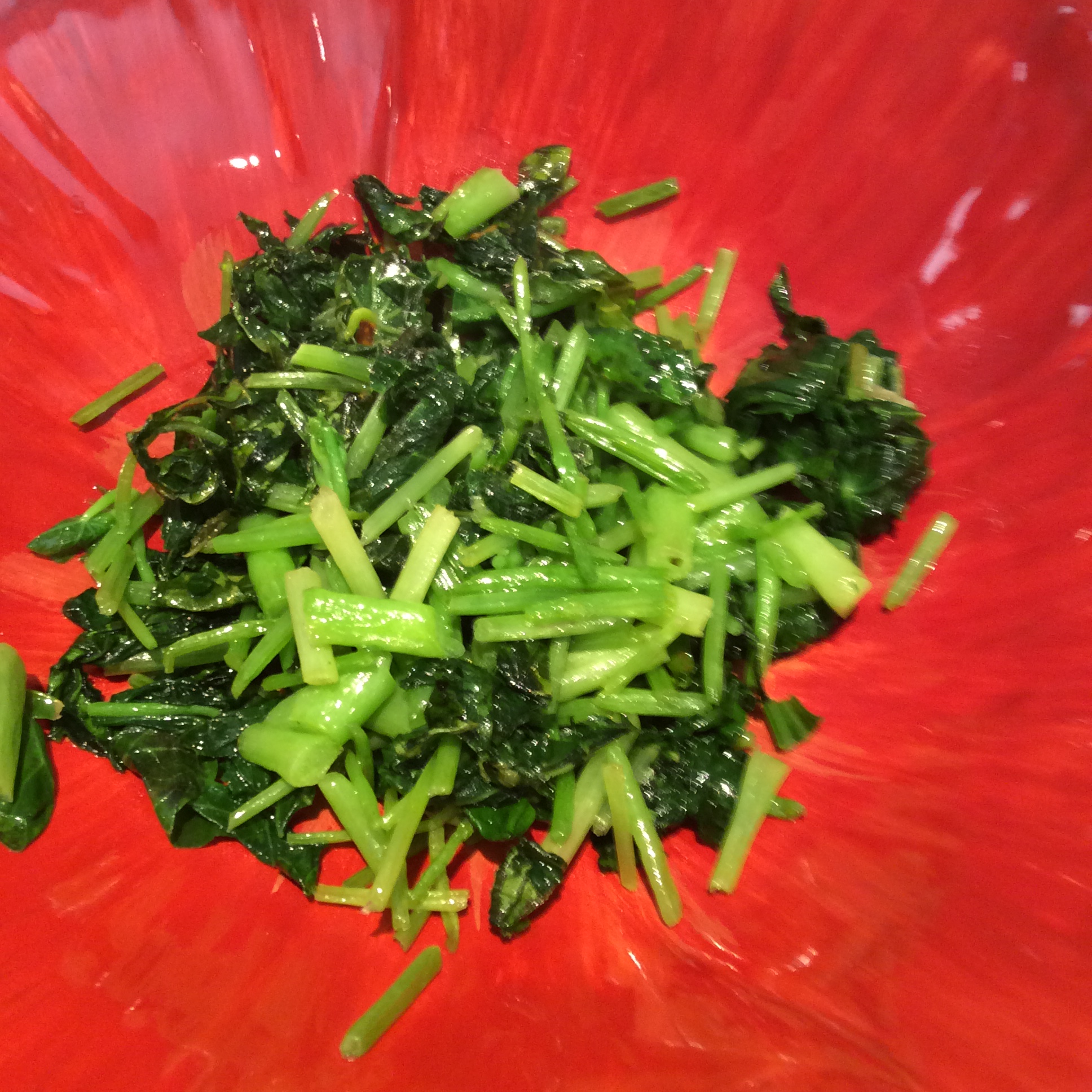
Now, cook them in any way that you would use other greens, cooking the stem sections for a couple of minutes longer than the leaves. I have two favorite ways. One is to sauté them fast in a tablespoon or so of hot flavorful olive oil, putting the stems in, sautéing for two minutes, then add in the leaves and sauté in for another minute.  Serve with salt and freshly ground pepper. Simple and good.

image

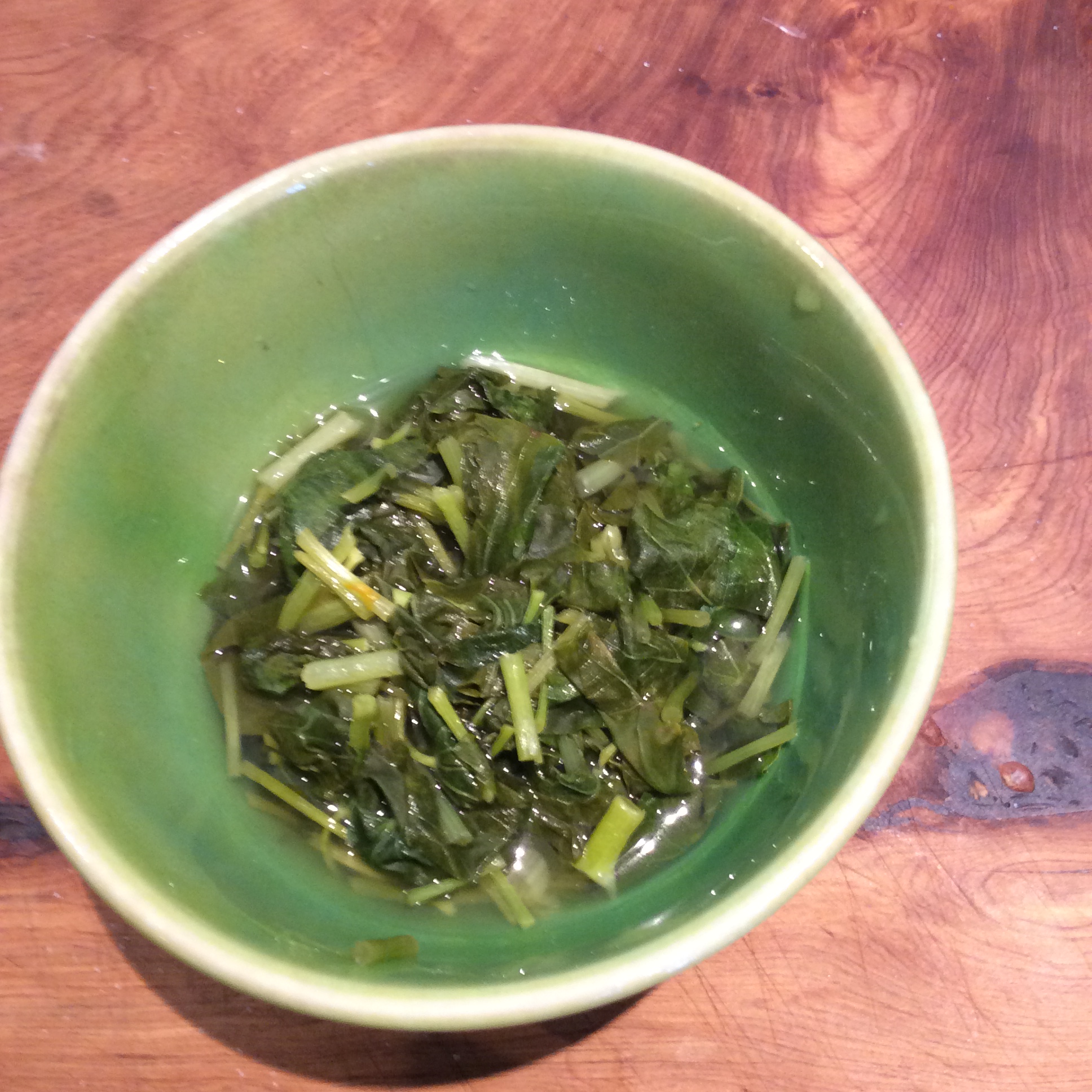
My other favorite use for them is a quick sort of sweet and sour pickle, which I like with grilled meat or dishes in the Japanese fashion.   For a heaping a handful of chopped nasturtium, eat half a cup of water in a small saucepan with 2 tablespoons of rice vinegar and 1 tablespoon of sugar or to taste, or you can use artificial sweetener if it is one that does well with cooking.  And a scant teaspoon of salt and bring to a boil. When it is boiling, put in the stems, boil for about two minutes, and the leaves, and take off the heat immediately and let it sit in the “pickling liquid” until room temperature.  serve immediately or keep in the refrigerator for a day or two.

image

For my taste the flavors in this quick “pickle” are too strong to use it as a side dish, but you could always use less vinegar and sweetening and salt, and use it as a side dish if you prefer that. When I was growing up in the south, collards were sometimes cooked this way, and I seem to remember that they were good.

Some people think highly of the nasturtium as a medicinal herb. If you wish to research this, please keep in mind that the nasturtium flower we are dealing with here is Tropaeolum majus, while  Nasturtium officinale is actually watercress.  This is why we use botanical names; in the long run, it avoids a lot of confusion.   In my view, the fact that they are green and lovely in cold weather and taste good is reason enough to eat them.


A Hot Treat

image
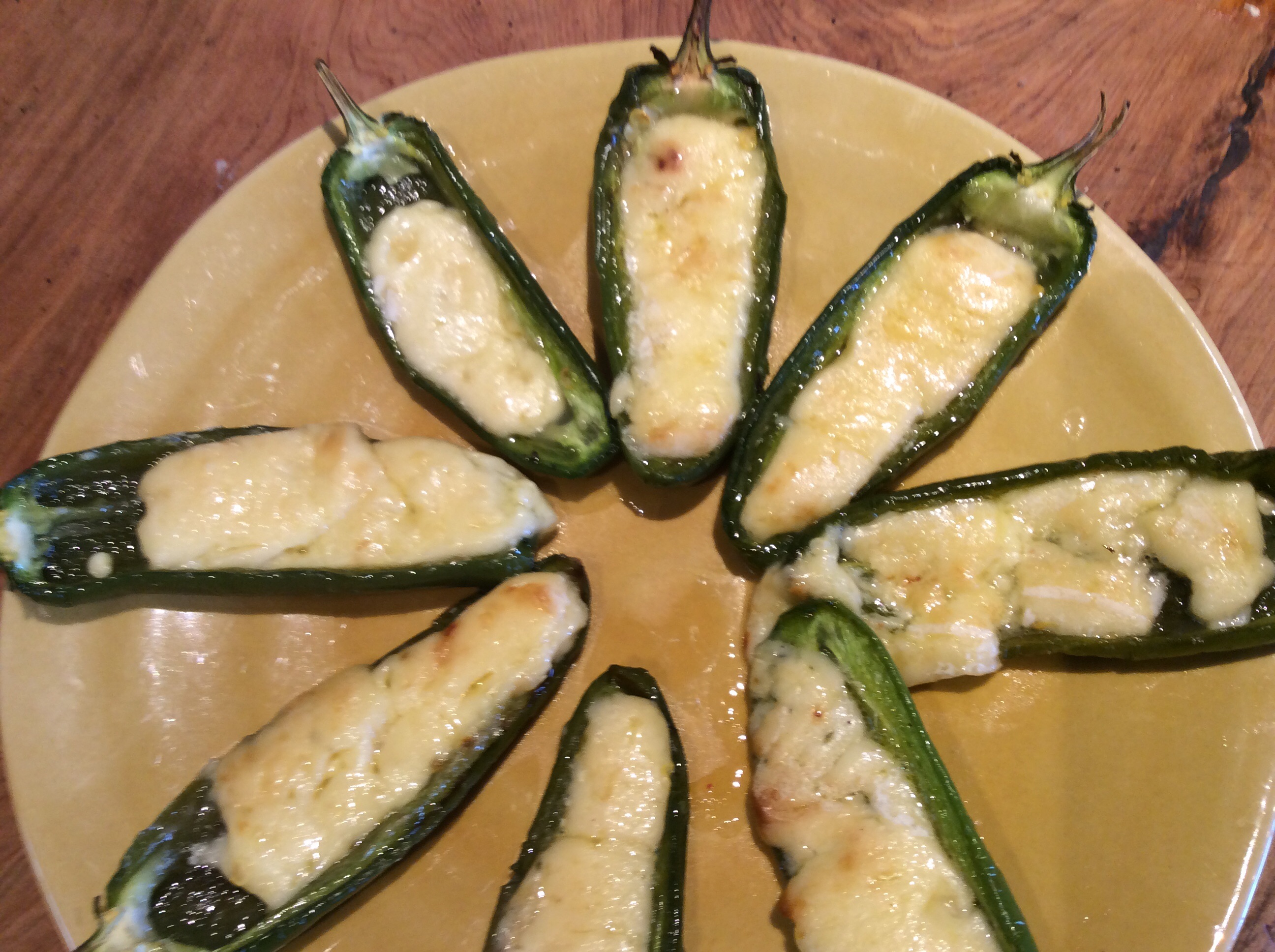
I love hot food, and one of my favorite snacks when other heat-lovers are around is stuffed jalapeños. Couldn’t be easier: slice 2 or 3 jalapeño chiles in half lengthwise, pull out the seeds and veins, salt liberally ( helps keep the heat in check,) put a piece of good cheddar about 1/2 inch square and two inches long in each half, and bake at 425 until done or cook on a part of the grill that you’re not cooking something else on, being careful not to burn the jalapeños. Eat with fingers. This amount of cheese will overflow a bit, causing crisp cheese crust to form on the baking pan. Yum. It’s low-carb and suitable for ketogenic eaters.
One split pepper makes a good cook’s treat when you have things in the oven anyway, and if you have a willing sous-chef don’t forget to roast a second one.
Jalapeños are good for growing in the front yard because they are sturdy and attractive. They may need a little judicious staking to keep them upright. They can get hot as blazes. The longer they’re left on the plant, the hotter they get. 1 or 2 plants per person are plenty.