Posts Tagged ‘vegetables’

Planning Your Garden: the Weed Patch, and more on the Peruvian Purple Potato

Those of you who have been following my blog for a while know about my interest in useful weeds, ie plants which thrive on neglect, spread rapidly, and are often overlooked, but offer good eating. Now that I’m planning a brand-new garden from scratch, I’m planning a “weed patch” as part of it. This will be out of the path of garden traffic so that I can have milk thistles and nettles, and screened from the rest of the property with a row of sunflowers so that nobody but me has to look at it much, and there all my favorite edible thugs can slug it out together. If you have room for a weed corner, you might consider some of these:

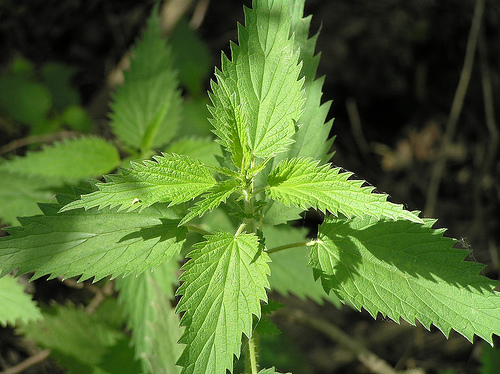
1. Stinging nettle. The nettle offers some of the best early-spring greens to be found. You can start them from seed (try Johnny’s Selected Seeds) or from plants (Richter’s is the only source that I know of.) They spread like wildfire, so underground barriers or a spot that you can mow all the way around are essential. See my post for harvesting and cooking details, and treat this plant with great respect, because the sting is pretty painful.
2. Curly Mallow. I like the leaves as part of a mix of greens, and it thrives on heat and doesn’t need too much water. I got the seeds from Nichols Garden Nursery years ago, and it’s been happily self-seeding ever since.
3. Milk thistle. THis will be a new one for me, but I’m told that the young shoots make good cooked greens when the prickles are trimmed off, so I’ll give it a try.
4. Sorrel. This might not seem like a weed, but it’s a healthy, vigorous, weedy-looking plant, so it can stay in the weed patch, out of the way. You can get seed almost anywhere, even from seed racks. It’s best to let it grow the first year, just removing flower stalks as they appear, and then start harvesting in early spring the second year.
5. Curled dock. This comon roadside weed is sour and bitter at most stages of development, but in the late fall and very early spring it’s one of the best greens around. Like its relative sorrel, it turns brownish-green when cooked, so I use it in mixtures of cooked greens rather than by itself. I don’t know of any source for the seeds. I picked mine by the roadside years ago, and this robust perennial has been with me ever since.
6. Dandelions. Like dock, they are actively distasteful most of the year, but in very early spring they offer delicious lightly bitter leaves which give a wild tang to a mixed salad or a little zip to a cooked greens mixture.

An alert reader let me know recently that the source I gave for the Peruvian Purple Potato no longer offers them. I save my own starter potatoes from year to year, but you can get the Peruvian from Ronnigers. They also have a splendid assortment of garlics, and some other plants of interest.
The Joys of Summer: more grilled vegetables

july 2009 013
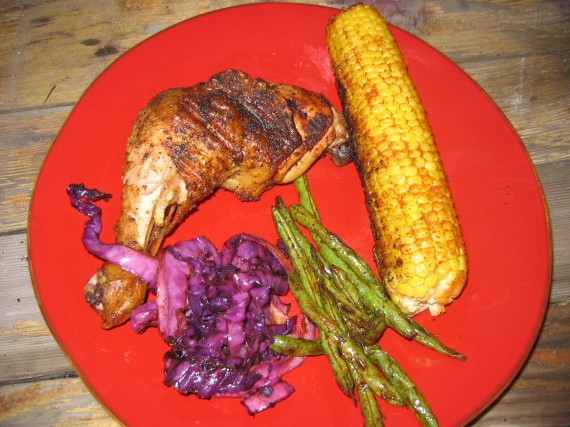
Here in New Mexico the hot weather has continued for a few weeks with no relief, and we’re doing more and more grilling to avoid heating up the kitchen. This has led to more and more experimenting with grilled vegetables, and so far we’ve loved them all. I also love having plates full of color, not just brown meat. If you want to reduce your meat consumption, eating more vegetables is a delicious way to approach that goal. To improve kitchen efficiency, I plan how to season each vegetable so that I can make the seasoning pastes in a sequence yet not have all the seasoning the same; this is explained in the recipe section. If you want more details on how to grill, I recommend the superb grilling cookbook by Francis Mallmann, Seven Fires. Grilling is an art, and can’t be taught in a blogpost. But it’s an art well worth aquiring.

The quality of your ingredients is paramount. I do not recommend any use of battery-raised commercial chicken, which is a disaster from the gastronomic as well as the environmental and humane standpoint. Commercially raised “free-range” chicken is only slightly better. Get some real chicken. I strongly recommend Pollo Real pasture-raised chicken; see the Delahantes’ website to see how they raise their birds. They sell at the Santa Fe farmers’ market, and it’s possible to arrange a pick-up in Albuquerque if you contact them ahead of time. Back when I had a farm and raised my own chickens, they tasted like Pollo Real chicken, by which I mean that they tasted like chicken, while American commercial chicken tastes strikingly like nothing at all. Battery farming of chickens pollutes the envoronment and spreads disease, as well as being a horrible life for the birds, so I avoid it. We need to support humane and sustainable farming, and the best way to support it is to seek out your local sustainable farmers like the Delehantes.

If you have a grill with a griddle section, you’re all set. Otherwise, a heavy cast-iron skillet could be used where a griddle is specified.
Clich here for the recipes! Continue reading

The Joys of Summer: dinner on the grill

june 2009 033

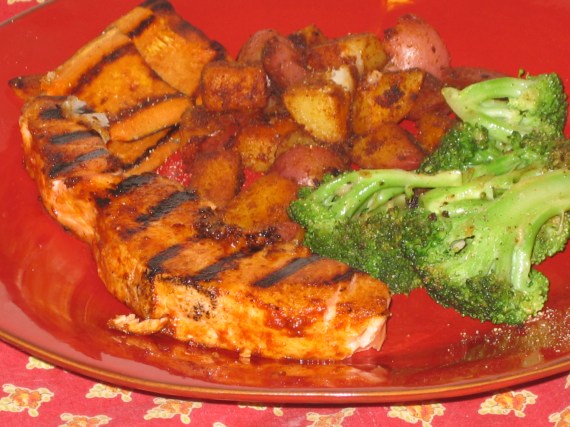
When it’s too damn hot to heat up the kitchen, the pleasures of summer dinners are just getting started. My garden is producing huge beautiful heads of broccoli right now, and the blossoms have died off the potatoes, indicating that I can start digging new potatoes. You can go to the Los Ranchos or Corrales farmers markets and find the Fishhuggers, Kenny and Brenna, who will sell you a splendid King Salmon “breakfast” steak from a fish personally caught by Kenny. They do beautifully on the grill. Add one large sweet potato and you’re all set. The small amount of prep work can be done in the morning, before the heat starts, and then the entire meal is finished on the grill.  If you read my earlier post (“The First Garlic,” three posts ago)and made garlic confit, you have a head start on the prep work. 

King salmon is loaded with omega 3 fatty acids, and personally I would rather eat delicious food than take pills, so for me the choice to eat Kenny’s wild-caught sustainable Alaskan fish whenever I can afford it is an easy one.

This meal is especially nice if you need to feed vegans and vegetarians as well as fish-eaters, because the vegetables are so satisfying by themselves.

Clich here for the recipe! Continue reading

Passing Pleasures: Artichokes

may 2009 019
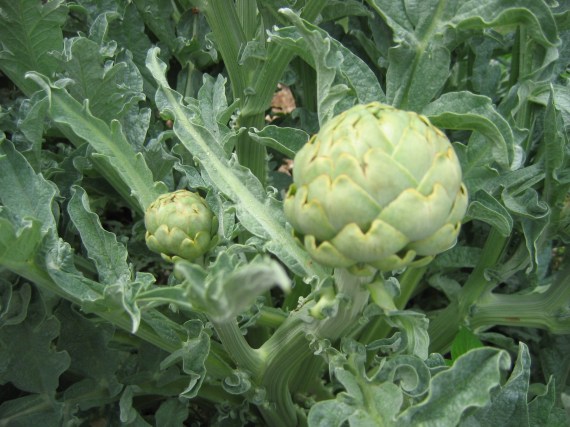
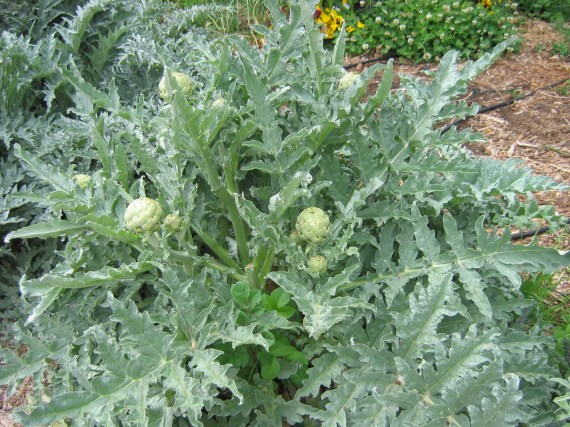
      Artichokes are a wonderful addition to the New Mexico garden. They are splendid silvery architectural bushes for the cooler seasons of the year, and provide a rare treat to their enthusiasts.

       One of the overlooked aspects of front yard gardening is that neat greens like Swiss Chard can’t be used as edging because passers-by don’t know vegetables when they see them, or don’t care, and so they let their dogs urinate on anything along the sidewalk. I solve this problem by edging my front garden with artichokes: the edible part happens a few feet off the ground, and until a squadron of Irish Wolfhounds comes to my neighborhood, I’m safe.

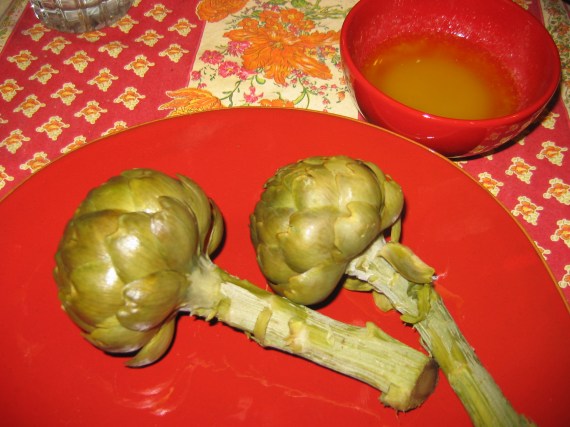
     Now is the time to start artichokes from seed, to enjoy next spring. I like the common “Green Globe” best. The plants typically live 3-4 years in our area. The scaly buds don’t get as big as they do on the misty west coast, but they’re very delicious. A deep watering once a week is plenty once they’re established. They don’t produce over a long season, but for two weeks in late spring we revel in all the fresh artichokes we can eat, and a rare feast it is, too. If you’re interested in such things, artichokes contain abundant amounts of two antioxidants, cynarin and silymarin, which are found only in the thistle family. I’m not sure what this really means nutritionally, but it does mean that when I feel tired and out of sorts, I can eat a plate of artichokes, telling myself that a good dose of cynarin will fix me right up. It usually does, too, unless it’s the bagna cauda or the general abundance of the season that I’m responding to.
may 2009 020
may 2009 018

For more on cultivation and recipes, Continue reading