Posts Tagged ‘leafy green vegetables’

A Glory of Greens, and notes on Turkish greens soup

image


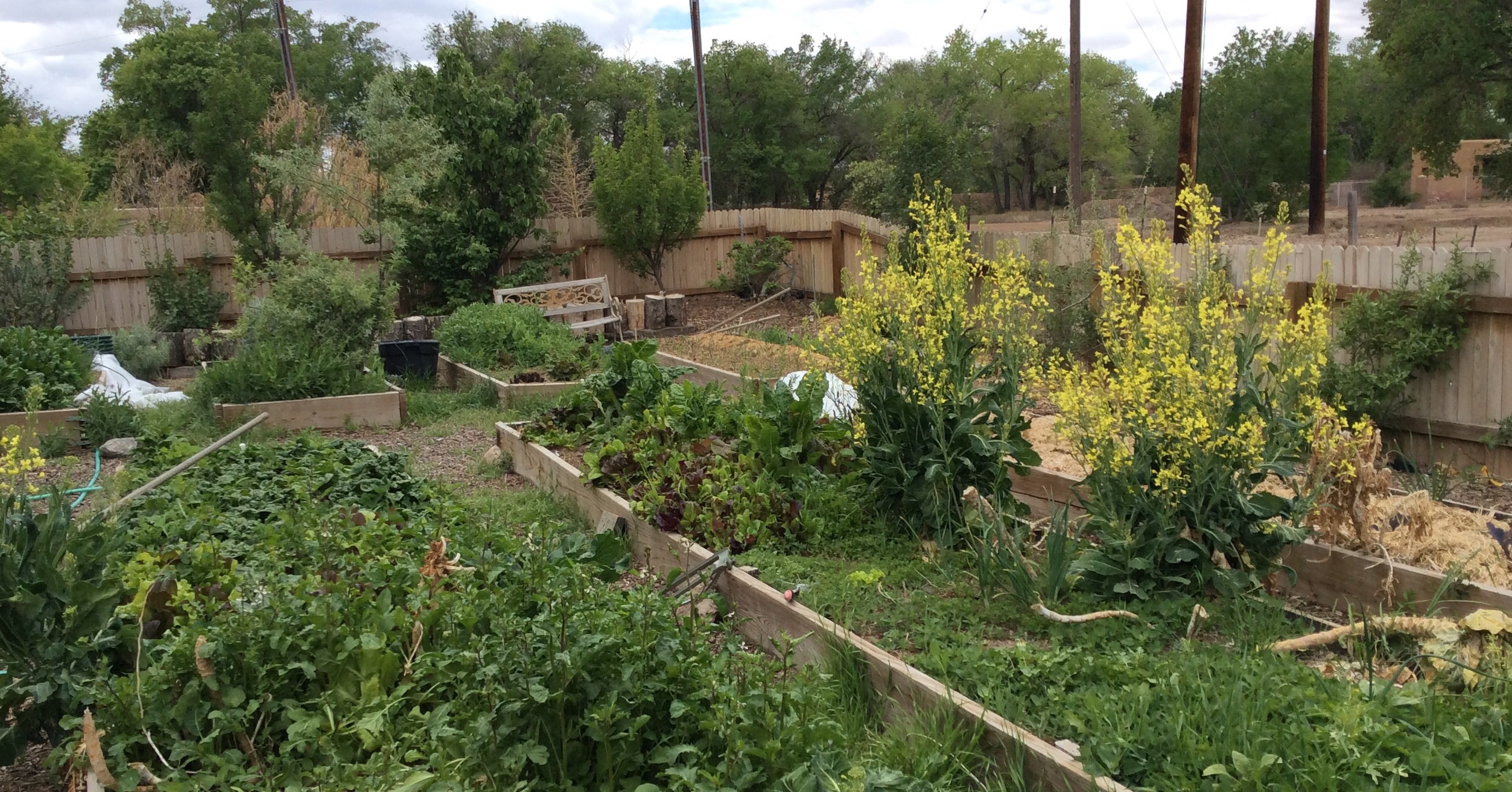
There is nothing more vibrant than a garden full of greens in the spring, all growing like mad, offering you a million healthy possibilities. During the two unfortunate years that I couldn’t garden, I did at least rogue out all the weeds that weren’t edible, and now nearly everything that sprouts in my beds is delicious, whether I planted them intentionally or not. And everybody, every one of us, would do well to eat more greens. Our health would improve and we would feel so damn good. Remember, the REAL Mediterranean diet, the one that was originally studied on Crete and that produced a long-lived and healthy population, was based on a huge variety of cultivated and wild greens.

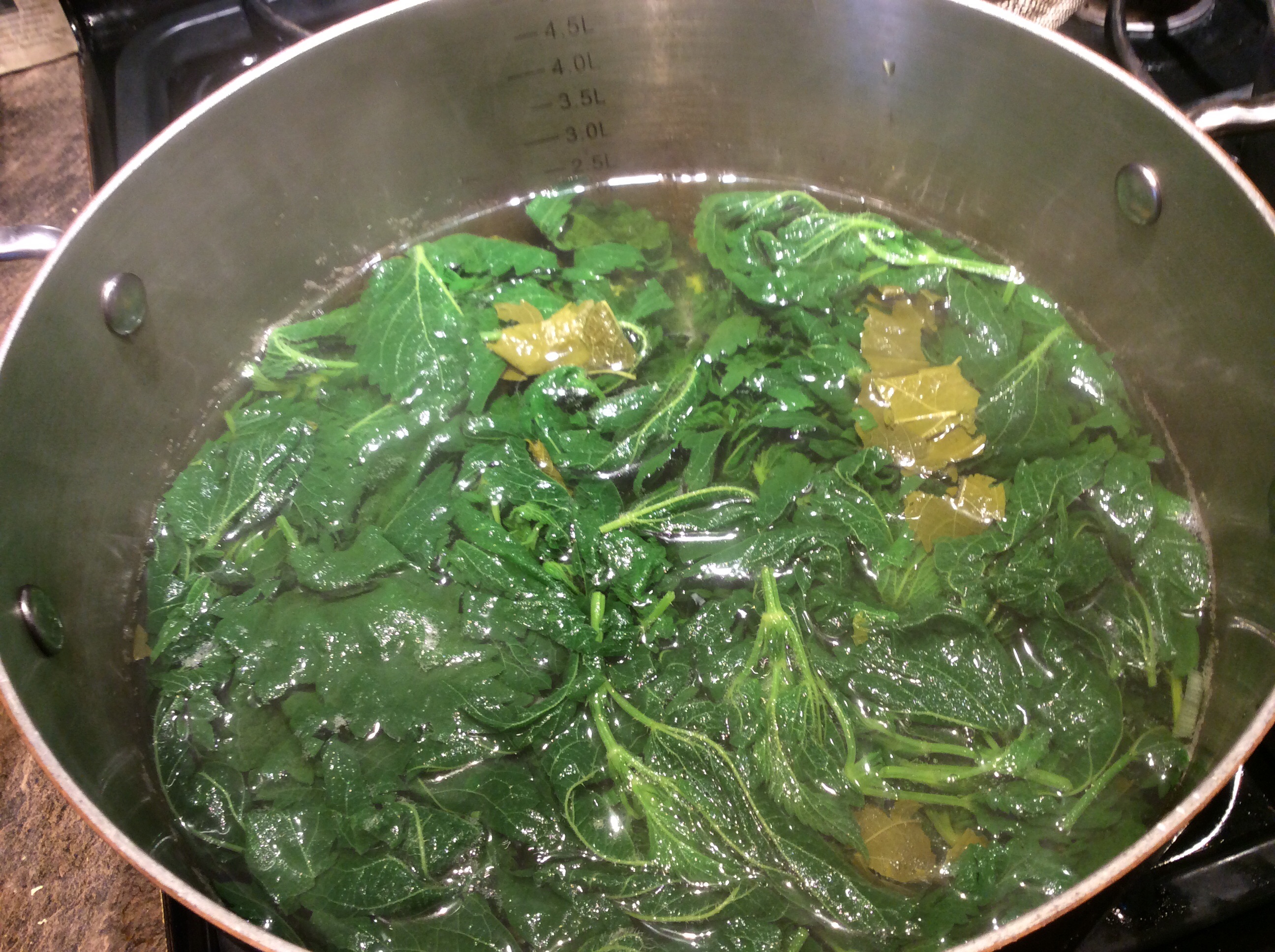
Today I noticed nettles, spinach, and lambs-quarters that needed to be harvested pronto. I also had lively green garlic ready to harvest. I picked a three-gallon pail to the brim, but loosely filled as I threw the bounty in, not packed down. I washed them ( it goes without saying that when nettles are in the mixture, you use gloves whenever handling them and stir in the washing water with a big wooden spoon, not your hand,) and decided to make a Turkish greens soup for dinner.
image
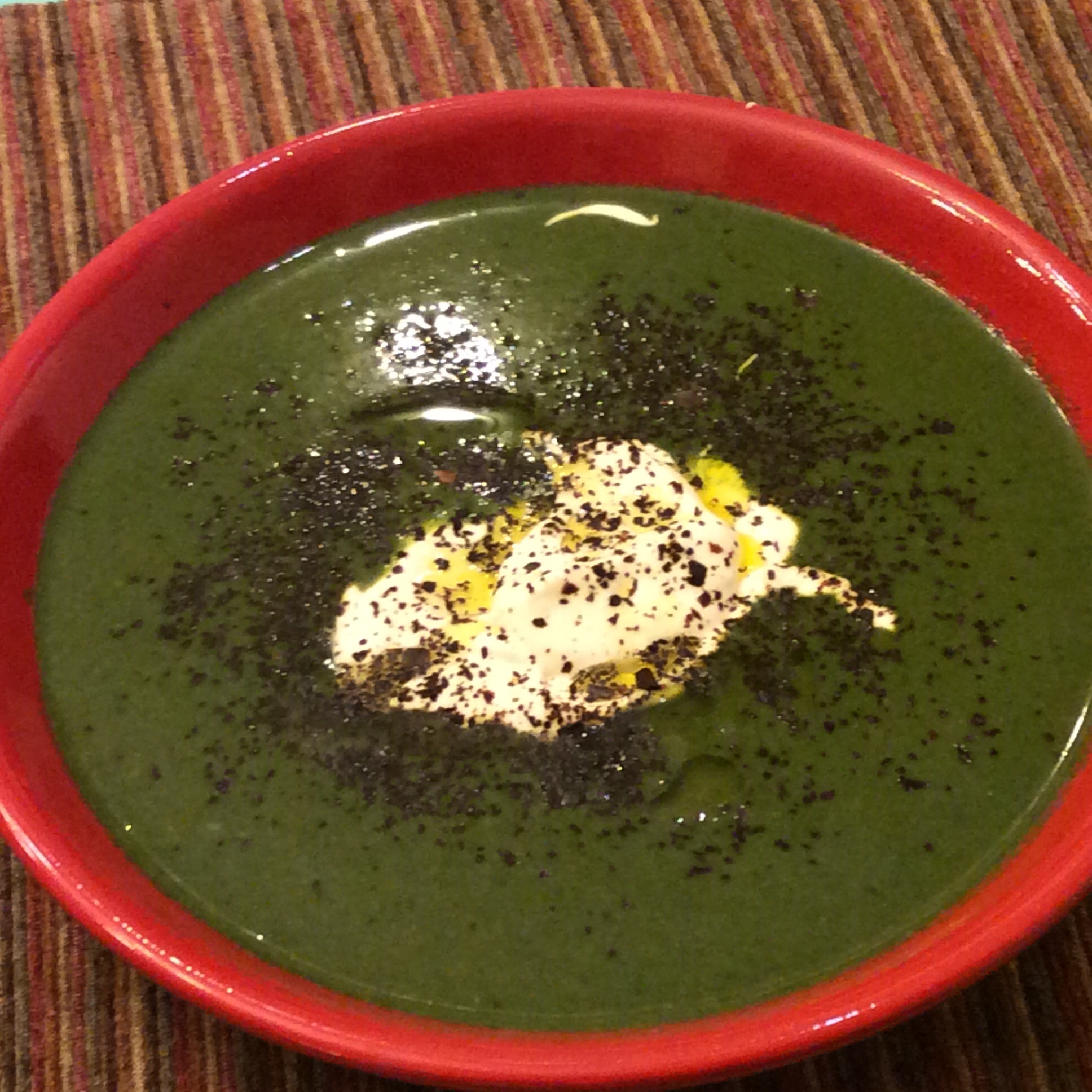
This is a soup that I have been making variations of since a lovely trip to Turkey nearly thirty years ago. It is based roughly on a soup that my guide described his wife making, but it’s interpreted by me and changes every time I make it, so I don’t vouch for its authenticity. This time it was a thick velouté; other times it’s a rough potage, and sometimes it resembles gumbo z’heirbes. So here’s how this one happened:
Prepare and wash three gallons, loosely packed, of assorted greens. No bland store-bought baby spinach! If you don’t have a garden, consider chard, adult spinach, and Tuscan kale, one bunch each.
Pull a quart of good rich chicken stock out of the freezer (it is in there, isn’t it?)or procure a quart of good chicken stock from somewhere.
Set the chicken stock to melting over medium heat in a gallon pot.
Chop three large stalks of green garlic, stems, leaves, and all, and sauté them in a quarter cup or so of excellent olive oil in a sauté pan. OR use a small onion and two cloves of garlic, chopped, for the sauté step. Make sure they are cooked through, and soft but not colored, before proceeding.
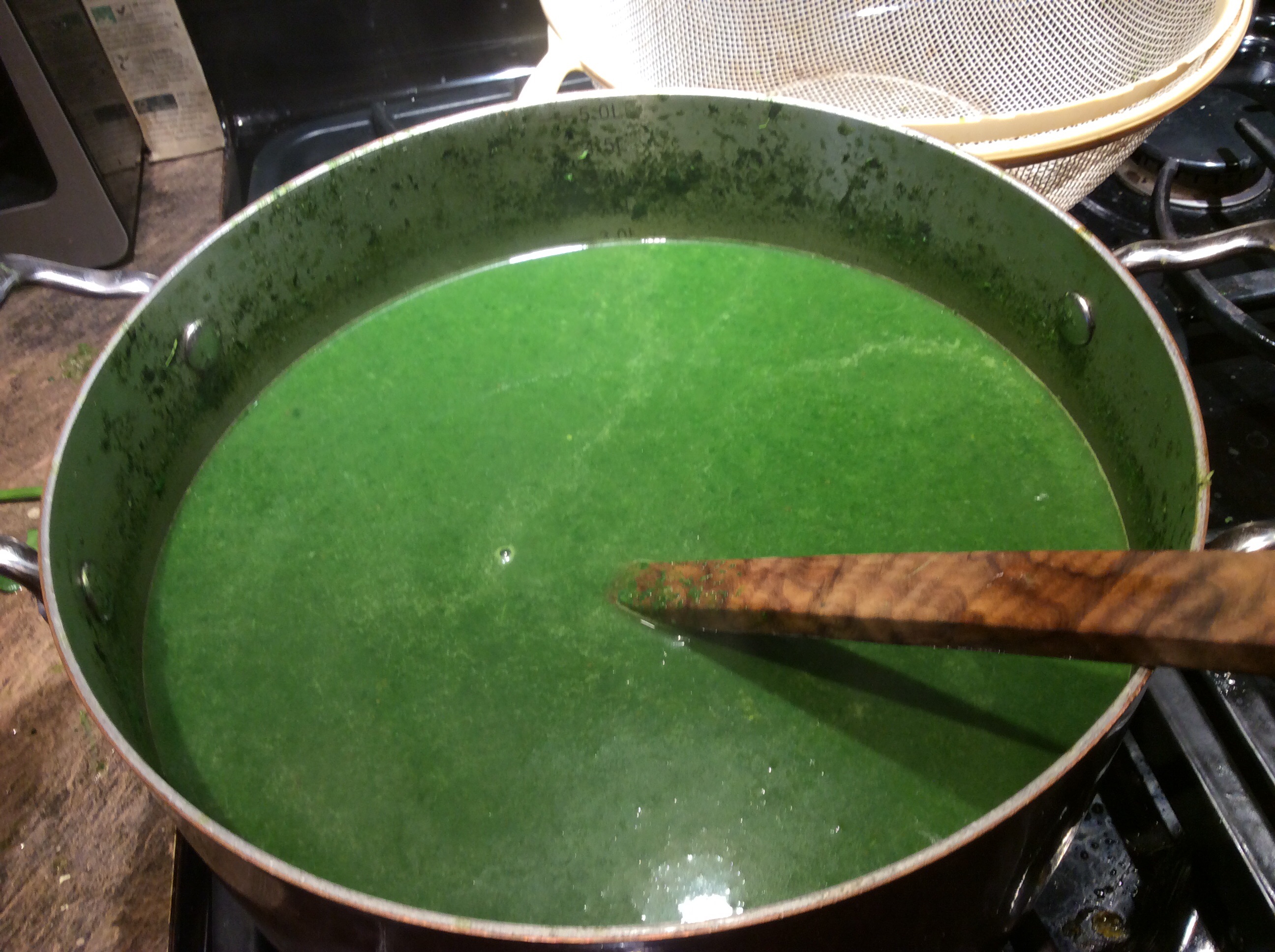
When the garlic mixture is ready and the stock is boiling, begin adding the greens to the stock, stirring, and remembering not to touch those nettles. Boil for about a minute after the last of the greens is added. Now add the garlic mixture to the soup pot and simmer for five minutes.
Now purée with a stick blender. Add salt to taste (I think it needs to be on the salty side)and add a teaspoon of Urfa pepper flakes, Aleppo pepper flakes, or mild red pepper flakes. I like a bit of oregano and thyme. Taste and correct the seasoning carefully.
Mix some full-fat Greek yogurt with salt to taste and have it ready.
Put six egg yolks in a bowl, whisk them up, and slowly add a cup of the hot soup, whisking furiously all the time. Slowly pour the egg mixture into the soup over lowest heat, and whisk another minute or two until it’s lightly thickened and smooth.
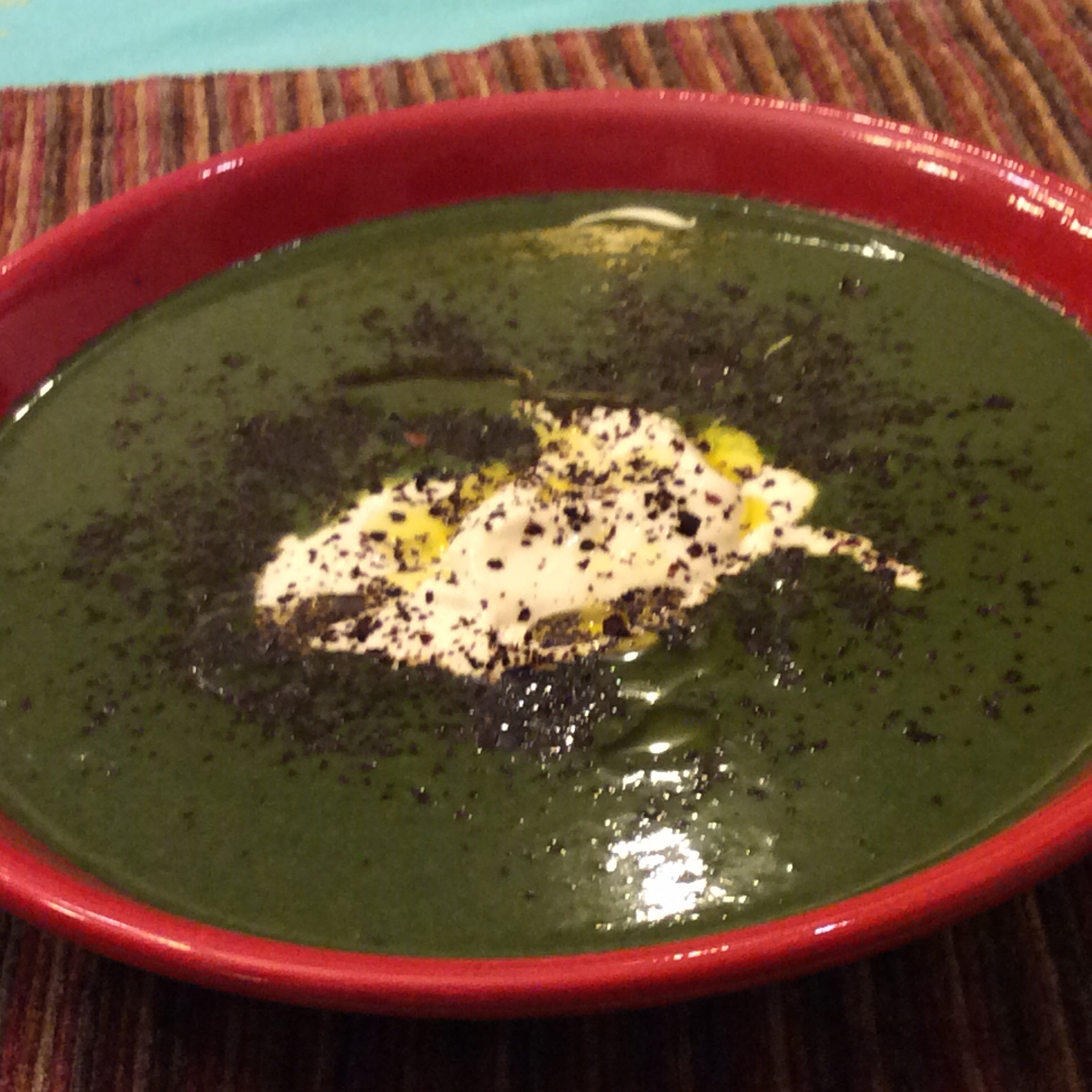
Serve into bowls, pile a half cup of salted yogurt in each bowl, drizzle lavishly with your best olive oil, and sprinkle heavily with more Urfa or red pepper flakes. Eat, and flourish.
image

image

image

image


My Favorite Spinach


For some reason, probably simple curiosity, I tried an old spinach variety called Giant of Viroflay this spring. It was a hot, early spring with lots of wind and duststorms, and I didn’t think that this European antique would survive our high-desert climate, but in fact I have never had such a good crop of spinach. The leaves are smooth and about 10″ long,and in the current June heat I’m still picking from the row that I started harvesting in early May. The particular strain that you have can make a big difference. I got mine from Nichols Garden Nursery. I have seen seeds around labeled “Giant Noble,” which may or may not be the same thing. The maintenance of a good line of seed takes a lot of attention, and it pays to get your seed from the best source that you can find.
The flavor is wonderful, full of the richness that good spinach has, with no metallic or bitter flavors. The texture is smooth and melting when cooked properly, and wonderful in salads too. When I have spinach this good, I like plain creamed spinach more than any other way of cooking it. I think that the French method of blanching first produces the best flavor, and I make up for any diminishment of water-soluble vitamins by eating a great deal of it.
Pick a lot of spinach, since it shrinks greatly when cooked. I use a 5-gallon food-grade pail to pick into, and pick it 2/3 full (loosely filled) to serve 4. Wash very well three times in sinkfuls or pailfuls of cold water. Don’t neglect the washing step. Any bit of grit will spoil your perfect spinach. Then bring a gallon of water to a rolling boil in your big stockpot, toss in the spinach, DON’T cover the pot, and stir with a wooden spoon to get all the leaves exposed to boiling water. When the water returns to a full boil, stir and boil for another minute, then drain in a colander and press ALL the excess moisture out. Turn out on a clean cutting board, chop rapidly with your big chef’s knife, and put in a saucepan with a few tablespoons of butter, half a cup of heavy cream, and salt to taste. Cook over high heat, turning regularly, until the cream is reduced and there’s no drippy liquid. Serve forth promptly, with a little more butter on top. If you know someone who has a Jersey cow, your cream can be thick raw Jersey cream, which is the best cream there is. Shave a few shreds of fresh nutmeg on top just before it goes to the table (I do mean a few, 1/8 teaspoon or thereabouts.) Some fresh pepper is nice too. Sometimes I add some sauteed shallot or green onion, and sometimes I feel that alliums impair the delicacy of the thing.
I like to eat this as a meal all by itself, with a few slices of good baguette alongside. It also makes a great base for poached eggs, and accompanies delicately seasoned chicken and fish dishes beautifully. It is one of the joys of late spring, to be enjoyed lavishly in its season.

Vegetable dinners: a roasted melange, and notes on gochujang


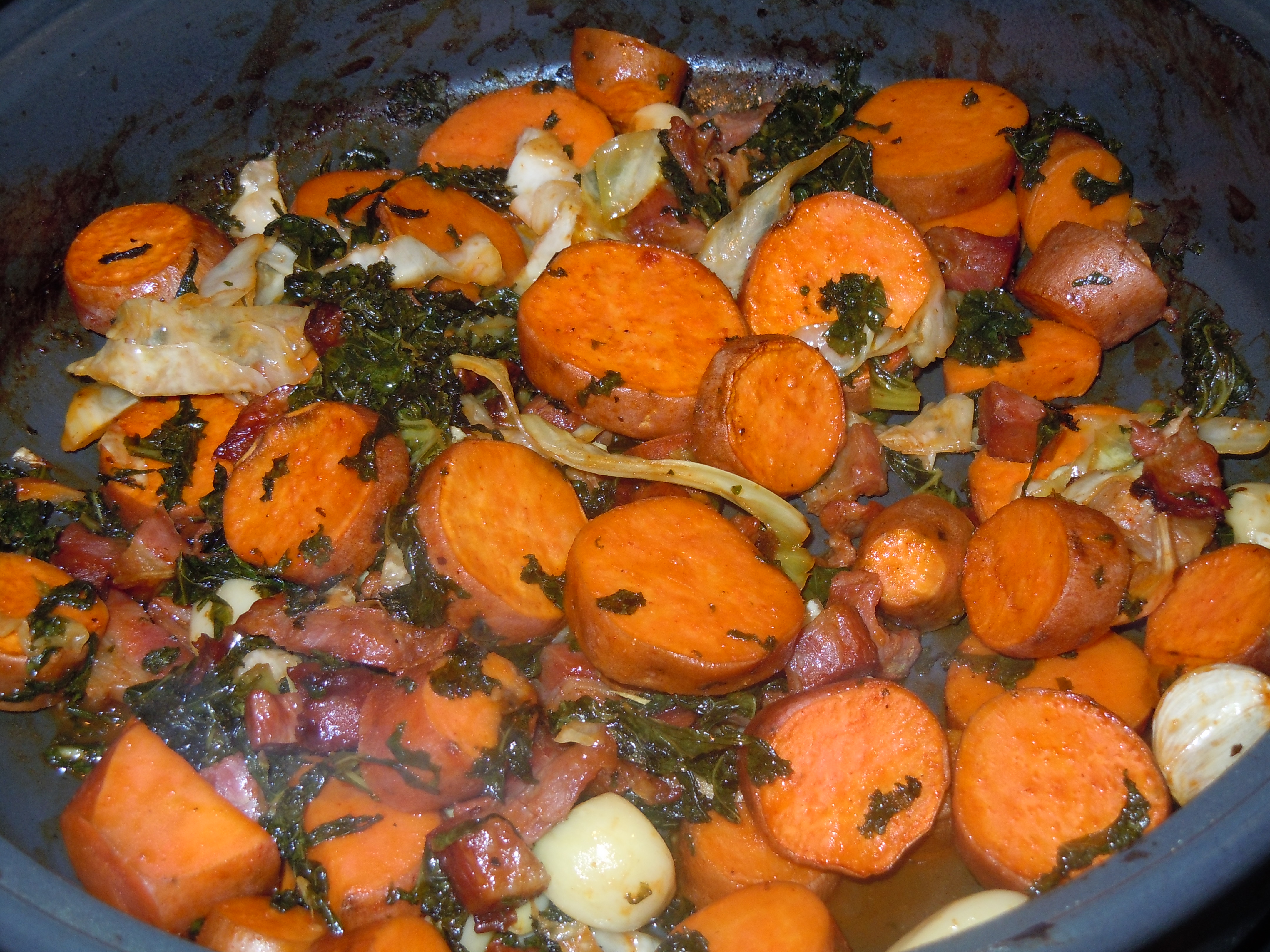
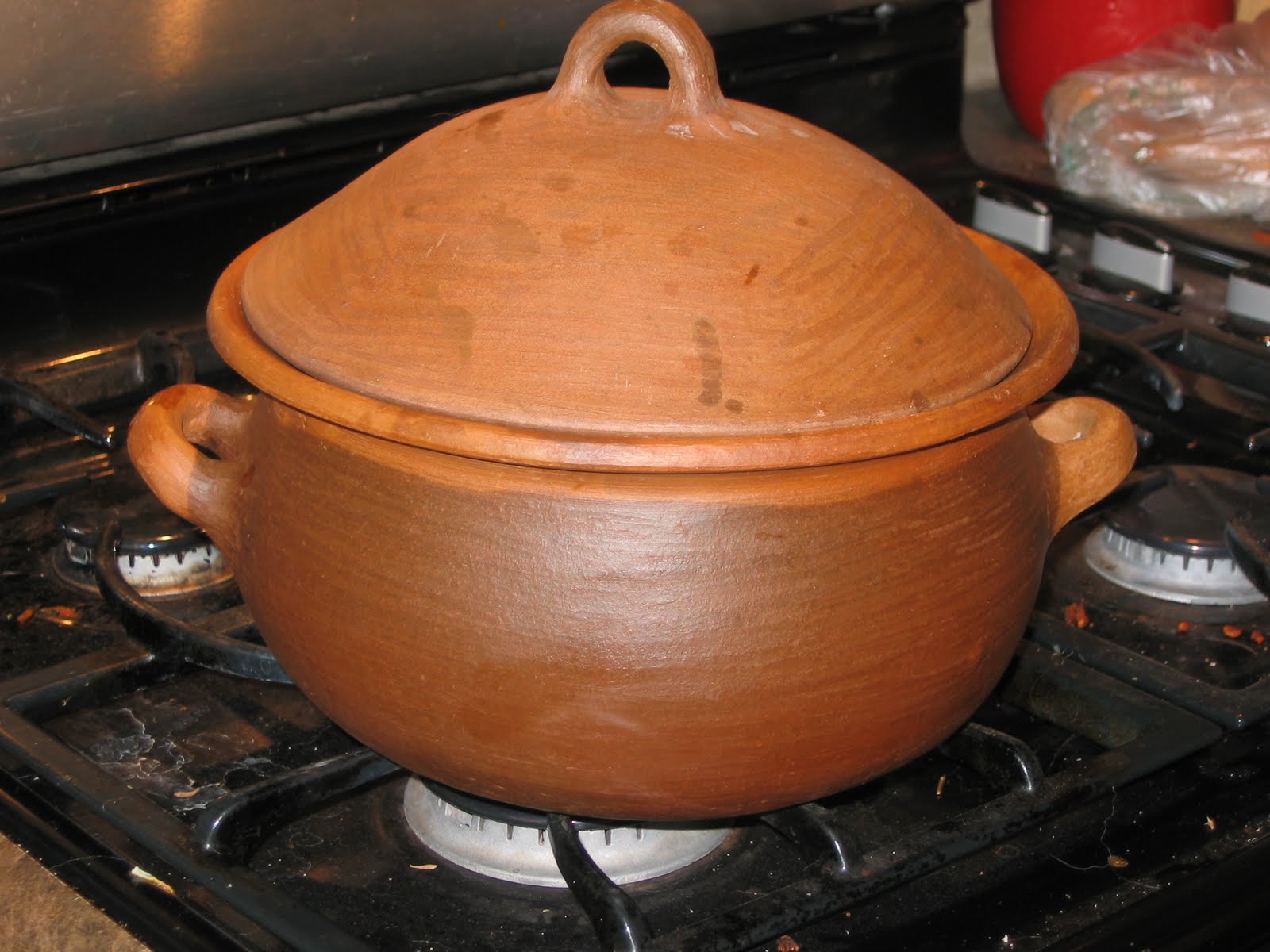
On frazzled days, one way to save time when making dinner is to put food in the oven and pretty much forget about it until it’s done. Many vegetables respond beautifully to this treatment, especially if flavored a little. I have a large clay Spanish cazuela about 14″ in diameter that I use for these impromptu roasts because I’m convinced that the clay improves the flavor, but you can use your standard 9X13 pan if you prefer. I am using a lot of sweet potatoes right now because I dug a lot of them recently, but I’ll include suggestions for substitutions. The idea is to use what you have and like.

You will need:
for the vegetables: 4 medium/large sweet potatoes cut in 1″ chunks (I scrub them well and leave the peel on), or a medium-sized winter squash peeled and cubed, or 6 large carrots scrubbed well and cut in 1/2″ chunks, or some combination of the above. I used sweet potatoes.
For the greens: 1 bunch of kale cleaned and cut in 1″ slices crosswise, or half a small green or red cabbage cut in thin slices, or 3/4 pound of sturdy leafy greens cleaned and cut in 1″ slices, to total about 3/4 pound. I used half Tuscan kale and half sliced green cabbage.
For the seasoning:
a handful of bacon, bacon ends, or pancetta, cut in little cubes. I used the tail end of a bacon slab.
3 large cloves garlic, chopped
3-4 tablespoons of olive oil
1 tablespoon of Korean gochujang paste (see below) or a teaspoon of Tabasco or other red chili sauce, or a teaspoon of red pepper flakes
about half a teaspoon of salt, or to taste
1/2 cup good stock or water

Preheat the oven to 375 degrees. Prepare the vegetables and toss them in the cazuela or pan. Mix the seasoning ingredients and pour over the vegetables, tossing with your hands to distribute. Try to end up with the chunky stuff mostly on top and the green stuff mostly on the bottom. Put the cazuela in the oven. Half an hour later turn the veggies with a spatula, and if the bottom seems dry and things are starting to stick, add a little more stock or water. Again, try to keep the greens mostly below the other stuff, where they won’t dry out. After an hour, check the vegetables for doneness. You don’t want them crisp for this dish; they need to be cooked through, a little soft, and well impregnated with the seasoning ingredients. When done, drizzle a tablespoon or so of your best olive oil over all, bring to the table in the cazuela, and eat with a crusty baguette or toasted whole-wheat bread, as you prefer. It couldn’t be easier or healthier.
You can leave out the bacon or pancetta and have a vegan/vegetarian meal. I don’t recommend it, because the pork has a wonderful alchemy with the sweet winter vegetables and the chili paste, and creates a whole much greater than the sum of its parts.

Now and then we find an ingredient that represents the Platonic ideal of its kind. For me, the Korean chili paste gochujang is the seventh heaven of the chile pepper. There is nothing quite like its deep, intense, fermented flavor, unctuous texture, and exquisite mahogany color, and it has a special affinity with pork and a thousand uses outside of traditional Korean cooking. These days the only gochujang that I will use is the one from Mother-in-law’s Kimchee, which does have some sugar in it but no high-fructose corn syrup and is properly fermented and deep and delicious. If it isn’t available in your area, you can order it online. I like the original one, called “concentrated” on the label.

I talk a lot about making dietary and lifestyle changes slowly and one at a time. This is a great time to start thinking about eating more green leafy vegetables. Salads are great, but cold weather is a perfect time to incorporate more cooked greens as main dishes, side dishes, or soups. If you garden, kale and cabbage will help get you through the winter. If you forage, dock, chicory, and dandelion greens are among the few wild foods available in winter in our area (plan to mix them with milder greens from the garden or store.) If you buy at the store, Tuscan kale is everywhere, and since there is no better leafy green, go for it. I do recommend sticking to organic greens wherever possible. If you always have garlic, olive oil, and a little good bacon or pancetta in the house you are always ready to make a lovely dish of saute’ed greens, and there are lots of variations. Check out my “greens” category on this blog for more recipes. I know I have said this before, but I’ll keep saying it: don’t undercook them. The thicker tougher greens like curly kale are acutely unpleasant to eat when undercooked and tough, so taste before sending to the table, and if chewing requires a ruminant level of effort, cook five minutes longer and taste again. Mark Bittman is now galaxy-famous as the author of many authoritative cookbooks, but few people are aware that his first effort was a little gem called “Leafy Greens.” You can still find it second-hand, and it’s worth tracking down. Read it and use it, and your family’s health will benefit.

The Greens of Summer: greens bruschetta

If you’re interested in making leafy greens an enjoyable part of your diet, I highly recommend Paula Wolfert’s book Mediterranean Grains and Greens. My favorite greens recipe, however, does not come from that book but from another of her books, Paul Wolfert’s World of Food. She calls it “marmalade of spring greens,” and it is intended as a spread for bread. I find it wonderful stuff to have tucked in the refrigerator, where it will keep for several days and makes great impromptu lunches and snacks. I have made it so often for so long that my recipe has morphed into something a little different from hers, as tends to happen with recipes that really work for me.

First, catch your greens. See my earlier blog post about greens options and about cleaning them. Right now I am mostly using mixtures of amaranth leaves ( the polite term for common pigweed), lambs quarters, purslane, sweet potato leaves, and New Zealand spinach, because those are the plants that are doing best in our summer heat. Gather about a pound of assorted greens. If you are using store bought, a mixture of Swiss chard or Tuscan kale and spinach will work well. I avoid the baby spinach that comes in cello bags. It doesn’t have enough flavor for use as a cooked green. If you enjoy bitter greens you can add several dandelion leaves (I am referring to the store bought kind, not the wild kind, which are too bitter to use at this time of year.) Or you can add a small bunch of watercress to add a little bit of snap. But don’t worry too much about this, because the seasonings will add the extra kick as long as the greens are good.

1 pound of mixed greens

One Shallot

Two cloves of garlic, fairly large

1/4 cup of olive oil

10 to 12 kalameta olives, finely chopped

2 tablespoons capers, preferably salt packed, washed of salt and soaked in cold water for an hour

Pinch of red pepper flakes

Salt and pepper to taste

Bring a pot of water to a boil, add the greens, and cook uncovered for one minute, just until they are thoroughly wilted. Drain and press out any excess moisture. Turn them out on the chopping board and chop them thoroughly in both directions, so that you retain some texture (you don’t want a paste) but all stems and leaf ribs are cut up into small pieces.

Chop the garlic and shallot quite finely over medium heat in the olive oil until cooked through but not brown. Add the chopped olives and the capers, either chopped or whole as you prefer. Sauté for a few minutes, then add the chopped greens, the red pepper, and a little salt. Cook over low heat, stirring occasionally, for about 15 minutes or until the greens are tender. Taste, season with salt and pepper as needed, and spread thickly on toasted or grilled bread. Top with some grated Parmesan cheese and a handful of toasted pine nuts.

Many variations are possible, and I seldom make this dish the same way twice. I may add several cloves of confited garlic instead of two cloves of fresh for a deep mellow flavor. A mashed filet of anchovy or a dash of colatura added at the saute’ stage give an especially rich flavor- this is very close to the Wolfert original. A generous spoonful of roasted tomato sauce added toward the beginning is a nice touch. A half teaspoon of Spanish smoked paprika, Pimenton de la Vera, gives a faint smoky edge as if you had cooked it over a wood fire.  A good sprinkling of fresh thyme or chopped oregano or marjoram leaves over the top just before serving gives a lovely whiff of its Mediterranean origin.  A poached or fried egg plopped on top makes it a hearty meal. You can serve the greens at room temp on a bed of fresh ricotta, drizzled with your best olive oil, and serve the bread on the side.

I should add that, like so many other things, it seems to taste best if cooked in clay. I tend to use either an unglazed clay bean pot or a Spanish cazuela, after doing the initial blanching of the greens in an ordinary pot. A Chinese sand pot works well too. If you’re curious, do read another of Ms. Wolfert’s books, Clay Pot Cookery, which contains everything you might want to know about cooking with clay.