Posts Tagged ‘greens’

Perennial Saag Paneer


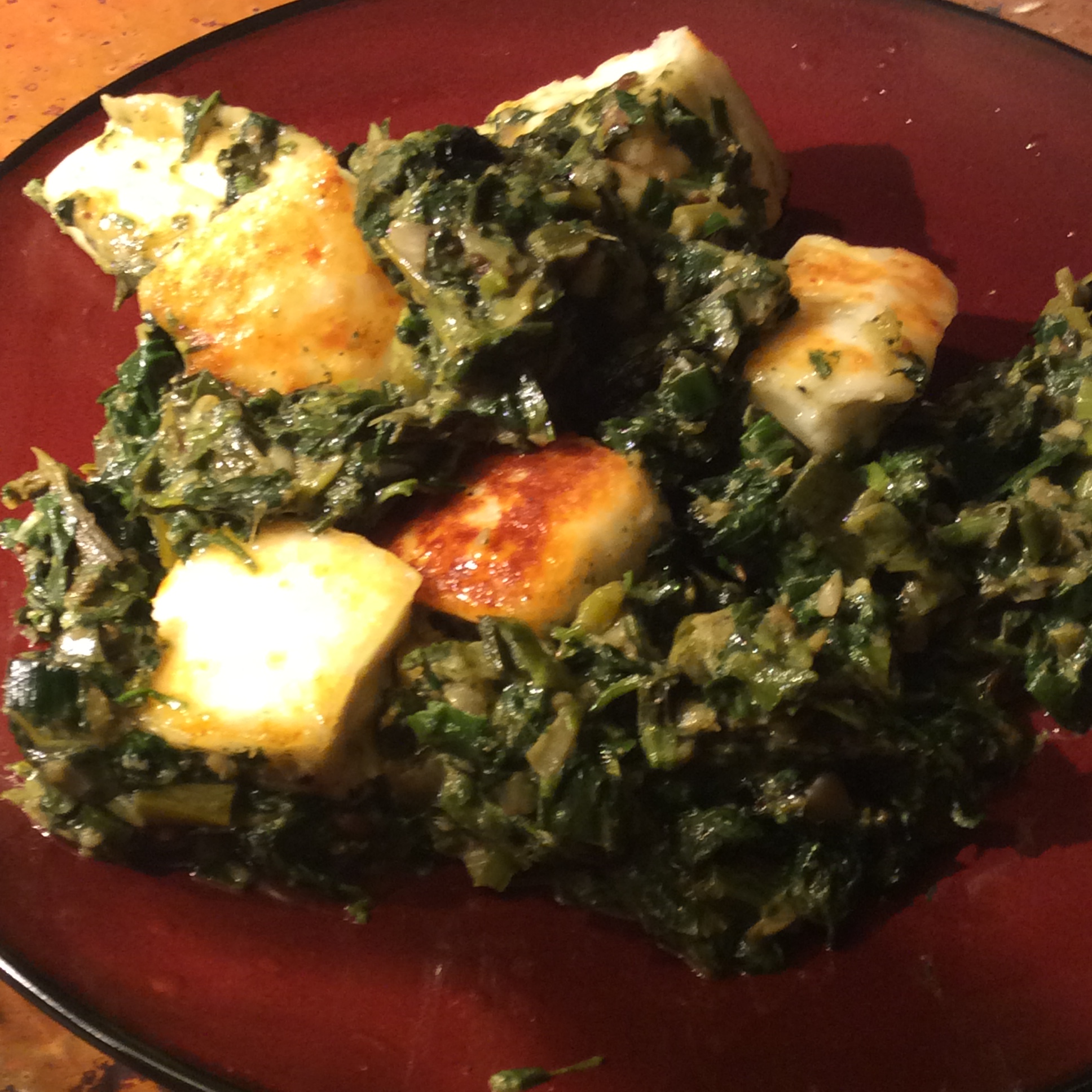
Yesterday I wrote about making Paneer with my grass-fed goat milk. Today I’ll talk about making saag paneer, one of my favorite dishes, and for a permaculture twist I’ll make it with perennials as much as possible. If you don’t have a weed patch, you can use a bunch of spinach. You will also need fresh ginger, cumin seeds, garam masala, heavy cream, and butter.
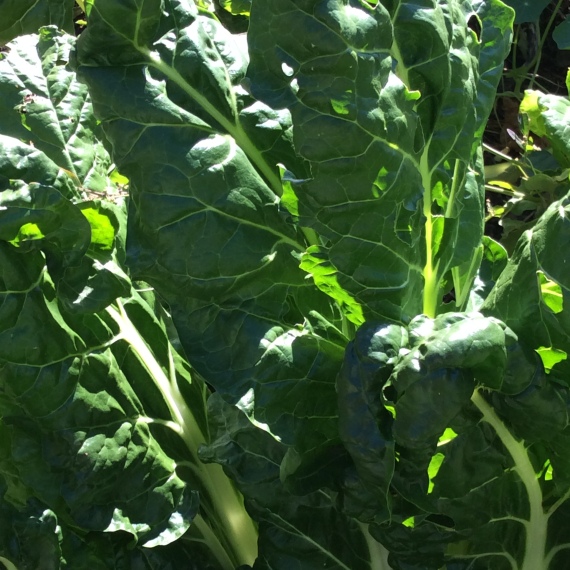
Assuming that you have the paneer, the next step is to catch your greens and alliums. I used equal parts each of nettles and bladder campion, and 4 stalks each of green garlic and perennial Welsh onions. The nettles and bladder campion were blanched for about 90 seconds so that the nettles could be handled easily, then drained, pressed, and chopped. The alliums were cleaned, trimmed, and sliced in 1/4″ cross section.

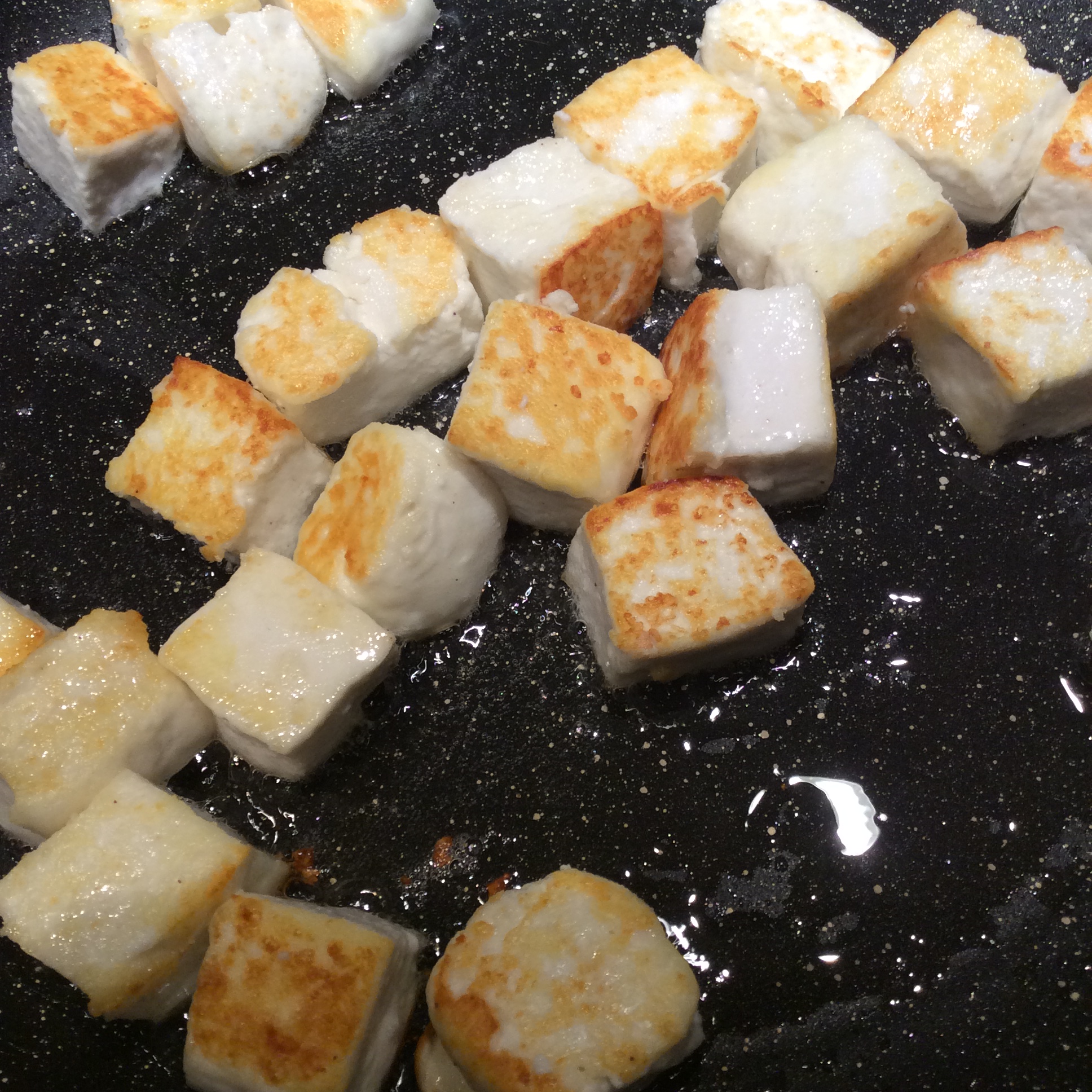
When ready to cook, heat a nonstick skillet, cut the paneer in 1″ cubes and salt it, and fry in mild oil of your choice (I like Macadamia nut oil) until browned. Set aside.


Chop a piece of fresh ginger about an inch square finely, and have ready a teaspoon of whole cumin seed and a heaping teaspoon of garam masala.
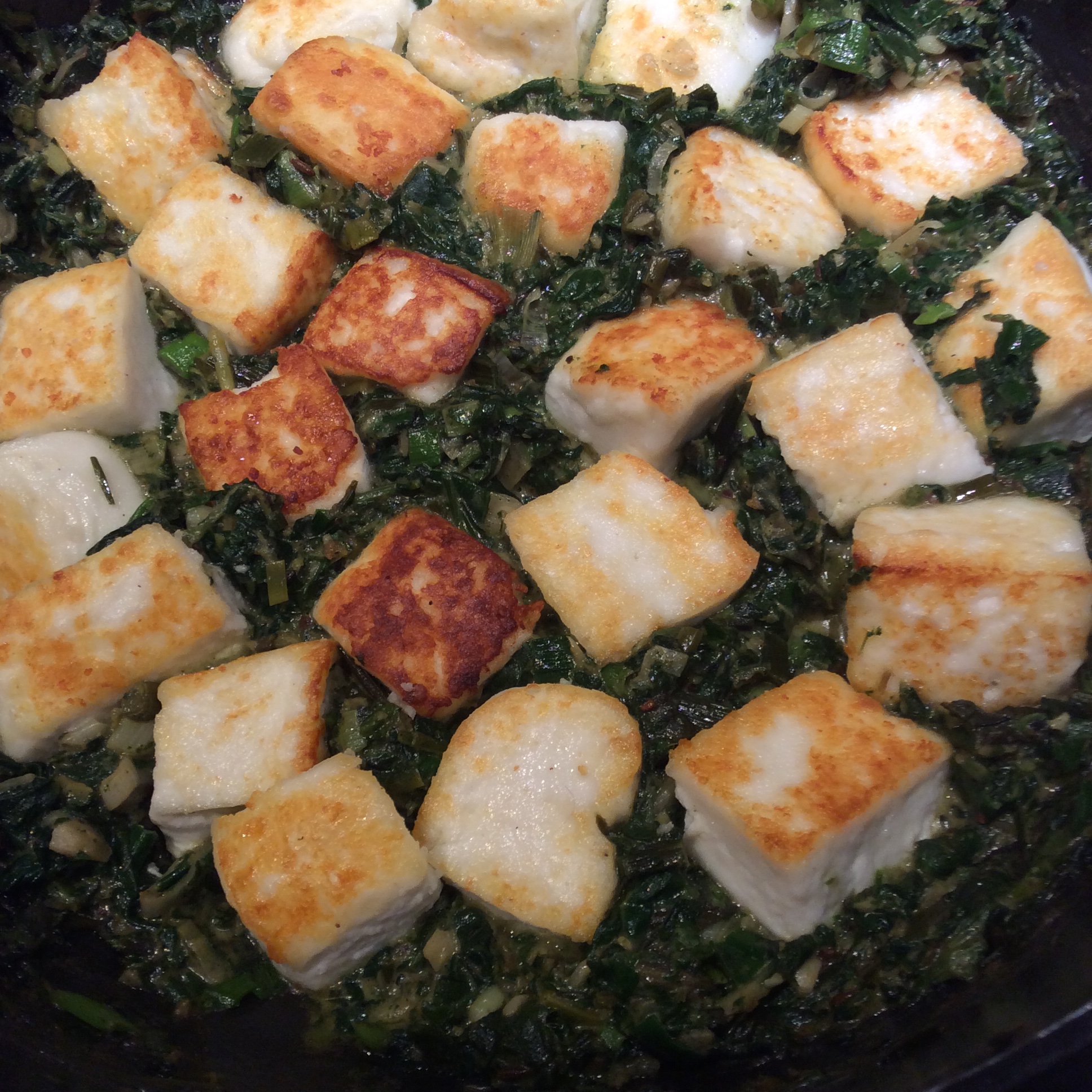
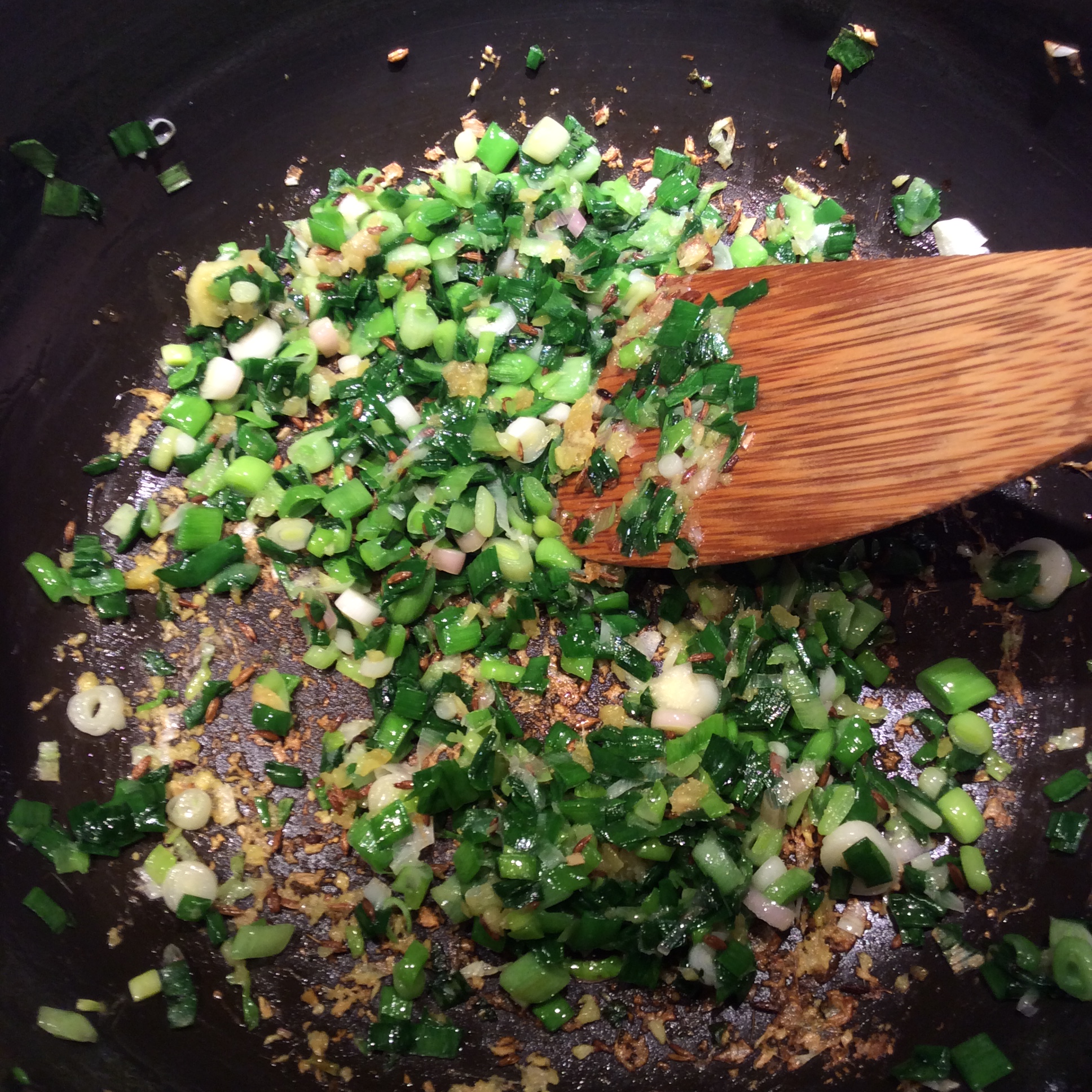
Heat a saucepan, put in a couple of tablespoons of mild oil, and fry the cumin seeds briefly until they darken a couple of shades. Immediately add the chopped ginger, stirfry furiously until it is cooked but not browned, and add the chopped alliums and lower the heat to medium-low. Add a half teaspoon of salt and sauté the alliums until they are softened, lowering the heat if necessary to keep them from burning. Add the garam masala, cook another minute or two, and add the cream. Add the blanched chopped greens and cook over low heat until they are thoroughly cooked, probably about another 10 minutes. Put the paneer cubes on top, pushing them into the greens mixture a bit, and cook over low heat until they are heated through. Serve with rice or, if you are a low carb eater, gloriously naked on the plate. Drizzle some melted butter or ghee over the top.

I was taught to make this dish a few decades ago by an Indian woman in Manhattan, and I am pretty flexible about the greens used as long as they’re mild. No bitter green has a place in this dish. The green garlic and onions are great in season, but chopped garlic and onion are traditional.  I’m very rigid about the seasoning, though. Sometimes I add a chopped hot pepper but that’s my only variation. The whole cumin seeds fried quickly in hot oil are not negotiable, and burning or scorching any of the seasonings or alliums  means you need to start over, so work carefully.

The Greens of Winter: Soup Base

img_5098

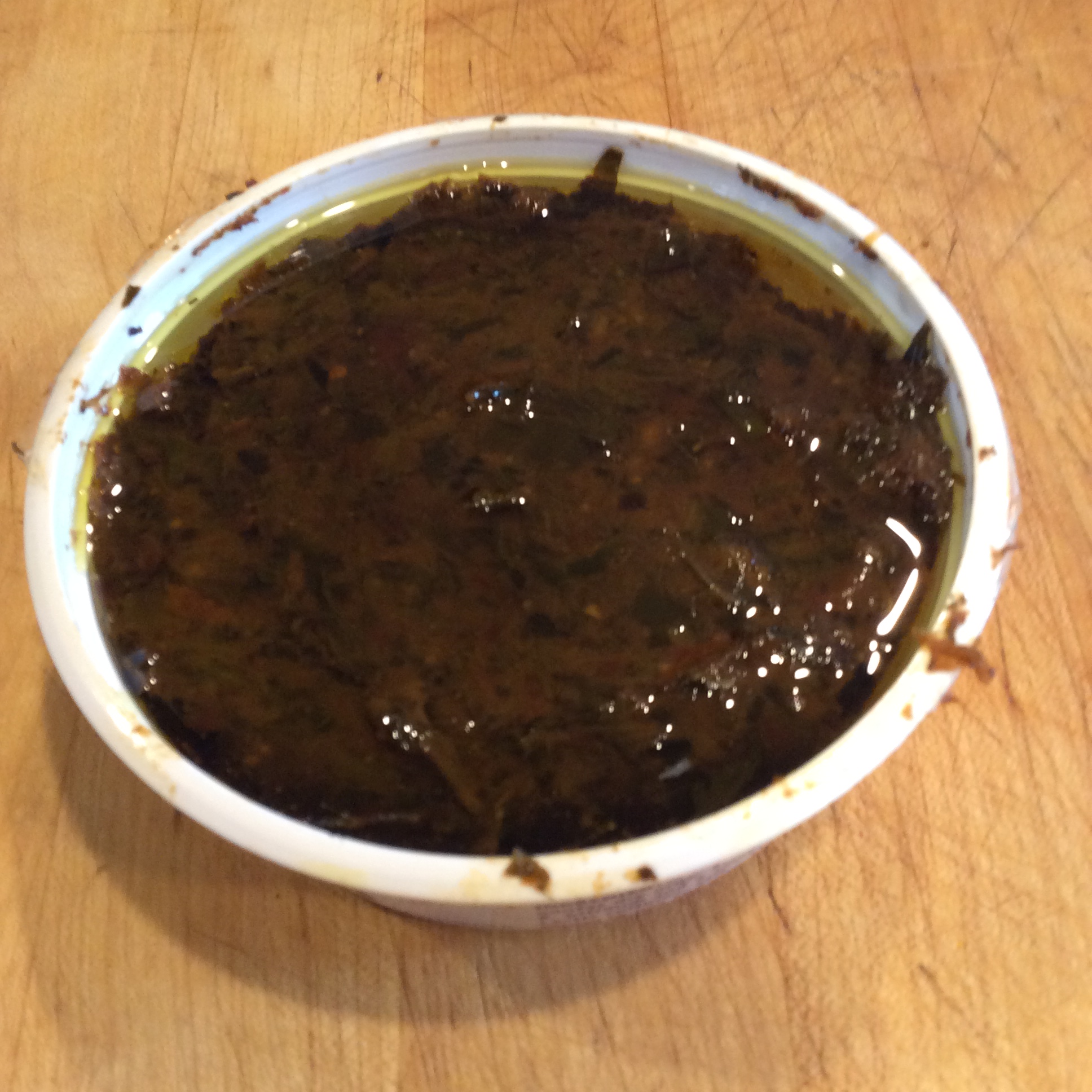
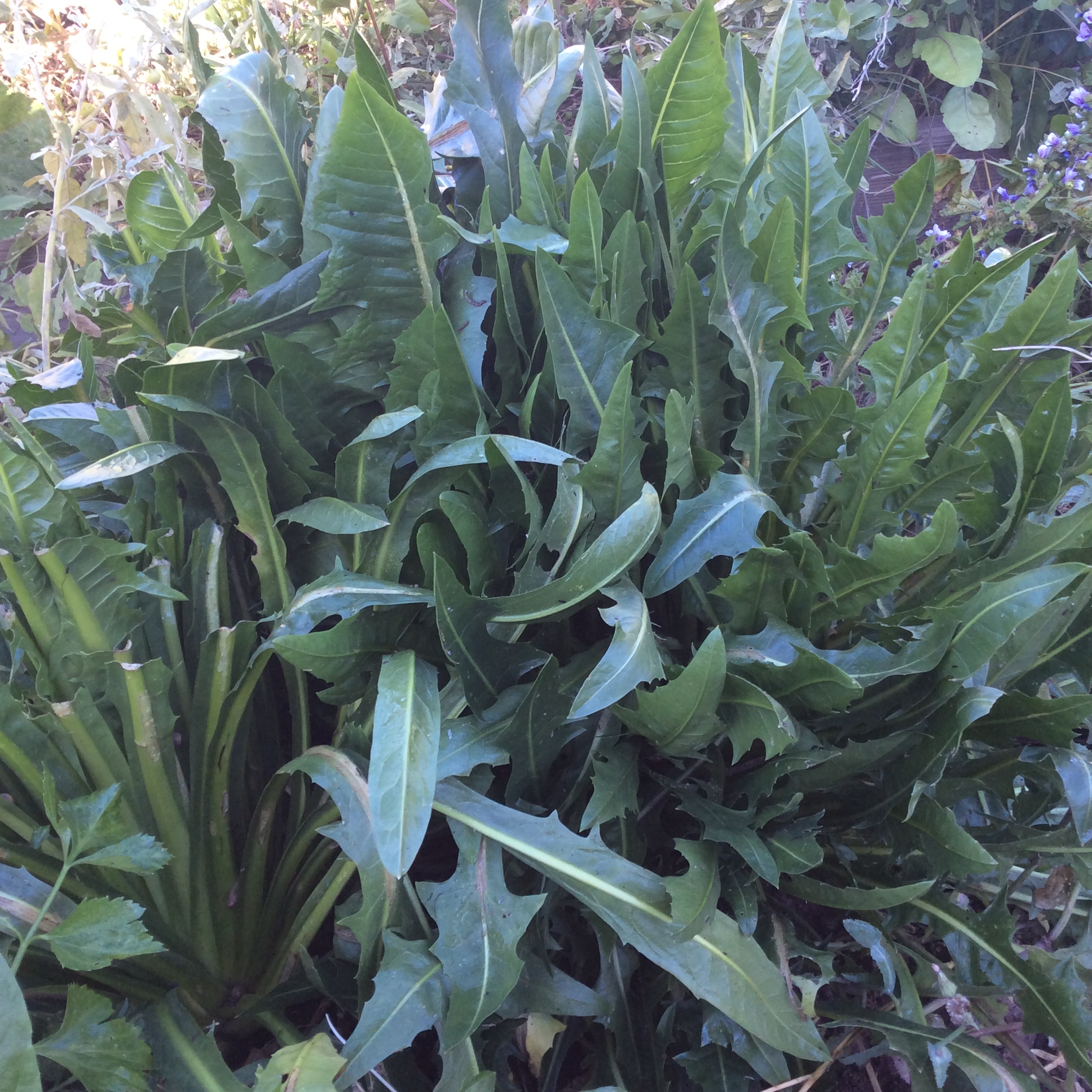
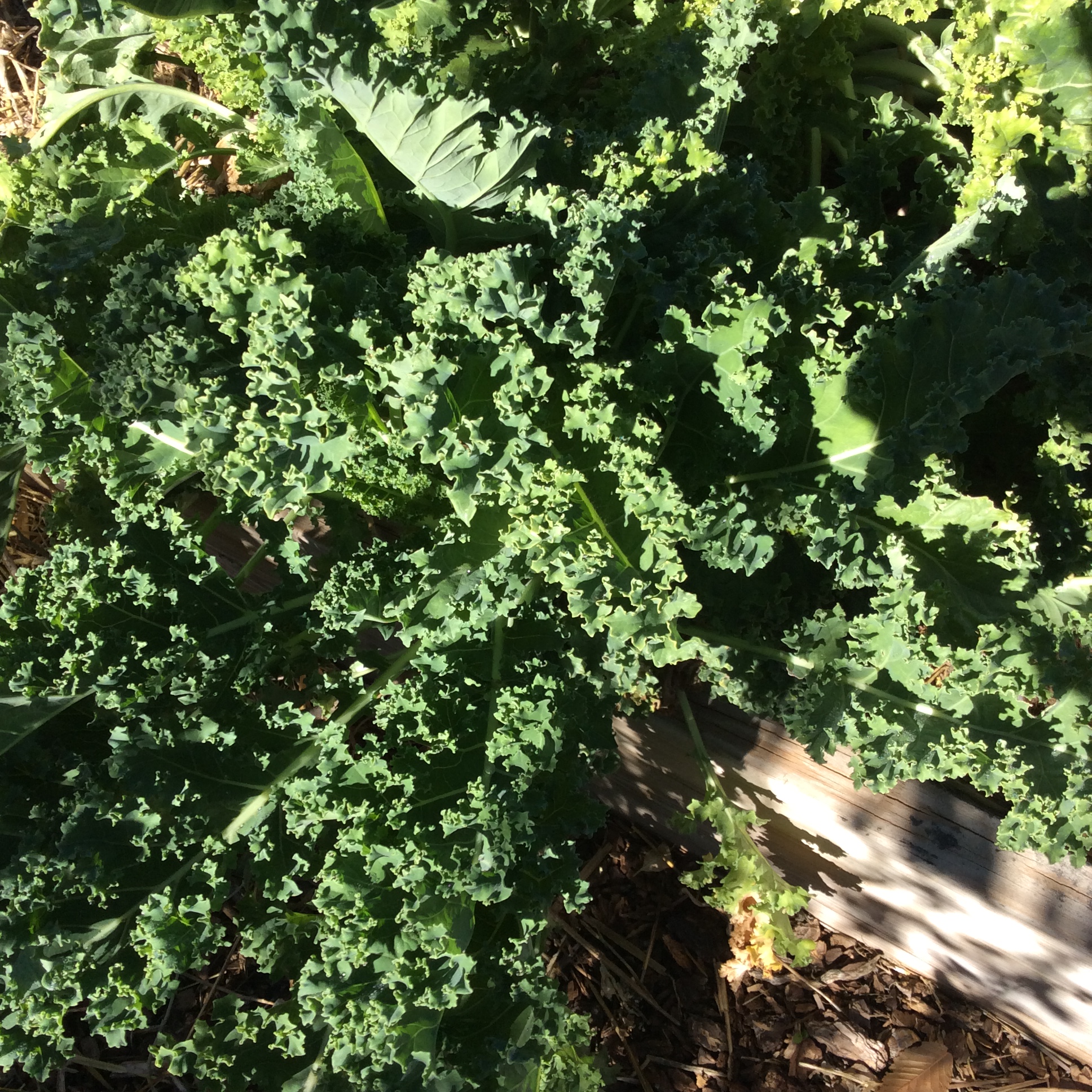
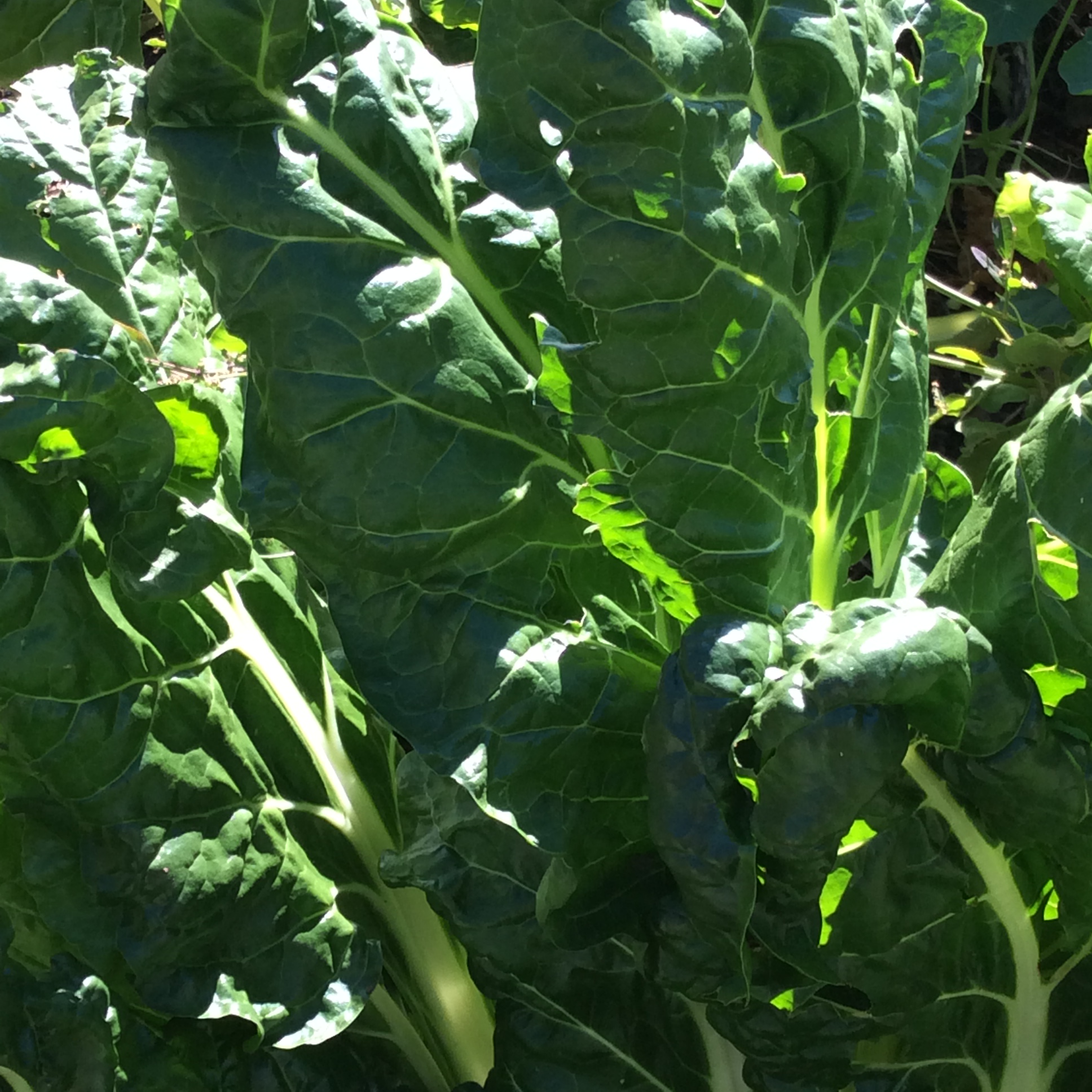
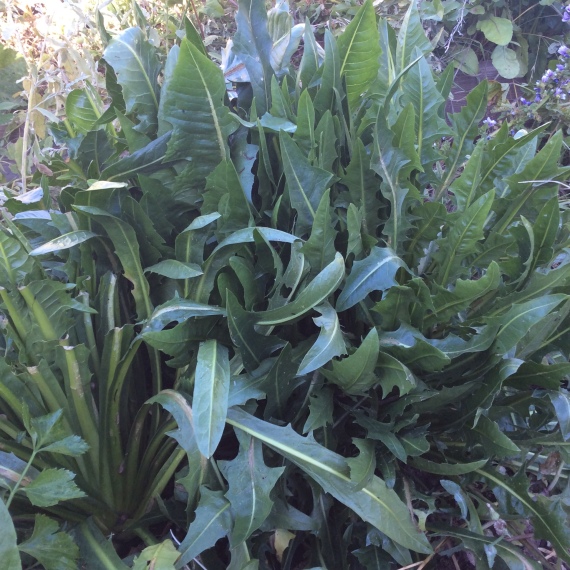
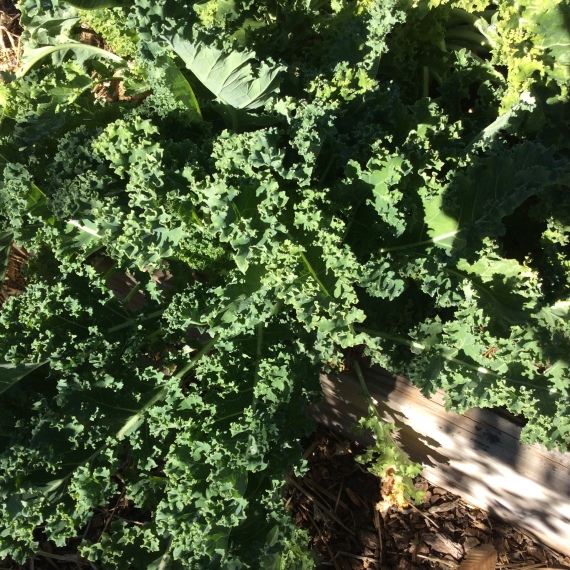
Earlier this week I walked through my frost-killed garden to see what was left. For the most part I don’t make any special effort to protect my garden in the fall because after a long summer I’m ready to move on to the things I do in the winter, so the pickings were slim, but I found lots of chicory, dandelion, chard, broccoli leaves, alfalfa tips, celery, and kale, along with green garlic and green onions, and some of the herbs were still in fine shape. I decided to make soup, and since I had a lot more greens than I remembered planting, it occurred to me to make a soup base that could sit in the freezer, ready at any time to be turned into soup in a hurry. To the garden ingredients I added a large onion and a largish handful of sun-dried tomatoes from earlier in the summer. You could also use a jar of dried tomatoes in oil, drained.  The celery was used from base to leaf tip. I used roughly equal volumes of all the greens types, about the equivalent of a medium-sized supermarket bunch of each.

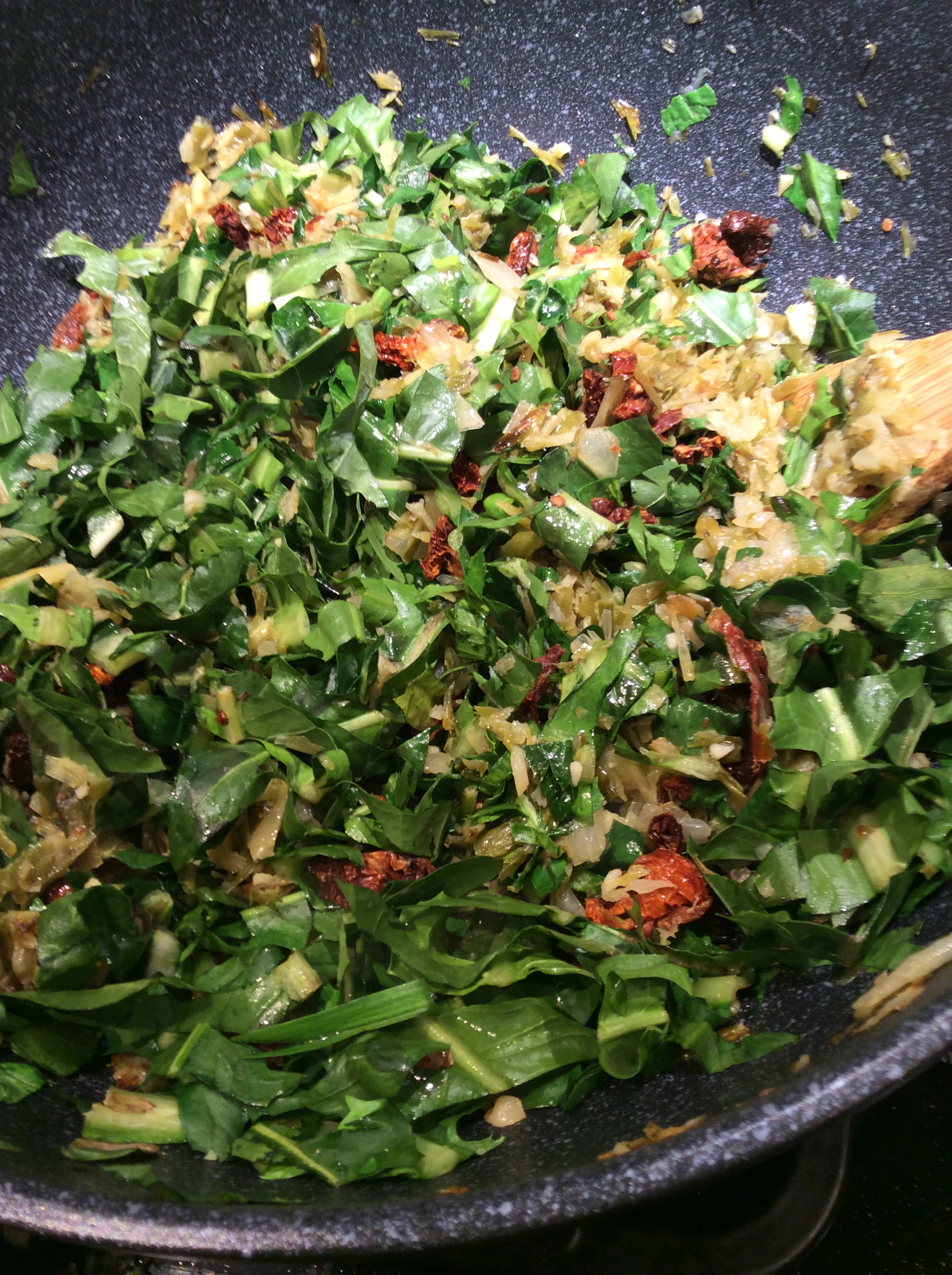
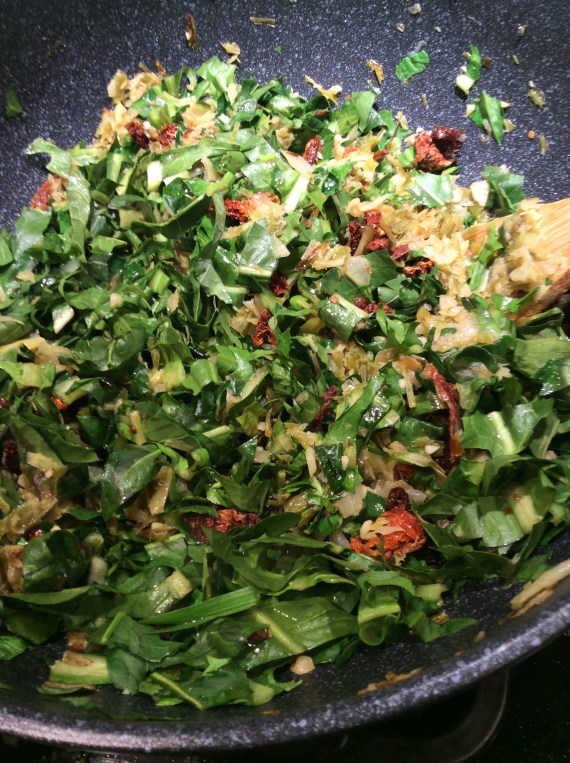
The onion was sliced thinly and sautéed very slowly in olive oil while I washed and prepared the greens. I was aiming for a rich caramel color, which meant low heat and frequent stirring, which is no extra trouble if you’re in the kitchen anyway. I used my wok because I knew that the volume of sliced greens would be considerable. First the green garlic and green onions were cleaned, finely slivered, and held separately, then everything else was washed and midribs removed and cut in cross section into roughly 1/2″ slices.
img_5084

When the onion was a nice toffee color I added the chopped green alliums, cooked about another five minutes, then added the other greens and some more olive oil along with about a teaspoon of salt. Don’t stint on the olive oil. You want sautéed flavor, not steamed flavor.  The heat was turned up to medium and the whole mass stirred and turned with a wide wooden spoon about every five minutes to keep it cooking evenly. As soon as the greens were in the pan I ground the sun dried tomatoes into small powdery chunks in the blender and added them to the wok. They rehydrated well enough in the moisture from the leaves.  Keep cooking until the greens are soft when chewed.

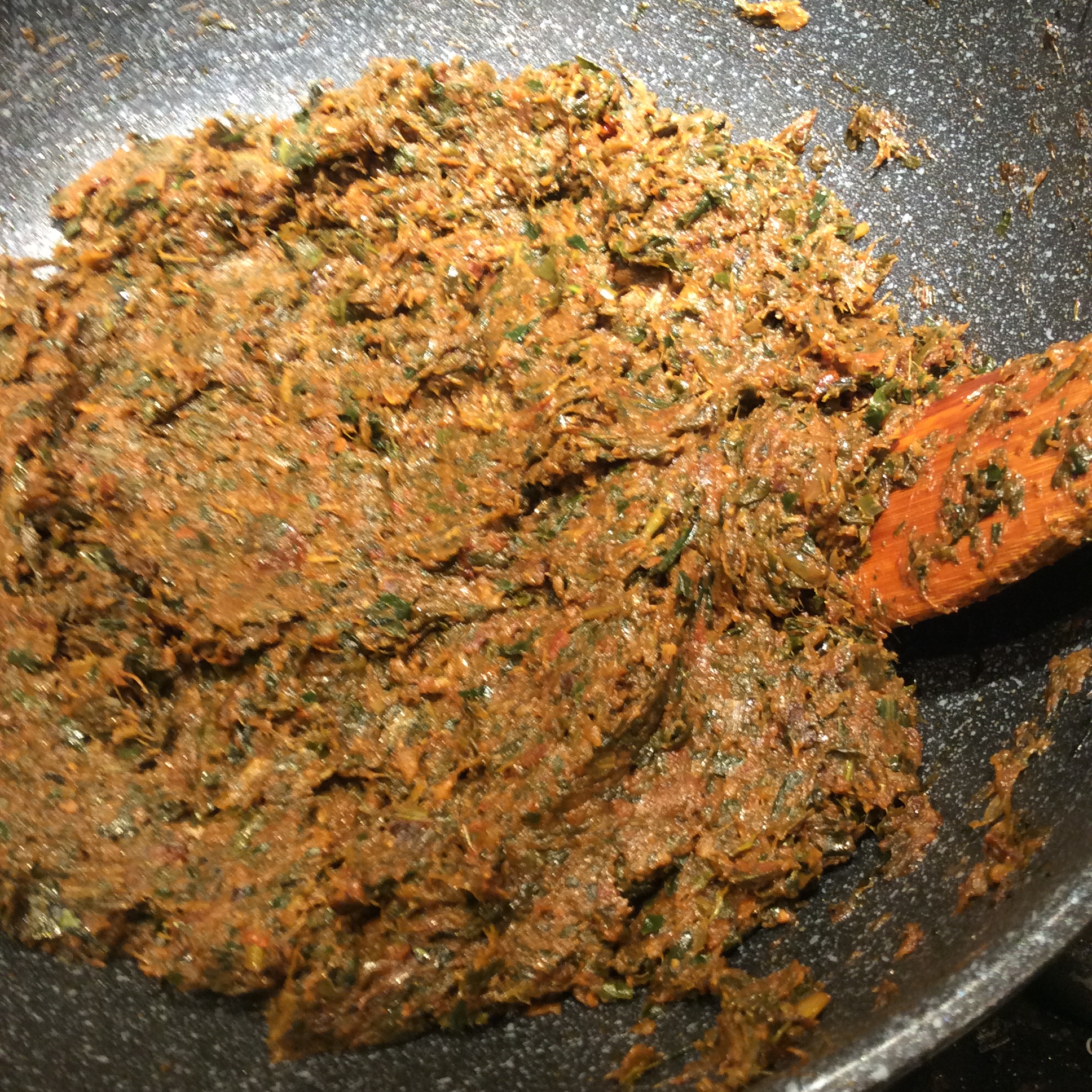
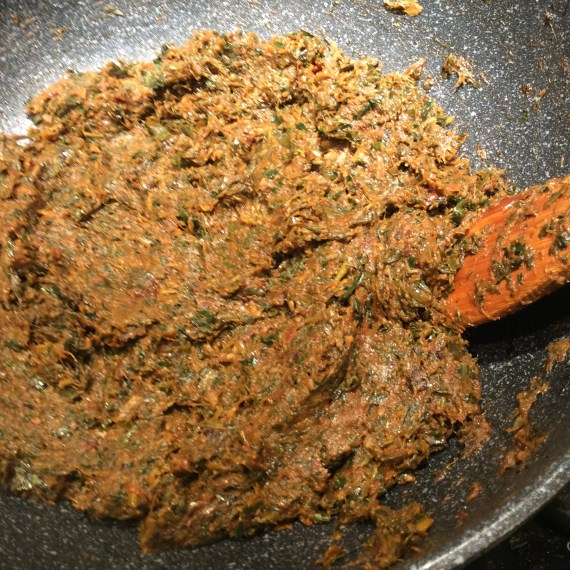
When you have a darkened dense mass of soft greens, put the whole business in the food processor and grind to the finest paste that you can achieve. Taste. You want it on the salty side, because that helps with preservation and it’s going to be diluted later. Add more salt if needed. I prefer to use fish sauce rather than salt to season at this point because it adds a wonderful rich savor. I used about a tablespoon. Don’t use this if you might be serving vegetarians.
img_5085

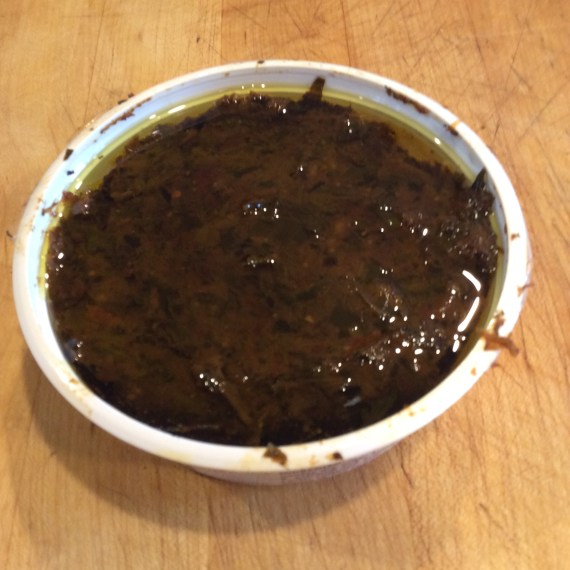
Now cool your soup paste and pack it into one-cup containers, each of which makes about a quart of finished soup. Coat the top with olive oil, push lids on tightly, and freeze.
img_5091

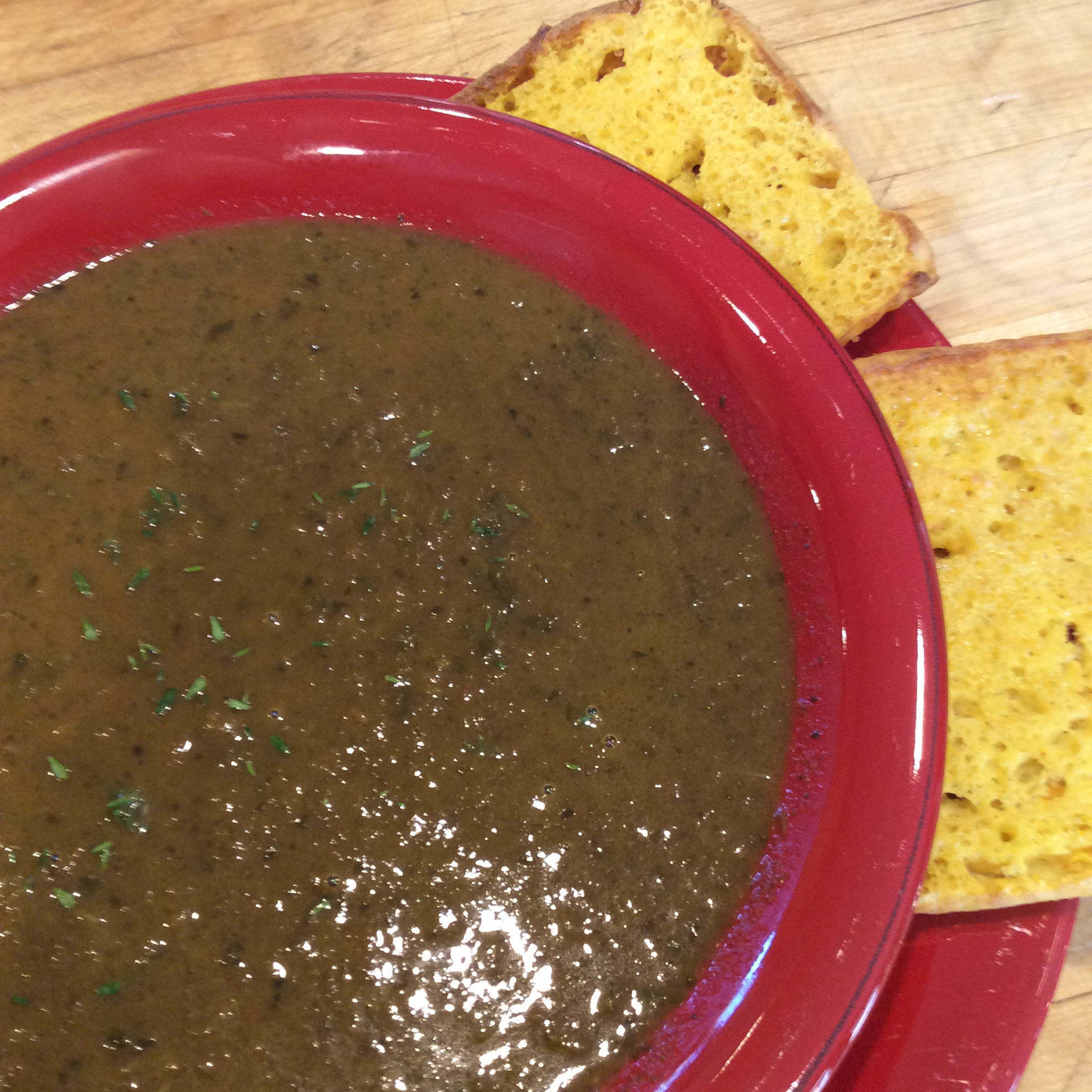
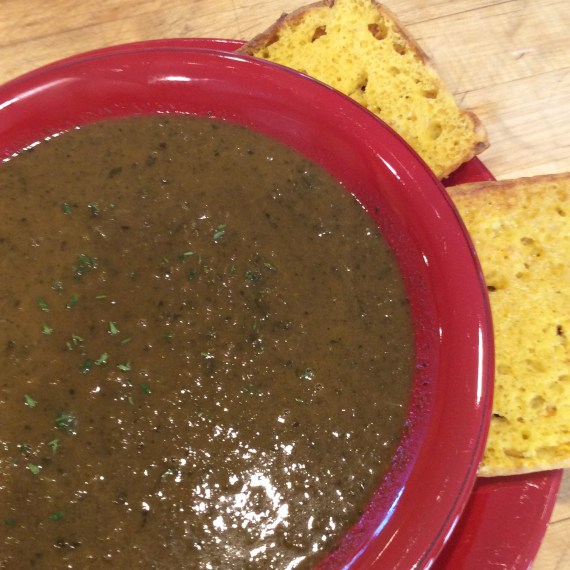
When ready to use, put a quart of any kind of salt-free or low-salt broth you like in a saucepan, add a cup of soup paste, and simmer until thawed. Correct the texture with a stick blender if it needs smoothing out. Taste for seasoning and adjust in any way you like. The caramelized onions, deeply sautéed greens, and fish sauce gave a meaty-umami flavor to the potful I made for lunch today, so I salted to taste and added a swirl of fat from my homemade bacon and a generous sprinkling of thyme leaves, a meaty-umami herb if ever there was one. Yum. With toasted buttered slices of my low-carb fake-o cornbread, it made a perfect light healthy Thanksgiving brunch to lead into the excesses to come at dinner.

This basic formula can be varied endlessly according to what you like and have available. If you serve vegans at your table, using some miso rather than fish sauce and good olive oil for the final swirl with water or vegetable broth as the liquid would suit their needs while fully satisfying the omnivores. If you don’t like the brownish color, leave the tomatoes out and it will be more green. Pan-grilled small oyster or other mushrooms would make a good garnish. A fried or poached egg adds tremendous heft to soup if you want a richer meal, or some bacon lardons fried crisp would satisfy any ardent carnivore with a minimum of actual meat. You can add cow or coconut cream for a cream soup (try a toss of chopped fresh tarragon for the final garnish,) or some leftover tomato sauce for interesting tartness, or finish it with a handful of good freshly grated Parmesan along with olive oil and let the cheese dissolve in the hot soup. For a more Cretan effect, use crumbled feta and olive oil on top.  There are a hundred possibilities and you can get any of them from freezer to table in well under 20 minutes. Serve any kind of bready stuff that suits your diet alongside, and you and your table mates will be full. I say that a quart of soup is two servings, but I understand that normal people can serve three or four with a quart. Know your family’s tastes.

In my opinion the celery is necessary rather than optional, and I strongly advise including at least a small portion of bitter greens (dandelion and chicory in this case.) When making mixed greens, I’ve often noticed that a savory-meaty element is lost if I don’t include some bitter greens. The proportion is small and the final product isn’t bitter and is enjoyed be people who don’t like strong greens in other contexts. Besides, they’re so damn good for you.
img_4891

img_4892

img_4888

Wild Lettuce

image

Wild lettuce is everywhere. I see it all over the downtown area of our city, growing in cracks in pavement and against buildings.  Wherever you are right now, there is probably a plant of it growing nearby. Its endurance is extraordinary and there is no getting rid of it, which suits me fine. A green that will grow in unwatered parts of my desert yard is an unusual thing, and I’m not likely to turn down a gift like that.

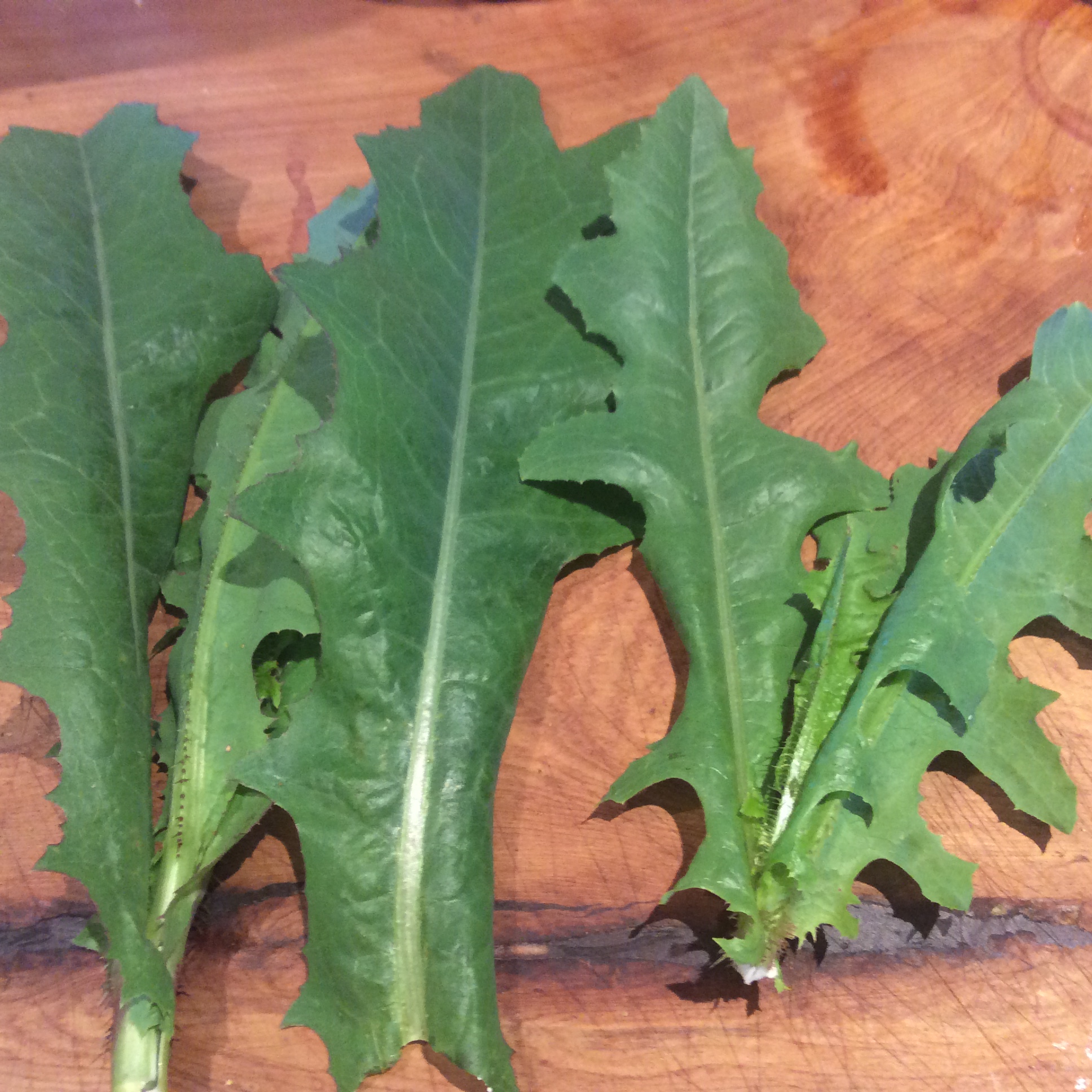
It’s quite variable in leaf shape and a few species are common in the U.S. In my area I mostly see Lactuca serriola, which is covered with small spines. I borrowed the photo above because the spines show more clearly than in my own photo. Accounts online and in foraging books differ, some reporting that the young leaves are delicious, others considering them a very poor food, and all commenting on the bitterness of the adult plant. In my area they don’t seem to get very bitter, not half as bitter as dandelions or chicory, and I love to eat the growing tips regardless of the age of the plant. This may relate to soil or temperature factors. I have noticed the same thing with sow thistle that grows in my yard, which lacks its characteristic bitterness, while dandelions in the same area seem even more bitter than those found elsewhere. Nature always has the last word and does not have to provide us with explanations. You have to get to know your home area.

image

I pick the tips as shown on the right, but if I find a plant growing in shade I will pick larger leaves because they remain more tender than when grown in sun. They exude sticky white sap, which washes away easily. I toss the tips in boiling water for about 90 seconds and drain and squeeze, which renders the spines soft and harmless. Proceed as desired. With greens that have any tinge of bitterness, I like to sauté with garlic, olive oil, and pepper flakes, preferably the deep earthy Turkish Urfa pepper flakes or smoky chipotle flakes. A ten minute sauté creates a lovely vegetable.

The rest of the plant is a favorite treat for my goat, who is totally unbothered by the spines. It’s one of the few plants that she never seems to get finicky about.

There are some very weird things to be found online. Wild lettuce has  acquired a strange internet reputation as “lettuce opium” and there are places that sell the seeds and tincture and swear it will cure insomnia and/or get you high. I have no idea where this idea came from. I was startled to learn about it when I searched for a good photo, and overall I would disregard the whole idea. So do the people who have actually tried it; customer feedback includes comments like “very mild,” “placebo buzz only,” “nothing going on here,” and “useless.” One commenter who thought it was great admitted to being “crazy drunk” when he tried it, which no doubt makes a difference. Some think it is a useful mild sleep aid if smoked or brewed as a very strong tea. I don’t advise smoking anything at all so I wouldn’t know. For those interested in soporifics I can only say that when I eat it at dinner I feel sleepy at bedtime, and when I eat anything else for dinner I feel sleepy at bedtime.

Diet in brief

image

I very seldom talk about low carb/ ketogenic diets except with my patients because I think that your diet decisions are best made by you, in conjunction with the doctor who knows you best. But I will say here that ketogenic diet is, in my opinion, the most desirable treatment for type 2 diabetes and the only one with no side effects. I am also keeping an eye on the evidence for low carb diets in simple weight loss. So I wanted to pass on this public-information piece from the Harvard School of Public Health:

http://www.hsph.harvard.edu/nutritionsource/carbohydrates/low-carbohydrate-diets/
And of course, my reason for bringing this up on a gardening blog to to make yet another shameless plug for green and leafy vegetables. Your nearest farmer’s market will have them if you don’t grow your own. Just eat them. Lots of them. Eat them instead of the starchy stuff. Your body will thank you.
Kohl