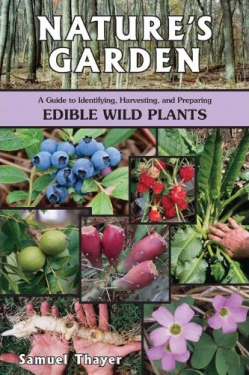
Periodically someone asks me what wild food books I recommend. There are a number of good ones, and a much larger number of bad ones. For overall high quality, level of detail, and knowledge of his subject, I’m a fan of Samuel Thayer and his books on foraging, The Forager’s Harvest and Nature’s Garden. Thayer has chosen to cover a smaller number of plants at a much higher level of detail than other guides, and if you’re a beginner I especially recommend this approach. There’s plenty of time to branch out later. I also recommend the delightful books of Euell Gibbons. They are not field guides and I don’t care for the recipes much, but his sheer joy in his subject is infectious. I became interested in wild foods when I was 12, and my wise mother bought me a set of Euell Gibbons books so that I wouldn’t poison myself. The gift has lasted almost 40 years (so far) and it would be impossible to calculate how much it deepened my love for the natural world.
This is a good opportunity for me to talk about my own view of foraging and use of wild edibles. Too many people with too little knowledge are out there seeking wild foods (and, worse, teaching about wild foods.) Most of us didn’t learn from experienced parents and grandparents, so respect your own learning speed and style. Consult at least two guidebooks before you decide that you have identified a plant, and read the first 40 pages of Nature’s Garden before you do any actual foraging because the information about a safe approach and common pitfalls is invaluable and well written. Remember that you are introducing your body to entirely new foods, and eat very small portions the first time, followed by small portions the second time, to determine your tolerance. NEVER assume that one part of a plant is edible just because another part is edible. Many common vegetables have toxic parts- the ordinary potato has toxic foliage- so there’s no reason to assume that edible leaf equals edible fruit or root, or vice versa. NEVER use this blog to identify a wild edible. I write about cooking and eating, not about plant identification, and the information that I give is not adequate to identify a wild plant when used alone, nor are my photographs taken with clear identification in mind. If you want online information, Thayer has an excellent website at Forager’s Harvest, and Langdon Cook has a delightful blog about wild food adventures in the Seattle area. Our climate in New Mexico is very different, but many of the plants he collects are found in our area.
That said, I can’t think of any hobby that has given me more pleasure than foraging. Sometimes people ask me why I seek and eat wild foods, when I have a garden and can grow all the vegetables I want. Euell said it best: “Wild foods are my way of taking communion with nature, and with the Author of nature.” I can’t think of anything we all need more right now than a positive connection with nature that makes us love it and want to protect it.
Archive for the ‘wild food’ Category
24 Jul
My Bookshelf: Safe Foraging with Samuel Thayer
20 Feb
Planning Your Garden: the Weed Patch, and more on the Peruvian Purple Potato
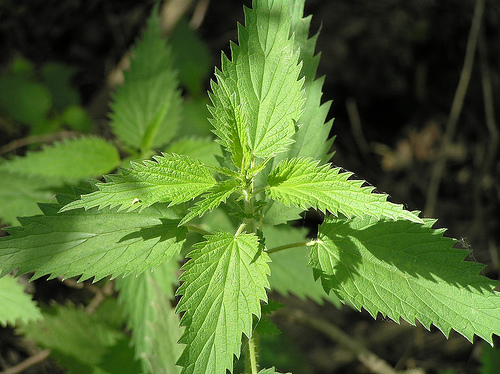
Those of you who have been following my blog for a while know about my interest in useful weeds, ie plants which thrive on neglect, spread rapidly, and are often overlooked, but offer good eating. Now that I’m planning a brand-new garden from scratch, I’m planning a “weed patch” as part of it. This will be out of the path of garden traffic so that I can have milk thistles and nettles, and screened from the rest of the property with a row of sunflowers so that nobody but me has to look at it much, and there all my favorite edible thugs can slug it out together. If you have room for a weed corner, you might consider some of these:
1. Stinging nettle. The nettle offers some of the best early-spring greens to be found. You can start them from seed (try Johnny’s Selected Seeds) or from plants (Richter’s is the only source that I know of.) They spread like wildfire, so underground barriers or a spot that you can mow all the way around are essential. See my post for harvesting and cooking details, and treat this plant with great respect, because the sting is pretty painful.
2. Curly Mallow. I like the leaves as part of a mix of greens, and it thrives on heat and doesn’t need too much water. I got the seeds from Nichols Garden Nursery years ago, and it’s been happily self-seeding ever since.
3. Milk thistle. THis will be a new one for me, but I’m told that the young shoots make good cooked greens when the prickles are trimmed off, so I’ll give it a try.
4. Sorrel. This might not seem like a weed, but it’s a healthy, vigorous, weedy-looking plant, so it can stay in the weed patch, out of the way. You can get seed almost anywhere, even from seed racks. It’s best to let it grow the first year, just removing flower stalks as they appear, and then start harvesting in early spring the second year.
5. Curled dock. This comon roadside weed is sour and bitter at most stages of development, but in the late fall and very early spring it’s one of the best greens around. Like its relative sorrel, it turns brownish-green when cooked, so I use it in mixtures of cooked greens rather than by itself. I don’t know of any source for the seeds. I picked mine by the roadside years ago, and this robust perennial has been with me ever since.
6. Dandelions. Like dock, they are actively distasteful most of the year, but in very early spring they offer delicious lightly bitter leaves which give a wild tang to a mixed salad or a little zip to a cooked greens mixture.
An alert reader let me know recently that the source I gave for the Peruvian Purple Potato no longer offers them. I save my own starter potatoes from year to year, but you can get the Peruvian from Ronnigers. They also have a splendid assortment of garlics, and some other plants of interest.
28 Sep
Passing Pleasures: Prickly Pear Tepache
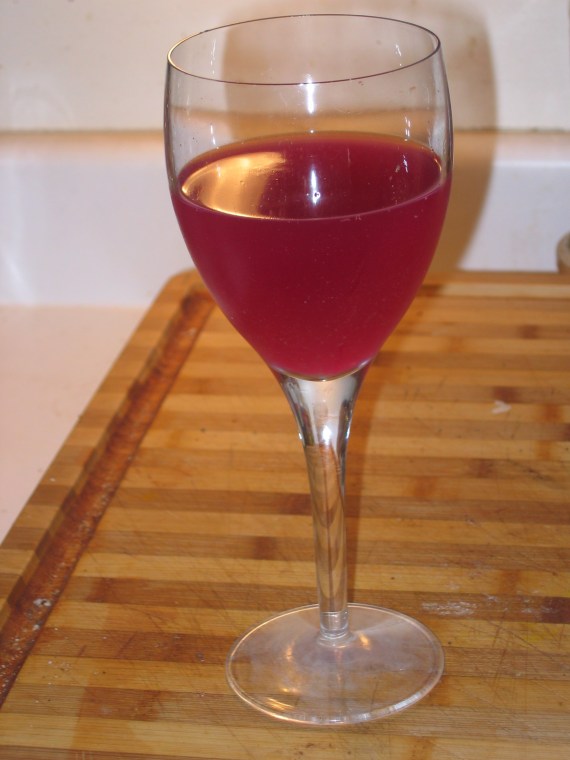
This fizzy, festive fuschia drink gets its color and flavor from a really local fruit, the tuna, or prickly pear fruit. Here in New Mexico you probably have some in your yard, and if you don’t, a neighbor probably does.
The basic directions are the same as for plain tepache. Pick, beg, or borrow eight tunas the size of an egg or bigger. Handle them with respect, because the wicked little prickles will make you itch and burn for days if you let them at your skin. Handle them with gloves. If you already know how to peel them with pliers or have someone to show you how, then peel them. Otherwise, throw them in the blender whole and crush to a puree, adding a little water if you have to in order to get the blender going. Pour the puree into a strainer lined with several layers of cheesecloth. Now, twist the cheesecloth closed and press it with a spatula or wooden spoon to release the juice. Don’t omit the cheesecloth, since the strainer alone won’t get the prickles out, and don’t squeeze the cheesecloth with your hands. You should end up with 1.5 to 2 cups of prickly pear juice. Now make tepache according to the directions I gave earlier in the summer (click here to get the directions) but add the prickly pear juice to the fermenting jar with the other ingredients. The other quantities stay the same, including the pineapple rind, which provides the wild yeasts that do the fermenting. Ferment according to the directions. The flavor of the tunas is accentuated by the fermenting process and will be dominant in the finished drink. Pour and toast the exhilarating autumn weather.
According to an article from Texas A&M, the antioxidants quercetin and kaempherol were found in prickly pear fruit, as well as other antioxidants. The link is below if you want to read more. Personally, I think the important thing about antioxidants is to get a lot of different ones, not by taking pills but by eating more fruits and vegetables (or, in this case, drinking them.)
27 Apr
The Greens of Spring: Scorzonera and Chicories
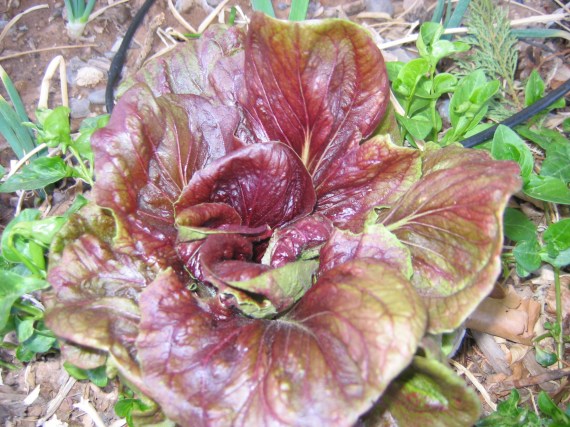
If all the greens you grow are sweet mild greens, your greens dishes will be bland. You need some vigor and some bitterness to make a hortapita or other mixed greens dish come alive. Chicories are a large, drought-tolerant, highly adaptable family well worth getting to know. Our local company Gourmet Seeds in Tatum, New Mexico has the most comprehensive selection I’ve come across. I bought my seed from them last year, and haven’t had to replant. Above, you can see what radicchio looks like in early life. I plant mine in late summer, harvest a small but usable head in late fall, ands take care not to harm the crown of the plant when I cut it for use. If the root and crown are left in place, next April they will look like “earth roses” as you see above. Cut the outer leaves for cooking. Taste before use, and if they’re very bitter blanch them in boiling water for 1-2 minutes and drain well before cooking further in whatever way you choose. Otherwise, when concentrated by cooking, they will be more bitter than you want. Some people like even the outer leaves in salads. Taste before serving. See my “greens” and “recipe” categories for some dishes made with mixed blanched greens, including the hortapita post, which is a great way to eat a lot of greens and enjoy it.
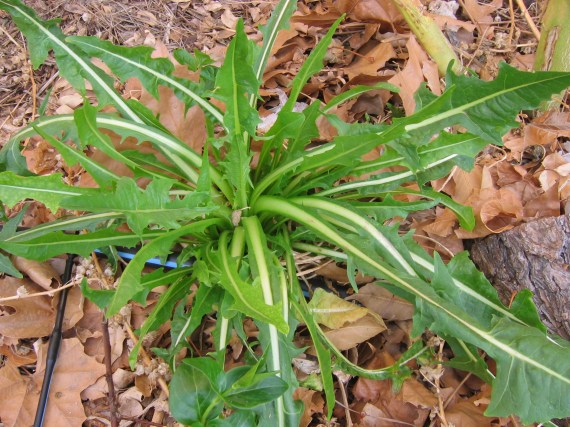
This is the chicory usually sold as “dandelion” in grocery stores. Cut the leaves until May or June; keep taking nibbles raw befre cutting, and when they go from pleasantly bitter to unpleasantly bitter, stop cutting or blanch before use. When very young, they’re good in salads. If allowed to go to seed, they’ll get 4 feet tall and seed themselves all over your garden. If this is not what you want, keep cutting back the stalks before they flower.
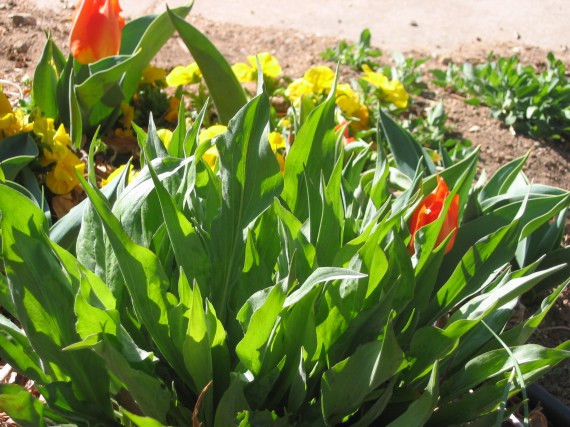
I planted scorzonera for the roots, but found that I wasn’t wowed by them. I left the remaining plants in place, and harvest a nice bunch of mild cooking greens from each plant every spring. After one good cutting, I leave them alone for the year. I’ve read that they can be used in salads, but to my tooth they’re too tough to use uncooked. They require no care and are very drought-tolerant. I prefer to mix them with stronger-flavored greens like chicories, and providentially, they’re harvestable at the same time. Vegetables that come up perennially with no fuss are too good to ignore.
For more about greens, see my “greens” and “herbs” pages on my website.
 My urban homestead