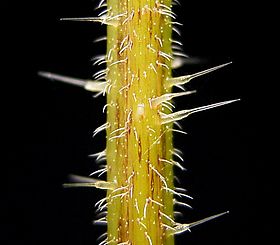
If green garlic is always the first thing that I harvest in spring, nettles are always the second. When I moved to New Mexico I couldn’t find any and couldn’t get seeds to germinate, so I was reduced to calling an herb nursery and begging them to dig up some nettles on their property and sell them to me. Every spring I’m glad that I did. Gather the tender tops with as little stem as possible, wearing leather garden gloves. Don’t handle them without gloves, no matter what you read on the Internet. I always manage to pick up a sting on my wrist just above the glove, but it hasn’t killed me yet. Wash in a big bowl of water, stirring them with a wooden spoon. Drain and dump them into lightly salted boiling water. Boil for two minutes and drain. They are now rendered weaponless: the venom (formic acid) has been denatured by heat and the zillions of fine spines that do such a good job of injecting the venom into your skin are soft. Squeeze the drained greens dry, chop them up to eliminate any stringiness in the stems, and finish cooking them any way you like. They are awfully good just braised in cream with a bit of sautéed green garlic and finished with butter and a little salt. You can click on the “greens” category of this blog for some other ideas. They are a mild-flavored green and can be used any way that you use spinach, although the flavor is a little different; “wilder” is the best way I can describe it. They are ultra-nutritious and worthy of a place on your spring menu. They are even…gulp…worth buying plants of if you don’t have them naturally.
Archive for the ‘vegetable gardening’ Category
13 Mar
Low Carb Colcannon
A few decades ago when I owned a sheep farm, I grew a lot of potatoes and made a lot of colcannon in the winter. This old Irish dish combines smashed boiled potatoes with milk and cream, and incorporates other vegetables according to your fancy. Onion and cabbage are traditional favorites, herbs and greens are common, and others are possible.
These days I want low-carb vegetable dishes, but I still want my easy accommodating colcannon and I have a ton of green garlic and green onions around, so I started there. I write a lot about green garlic and green onions because they are so easy to grow and have available for earliest spring, so chock-full of allacin and various antioxidants, and so very tasty. If you grow no other vegetable, put some small organic onions and at least a few dozen garlic cloves in among your ornamentals in fall (as long as you don’t use pesticides,) and next spring you will have these sweet and delicious vegetables to work with.
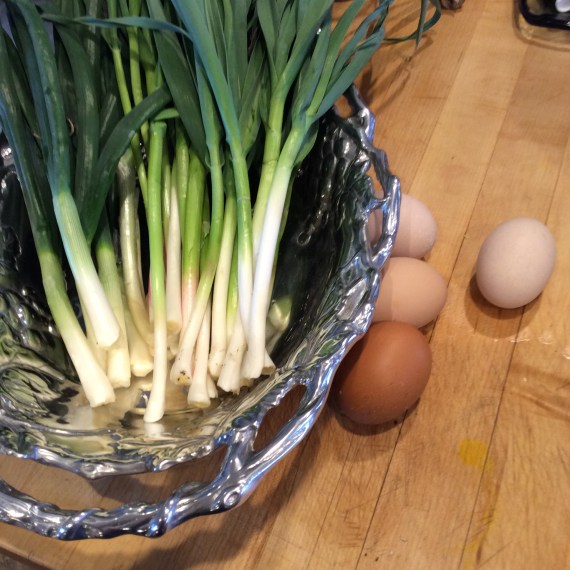
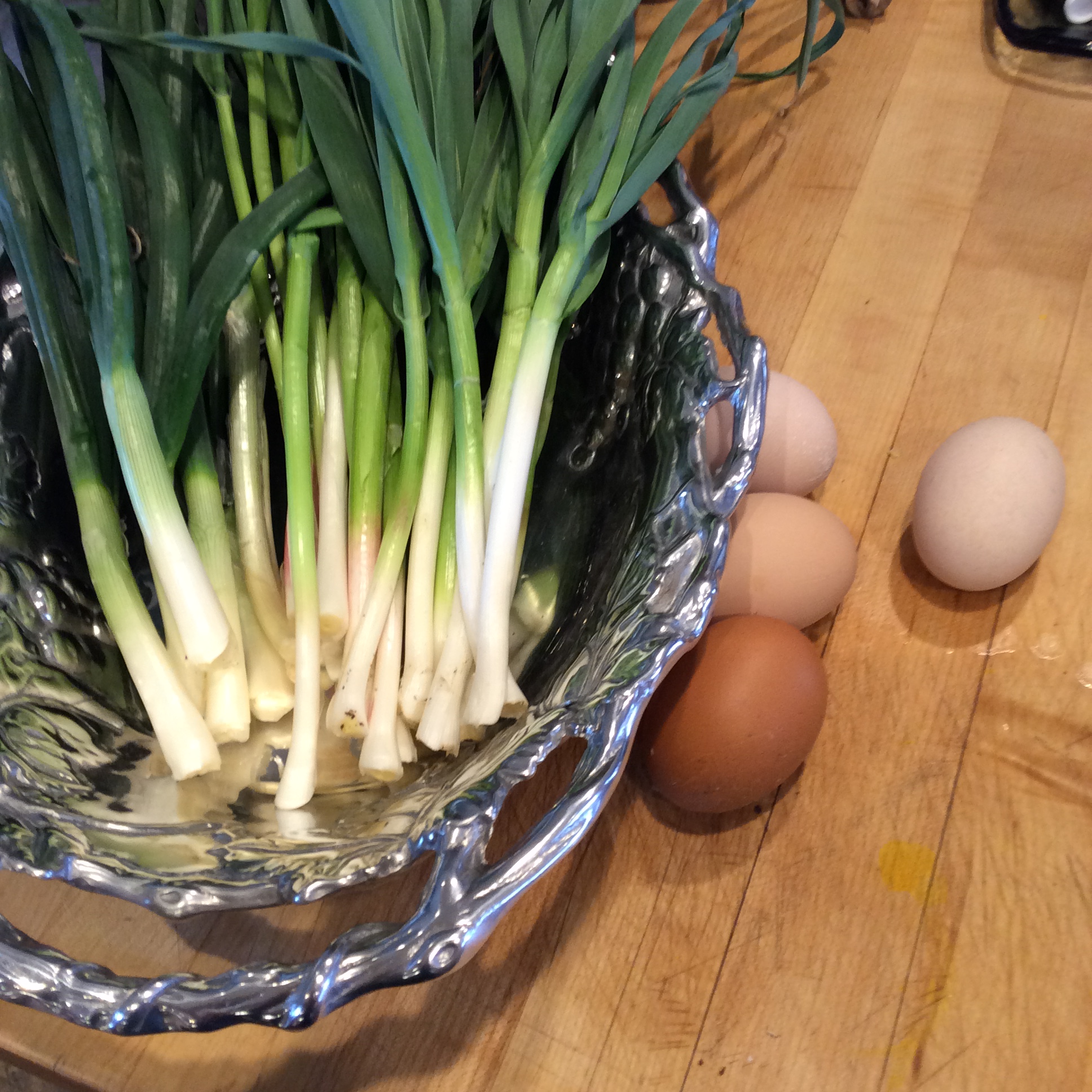
I started with six big green onions, a dozen stalks of green garlic, a head of cauliflower, half a head of cabbage, and butter and cream.
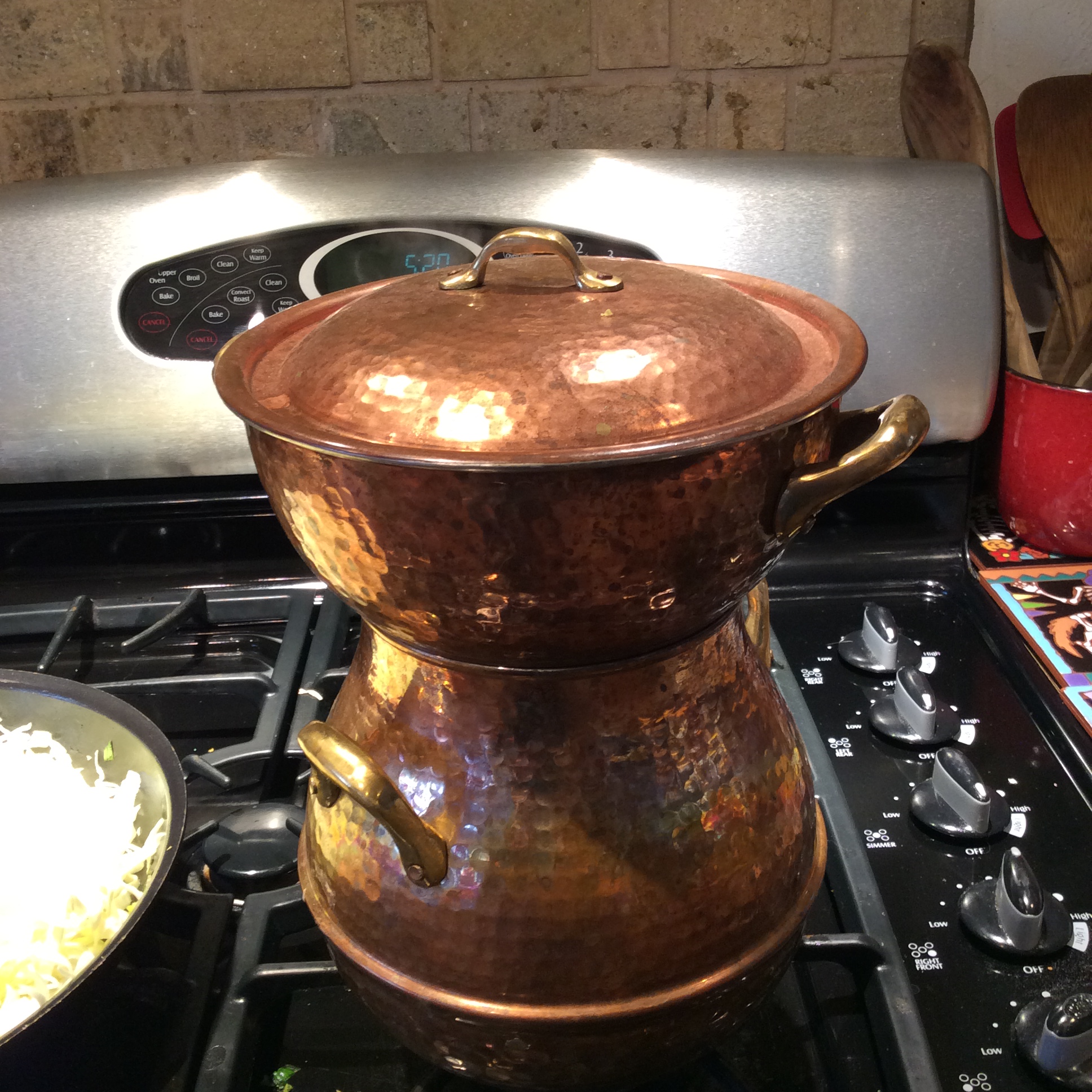
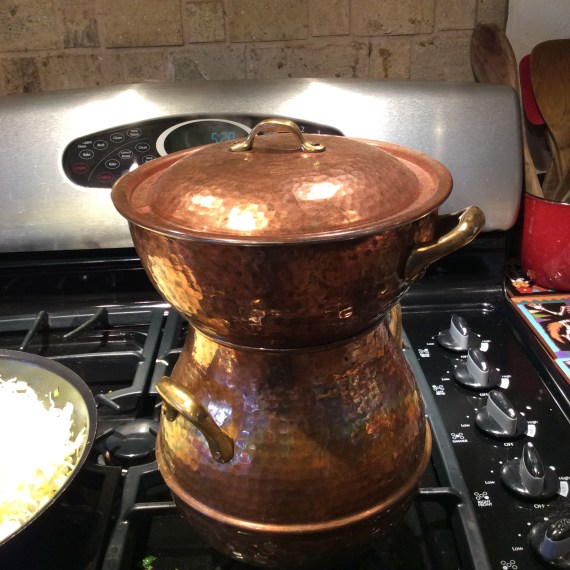
First, cut the florets off the cauliflower and put them in the steamer for half an hour. They need that much steaming time to be soft and smashable. I use my old couscousierre to steam veggies because I like to look at it, and incidental pleasures are half the fun of cooking.
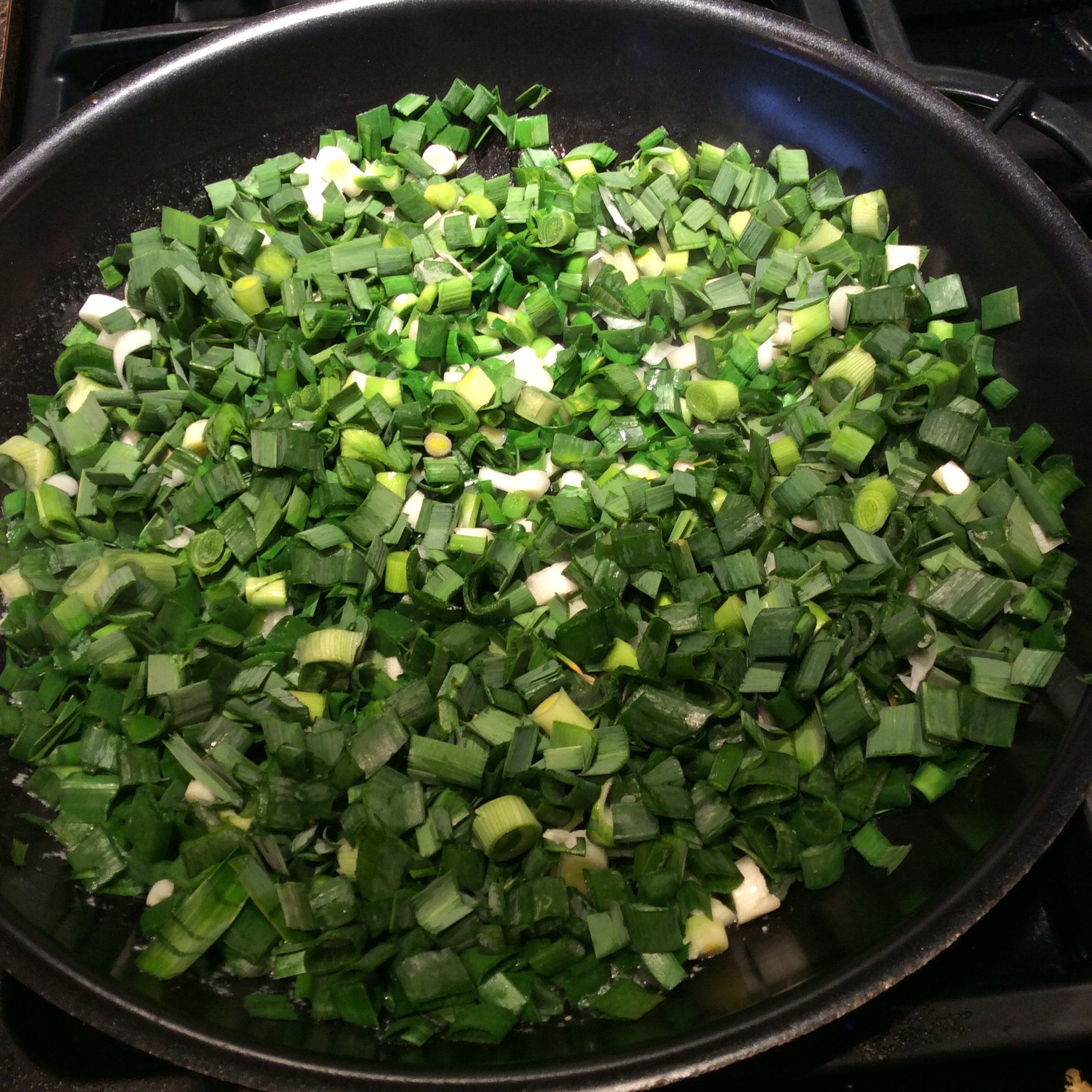
Wash the green alliums and trim off any yellowing or dry-looking leaf tips. On a large cutting board, slice the washed and trimmed green onions and green garlic into quarter inch cross-section slices.
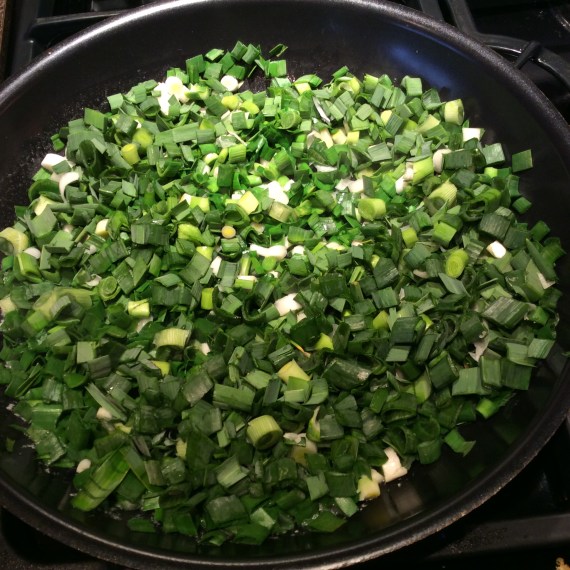
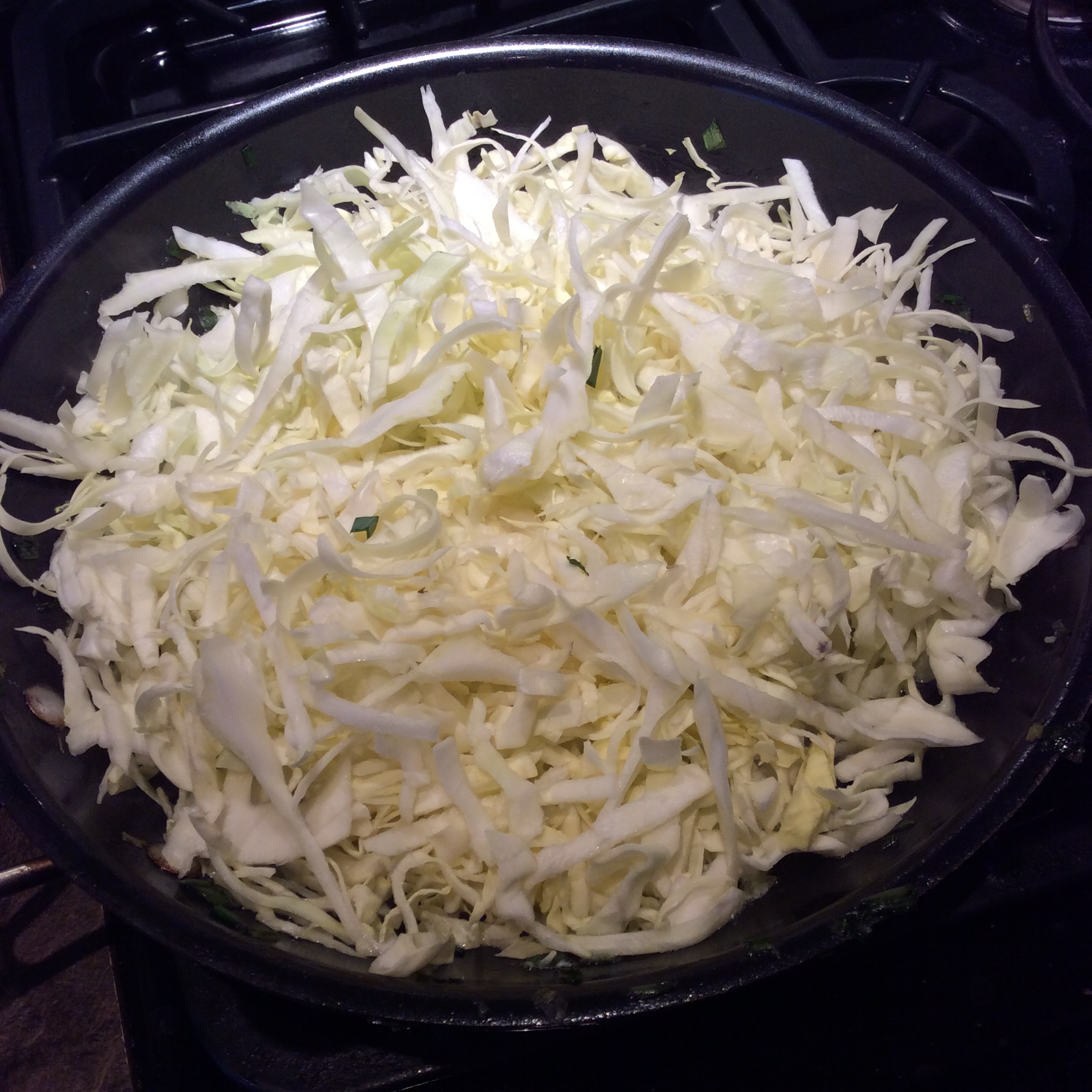
Heat a large skillet over medium heat, put in about 3 tablespoons of good butter, and sauté the greens over medium heat, adding some salt and stirring frequently, until thoroughly cooked, soft, and sweet. Meanwhile, slice the cabbage into very fine slices, discarding any thick ribby pieces. When the green alliums are cooked, scrape them into a bowl, return the skillet to the heat, add another good-sized knob of butter, and put in the cabbage shreds. Cook them over medium heat with some salt, stirring frequently, until very thoroughly cooked and sweet. This takes a while, and you need to keep an eye on the time and open your steamer when the cauliflower has cooked for 30 minutes.
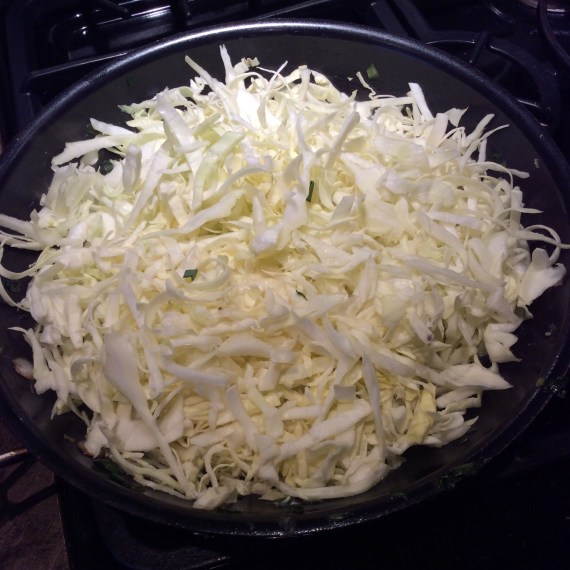
When the cabbage is cooked, put in the steamed florets and start smashing them with the back of a big wooden spoon. When thoroughly smashed, add half a cup of heavy cream and the cooked green garlic and taste the mixture for salt, correcting to taste. Cook over low heat for another half hour, stirring occasionally, to let the flavors amalgamate. Stir in a generous amount of freshly ground pepper and serve.
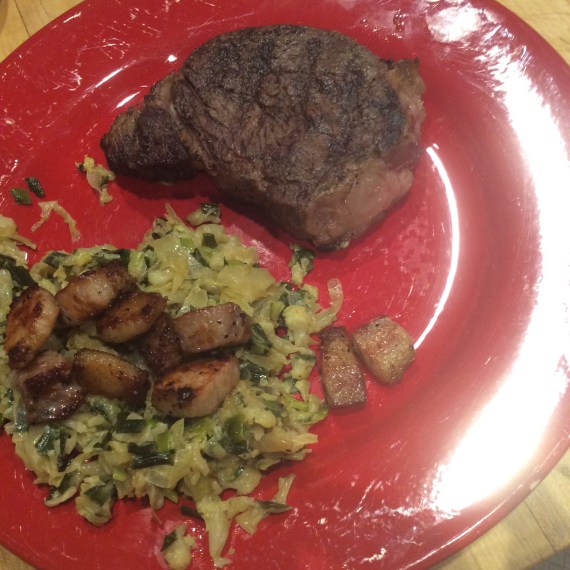
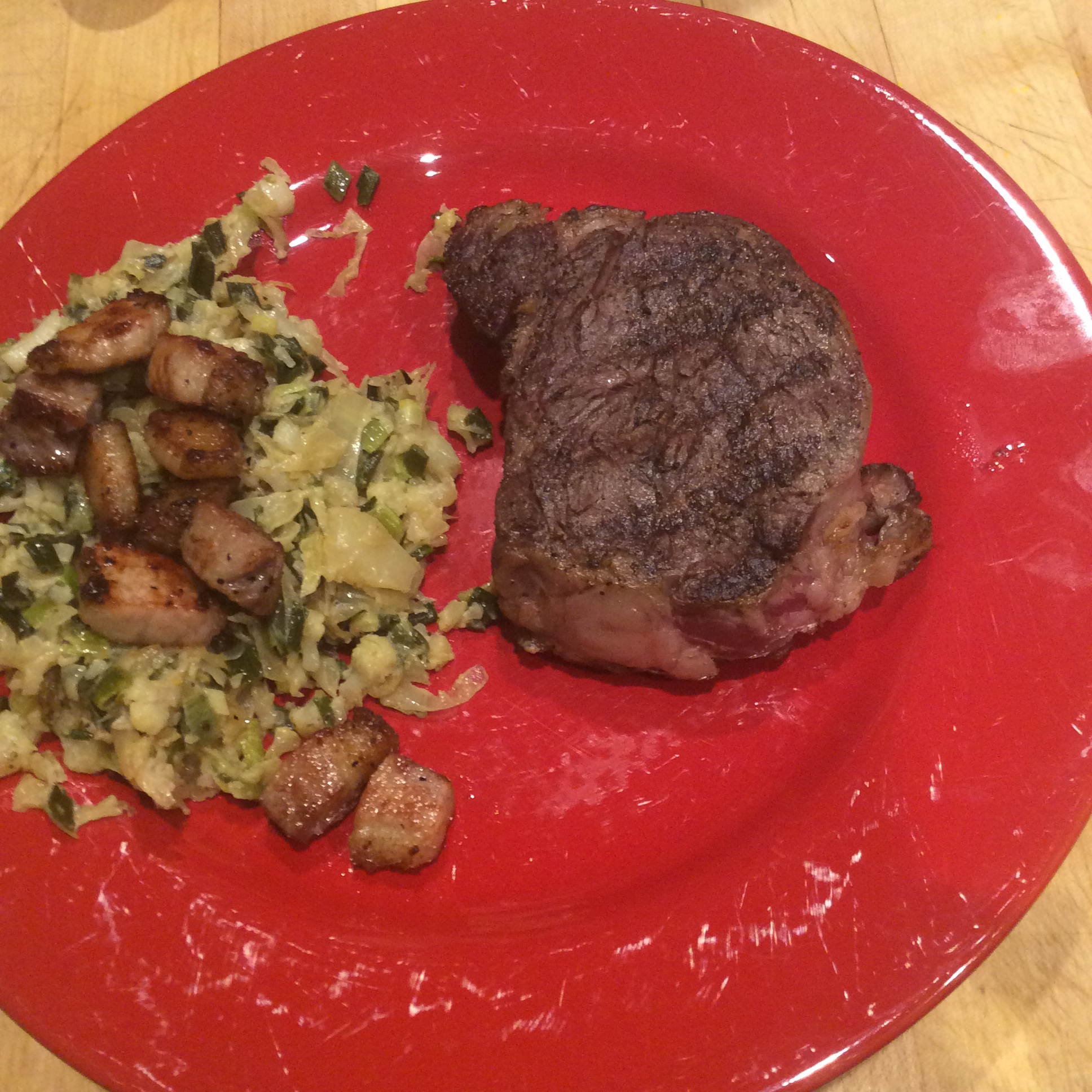
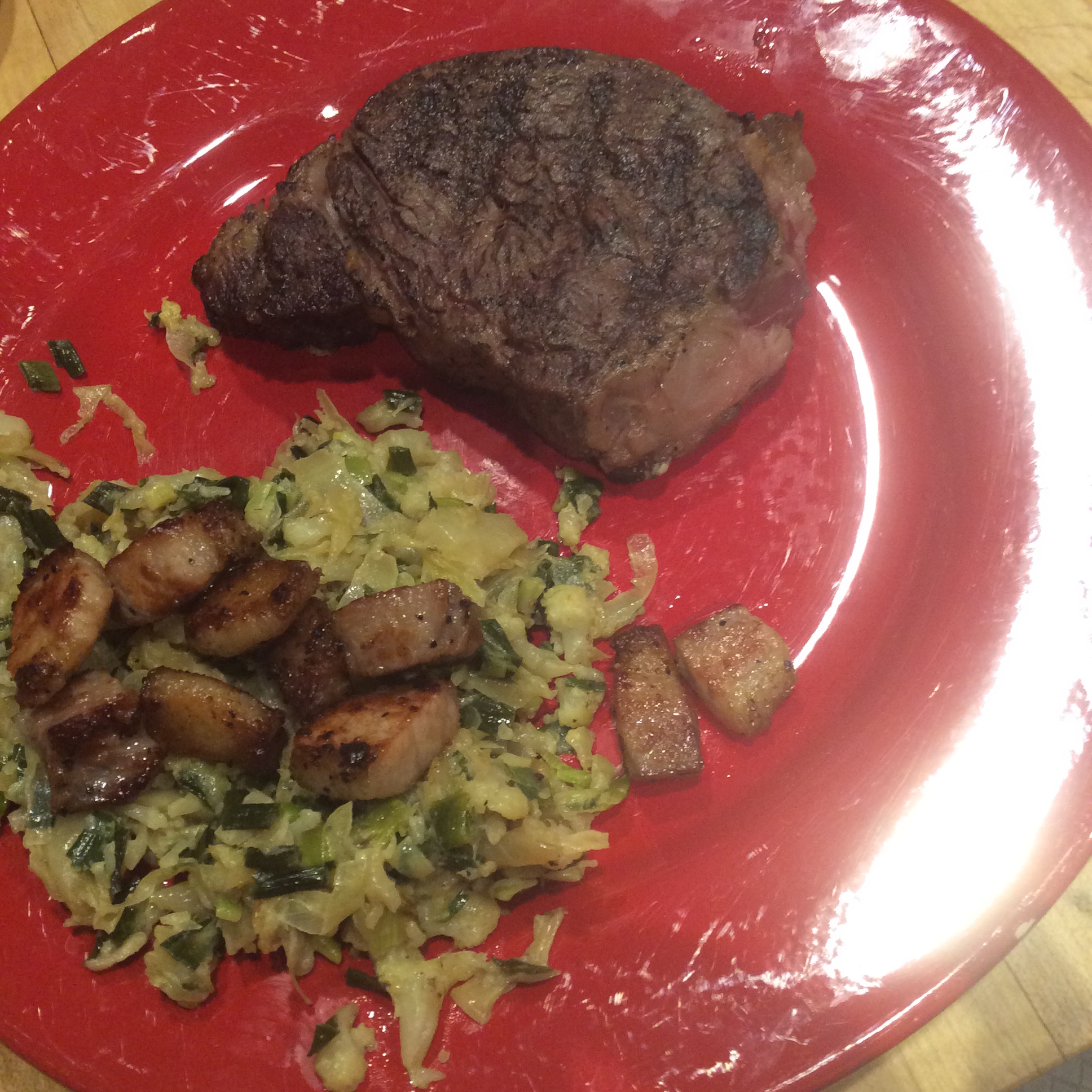
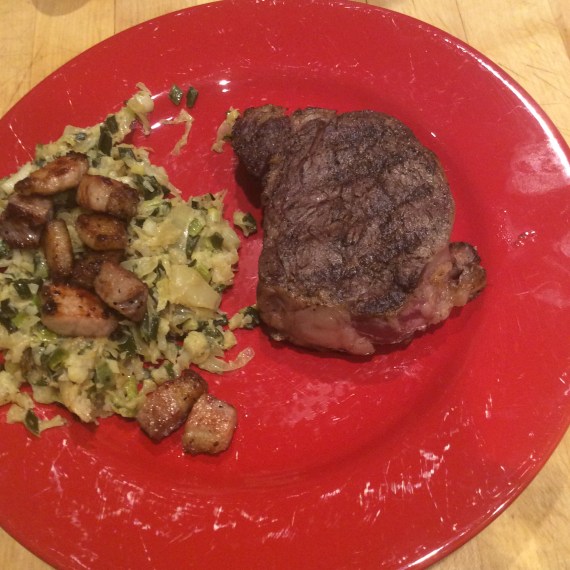
This is the fun part. Serving possibilities are endless. I pan fried some lardons of mild bacon to top it off and put a small steak on the side. It’s so filling that I didn’t eat more than a bite or two of the steak, so now I have leftover steak to plan another meal around.
Unlike potato colcannon, which can get gummy if reheated, the cauliflower version is even better when left over. You can top it with sautéed greens, or a fried or poached egg, or both. A bit of mild cheese could be grated in or gratineed on top, or this could accompany a roasted chicken. It is a wonderful basis for meals in mixed omnivorous-vegetarian crowds, because the vegetarians will find it satisfying on its own or with an egg and the omnivores can have meat on top or alongside and will probably not eat much meat because it isn’t needed.
I do think it’s wise to respect the essentially sweet and delicate nature of this dish, and keep seasoning simple. If you take your time with the sautéing, and use butter, the cabbage and green alliums develop wonderful depth of flavor. Heavy cream is essential in my opinion, and it has a lovely sweet flavor of its own. I also think a key step is to add some salt during the sautéing process so that it cooks into the vegetables well. Just not too much. This all takes some time, about an hour from bringing the green alliums in from the garden to finished colcannon, so there is no point in making smaller quantities. It will get eaten.
10 Mar
Indolent Pest Management
There is a semi-organic, thought-intensive mode of pest management called Integrated Pest Management. It has occurred to me lately that I could spearhead an alternative IPM called Indolent Pest Management. It has two phases:
- I notice a pest problem.
- I wait to see what happens.
The most recent example started last fall, when I noticed a proliferation of large garden snails from who knows where, leaving slime trails on the chard. I read about preparation of escargot out of curiosity but never did anything effective about the snails, because I was busy and there were so many other things to eat.
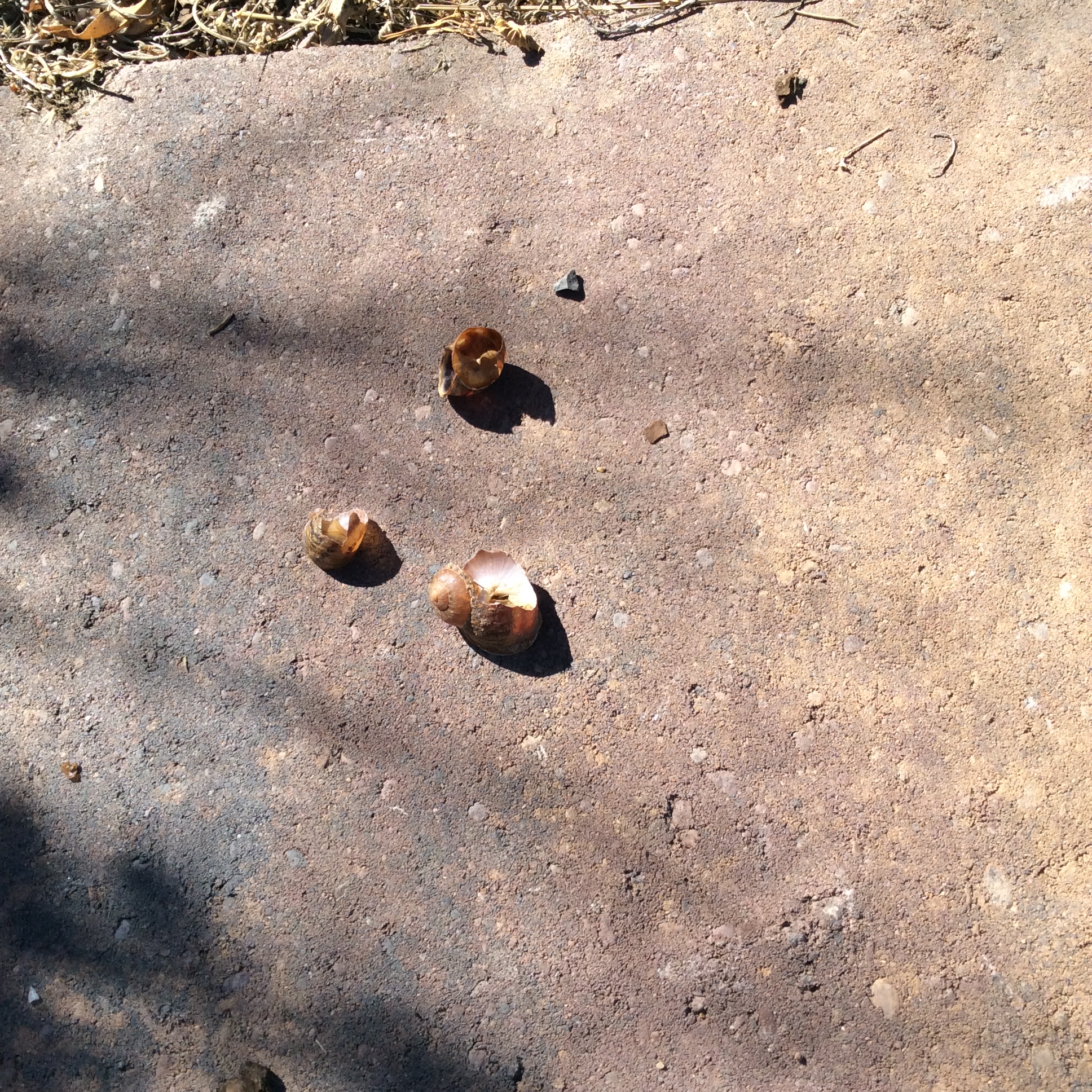
After a month or so, I started to see these everywhere:
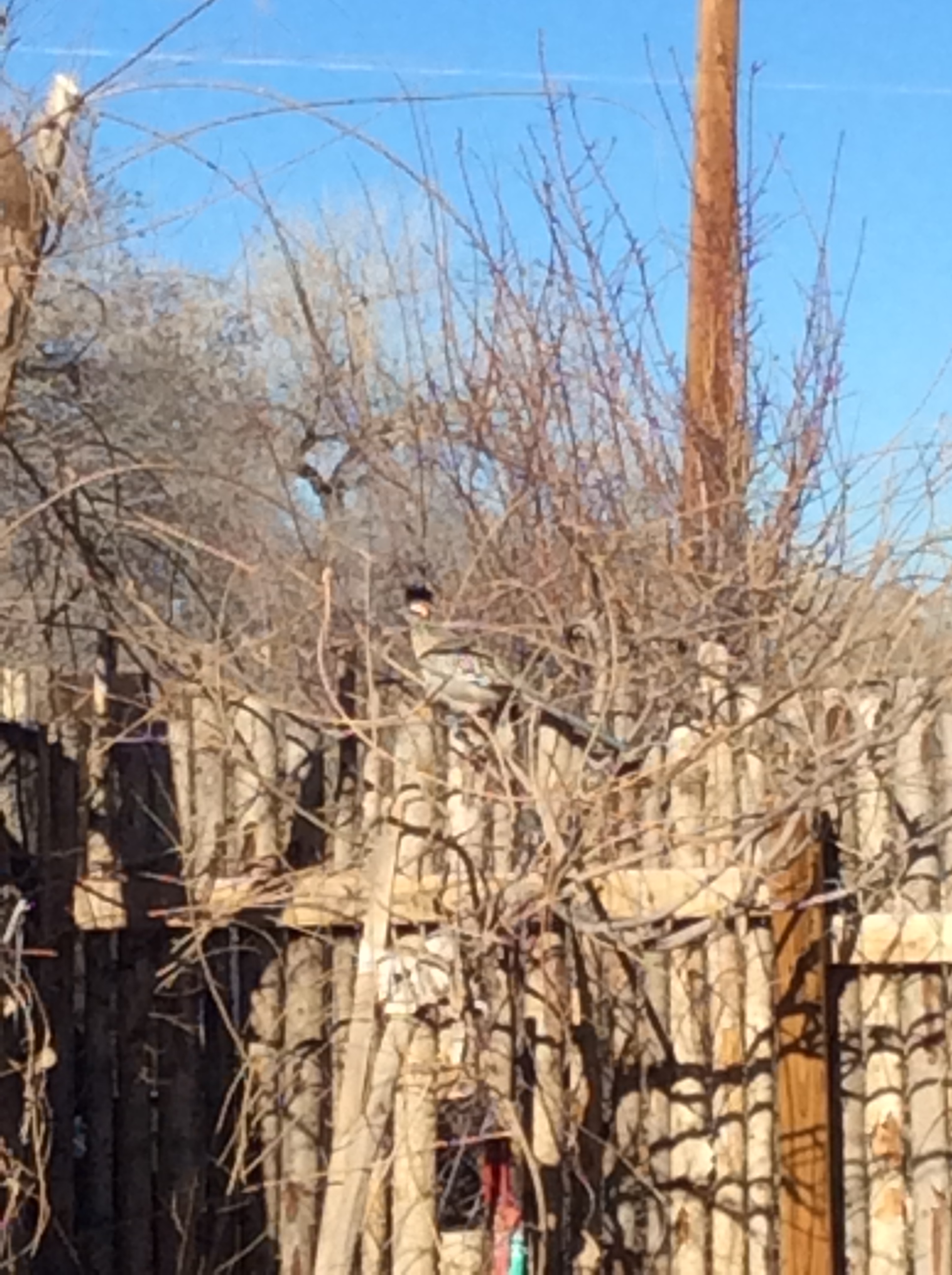
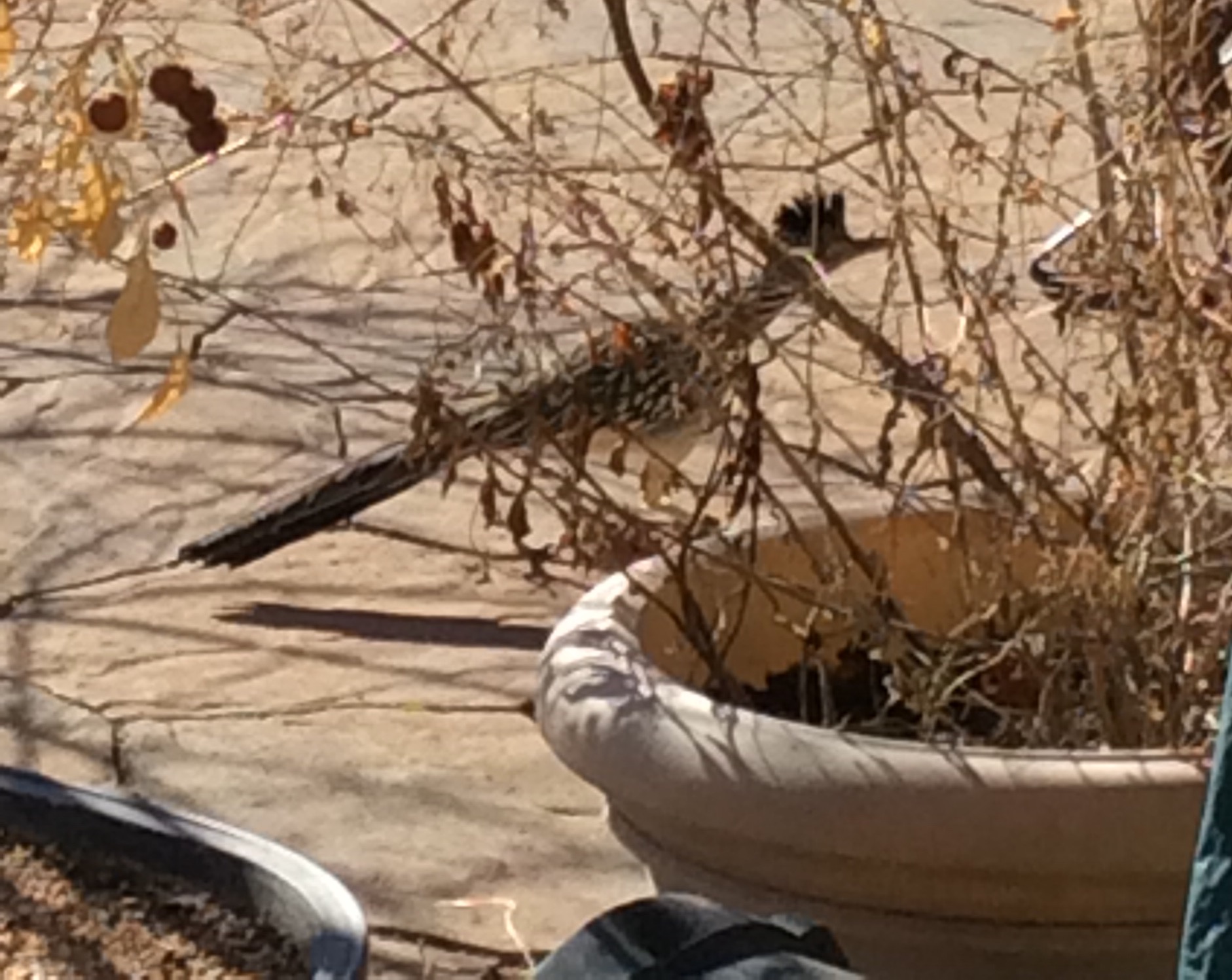
Snail shells, broken open and empty, appeared all over the place. Further observation revealed that a roadrunner, our local little feathered velociraptor, had taken over my yard and was exploring the mulch and eating all the snails, as well as a few stray mice. With the first warm day of spring he began strutting on my roof, calling for eligible females. I keep trying to photograph him, but roadrunners are wary and fast. Most of my photos of him are just a blur. The ones at the top and bottom of this post, where at least you can sort of see him, are the best I could do.
A sharp-shinned hawk has started nesting nearby and this helps keep the mice and English sparrows down. Yes, he hunts at my bird feeder occasionally. Hawks have to live too.
My much-loved Toka plum tree gets an aphid infestation every year after leafing out, although none of my other plums do. Ladybugs move in and decrease them, and the remaining aphids are certainly unattractive but don’t diminish yield in the slightest and are gone by early June.
Cabbage loopers put a few holes in my collard leaves every year. No issues. I feed those leaves to the chickens and eat the others.
Squash bugs spread viruses that are hard on my zucchini. But I am no worse afflicted than people who spray.
My point is that we are gardeners and urban homesteaders, not commercial farmers. Also, we typically have day jobs and limited time to attend to our crops. So why spend it trying to exterminate things that don’t do that much harm? Wait and see, and if a planting fails, other plantings will succeed. Before fixing, wait to see if it’s really broken. Meanwhile, eat something else. There’s plenty.
7 Mar
Early Harvest: Green Garlic
Other than herbs and alfalfa tips for my chickens, green garlic is always the first thing that I harvest from the garden. In my climate, which is more or less USDA zone seven, I plant in October and nearly always harvest green garlic the first week of March. The part of the garlic patch that I plan to harvest green is planted very closely, about 2 inches apart each way, which is plenty of room for this purpose. Every year I plant more. It is really good stuff. For a long time I thought that it might not really be worth the trouble, because I was harvesting and eating only the white stem and incipient bulb and composting the greens. Duh. The greens are the best part, as well as being full of allacin and other antioxidants, and any part that is bright green rather than yellow or brown can be used. You can grow a useful amount in a few square feet if your soil is rich, and it is harvested and out of the way in time to plant something else for the summer.
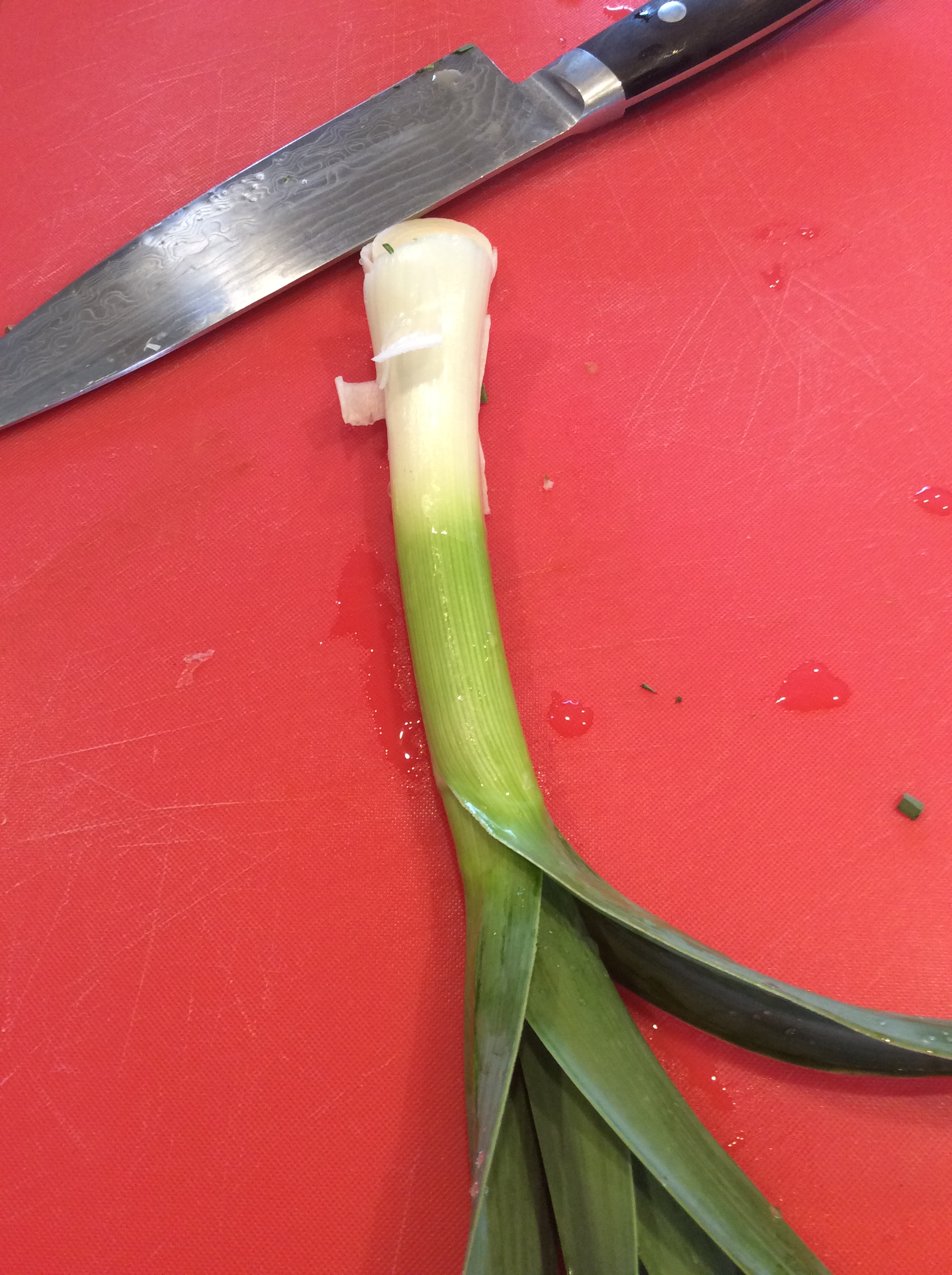
In the picture above you see a stalk of green elephant garlic, which is really a leek relative rather than a true garlic. It is typically a foot or more tall and an inch or so in diameter at the green stage. It has a slightly different flavor from true green garlic but is equally delicious. I once bought green garlic at a farmer’s market that was bitter, but I have never tasted any other that was bitter. It may have had to do with growing conditions or variety. I have heard of people chopping garlic leaves into salads as a seasoning, but personally I don’t care for the taste raw and only use them cooked.
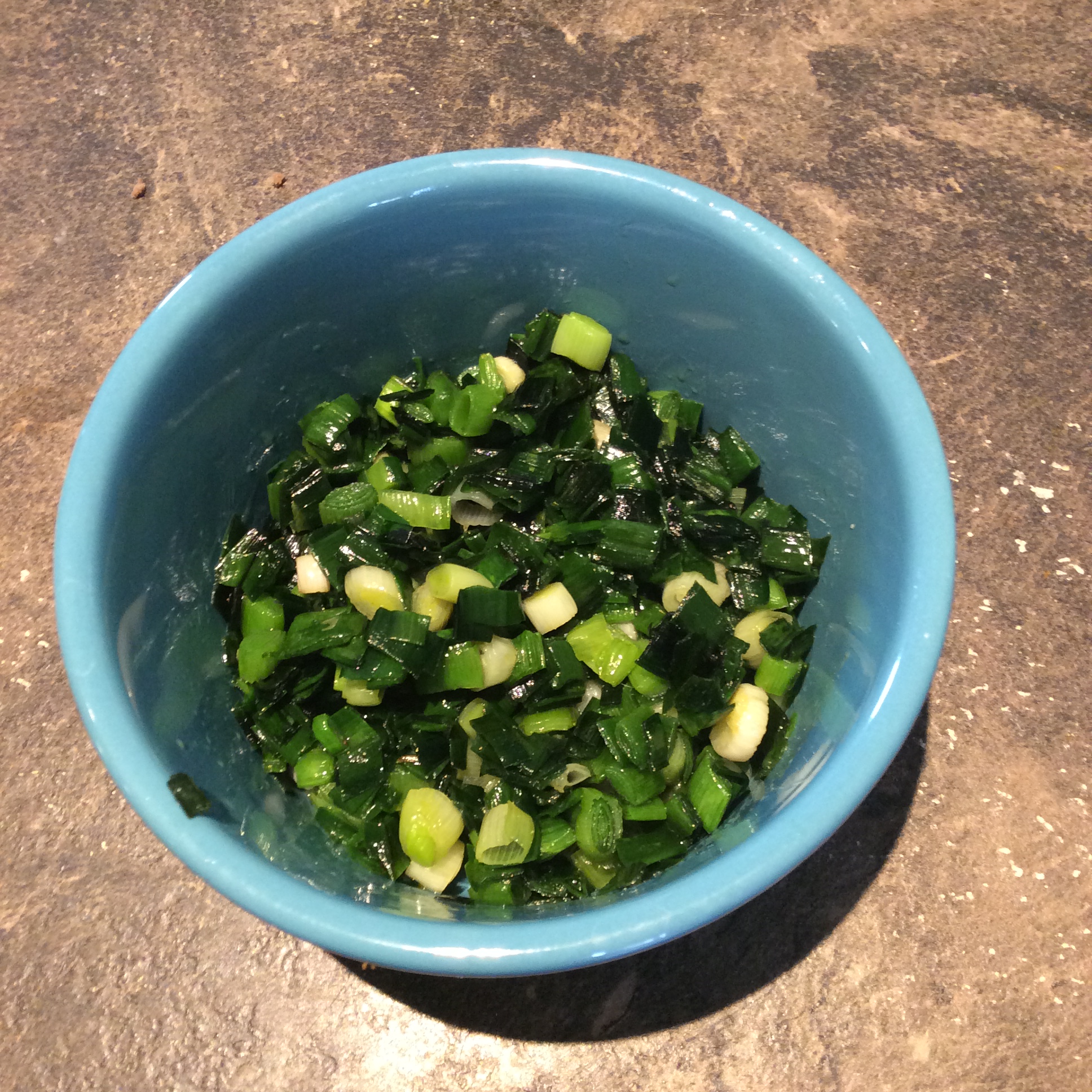
With all green garlic, I trim the roots and leaf tips and wash, then line them up and cut them in cross-section into slices about a quarter inch thick. I sauté in either butter or olive oil, whichever will suit the rest of the meal, slowly until the greens are tender. A little salt is thrown in along the way. They become soft and sweet and delicious, and I enjoy eating them as a vegetable on their own. They also go very nicely into all kinds of other vegetable dishes. If you are a carb eater, they would be delicious with fresh handmade egg pasta, butter, and a discreet amount of Parmesan, or tossed with new potatoes and butter. I love them in mixtures of cooked greens, too, and they are a lovely complement for fried eggs. I plan to make a cream of green garlic soup at some point this spring. A few stalks sautéed in your smallest skillet while you are cooking other things also make a very nice cook’s treat to eat standing in the kitchen, as a sort of tapa for one. After all, the laborer is worthy of her hire.
Like all the rest of us, green garlic will lose its youthful bloom sooner rather than later. When the bulb is swelling and the leaf tips are turning progressively more yellow, it is past the point of being worthwhile to eat green. In its brief season I harvest 10 or 12 stalks whenever I have some free time, clean and sauté them, and have them waiting in the refrigerator. If I haven’t use them within a day or two, I vacuum seal them into neat little packets and keep them in the freezer to go in summer dishes.