Archive for the ‘Vegetable dinners’ Category

The Greens of Summer: greens bruschetta

If you’re interested in making leafy greens an enjoyable part of your diet, I highly recommend Paula Wolfert’s book Mediterranean Grains and Greens. My favorite greens recipe, however, does not come from that book but from another of her books, Paul Wolfert’s World of Food. She calls it “marmalade of spring greens,” and it is intended as a spread for bread. I find it wonderful stuff to have tucked in the refrigerator, where it will keep for several days and makes great impromptu lunches and snacks. I have made it so often for so long that my recipe has morphed into something a little different from hers, as tends to happen with recipes that really work for me.

First, catch your greens. See my earlier blog post about greens options and about cleaning them. Right now I am mostly using mixtures of amaranth leaves ( the polite term for common pigweed), lambs quarters, purslane, sweet potato leaves, and New Zealand spinach, because those are the plants that are doing best in our summer heat. Gather about a pound of assorted greens. If you are using store bought, a mixture of Swiss chard or Tuscan kale and spinach will work well. I avoid the baby spinach that comes in cello bags. It doesn’t have enough flavor for use as a cooked green. If you enjoy bitter greens you can add several dandelion leaves (I am referring to the store bought kind, not the wild kind, which are too bitter to use at this time of year.) Or you can add a small bunch of watercress to add a little bit of snap. But don’t worry too much about this, because the seasonings will add the extra kick as long as the greens are good.

1 pound of mixed greens

One Shallot

Two cloves of garlic, fairly large

1/4 cup of olive oil

10 to 12 kalameta olives, finely chopped

2 tablespoons capers, preferably salt packed, washed of salt and soaked in cold water for an hour

Pinch of red pepper flakes

Salt and pepper to taste

Bring a pot of water to a boil, add the greens, and cook uncovered for one minute, just until they are thoroughly wilted. Drain and press out any excess moisture. Turn them out on the chopping board and chop them thoroughly in both directions, so that you retain some texture (you don’t want a paste) but all stems and leaf ribs are cut up into small pieces.

Chop the garlic and shallot quite finely over medium heat in the olive oil until cooked through but not brown. Add the chopped olives and the capers, either chopped or whole as you prefer. Sauté for a few minutes, then add the chopped greens, the red pepper, and a little salt. Cook over low heat, stirring occasionally, for about 15 minutes or until the greens are tender. Taste, season with salt and pepper as needed, and spread thickly on toasted or grilled bread. Top with some grated Parmesan cheese and a handful of toasted pine nuts.

Many variations are possible, and I seldom make this dish the same way twice. I may add several cloves of confited garlic instead of two cloves of fresh for a deep mellow flavor. A mashed filet of anchovy or a dash of colatura added at the saute’ stage give an especially rich flavor- this is very close to the Wolfert original. A generous spoonful of roasted tomato sauce added toward the beginning is a nice touch. A half teaspoon of Spanish smoked paprika, Pimenton de la Vera, gives a faint smoky edge as if you had cooked it over a wood fire.  A good sprinkling of fresh thyme or chopped oregano or marjoram leaves over the top just before serving gives a lovely whiff of its Mediterranean origin.  A poached or fried egg plopped on top makes it a hearty meal. You can serve the greens at room temp on a bed of fresh ricotta, drizzled with your best olive oil, and serve the bread on the side.

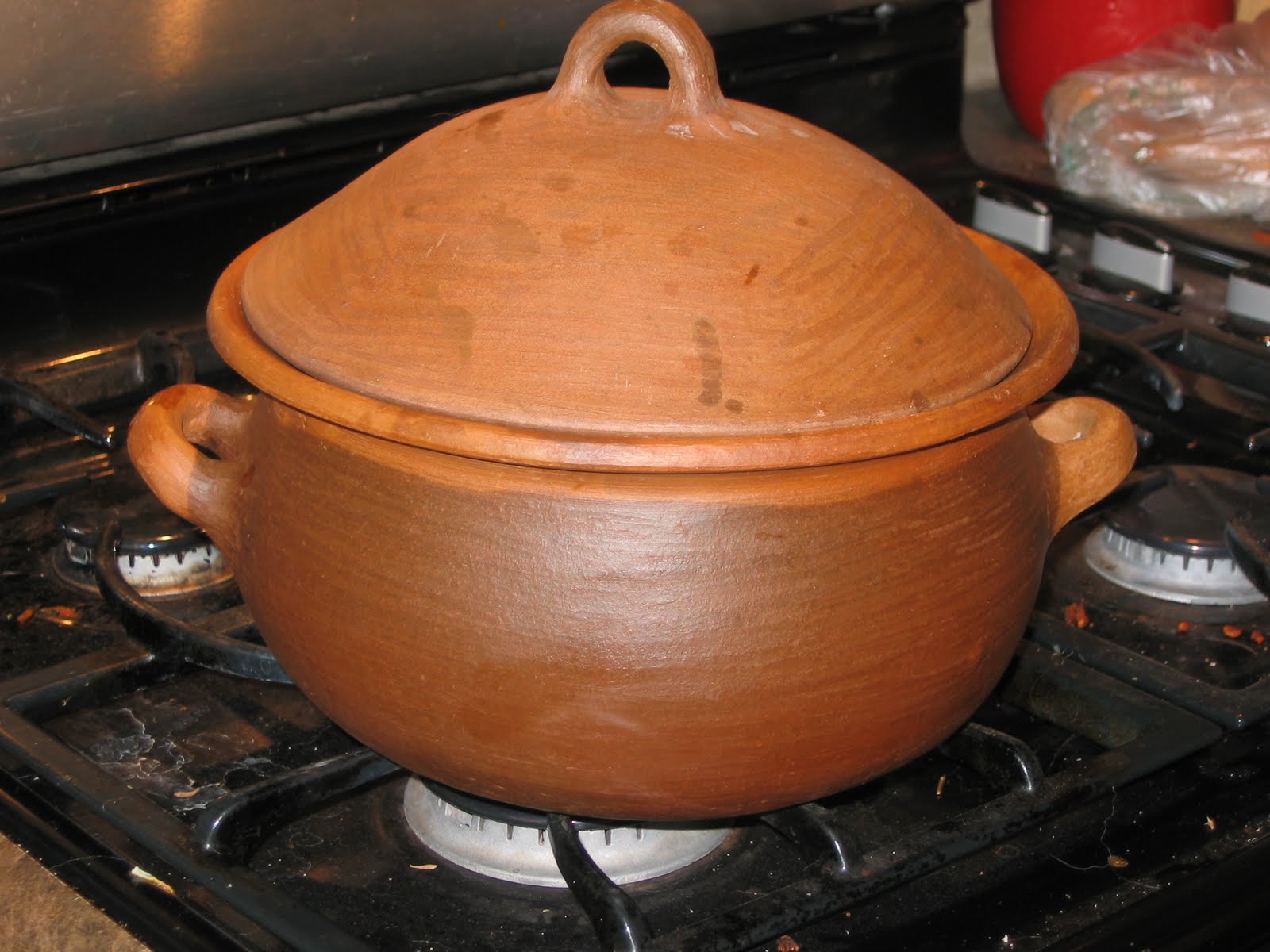
I should add that, like so many other things, it seems to taste best if cooked in clay. I tend to use either an unglazed clay bean pot or a Spanish cazuela, after doing the initial blanching of the greens in an ordinary pot. A Chinese sand pot works well too. If you’re curious, do read another of Ms. Wolfert’s books, Clay Pot Cookery, which contains everything you might want to know about cooking with clay.
More vegetable-centered meals

july 2009 012
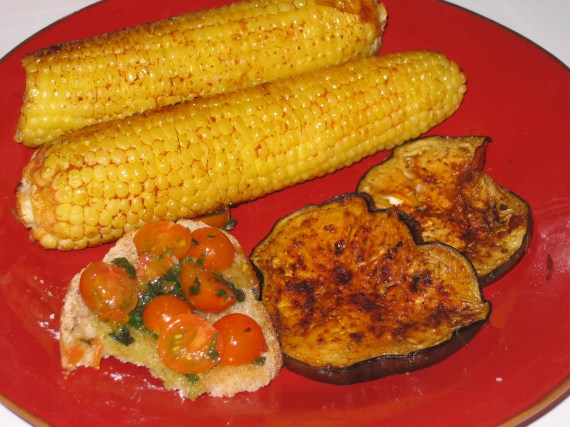
This time of year, vegetables are abundant and make up the bulk of our diet. Recently I wanted to put together a meal cooked on the grill using only vegetables that can easily be found at the farmers’ market. The kitchen stays cool, and people who don’t have a garden aren’t left out. If you need to accomodate vegetarians and vegans at your table, this meal can have everyone at your table happily eating the same thing, with no need for special plates.

The only remotely exotic seasonings that you’ll need are Spanish smoked paprika, readily available as Pimenton de Vera at The Spanish Table and other specialty grocers, and some capers, preferably the kind preserved in salt.
Click here for the recipe Continue reading

The Joys of Summer: more grilled vegetables

july 2009 013
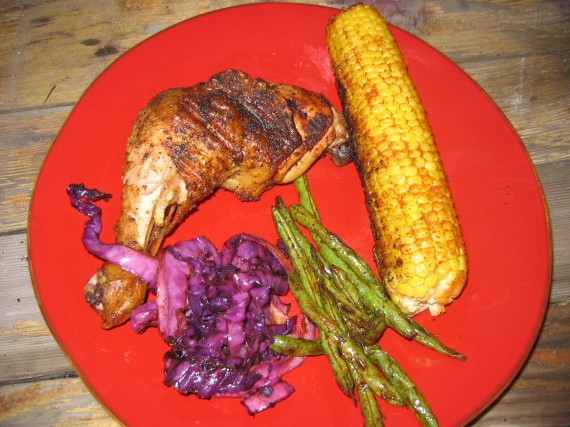
Here in New Mexico the hot weather has continued for a few weeks with no relief, and we’re doing more and more grilling to avoid heating up the kitchen. This has led to more and more experimenting with grilled vegetables, and so far we’ve loved them all. I also love having plates full of color, not just brown meat. If you want to reduce your meat consumption, eating more vegetables is a delicious way to approach that goal. To improve kitchen efficiency, I plan how to season each vegetable so that I can make the seasoning pastes in a sequence yet not have all the seasoning the same; this is explained in the recipe section. If you want more details on how to grill, I recommend the superb grilling cookbook by Francis Mallmann, Seven Fires. Grilling is an art, and can’t be taught in a blogpost. But it’s an art well worth aquiring.

The quality of your ingredients is paramount. I do not recommend any use of battery-raised commercial chicken, which is a disaster from the gastronomic as well as the environmental and humane standpoint. Commercially raised “free-range” chicken is only slightly better. Get some real chicken. I strongly recommend Pollo Real pasture-raised chicken; see the Delahantes’ website to see how they raise their birds. They sell at the Santa Fe farmers’ market, and it’s possible to arrange a pick-up in Albuquerque if you contact them ahead of time. Back when I had a farm and raised my own chickens, they tasted like Pollo Real chicken, by which I mean that they tasted like chicken, while American commercial chicken tastes strikingly like nothing at all. Battery farming of chickens pollutes the envoronment and spreads disease, as well as being a horrible life for the birds, so I avoid it. We need to support humane and sustainable farming, and the best way to support it is to seek out your local sustainable farmers like the Delehantes.

If you have a grill with a griddle section, you’re all set. Otherwise, a heavy cast-iron skillet could be used where a griddle is specified.
Clich here for the recipes! Continue reading

The Joys of Summer: Simple Lunches

july 2009 011
There are few things I love more than leisurely weekend lunches eaten on our back patio, with good food and sweet surroundings. I don’t like to fuss in the kitchen for these meals, though, and in this season there’s no reason to. With tomatoes and basil in the yard or at the farmers market, a bottle of olive oil, and a good loaf of sourdough bread, you’re set.

First, catch your tomatoes. Meaty beefsteak types are delicious here, but you can use any really flavorful tomato, including ripe sweet Sungold or Green Grape cherry tomatoes. If you have bland and blah tomatoes, do something else with them; this demands great tomato flavor. If you don’t bake your own bread, get a good loaf of crusty sourdough or a crusty baguette; in our area the baguettes from Sage Bakehouse are hard to beat. Make your basil into pesto according to your favorite recipe or use my own favorite below. During the summer, I usually have some pesto handy, and it will keep a day or two without much loss of flavor, making this truly fast food. It’s also good for a mixed group of omnivores, vegetarians, and vegans.

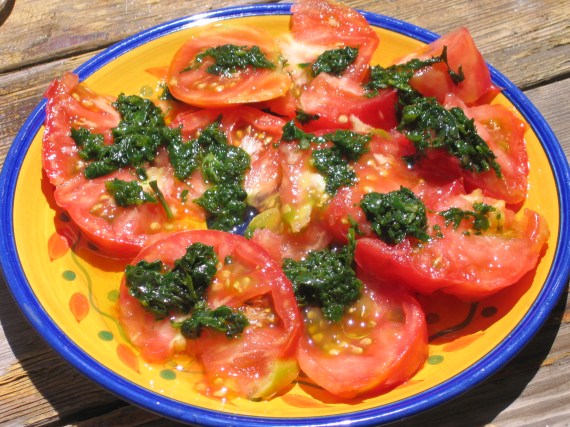
You’ll need (at a minimum) half a big beefsteak tomato or one regular tomato or at least a dozen cherry tomatoes per person. When you’re ready to eat, slice the tomatoes and spread them out on a plate. A lot of juice will probably run out on the cutting board. Make sure to pour it onto the plate. Juice is half the point here. Drizzle with pesto and sprinkle with coarse sea salt. Drizzle on a little of your best olive oil. Slice the bread and toast or grill it. Bring the tomatoes and bread to the table on two separate plates, with a small plate for each person. The lucky eaters will need a spoon to scoop tomatoes and juice onto their crusty bread. They will also need to be sufficiently at ease to shamelessly rub their bread into the delicious juices on the tomato plate. Have plenty of napkins handy.
For more on pesto, click here! Continue reading