Archive for the ‘farmers market’ Category

Vegetable dinners: a roasted melange, and notes on gochujang


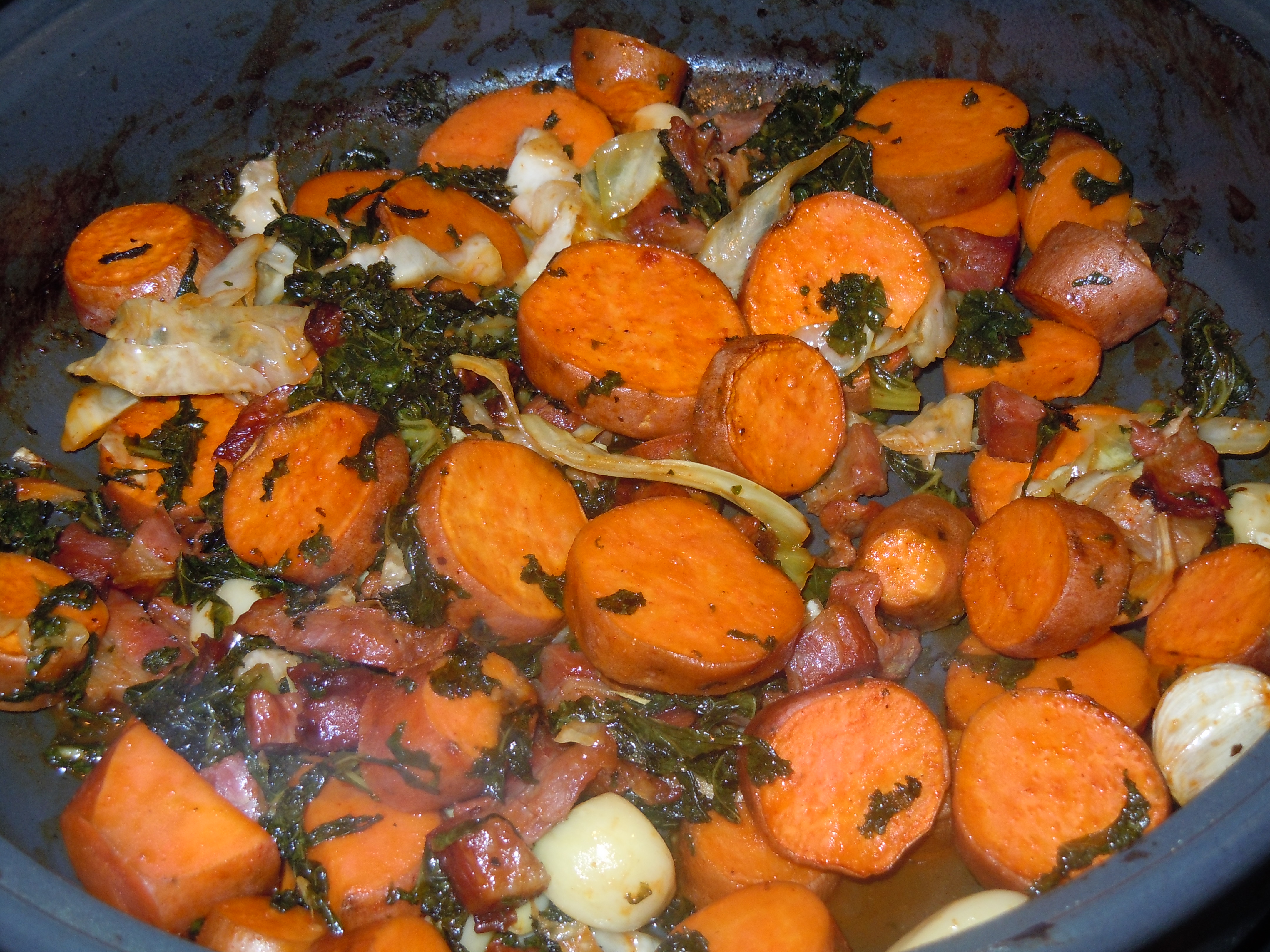
On frazzled days, one way to save time when making dinner is to put food in the oven and pretty much forget about it until it’s done. Many vegetables respond beautifully to this treatment, especially if flavored a little. I have a large clay Spanish cazuela about 14″ in diameter that I use for these impromptu roasts because I’m convinced that the clay improves the flavor, but you can use your standard 9X13 pan if you prefer. I am using a lot of sweet potatoes right now because I dug a lot of them recently, but I’ll include suggestions for substitutions. The idea is to use what you have and like.

You will need:
for the vegetables: 4 medium/large sweet potatoes cut in 1″ chunks (I scrub them well and leave the peel on), or a medium-sized winter squash peeled and cubed, or 6 large carrots scrubbed well and cut in 1/2″ chunks, or some combination of the above. I used sweet potatoes.
For the greens: 1 bunch of kale cleaned and cut in 1″ slices crosswise, or half a small green or red cabbage cut in thin slices, or 3/4 pound of sturdy leafy greens cleaned and cut in 1″ slices, to total about 3/4 pound. I used half Tuscan kale and half sliced green cabbage.
For the seasoning:
a handful of bacon, bacon ends, or pancetta, cut in little cubes. I used the tail end of a bacon slab.
3 large cloves garlic, chopped
3-4 tablespoons of olive oil
1 tablespoon of Korean gochujang paste (see below) or a teaspoon of Tabasco or other red chili sauce, or a teaspoon of red pepper flakes
about half a teaspoon of salt, or to taste
1/2 cup good stock or water

Preheat the oven to 375 degrees. Prepare the vegetables and toss them in the cazuela or pan. Mix the seasoning ingredients and pour over the vegetables, tossing with your hands to distribute. Try to end up with the chunky stuff mostly on top and the green stuff mostly on the bottom. Put the cazuela in the oven. Half an hour later turn the veggies with a spatula, and if the bottom seems dry and things are starting to stick, add a little more stock or water. Again, try to keep the greens mostly below the other stuff, where they won’t dry out. After an hour, check the vegetables for doneness. You don’t want them crisp for this dish; they need to be cooked through, a little soft, and well impregnated with the seasoning ingredients. When done, drizzle a tablespoon or so of your best olive oil over all, bring to the table in the cazuela, and eat with a crusty baguette or toasted whole-wheat bread, as you prefer. It couldn’t be easier or healthier.
You can leave out the bacon or pancetta and have a vegan/vegetarian meal. I don’t recommend it, because the pork has a wonderful alchemy with the sweet winter vegetables and the chili paste, and creates a whole much greater than the sum of its parts.

Now and then we find an ingredient that represents the Platonic ideal of its kind. For me, the Korean chili paste gochujang is the seventh heaven of the chile pepper. There is nothing quite like its deep, intense, fermented flavor, unctuous texture, and exquisite mahogany color, and it has a special affinity with pork and a thousand uses outside of traditional Korean cooking. These days the only gochujang that I will use is the one from Mother-in-law’s Kimchee, which does have some sugar in it but no high-fructose corn syrup and is properly fermented and deep and delicious. If it isn’t available in your area, you can order it online. I like the original one, called “concentrated” on the label.

I talk a lot about making dietary and lifestyle changes slowly and one at a time. This is a great time to start thinking about eating more green leafy vegetables. Salads are great, but cold weather is a perfect time to incorporate more cooked greens as main dishes, side dishes, or soups. If you garden, kale and cabbage will help get you through the winter. If you forage, dock, chicory, and dandelion greens are among the few wild foods available in winter in our area (plan to mix them with milder greens from the garden or store.) If you buy at the store, Tuscan kale is everywhere, and since there is no better leafy green, go for it. I do recommend sticking to organic greens wherever possible. If you always have garlic, olive oil, and a little good bacon or pancetta in the house you are always ready to make a lovely dish of saute’ed greens, and there are lots of variations. Check out my “greens” category on this blog for more recipes. I know I have said this before, but I’ll keep saying it: don’t undercook them. The thicker tougher greens like curly kale are acutely unpleasant to eat when undercooked and tough, so taste before sending to the table, and if chewing requires a ruminant level of effort, cook five minutes longer and taste again. Mark Bittman is now galaxy-famous as the author of many authoritative cookbooks, but few people are aware that his first effort was a little gem called “Leafy Greens.” You can still find it second-hand, and it’s worth tracking down. Read it and use it, and your family’s health will benefit.
Cooking in Clay: cazuela apple crisp


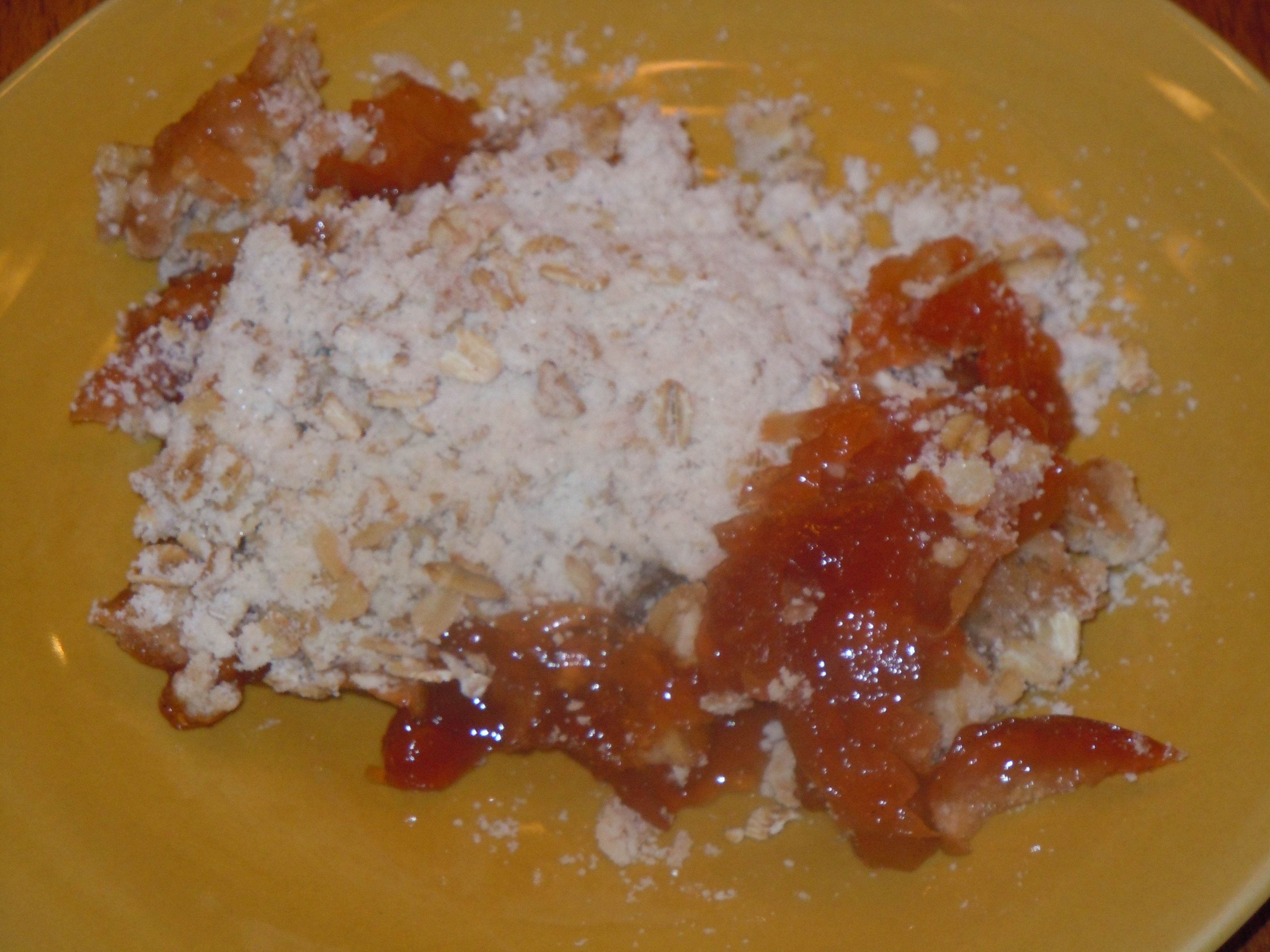
In my new home my apple trees are infants about five feet high, but the day will come when I’m eating apples from my own trees, all heirlooms chosen for superb flavor. In the meantime the farmers’ markets are full of apples, and in a moment of impulse I bought an enormous bag of Winesaps. After eating all that I could fresh, I indulged my passion for fruit crisps. Desserts are seldom justifiable on purely nutritional grounds, but this one is a lot healthier than most, particularly because the peel is left on the apples. Try it. As long as you follow the directions, the peel won’t bother you a bit, and it adds fiber and antioxidants and saves time. Use organic, unwaxed apples. Ask to taste them first, because any apple is affected by its immediate conditions and the season. Don’t ever bother cooking with an insipid or mealy apple. Your time and effort will not be rewarded.

I strongly advise cooking in a clay pan for best flavor. I keep a 10″ Spanish cazuela from The Spanish Table in Santa Fe, and find that it’s the most used pan in my kitchen, because I can use it on the stovetop or in the oven. I strongly advise reading Paula Wolfert’s “Mediterranean Clay Pot Cooking” for the ins and outs of using clay pots. Season the cazuela according to the directions that come with it, and follow the temperature and timing directions below closely. This dessert takes a few hours to make, but 90% or more of the time is unattended oven-cooking time, so you’ll get a lot of other things done at the same time.

The whole beauty of this dessert is the pure flavor of the slow-cooked, semicaramelized apples, made a little richer by the vanilla. I definitely don’t recommend adding spices.
You will need:
a seasoned 10″ cazuela
Fruit layer:
8 large flavorful apples such as Winesap or Granny Smith, each at least 3″ in diameter, or a dozen or more smaller apples
juice of half a small lemon
1/2 cup (or more) light agave nectar
2 tablespoons cornstarch
2 teaspoons vanilla
a pinch of salt
Crisp layer:
1 cup rolled oats
1 cup unbleached flour
1/2 cup sugar
8 tablespoons good grass-fed butter
2 teaspoons vanilla
1/2 teaspoon salt
l
Wash, halve, and core the apples, then slice into very thin slices lengthwise. Aim for slices 1/8″ thick, but if a few are a little thicker it won’t matter much. A food processor or mandoline is helpful, but I just use a good sharp knife. Don’t leave any really thick slices in, because the peels will be tough in the finished dessert, while very thin slices of peel become unnoticeable during the long slow cooking. In a large bowl, toss the apple slices with the cornstarch, lemon juice, agave nectar, vanilla, and salt. Pile them into the cazuela. They will probably have to be stacked up a little inn order to fit. Don’t worry, they cook down a lot. Pop the cazuela in the oven, set it for 300 degrees, and bake about 90 minutes. Stir once or twice during that time. If the apples seem to be browning on the bottom, turn the oven down some and stir a little more frequently.

To make the topping, combine the oats, flour, salt, and sugar in a bowl. Cut the cold butter in chunks, then work it into the mixture with your fingers, making sure that it is “smooshed” well into the dry ingredients and no large chunks remain. Toss in the vanilla with a fork, then check the baking apples. After about 90 minutes they should be well cooked down. Pile the crumble mixture on top, return to the slow oven, and bake another hour. At that point you can turn up the heat to brown the top a little, or turn on the broiler for a minute or two, but don’t let it get darker than medium gold and watch carefully to avoid burning. Remove from the oven, let cool a little, and serve with vanilla ice cream on top, or cool it completely to rewarm at another time. It keeps at least a few days.

The desert is not terribly sweet, and I love it that way. If you prefer, you can add a little more sweetener to both the apple mixture and the topping. This topping is very crumbly and crispy. If you want something more like a cake topping, you can add an egg and a little milk and a pinch of baking powder to the dry mixture, but keep it on the dry clumpy side and don’t stir it too much, or you’ll develop the gluten in the flour and make it tough. This version doesn’t reheat nearly as well as the crumbly version.
Viva Fall! I love summer and hate to see it go, but the end of the harvest season has its own pleasures. Besides, it inspires me to dig more planting holes for more apple trees next spring.

Vegetable dinners: things to wrap in a pita


My new category, Vegetable Dinners, will be a collection of meals based on vegetables. Some are vegetarian and some aren’t, but where meat is used, it’s a small amount and is used more as a seasoning than as the bulk of the meal. Where relevant, notes on how to make them vegetarian or vegan are included, but many of them taste best with a little meat or fish included, and my recipes note this. My kitchen mantra is “Eat less meat, eat better meat,” and the same goes for eggs and dairy products. Since you aren’t using much, you can afford the best and most sustainable.
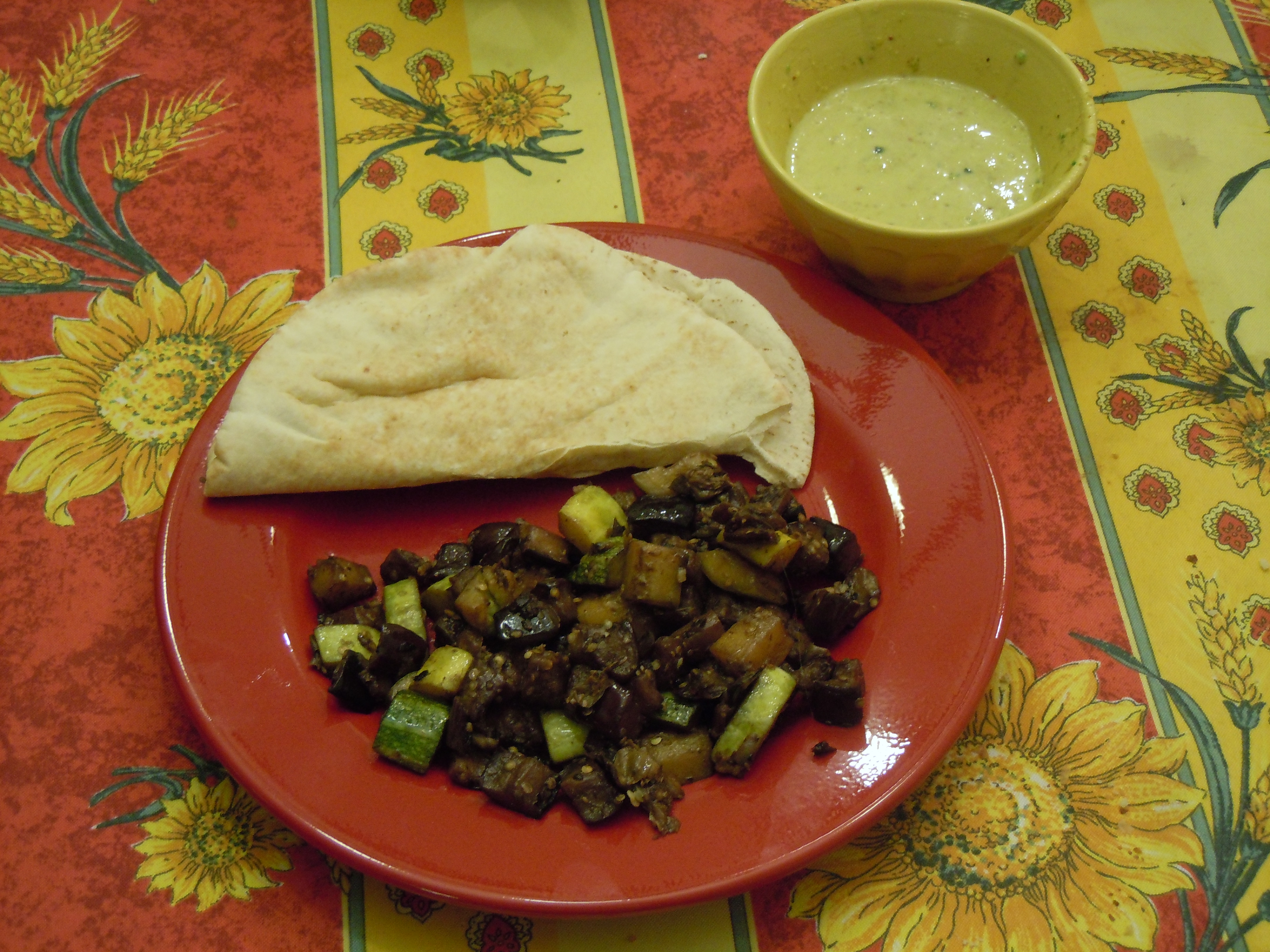
Summer vegetables are at their peak now, and in my home most of our meals are based on them. Mixtures that can be wrapped in a pita make a light easy meal on hot days. The filling can be made ahead, and keeps a few days in the refrigerator. OIl-cured black olives are used to add a meaty savor to eggplant and zucchini, and capers add an herbal note. This meal is vegetarian, and can be made vegan if you alter the sauce recipe a little.

Eggplant and Zucchini with olive paste

2 small or one large eggplant, fresh and firm
2 small zucchini
12-20 oil-cured black olives depending on your taste for them (no other kind of olive will do here)
3 tablespoons salted capers, rinsed and then soaked in cold water for an hour and squeezed dry
1/4 cup good olive oil
2 large or 3 medium cloves garlic
chopped parsley to taste, probably a couple of tablespoons

Cut the eggplant in cubes 1/2 inch or a little larger on a side. Whether you peel it first is up to you. The finished dish has a more tender texture if the eggplant is peeled, but less fiber and fewer antioxidants, so take your pick. Personally, I leave the peel on for this dish as long as the eggplants are young and tender. Cut the zucchini in quarters and slice each quarter into segments on the small side of 1/2 inch. Toss the vegetable cubes together in a bowl with 2 teaspoons of salt and let sit at least 1 hour, tossing occasionally. This step is important for this dish and shouldn’t be shortened. Don’t worry about the quantity of salt; if you do the squeezing step well, most of it will be removed with the liquid. You can soak the capers at the same time. Pit the olives and chop them coarsely, and chop the garlic finely. At the end of an hour, drain off exuded liquid and squeeze the veggie chunks in a clean kitchen towel, a few handfuls at a time, until as much liquid as possible has been squeezed out. Squeeze the capers dry and chop them coarsely. In a clay cazuela or 10″ skillet, heat a few tablespoons of the olive oil and add the garlic. Cook until opaque and cooked but do not allow it to start to brown even a little. Now add the olives, capers, and veggie chunks, toss to coat with the oil, and cook over low heat for about an hour, tossing occasionally and making sure it doesn’t burn on the bottom. Add a little water if needed to prevent burning.
Texture is very important. Start tasting a little after 45 minutes or even 30 if it looks like it’s cooking quickly. When the zucchini is just tender but not mushy, and the eggplant is melting in texture, it’s done. Also check for salt, but the seasonings are salty and you are unlikely to need any. Stir in the parsley just before serving. Serve with good pita bread, lightly warmed, and the sauce below.

Lemon-garlic sauce
This sauce is like an aioli but looser and less rich. The egg yolk just binds it and thickens it a little. If you leave out the egg yolk the whole dish is vegan, and the flavor doesn’t suffer at all but the texture will be liquid, not thick, and it will need to be stirred up by each diner before taking any.

1 egg yolk
1 large clove garlic
juice of half a lemon
1 Jalapeno pepper
olive oil as needed, usually about 1/4 cup.
salt to taste
1-2 teaspoons fresh thyme leaves

In a small food processor, chop the garlic clove and the chile pepper. I always mince fresh chiles before putting them in the processor to make sure that big chunks don’t startle diners. Add the egg yolk and lemon juice, process briefly, and slowly drip in the olive oil until it’s as thick as you want. I like it to be liquid and spoonable, but velvety. Taste and salt as needed. Add the thyme leaves and stir in. For the vegan version, proceed the same way except leave out the egg yolk, and be aware that it won’t thicken in the same way but will be more like a vinaigrette.
Don’t save leftover sauce more than a day in the refrigerator, because of the egg yolk, but I like to spread leftover sauce on a warmed pita for lunch the next day.

Still more greens, and notes on solar cooking


Since I got a solar oven, I no longer find it difficult to cook chickpeas, and so I’m looking for new ways to use them. I especially like combinations of greens and beans, partly because these primal and earthy dishes are found all over the world wherever people need healthy cheap food, and partly because they taste good. I’m cooking my way through a huge patch of lambs-quarters and amaranth (common pigweed) in my back yard, and getting healthy food from weedy places always satisfies my sense of economy. If you’re not a weed-eater, just use Swiss chard. I like a little smoked meat with greens, but if you don’t eat meat, just leave off the final garnish of bacon. This makes two large main-course servings with leftovers.

One pound young leaves and tender tips of lambs-quarters and amaranth, OR one large bunch of swiss chard, stems removed, chopped coarsely.
One pint cooked chickpeas, with just enough of the cooking liquid to cover them (see Solar Beans, below.)
3-4 tablespoons good flavorful olive oil
1 large onion, finely sliced
2 large cloves garlic, chopped finely
1 tablespoon of fresh thyme leaves
2 teaspoons Spanish Pimenton de la Vera, or smoked paprika
1/2 teaspoon red chile flakes
salt and pepper to taste
a little of your best olive oil for drizzling
1 thick slice bacon, fried crisp and crumbled (optional)
Wash the greens very well, make sure to remove any remaining large stems, and blanch them in boiling water for 1 minute. Drain, press out extra water, and turn out on a cutting board and chop coarsely in both directions. Meanwhile, heat a heavy pot (I like an unglazed clay 3 quart pot) over medium heat, warm the olive oil, and saute the onions in the oil until translucent and cooked through but not browned more than a little. Add the chopped garlic and saute until garlic is cooked. Add the smoked paprika, thyme leaves, and chile flakes, saute a minute but no more, and promptly add the chickpeas and their liquid. When this mixture comes to a boil, add the blanched and chopped greens, salt to taste, turn the heat to low, and let it all mellow together for 10-15 minutes. Check the seasoning, add pepper to taste, and serve with a good drizzle of very good olive oil on each serving and the crumbled bacon on top if you’re using it. With a hunk of good baguette and a glass of full-bodied straightforward red wine, it couldn’t be better or healthier. Without its bacon topping it’s vegan and can be served to people of that persuasion, with the bacon fillip for the carnivores at the table. People who are vegetarian but not vegan will enjoy a pat of butter melted on top to give a little richness. Hedonists will like both a little butter and a little bacon.

Solar cooking is a natural here in New Mexico, where we have more sunlight than we know what to do with.
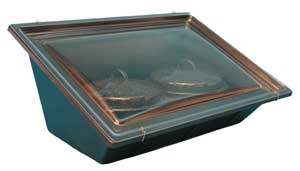
So, how do you cook solar beans? Fist you catch your solar oven. There are lots of easy plans on the internet for making them, but I chose to buy mine from the Solar Oven Society. Their solar ovens are capacious, lightweight, and every one you buy helps the society provide solar ovens to the third world, which avoids some deforestation and greenhouse gases from cooking fires. Their ovens are cleverly designed with two potential bases to provide a summer sun-catching angle and a winter sun-catching angle. Optional reflectors are available to achieve higher temperatures. You may want the optional reflectors for other purposes, but for cooking beans you won’t need them. Two graniteware pots are included with the oven, and you can put a pint of dry chickpeas in each one, cover with cold water by at least 2″, and set the oven up facing south in the morning with the two full pots inside. Then employ my special cooking technique: walk away, laughing a carefree laugh, and go to work or just get on with your life. On a reasonably sunny day, the oven without reflectors attached will reach a peak temperature of about 250 degrees and will stay in that range for much of the day. When you get home eight or nine hours later, you will find two steaming pots of perfectly cooked chickpeas, and you can salt them to taste, let them cool, and use immediately or freeze in pint containers with enough of their pot-liquor to cover. I love the oddly meaty-tasting cooking liquid and often use it as the broth for the finished dish, as I do above.
The directions that come with the oven imply that you need to turn it a few times to keep it facing the sun, but at least in summer I just point mine due south and forget about it. Other types of beans are also naturals for this solar slow-cooking, but they take less time, so I do them on weekends when I can check the oven in 4 hours or so to see how they’re coming along. For readers at lower altitudes than our 5500 feet, cooking times would tend to be much shorter. If the day clouds over, you may need to finish inside, or just put the pots in the refrigerator overnight and try again the next day. Don’t forget and leave the beans in the cool solar oven overnight, since some very nasty bacteria including botulinum could grow in room-temperature aqueous solutions. Cool them and pop them in the fridge or freezer when they’re cooked. Eat in the knowledge that you’re taking in all sorts of nutritive and cholesterol-lowering compounds that cost you no energy and very little trouble to cook. Beats canned, doesn’t it?