Archive for the ‘farmers market’ Category

Flexible Romesco Sauce

image

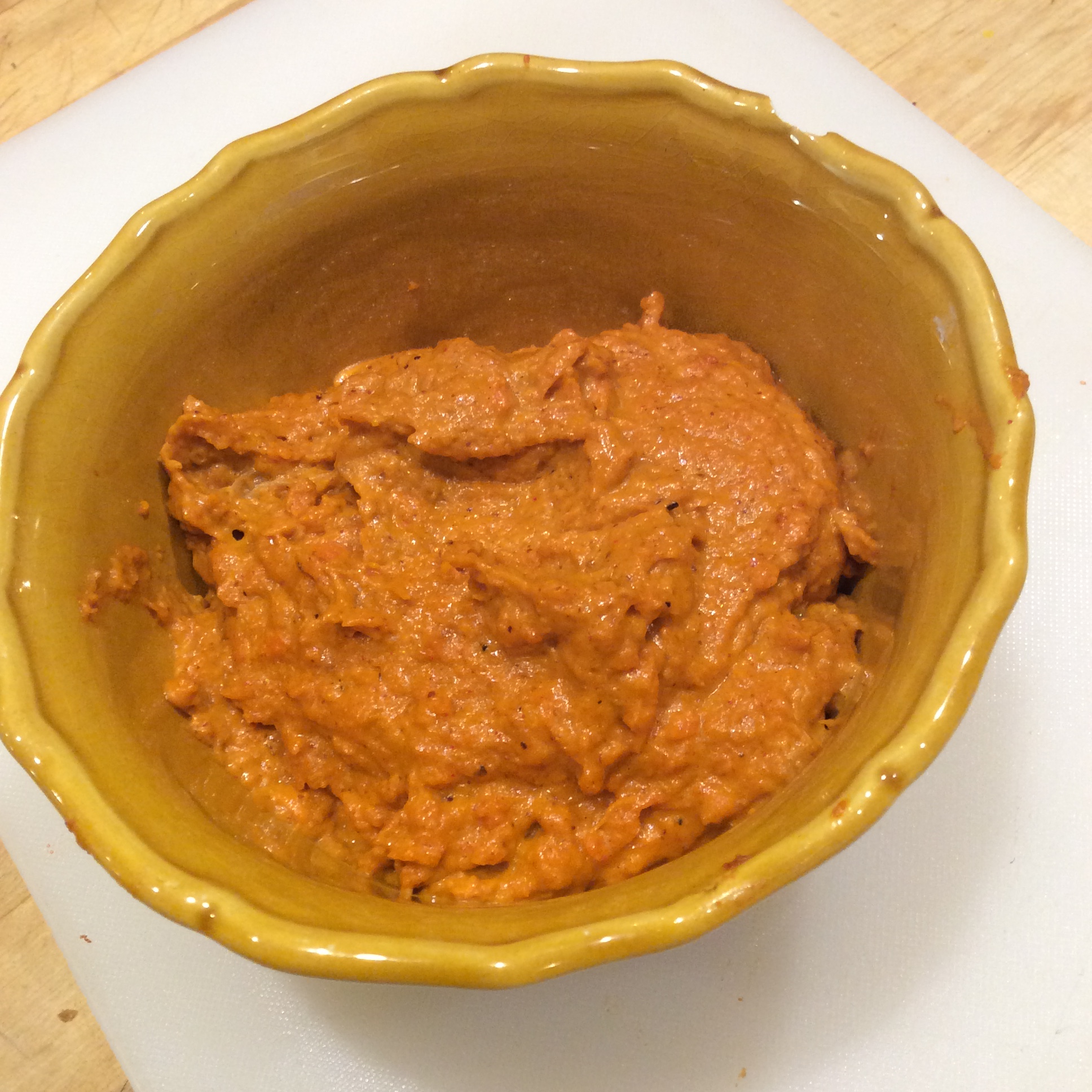
I’m a great fan of the Spanish Romesco sauce, and while I love it in its classic form, I also find its basic structure an adaptable framework that will support a lot of variations. Right now I’m digging up last year’s Autumn King carrots to make room  for a new planting. They are too tough now for eating fresh, but they are still sweet and flavorful, so I’m using some to make roasted carrot Romesco sauce.

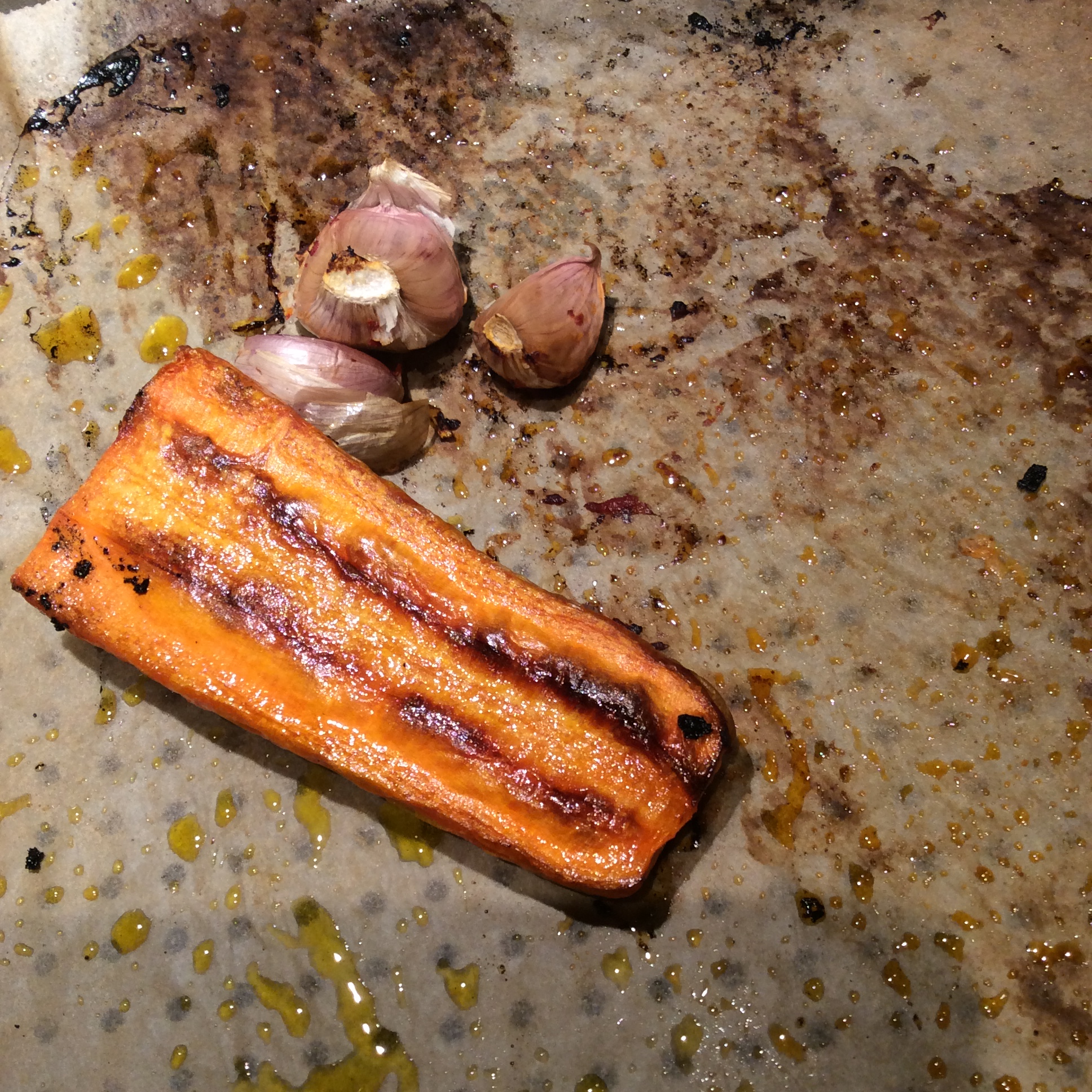
To start, turn the oven on to 500 degrees. Then one large Autumn King carrot (or two regular carrots) is cut in slices. One small onion is cut in quarters. Three cloves of garlic are separated from their head but not peeled. I use two roasted tomatoes out of my freezer, but you can put in two tomatoes, either fresh or canned plum tomatoes, to roast with the other veggies. Toss the veggies lightly in olive oil and put them on a sheet pan to roast, watching carefully because they can burn quickly.
image

When the carrot looks roasted but not burned and the onion is softened and translucent, take the veggies out. Skin the onion and peel the garlic cloves. Put all the roasted stuff in the food processor with half a cup of roasted almonds and grind as finely as possible. If you are using pre-roasted tomatoes, add them now and grind with the rest. Add two teaspoons of any of the following chiles: ground red New Mexico chile, or Spanish Nora chile, or half Spanish smoked Pimenton and half ground chipotle chile. This last mixture adds a beautiful heat and smoky edge, and is my own favorite. Process, and add two tablespoons of either lemon juice or sherry vinegar. I prefer the sherry vinegar, but a Romesco with lemon can be good with shrimp. Now add really good olive oil until the mixture comes together as a somewhat loose paste. Add more chile if needed. Salt to taste; it’s a condiment, and I like it on the salty side. Serve with roasted vegetables, or meat or chicken roasted rather plainly, or slices of baguette, or cold shrimp, or blackened fish, or nearly anything.

There are lots of other possibilities for a good flexible Romesco.  Roasted peeled red peppers are traditional. Roasted winter squash or sweet potato might be good, and I can imagine using roasted kale or chard leaves for a really dark, earthy, and healthy version. In my opinion the roasted tomatoes are necessary, but I’ve seen recipes that don’t include them. Some people prefer toasted bread crumbs to nuts to add body. And I can’t tell you how much sauce this will make, because I don’t know how much olive oil will taste right to you.

image

I recently ate it with tiny crisp-fried bits of chicken and low-carb flaxseed focaccia and it was very, very good.
Chicken Skin Genius

image

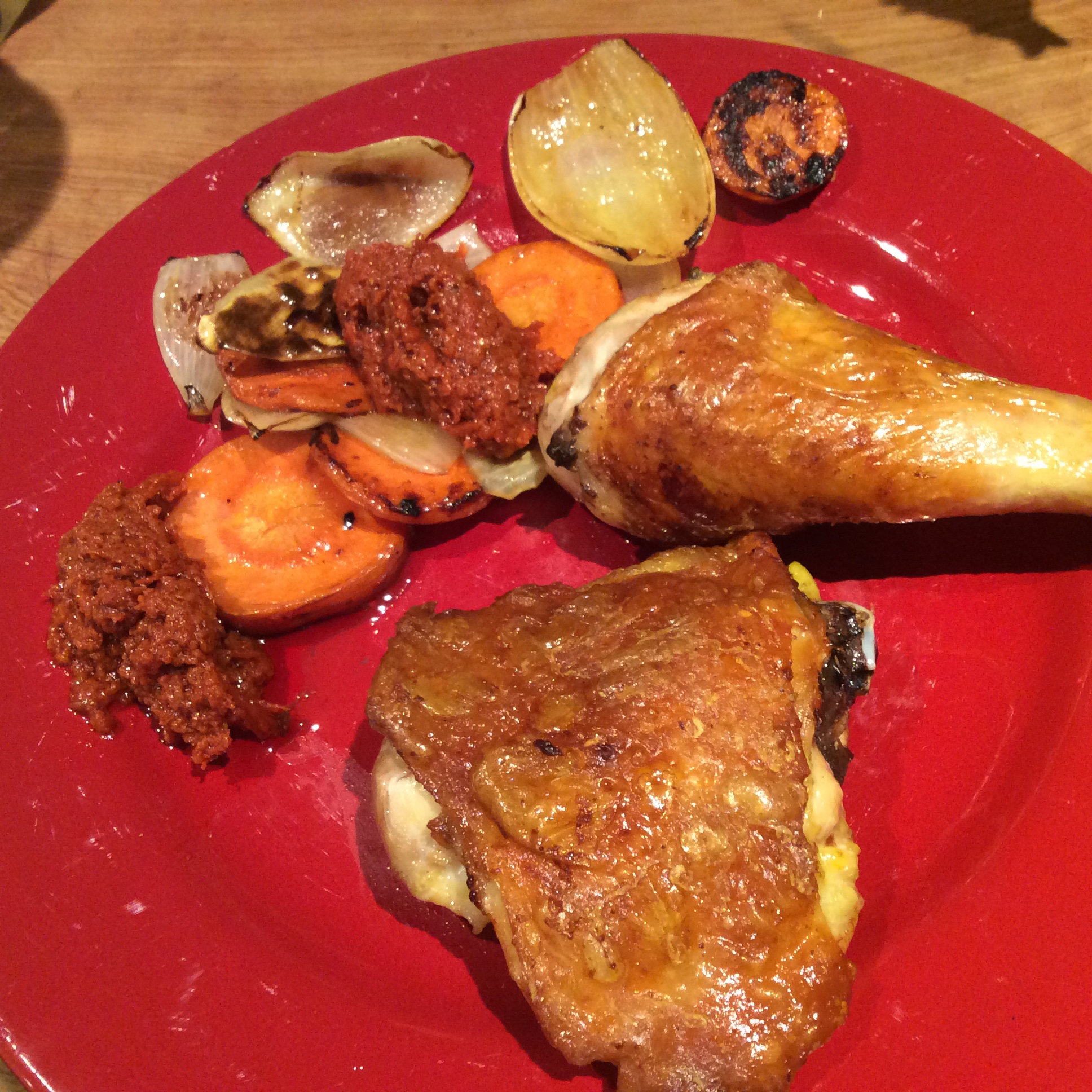
When I learn something new at the stove, I get absurdly excited. And I am especially excited about a good way to crisp chicken skin.  I feed my meat birds very carefully with a lot of greens to produce the highest possible level of caratinoids and omega-3 fatty acids, and many of those nutrients are in the skin.  So of course I want to make the skin as enticing as possible. Besides, it is the best tasting part of the chicken.  A simple tip that I learned in the Genius Recipes section on the wonderful Food 52 website involves seasoning chicken, preferably thighs and legs, and frying the chicken slowly skin side down in nothing more than its own fat or a small amount of olive oil.   I have not tried it with white meat, and wings might be too irregular to cook well this way.  In brief, I season drumsticks and thighs with salt and pepper, refrigerate them overnight, and when ready to cook I heat my cast-iron skillet over medium low heat.  I rub the chicken pieces  lightly with olive oil and put them in the skillet skin side down. Then, I do other things and forget about them.  In 15 or 20 minutes, the skin is done to a beautiful deep crispy crunchy brown.  Work a spatula under each piece taking care to keep the skin intact, flip the chicken and continue cooking skin side up until done through.  Simple as that. The skin is quite glorious in its unabashed simplicity.  You do need to be in the kitchen to turn the heat down if necessary  but for the most part you can concentrate on other things.  Serve any reasonable vegetable on the side.  If you want to deglaze the pan with white wine and chicken broth and boil it down and finish with butter to make a pretty wonderful bit of pan juice, offer the juice on the side or set the chicken in a pool of it. Don’t pour it over the skin or  it will lose its crispness. Sometimes it’s fun to pare a meal down to very simple components. Besides, it makes me wish that chickens were all skin.

Low Carb Easy: The Clay Pot Bake

image

When I’m having special friends over for dinner and want to have plenty of time for serious conversation, my favorite weapon is a 14″ Spanish cazuela that I got at a Spanish import store many years ago. Any large clay baking pan would do just as well. The idea is to be able to roast chicken and vegetables together in chosen seasonings and have a veggie-rich low-carb meal come out of one pan without a lot of fuss, and be able to bring the baking dish straight to the table fairly attractively. Dark meat of chicken is ideal for a “mixed bake,” and if you don’t grow your own, get the best pastured chicken that you can lay hands on.

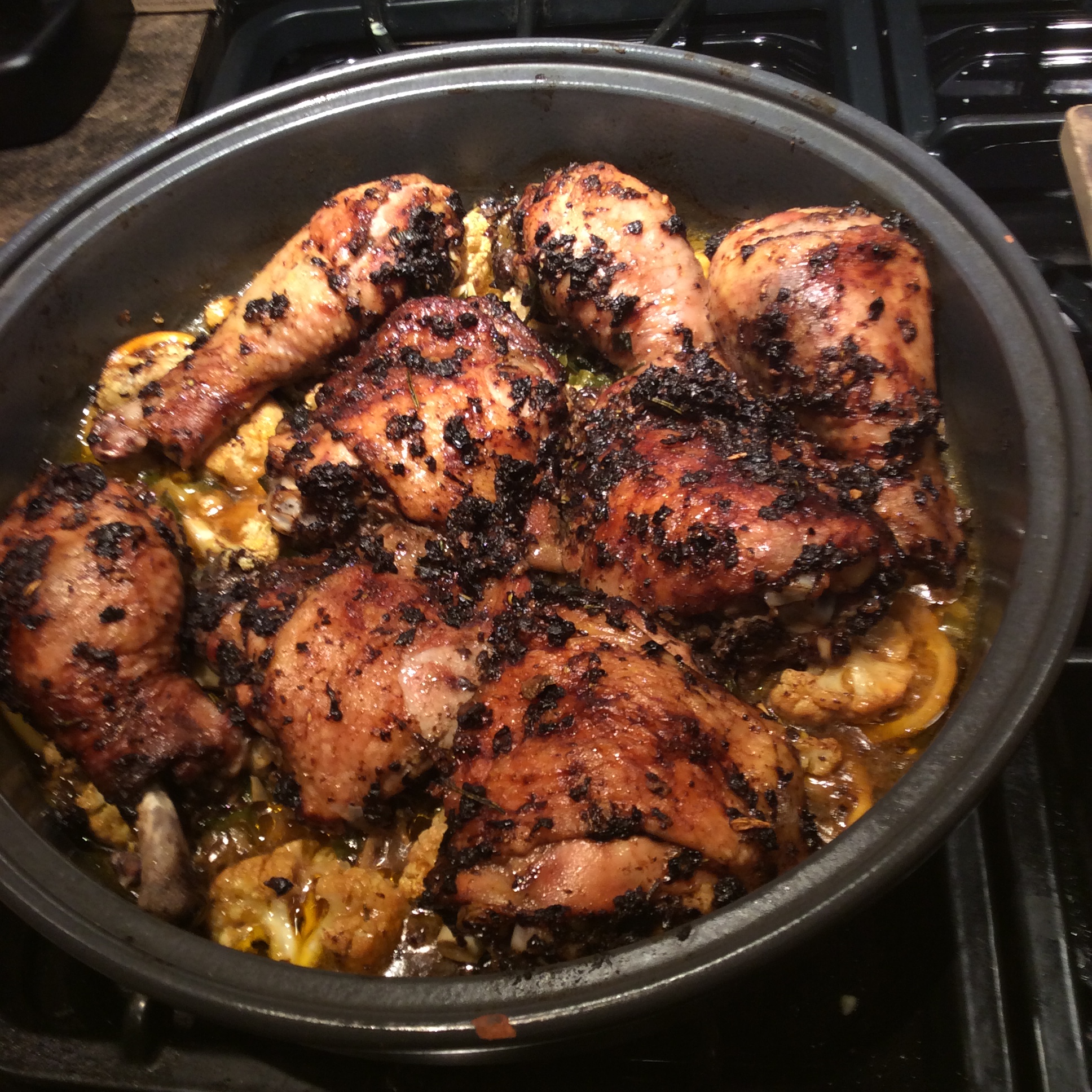
Decide on your seasonings. One of my favorites is a loose paste of a few cloves of garlic, about half a cup of oil-cured black olives, a little salt ( half a teaspoon or so, since the olives are pretty salty,) a sprig of rosemary chopped, the juice of half a lemon, and enough olive oil to form a runny paste in the food processor. Work this paste over eight pieces of chicken thighs and legs and set them in the refrigerator overnight.

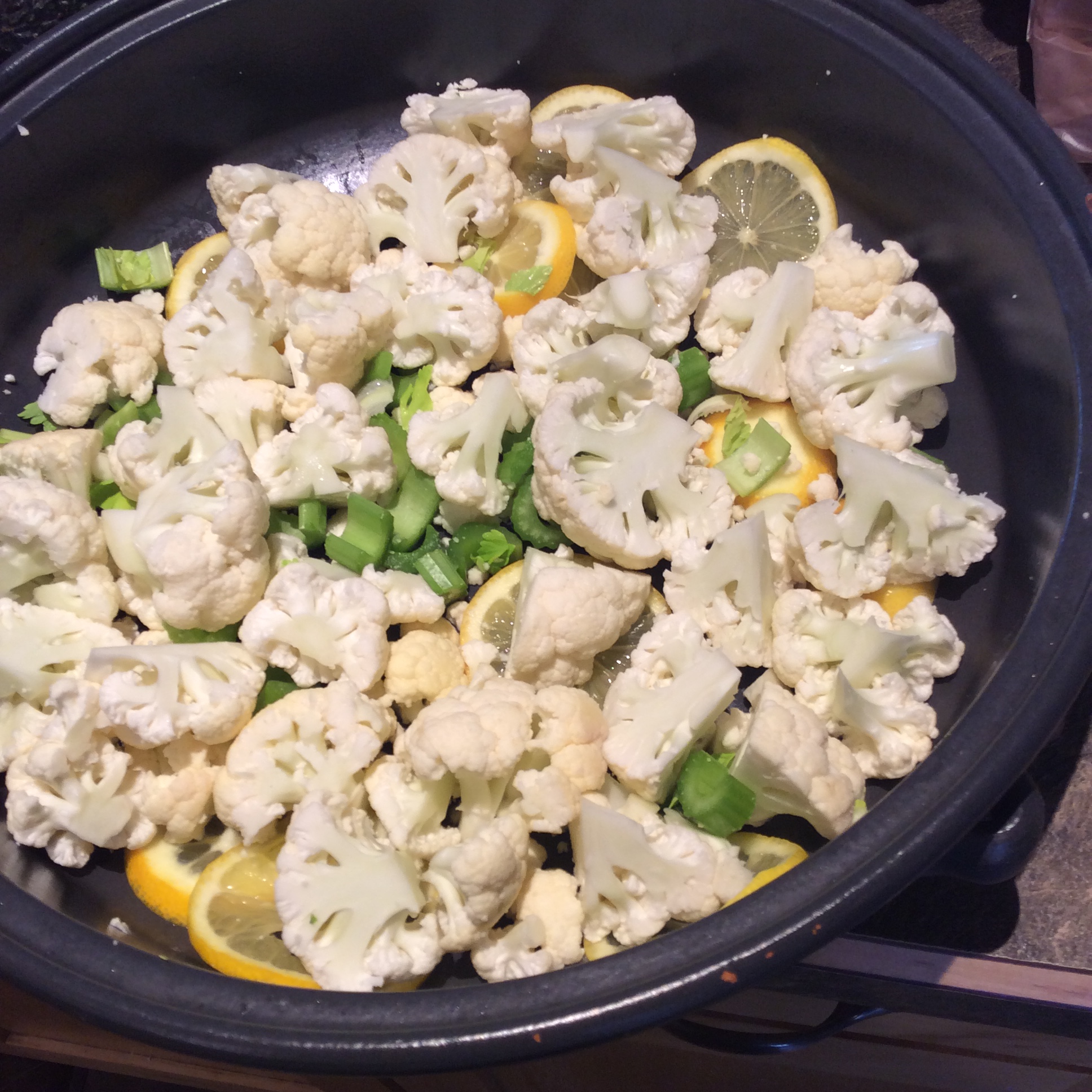
Then choose your vegetables. A head of cauliflower cut into florets is top of the list for me because it takes up the seasonings so beautifully. Leave out all the stemmy center, which is a nice break for your backyard goat. I always add a cup of thickly sliced celery and a lemon sliced thin, peel and all. You can put in 7-8 chopped stalks of green garlic at this time, or if you already have some cooked green garlic in the refrigerator, it can go in later with the chicken. Have your veggies prepped in a bag in the refrigerator.

image

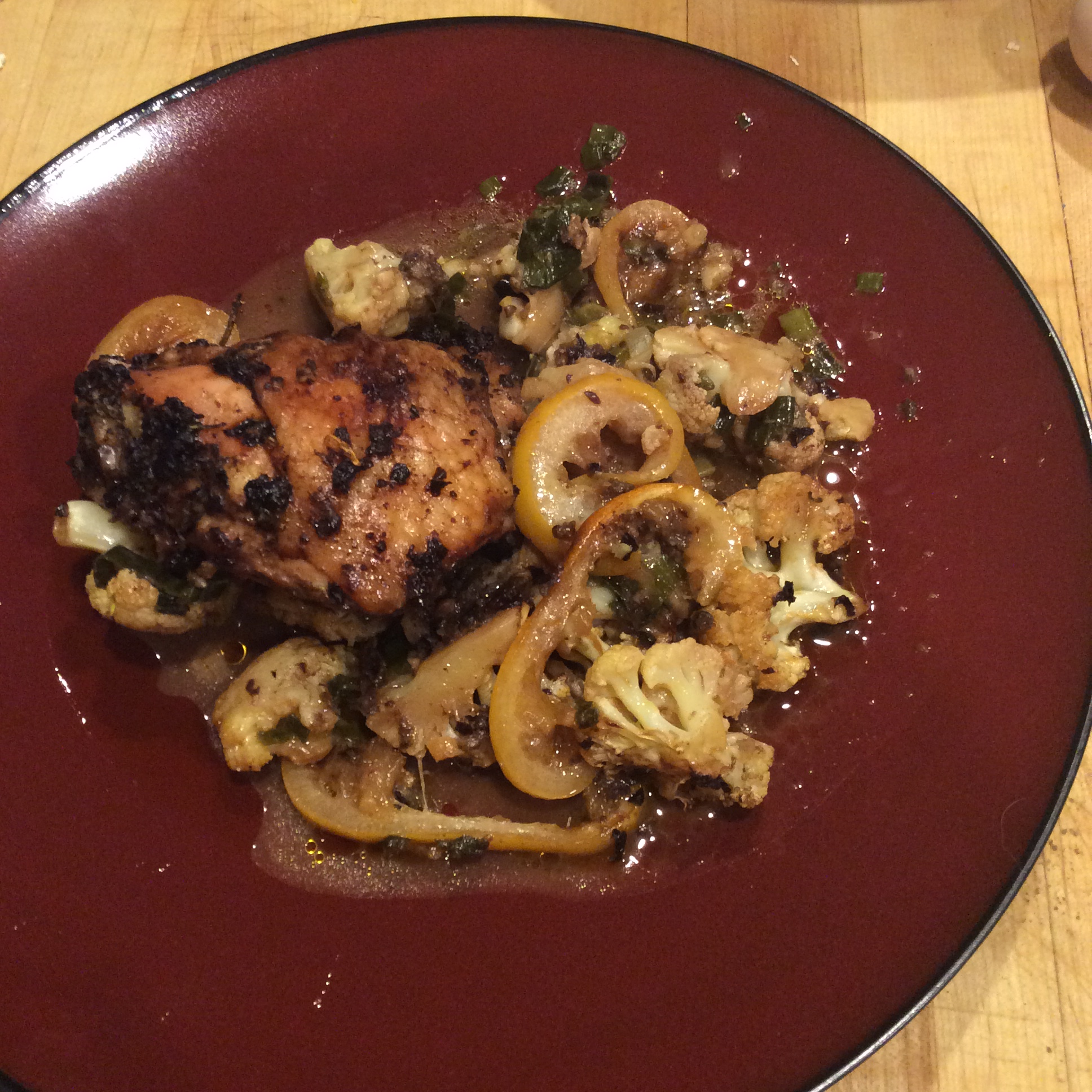
About forty-five minutes before you want to serve, preheat your oven to 425. Spread the lemon slices in the bottom of the dish and put the other veggies on top. Sprinkle lightly with salt but for the most part they will be seasoned by the chicken. Stick in the oven and roast about 20 minutes. Meanwhile, enjoy some wine and nuts or other nibble with your company. Pull the pan out and arrange the chicken on top of the veggies skin side up. If you like (and I do,) you can also add several stalks’ worth of green garlic at this time before putting in the chicken if you have green garlic waiting, pre-sautéed, in the refrigerator. Glop any remaining seasoning paste on top and pour in about half a cup of rich chicken broth to prevent burning.  Return to the oven and roast until the chicken is done, put the pan on a trivet on the table, provide a large serving spoon and a pepper mill, and eat. That’s all there is to it.

image

I find the softened, slightly caramelized lemon truly delicious and include a bit of it in each bite, but dubious guests can shove it to the side of their plate if they prefer and still get the flavor. I only suggest doing this with organic lemons.

Even people who don’t usually eat low-carb will find this a satisfying meal, but you can provide some toasted sourdough bread if you want to make sure.

Berries or dark chocolate or both make a good finish.

Early Harvest: Green Garlic

image

Other than herbs and alfalfa tips for my chickens, green garlic is always the first thing that I harvest from the garden.  In my climate, which is more or less USDA zone seven, I plant in October and nearly always harvest green garlic the first week of March.  The part of the garlic patch that I plan to harvest green is planted very closely, about 2 inches apart each way, which is plenty  of room for this purpose.  Every year I plant more. It is really good stuff. For a long time I thought that it might not really be worth the trouble, because I was harvesting and eating only the white stem and incipient bulb and composting the greens.  Duh. The greens are the best part, as well as being full of allacin and other antioxidants, and any part that is bright green rather than yellow or brown can be used. You can grow a useful amount in a few square feet if your soil is rich, and it is harvested and out of the way in time to plant something else for the summer.

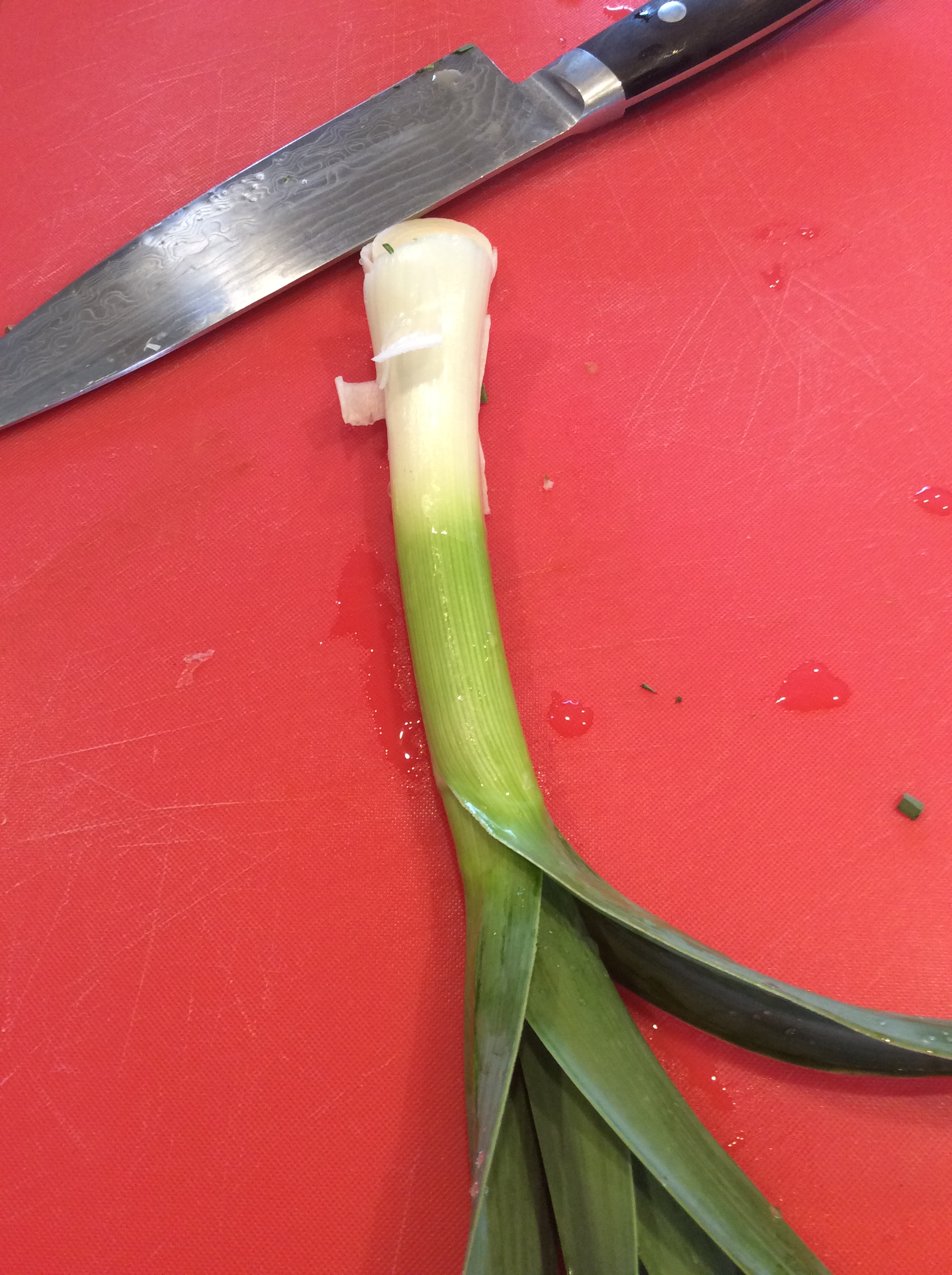
In the picture above you see a stalk of green elephant garlic, which is really a leek relative rather than a true garlic.  It is typically a foot or more tall and an inch or so in diameter at the green stage.   It has a slightly different flavor from true green garlic but is equally delicious.  I once bought green garlic at a farmer’s market that was bitter, but I have never tasted any other that was bitter. It may have had to do with growing conditions or variety. I have heard of people chopping garlic leaves into salads as a seasoning, but personally I don’t care for the taste raw and only use them cooked.

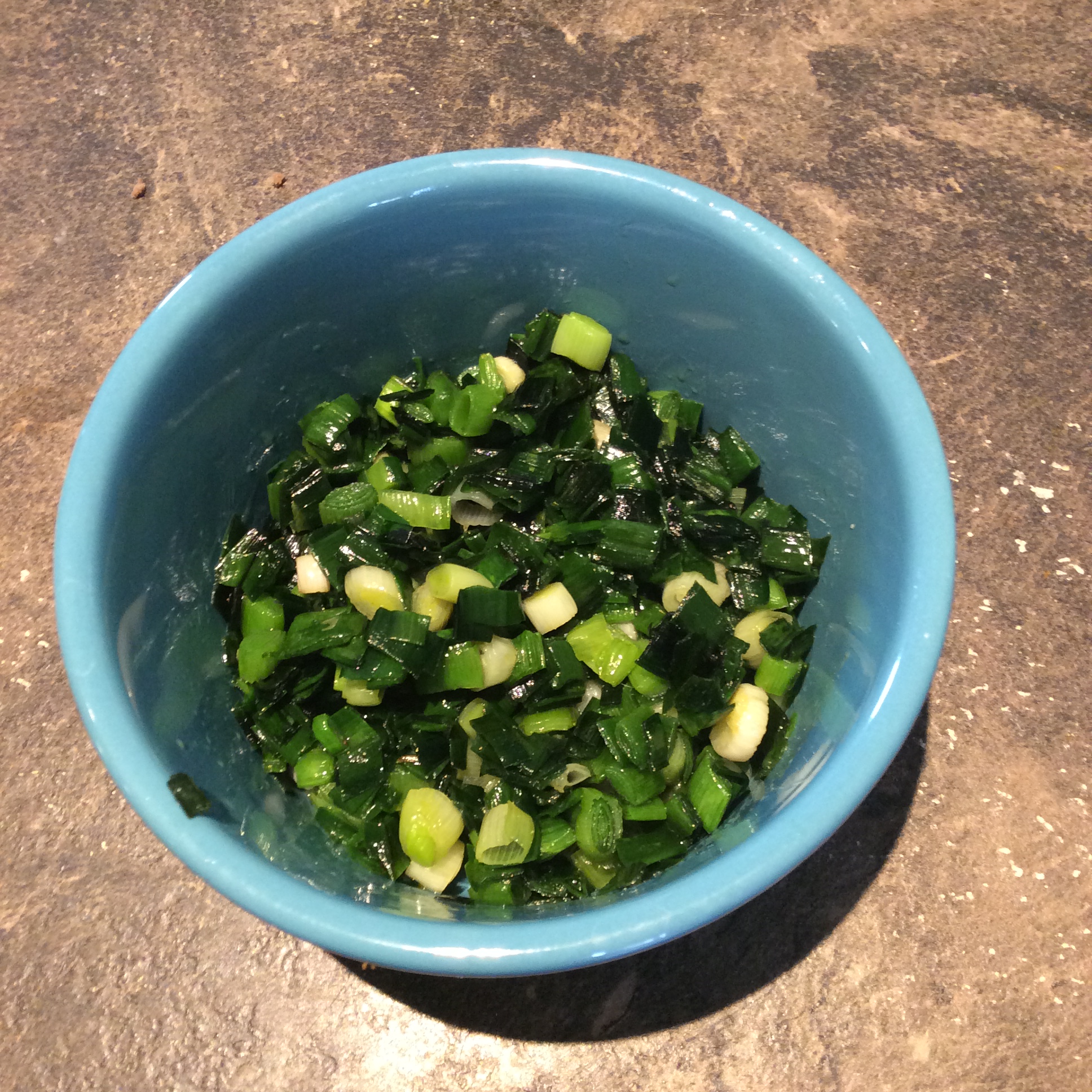
With all green garlic, I trim the roots and leaf tips and wash, then line them up and cut them in cross-section into slices about a quarter inch thick.  I sauté  in either butter or olive oil, whichever will suit the rest of the meal, slowly until the greens are tender. A little salt is thrown in along the way. They become soft and sweet and delicious, and I enjoy eating them as a vegetable on their own.  They also go very nicely into all kinds of other vegetable dishes.  If you are a carb eater, they would be delicious with fresh handmade egg pasta, butter, and a discreet amount of Parmesan, or tossed with new potatoes and butter. I love them in mixtures of cooked greens, too, and they are a lovely complement for fried eggs.  I plan to make a cream of green garlic soup  at some point this spring.  A few stalks sautéed in your smallest skillet while you are cooking other things also make a very nice cook’s treat  to eat standing in the kitchen, as a sort of tapa for one. After all, the laborer is worthy of her hire.

image

Like all the rest of us, green garlic will lose its youthful bloom sooner rather than later.  When the bulb is swelling and the leaf tips are turning progressively more yellow, it is past the point of being worthwhile to eat green.  In its brief season I harvest 10 or 12 stalks whenever I have some free time, clean and sauté them, and have them waiting in the refrigerator.  If I haven’t use them within a day or two, I vacuum seal them into neat little packets and keep them in the freezer to go in summer dishes.