Archive for the ‘edible landscaping’ Category

A Carrot of a Different Color

image

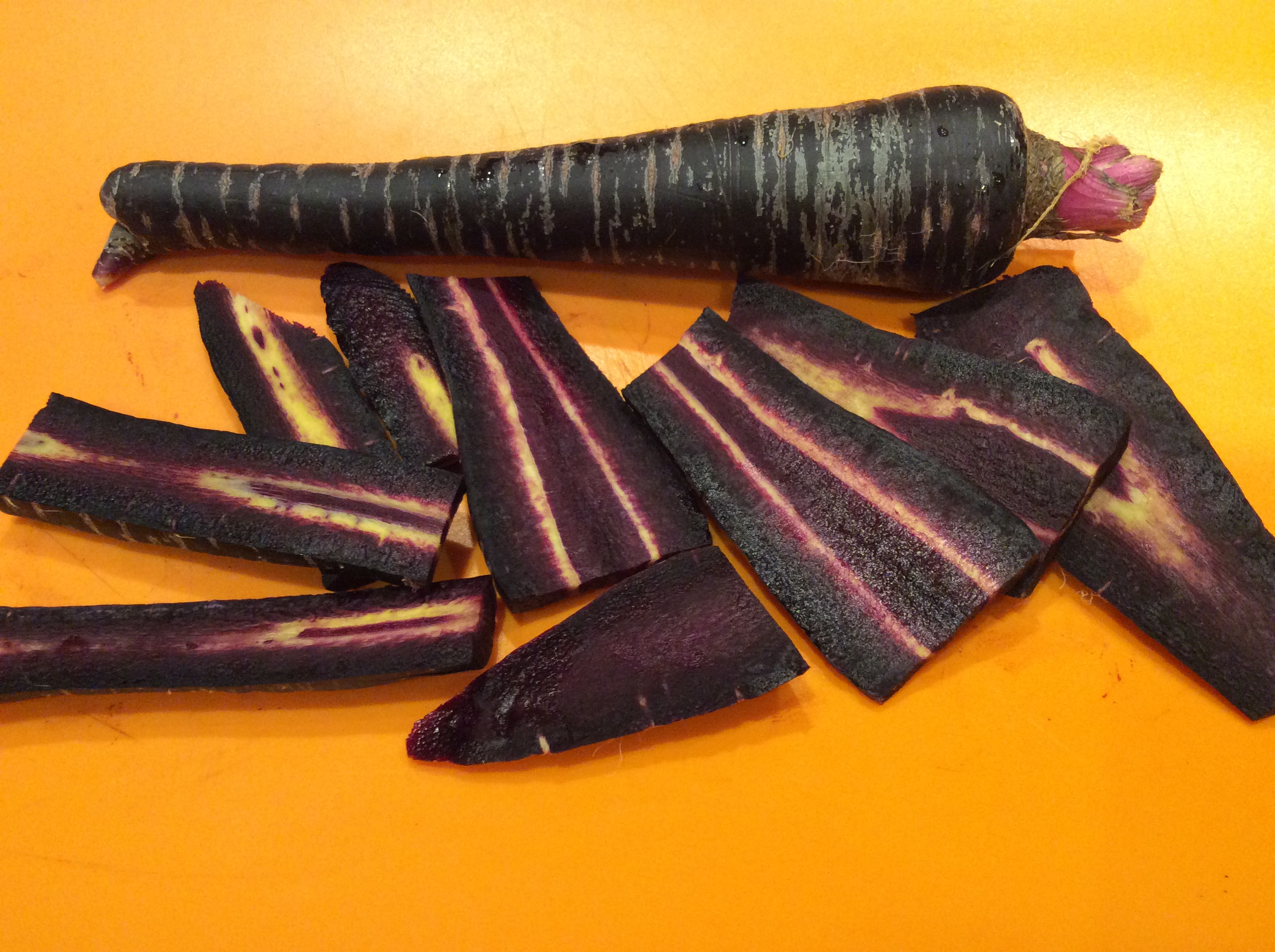
I like carrots in general, and this year I’m especially enamoured of the carrot variety named Deep Purple. As you see above, it is not a wimpy purple-blushed orange carrot. It is a startling deep indigo-violet right to the core. It is packed with anthocyanins, which can only do us good, and the flavor is a bit less sweet than many modern hybrids, which suits my preferences. I like carrots, not candy bars.

If you are accustomed to boiling carrots you will need to rethink your strategy, because the rich anthocyanin content in this one makes it bleed on the plate like boiled beets. This is not attractive, and I am no fan of boiled vegetables anyway, so a cooking method that keeps its juices inside where they belong makes sense.
image

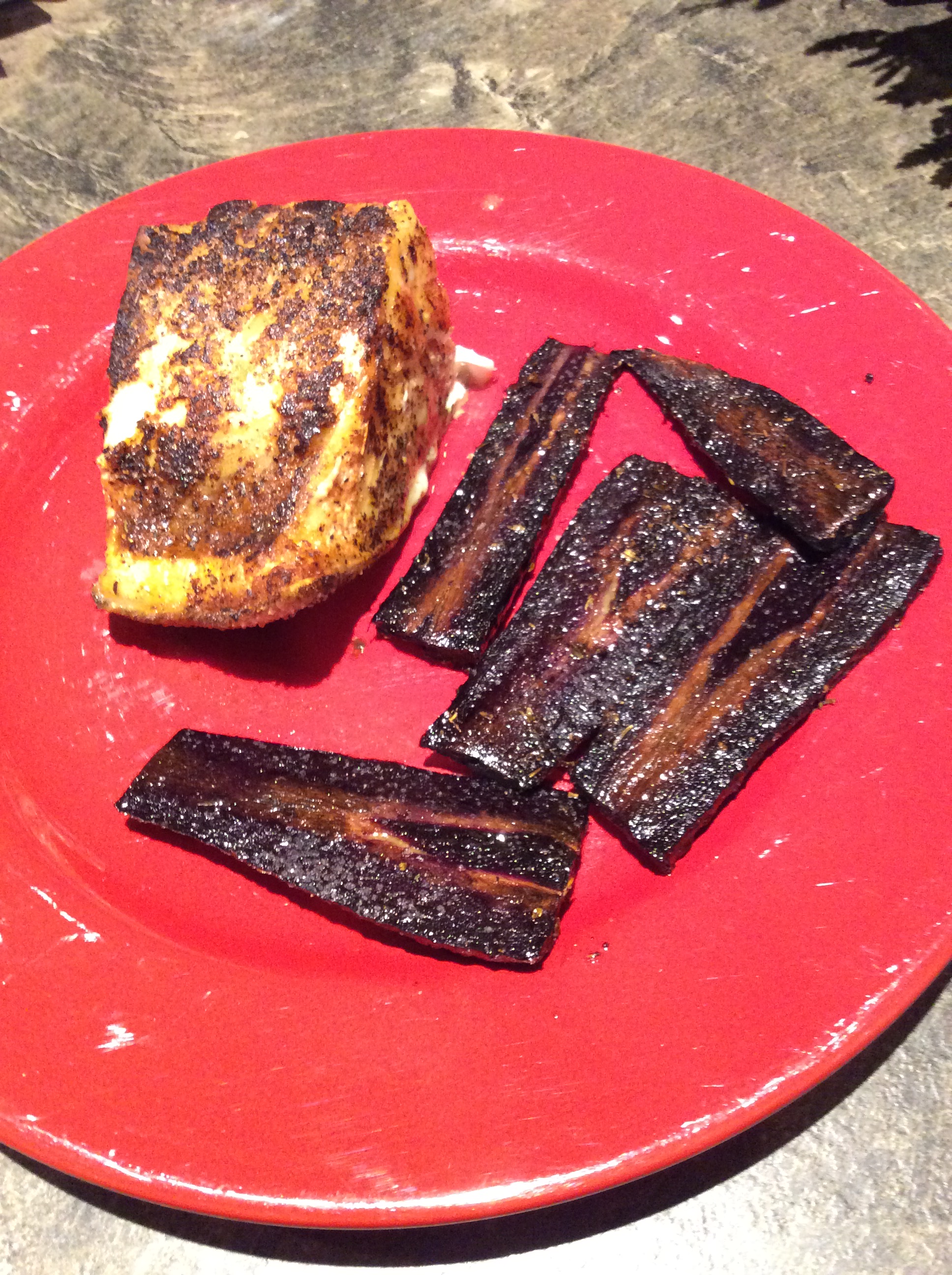
I am cooking a lot of carrot steaks lately and this is a great method for quick vegetable accompaniments that requires no forethought. The prep is quick. Catch your carrots, scrub them thoroughly, cut off the tops and bottoms, and cut the body of the carrot lengthwise into “steaks” of the thickness that you prefer. I like 1/4″ because I like them to cook quickly and get a little cooked clear to the center. I cook all the odd-shaped side slices because they are all delicious; the tapering parts get a little gooey and caramelized, which adds depth and savor. I salt the slices lightly, rub them with good olive oil, and add any seasoning that I might want. In the case shown here they were to accompany blackened fish chunks and so I dusted them lightly with blackening spices.

After you cook your entree, or in a separate nonstick skillet, heat the pan over medium-high heat and lay in the carrot slices, not letting them touch each other. Let them cook at a brisk sizzle until the underside looks cooked and is deep brown in spots, flip, and repeat. Serve and eat.

Incidentally, when I say “nonstick skillet,” these days I mean seasoned cast iron. The newer ceramic-lined nonstick skillets might be safer than the older ones, but their nonstick qualities rapidly break down if used over high heat and they are not considered safe for use under these circumstances. I also dislike the mushy not-really-a-crust that is produced over lower heat, and only fairly high heat will produce a true sear. So cast iron it is. Keeping a skillet seasoned takes a little extra work but not much. The Maillard browning reaction is the cook’s friend for deepening flavor and it happens happily in hot cast iron.  The meaty tang that browning produces makes carrot steaks an ideal vegetable entree.
DSCN0490

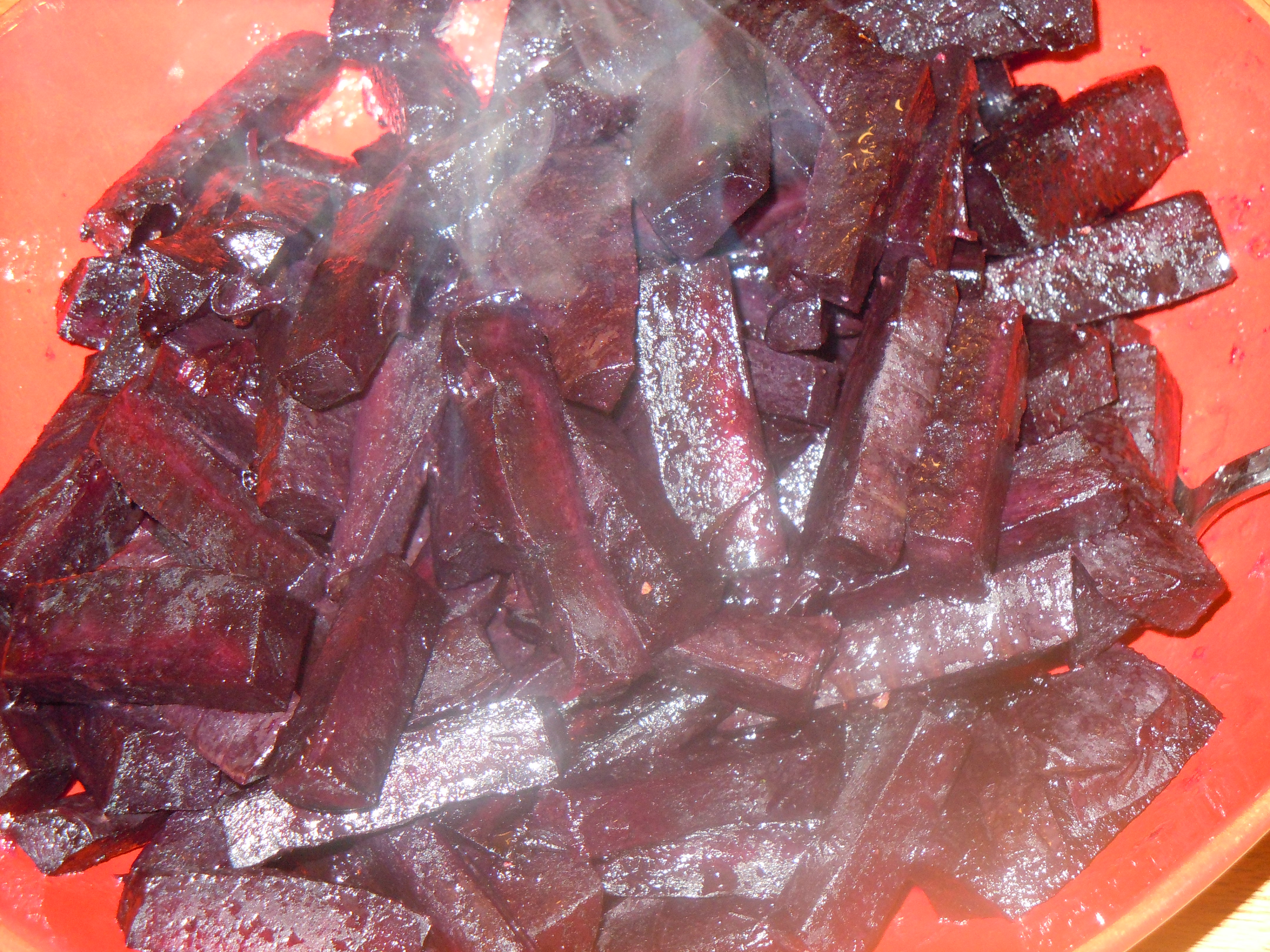
The same general method can be applied to purple carrot quarters as shown in the steaming plateful above. In this case I cooked them over lower heat for a longer time with no seasonings but salt and olive oil, and added thyme butter just before serving.

august 09 007

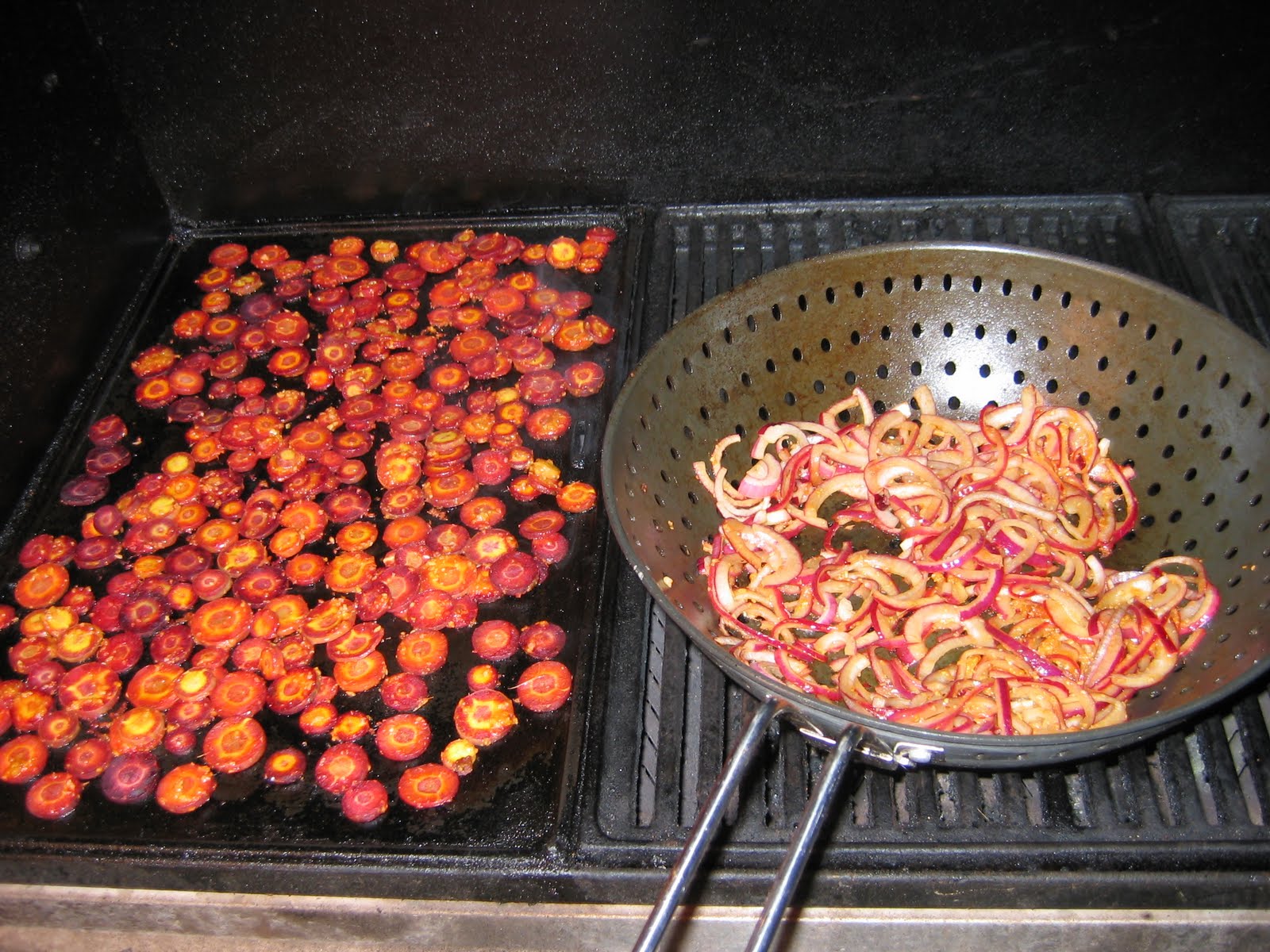
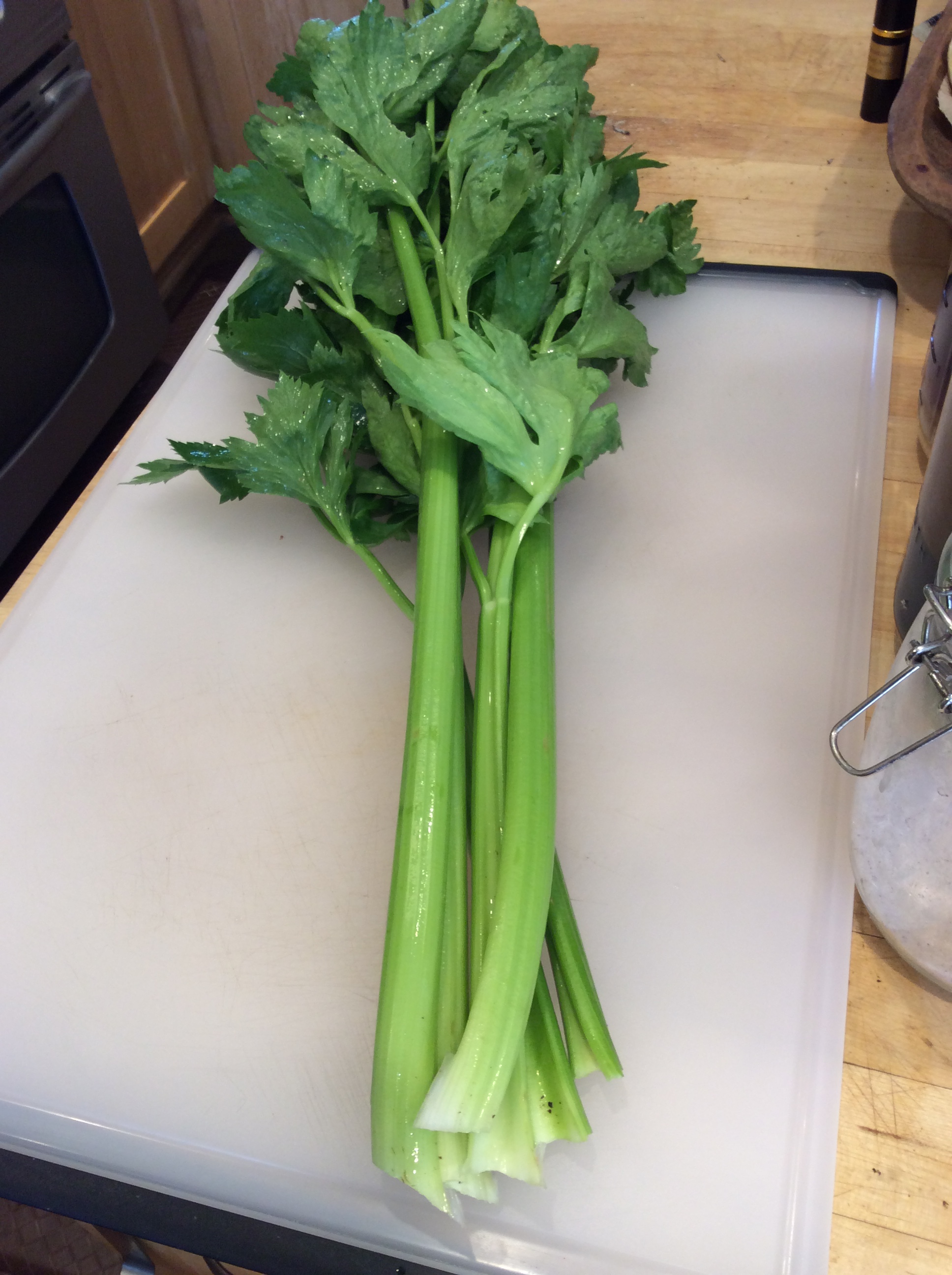
Grilling is another great way to cook purple carrots. The ones shown above are a purple-blushed variety that I grew before I discovered Deep Purple, seasoned with garlic and ginger midway through grilling so that the garlic doesn’t burn and topped with chopped turmeric leaves to accompany a dish of southeast Asian grilled shrimp.
august 09 005

My 200th post: Celery, Nose to Tail

image
My WordPress dashboard brought to my attention that I have been yapping endlessly about home food production for 199 posts. Naturally, I decided to make my 200th post about a green vegetable, the very thing that I am forever droning on about.
I never tried growing celery because I never ate that much of it. I crunched an occasional stalk, and as a homegrown Louisiana cook I cooked it in the mirepoix that begins so many Cajun dishes, but a bunch a year pretty much met my needs. Then last spring I noticed that a supplier had celery plants at the same time that I noticed I had a bed about to be empty. So I ordered a dozen plants as a lark.
As it turns out, celery is highly versatile in the kitchen as well as easy to grow. It needs your best soil and some elbow room, and here in the desert it has to be watered regularly. Given those conditions it will grow into a wonderful mound of greens.
For general snacking, stalks can be harvested as soon as they’re big enough. Break or cut near the base, but don’t damage the plant. The stalks are a little less tender than grocery store celery, and also a lot less watery and have a full delicious flavor of their own. I snacked away about four of my twelve plants and had eight big plants left by fall. After several frosts when the rest of the garden was over, the celery was green and robust and I finally got around to harvesting it. I never blanched the plants. Blanching produces lighter, yellower, and more tender stalks, but it is also a fair amount of trouble and I am as lazy a gardener as there is.
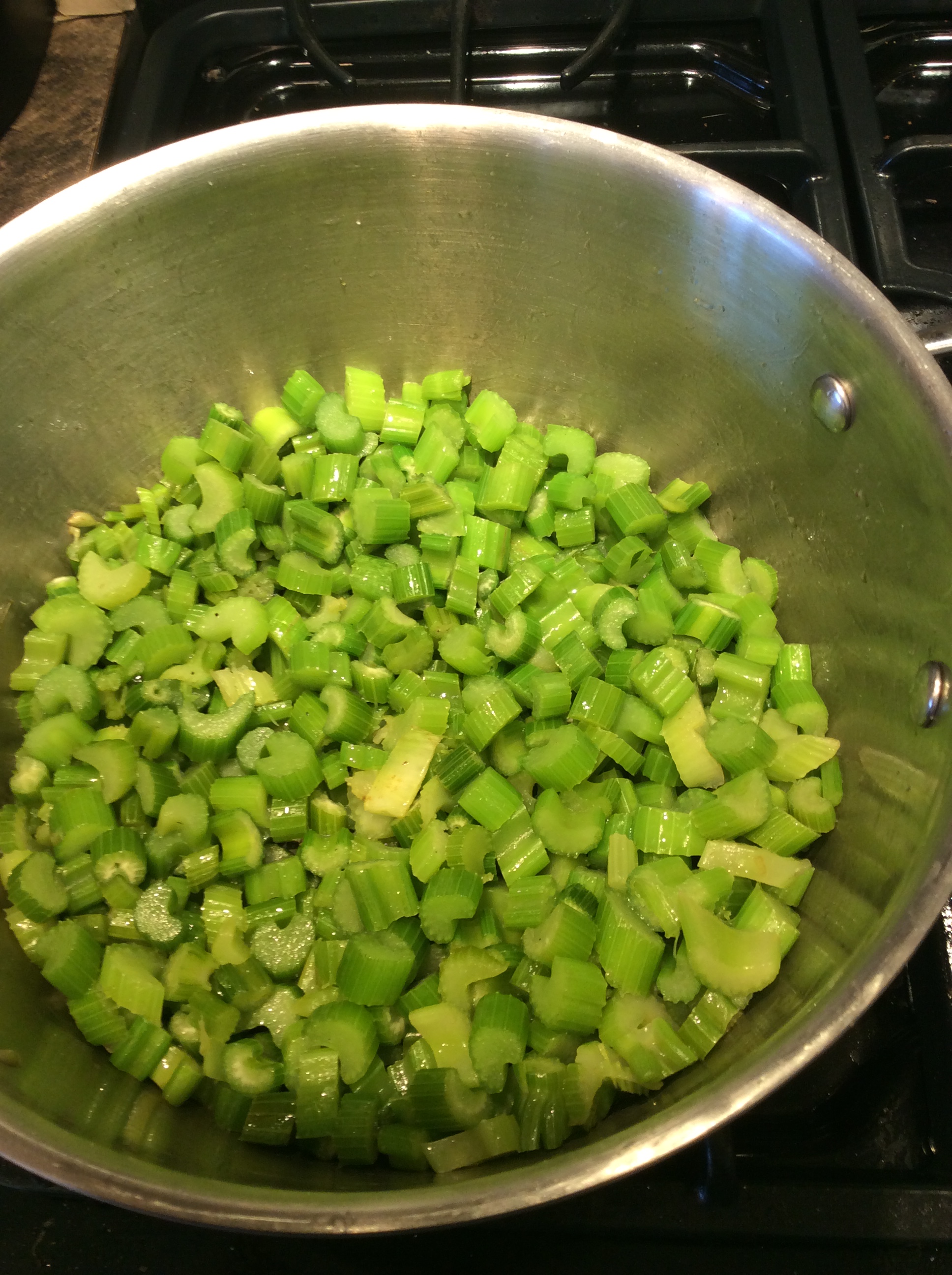
I cleaned the stalks thoroughly and cut them in 1/2″ cross sections and sautéed them in batches in very good olive oil. I thoroughly enjoyed eating them as a green vegetable, with salt and bits of fried guanciale on top. I froze a lot in vacuum-sealed bags to eat this way and to use in mirepoix and soup all winter.
image
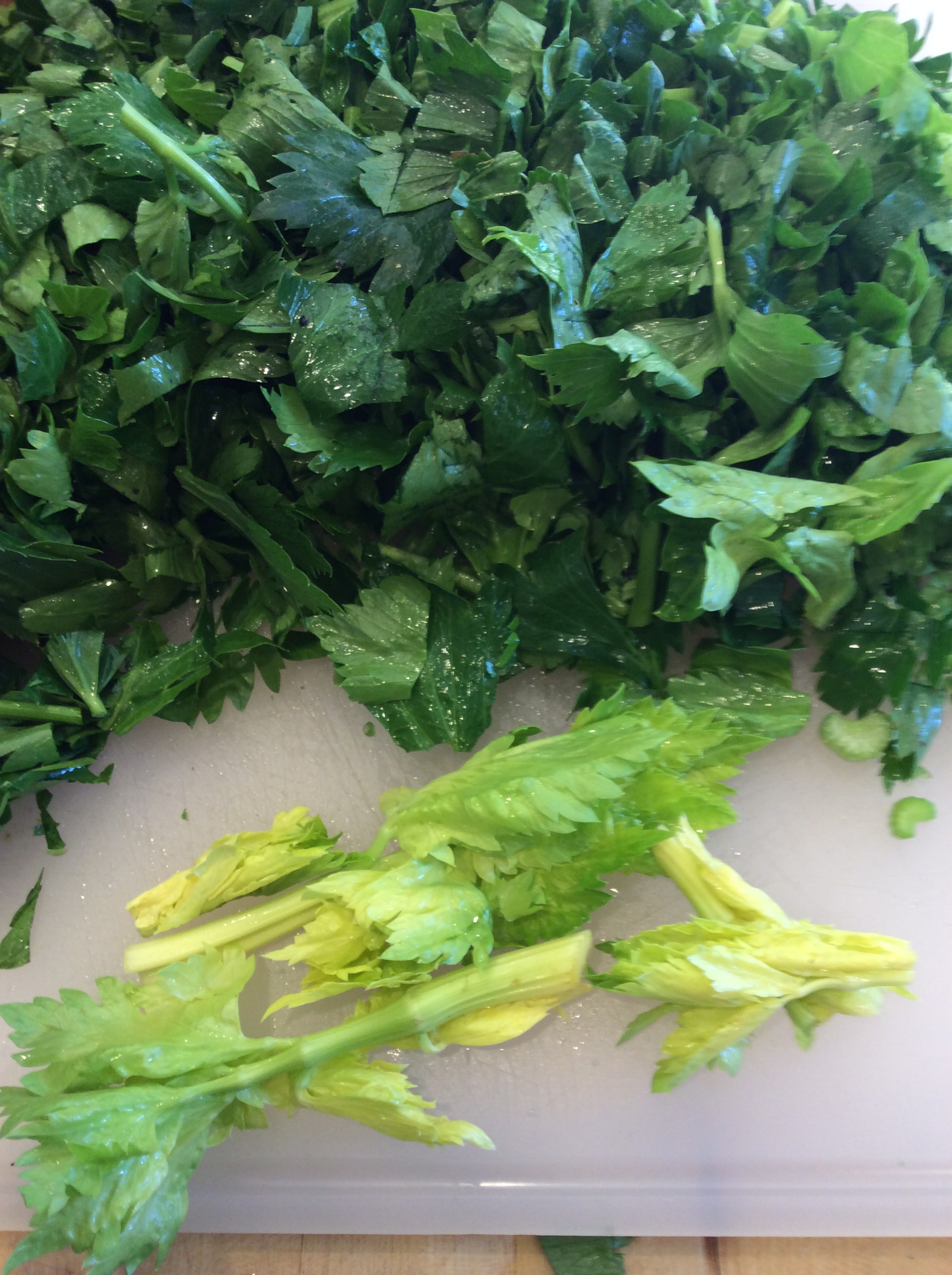
I was left with a counter full of the upper halves of the plants, all thin stalks and dark green leaves. I sorted out the pale self-blanched leaves in the middle, ate some dipped in olive oil as a cook’s treat, and refrigerated the rest for use in salads.
image
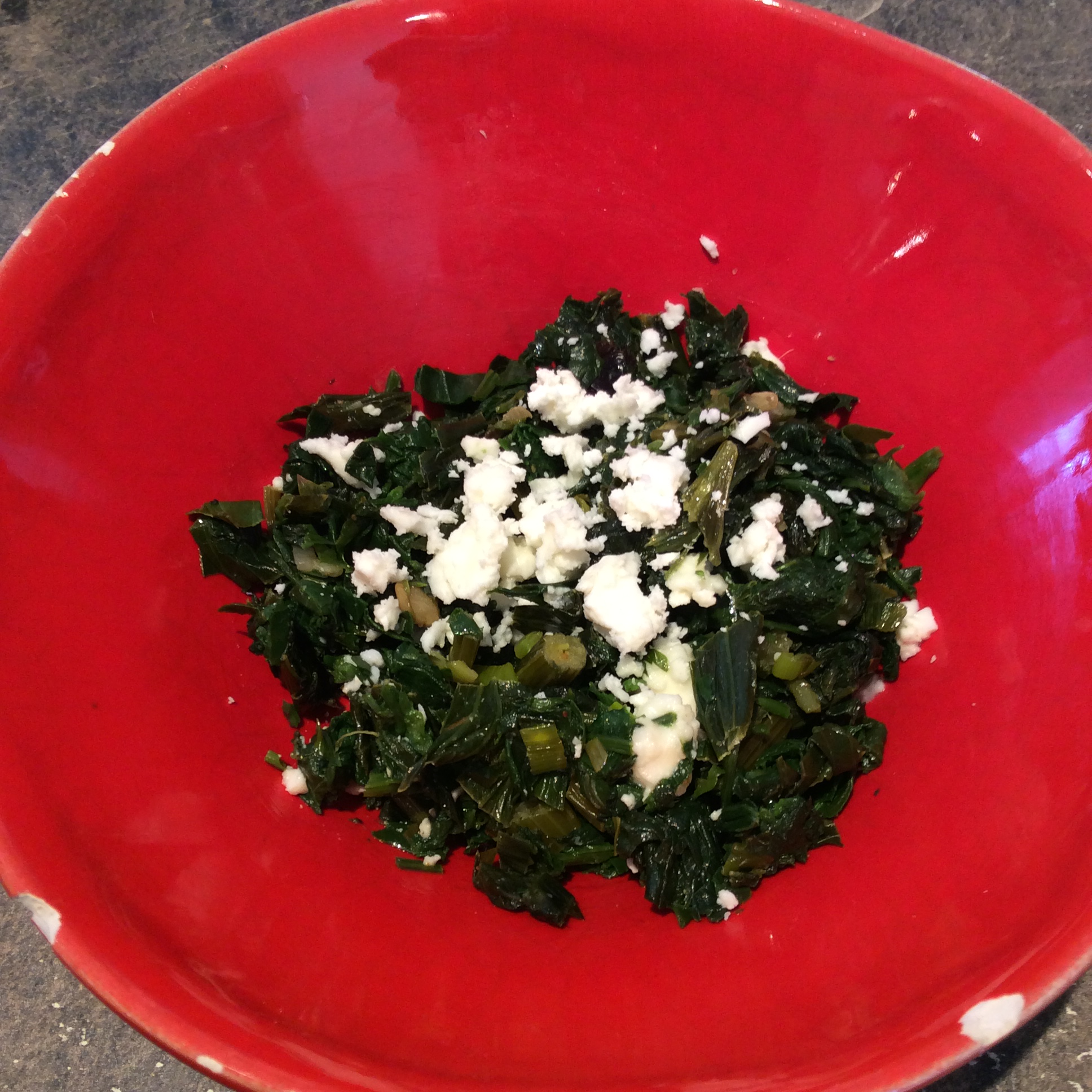
I was left with heaps of dark leaves like the ones toward the top of the picture above. I am not one to waste leafy greens, so I cut them in the same half inch cross sections, leaves and all, and sautéed them in olive oil until cooked. I put a bit of the cooked tops in a skillet with more olive oil and added a chopped clove of garlic, some salt, several chopped black oil-cured olives, and a squeeze of lemon to make a Horta of pure celery leaves. I ate it with crumbled feta and greatly enjoyed it, but have to say that this is a bitter green and probably only real greens-lovers will enjoy it. But when I made a horta with celery tops as about a quarter of the total greens and used milder greens to make up the bulk, I was surprised how much the bitter leaves added to the savory nature of the dish.
image
I sealed and froze the rest of the cooked tops and am using them with my frozen lambsquarters and amaranth to make horta that meets with general approval. I think that a bit of the pure celery-top horta would be good as a sort of herb salad next to roast duck to cut the richness, but I haven’t tried it yet.
I want to say once again, when cooking leafy greens, don’t be afraid to cook them. I often find the stronger greens tough and revolting when lightly cooked but delicious with 10 or 15 more minutes on the stove. As long as you are sautéing there is minimal nutritional loss. The thing I no longer ever do is blanch them and toss out the blanching water. If a sauté method isn’t appropriate, I blanch in a very small amount of water with frequent stirring, sort of half-steaming in effect, and drink the bit of water after it’s been drained off and cooled.

Just as a point of interest, a phytochemical found in celery called luteolin is being studied for neuroprotective effects. If true, one more reason to eat your celery, and your green veggies generally. You can find an abstract here.

2015: Things That Worked

The long nights this time  of year are perfectly suited for curling up with seed and nursery catalogs, the most exquisite pornography available  and about as realistic as most pornography.  It’s also the time of year when I look back over what worked and what didn’t during the growing season.  So here are some things that worked, and some things that didn’t. Your mileage may vary.

image
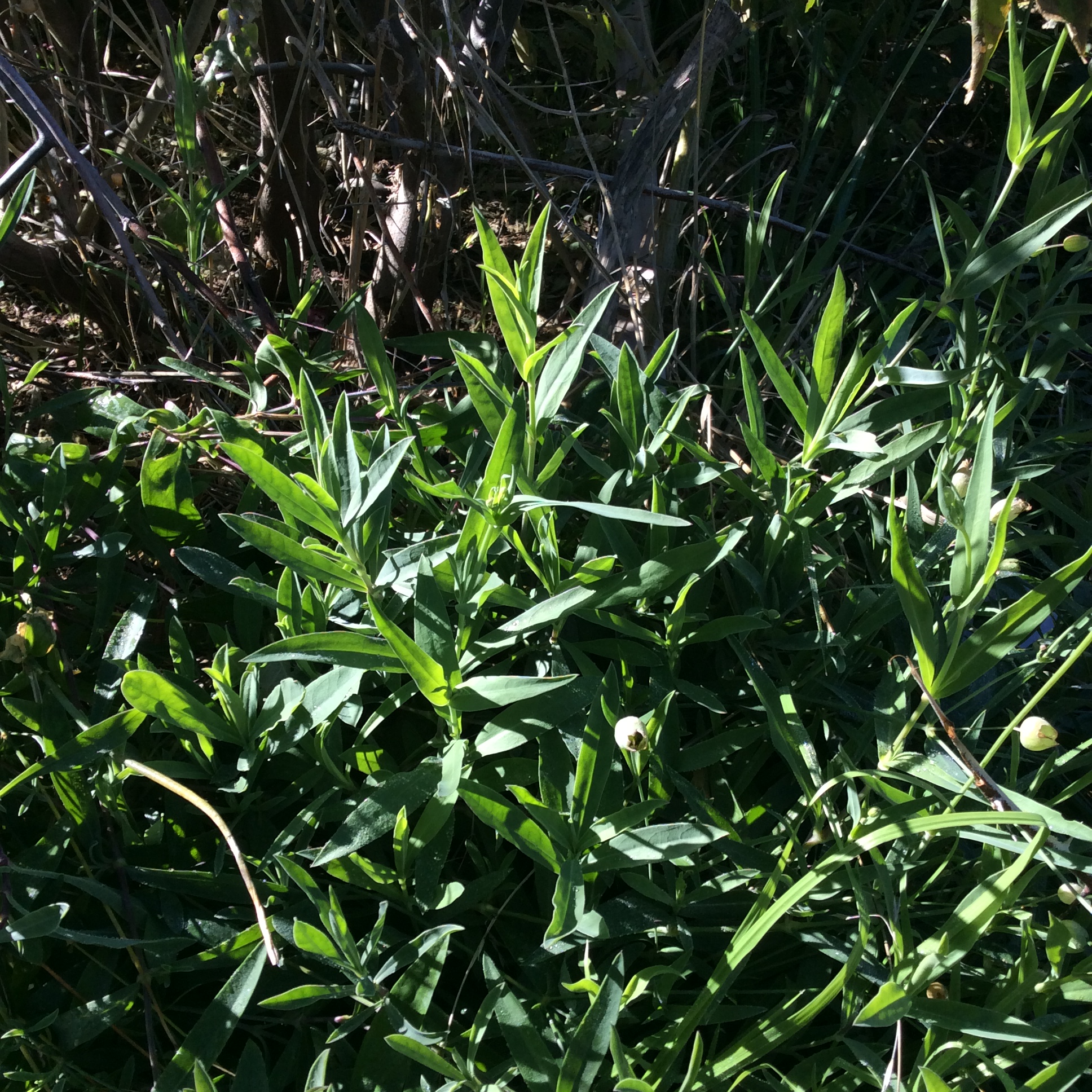
Silene, also known as bladder campion, always works. It is a common weed in many places, but not in my area, so I had to seek out seed and get it started. Treat it as a perennial and give it a spot where it can establish itself. The flavor of the young leaves is a very muted version of green peas, and the young stocks are tender. It is not exciting in flavor, nor is it a specially productive, but it is wonderfully available in latest fall and earliest spring, when little else is still thriving. It loses most of its volume when cooked, and I mostly use it in salads.
image
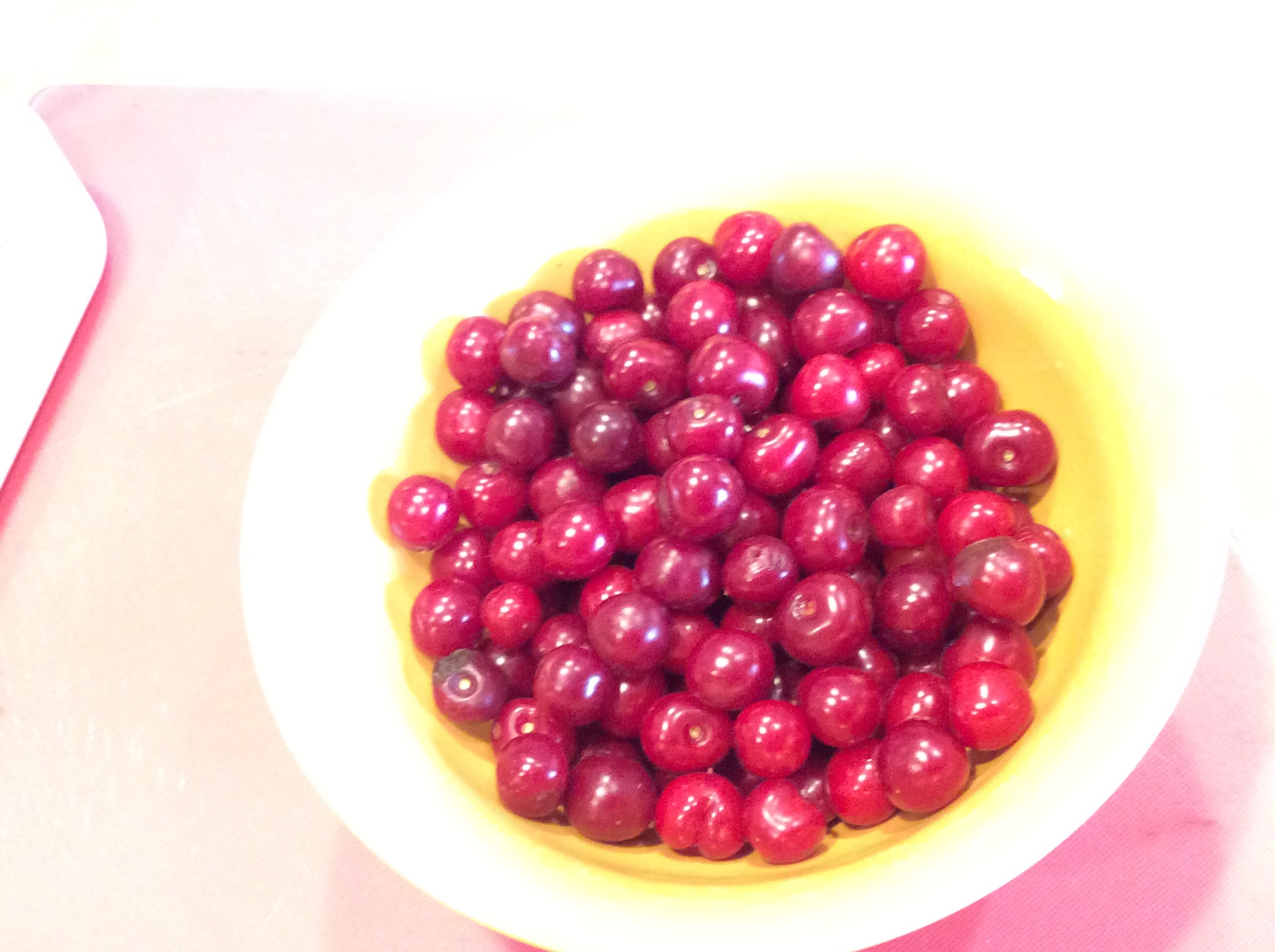
Sour cherries worked. My dwarf tree is five years old now and bearing nice crops. From that one small tree I made several cobblers and a full half-gallon of cherry liqueur. The tree also adds to quality-of-life, because in summer sunlight when hung with its hundreds of bright enameled fruits, it is beautiful enough to take your breath away.
image
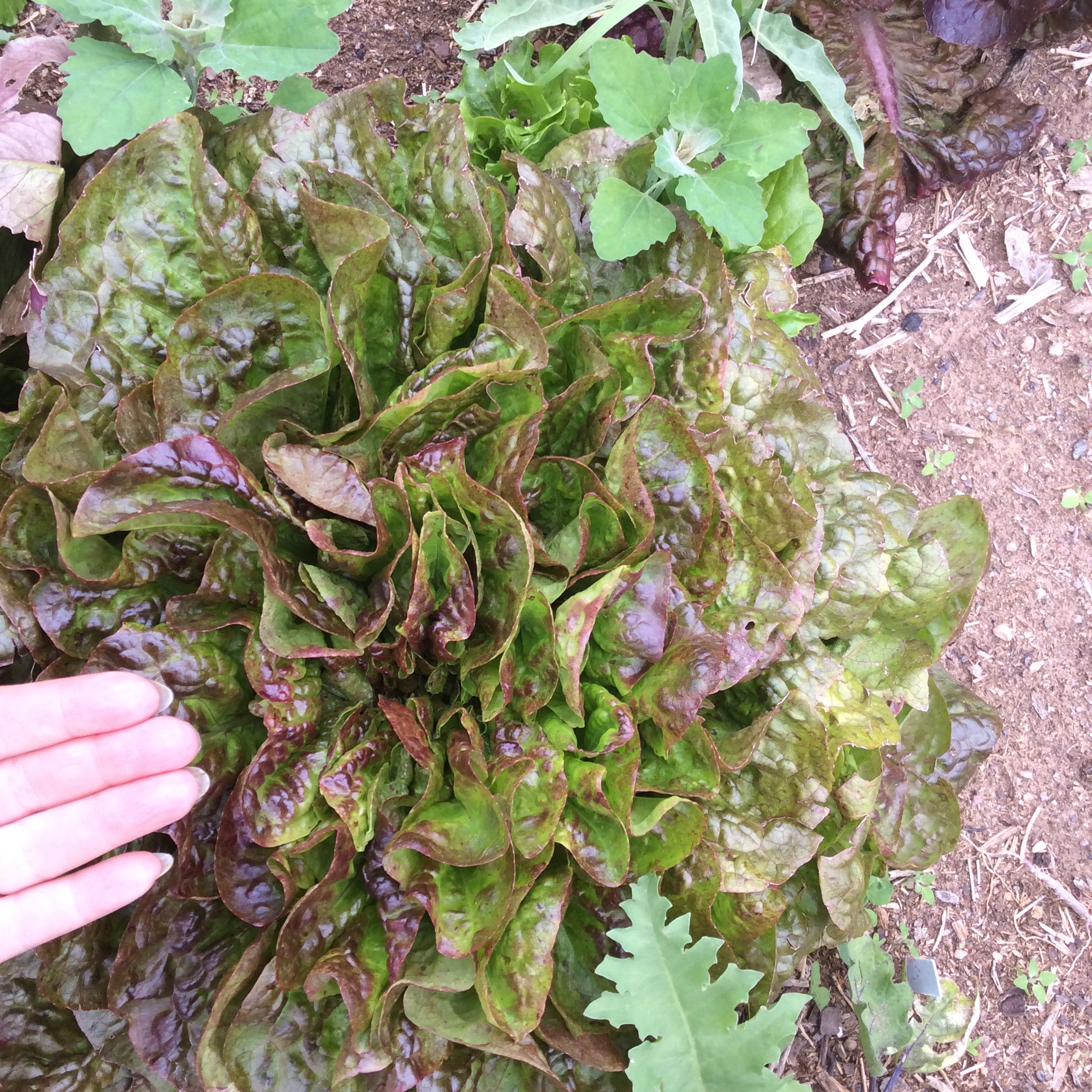
All the lettuces from Wild Garden Seeds worked. Their devotion to trialing their own crops really shows. Every lettuce variety and all the mixtures that I have tried from them have been wonderfully successful. Choose the size and color of lettuce that you want, and they will have something to suit your conditions.
image
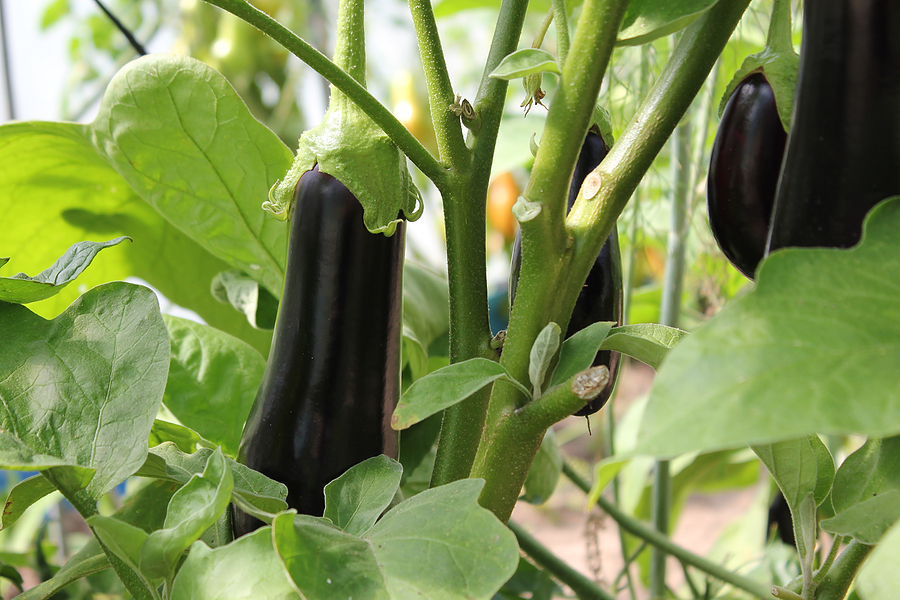
Grafted eggplants worked. The grafted tomatoes grew beautifully but so do my other tomatoes. The grafted eggplants, however, bore more fruit than ungrafted by a large margin. I consider them Roth the expense and I’ll be planting them again.
image
I put in some celery plants as a lark, and I’ll be planting more next year. They need the richest soil you have and some extra water, but they are sturdy and offer delicious crunching and cooking when the rest of the garden is going to sleep for the winter.
image
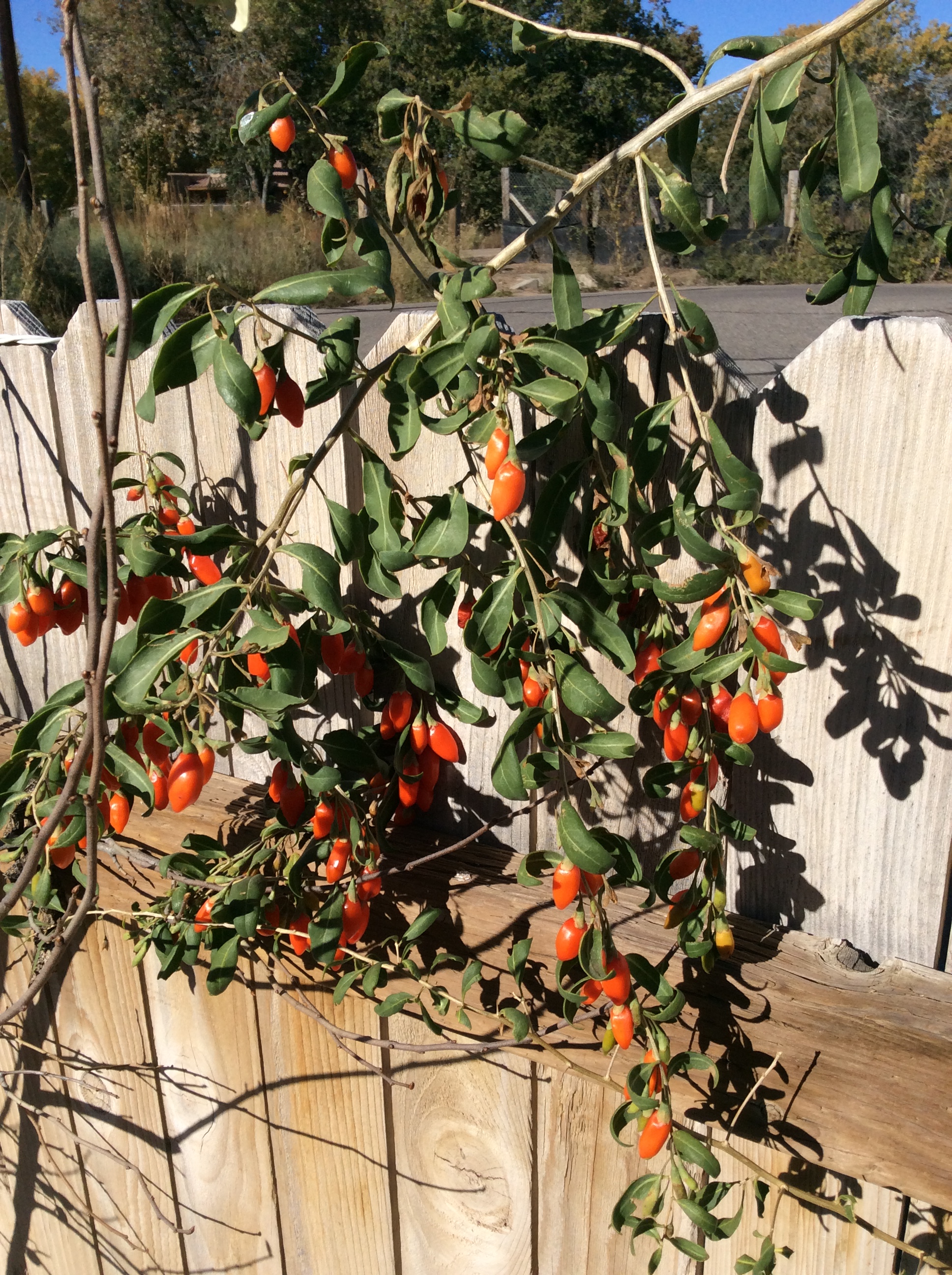
Goji berries worked. They need some extra water but not a lot, and the berries are pleasant out of hand and in salads. They offer maximum antioxidants for minimum carbohydrates.
image
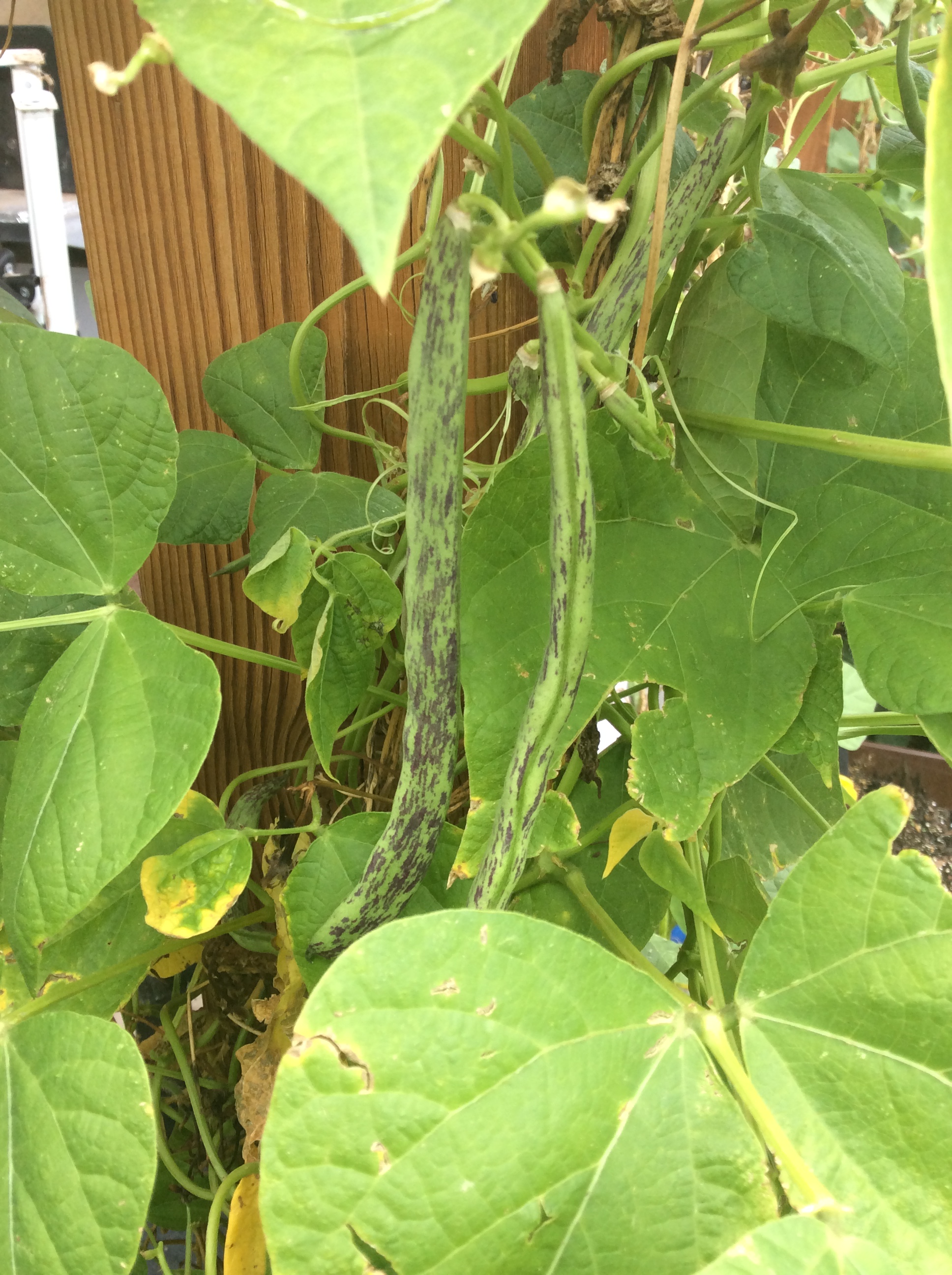
Rattlesnake beans worked. They are hard to stop. The pods have a very good flavor if picked young but do need stringing, no matter what the seed catalog says. They get quite tough as they age, so pick them over every day or two.

Every year I try some new things, and some work out and some don’t. In most cases a failure only means that you’re out a few dollars’ worth of seeds, so garden boldly.

The Greens of Fall: Nasturtiums II

image

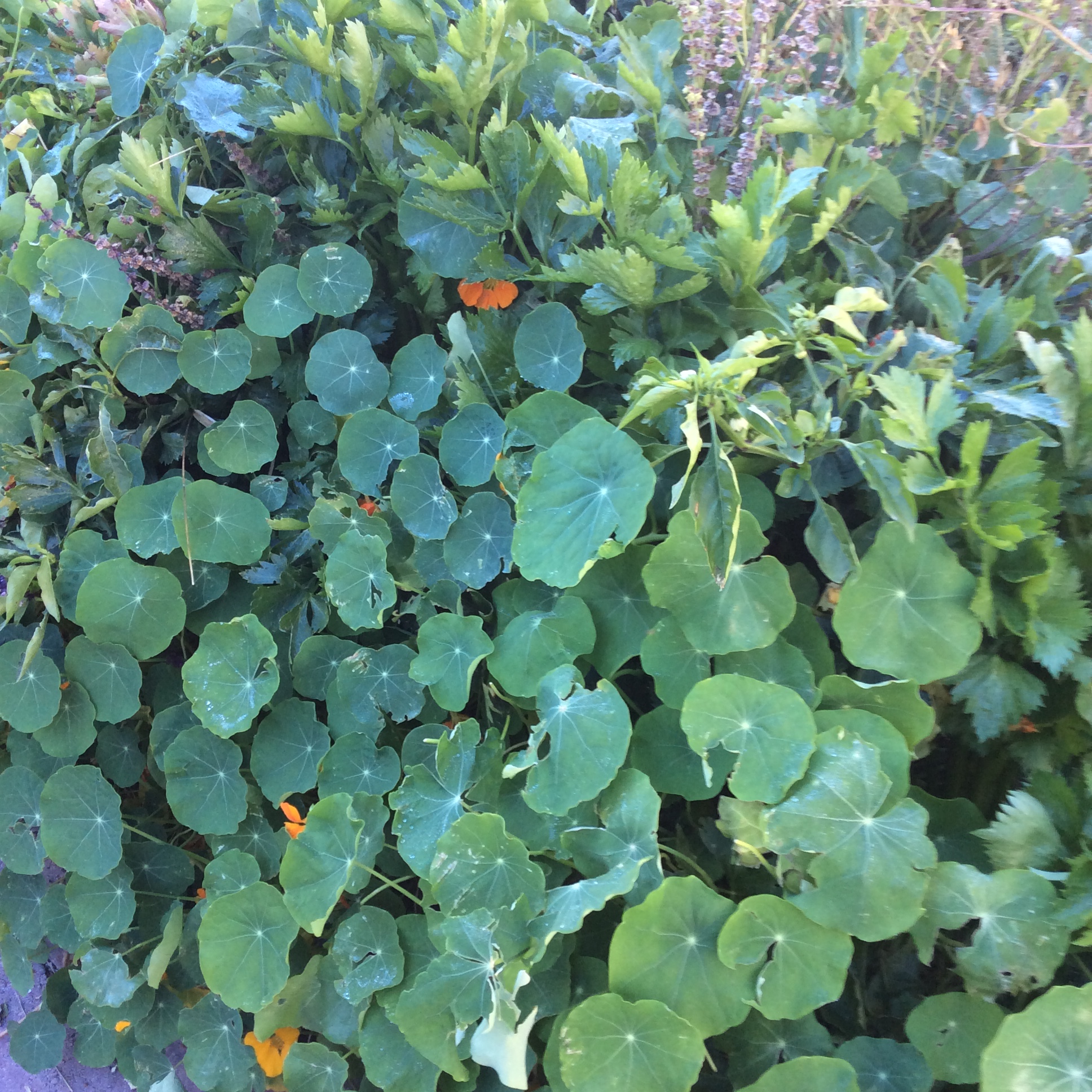
After several light frosts and a couple of hard frosts, the nasturtiums in my front yard are still holding their leaves in good condition, and still blooming a bit.  They won’t last much longer though, so this is the time to take advantage of them.  They are always good in salads or used to make hand rolls as suggested in my last post, because they combine a snappy watercress peppery flavor with a tender texture.  Cooked, they lose a lot of their sharpness but remain delicious.

image

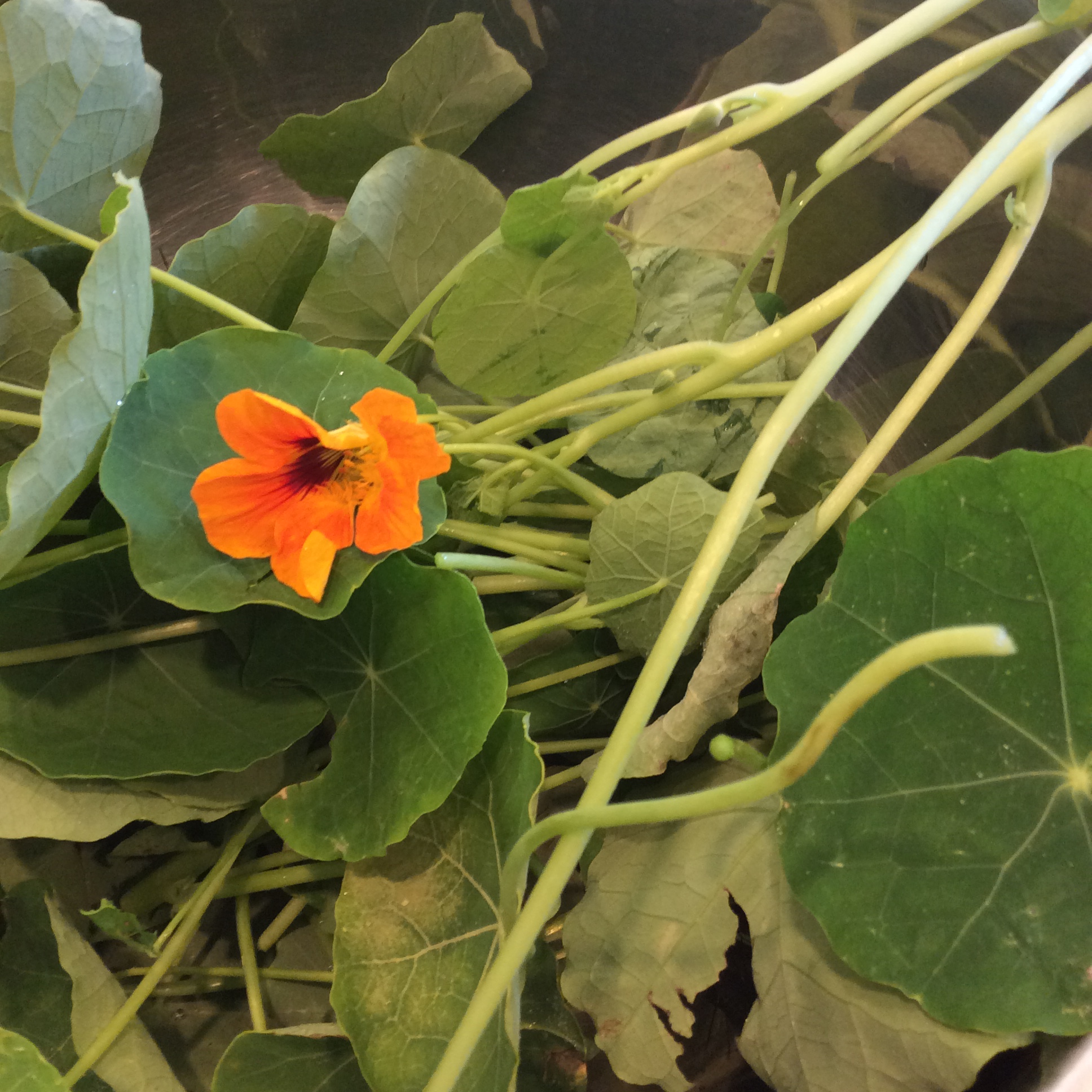
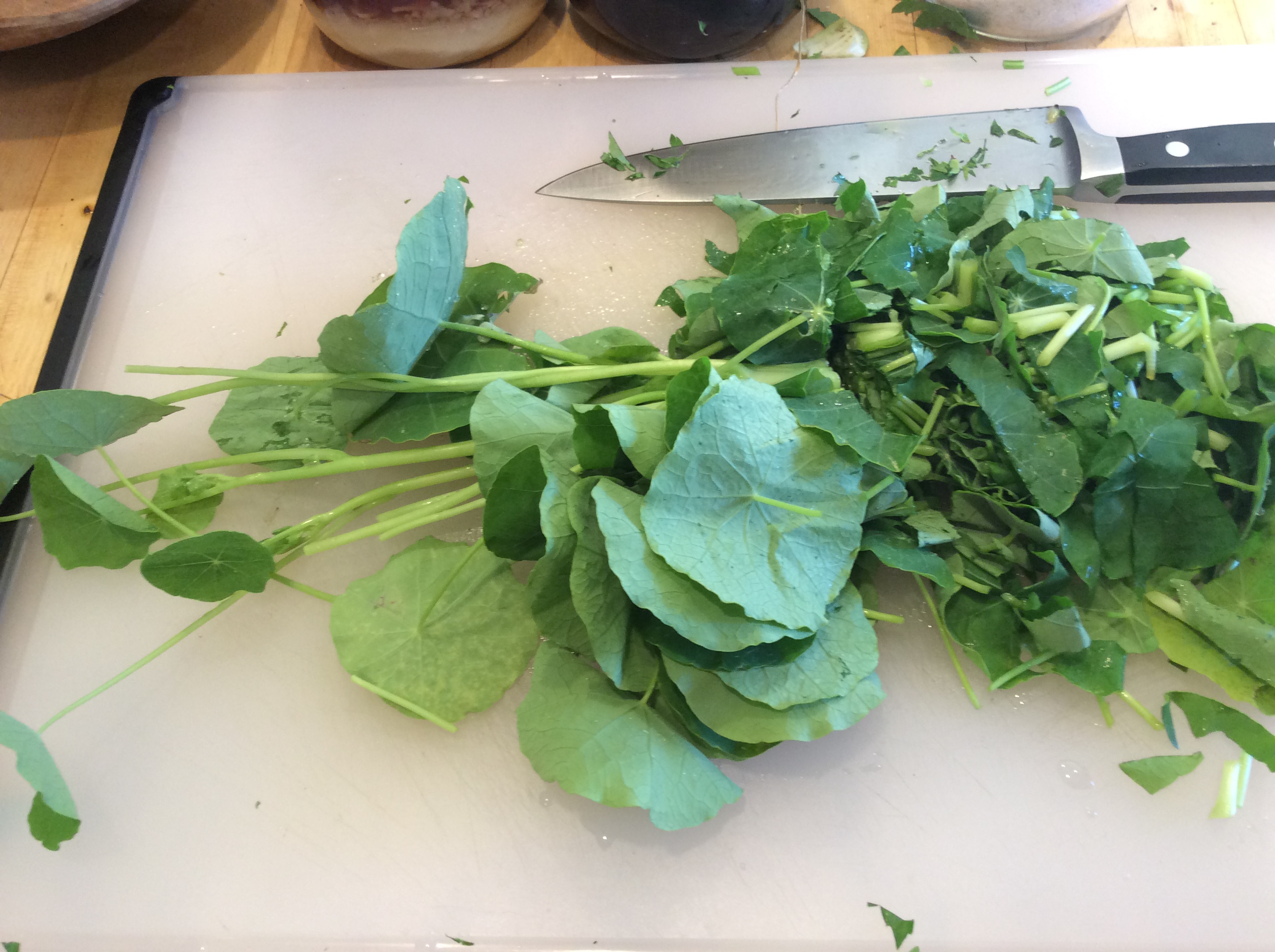
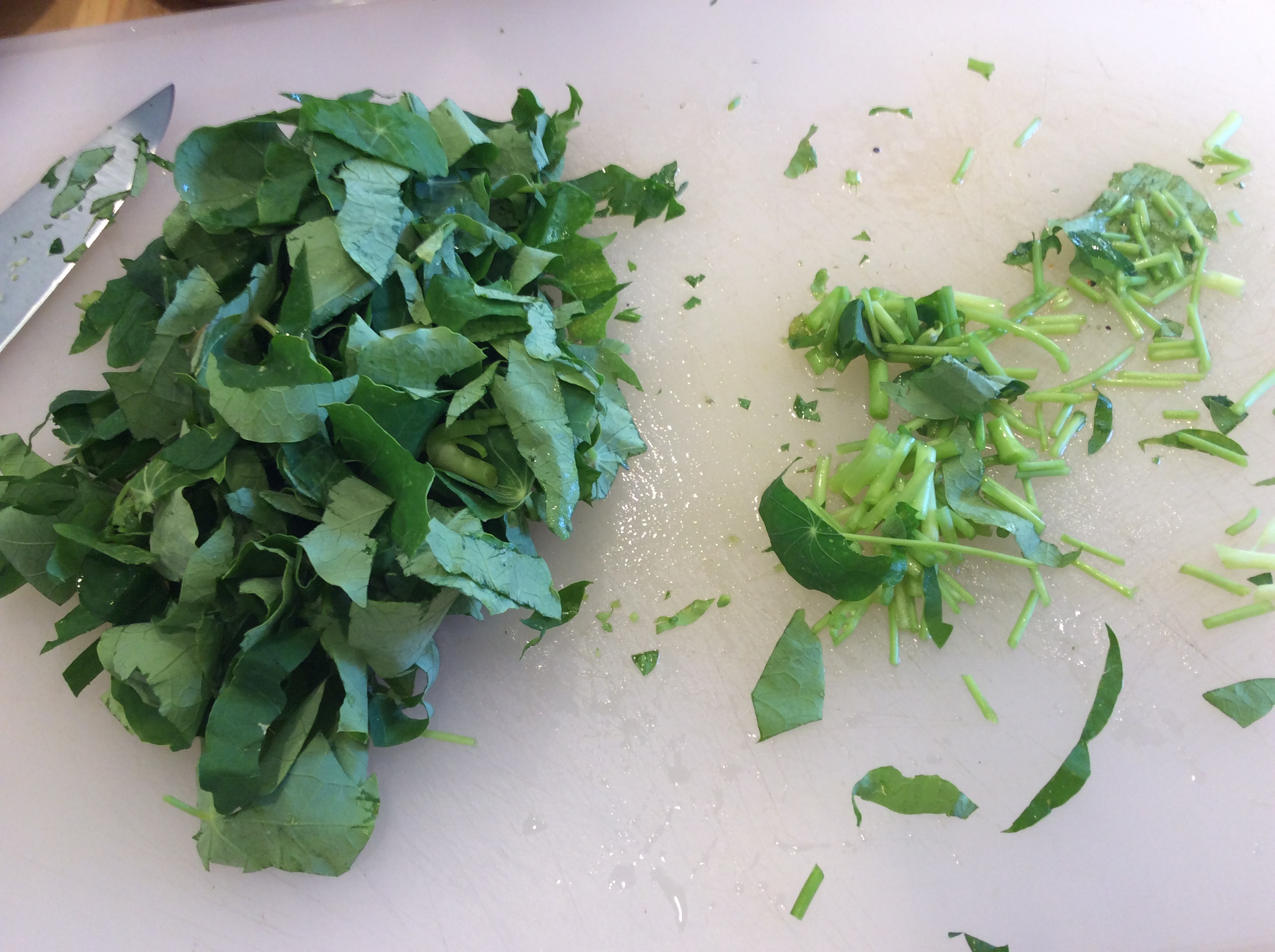
I grow the trailing nasturtiums that wind so nicely among other things in the bed, and at this time of year I grab about the last foot of stem. I snap them off wherever the stem snaps cleanly, which is usually while they are still smaller than a pencil. I take everything above that into the kitchen  for cleaning. I wash them and lay them out on the cutting board. The flowers are devoured on the spot as a cook’s treat, or can be saved for the top of a salad.  What remains is cut crosswise into half-inch segments. It’s important to keep them out about this length, or the stems can seem fibrous.

image

Now  stir the sections around a bit with your fingers, then lift off the leaves which are mostly on top and set them to one side, leaving most of the stem segments on the other. There will be a few of each item in the pile of the other, and it doesn’t matter.  This step is so you can give the stems a bit more cooking than the leaves.

image

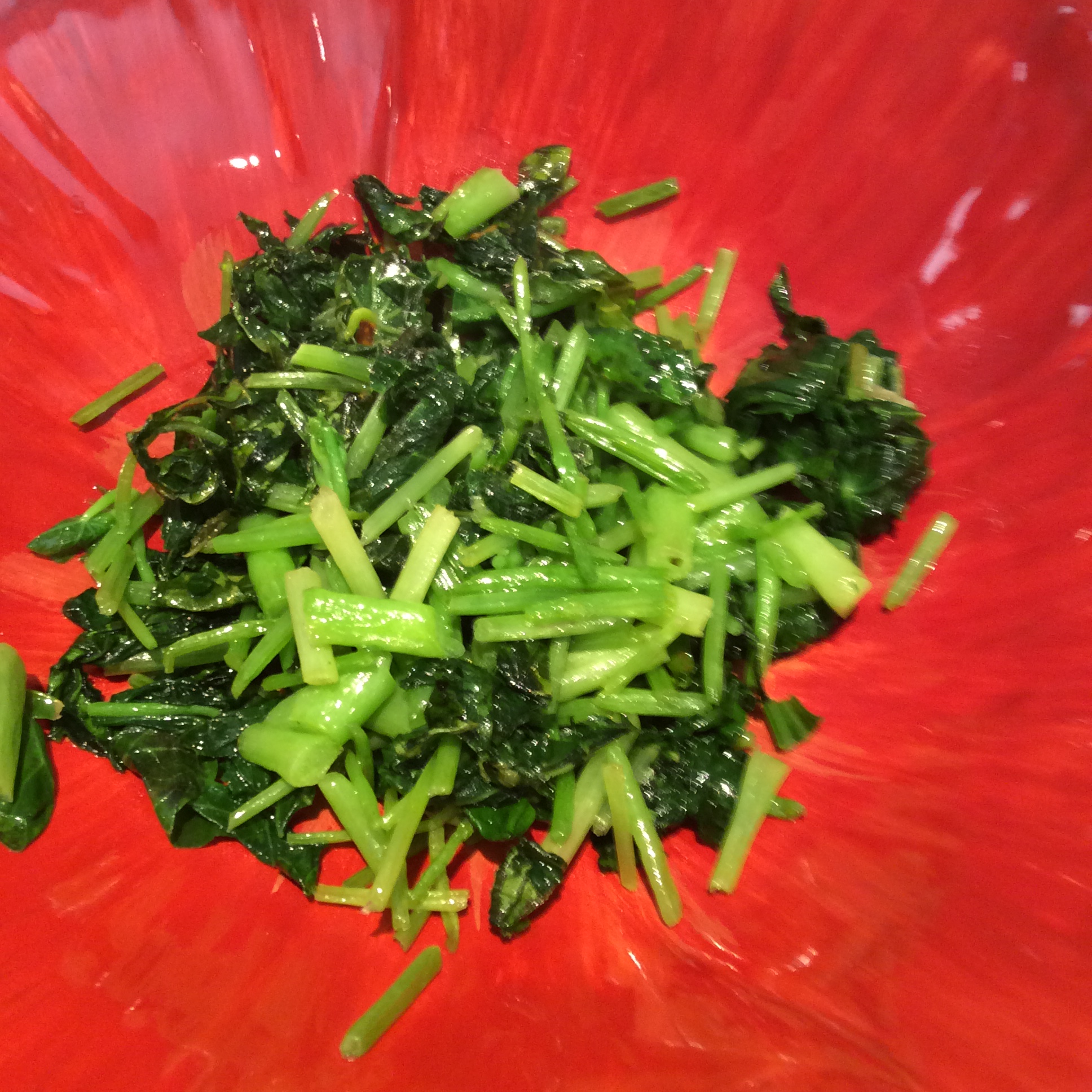
Now, cook them in any way that you would use other greens, cooking the stem sections for a couple of minutes longer than the leaves. I have two favorite ways. One is to sauté them fast in a tablespoon or so of hot flavorful olive oil, putting the stems in, sautéing for two minutes, then add in the leaves and sauté in for another minute.  Serve with salt and freshly ground pepper. Simple and good.

image

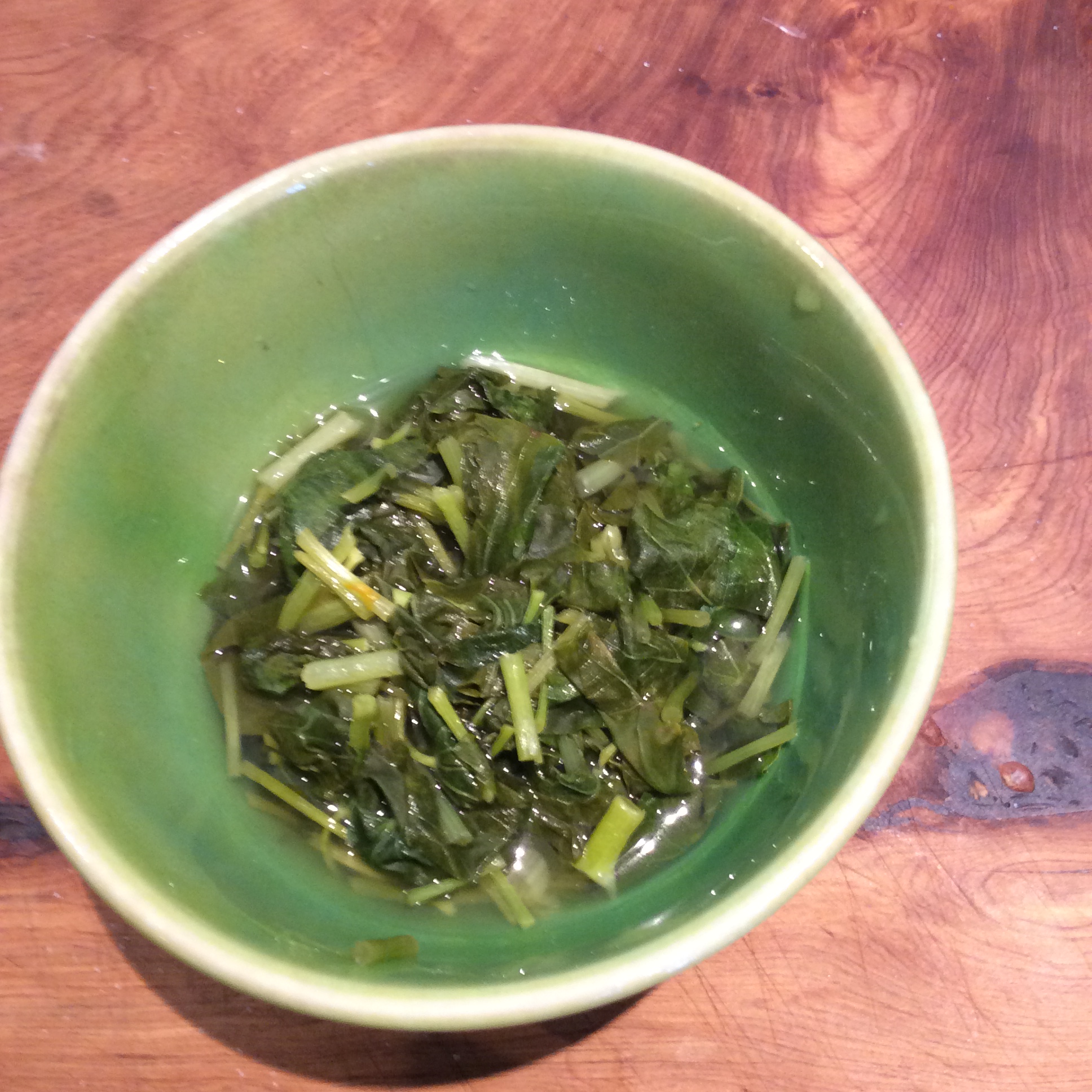
My other favorite use for them is a quick sort of sweet and sour pickle, which I like with grilled meat or dishes in the Japanese fashion.   For a heaping a handful of chopped nasturtium, eat half a cup of water in a small saucepan with 2 tablespoons of rice vinegar and 1 tablespoon of sugar or to taste, or you can use artificial sweetener if it is one that does well with cooking.  And a scant teaspoon of salt and bring to a boil. When it is boiling, put in the stems, boil for about two minutes, and the leaves, and take off the heat immediately and let it sit in the “pickling liquid” until room temperature.  serve immediately or keep in the refrigerator for a day or two.

image

For my taste the flavors in this quick “pickle” are too strong to use it as a side dish, but you could always use less vinegar and sweetening and salt, and use it as a side dish if you prefer that. When I was growing up in the south, collards were sometimes cooked this way, and I seem to remember that they were good.

Some people think highly of the nasturtium as a medicinal herb. If you wish to research this, please keep in mind that the nasturtium flower we are dealing with here is Tropaeolum majus, while  Nasturtium officinale is actually watercress.  This is why we use botanical names; in the long run, it avoids a lot of confusion.   In my view, the fact that they are green and lovely in cold weather and taste good is reason enough to eat them.