Archive for the ‘cooking’ Category

The Greens of Fall: Nasturtiums II

image

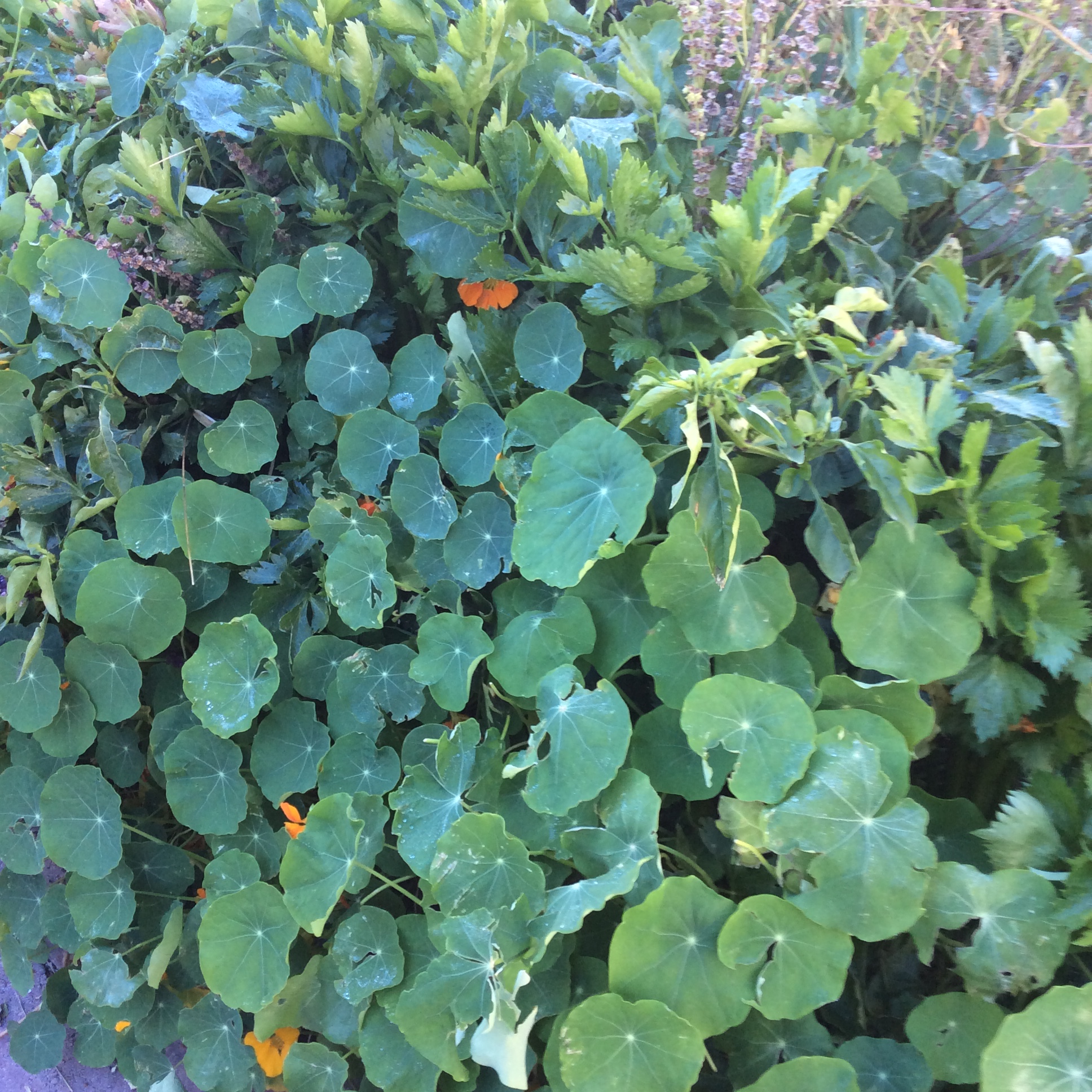
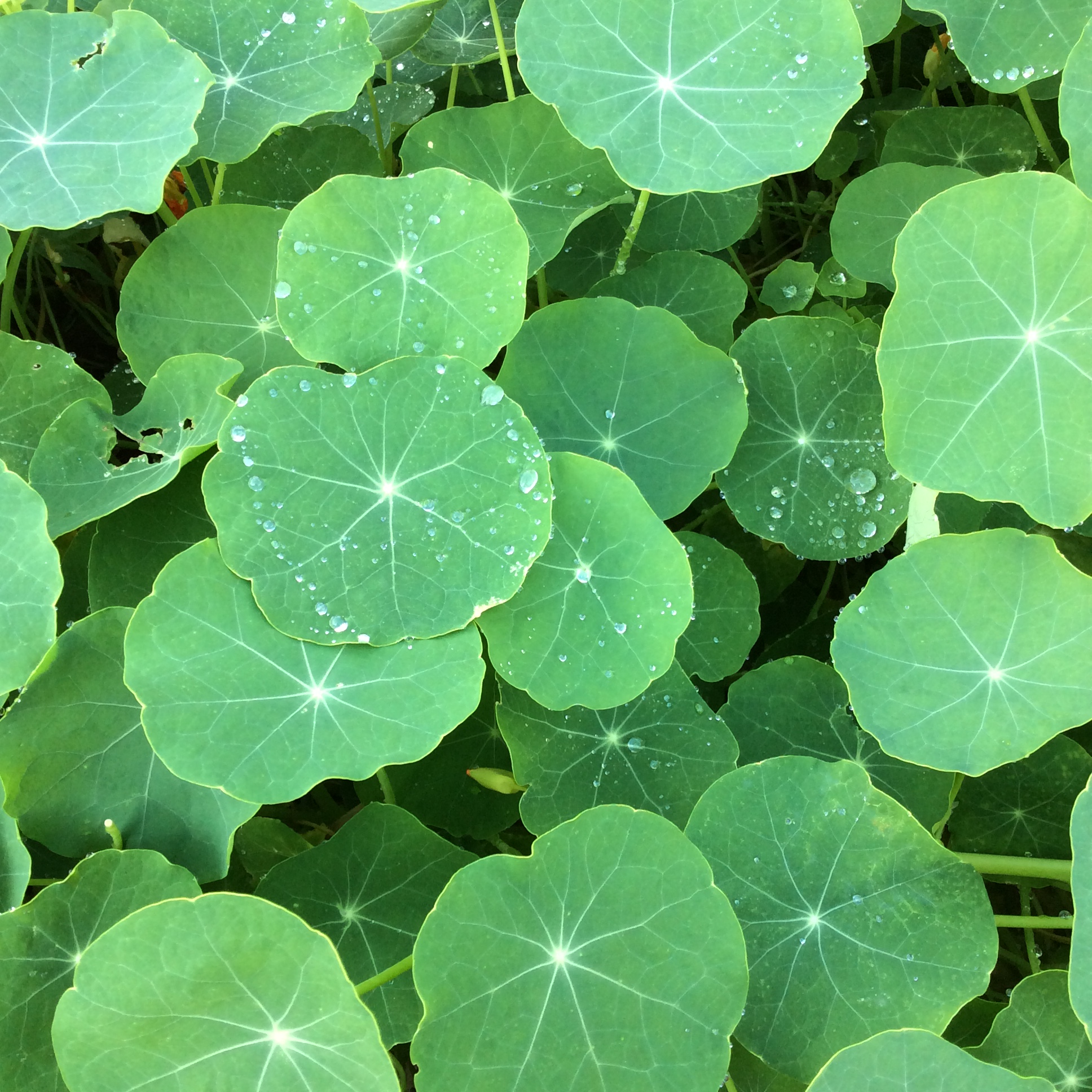
After several light frosts and a couple of hard frosts, the nasturtiums in my front yard are still holding their leaves in good condition, and still blooming a bit.  They won’t last much longer though, so this is the time to take advantage of them.  They are always good in salads or used to make hand rolls as suggested in my last post, because they combine a snappy watercress peppery flavor with a tender texture.  Cooked, they lose a lot of their sharpness but remain delicious.
image

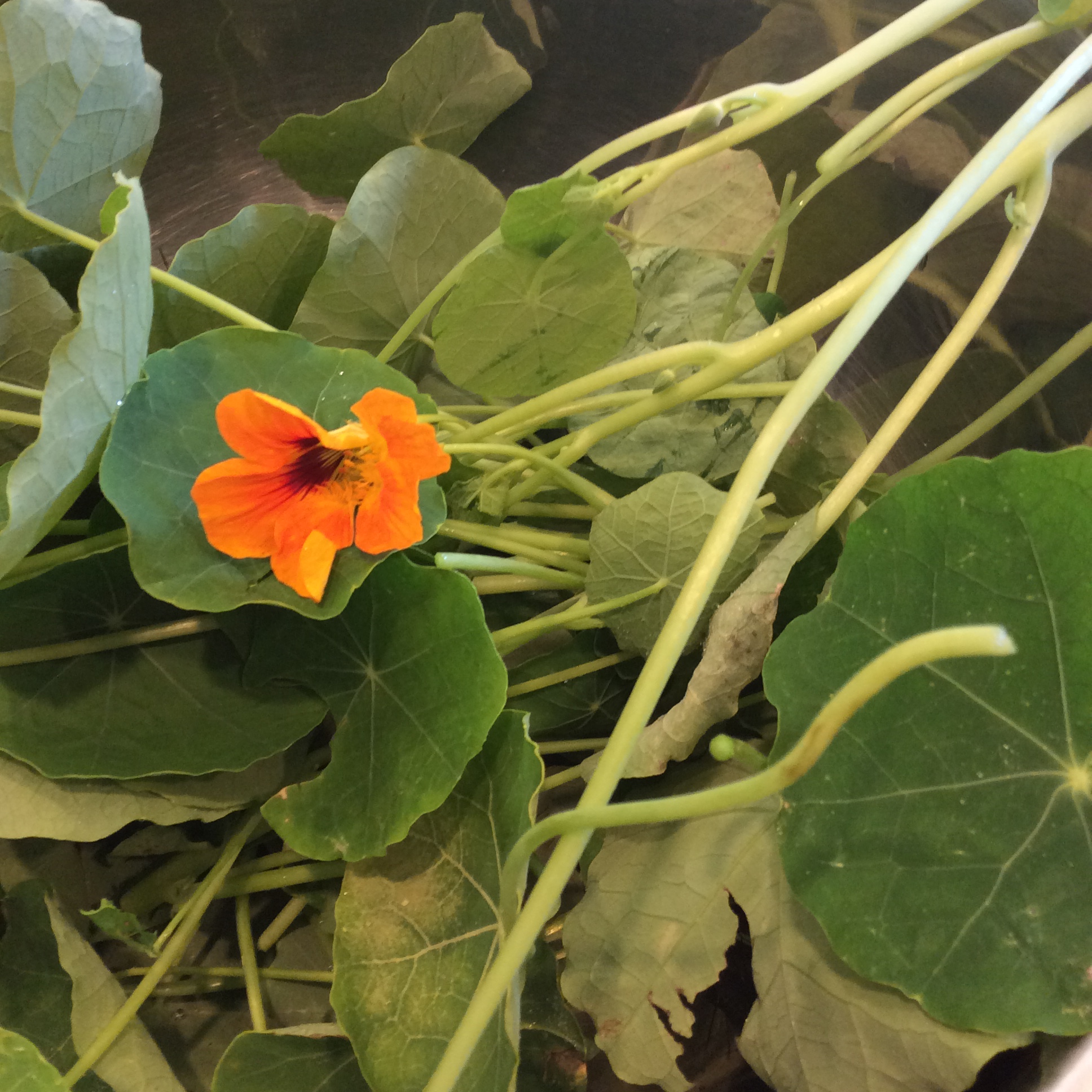
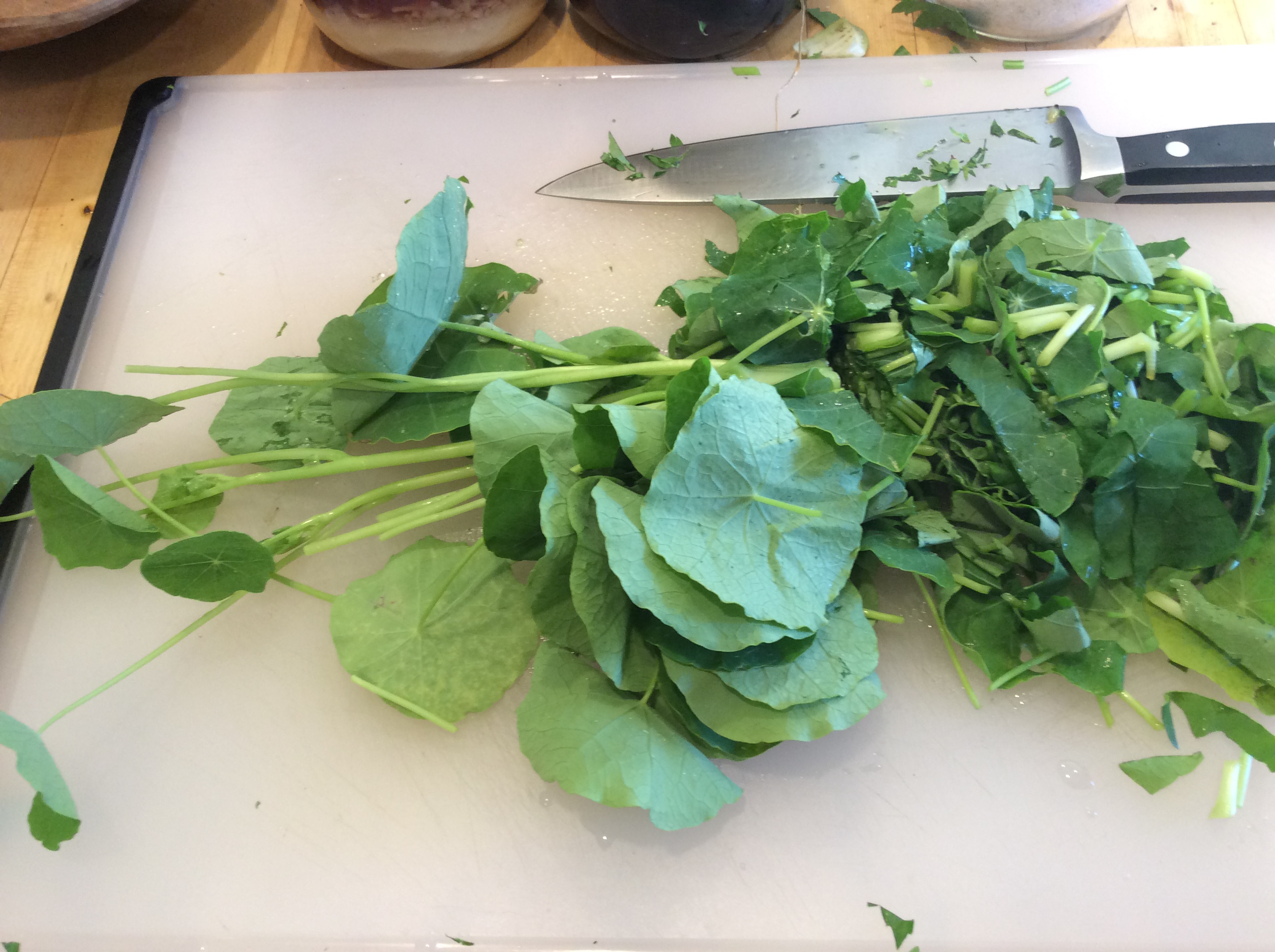
I grow the trailing nasturtiums that wind so nicely among other things in the bed, and at this time of year I grab about the last foot of stem. I snap them off wherever the stem snaps cleanly, which is usually while they are still smaller than a pencil. I take everything above that into the kitchen  for cleaning. I wash them and lay them out on the cutting board. The flowers are devoured on the spot as a cook’s treat, or can be saved for the top of a salad.  What remains is cut crosswise into half-inch segments. It’s important to keep them out about this length, or the stems can seem fibrous.
image

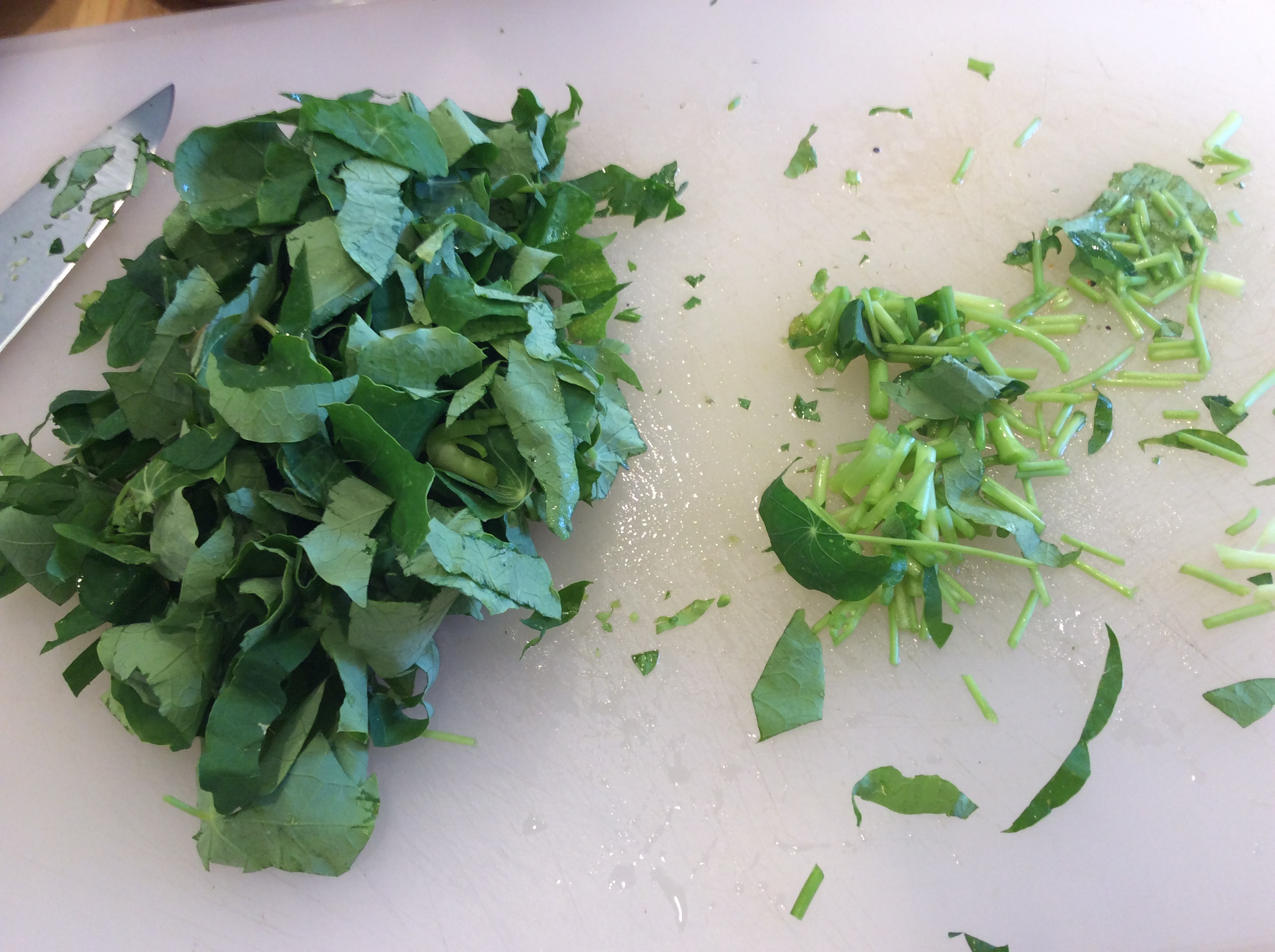
Now  stir the sections around a bit with your fingers, then lift off the leaves which are mostly on top and set them to one side, leaving most of the stem segments on the other. There will be a few of each item in the pile of the other, and it doesn’t matter.  This step is so you can give the stems a bit more cooking than the leaves.
image

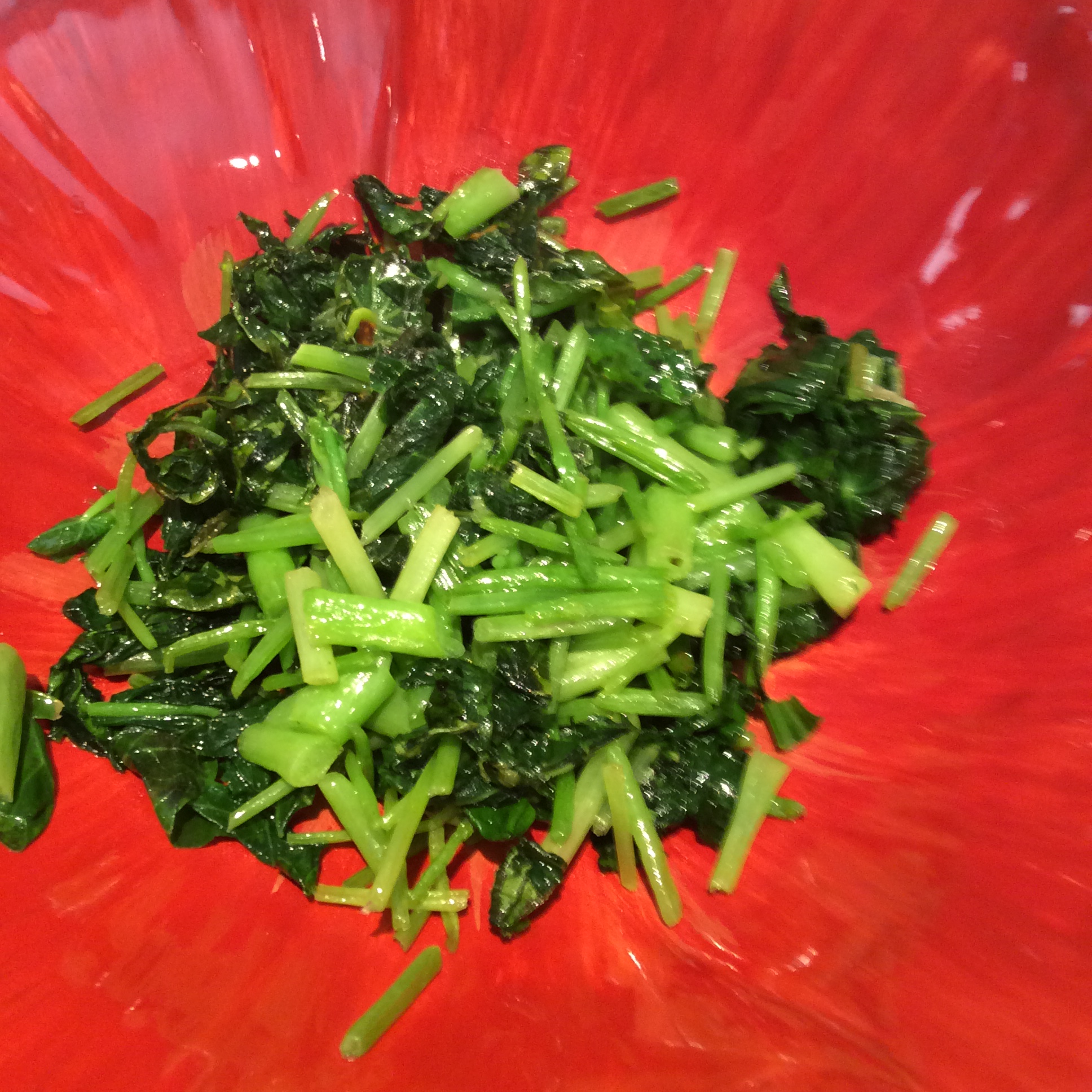
Now, cook them in any way that you would use other greens, cooking the stem sections for a couple of minutes longer than the leaves. I have two favorite ways. One is to sauté them fast in a tablespoon or so of hot flavorful olive oil, putting the stems in, sautéing for two minutes, then add in the leaves and sauté in for another minute.  Serve with salt and freshly ground pepper. Simple and good.
image

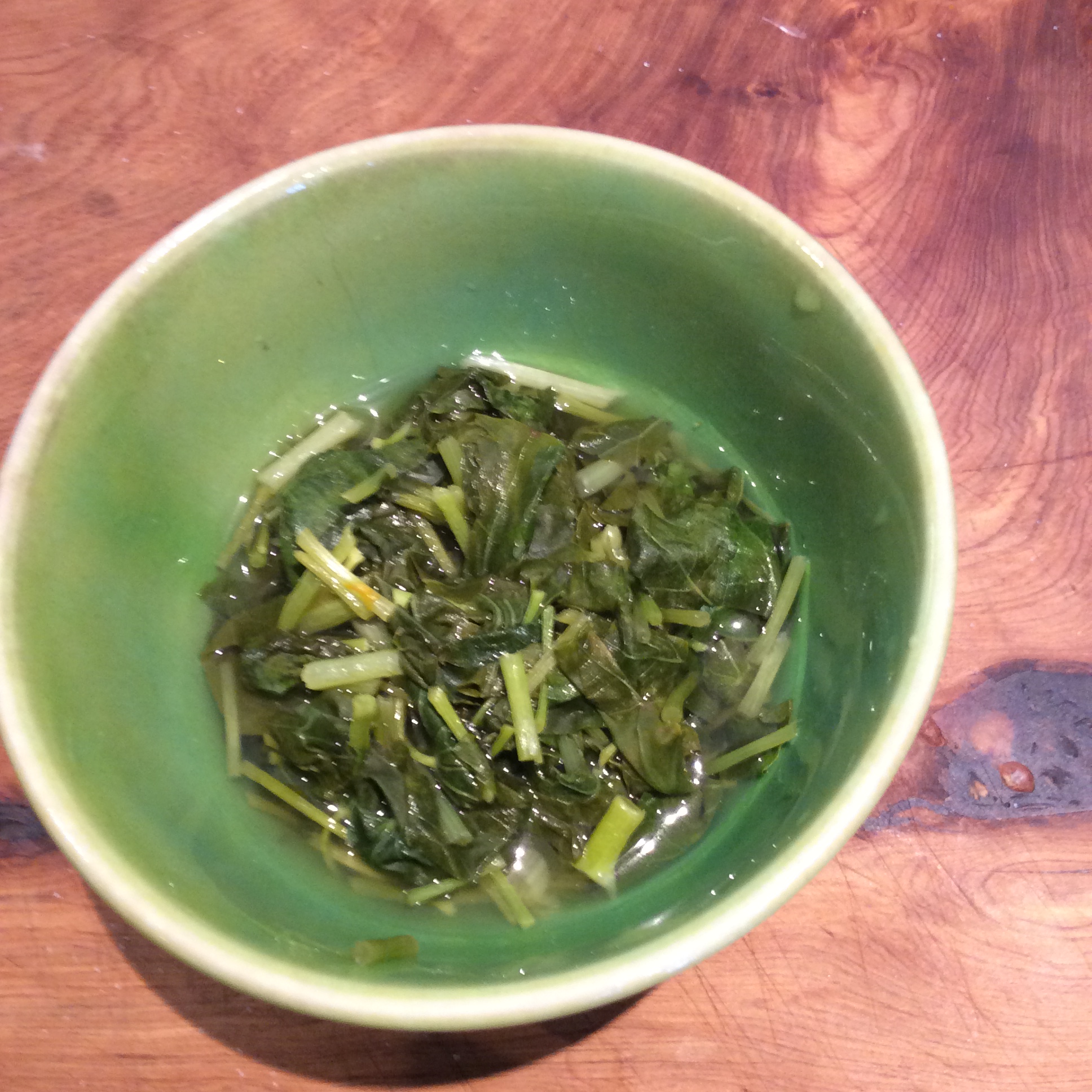
My other favorite use for them is a quick sort of sweet and sour pickle, which I like with grilled meat or dishes in the Japanese fashion.   For a heaping a handful of chopped nasturtium, eat half a cup of water in a small saucepan with 2 tablespoons of rice vinegar and 1 tablespoon of sugar or to taste, or you can use artificial sweetener if it is one that does well with cooking.  And a scant teaspoon of salt and bring to a boil. When it is boiling, put in the stems, boil for about two minutes, and the leaves, and take off the heat immediately and let it sit in the “pickling liquid” until room temperature.  serve immediately or keep in the refrigerator for a day or two.
image

For my taste the flavors in this quick “pickle” are too strong to use it as a side dish, but you could always use less vinegar and sweetening and salt, and use it as a side dish if you prefer that. When I was growing up in the south, collards were sometimes cooked this way, and I seem to remember that they were good.

Some people think highly of the nasturtium as a medicinal herb. If you wish to research this, please keep in mind that the nasturtium flower we are dealing with here is Tropaeolum majus, while  Nasturtium officinale is actually watercress.  This is why we use botanical names; in the long run, it avoids a lot of confusion.   In my view, the fact that they are green and lovely in cold weather and taste good is reason enough to eat them.
 

The greens of fall: Nasturtium

image
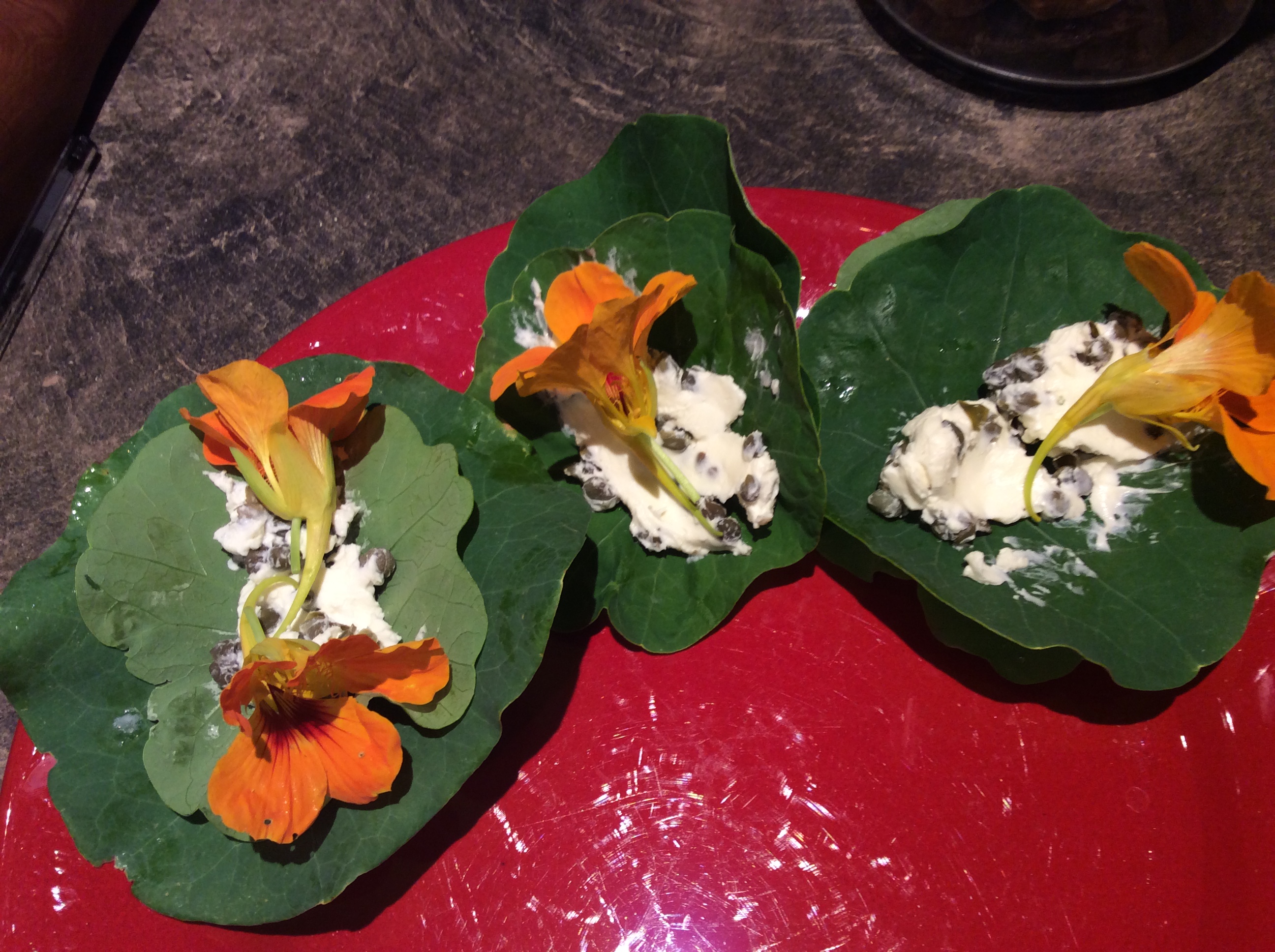
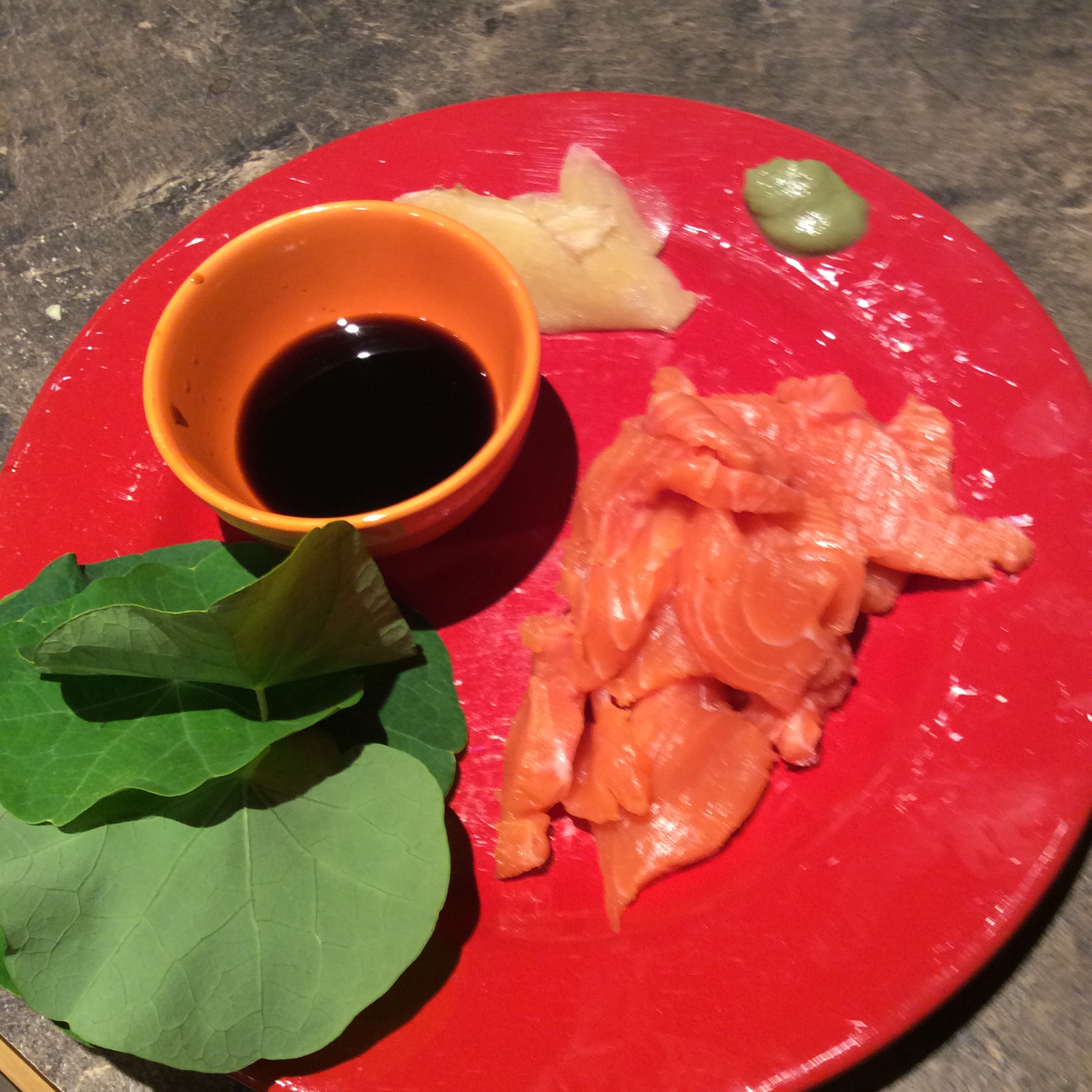
With the first frost behind us, there are parts of the garden that are just getting into full swing. This is the second great greens season. During the summer I enjoy the beauty of nasturtiums and put the flowers in salads frequently, as well as using the leaves here and there. After a frost, flower production slows way down but leaf production increases, and this is the time to use these wonderful tender leaves with the flavor of watercress. I use them fairly simply. The largest ones always become hand rolls, and my favorite things to put in them are cream cheese with capers and some of their own blossoms, slivered sushi salmon with pickled ginger and other accompaniments, and smoked salmon. I use two leaves stacked to make up each role so that you get a good watercressy flavor in each bite.
image
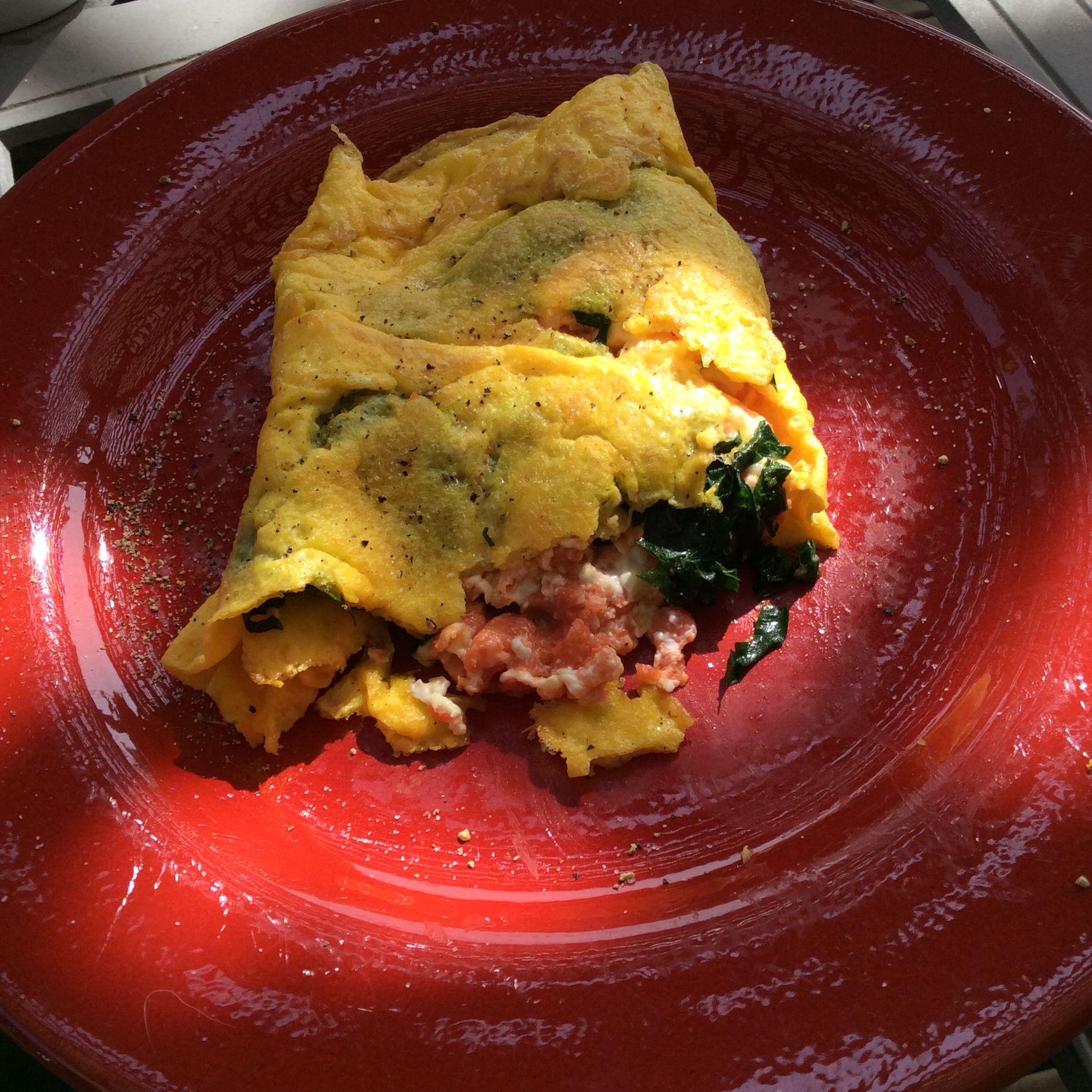
The smaller leaves go into quickly sautéed mixtures of greens and herbs that flavor omelettes. Green garlic is available again this time of year after the summer hiatus, and I like to chop up a small stalk of it leaves and all, chop up a packed pint of the smaller nasturtium leaves and a celery leaf or two chopped fine, and sauté them together quickly in butter and put them in an omelette of eggs from my own hens. Delicious. If you care to gild the lily by adding slivered smoked salmon and bits of cream cheese to the filling, it only gets better. If you can eat outside in the clear October sunlight, that’s best of all.
image
image

A Mushroomy Meal

image
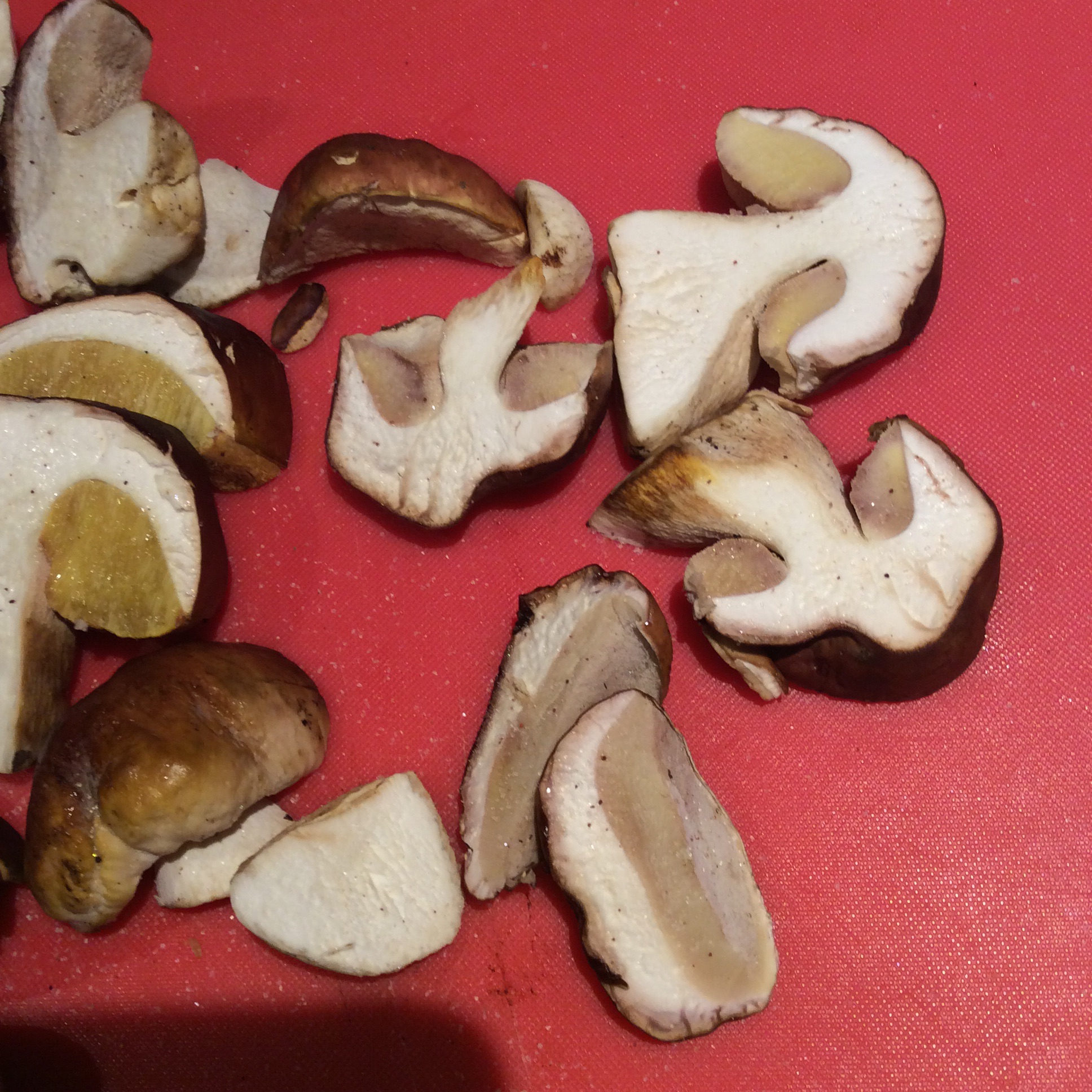
Sometimes it just comes together. The Universe hands you one. I walked into my local wonderful co-op this morning to get a lemon and they had a little basket of exquisite local porcinis, which a gatherer further north found after our recent major rainstorm. They were actually affordable (more or less.) I nabbed the whole pound and went home thinking that it was a shame to cook them on a blistering August day, but I planned to eat them anyway. Then it turned dark and cloudy and cool this evening. Perfect! I pulled some sablefish out of the freezer.
imageP
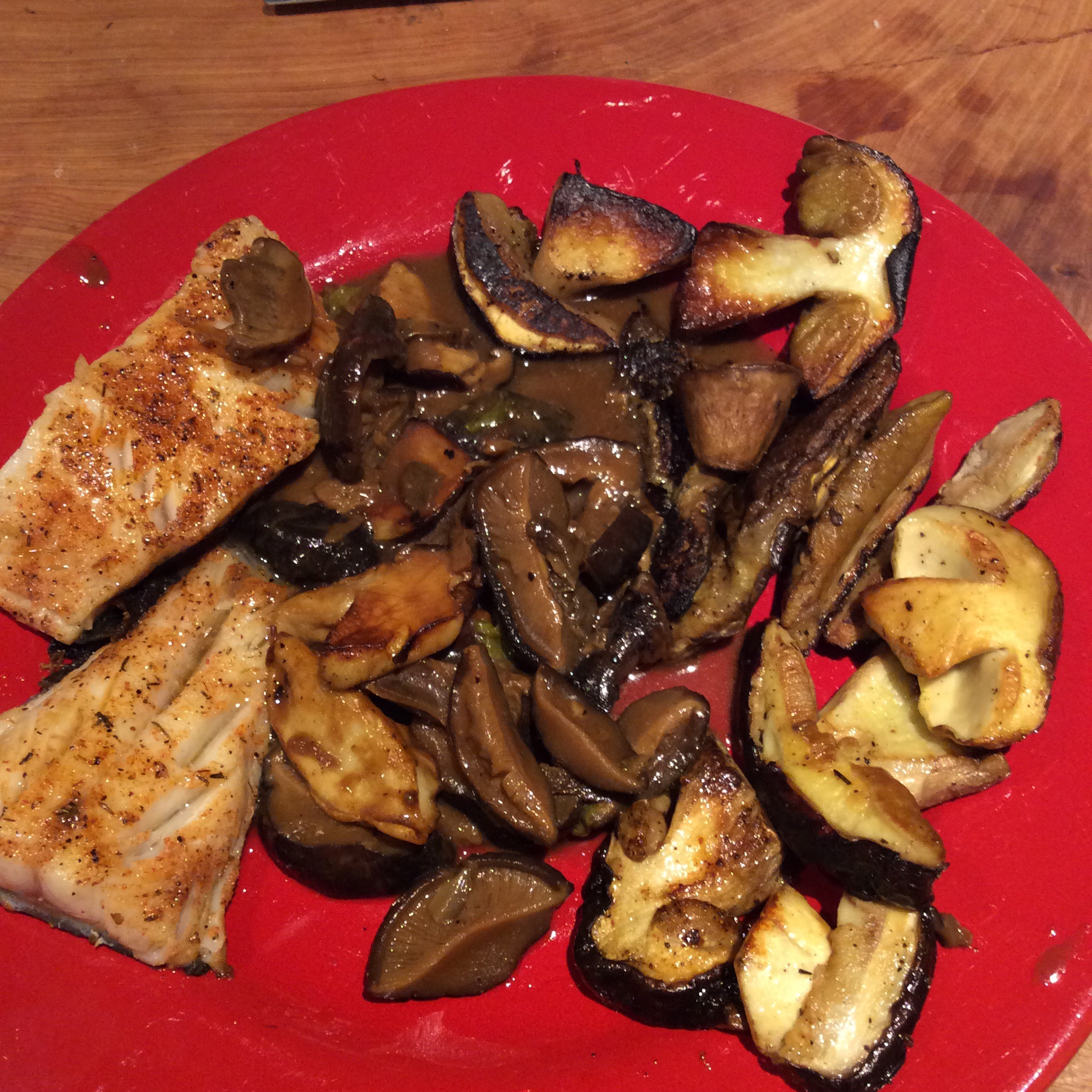
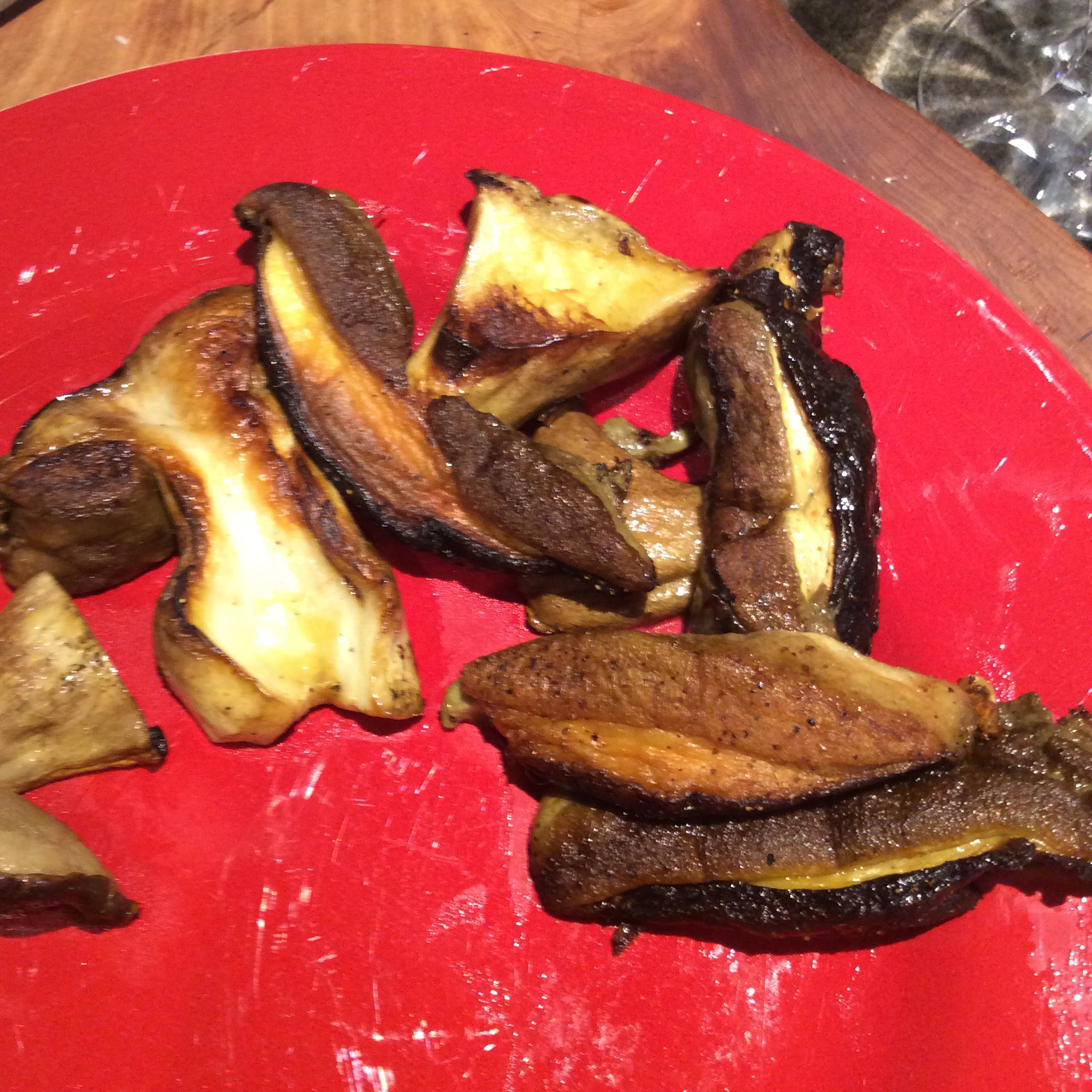
I sliced the porcinis in half lengthwise, then cut a “steak” out of each half that was nearly half an inch thick. I salted the mushroom steaks, and also the ends of caps and stems left over. I sprinkled the thawed fish liberally with salt and added some blackening seasonings to help it stand up to the assertive mushrooms. I chopped a clove of garlic and got some chicken glacé out of the freezer. You can buy glacé de poulet for about $6 for a quarter cup from http://www.olivenation.com, or you can make and freeze your own. Chicken glacé with fish? Hell yes. I learned this when tasting shrimp dishes in Mexico, which often have some chicken bullion concentrate added. It keeps the plate as a whole from getting too fishy, and makes a bridge between fish or seafood and some side dishes that wouldn’t usually go with it.
image
Everything happens very fast from here on. Preheat the oven to 275 and put your fish in it. The fish can spend anywhere between 15 and 20 minutes in the oven without harm while you sear the mushroom steaks as long as your oven is accurately regulated at 275. Heat your biggest skillet over high heat with the hood fan sucking air furiously. Put a hefty glug of good olive oil in the hot skillet and lay the porcini steaks in one layer. When well seared on one side, turn them and sear the other side. Remove to warmed plates putting the mushroom steaks on one side of each plate, add some more olive oil, and sear the remaining bits of porcini. When seared, add the chopped garlic and toss about furiously for maybe 30 seconds, then add the chicken glacé and a glug of good white wine, maybe a shot glass full. Boil hard until it thickens, salt to taste, and remove to a bowl. Wipe out the skillet very quickly, reheat over high heat, put in more olive oil, and sear the fish pieces quickly on each side. They should have been in the low oven about 15 minutes, and should be done when seared, but check and cook another minute if needed. Plate them across from the mushroom steaks and pour the mushroom sauce down the middle.

Eat with gratitude and a light but flavorful red wine. Give thanks for the rain and the edibles that appear behind it.
If you can’t get porcinis or they are the usual obscene price, you can use fresh shitake caps cut in half (all stem removed. Really.) Or use portobellos but use a spoon to scrape out the gills, which turn a nasty black-muck color in the pan.
So far my efforts to grow edible mushrooms outdoors haven’t come to much, but I’ll keep trying, and I’ll reward our local foragers whenever I can afford to.
Incidentally, if two people eating a pound of porcinis sounds gluttonous to you, well, uh, no kidding. All I can say in our defense is that we eat basically one meal a day, plus snacks. And I think that wretched excess is a wonderful thing when practiced in moderation😉

A Hot Treat

image
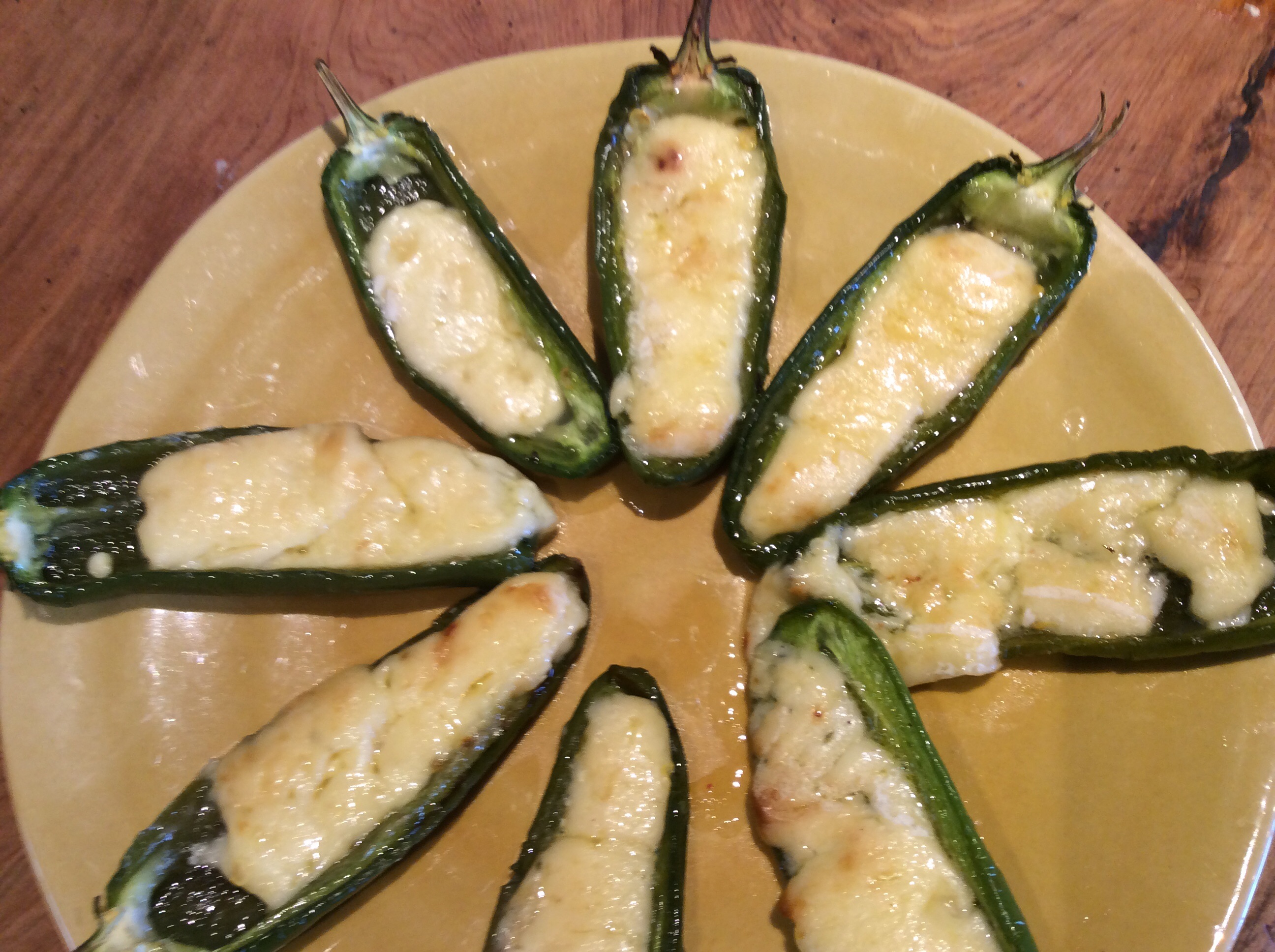
I love hot food, and one of my favorite snacks when other heat-lovers are around is stuffed jalapeños. Couldn’t be easier: slice 2 or 3 jalapeño chiles in half lengthwise, pull out the seeds and veins, salt liberally ( helps keep the heat in check,) put a piece of good cheddar about 1/2 inch square and two inches long in each half, and bake at 425 until done or cook on a part of the grill that you’re not cooking something else on, being careful not to burn the jalapeños. Eat with fingers. This amount of cheese will overflow a bit, causing crisp cheese crust to form on the baking pan. Yum. It’s low-carb and suitable for ketogenic eaters.
One split pepper makes a good cook’s treat when you have things in the oven anyway, and if you have a willing sous-chef don’t forget to roast a second one.
Jalapeños are good for growing in the front yard because they are sturdy and attractive. They may need a little judicious staking to keep them upright. They can get hot as blazes. The longer they’re left on the plant, the hotter they get. 1 or 2 plants per person are plenty.