Archive for the ‘cooking’ Category

Low Carb Easy: The Clay Pot Bake

image

When I’m having special friends over for dinner and want to have plenty of time for serious conversation, my favorite weapon is a 14″ Spanish cazuela that I got at a Spanish import store many years ago. Any large clay baking pan would do just as well. The idea is to be able to roast chicken and vegetables together in chosen seasonings and have a veggie-rich low-carb meal come out of one pan without a lot of fuss, and be able to bring the baking dish straight to the table fairly attractively. Dark meat of chicken is ideal for a “mixed bake,” and if you don’t grow your own, get the best pastured chicken that you can lay hands on.

Decide on your seasonings. One of my favorites is a loose paste of a few cloves of garlic, about half a cup of oil-cured black olives, a little salt ( half a teaspoon or so, since the olives are pretty salty,) a sprig of rosemary chopped, the juice of half a lemon, and enough olive oil to form a runny paste in the food processor. Work this paste over eight pieces of chicken thighs and legs and set them in the refrigerator overnight.

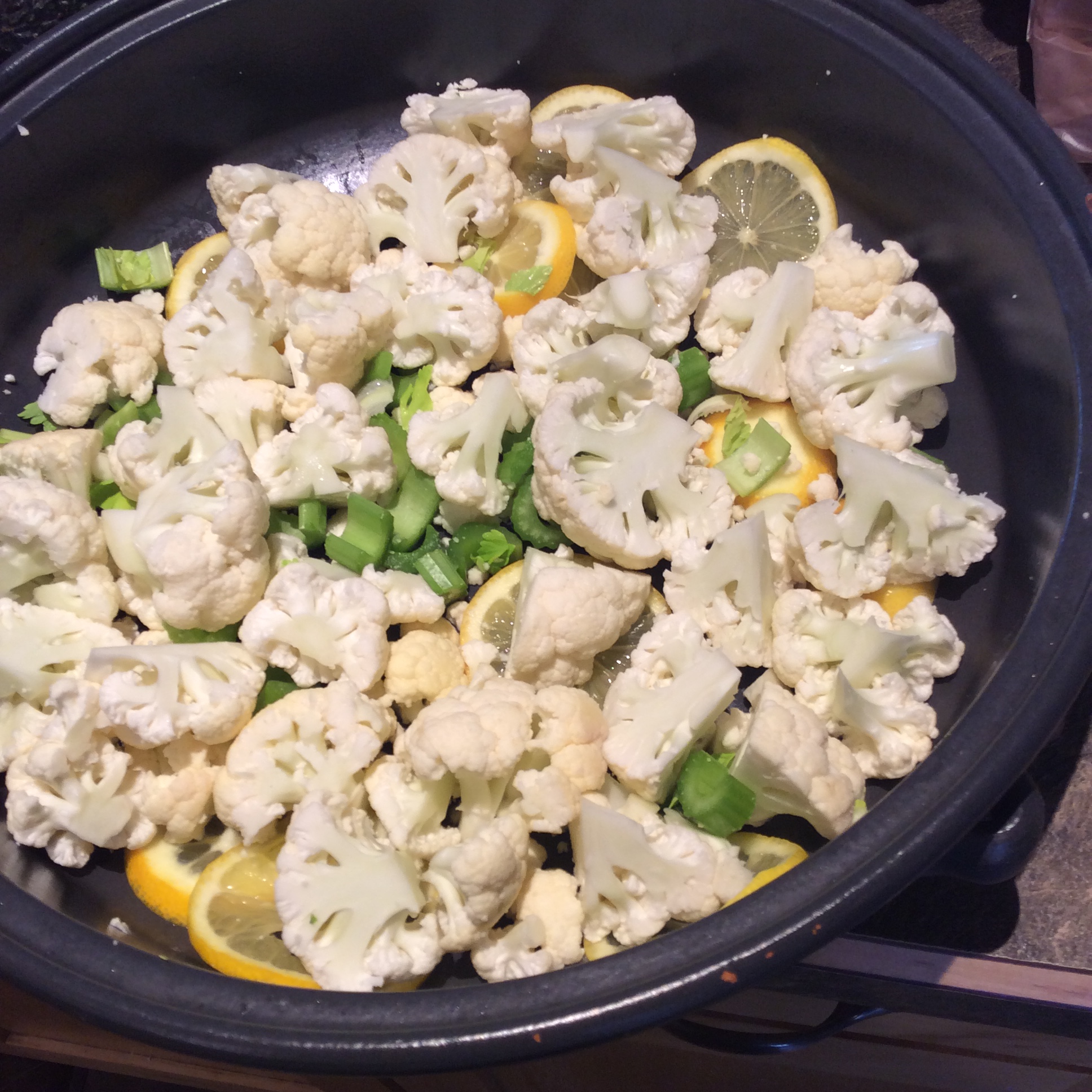
Then choose your vegetables. A head of cauliflower cut into florets is top of the list for me because it takes up the seasonings so beautifully. Leave out all the stemmy center, which is a nice break for your backyard goat. I always add a cup of thickly sliced celery and a lemon sliced thin, peel and all. You can put in 7-8 chopped stalks of green garlic at this time, or if you already have some cooked green garlic in the refrigerator, it can go in later with the chicken. Have your veggies prepped in a bag in the refrigerator.
image

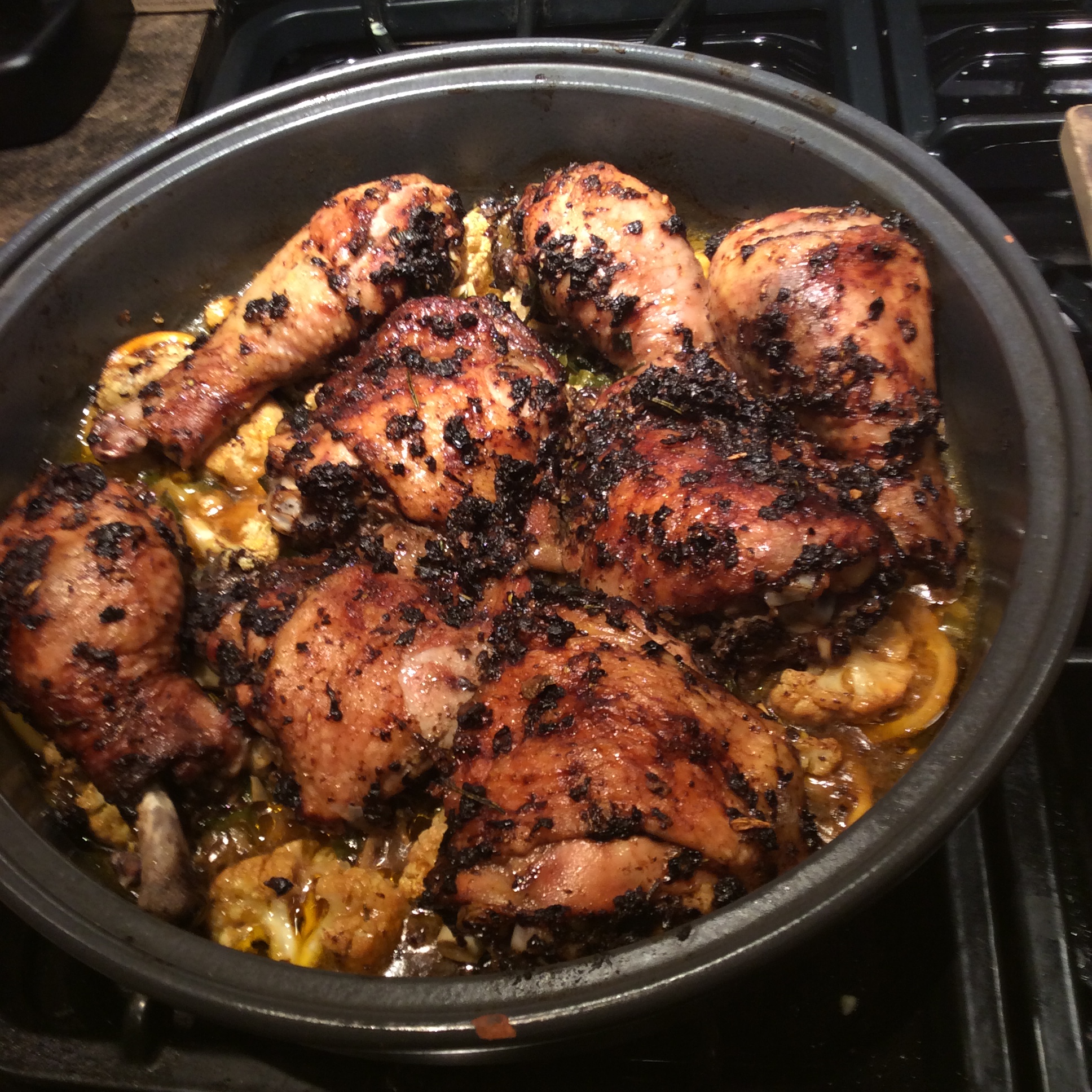
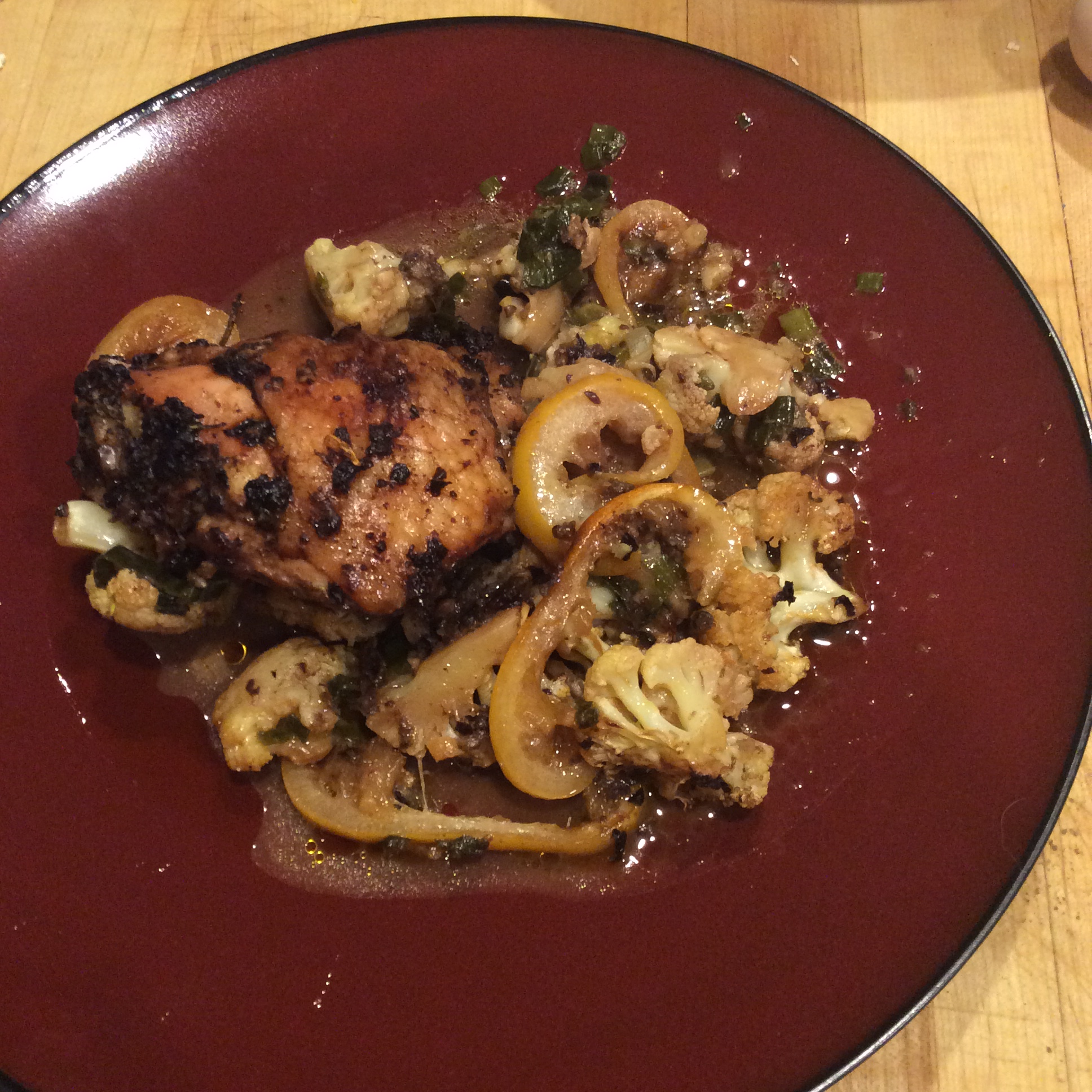
About forty-five minutes before you want to serve, preheat your oven to 425. Spread the lemon slices in the bottom of the dish and put the other veggies on top. Sprinkle lightly with salt but for the most part they will be seasoned by the chicken. Stick in the oven and roast about 20 minutes. Meanwhile, enjoy some wine and nuts or other nibble with your company. Pull the pan out and arrange the chicken on top of the veggies skin side up. If you like (and I do,) you can also add several stalks’ worth of green garlic at this time before putting in the chicken if you have green garlic waiting, pre-sautéed, in the refrigerator. Glop any remaining seasoning paste on top and pour in about half a cup of rich chicken broth to prevent burning.  Return to the oven and roast until the chicken is done, put the pan on a trivet on the table, provide a large serving spoon and a pepper mill, and eat. That’s all there is to it.
image

I find the softened, slightly caramelized lemon truly delicious and include a bit of it in each bite, but dubious guests can shove it to the side of their plate if they prefer and still get the flavor. I only suggest doing this with organic lemons.

Even people who don’t usually eat low-carb will find this a satisfying meal, but you can provide some toasted sourdough bread if you want to make sure.

Berries or dark chocolate or both make a good finish.
Early Harvest: Green Garlic

image

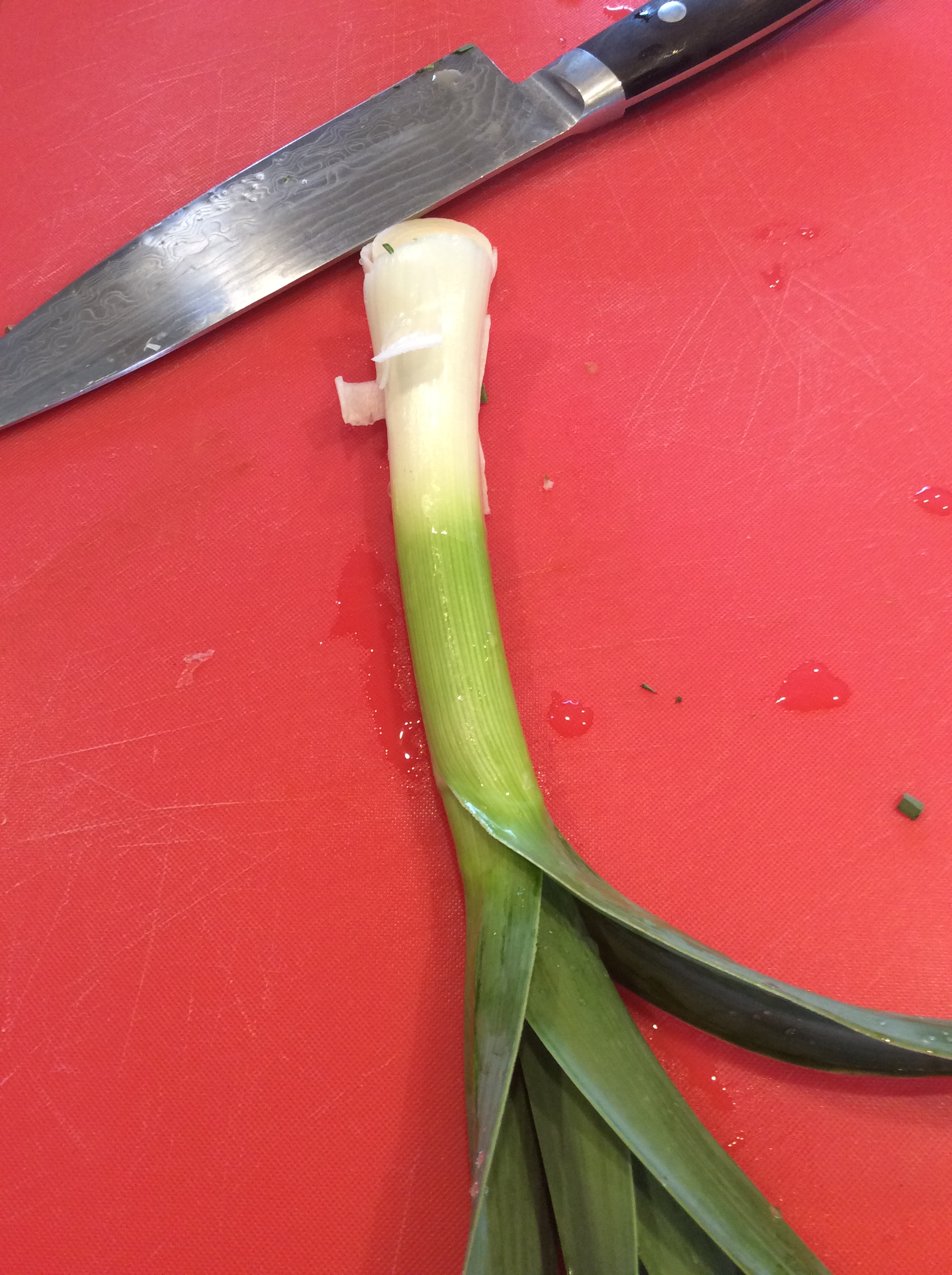
Other than herbs and alfalfa tips for my chickens, green garlic is always the first thing that I harvest from the garden.  In my climate, which is more or less USDA zone seven, I plant in October and nearly always harvest green garlic the first week of March.  The part of the garlic patch that I plan to harvest green is planted very closely, about 2 inches apart each way, which is plenty  of room for this purpose.  Every year I plant more. It is really good stuff. For a long time I thought that it might not really be worth the trouble, because I was harvesting and eating only the white stem and incipient bulb and composting the greens.  Duh. The greens are the best part, as well as being full of allacin and other antioxidants, and any part that is bright green rather than yellow or brown can be used. You can grow a useful amount in a few square feet if your soil is rich, and it is harvested and out of the way in time to plant something else for the summer.

In the picture above you see a stalk of green elephant garlic, which is really a leek relative rather than a true garlic.  It is typically a foot or more tall and an inch or so in diameter at the green stage.   It has a slightly different flavor from true green garlic but is equally delicious.  I once bought green garlic at a farmer’s market that was bitter, but I have never tasted any other that was bitter. It may have had to do with growing conditions or variety. I have heard of people chopping garlic leaves into salads as a seasoning, but personally I don’t care for the taste raw and only use them cooked.

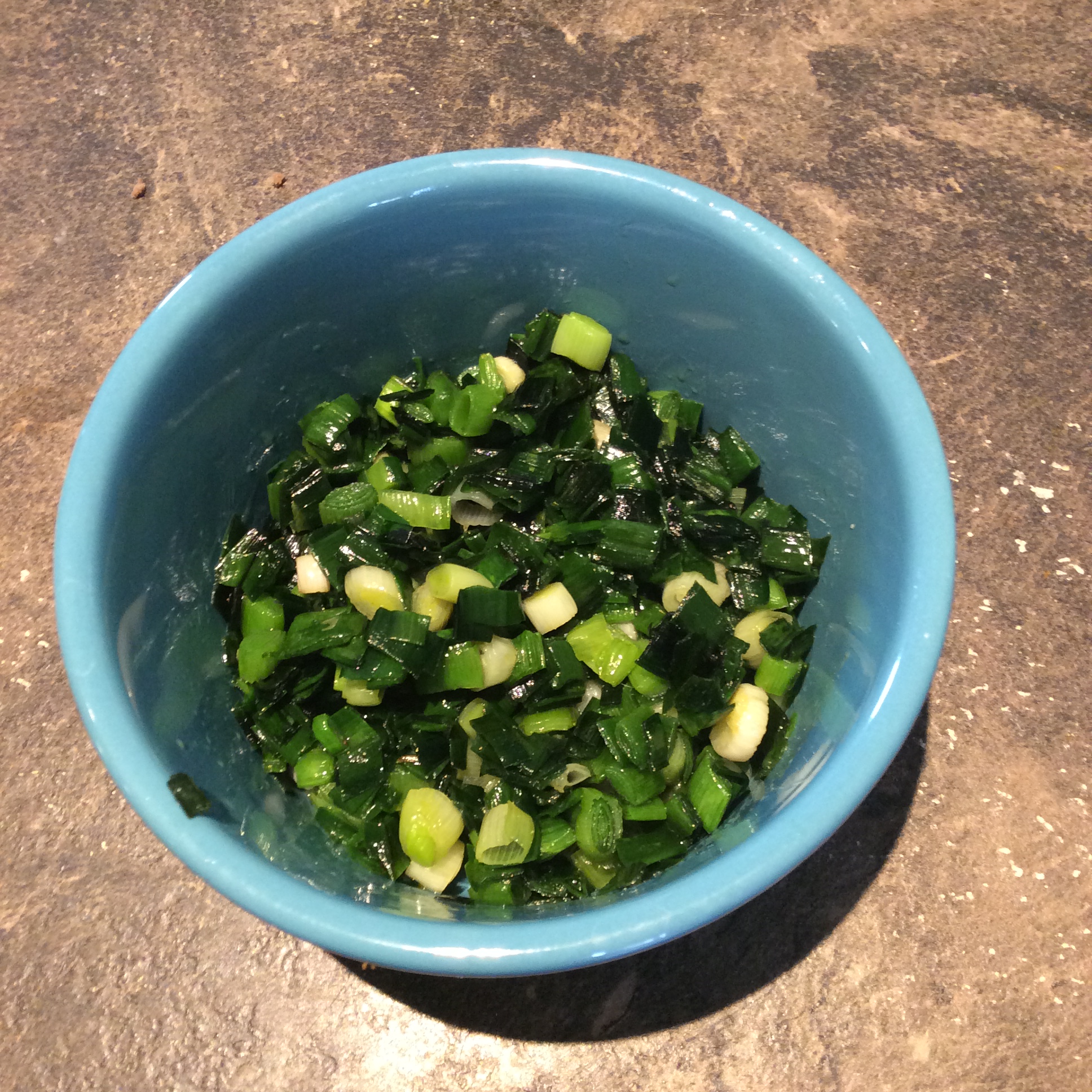
With all green garlic, I trim the roots and leaf tips and wash, then line them up and cut them in cross-section into slices about a quarter inch thick.  I sauté  in either butter or olive oil, whichever will suit the rest of the meal, slowly until the greens are tender. A little salt is thrown in along the way. They become soft and sweet and delicious, and I enjoy eating them as a vegetable on their own.  They also go very nicely into all kinds of other vegetable dishes.  If you are a carb eater, they would be delicious with fresh handmade egg pasta, butter, and a discreet amount of Parmesan, or tossed with new potatoes and butter. I love them in mixtures of cooked greens, too, and they are a lovely complement for fried eggs.  I plan to make a cream of green garlic soup  at some point this spring.  A few stalks sautéed in your smallest skillet while you are cooking other things also make a very nice cook’s treat  to eat standing in the kitchen, as a sort of tapa for one. After all, the laborer is worthy of her hire.

image

Like all the rest of us, green garlic will lose its youthful bloom sooner rather than later.  When the bulb is swelling and the leaf tips are turning progressively more yellow, it is past the point of being worthwhile to eat green.  In its brief season I harvest 10 or 12 stalks whenever I have some free time, clean and sauté them, and have them waiting in the refrigerator.  If I haven’t use them within a day or two, I vacuum seal them into neat little packets and keep them in the freezer to go in summer dishes.

More on Carrot Steaks

A few days ago I wrote at some length about purple carrots and you can find that post here.

Today I want to talk about the common orange carrot which I also grow, for its vivid color on winter plates as well as flavor and nutritional value.
image
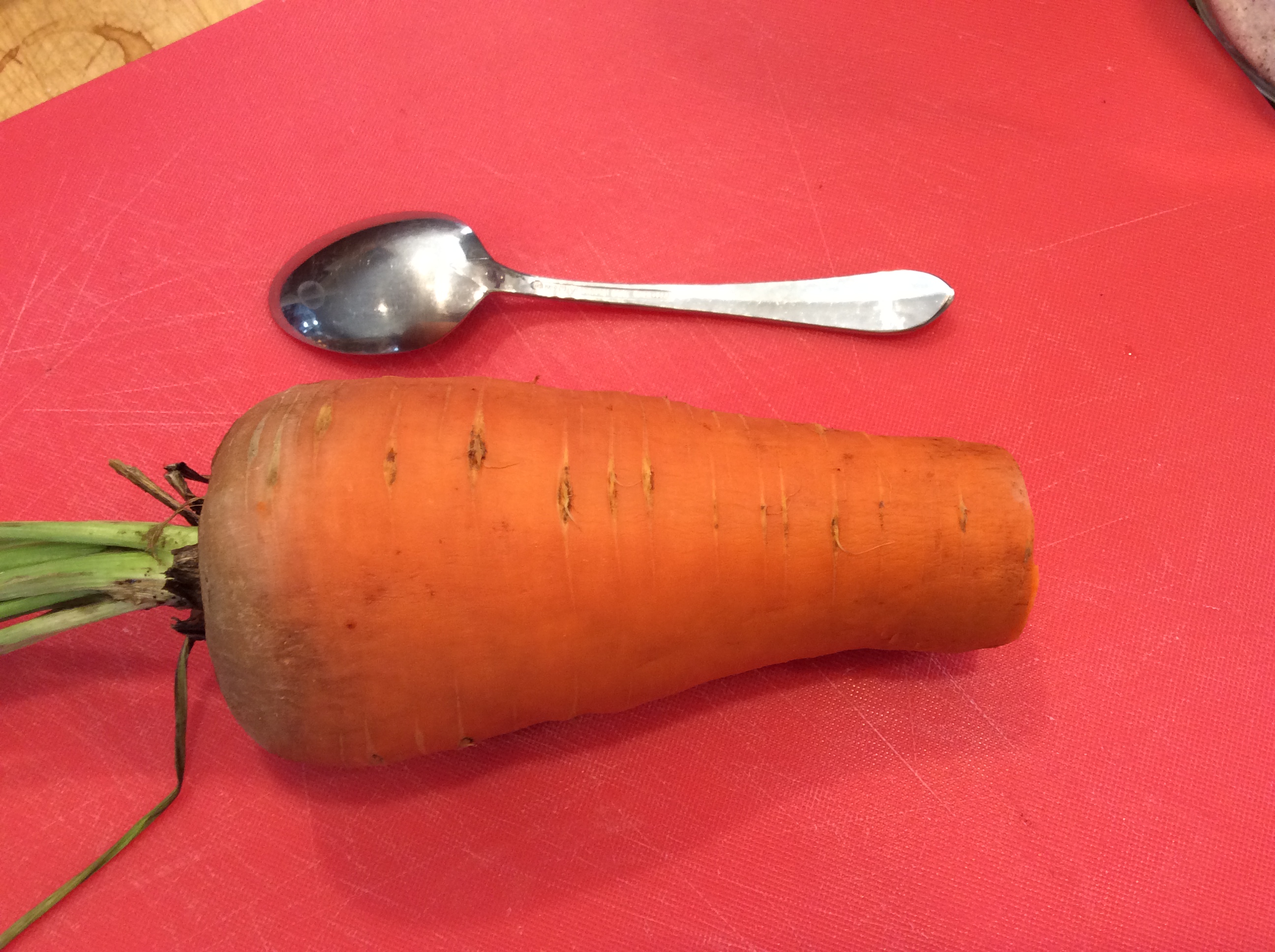
I don’t grow the tiny baby carrots. My preference is for the immense Chanteney-style variety Autumn King. I plant them at some point in May and let them grow all summer. By late fall they have reached the proportions shown. They are very tender and flavorful as long as they get enough regular watering during the growing season. I store them for winter by doing exactly nothing. They stay right where they grew. This works because this variety is quite hardy and because I live in a relatively mild climate where the ground doesn’t freeze more than an inch or so deep, and I can break the frozen ground with a shovel when I want to harvest. Dig up at will, scrub, and eat. In colder climates further protection would have to be given. I would experiment with putting straw bales a layer or two deep over and around the carrot bed rather than fuss with a root cellar. Readers in colder climates, please let us know what methods you like
image
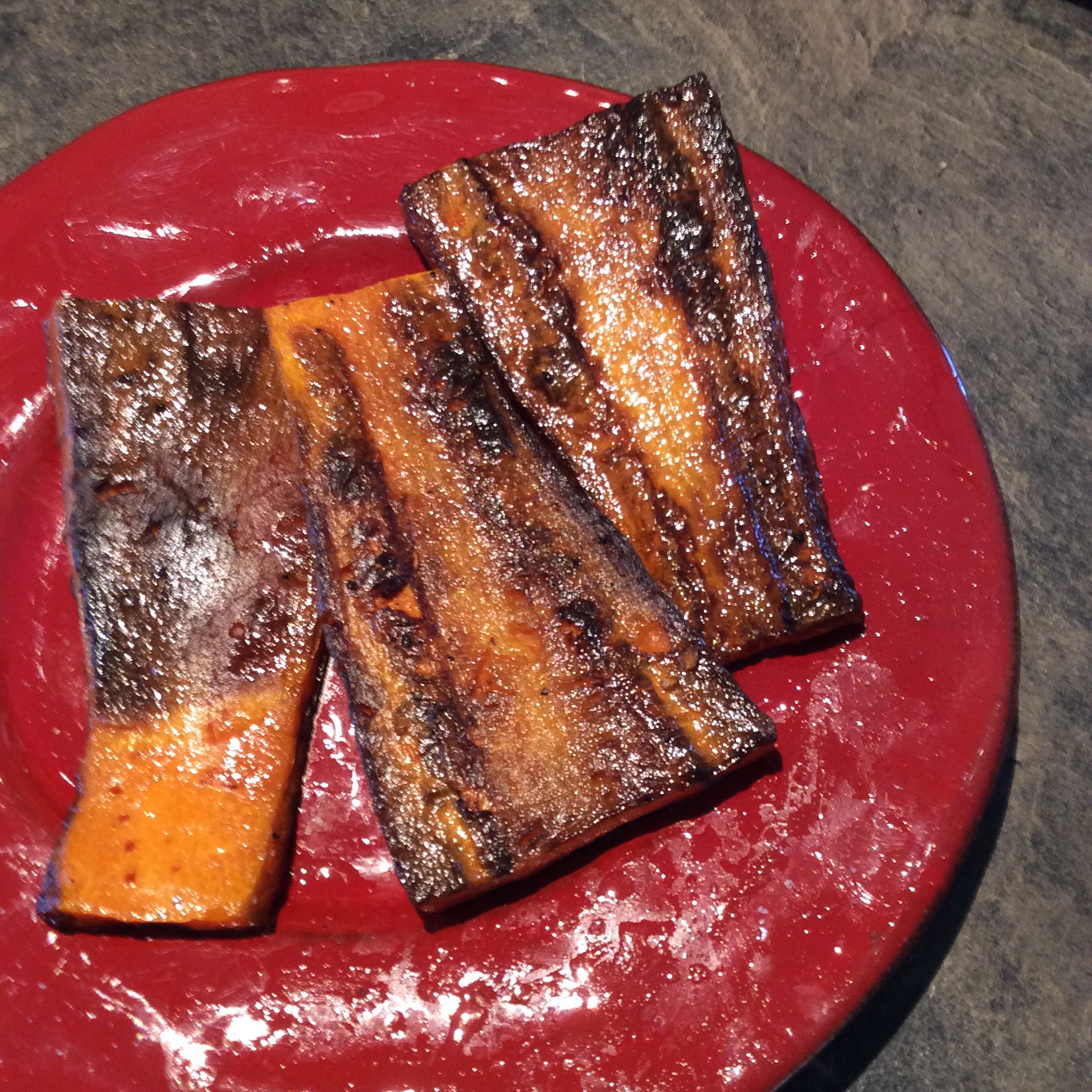
For cooking, I’m very fond of the carrot steak method that I wrote about yesterday as well as other, more conventional methods. The immense Autumn King can be sliced into carrot steaks that are about the size of  porterhouses. They can be seasoned in a lot of different ways. My default seasoning is olive oil and salt for the grilling or pan-grilling, then a glaze of thyme butter before eating.  It has recently occurred to me, though, that Carrot Steak Tandoori could be really wonderful. The only carrot dishes that I really dislike are those that are sweetened. Carrots are loaded with natural sugar and don’t need any added. Just let them shine.

If there are leftovers, carrot steaks are wonderful brought to room temperature, sliced into julienne, and dressed with a good vinaigrette.

I have often read that carrots left in the ground become woody. I have found this to be true only if they are left there until they resprout in the spring. So any carrots that are left when new tall green fronds start to emerge go to my goat and not to my kitchen. She couldn’t be happier. If you are goatless, chickens will scarf up carrots if they are chopped up finely in the Cuisinart. A carrot is also a necessary ingredient in the broth pot and woody cores don’t matter in that context.

A Carrot of a Different Color

image

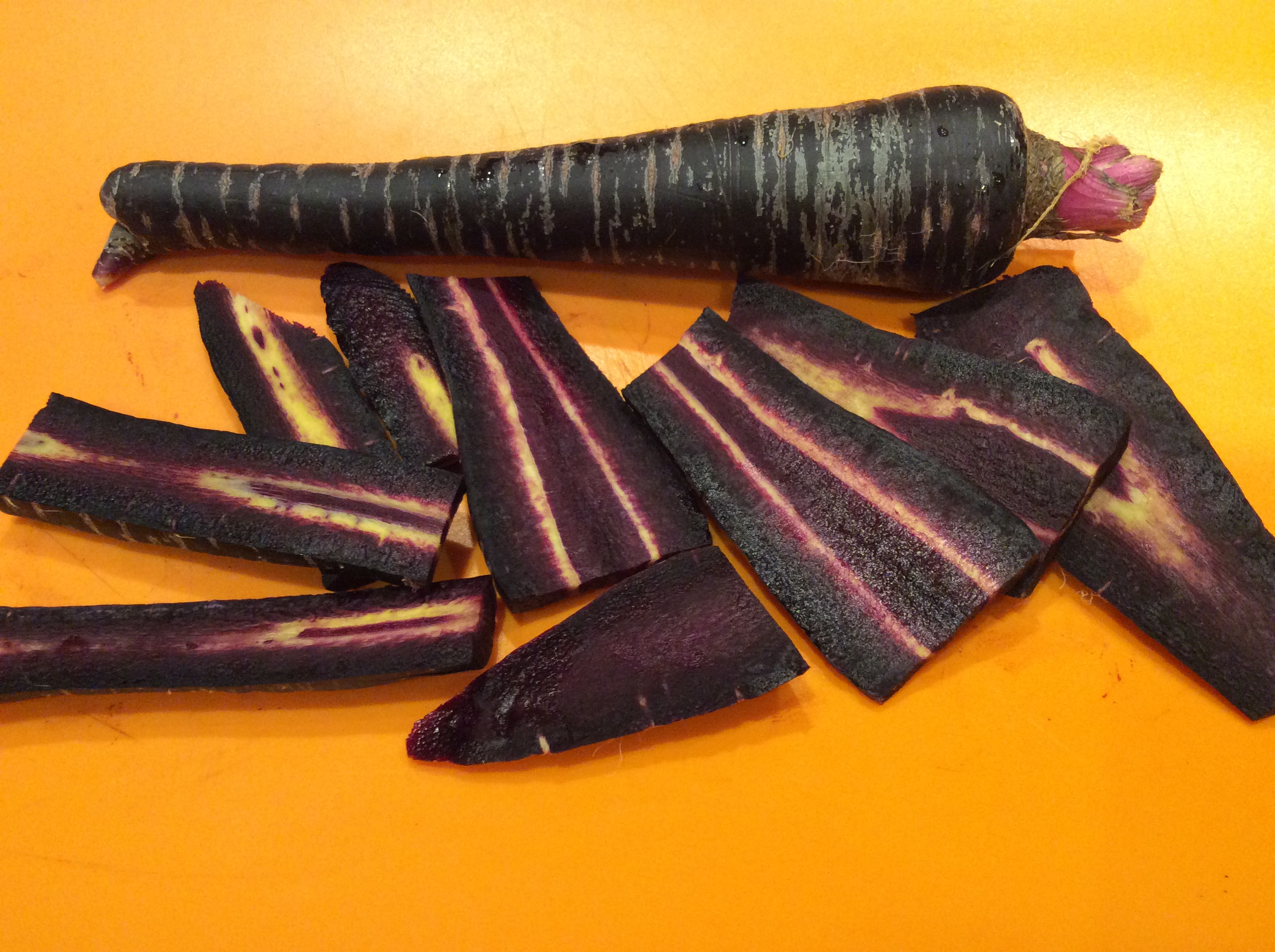
I like carrots in general, and this year I’m especially enamoured of the carrot variety named Deep Purple. As you see above, it is not a wimpy purple-blushed orange carrot. It is a startling deep indigo-violet right to the core. It is packed with anthocyanins, which can only do us good, and the flavor is a bit less sweet than many modern hybrids, which suits my preferences. I like carrots, not candy bars.

If you are accustomed to boiling carrots you will need to rethink your strategy, because the rich anthocyanin content in this one makes it bleed on the plate like boiled beets. This is not attractive, and I am no fan of boiled vegetables anyway, so a cooking method that keeps its juices inside where they belong makes sense.

image

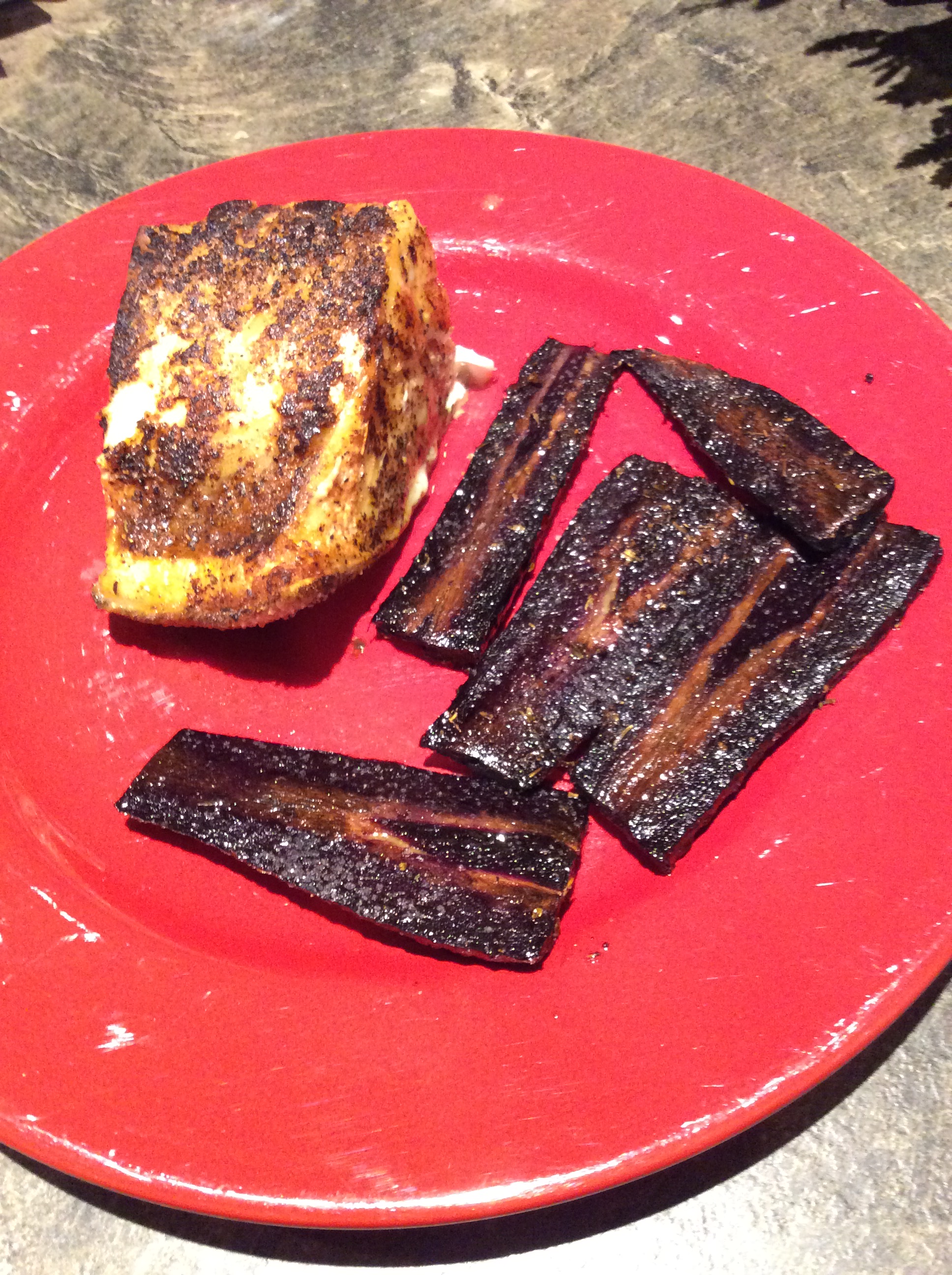
I am cooking a lot of carrot steaks lately and this is a great method for quick vegetable accompaniments that requires no forethought. The prep is quick. Catch your carrots, scrub them thoroughly, cut off the tops and bottoms, and cut the body of the carrot lengthwise into “steaks” of the thickness that you prefer. I like 1/4″ because I like them to cook quickly and get a little cooked clear to the center. I cook all the odd-shaped side slices because they are all delicious; the tapering parts get a little gooey and caramelized, which adds depth and savor. I salt the slices lightly, rub them with good olive oil, and add any seasoning that I might want. In the case shown here they were to accompany blackened fish chunks and so I dusted them lightly with blackening spices.

After you cook your entree, or in a separate nonstick skillet, heat the pan over medium-high heat and lay in the carrot slices, not letting them touch each other. Let them cook at a brisk sizzle until the underside looks cooked and is deep brown in spots, flip, and repeat. Serve and eat.

Incidentally, when I say “nonstick skillet,” these days I mean seasoned cast iron. The newer ceramic-lined nonstick skillets might be safer than the older ones, but their nonstick qualities rapidly break down if used over high heat and they are not considered safe for use under these circumstances. I also dislike the mushy not-really-a-crust that is produced over lower heat, and only fairly high heat will produce a true sear. So cast iron it is. Keeping a skillet seasoned takes a little extra work but not much. The Maillard browning reaction is the cook’s friend for deepening flavor and it happens happily in hot cast iron.  The meaty tang that browning produces makes carrot steaks an ideal vegetable entree.

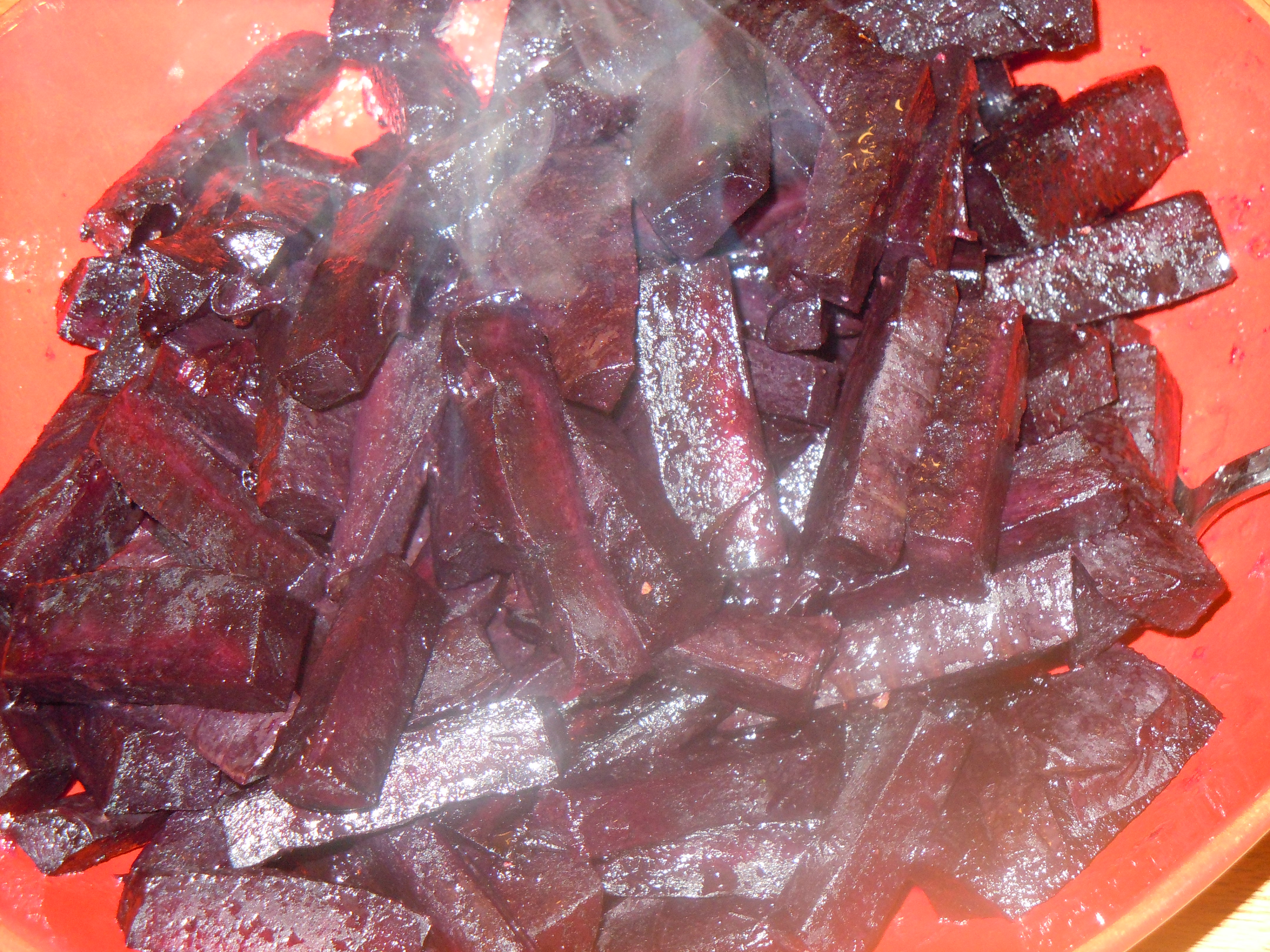
DSCN0490

The same general method can be applied to purple carrot quarters as shown in the steaming plateful above. In this case I cooked them over lower heat for a longer time with no seasonings but salt and olive oil, and added thyme butter just before serving.

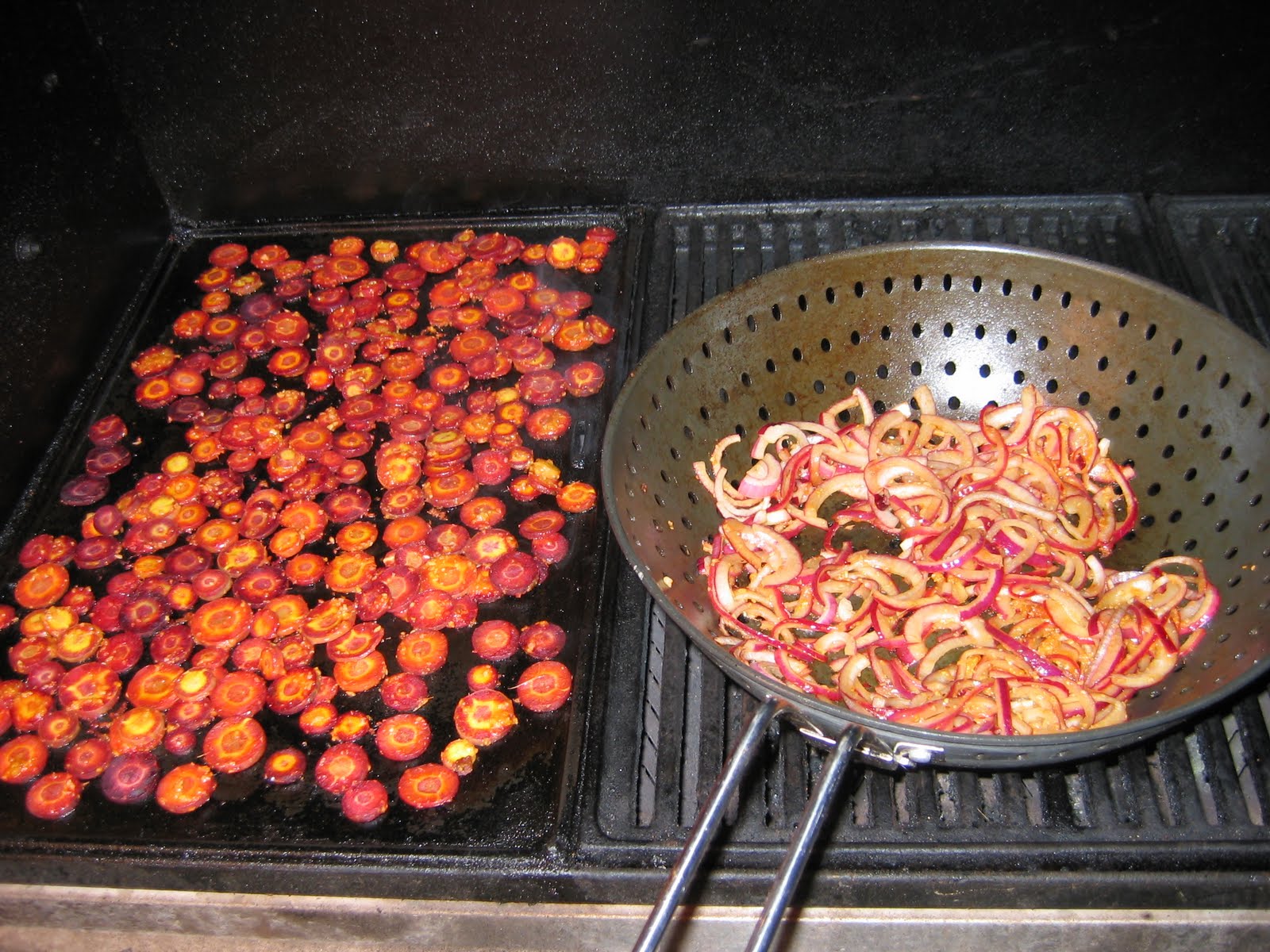
august 09 007

Grilling is another great way to cook purple carrots. The ones shown above are a purple-blushed variety that I grew before I discovered Deep Purple, seasoned with garlic and ginger midway through grilling so that the garlic doesn’t burn and topped with chopped turmeric leaves to accompany a dish of southeast Asian grilled shrimp.

august 09 005