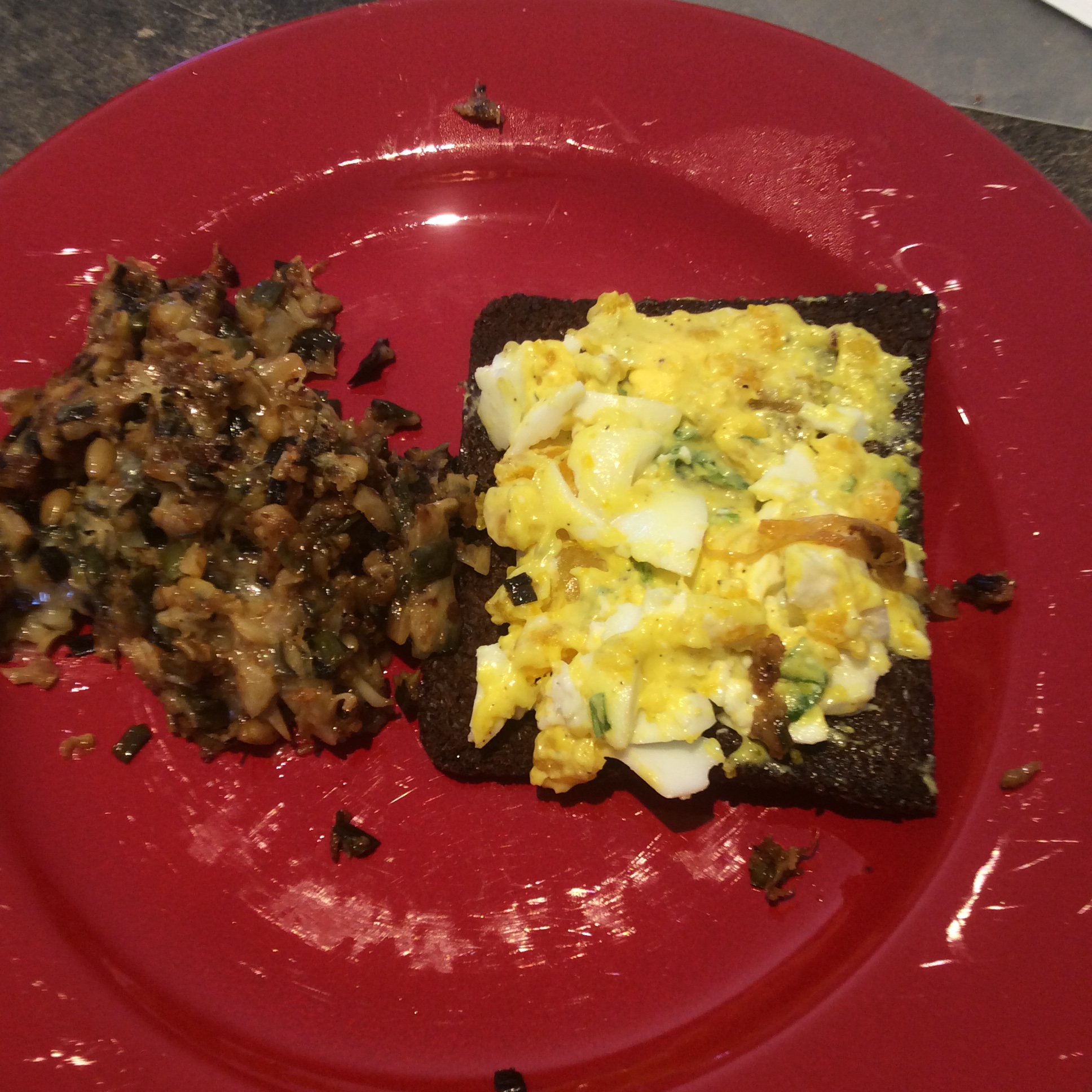
My last post was about a low-carb version of the classic peasant dish colcannon, and I suggested making plenty because there are lots of uses for it. Today I was surfeited with delicacy and wanted a punchier flavor. Easy. I threw a pint of leftover colcannon (intended to serve two) in a skillet with a bit of bacon grease and a chopped canned chipotle chile in adobo, seeds pulled out, a spoonful of the adobo added too. I fried this mixture over medium heat, going for some browning. The vegetables in the colcannon will brown easily because of the milk proteins in the butter and cream that you used when you originally cooked it. When as brown as you like, throw in a handful of grated cheddar, stir another half minute until the cheese softens, and serve with plenty of ground black pepper on top. I needed a very filling meal, so added a quick egg salad with sliced hard-boiled eggs, homemade olive oil mayonnaise and fresh chopped tarragon (just up this week!) on a slice of flaxseed bread. If I had been less hungry, I would just have sliced half an avocado alongside.
Cauliflower and cabbage are both chameleon vegetables and will take on almost any flavor that you care to give them, within reasonable limits. So keep pushing their limits. I’m still debating what to make with the rest of the leftover colcannon.
Archive for March, 2016
26 Mar
Colcannon II
13 Mar
Low Carb Colcannon
A few decades ago when I owned a sheep farm, I grew a lot of potatoes and made a lot of colcannon in the winter. This old Irish dish combines smashed boiled potatoes with milk and cream, and incorporates other vegetables according to your fancy. Onion and cabbage are traditional favorites, herbs and greens are common, and others are possible.
These days I want low-carb vegetable dishes, but I still want my easy accommodating colcannon and I have a ton of green garlic and green onions around, so I started there. I write a lot about green garlic and green onions because they are so easy to grow and have available for earliest spring, so chock-full of allacin and various antioxidants, and so very tasty. If you grow no other vegetable, put some small organic onions and at least a few dozen garlic cloves in among your ornamentals in fall (as long as you don’t use pesticides,) and next spring you will have these sweet and delicious vegetables to work with.
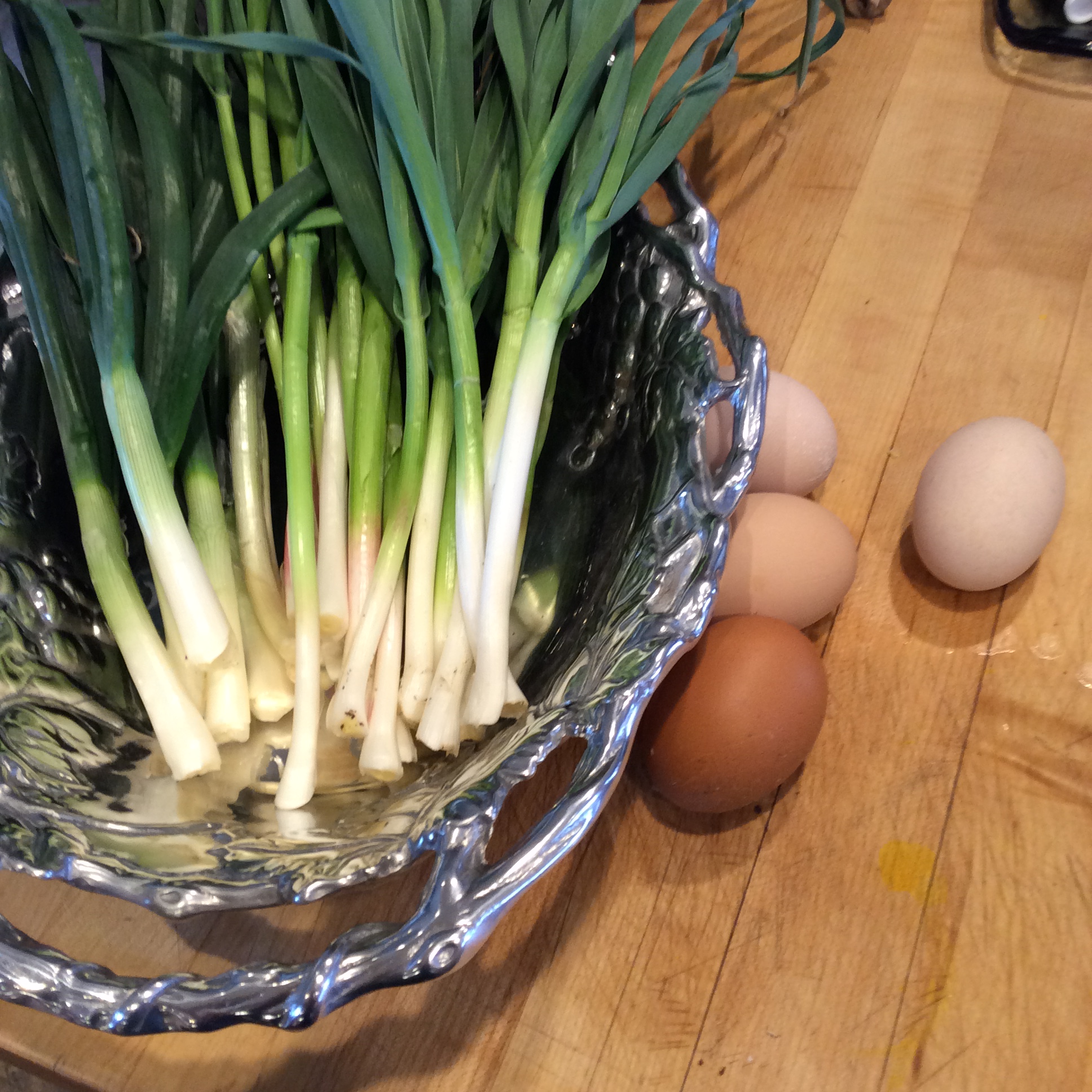
I started with six big green onions, a dozen stalks of green garlic, a head of cauliflower, half a head of cabbage, and butter and cream.
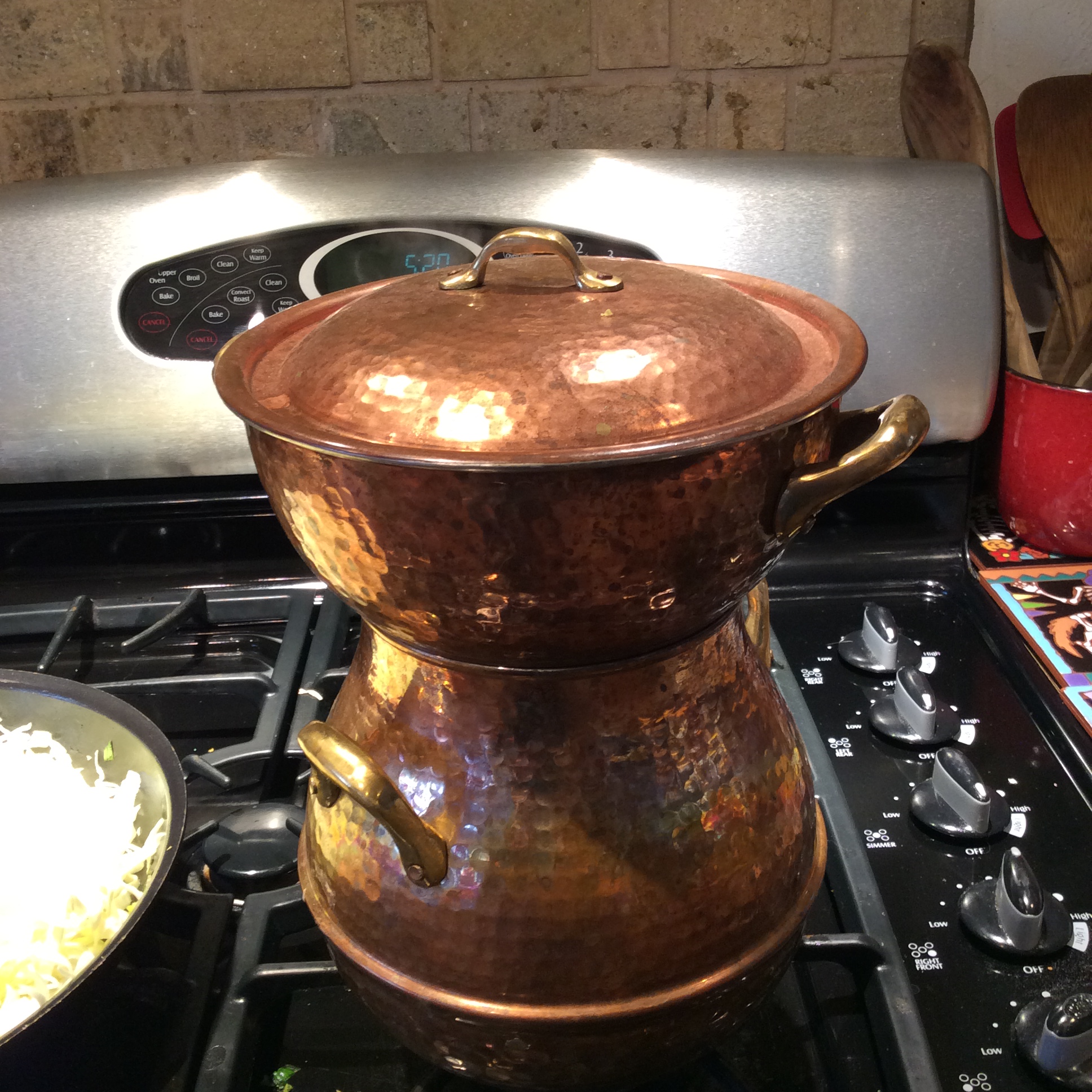
First, cut the florets off the cauliflower and put them in the steamer for half an hour. They need that much steaming time to be soft and smashable. I use my old couscousierre to steam veggies because I like to look at it, and incidental pleasures are half the fun of cooking.
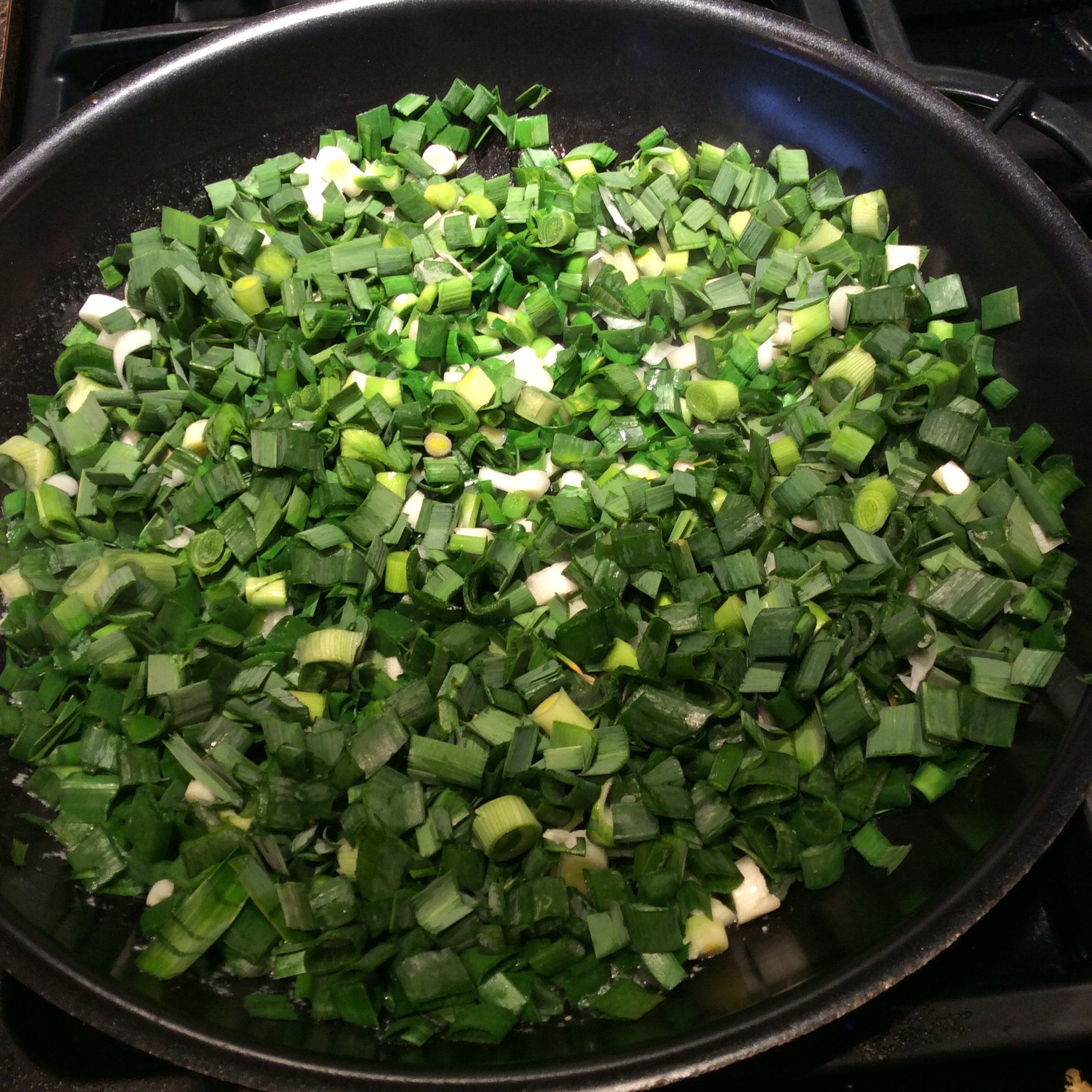
Wash the green alliums and trim off any yellowing or dry-looking leaf tips. On a large cutting board, slice the washed and trimmed green onions and green garlic into quarter inch cross-section slices.
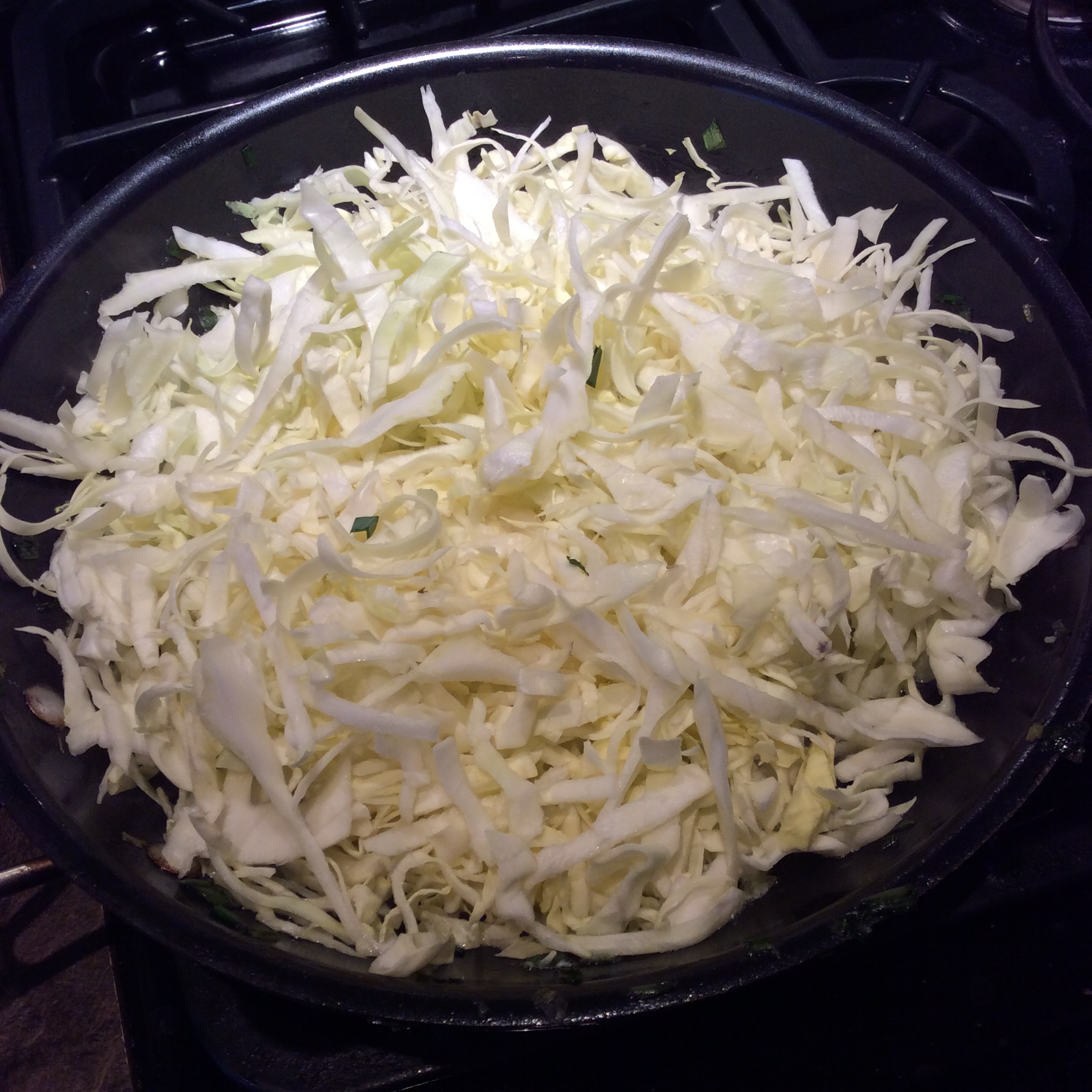
 Heat a large skillet over medium heat, put in about 3 tablespoons of good butter, and sauté the greens over medium heat, adding some salt and stirring frequently, until thoroughly cooked, soft, and sweet. Meanwhile, slice the cabbage into very fine slices, discarding any thick ribby pieces. When the green alliums are cooked, scrape them into a bowl, return the skillet to the heat, add another good-sized knob of butter, and put in the cabbage shreds. Cook them over medium heat with some salt, stirring frequently, until very thoroughly cooked and sweet. This takes a while, and you need to keep an eye on the time and open your steamer when the cauliflower has cooked for 30 minutes.
When the cabbage is cooked, put in the steamed florets and start smashing them with the back of a big wooden spoon. When thoroughly smashed, add half a cup of heavy cream and the cooked green garlic and taste the mixture for salt, correcting to taste. Cook over low heat for another half hour, stirring occasionally, to let the flavors amalgamate. Stir in a generous amount of freshly ground pepper and serve.
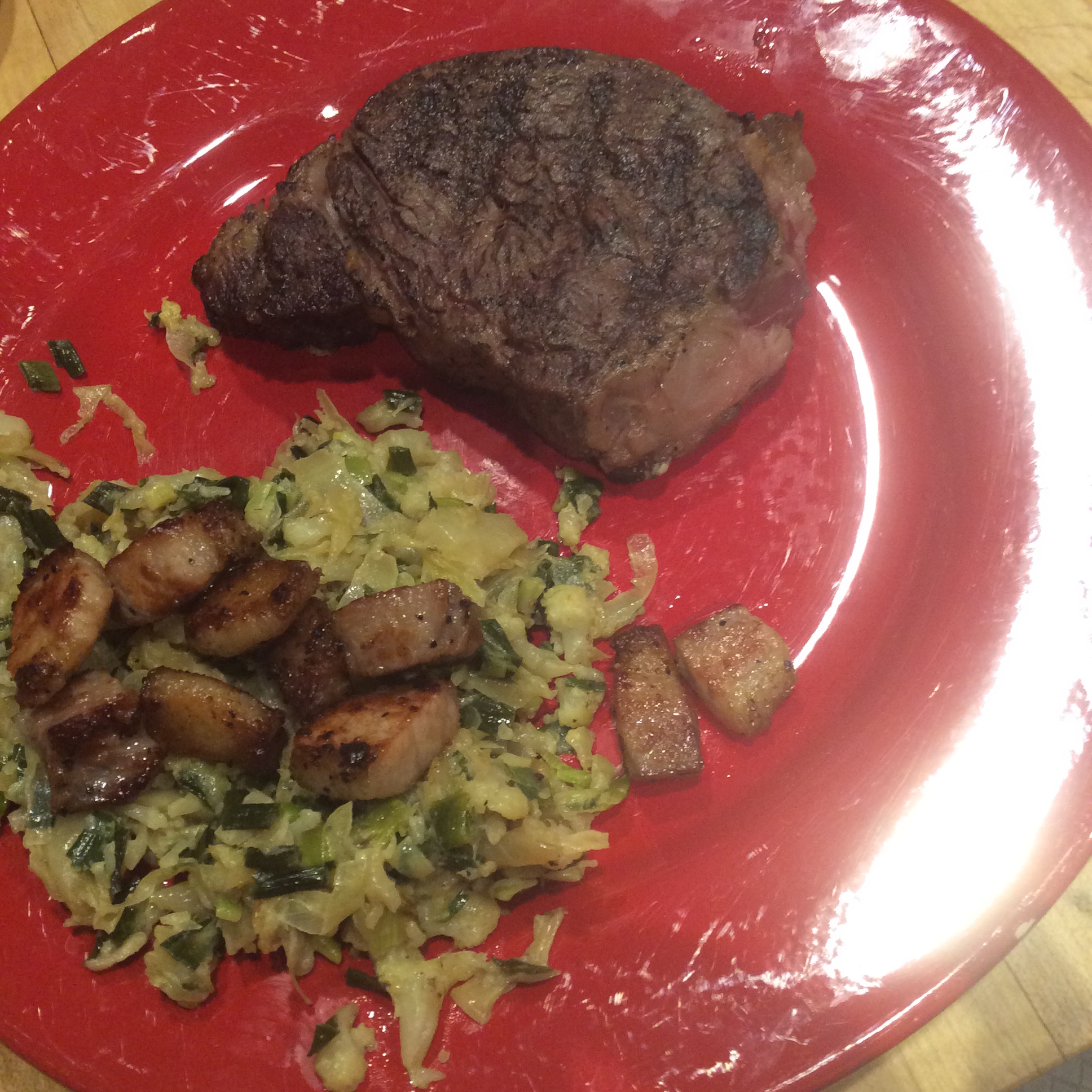
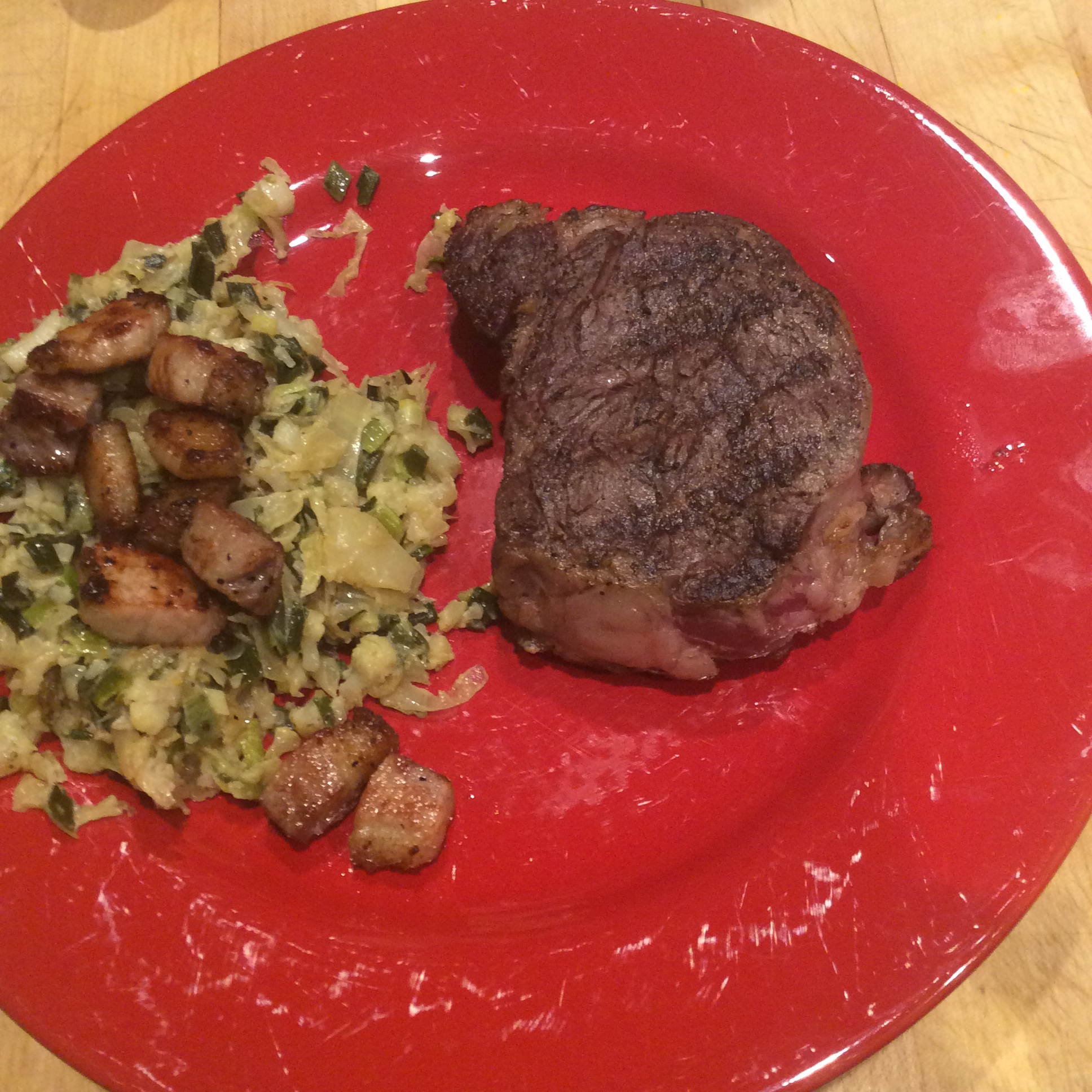
This is the fun part. Serving possibilities are endless. I pan fried some lardons of mild bacon to top it off and put a small steak on the side. It’s so filling that I didn’t eat more than a bite or two of the steak, so now I have leftover steak to plan another meal around.
Unlike potato colcannon, which can get gummy if reheated, the cauliflower version is even better when left over. You can top it with sautéed greens, or a fried or poached egg, or both. A bit of mild cheese could be grated in or gratineed on top, or this could accompany a roasted chicken. It is a wonderful basis for meals in mixed omnivorous-vegetarian crowds, because the vegetarians will find it satisfying on its own or with an egg and the omnivores can have meat on top or alongside and will probably not eat much meat because it isn’t needed.
I do think it’s wise to respect the essentially sweet and delicate nature of this dish, and keep seasoning simple. If you take your time with the sautéing, and use butter, the cabbage and green alliums develop wonderful depth of flavor. Heavy cream is essential in my opinion, and it has a lovely sweet flavor of its own. I also think a key step is to add some salt during the sautéing process so that it cooks into the vegetables well. Just not too much. This all takes some time, about an hour from bringing the green alliums in from the garden to finished colcannon, so there is no point in making smaller quantities. It will get eaten.
10 Mar
Indolent Pest Management

There is a semi-organic, thought-intensive mode of pest management called Integrated Pest Management. It has occurred to me lately that I could spearhead an alternative IPM called Indolent Pest Management. It has two phases:
- I notice a pest problem.
- I wait to see what happens.
The most recent example started last fall, when I noticed a proliferation of large garden snails from who knows where, leaving slime trails on the chard. I read about preparation of escargot out of curiosity but never did anything effective about the snails, because I was busy and there were so many other things to eat.
After a month or so, I started to see these everywhere:

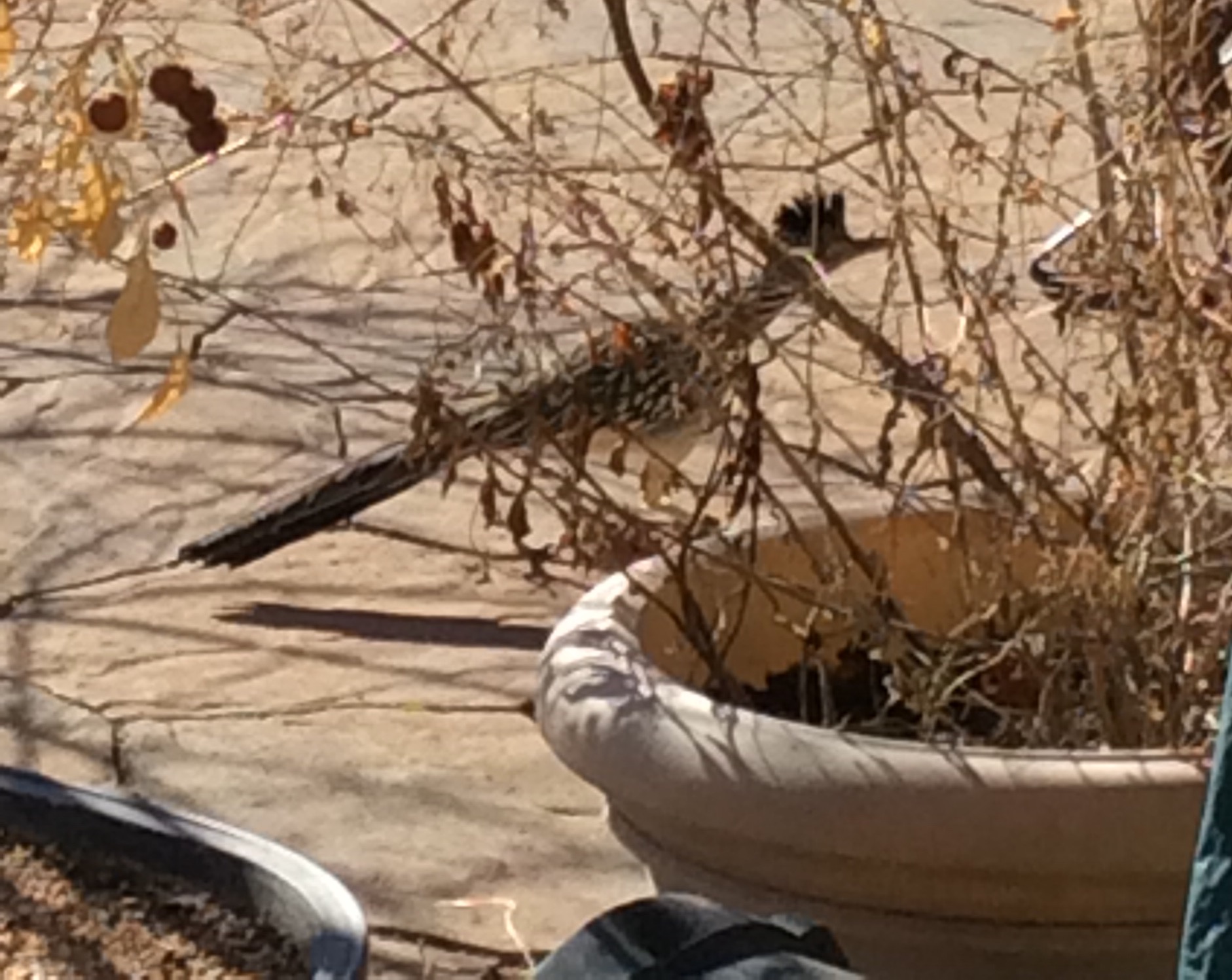
Snail shells, broken open and empty, appeared all over the place. Further observation revealed that a roadrunner, our local little feathered velociraptor, had taken over my yard and was exploring the mulch and eating all the snails, as well as a few stray mice. With the first warm day of spring he began strutting on my roof, calling for eligible females. I keep trying to photograph him, but roadrunners are wary and fast. Most of my photos of him are just a blur. The ones at the top and bottom of this post, where at least you can sort of see him, are the best I could do.
A sharp-shinned hawk has started nesting nearby and this helps keep the mice and English sparrows down. Yes, he hunts at my bird feeder occasionally. Hawks have to live too.
My much-loved Toka plum tree gets an aphid infestation every year after leafing out, although none of my other plums do. Ladybugs move in and decrease them, and the remaining aphids are certainly unattractive but don’t diminish yield in the slightest and are gone by early June.
Cabbage loopers put a few holes in my collard leaves every year. No issues. I feed those leaves to the chickens and eat the others.
Squash bugs spread viruses that are hard on my zucchini. But I am no worse afflicted than people who spray.
My point is that we are gardeners and urban homesteaders, not commercial farmers. Also, we typically have day jobs and limited time to attend to our crops. So why spend it trying to exterminate things that don’t do that much harm? Wait and see, and if a planting fails, other plantings will succeed. Before fixing, wait to see if it’s really broken. Meanwhile, eat something else. There’s plenty.
10 Mar
Low Carb Easy: The Clay Pot Bake
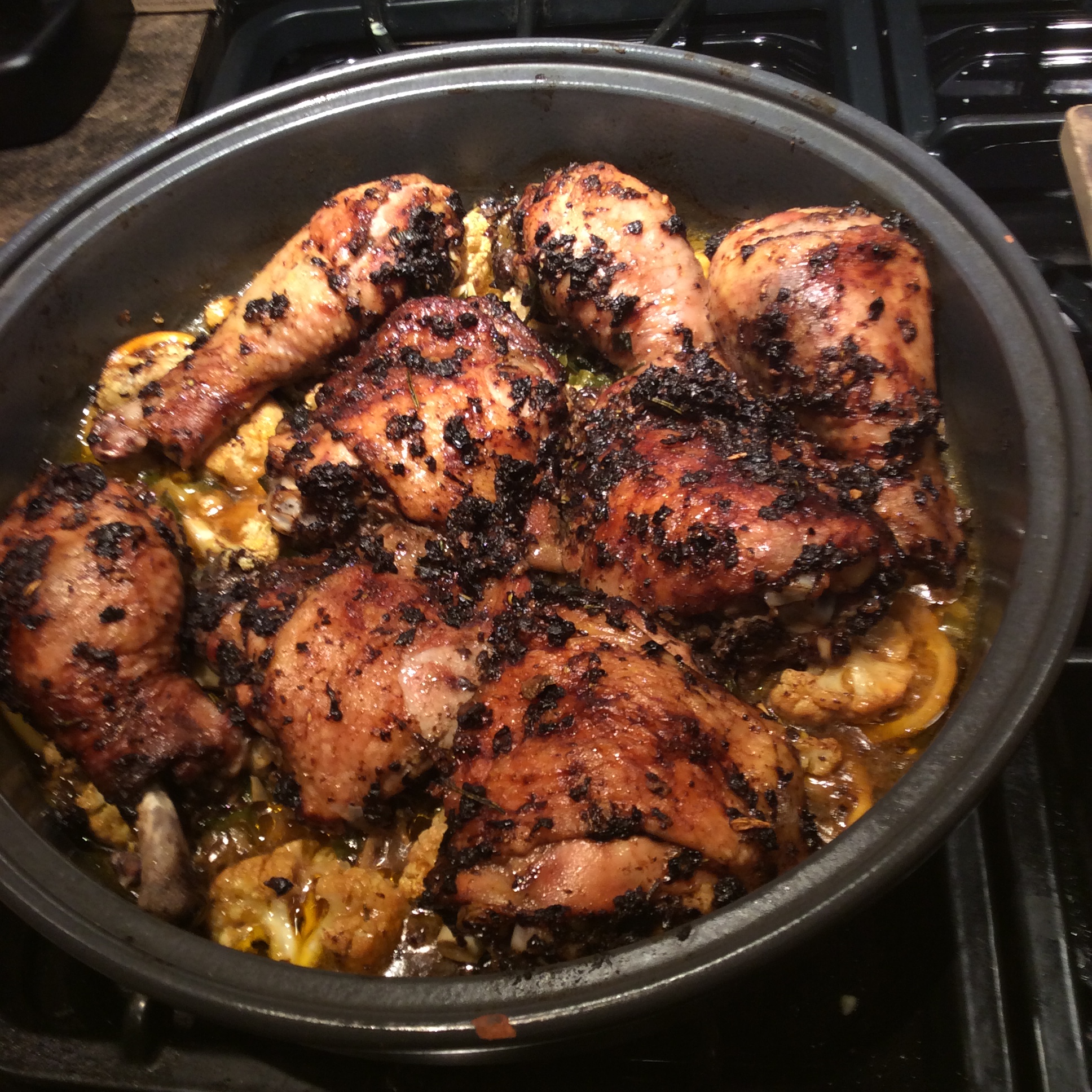
When I’m having special friends over for dinner and want to have plenty of time for serious conversation, my favorite weapon is a 14″ Spanish cazuela that I got at a Spanish import store many years ago. Any large clay baking pan would do just as well. The idea is to be able to roast chicken and vegetables together in chosen seasonings and have a veggie-rich low-carb meal come out of one pan without a lot of fuss, and be able to bring the baking dish straight to the table fairly attractively. Dark meat of chicken is ideal for a “mixed bake,” and if you don’t grow your own, get the best pastured chicken that you can lay hands on.
Decide on your seasonings. One of my favorites is a loose paste of a few cloves of garlic, about half a cup of oil-cured black olives, a little salt ( half a teaspoon or so, since the olives are pretty salty,) a sprig of rosemary chopped, the juice of half a lemon, and enough olive oil to form a runny paste in the food processor. Work this paste over eight pieces of chicken thighs and legs and set them in the refrigerator overnight.
Then choose your vegetables. A head of cauliflower cut into florets is top of the list for me because it takes up the seasonings so beautifully. Leave out all the stemmy center, which is a nice break for your backyard goat. I always add a cup of thickly sliced celery and a lemon sliced thin, peel and all. You can put in 7-8 chopped stalks of green garlic at this time, or if you already have some cooked green garlic in the refrigerator, it can go in later with the chicken. Have your veggies prepped in a bag in the refrigerator.
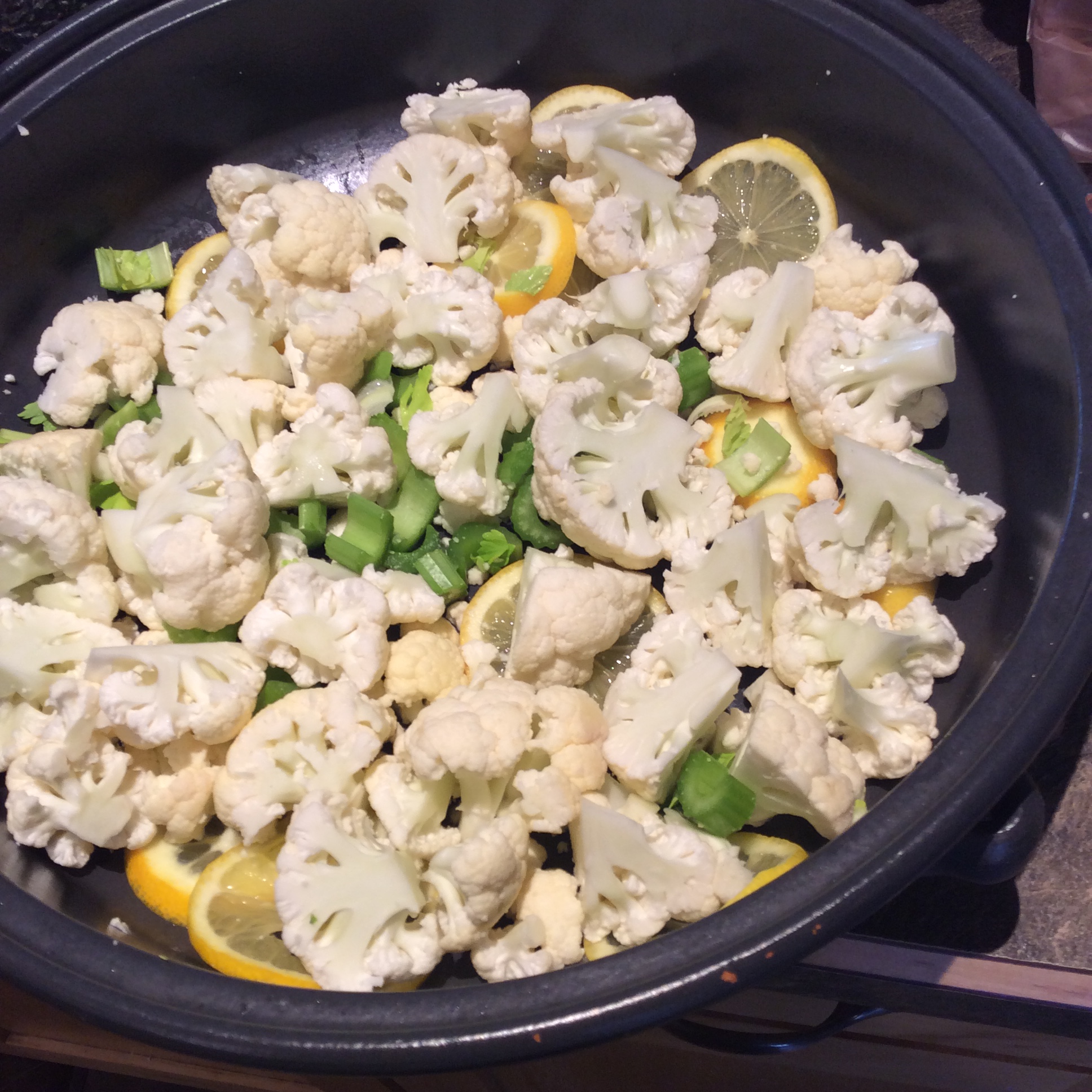
About forty-five minutes before you want to serve, preheat your oven to 425. Spread the lemon slices in the bottom of the dish and put the other veggies on top. Sprinkle lightly with salt but for the most part they will be seasoned by the chicken. Stick in the oven and roast about 20 minutes. Meanwhile, enjoy some wine and nuts or other nibble with your company. Pull the pan out and arrange the chicken on top of the veggies skin side up. If you like (and I do,) you can also add several stalks’ worth of green garlic at this time before putting in the chicken if you have green garlic waiting, pre-sautéed, in the refrigerator. Glop any remaining seasoning paste on top and pour in about half a cup of rich chicken broth to prevent burning. Return to the oven and roast until the chicken is done, put the pan on a trivet on the table, provide a large serving spoon and a pepper mill, and eat. That’s all there is to it.
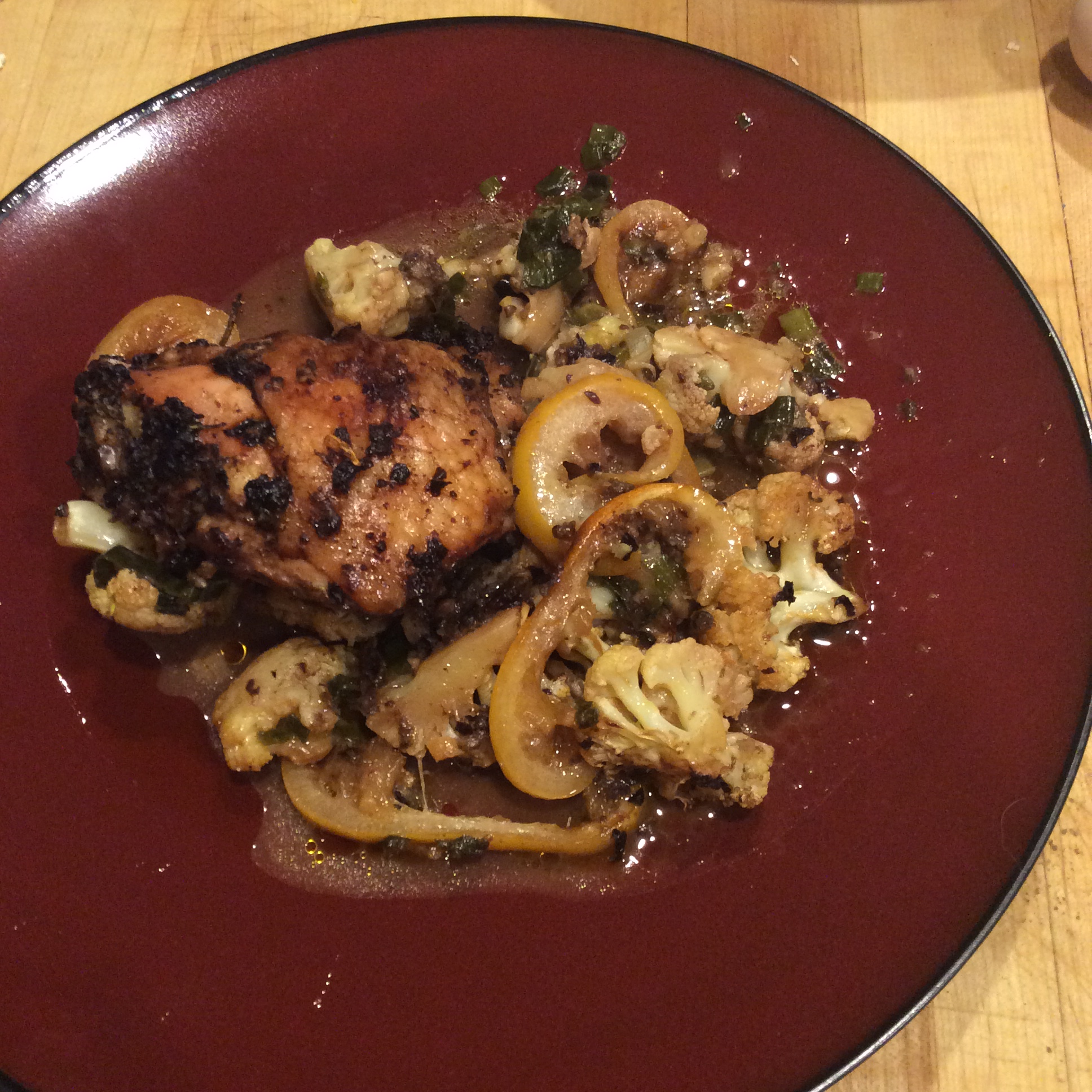
I find the softened, slightly caramelized lemon truly delicious and include a bit of it in each bite, but dubious guests can shove it to the side of their plate if they prefer and still get the flavor. I only suggest doing this with organic lemons.
Even people who don’t usually eat low-carb will find this a satisfying meal, but you can provide some toasted sourdough bread if you want to make sure.
Berries or dark chocolate or both make a good finish.
 My urban homestead