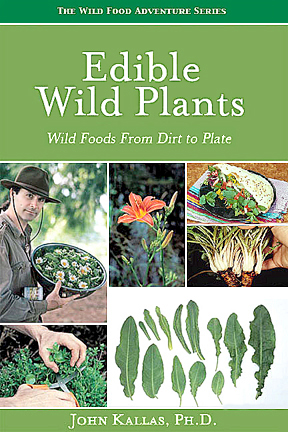
The holiday weekend was a great time to read in a warm spot, which reminded me that I should be sharing more of the books that I think are really helpful. I should add that I don’t accept free review copies; whenever I review a book, I paid the same price for it that you will. I think that this is essential to an accurate judgment of the value-for-money aspect of the books that I recommend.
With that in mind, John Kallas’s Edible Wild Plants: Wild Foods from Dirt to Plate is a very good value if you want to get started in foraging. I get a lot of inquiries about wild foods, and this is a book that I can recommend without reservation to any beginner; if you read and pay attention, you will learn to collect a number of common plants safely and prepare them well. Kallas concentrates on leafy greens which are found in most parts of the country, and he organizes them by flavor category in addition to giving accurate botanical and ID information. This is a lot more useful and practical than you might realize if you aren’t accustomed to foraging for greens. A well-balanced dish of greens needs a range of flavor notes, as well as a base of mild greens to build upon, and as you learn the plants from Kallas you will learn the notable aspects of their flavors. In my opinion, nearly any experienced forager could pick up a tip or two here, about preparation if not about identification.
Only greens and shoots are found in this book. If this seems too limited, keep in mind that most of us aren’t going to spend the time needed to forage and prepare wild staples, at least not most of the time. It’s romantic to read about gathering wild rice or arrowroot, or to imagine spending a clear autumn day gathering and storing fruit or nuts, but the wild foods that are widely available throughout much of the country for much of the year and that you can forage in a few minutes on your way home from work are mostly greens and shoots. Besides, if most of us were to make one change in our diets and maintain it, the addition of more green veggies would be a good one to pick. If foraging gets you to eat more leafy greens, this is a good thing.
If, like me, you’re a Kindle addict, this book is available on Kindle. I use the Kindle app on my Ipad so that I can see the photos in color. I daydream about eventually having a large collection of good foraging books on one e-device that I can carry around in my backpack, but unfortunately most of the wild-foods books available for Kindle are not of high quality. This one is.
DR. Kallas’s website can be found here if you’d like to order the book directly from him. You can also read his reviews of foraging books, and his thoughtful comments are invaluable when deciding what books you want to add to your collection.
Posts Tagged ‘leafy greens’
28 Nov
Books Worth Reading: John Kallas on Edible Wild Plants
15 Nov
Vegetable dinners: a roasted melange, and notes on gochujang
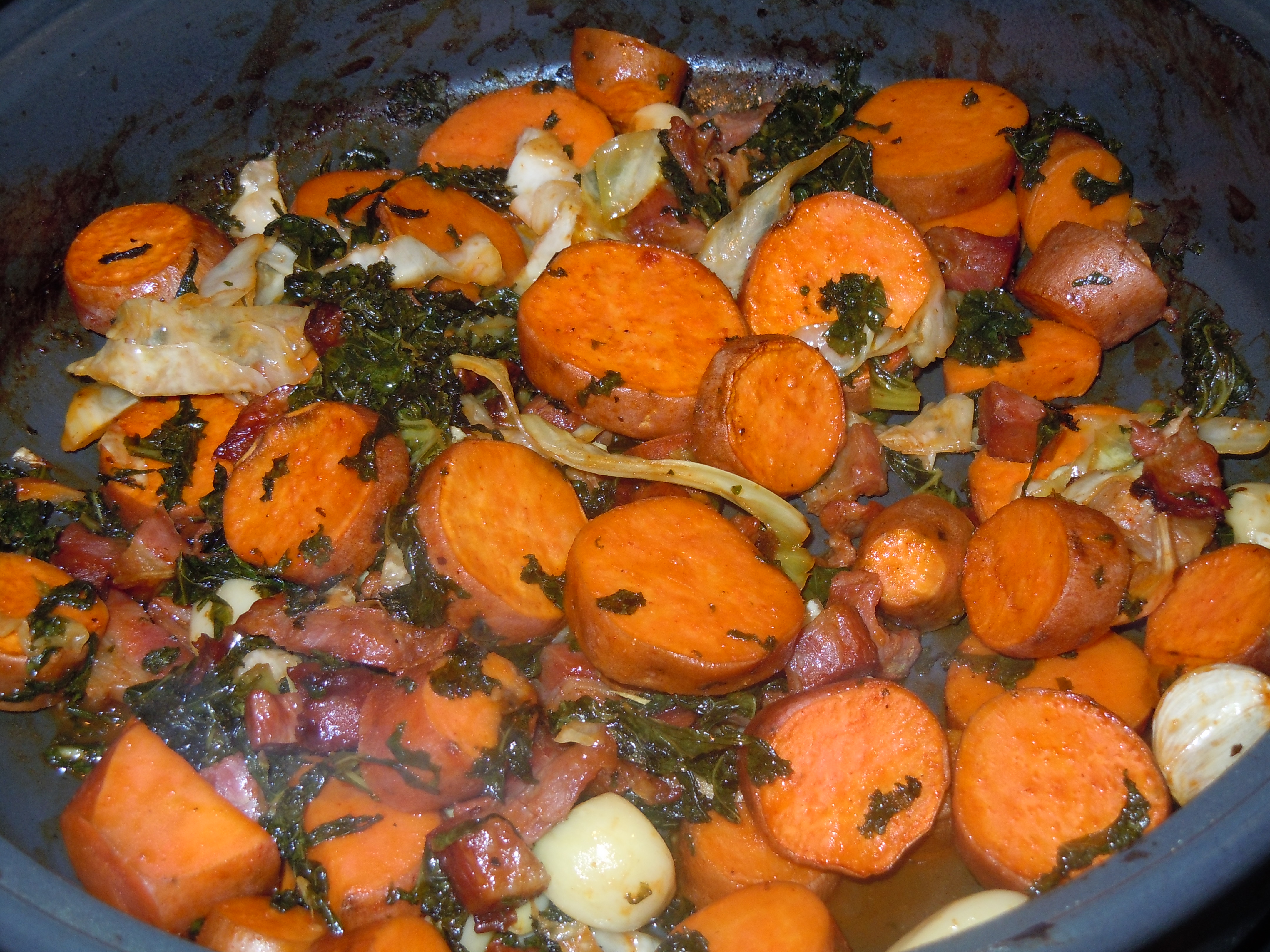
On frazzled days, one way to save time when making dinner is to put food in the oven and pretty much forget about it until it’s done. Many vegetables respond beautifully to this treatment, especially if flavored a little. I have a large clay Spanish cazuela about 14″ in diameter that I use for these impromptu roasts because I’m convinced that the clay improves the flavor, but you can use your standard 9X13 pan if you prefer. I am using a lot of sweet potatoes right now because I dug a lot of them recently, but I’ll include suggestions for substitutions. The idea is to use what you have and like.
You will need:
for the vegetables: 4 medium/large sweet potatoes cut in 1″ chunks (I scrub them well and leave the peel on), or a medium-sized winter squash peeled and cubed, or 6 large carrots scrubbed well and cut in 1/2″ chunks, or some combination of the above. I used sweet potatoes.
For the greens: 1 bunch of kale cleaned and cut in 1″ slices crosswise, or half a small green or red cabbage cut in thin slices, or 3/4 pound of sturdy leafy greens cleaned and cut in 1″ slices, to total about 3/4 pound. I used half Tuscan kale and half sliced green cabbage.
For the seasoning:
a handful of bacon, bacon ends, or pancetta, cut in little cubes. I used the tail end of a bacon slab.
3 large cloves garlic, chopped
3-4 tablespoons of olive oil
1 tablespoon of Korean gochujang paste (see below) or a teaspoon of Tabasco or other red chili sauce, or a teaspoon of red pepper flakes
about half a teaspoon of salt, or to taste
1/2 cup good stock or water
Preheat the oven to 375 degrees. Prepare the vegetables and toss them in the cazuela or pan. Mix the seasoning ingredients and pour over the vegetables, tossing with your hands to distribute. Try to end up with the chunky stuff mostly on top and the green stuff mostly on the bottom. Put the cazuela in the oven. Half an hour later turn the veggies with a spatula, and if the bottom seems dry and things are starting to stick, add a little more stock or water. Again, try to keep the greens mostly below the other stuff, where they won’t dry out. After an hour, check the vegetables for doneness. You don’t want them crisp for this dish; they need to be cooked through, a little soft, and well impregnated with the seasoning ingredients. When done, drizzle a tablespoon or so of your best olive oil over all, bring to the table in the cazuela, and eat with a crusty baguette or toasted whole-wheat bread, as you prefer. It couldn’t be easier or healthier.
You can leave out the bacon or pancetta and have a vegan/vegetarian meal. I don’t recommend it, because the pork has a wonderful alchemy with the sweet winter vegetables and the chili paste, and creates a whole much greater than the sum of its parts.
Now and then we find an ingredient that represents the Platonic ideal of its kind. For me, the Korean chili paste gochujang is the seventh heaven of the chile pepper. There is nothing quite like its deep, intense, fermented flavor, unctuous texture, and exquisite mahogany color, and it has a special affinity with pork and a thousand uses outside of traditional Korean cooking. These days the only gochujang that I will use is the one from Mother-in-law’s Kimchee, which does have some sugar in it but no high-fructose corn syrup and is properly fermented and deep and delicious. If it isn’t available in your area, you can order it online. I like the original one, called “concentrated” on the label.
I talk a lot about making dietary and lifestyle changes slowly and one at a time. This is a great time to start thinking about eating more green leafy vegetables. Salads are great, but cold weather is a perfect time to incorporate more cooked greens as main dishes, side dishes, or soups. If you garden, kale and cabbage will help get you through the winter. If you forage, dock, chicory, and dandelion greens are among the few wild foods available in winter in our area (plan to mix them with milder greens from the garden or store.) If you buy at the store, Tuscan kale is everywhere, and since there is no better leafy green, go for it. I do recommend sticking to organic greens wherever possible. If you always have garlic, olive oil, and a little good bacon or pancetta in the house you are always ready to make a lovely dish of saute’ed greens, and there are lots of variations. Check out my “greens” category on this blog for more recipes. I know I have said this before, but I’ll keep saying it: don’t undercook them. The thicker tougher greens like curly kale are acutely unpleasant to eat when undercooked and tough, so taste before sending to the table, and if chewing requires a ruminant level of effort, cook five minutes longer and taste again. Mark Bittman is now galaxy-famous as the author of many authoritative cookbooks, but few people are aware that his first effort was a little gem called “Leafy Greens.” You can still find it second-hand, and it’s worth tracking down. Read it and use it, and your family’s health will benefit.
26 May
The Greens of Summer: curly mallow
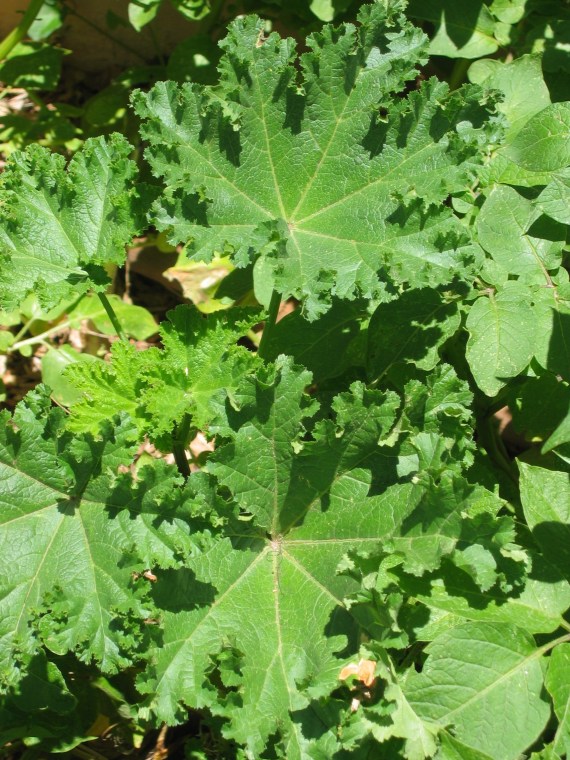
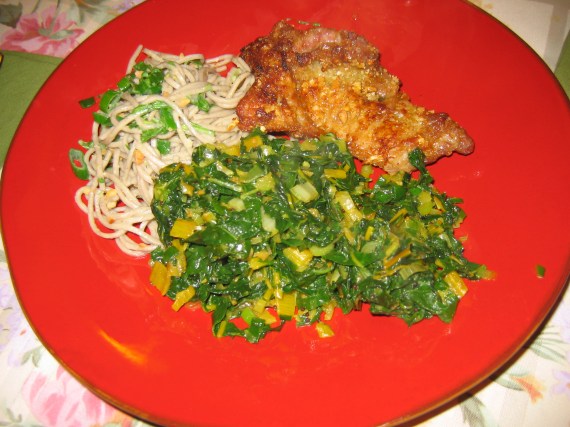
As our days heat up, our spring greens lose their luster, and we need green vegetables that can thrive in our intense sunlight. Fortunately, there are a lot of them. Curly mallow, Verticilla crispa, is one of the best in my opinion; it’s productive, disease-free, and hits its stride just as the spinach is bolting and goes on until a hard frost. The flavor is very mild, and the leaf has a demulcent “thickening” quality that gives body to greens mixtures. The plants can reach 5′ tall. I got seeds from Nichols Garden Nursery a few years ago, and it has seeded itself around nicely ever since. I often mix it half and half with Swiss chard, as I did here in an Indonesian recipe that I love and cook often.
Continue reading
27 Apr
The Greens of Spring: Scorzonera and Chicories
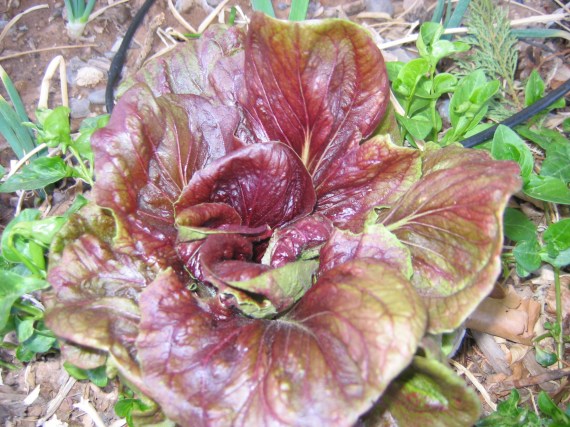
If all the greens you grow are sweet mild greens, your greens dishes will be bland. You need some vigor and some bitterness to make a hortapita or other mixed greens dish come alive. Chicories are a large, drought-tolerant, highly adaptable family well worth getting to know. Our local company Gourmet Seeds in Tatum, New Mexico has the most comprehensive selection I’ve come across. I bought my seed from them last year, and haven’t had to replant. Above, you can see what radicchio looks like in early life. I plant mine in late summer, harvest a small but usable head in late fall, ands take care not to harm the crown of the plant when I cut it for use. If the root and crown are left in place, next April they will look like “earth roses” as you see above. Cut the outer leaves for cooking. Taste before use, and if they’re very bitter blanch them in boiling water for 1-2 minutes and drain well before cooking further in whatever way you choose. Otherwise, when concentrated by cooking, they will be more bitter than you want. Some people like even the outer leaves in salads. Taste before serving. See my “greens” and “recipe” categories for some dishes made with mixed blanched greens, including the hortapita post, which is a great way to eat a lot of greens and enjoy it.
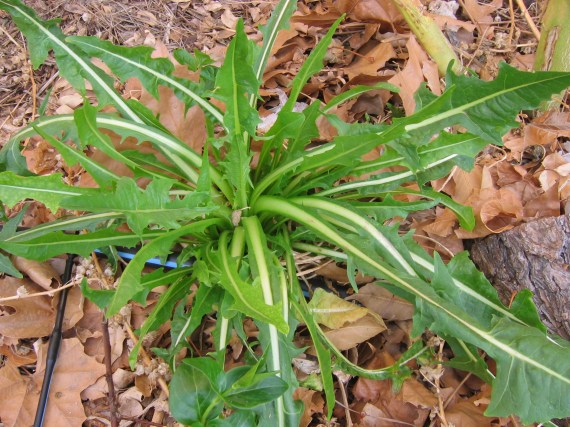
This is the chicory usually sold as “dandelion” in grocery stores. Cut the leaves until May or June; keep taking nibbles raw befre cutting, and when they go from pleasantly bitter to unpleasantly bitter, stop cutting or blanch before use. When very young, they’re good in salads. If allowed to go to seed, they’ll get 4 feet tall and seed themselves all over your garden. If this is not what you want, keep cutting back the stalks before they flower.
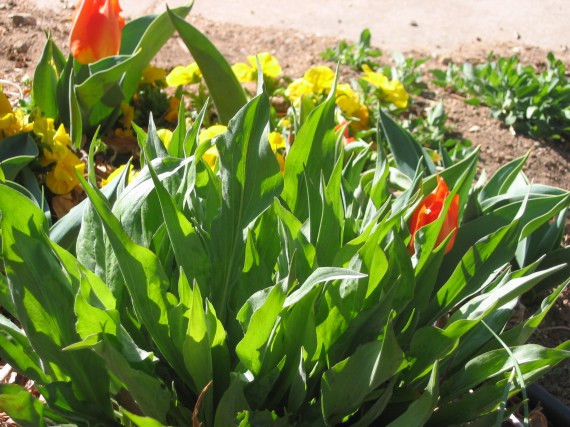
I planted scorzonera for the roots, but found that I wasn’t wowed by them. I left the remaining plants in place, and harvest a nice bunch of mild cooking greens from each plant every spring. After one good cutting, I leave them alone for the year. I’ve read that they can be used in salads, but to my tooth they’re too tough to use uncooked. They require no care and are very drought-tolerant. I prefer to mix them with stronger-flavored greens like chicories, and providentially, they’re harvestable at the same time. Vegetables that come up perennially with no fuss are too good to ignore.
For more about greens, see my “greens” and “herbs” pages on my website.
 My urban homestead