Posts Tagged ‘leafy green vegetables’

A Grand Mess of Greens

image

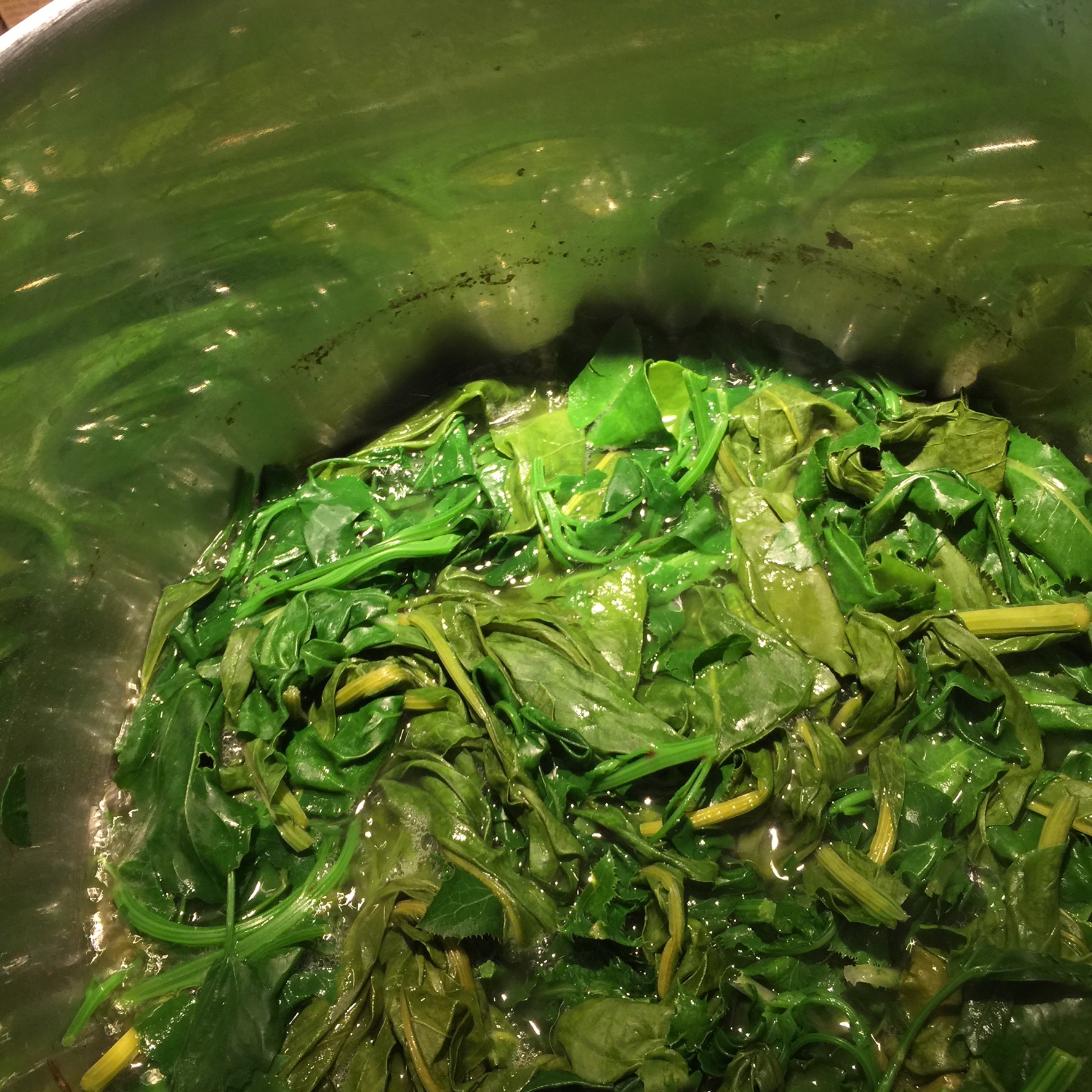
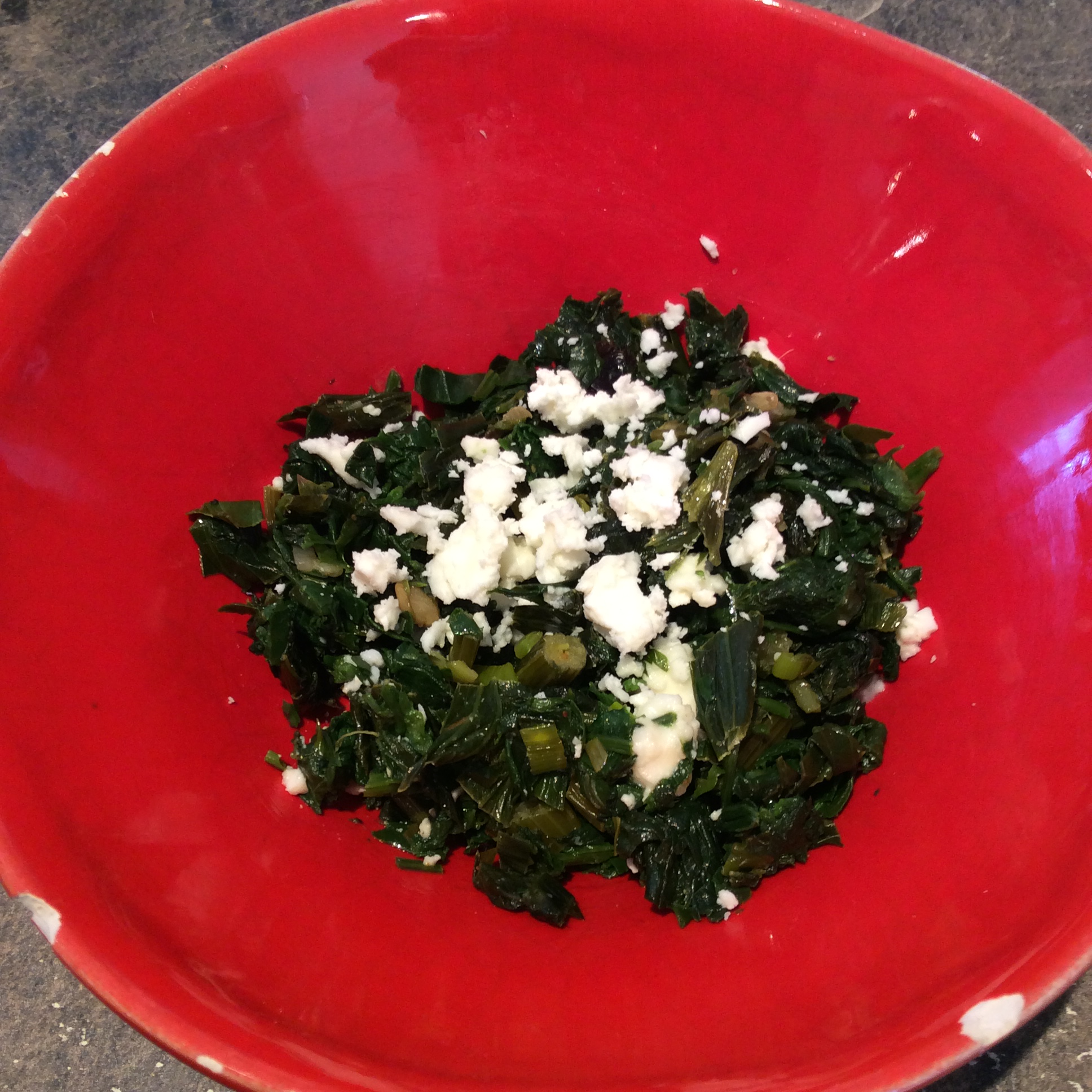
I love the various vegetables that the seasons offer me, and for the most part prefer to eat what my environment is offering me fresh that day. I do freeze greens mixtures, though, so that I never run short and have them all winter. Recently I came across a forager’s description of his “56 species calzone” and it made me want to count up the number of species in the large batch of cooked seasoned greens for the freezer  that I’m working on today.

The main components: chard, dock, lambs-quarters, spinach, nettles

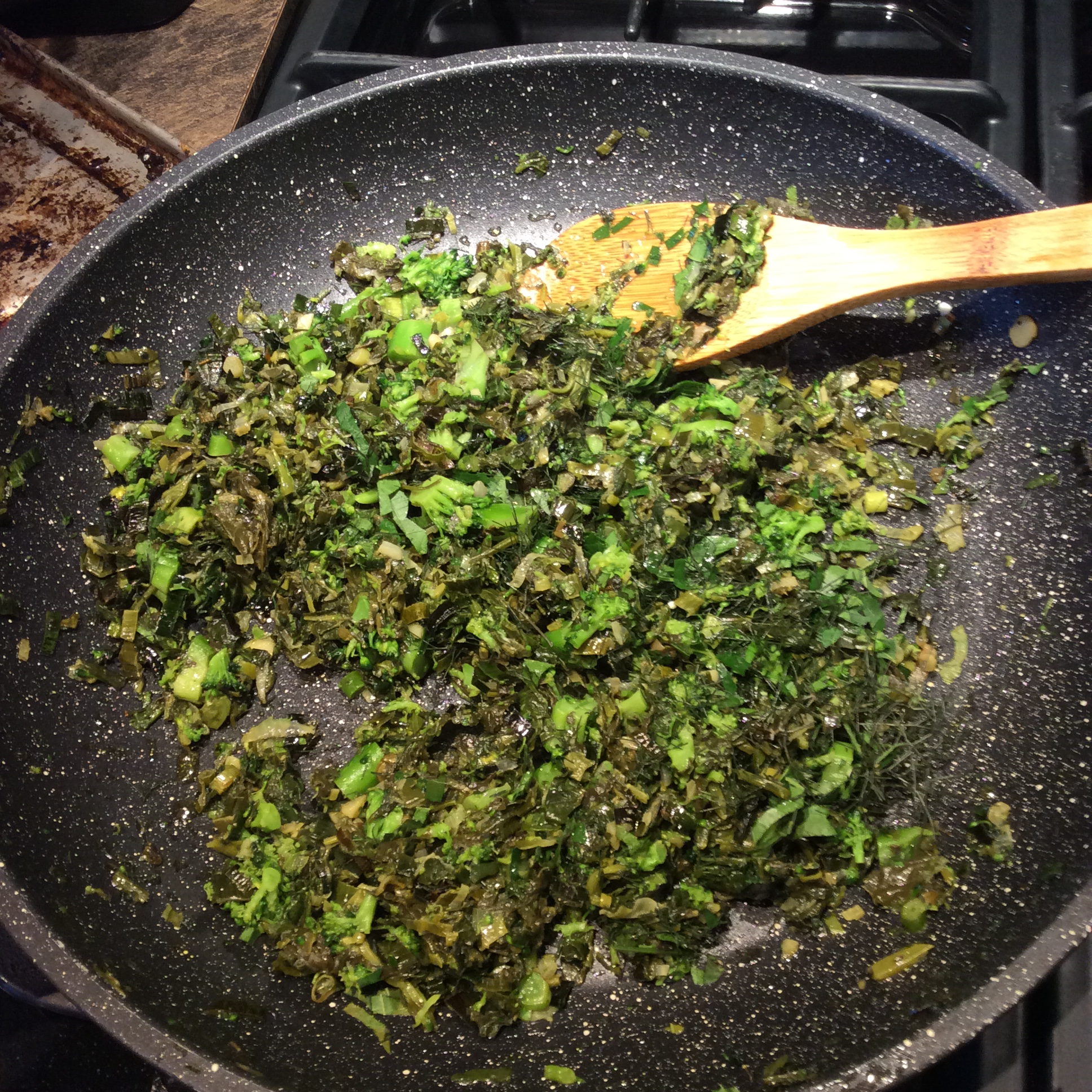
Seasonings and minor components: mulberry leaves, hops shoots, lettuce ( about to bolt,) dandelion,  scorzonera, salsify, sunflower, green onion, young leeks, elephant garlic, corn poppies, young grape leaves, marjoram, mint, fennel, mustard, cattail shoots, pea vines, broccoli leaves,  arugula, sow thistle, wild lettuce

Sauteed separately and added: chopped broccoli stems, grape leaves, green garlic

So, 30 species, a thoroughly respectable count for an average early summer morning,  and a potential treasure on winter days when I need to be flooded with the antioxidants of summer. In general I blanch the bulk greens in a fairly small amount of water which I later drink or make soup from, saute the chopped alliums and seasonings, then combine all and saute together for five-ten minutes or until the flavors have blended.
image
image

The true Cretan diet, the one that nourished some of the healthiest and longest-lived people in the world, was based on huge numbers of wild mountainside greens. It’s said that over 300 edible greens grow on Crete, and the average citizen can recognize over a hundred, making my 30 seem limited. But be assured that if you can learn to recognize ten of your local edible weeds and know when to harvest them and how to prepare them, your health and table will improve.  I’ve been tracking the preferences of a vegetable-despising friend, and he will eat greens, sometimes even second helpings, if they don’t look like greens on the plate. An example is the horta egg cake that I make often. He will even eat plain greens if they have a sweet component and a bit of texture, and an easy way to provide this is to douse them in the Quasi-Korean Sauce that I always have in the refrigerator and put a handful of roasted peanuts on top. If you eat bread, toasted sourdough bread crumbs provide delicious crunch on greens sautéed with garlic and chile flakes.
Be aware that greens have a remarkable capacity to absorb and mute flavors, and may need more seasoning than you think. Salt seems to disappear into them, and enough seasoning may be key to getting your loved ones to eat them and even like them. So keep tasting and adjusting until the flavor is right.
If you want to learn to identify some wild greens, gather them at the right stage, and cook them well, there is no better foraging author than John Kallas.
An Assortment of Shoots

image

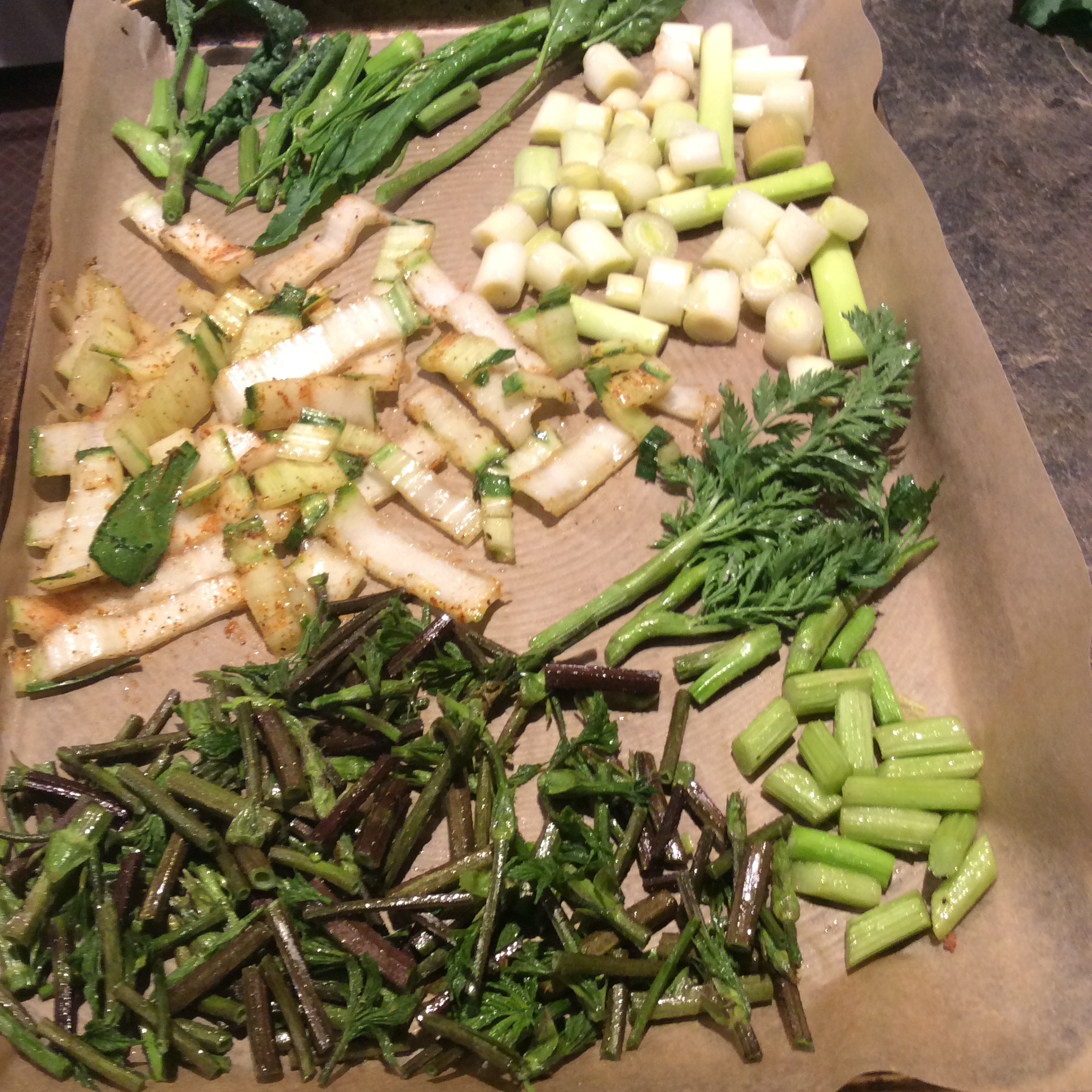
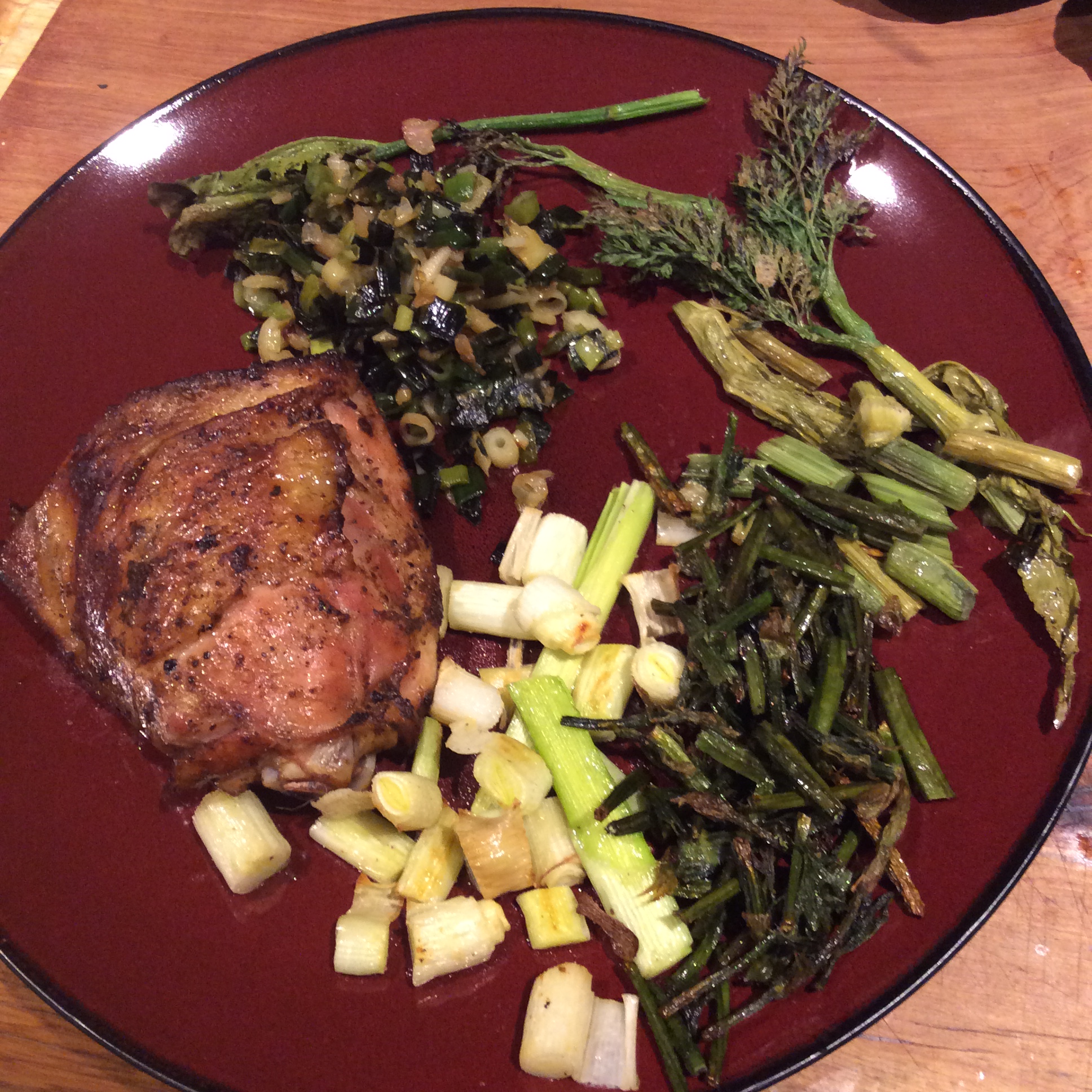
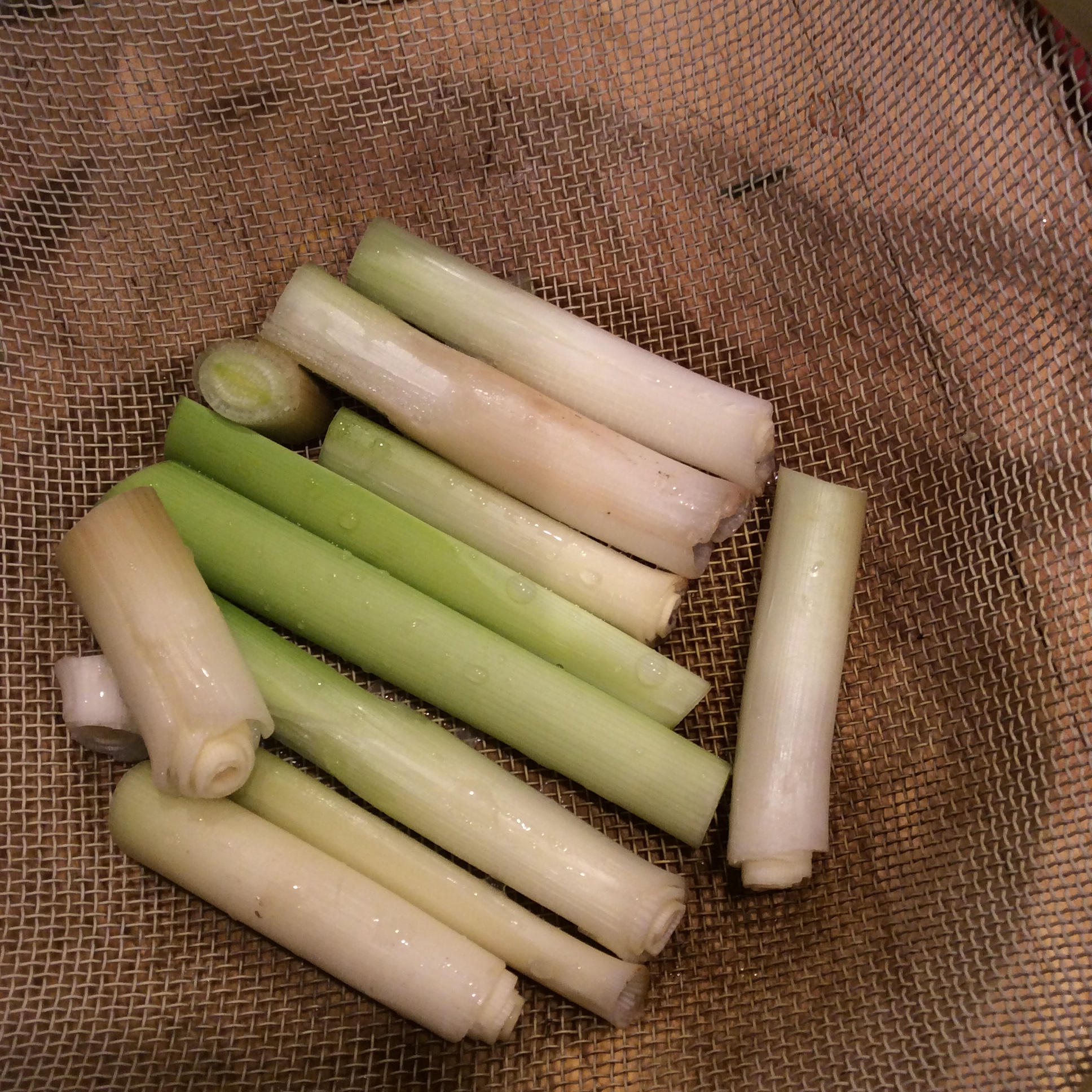
Last night I decided to try a grand assortment of the shoots found on or near my property right now. All would be oven-roasted in olive oil and salt at 500 degrees except for the garlic shoots, which are getting a bit tough this time of year as they elongate toward making scapes and need gentle stewing in olive oil over low heat for a long time, 25-30 minutes. They were cooked sparately on the stovetop.

The materials that I had to work with included a good-sized bundle of hops shoots, which I have shown many times before, and all of the following:

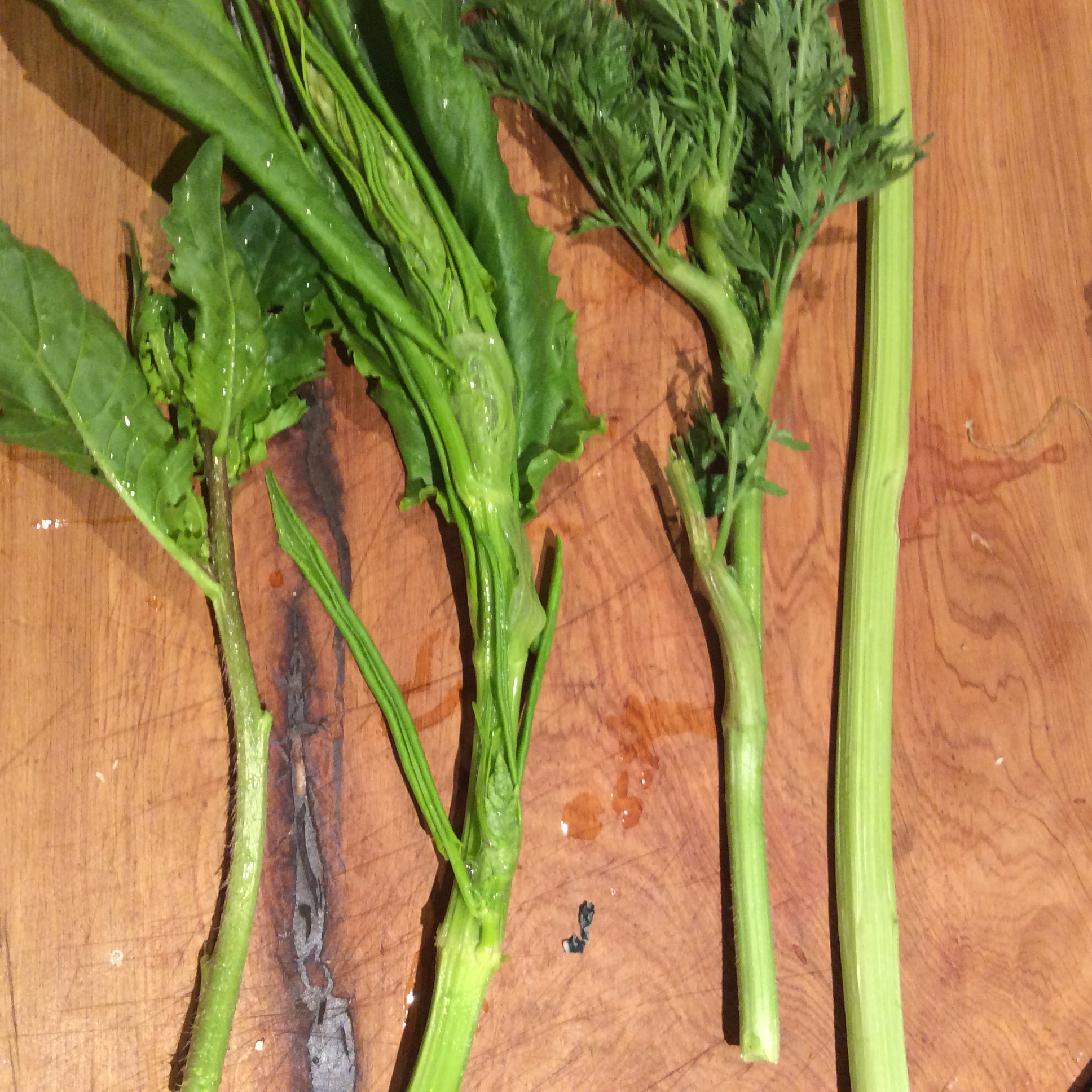
imageimage

Tender cattail shoots are shown in the upper picture. The one below shows, from left to right:

  1. Annual arugula shoot with buds only just beginning to show.
  2. Dock shoots harvested before any flower buds show.
  3. Carrot shoots from some roots that I didn’t get around to harvesting.
  4. Stalk of a sunflower picked at about 18″ tall and the very fibrous outer layer carefully peeled off.

They were tossed separately in olive oil and a little salt and kept in separate piles on the baking parchment so that we could discern the flavors accurately. All but the arugula were cut in sections an inch long or less to mitigate possible stringiness. I added a couple of chard stems cut in 1/4″ cross sections, after I used the leaves for something else.

image

Roast away in a preheated 500 degree oven, checking frequently and removing each at its preferred stage of doneness, i.e. when it looks roasted but not burned.

Consensus:

I have been writing about green garlic all season, so no need to say anything more except that, as always, they were delicious.

I love cattail shoots but my husband finds them only passable. Probably for solitary dinners in the future.

Love hops shoots with their feral, mildly bitter, “unimproved” flavor. Love them.

Sunflower stalks have a pleasant enough, rather innocuous flavor and nice texture when carefully peeled. There are those on the Internet who claim that they just pluck them and eat them. These people have probably never been near a sunflower. More on this later.

I have not yet found any way that I like chard stems except roasted and  ground into a fairly good baba ghanoush. Eaten alone, there is a touch of dirt in the flavor that doesn’t do it for me.

Dock shoots were amazingly good, with a soft center tasting of lemon with a strain of bitterness. Be sure to cut into sections before cooking to eliminate the stringy factor, and pull large leaves off. Smaller ones can be left in place and are tasty.

The arugula shoot was very slender but a bit stringy anyway. They, too, need to be cut into sections. Delicious though, although they are small and it would be tedious to pick enough for a meal.

Carrot shoots were the real surprise. When roasted in sections they were tender, sweet, and full-flavored with a touch of the terpene scent that makes carrot foliage smell aromatic and carroty. The remaining leaves got brown and crisp during roasting and added textural interest. I liked them so much that I am going to leave the rest of the row of woody second-year carrots in place until they produce shoots. Even when the roots are at this advanced stage my goat loves them, so the roots will not be wasted.

Initially I wanted to taste each type of shoot individually, but I will make a grand mixture in the near future by sorting sections roughly according to size, i.e. thin, medium, or thick. Then I’ll pan-fry them in olive oil in my biggest skillet, putting thick ones in first, then two minutes later mediums, followed by thin bits in another two minutes, then cook until done. Yum.

Look around you and see what’s producing shoots right now. If (and only if) you’re certain that the foliage of that plant is edible, try them out in hot olive oil. I enjoyed goji berry shoots a little earlier in the season, and will be trying wild lettuce and sow thistle within a week or two. Some grapevines produce delicious shoots, although some ( most notably my Concord vine) have so much papery fiber in the leaves and shoots that I consider them inedible; read more here.


Diet in brief

image

I very seldom talk about low carb/ ketogenic diets except with my patients because I think that your diet decisions are best made by you, in conjunction with the doctor who knows you best. But I will say here that ketogenic diet is, in my opinion, the most desirable treatment for type 2 diabetes and the only one with no side effects. I am also keeping an eye on the evidence for low carb diets in simple weight loss. So I wanted to pass on this public-information piece from the Harvard School of Public Health:

http://www.hsph.harvard.edu/nutritionsource/carbohydrates/low-carbohydrate-diets/
And of course, my reason for bringing this up on a gardening blog to to make yet another shameless plug for green and leafy vegetables. Your nearest farmer’s market will have them if you don’t grow your own. Just eat them. Lots of them. Eat them instead of the starchy stuff. Your body will thank you.
Kohl

My 200th post: Celery, Nose to Tail

image
My WordPress dashboard brought to my attention that I have been yapping endlessly about home food production for 199 posts. Naturally, I decided to make my 200th post about a green vegetable, the very thing that I am forever droning on about.
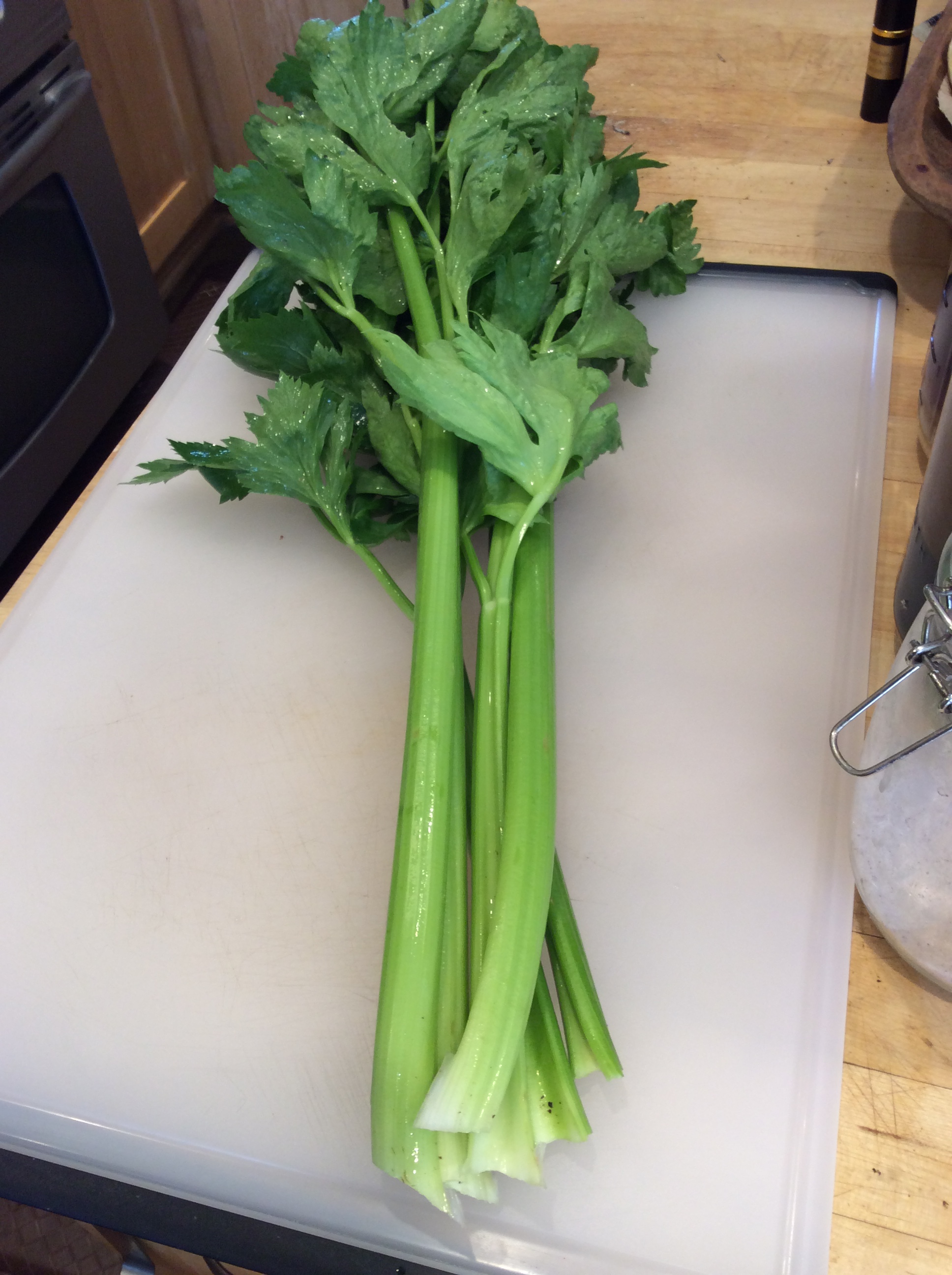
I never tried growing celery because I never ate that much of it. I crunched an occasional stalk, and as a homegrown Louisiana cook I cooked it in the mirepoix that begins so many Cajun dishes, but a bunch a year pretty much met my needs. Then last spring I noticed that a supplier had celery plants at the same time that I noticed I had a bed about to be empty. So I ordered a dozen plants as a lark.
As it turns out, celery is highly versatile in the kitchen as well as easy to grow. It needs your best soil and some elbow room, and here in the desert it has to be watered regularly. Given those conditions it will grow into a wonderful mound of greens.
For general snacking, stalks can be harvested as soon as they’re big enough. Break or cut near the base, but don’t damage the plant. The stalks are a little less tender than grocery store celery, and also a lot less watery and have a full delicious flavor of their own. I snacked away about four of my twelve plants and had eight big plants left by fall. After several frosts when the rest of the garden was over, the celery was green and robust and I finally got around to harvesting it. I never blanched the plants. Blanching produces lighter, yellower, and more tender stalks, but it is also a fair amount of trouble and I am as lazy a gardener as there is.
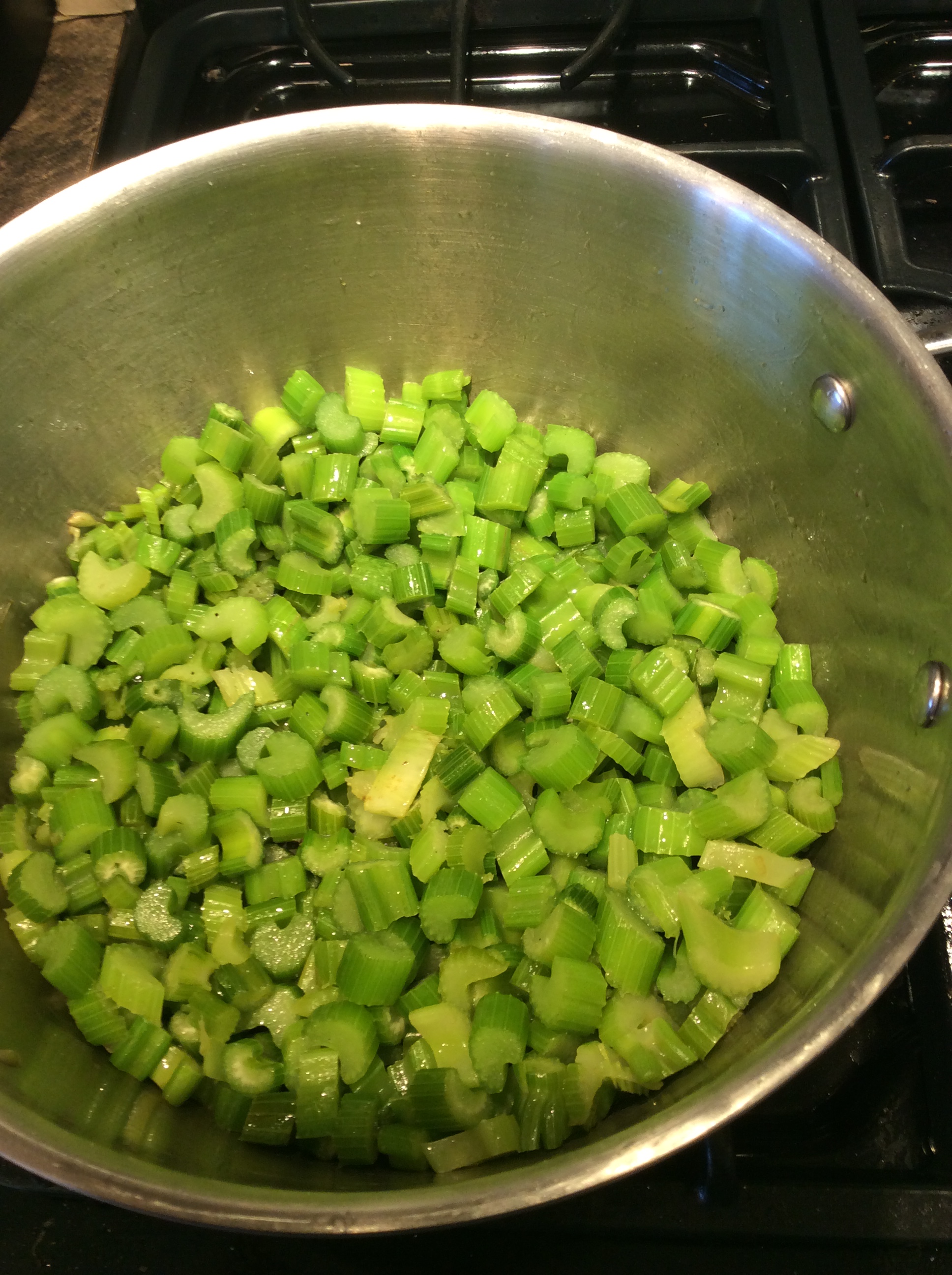
I cleaned the stalks thoroughly and cut them in 1/2″ cross sections and sautéed them in batches in very good olive oil. I thoroughly enjoyed eating them as a green vegetable, with salt and bits of fried guanciale on top. I froze a lot in vacuum-sealed bags to eat this way and to use in mirepoix and soup all winter.
image
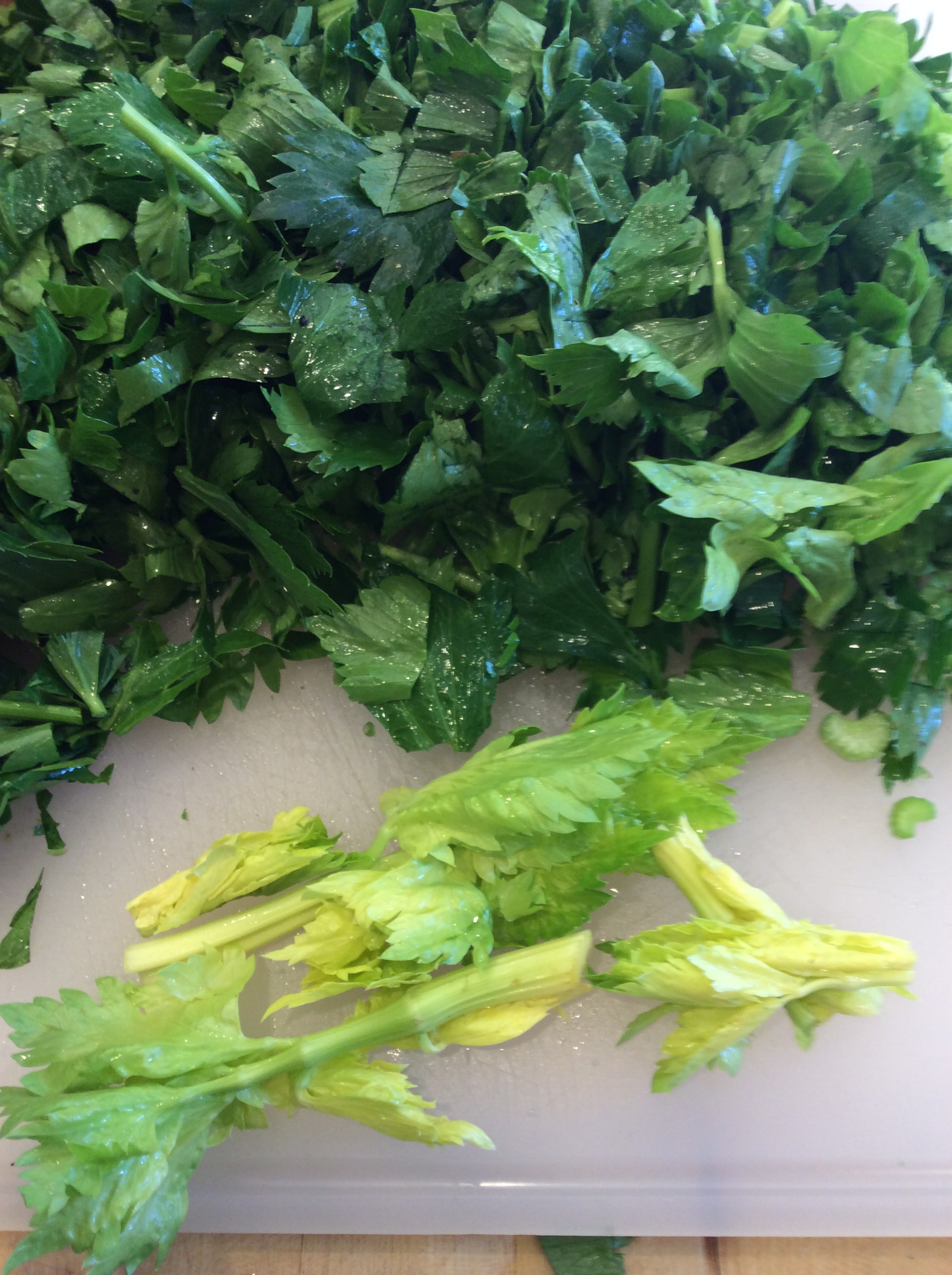
I was left with a counter full of the upper halves of the plants, all thin stalks and dark green leaves. I sorted out the pale self-blanched leaves in the middle, ate some dipped in olive oil as a cook’s treat, and refrigerated the rest for use in salads.
image
I was left with heaps of dark leaves like the ones toward the top of the picture above. I am not one to waste leafy greens, so I cut them in the same half inch cross sections, leaves and all, and sautéed them in olive oil until cooked. I put a bit of the cooked tops in a skillet with more olive oil and added a chopped clove of garlic, some salt, several chopped black oil-cured olives, and a squeeze of lemon to make a Horta of pure celery leaves. I ate it with crumbled feta and greatly enjoyed it, but have to say that this is a bitter green and probably only real greens-lovers will enjoy it. But when I made a horta with celery tops as about a quarter of the total greens and used milder greens to make up the bulk, I was surprised how much the bitter leaves added to the savory nature of the dish.
image
I sealed and froze the rest of the cooked tops and am using them with my frozen lambsquarters and amaranth to make horta that meets with general approval. I think that a bit of the pure celery-top horta would be good as a sort of herb salad next to roast duck to cut the richness, but I haven’t tried it yet.
I want to say once again, when cooking leafy greens, don’t be afraid to cook them. I often find the stronger greens tough and revolting when lightly cooked but delicious with 10 or 15 more minutes on the stove. As long as you are sautéing there is minimal nutritional loss. The thing I no longer ever do is blanch them and toss out the blanching water. If a sauté method isn’t appropriate, I blanch in a very small amount of water with frequent stirring, sort of half-steaming in effect, and drink the bit of water after it’s been drained off and cooled.

Just as a point of interest, a phytochemical found in celery called luteolin is being studied for neuroprotective effects. If true, one more reason to eat your celery, and your green veggies generally. You can find an abstract here.