Posts Tagged ‘garlic’

The Joys of Summer: Simple Lunches

july 2009 011
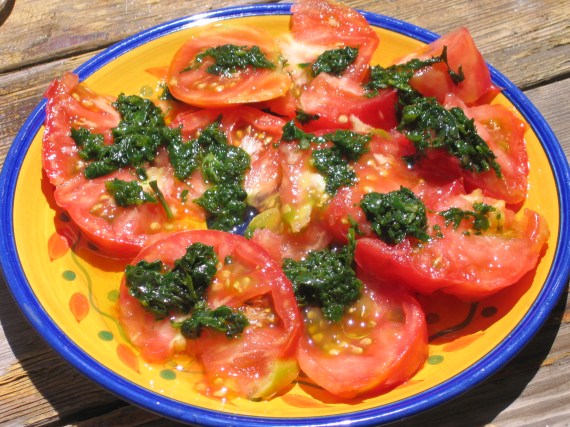
There are few things I love more than leisurely weekend lunches eaten on our back patio, with good food and sweet surroundings. I don’t like to fuss in the kitchen for these meals, though, and in this season there’s no reason to. With tomatoes and basil in the yard or at the farmers market, a bottle of olive oil, and a good loaf of sourdough bread, you’re set.

First, catch your tomatoes. Meaty beefsteak types are delicious here, but you can use any really flavorful tomato, including ripe sweet Sungold or Green Grape cherry tomatoes. If you have bland and blah tomatoes, do something else with them; this demands great tomato flavor. If you don’t bake your own bread, get a good loaf of crusty sourdough or a crusty baguette; in our area the baguettes from Sage Bakehouse are hard to beat. Make your basil into pesto according to your favorite recipe or use my own favorite below. During the summer, I usually have some pesto handy, and it will keep a day or two without much loss of flavor, making this truly fast food. It’s also good for a mixed group of omnivores, vegetarians, and vegans.

You’ll need (at a minimum) half a big beefsteak tomato or one regular tomato or at least a dozen cherry tomatoes per person. When you’re ready to eat, slice the tomatoes and spread them out on a plate. A lot of juice will probably run out on the cutting board. Make sure to pour it onto the plate. Juice is half the point here. Drizzle with pesto and sprinkle with coarse sea salt. Drizzle on a little of your best olive oil. Slice the bread and toast or grill it. Bring the tomatoes and bread to the table on two separate plates, with a small plate for each person. The lucky eaters will need a spoon to scoop tomatoes and juice onto their crusty bread. They will also need to be sufficiently at ease to shamelessly rub their bread into the delicious juices on the tomato plate. Have plenty of napkins handy.
For more on pesto, click here! Continue reading
The First Garlic

june 2009 008
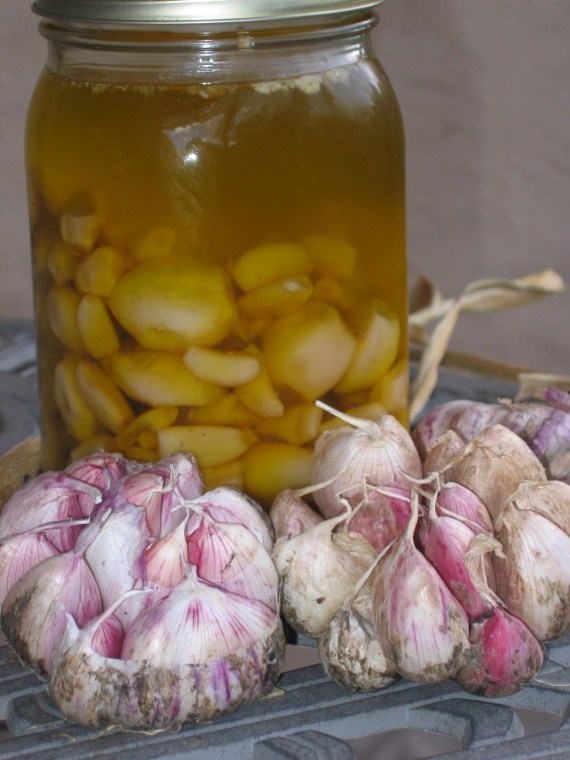
I think it’s underappreciated that garlic is as seasonal as any other vegetable. Sure, you can obtain it throughout the year, and personally I’m never without it, but the great dishes of sheer garlic debauchery- aioli, roasted garlic, chicken with 40 cloves of garlic, etc.- were designed to be made with fresh garlic, the kind you harvest in early summer, before it develops the slight (sometimes pronounced) acridness that comes with storage.
I grow three kinds of garlic, and one of them is Chinese Pink, which I get from Territorial Seeds. It’s a nicely flavored hardneck type, and I grow it because it matures fully a month earlier than any other garlic that I’ve grown.

See my earlier posts on green garlic and using the scapes of hardneck garlic for other uses of the maturing garlic plant, but by June the Chinese Pink is mature and I’m ready for some garlic confit. The confit process involves long, slow cooking at low heat in fat, olive oil in this case. The result is soft, mellow, and intensely flavorful without the sharp punch of raw garlic. It will keep in the refrigerator for a good long time as long as you make sure the cloves are well covered with oil.

Click here for the recipe!
Continue reading

Passing Pleasures: Artichokes

may 2009 019
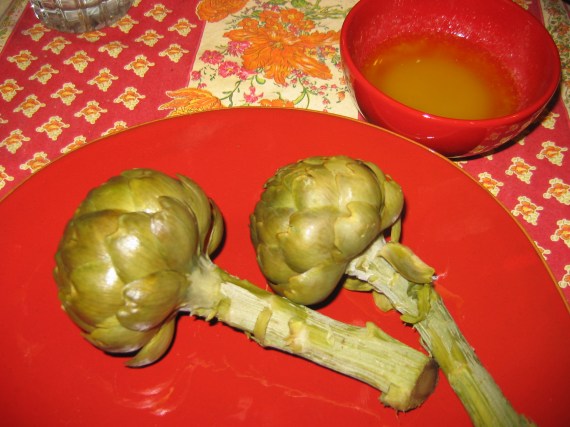
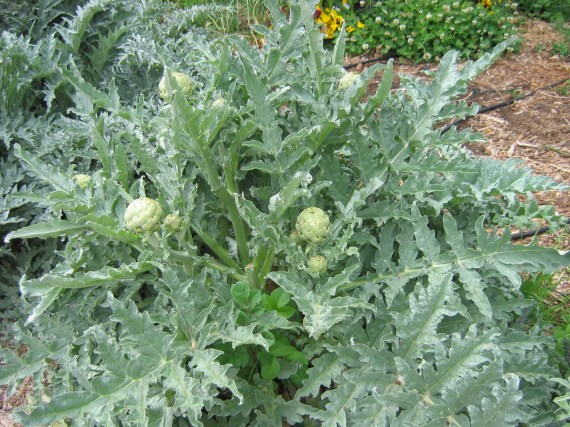
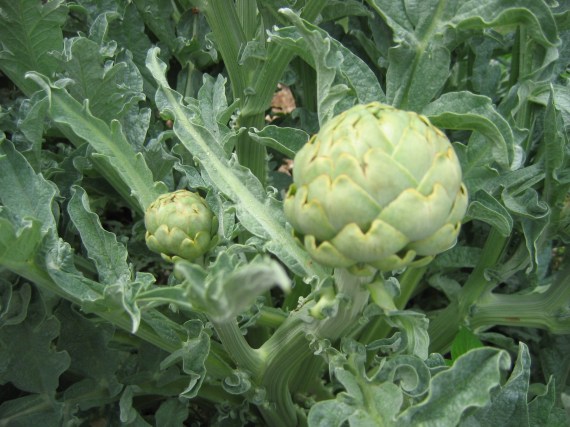
      Artichokes are a wonderful addition to the New Mexico garden. They are splendid silvery architectural bushes for the cooler seasons of the year, and provide a rare treat to their enthusiasts.

       One of the overlooked aspects of front yard gardening is that neat greens like Swiss Chard can’t be used as edging because passers-by don’t know vegetables when they see them, or don’t care, and so they let their dogs urinate on anything along the sidewalk. I solve this problem by edging my front garden with artichokes: the edible part happens a few feet off the ground, and until a squadron of Irish Wolfhounds comes to my neighborhood, I’m safe.

     Now is the time to start artichokes from seed, to enjoy next spring. I like the common “Green Globe” best. The plants typically live 3-4 years in our area. The scaly buds don’t get as big as they do on the misty west coast, but they’re very delicious. A deep watering once a week is plenty once they’re established. They don’t produce over a long season, but for two weeks in late spring we revel in all the fresh artichokes we can eat, and a rare feast it is, too. If you’re interested in such things, artichokes contain abundant amounts of two antioxidants, cynarin and silymarin, which are found only in the thistle family. I’m not sure what this really means nutritionally, but it does mean that when I feel tired and out of sorts, I can eat a plate of artichokes, telling myself that a good dose of cynarin will fix me right up. It usually does, too, unless it’s the bagna cauda or the general abundance of the season that I’m responding to.
may 2009 020
may 2009 018

For more on cultivation and recipes, Continue reading

The greens of spring: scapes

may-2009-014
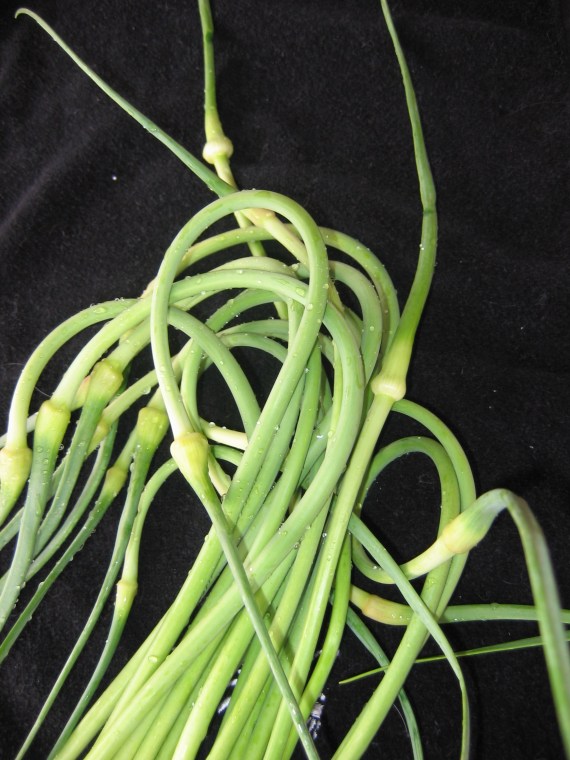
Garlics of the hardneck type have a wonderful array of flavors and are easy to grow. Separate cloves and plant them in early fall. Earlier in spring, green garlic could be harvested if you planted extra for that purpose, and it certainly is delicious. Please see my earlier post on alliums for more on green garlic. Now, though, the underground cloves are swelling and forming fibrous skin between divisions and aren’t good to eat as green garlic. But your garlic plants have sent up scapes, thoughtfully providing you with a pleasant garlicky green vegetable to tide you over until the “heads” are ready to harvest. You need to cut off the scapes, since they take energy from bulb formation, so this harvest is guilt-free pure bonus.

The scapes may have coiled into fantastical seaweedy coils. Make sure that you harvest them while the entire stem is still green, with no withering or yellowing. There may be a small touch of yellow around the blossom-sheath at the tip, but the stem should be all green. Cut them at the base of the highest leaf on the plant. Now wash well and cut each scape into one inch pieces, including the bulging part of the blossom sheath but discarding the long skinny tip above it. Now you are ready to cook them. See below for recipes and suggestions.

may-2009-015

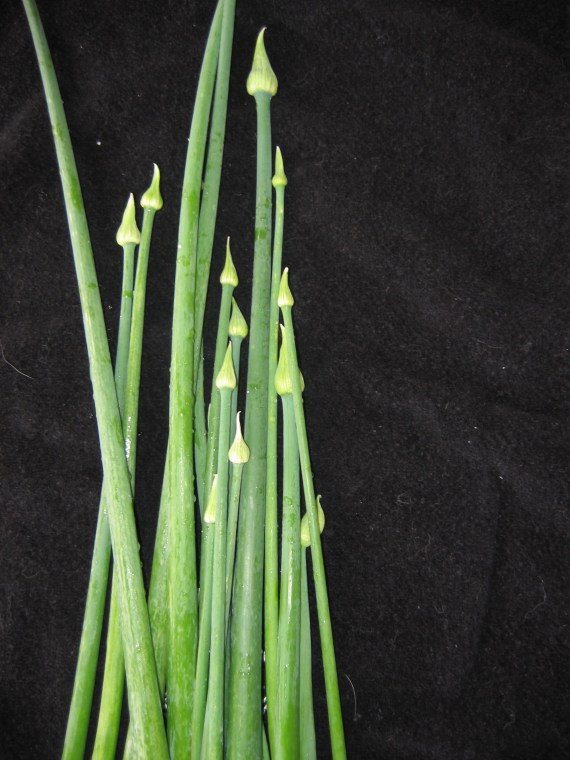
Onion scapes, shown above, are also a nice kitchen bonus. When green onions (see my last post) start to go to seed, this is what you get. Pick them while the blossom-sheath is still the size of the tip of your finger or smaller. Wash them and cut in segments as for garlic scapes, above. They need different handling at the stove. Click here for recipes and suggestions