10
Jun
Posted by wooddogs3 in cooking, edible landscaping, front yard gardening, fruit, home food production, preserving, recipe, sustainable, Uncategorized, urban homesteading. Tagged: cherries, cherry pits, cordial, edible landscaping, Jane Grigson, liqueur, mahlab, pie cherries, preserving, sour cherries, urban homesteading. 3 comments
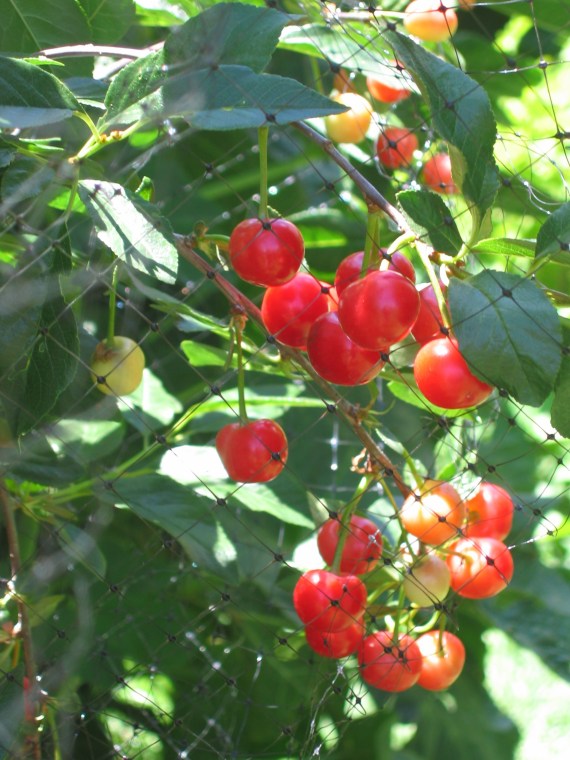
The single best reason that I know of to grow a pie cherry tree is to stand and gawk at it in full fruit on a sunny day. Even my dwarf North Star cherry, which is only two years old and no taller than I am, looks so stunning in the summer sun, with cherries glowing like Russian enamels, that I spend some time just standing there taking it in. But once you’re ready to stop looking and start eating, there are the cherries. Sour or pie cherries are of course perfect for pies, and they also make excellent jams, cobblers, etc. If you want a lot of good well-tested recipes, get yourself a copy of the British classic Jane Grigson’s Fruit Book. But I decided to make cherry liqueur this year, and so far the results are very promising. Remember, besides being economical and ecological and virtuous, this urban homesteading stuff is an awful lot of fun.
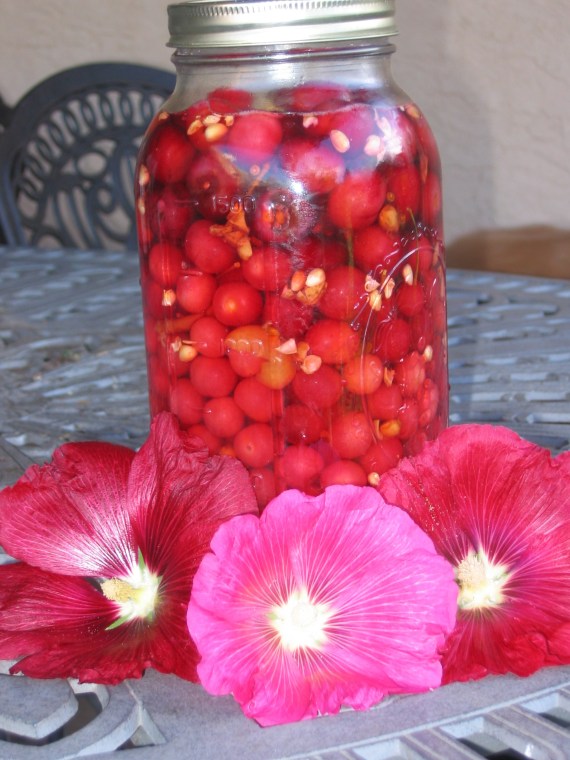
Click here for the recipe! Continue reading →
28
Dec
Posted by wooddogs3 in cooking, edible landscaping, front yard gardening, greens, herbs, salads, urban homesteading, vegetable gardening. Tagged: albuquerque, arugula, chervil, cooking, edible estates, edible flowers, edible landscaping, food garnish, gardening, lettuce, local food, salad, sprouts, sunflower, urban homesteading, vegetable gardening, winter. 1 comment
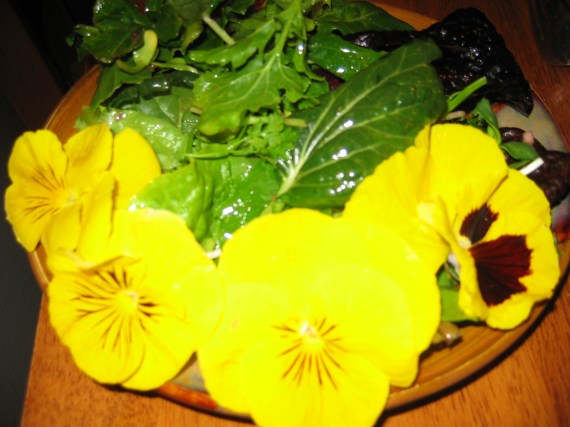
As part of our Christmas dinner, we had salads made entirely from our own yard produce. I had not used any season-extending devices at all, and we’d had cold weather and a few light snows, so these are the greens that thrive on cold and neglect. The “trim” is a ring of pansies, which I wrote about in an earlier post. The greens included arugula (see the post before this one,) pansy leaves (cool, tender, and delicious,) chervil, a few nasturtium leaves still surviving in a sheltered corner, my new favorite lettuce, and sunflower sprouts.
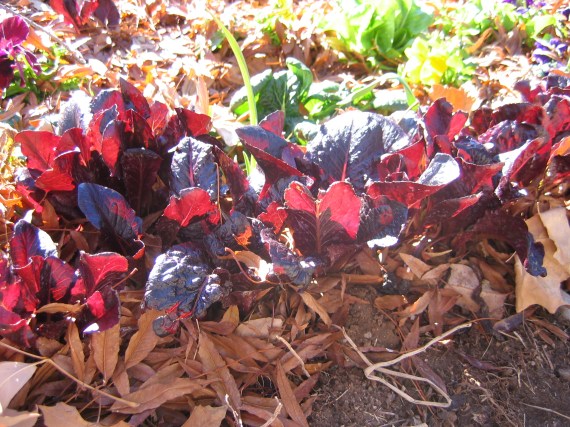
The lettuce that I’ve enjoyed most this year is a gorgeous deep red romaine called “Marshall.” I think I got my seeds from Territorial. the color is a dramatic foil for almost anything else, and it doesn’r get bitter in our sudden hot springs. It’s beautiful in the garden, too. You can see it poking up through a light mulch in the photo below.
The other photo shows my sunflower sprouts, and I wish I had known earlier how delicious they are. The first taste is pleasant and mild, but a delicious nuttiness rapidly reveals itself. These are the only sprouts that I’ve enjoyed eating out of hand, but they’re even better in a good mixed salad.
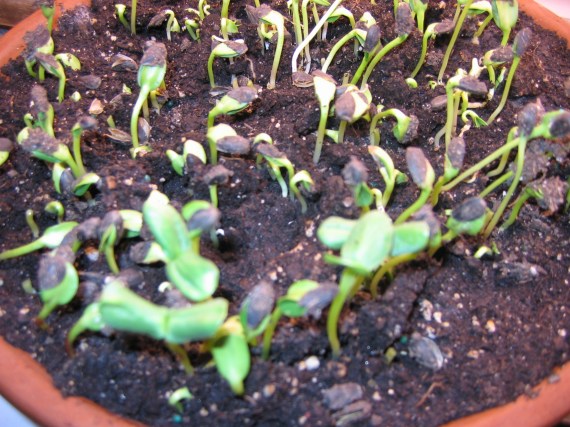
Sunflower sprouts seem to be best when soil-grown, and they need a little light. I have a grow-light for my spring seedlings, and it usually goes unused in the winter, so I used it to grow the sprouts, but a sunny window would be fine.
Start with a large flat container. I used a terra cotta saucer intended to hold a large potted plant, just because I had one sitting around. Put in an inch of good organic soil. Scatter raw organic sunflower seeds (in shell) very thickly on top, touching each other. Pat them into the surface, cover with another 1/4 inch or so of soil, water well but don’t make the soil soggy, and wait a few days. The books say to presoak the seeds, but I didn’t and they did fine. When they start to emerge, begin giving them light, and harvest when they are green and are trying to shed their shells. I snap them off at soil level with my thumbnail, flick off the clinging shell, rinse well and dry, and start snacking. They go well with spicy mesclun mixes but can also give depth to a simple lettuce salad. Grow lots, so that you can use them lavishly.
5
Dec
Posted by wooddogs3 in Uncategorized. Tagged: albuquerque, edible estates, edible landscaping, front yard gardening, local food, new mexico, self-sufficiency, urban homestead, vegetable gardening. Leave a comment
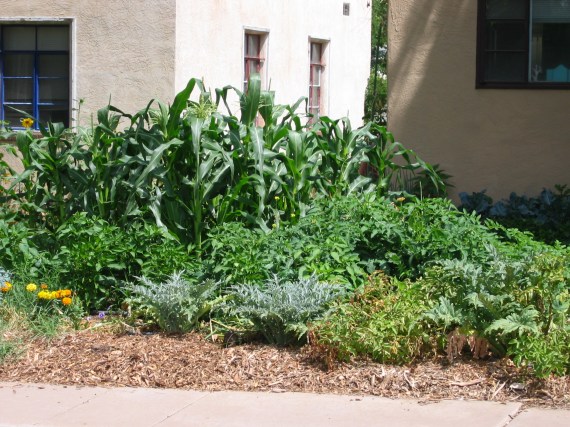
What a deeply joyful Thanksgiving I was privileged to have: here in New Mexico we had both a new president and a good long soaking rain, and in the high desert it’s a little hard to say which is more exciting. The garden is still providing some lettuce, arugula, herbs, and carrots, but I have more time to reflect on what I’m doing. This has led to thinking about what, exactly, my urban homestead means. It certainly doesn’t mean self-sufficiency. That won’t happen until I can grow coffee and olive oil. It doesn’t mean grimly making do. It’s a happy celebration of what one small piece of city dirt can produce. I have a medical practice and a number of hobbies, but growing my own food in the most space-intensive way possible is a lot of fun, and I have a website and blog to let other people know that, if they want to provide for themselves a little more, they don’t need to quit their job and move to the country. I don’t even think that’s the best way to start. Start where you are, with what you have. People with no land at all can bake sourdough bread and brew beer, and those are indoor “yeast gardens.” People with a balcony can grow herbs in pots. People with a tiny yard can utilize it. In the quest for local food, we can have the most local food of all, and if we have more garden space at other points in our lives, we’ll know more about how to use it if we’ve practiced in small ways. Please go to my website, www.localfoodalbuquerque.com, for more about urban gardening, and look at my blog entries on other pages for details about the many small pleasures that crop up along the way.
Most of my winter posts will be about canning, preserving, and using what was made during the summer. That’s also a way of remembering the abundant season and being grateful for what I received. So, here’s a fond look backward at
the colors of summer. 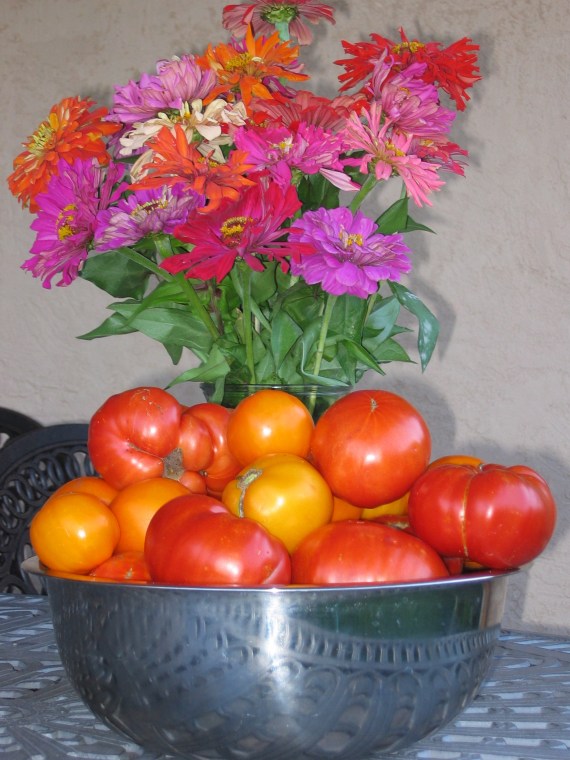
22
Nov
Posted by wooddogs3 in cooking, edible landscaping, front yard gardening, home food production, preserving, sustainable, Uncategorized, urban homesteading, vegetable gardening. Tagged: chiles, cooking, edible landscaping, local food, oven drying, pimientos de padron, red pepper, seasoning, vegetable gardening. Leave a comment
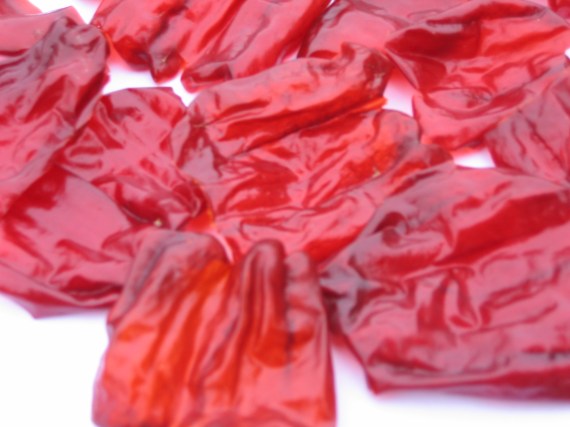
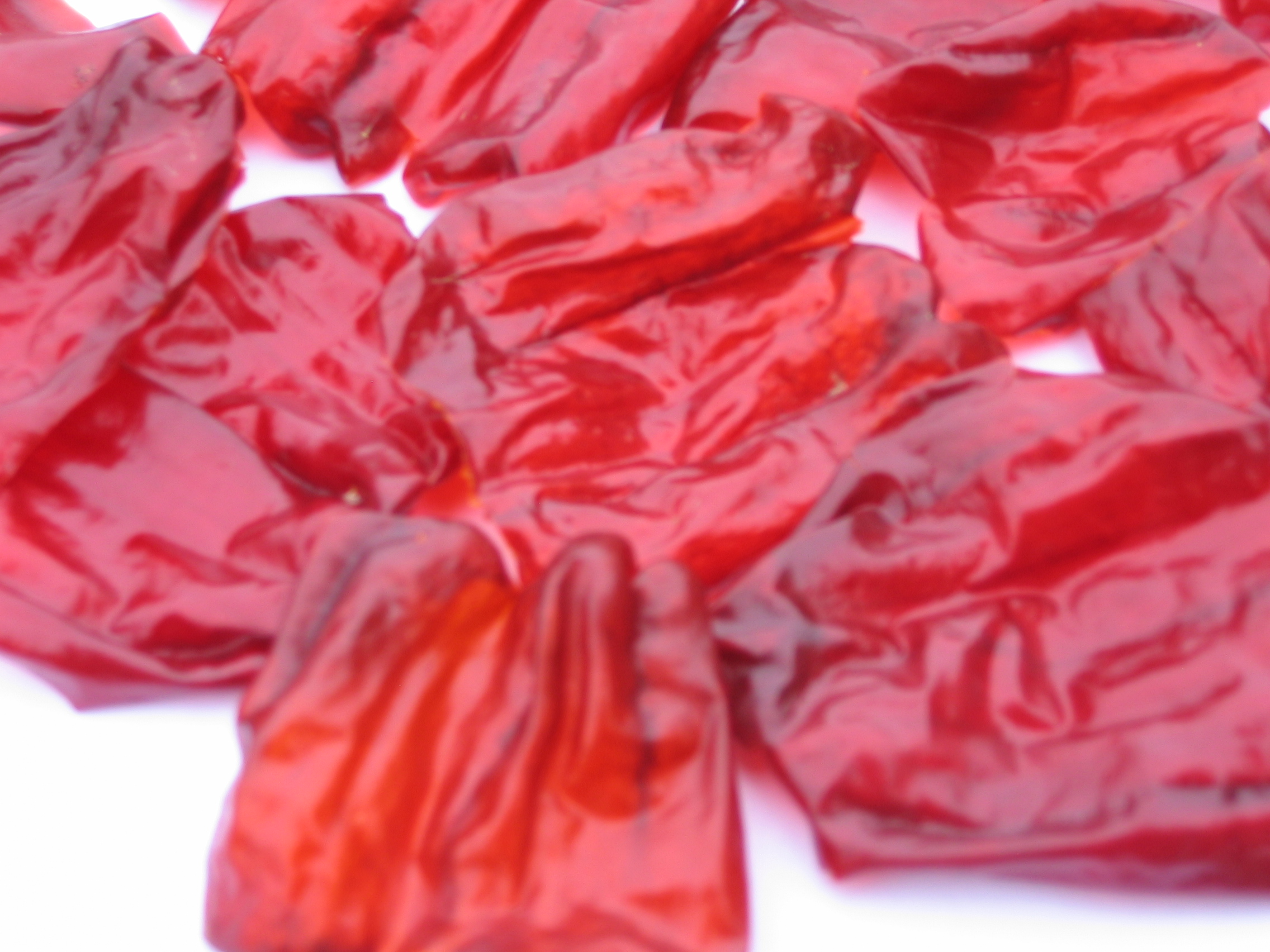
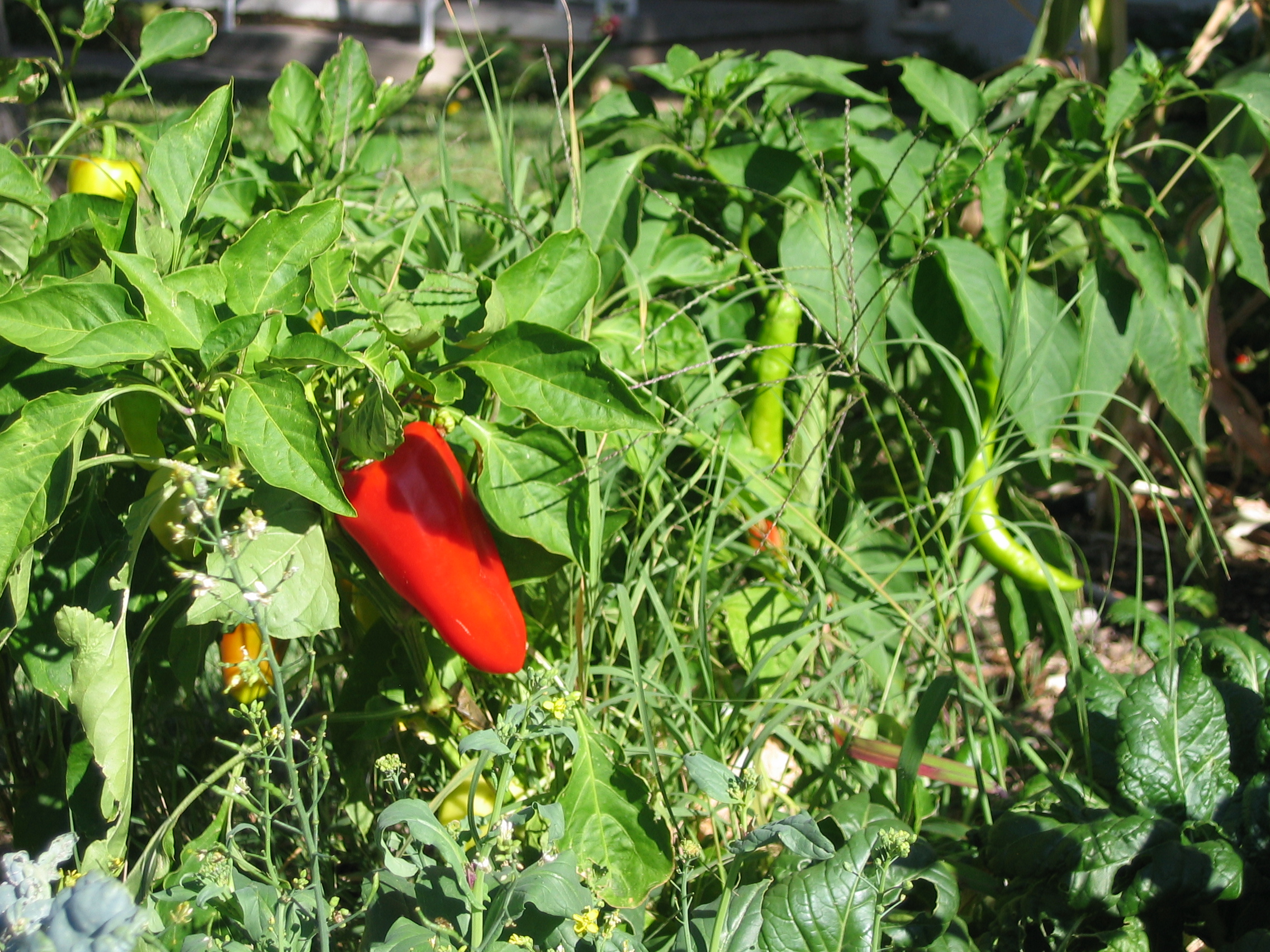
Here in New Mexico, we’re rich in chiles of all kinds. However, I seldom see or hear about one of the best, the Spanish Pimiento de Padron. In northern Spain, there’s a festival devoted to them when they come into season. The peppers are picked green, when about the size of large olives, and saute’ed whole in olive oil with some sea salt, then eaten hot as a tapa. About one in 8-10 is fiery hot, while the rest are pretty mild. Eating them is called Spanish Roulette, but we New Mexicans are up to it. After a summer of chowing down the green ones, I let the last flush turn red and dry on the plant, and make my year’s supply of wonderfully flavorful red pepper. I pick the somewhat dry, leathery peppers and slit each one open, lay it flat, and remove all the stem, seeds and veins. The sensitive will want to wear latex gloves for this. Spread them out in single layers on one or two large baking sheets and dry them in a very slow oven, 170 degrees if possible. Drying time varies with weather conditions and oven temp. Usually I dry them at 170 for about 4 hours, then leave them in the turned-off oven overnight. When dry, they are shiny and translucent and look like Chinese enamel; see above. Grind them to a powder in the blender and keep them in an airtight container until you need them. I keep a shaker of “yard pepper” on my dining room table, and love the way it adds snap and piquancy to a variety of foods. try it on fried eggs. The plants are very attractive, about 3′ high at maturity and fairly compact, so I like to grow them where they can be seen. You can get seeds at our New Mexico source, Gourmet Seeds.

 My urban homestead