Posts Tagged ‘antioxidants’

My Southeast Asian Summer: Turmeric

_Media Card_BlackBerry_pictures_IMG00146

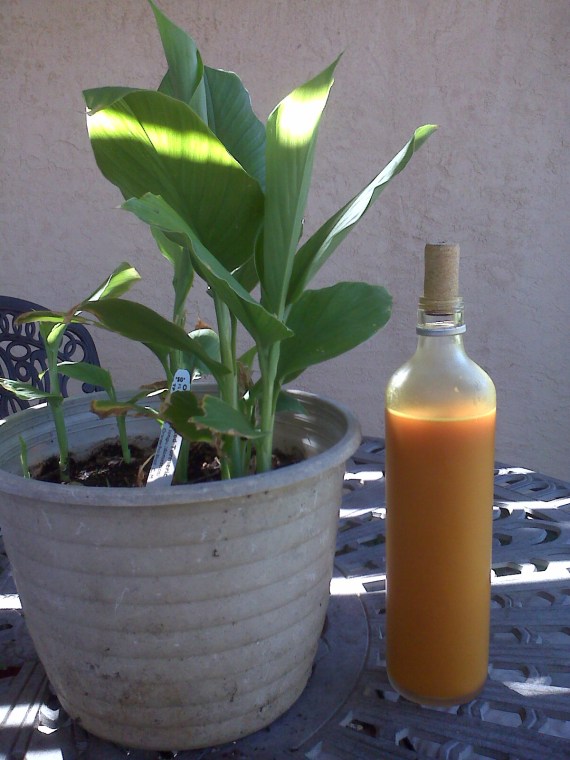
      Turmeric and its constituent components the curcuminoids, a complex of antioxidant and anti-inflammatory compounds, are getting attention and medical research dollars these days. But this blog is not about disease treatment or medical research, it’s about healthy and delicious food, and turmeric is here for its culinary qualities.  Both the roots and the leaves are a common seasoning in many parts of southeast Asia, and the leaves are impossible to buy in this area, which led to my experiments in growing them. It’s a tropical and needs to be brought indoors when the nights start to cool off, and during the summer it needs light shade and plenty of moisture. Initially I bought plants from an herb supplier, but since then have done better with plants I started at home.

       You need some roots from the store to get started. Put them on top of a pot of good organic potting soil and press them into the soil. Put in a warm place (a seed-starting warming mat will really speed things up,) keep moist, and within a month you’ll see small buds growing off the roots. In another month or so, you’ll have turmeric leaves to use.  It will prosper in a sunny window over the winter, but does best if it can go outdoors in the summer. Remember, part shade is important.

     To begin with the root, it can be grown in a pot but you are unlikely to get enough to use it freely. I don’t recommend the dried powder for most applications; to my palate if lacks the fresh vibrancy of the fresh root. I advise buying organic root, and you can often find it among the other fresh vegetables at La Montanita Co-op. Ask the produce manager if you don’t see it. It’s used in a lot of the seasoning pastes that I make for my southeast Asian cooking, so you’ll notice it in several of the recipes on this blog (use the search function to find them). But one of my favorite ways to use it is as a brilliant yellow-orange “juice” concentrate which I keep in a corked bottle in the refrigerator and add to water to make “sun juice.” The color alone is irresistible and cheers me up just to look at it.

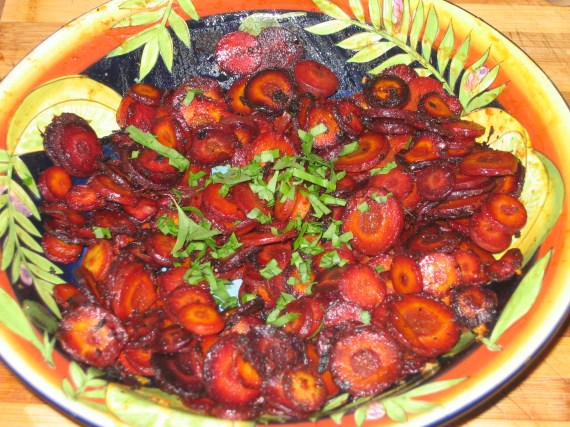
     The leaves are large, glossy and handsome, and look attractive when the pot is brought indoors for the winter, but remember that any plant you’re always snipping at for kitchen use won’t look great for long. When cut they smell very like a fresh, sweet carrot, and I love to season carrots with them. Clich the link below the picture for recipes.
august 09 007

Click here for recipes! Continue reading
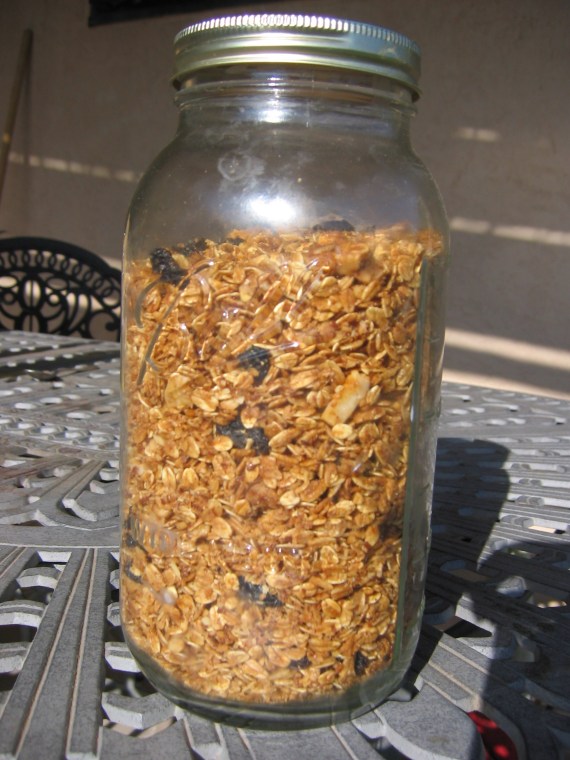
Kitchen staples: granola with chia seeds

may 2009 032

Kitchen experimentation is a lot of fun, but early in the morning on a busy workday I don’t feel very experimental. I want something comfortable and familiar, quick to prepare, healthy, and tasty. Oh yes, and I also want it to keep me feeling good all morning, not just give me a sugar rush to get me out the door.

       My homemade granola fits the bill perfectly. It offers whole grains, fruit, nuts, lots of fiber and antioxidants, and good flavor. If you eat it with yogurt, as I do, you get a good dose of healthy bacteria too. One easy kitchen job every 3-4 weeks keeps two people supplied with good breakfasts, plus an occasional handful out of the jar as a snack.

     I use agave nectar as the sweetener due to its low glycemic index and good flavor. I used to use vegetable oil but now use a light-flavored olive oil. This is a great vehicle for chia seeds, too. If you’ve read Christopher McDougle’s interesting new book Born to Run, you know about how the Tarahumara tribe uses chia seeds as an energy source. Personally, I won’t eat anything just because it’s good for me; it also has to taste good. In this recipe, chia seeds taste good.

Click here for the recipe! Continue reading

The Joys of Summer: more grilled vegetables

july 2009 013
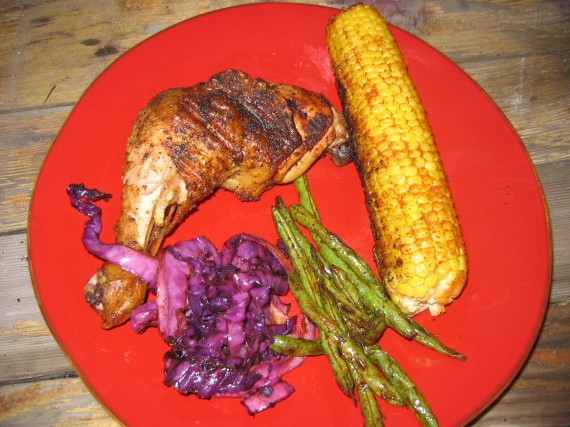
Here in New Mexico the hot weather has continued for a few weeks with no relief, and we’re doing more and more grilling to avoid heating up the kitchen. This has led to more and more experimenting with grilled vegetables, and so far we’ve loved them all. I also love having plates full of color, not just brown meat. If you want to reduce your meat consumption, eating more vegetables is a delicious way to approach that goal. To improve kitchen efficiency, I plan how to season each vegetable so that I can make the seasoning pastes in a sequence yet not have all the seasoning the same; this is explained in the recipe section. If you want more details on how to grill, I recommend the superb grilling cookbook by Francis Mallmann, Seven Fires. Grilling is an art, and can’t be taught in a blogpost. But it’s an art well worth aquiring.

The quality of your ingredients is paramount. I do not recommend any use of battery-raised commercial chicken, which is a disaster from the gastronomic as well as the environmental and humane standpoint. Commercially raised “free-range” chicken is only slightly better. Get some real chicken. I strongly recommend Pollo Real pasture-raised chicken; see the Delahantes’ website to see how they raise their birds. They sell at the Santa Fe farmers’ market, and it’s possible to arrange a pick-up in Albuquerque if you contact them ahead of time. Back when I had a farm and raised my own chickens, they tasted like Pollo Real chicken, by which I mean that they tasted like chicken, while American commercial chicken tastes strikingly like nothing at all. Battery farming of chickens pollutes the envoronment and spreads disease, as well as being a horrible life for the birds, so I avoid it. We need to support humane and sustainable farming, and the best way to support it is to seek out your local sustainable farmers like the Delehantes.

If you have a grill with a griddle section, you’re all set. Otherwise, a heavy cast-iron skillet could be used where a griddle is specified.
Clich here for the recipes! Continue reading

Sharpening the Flavor: Lemon Jam

march-2009-059
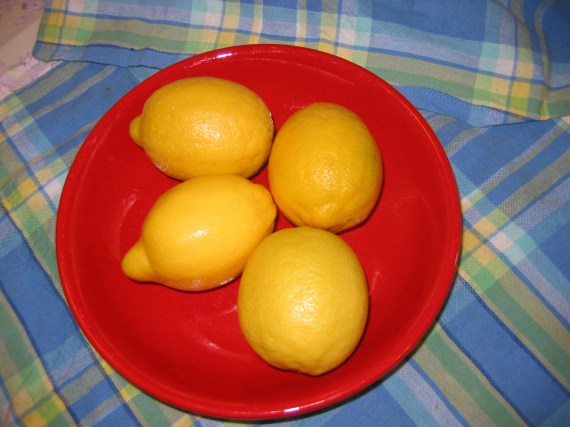
Mario Batali’s Lemon Oregano Jam has achieved a lot of Internet fame, but all the recipes floating around for it were disappointing. All involve removing the zest from two Meyer lemons, blanching the zest, carefully removing all white pith from the lemon segments, and pureeing the zest and segments with olive oil, salt, and sugar. The result was unimpressive. Just recently I found a better version in Sally Schneider’s interesting cookbook The Improvisational Cook. It tastes better, has a better texture, involves less work, and as a bonus is brimming with hesperidin, naringenin, and the other antioxidants found in citrus. Just one caution: don’t make it more than an hour ahead. It does get bitter if it sits.
Cut two organic Meyer lemons into slices. Carefully pick out all the seeds. Put the slices in the blender with a teaspoon of salt, 3 tablespoons of sugar, and enough olive oil to make the blades run, about 3-4 tablespoons. Pour the velvety frothy puree into a small bowl, add 2 tablespoons of chopped herbs if you like (thyme is my favorite here) and serve. It’s a wonderful fresh relish with almost any greens dish, especially hortapita (see the post of 3-22-09), and is wonderful with grilled seafood or fried fish. A spoonful is a good addition to a salad dressing. Or, as I am prone to do, dip the tip of a spoon into it and lick the spoon slowly and thoughtfully. Your parotid glands will pucker and your mouth will come alive. And why not? After all, it’s spring.