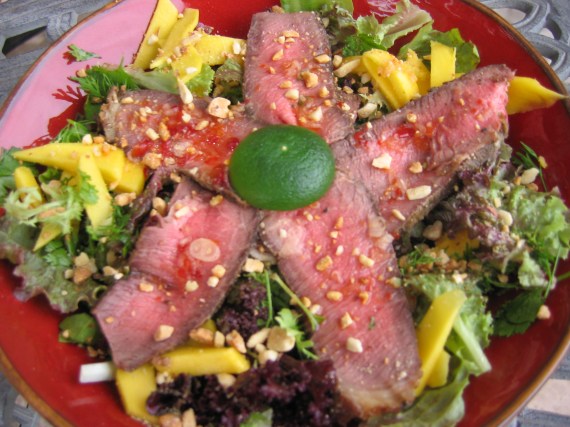
The hotter it gets, the more interested I am in the piquant and flavorful foods of southeast Asia. Recently I picked the last of my lettuce, and an Asian-inspired meat salad seemed like an obvious choice for a summer dinner on the patio. It’s hard to give an exact nationality for this salad, since I’m obsessed with Thai and Vietnamese food and this has some elements of each.
First, grow your lettuce and herbs. I plant a little lettuce every two weeks throughout the spring, and make sure that the last few plantings are in light shade. I haven’t yet been able to pick any lettuce in July or August, but it always does well through early June. This year I did best with romaines, including a beautiful maroon one called “Marshall” which I got from Territorial Seeds. It’s disease-resistant and was the last lettuce in my garden to bolt. Of course, you can buy the lettuce if you need to. For the herbs, you need a few sprigs each of cilantro, Thai basil, lemon basil, and rau ram. If you don’t grow herbs yourself, you may be limited to Thai basil and cilantro, but the salad will still be very good.
Next, catch your beef. I’m a firm believer in grass-fed beef. It may be better for us, and beyond question it’s better for the cows. For more discussion of grass-fed and sustainable meats and more sourcesd, see my website. I buy big sirloin steaks from our local Fishhuggers at the Corrales Farmers Market on Sunday morning. A single steak will always provide the two of us with three meals, often four, and sometimes five. Grill it plainly for the first meal, and you can take it in a lot of directions after that. It has a wonderful beefy flavor, and you don’t need much to have a flavor impact, so cold grass-fed steak in your refrigerator is a meal waiting to happen.
Click here for the recipe! Continue reading
Archive for the ‘salads’ Category
27 Jun
My Southeast Asian Summer: Beef salad
31 May
The Greens of Summer: Frisee’
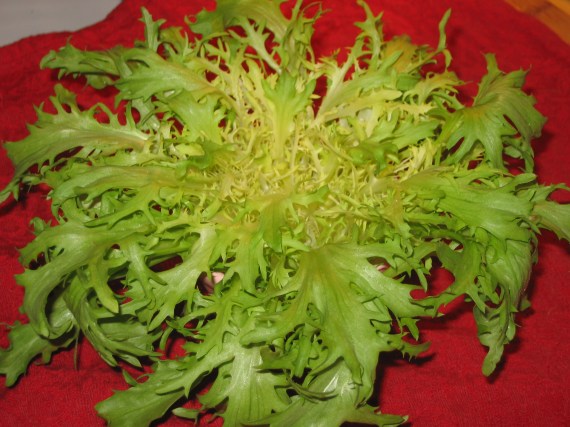
This is one of my favorite members of the chicory family to use in salads, and is a rugged and tolerant plant besides. Planted at the same time as lettuce, it comes along a little later. I start my early crop indoors for use in late April, and the later crop from seeds planted outdoors as soon as the ground unfreezes. Deep containers work fine, and it tolerates a little shade without fuss. Thin the plants to at least 8″ apart each way so that they have room to grow. When you have a big green fuzzball about 9″ across, it’s time to blanch. Simply invert a dinner plate on the plant and leave it there anywhere from 3 to 5 days, depending on how blanched you want it. I like mine only moderately blanched, as shown above, because at that stage the underlying chicory bitterness is still detectable. If you want yours milder, wait the full five days before cutting.
Remove the plate, harvest the whole plant about 1-2 inches above the ground with kitchen shears, wash well, and enjoy. When cutting, avoid injuring the crown, and leave the plant in place. Most of the time it will produce another somewhat smaller head, which you can blanch and eat in its turn.
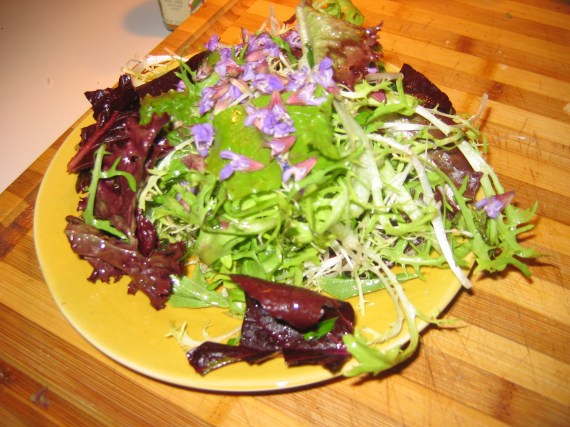
When dressing a frisee’ salad, I prefer bold vinaigrettes. This is an occasion for a little roasted garlic in the dressing, or slice a small shallot very finely and marinate it in the vinegar for 15 minutes before completing the vinaigrette. This is a good place for your flavorful homemade red wine vinegar (see my post on making vinegar.) Bold and peppery Tuscan-style olive oils are good. A little crumbled bacon or crisped proscuitto on top is wonderful. And consider a dash of colatura (garum) in the dressing; see the “notes on specialty ingredients” section on my website.I like sturdy romaines in these salads, but this is not a place for tender butter lettuces. Thyme or the new, tender leaves of winter savory or (best of all, in my view) the exquisite blue blossoms of common sage are good herbal flavorings. Just for fun, I’ll add a pictture of a recent frisee’ and romaine salad, made in the brief sage blossom season.
26 May
The Greens of Summer: curly mallow
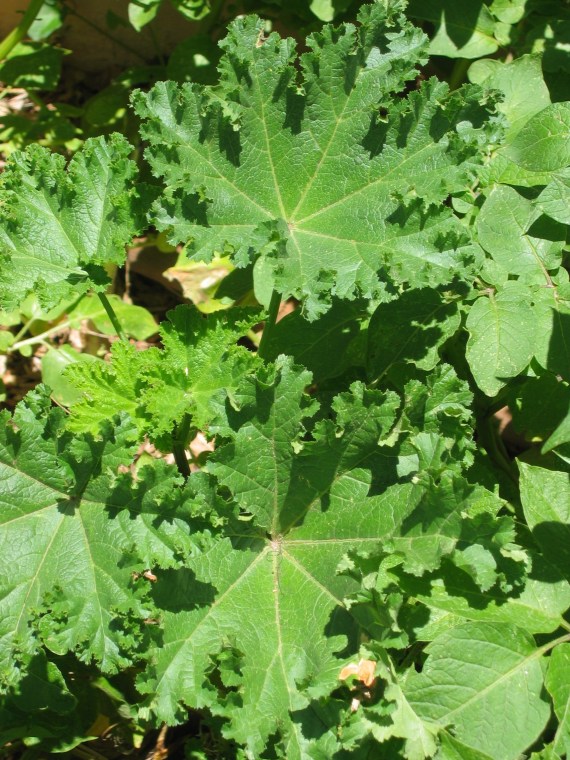
As our days heat up, our spring greens lose their luster, and we need green vegetables that can thrive in our intense sunlight. Fortunately, there are a lot of them. Curly mallow, Verticilla crispa, is one of the best in my opinion; it’s productive, disease-free, and hits its stride just as the spinach is bolting and goes on until a hard frost. The flavor is very mild, and the leaf has a demulcent “thickening” quality that gives body to greens mixtures. The plants can reach 5′ tall. I got seeds from Nichols Garden Nursery a few years ago, and it has seeded itself around nicely ever since. I often mix it half and half with Swiss chard, as I did here in an Indonesian recipe that I love and cook often.
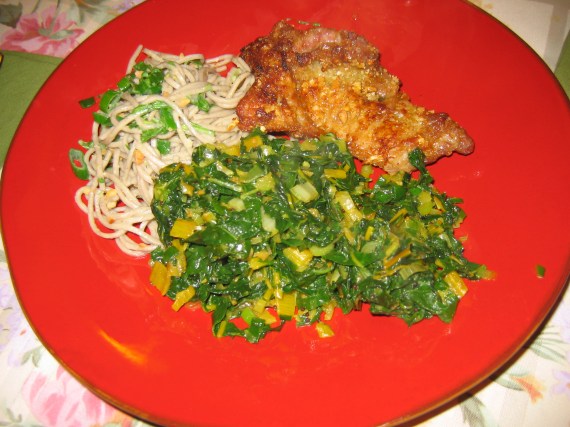
Continue reading
22 May
Passing Pleasures: Artichokes
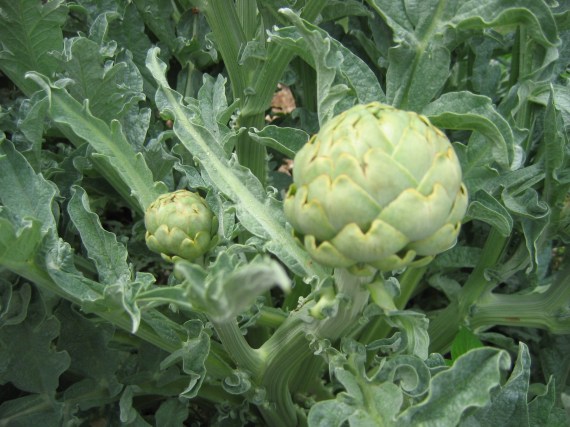
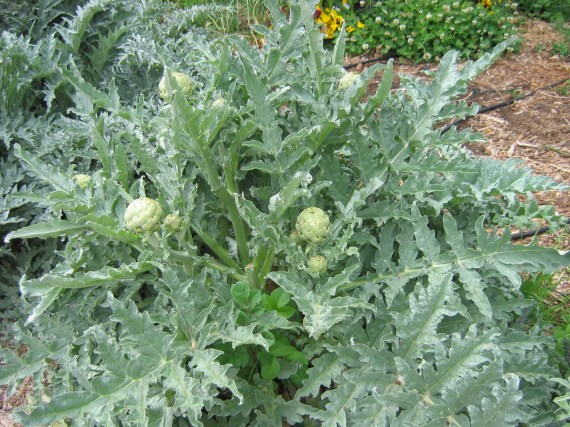
Artichokes are a wonderful addition to the New Mexico garden. They are splendid silvery architectural bushes for the cooler seasons of the year, and provide a rare treat to their enthusiasts.
One of the overlooked aspects of front yard gardening is that neat greens like Swiss Chard can’t be used as edging because passers-by don’t know vegetables when they see them, or don’t care, and so they let their dogs urinate on anything along the sidewalk. I solve this problem by edging my front garden with artichokes: the edible part happens a few feet off the ground, and until a squadron of Irish Wolfhounds comes to my neighborhood, I’m safe.
Now is the time to start artichokes from seed, to enjoy next spring. I like the common “Green Globe” best. The plants typically live 3-4 years in our area. The scaly buds don’t get as big as they do on the misty west coast, but they’re very delicious. A deep watering once a week is plenty once they’re established. They don’t produce over a long season, but for two weeks in late spring we revel in all the fresh artichokes we can eat, and a rare feast it is, too. If you’re interested in such things, artichokes contain abundant amounts of two antioxidants, cynarin and silymarin, which are found only in the thistle family. I’m not sure what this really means nutritionally, but it does mean that when I feel tired and out of sorts, I can eat a plate of artichokes, telling myself that a good dose of cynarin will fix me right up. It usually does, too, unless it’s the bagna cauda or the general abundance of the season that I’m responding to.
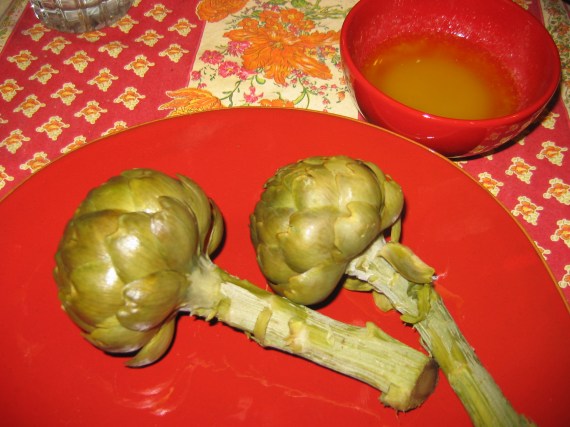
For more on cultivation and recipes, Continue reading
 My urban homestead