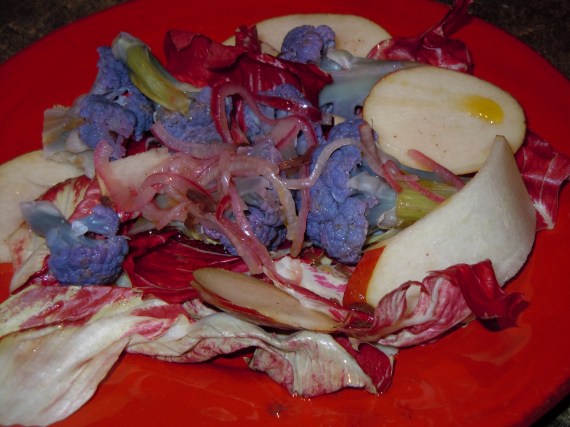
For the most part I make simple salads when I make salads at all, relying on top-quality greens and a well-made vinaigrette for effect. But the salade composee, or composed salad, will always be dear to me because I can remember when Salade Nicoise was the very height of Manhattan foodie chic and Nocoise olives were hard to find. The urge to make a greater spectacle of my salads comes over me in midwinter, when short days and long nights give me more time to fiddle. In my opinion, this salad is one worth fiddling with.
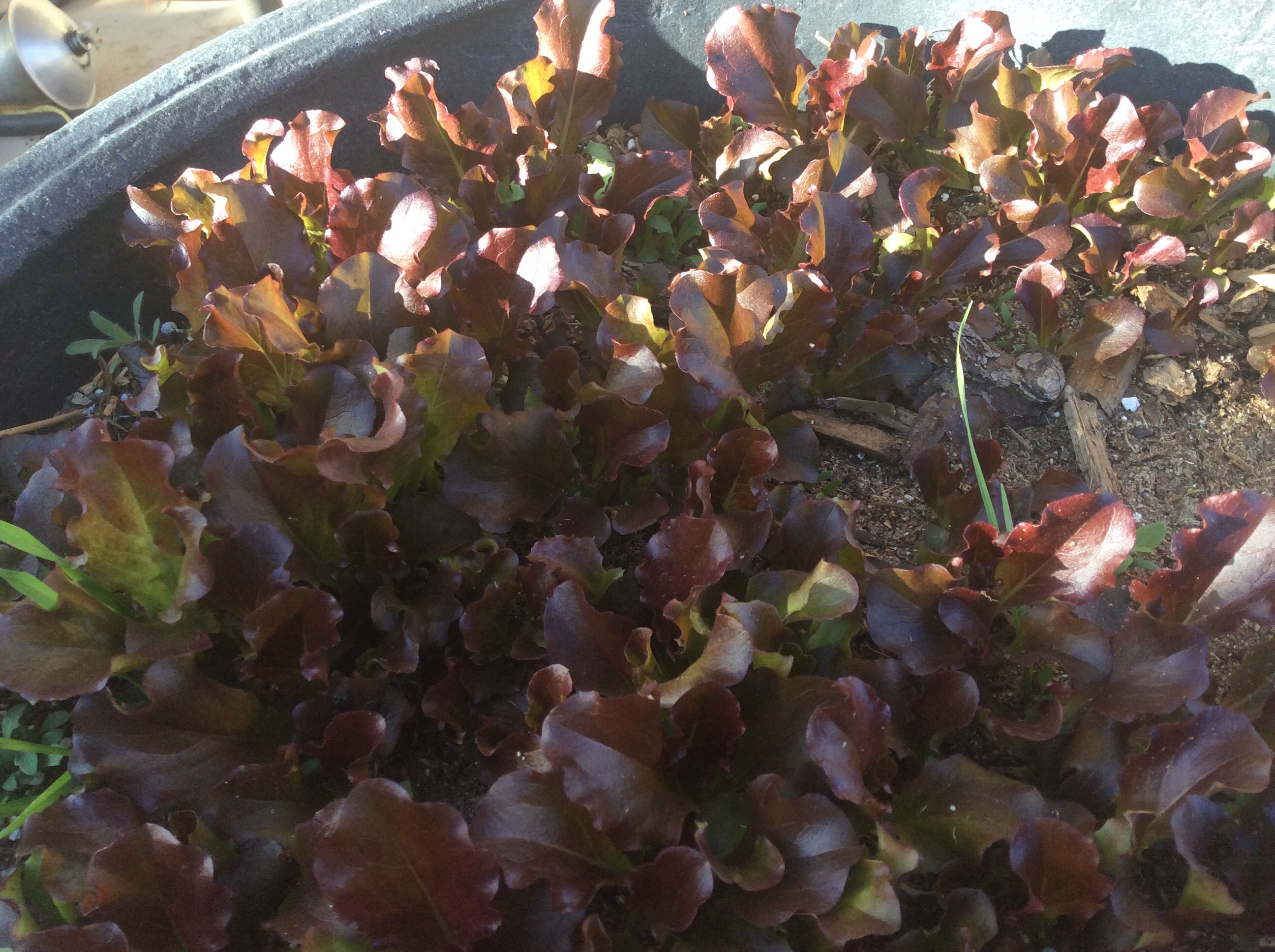
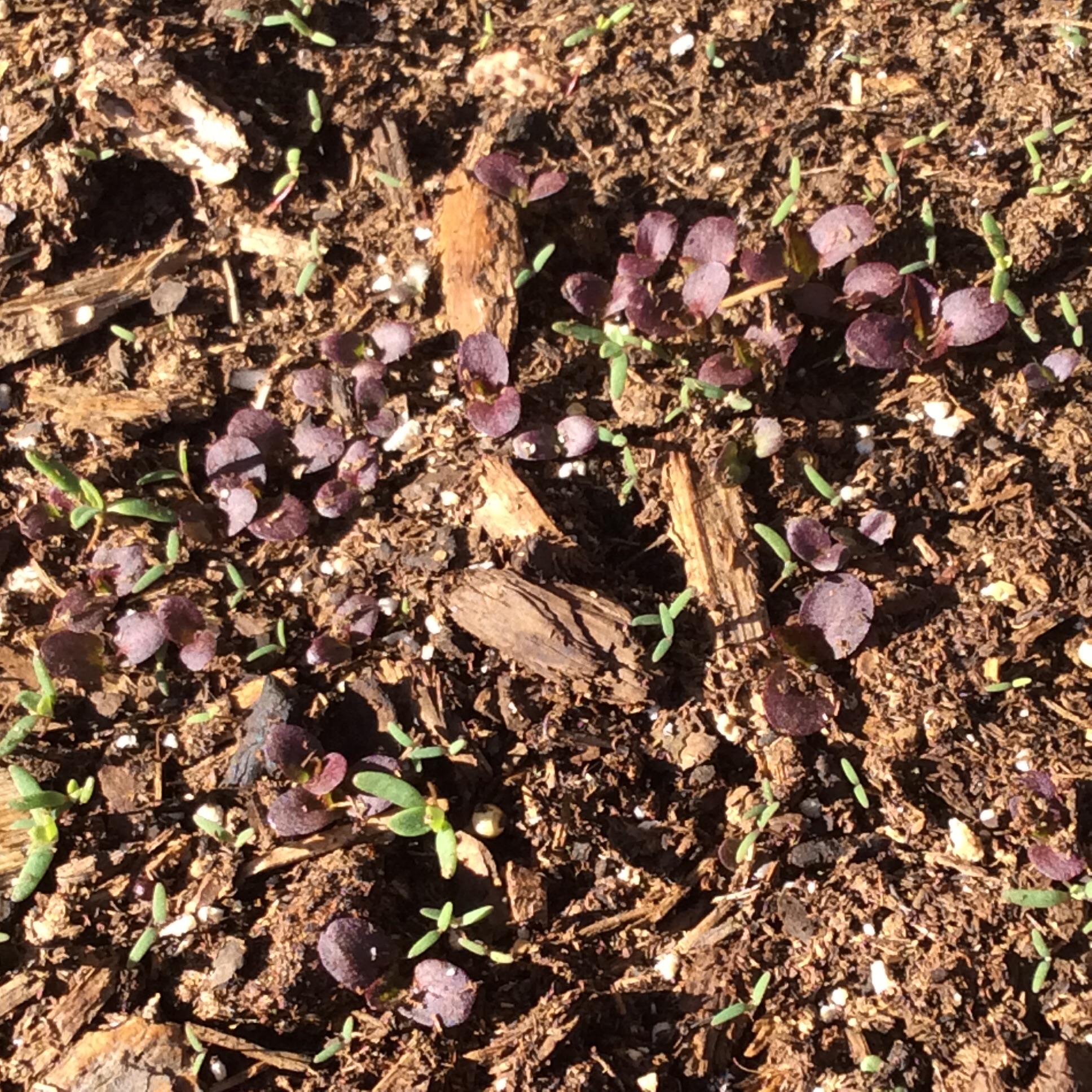
For two people, I started with a small red onion, half a head of purple cauliflower (probably 5-6 ounces, or a heaping cup of trimmed florets) , a very firm red-skinned pear, and a small head of castelfranco raddicchio from the garden. A small head of round or Treviso raddicchio from the store would work just as well. I had on hand a third of a cup or so of red-wine-vinegar vinaigrette (see notes below) and a bottle of truly superb olive oil.
First, heat 1.5 cups of water to boiling, adding a tablespoon of salt and the juice of half a lemon. The lemon juice is essential to keep the red/purple veggies from turning an awful muddy grey. Trim the cauliflower florets neatly, slicing the stems where needed so that all pieces are about the same size. Drop them in the boiling acidulated water, cover tightly and turn the heat down to medium, and poach at a fast simmer for eight minutes. While it cooks,slice half of the onion very finely (save the other half for something else) and put them in a bowl. After eight minutes, drain the cauliflower, pouring its poaching liquid into the bowl with the onion slices. Run cold water over the cauliflower pieces to chill them, and set them aside to drain thoroughly. Stir the onions around a little, then let sit for half an hour. Drain the onion, press out excess moisture but don’t rinse, squeeze on a few more drops of fresh lemon juice, work them through the soft onion strands with your fingers, and set aside. Wash the radicchio thoroughly and spin it dry or whirl it around in a kitchen towel (outdoors, please) until reasonably dry. Put it back in the refrigerator. Rinse the lemon juice off the onion slices and squeeze them dry in a towel. You can do all this up to two hours before dinner. Everything should be at room temperature except the radicchio, which is used cold from the refrigerator.
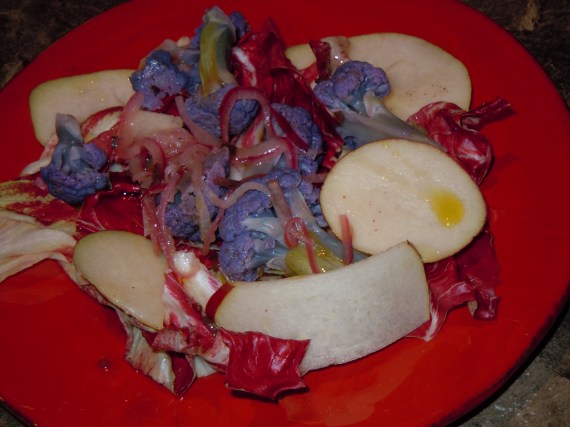
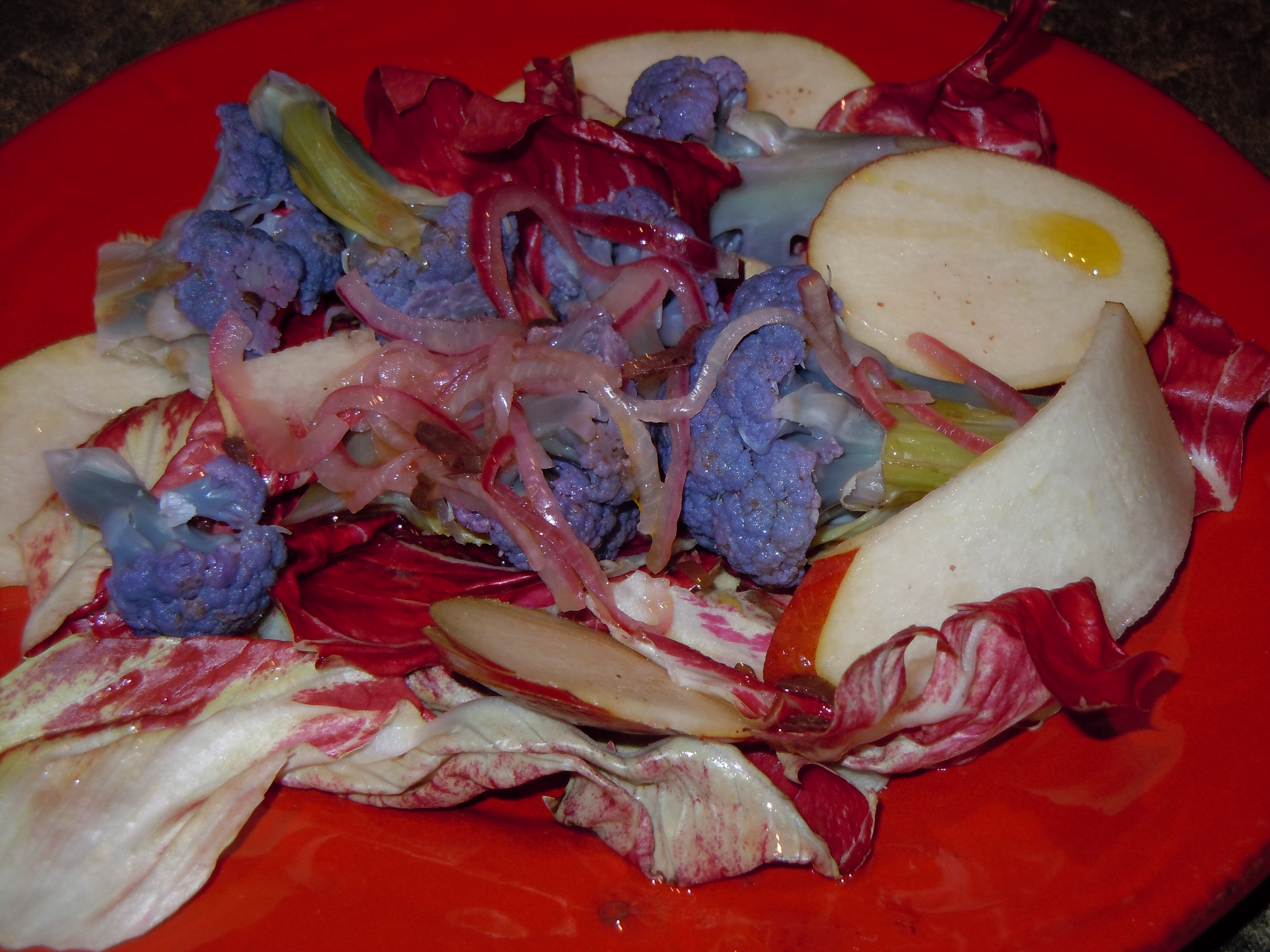
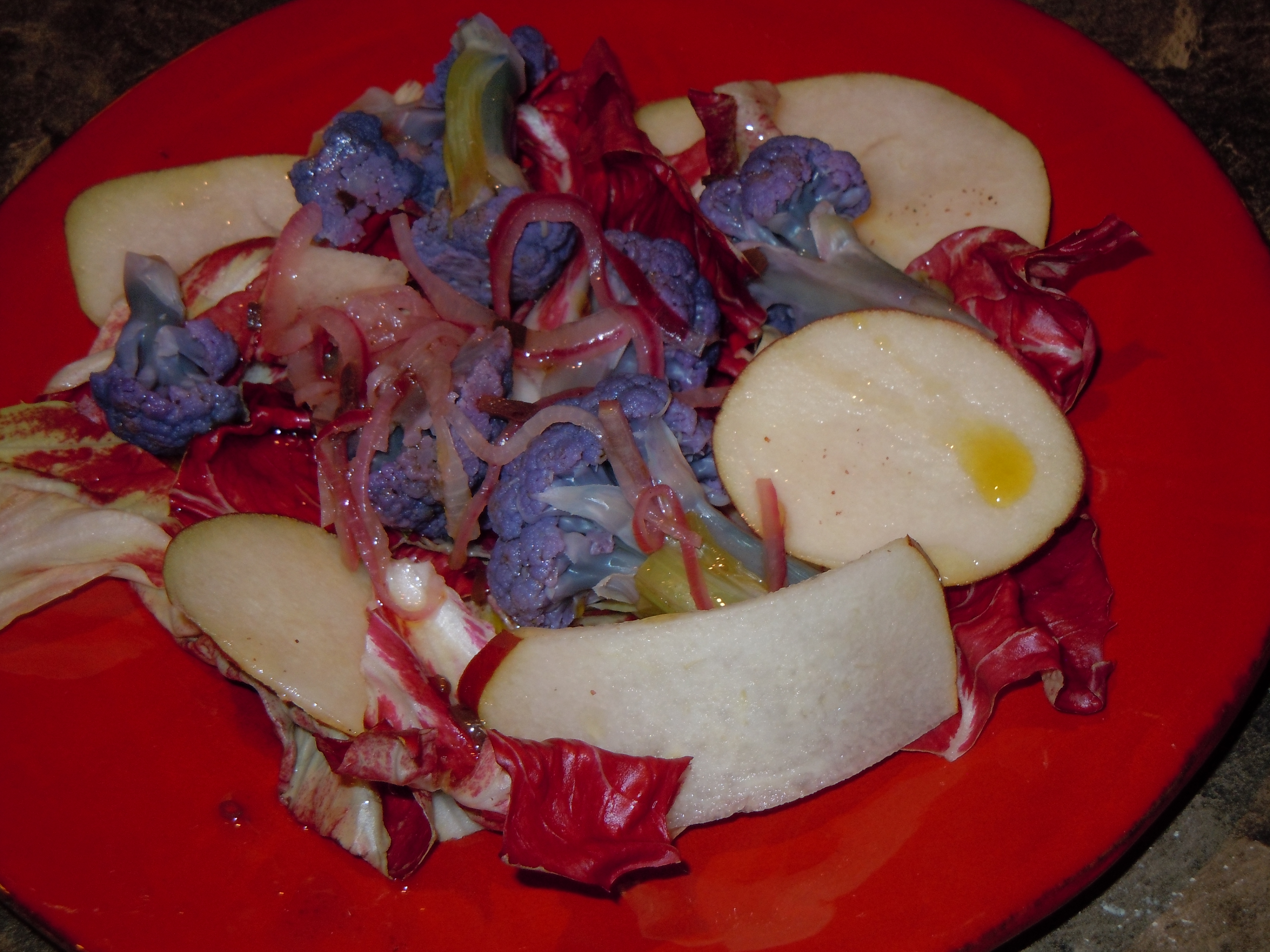
When ready to eat, use a very sharp knife to cut thin slices off the pear. Choose your salad plates, preferably red ones, but black looks equally good and very dramatic. White will do. Arrange some torn radicchio leaves artistically on two plates. Toss the thin pear slices around over them. Pile half the cauliflower florets on each plate, keeping them toward the center so that the radicchio and pear show clearly. Place some onion slices (which will now be soft and magenta in color) over and around the salad. Drizzle with a tablespoon or two of the vinaigrette, and then drizzle lightly with your very best olive oil, taking care to get some gleaming golden drops on the pear slices. Grind just a touch of pepper over the top. Serve.
Purple cauliflower is widely available in this season. Check your favorite food co-op if it has a good produce section, or try Whole Foods. If you can’t find any, the yellow Cheddar cauliflower will give a different but still nice effect. A light scattering of toasted pine nuts or walnuts would be a great addition to this very autumnal salad. Don’t be tempted to throw in any cheese, no matter how fine a cheese it is. The pure flavors will get muddy, and the result will be undistinguished. Half the art of the composed salad is being able to stop before you ruin it with over-elaboration.
I have strong, even violent, opinions about vinaigrette. Each vinaigrette has to be made to suit the materials it is meant to enhance. In my opinion, this is the right one for this salad. Nothing that came premixed in a bottle is going to work. I have noted the steps that I consider especially important.
Opinionated Red Wine Vinaigrette
Start with really good olive oil and the best red wine vinegar you can lay hands on. I make my own wine vinegar, so I can’t help you with brands, but it’s essential that it be aged in oak and have a full flavor. The steps fit into general kitchen preparation, so you can do lots of other things while marinating the alliums.
Chop allium: 1 clove garlic chopped very finely, or one small shallot sliced finely, or half a small onion sliced finely. Put the prepared allium of your choice in a small bowl and add half a teaspoon of salt and 3 tablespoons of red wine vinegar. Stir around, and let sit at least 15 minutes. The “sit” is essential to get the right flavor. After this brief curing, add a teaspoon of fresh thyme leaves chopped and half a mashed anchovy fillet or a dash of colatura (my preference.) If you are vegan, or an irredeemable anchovy hater, you can substitute one or two pitted oil-cured olives thoroughly mashed in a mortar and pestle to give the meaty-umami undertone that helps tame bitter leaves like radicchio. Grind in fresh pepper, about 6 turns of the mill, and stir in half a cup of really good olive oil and a tablespoon of roasted walnut or roasted hazelnut oil. Taste and check for salt (remember, it should be on the salty side to season the veggies properly) That’s all there is to it. For other uses you may want to add a little Dijon mustard, vary the herb(s), use lemon juice instead of vinegar, or any of a million other variations, but this is the basic. The worst offenses that I taste in vinaigrettes are mediocre olive oil, bad wine vinegar, and a general excess in seasoning. No amount of herbs will make up for poor basic ingredients. I also dislike drippy, overdressed salads. As I see it, if you can’t taste the leaves and florets, why have them on the plate?
Since young adulthood I’ve cherished a story someone told me about seeing Alice Waters dining out in San Francisco; the eager voyeur insisted that she ate a large salad with her fingers, and then licked them. I have no idea whether it’s true, but if it is, more power to her. I’ll bet that was a good vinaigrette.

 My urban homestead