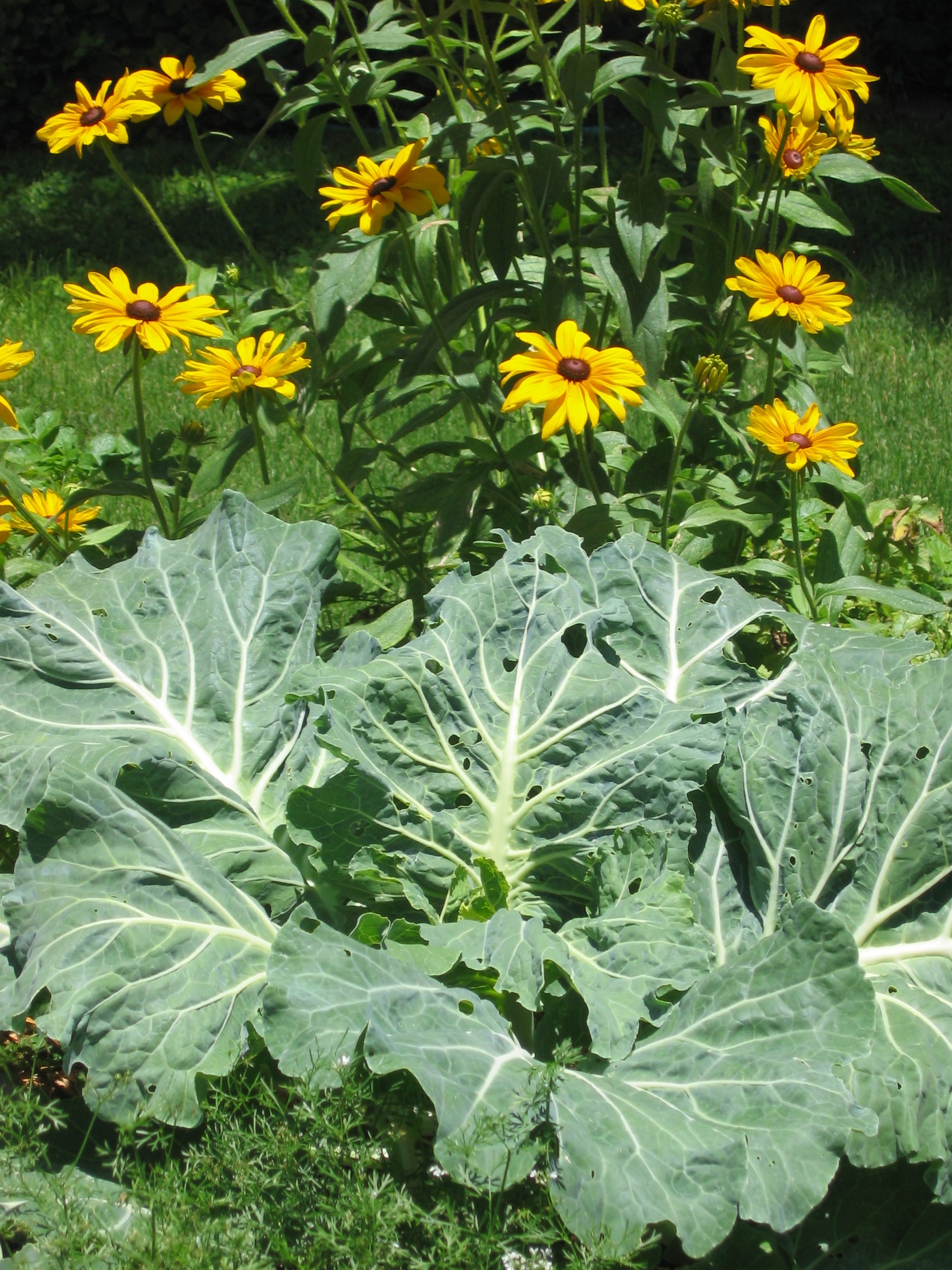
Every year I try a few vegetables that I haven’t tried before, and for 2009 one of the clear winners was Tronchuda, a giant non-heading cabbage from Portugal. I grew only one plant, and it ultimately reached over four feet across, with leaves almost 2 feet from side to side. The leaves were pleasant to eat cooked at any point, but especially good after a few frosts. I used it in the same ways as collards or kale, and also made a soup with sauteed onions and garlic, Spanish chorizo (not the Mexican soft chorizo,) good chicken broth, salt to taste, and chopped tronchuda, all simmered together until the tronchuda tasted good. By the way, this is an overlooked method for determining when green leafies are sufficiently cooked: keep tasting them, and when they start to taste good, they’re done.
I will definitely be growing it again this year, and that’s the real test of any vegetable: is it worth the garden space? Tronchuda delivers. I’ve read that the wide white leaf ribs can be cooked as a vegetable in their own right, but I didn’t care for them and composted them instead, keeping the green parts and the narrow ribs to cook. I recommend it highly for any garden. You can get seeds at Nichols Garden Nursery, a wonderful source for all sorts of odd delights.
Our own New Mexico seed company, Gourmet Seed International, offered seeds for two of my new experiments, rampion (the famous “rapunzel” of the fairy tale) and bladder campion. I’ll keep you posted.
This is the time of year to plan your homestead garden and order what you need. I’m dealing with a brand new property with no planting in place, so I’ll be starting a new mini-orchard, and I would highly recommend dwarf fruit trees for eager would-be urban homesteaders. They produce relatively quickly, look charming, and allow harvesting with feet planted firmly on the ground.
Every yard-farm should reflect what the owner and family like to eat and drink, and with this in mind I’ve decided to plant wine grapes. It will be a few years before I’m making my own wine, but the thought of my very own mini-winery has already given me a lot of pleasure and the vines aren’t even planted yet. In anticipatory value, it’s the best garden bargain I’ve had, and this may be the most overlooked benefit of urban homesteading; you spend so many happy expectant hours. The same applies to my backyard chickens, which are not yet purchased but are already clucking quietly in the back of my mind.
By the way, if you have any interest in adding livestock to your homestead, it’s worth reading Farm City . Author Novella Carpenter created a little squatter farm in Oakland, and it isn’t what most of us would want, but her descriptions of raising and killing animals for meat are accurate and unromantic (but reverent.) If you have never harvested meat animals, this is a test. If you can’t stand to read her descriptions, you probably don’t want to go into livestock. If you do go on to raise a little of your own meat, I can guarantee that you will no longer allow meat to be wasted. Once you really understand where it comes from, waste is not an option. On the other hand, you will understand the fascinated reverence with which good farmers and hunters view meat animals.
Archive for the ‘vegetable gardening’ Category
8 Feb
Tronchuda, and some thoughts on planning urban homesteads
21 Sep
My Southeast Asian Summer: Turmeric
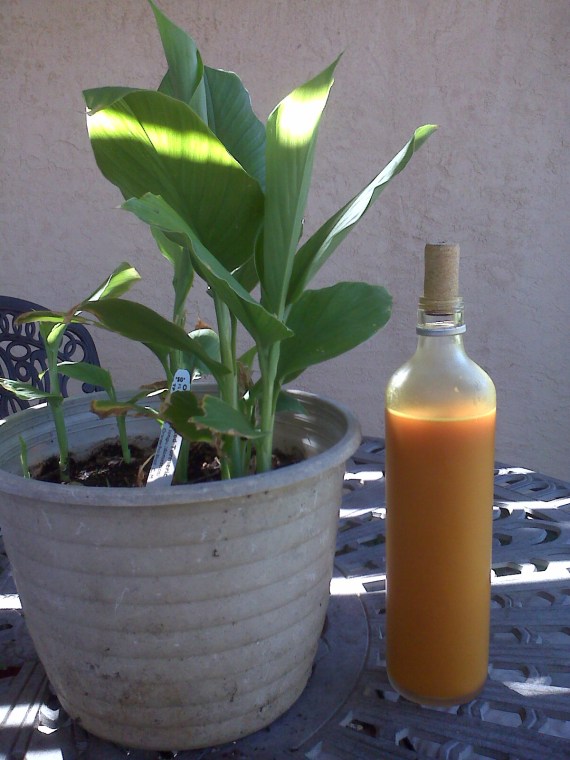
Turmeric and its constituent components the curcuminoids, a complex of antioxidant and anti-inflammatory compounds, are getting attention and medical research dollars these days. But this blog is not about disease treatment or medical research, it’s about healthy and delicious food, and turmeric is here for its culinary qualities. Both the roots and the leaves are a common seasoning in many parts of southeast Asia, and the leaves are impossible to buy in this area, which led to my experiments in growing them. It’s a tropical and needs to be brought indoors when the nights start to cool off, and during the summer it needs light shade and plenty of moisture. Initially I bought plants from an herb supplier, but since then have done better with plants I started at home.
You need some roots from the store to get started. Put them on top of a pot of good organic potting soil and press them into the soil. Put in a warm place (a seed-starting warming mat will really speed things up,) keep moist, and within a month you’ll see small buds growing off the roots. In another month or so, you’ll have turmeric leaves to use. It will prosper in a sunny window over the winter, but does best if it can go outdoors in the summer. Remember, part shade is important.
To begin with the root, it can be grown in a pot but you are unlikely to get enough to use it freely. I don’t recommend the dried powder for most applications; to my palate if lacks the fresh vibrancy of the fresh root. I advise buying organic root, and you can often find it among the other fresh vegetables at La Montanita Co-op. Ask the produce manager if you don’t see it. It’s used in a lot of the seasoning pastes that I make for my southeast Asian cooking, so you’ll notice it in several of the recipes on this blog (use the search function to find them). But one of my favorite ways to use it is as a brilliant yellow-orange “juice” concentrate which I keep in a corked bottle in the refrigerator and add to water to make “sun juice.” The color alone is irresistible and cheers me up just to look at it.
The leaves are large, glossy and handsome, and look attractive when the pot is brought indoors for the winter, but remember that any plant you’re always snipping at for kitchen use won’t look great for long. When cut they smell very like a fresh, sweet carrot, and I love to season carrots with them. Clich the link below the picture for recipes.
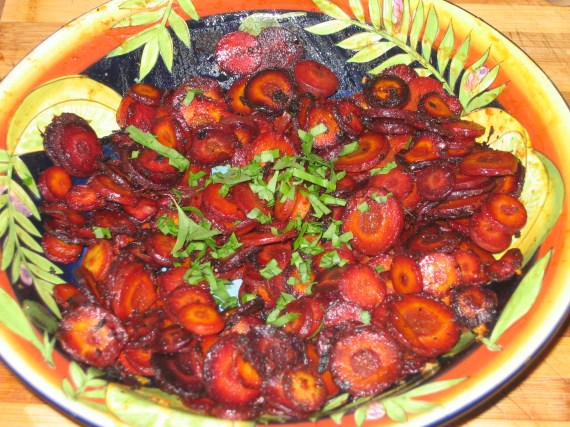
Click here for recipes! Continue reading
5 Sep
More vegetable-centered meals
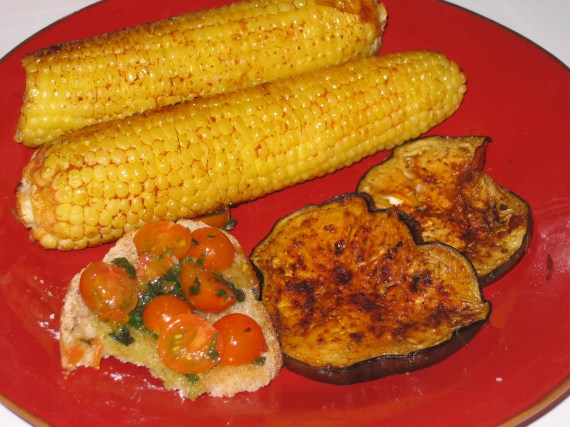
This time of year, vegetables are abundant and make up the bulk of our diet. Recently I wanted to put together a meal cooked on the grill using only vegetables that can easily be found at the farmers’ market. The kitchen stays cool, and people who don’t have a garden aren’t left out. If you need to accomodate vegetarians and vegans at your table, this meal can have everyone at your table happily eating the same thing, with no need for special plates.
The only remotely exotic seasonings that you’ll need are Spanish smoked paprika, readily available as Pimenton de Vera at The Spanish Table and other specialty grocers, and some capers, preferably the kind preserved in salt.
Click here for the recipe Continue reading
2 Aug
My Southeast Asian Summer: lemony herbs
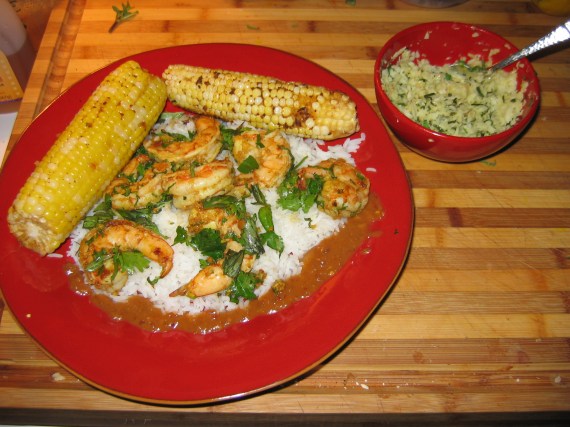
Some of the most delightful herbs used in Southeast Asia have a strong, clean citrus scent. Here we’ll consider lemongrass and lemon basil, along with a Western taste-alike, lemon verbena. My love affair with the piquant and flavorful food of Southeast Asia continues, and I’m putting more and more thought into which herbs and roots to buy and which to grow. There’s an excellent reason to grow rather than buy: these herbs are almost never available organically grown. My experiments are aimed at seeing which ones I can grow in useful quantities without a greenhouse or other specialized setting.
They are very delicious with fish and seafood. For the Lemon Shrimp above, go to the very end of the post, after the growing info.
For more about growing and using the lemony herbs, click here. Continue reading
 My urban homestead