Archive for the ‘urban homesteading’ Category

The Greens of Fall: Nasturtiums II

image

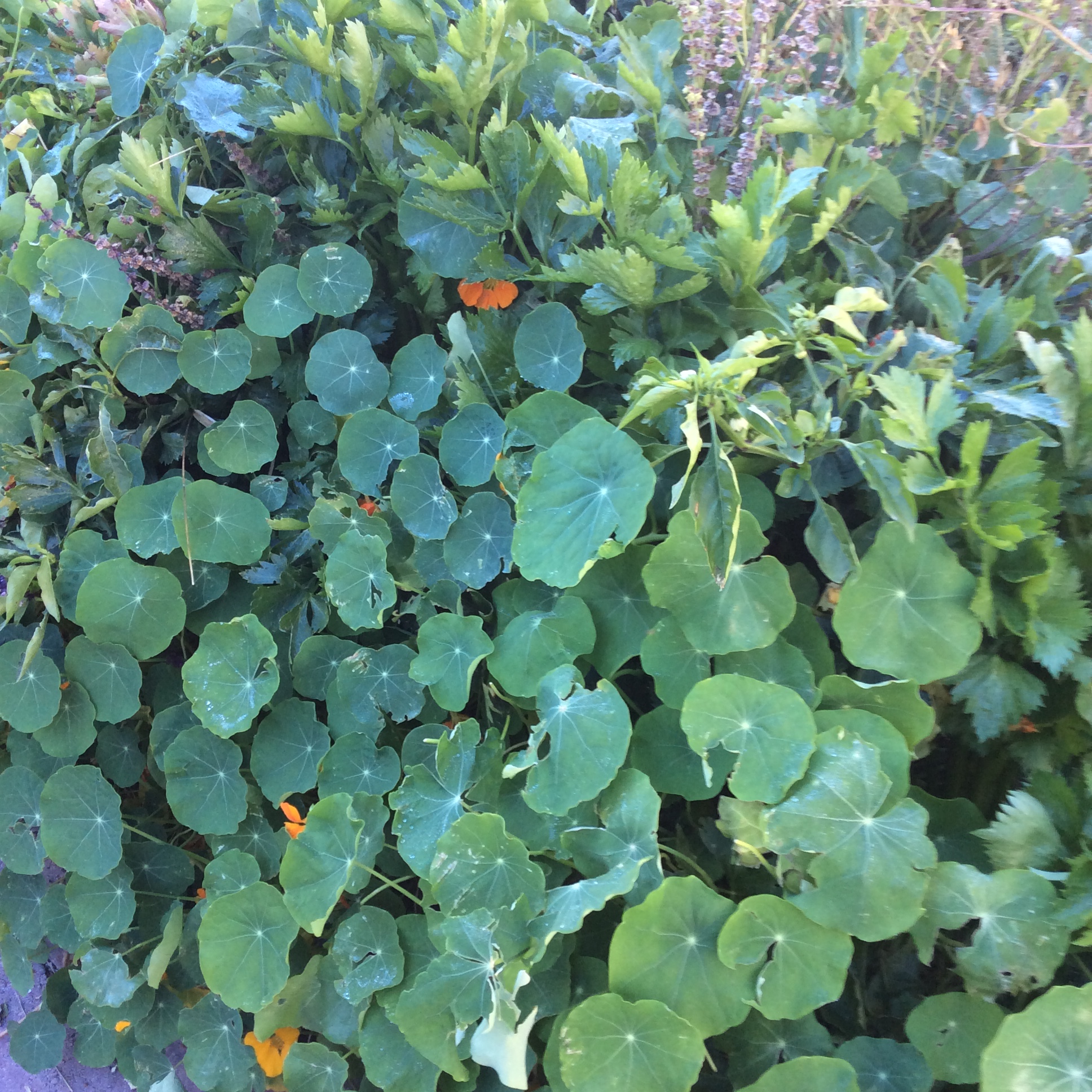
After several light frosts and a couple of hard frosts, the nasturtiums in my front yard are still holding their leaves in good condition, and still blooming a bit.  They won’t last much longer though, so this is the time to take advantage of them.  They are always good in salads or used to make hand rolls as suggested in my last post, because they combine a snappy watercress peppery flavor with a tender texture.  Cooked, they lose a lot of their sharpness but remain delicious.
image

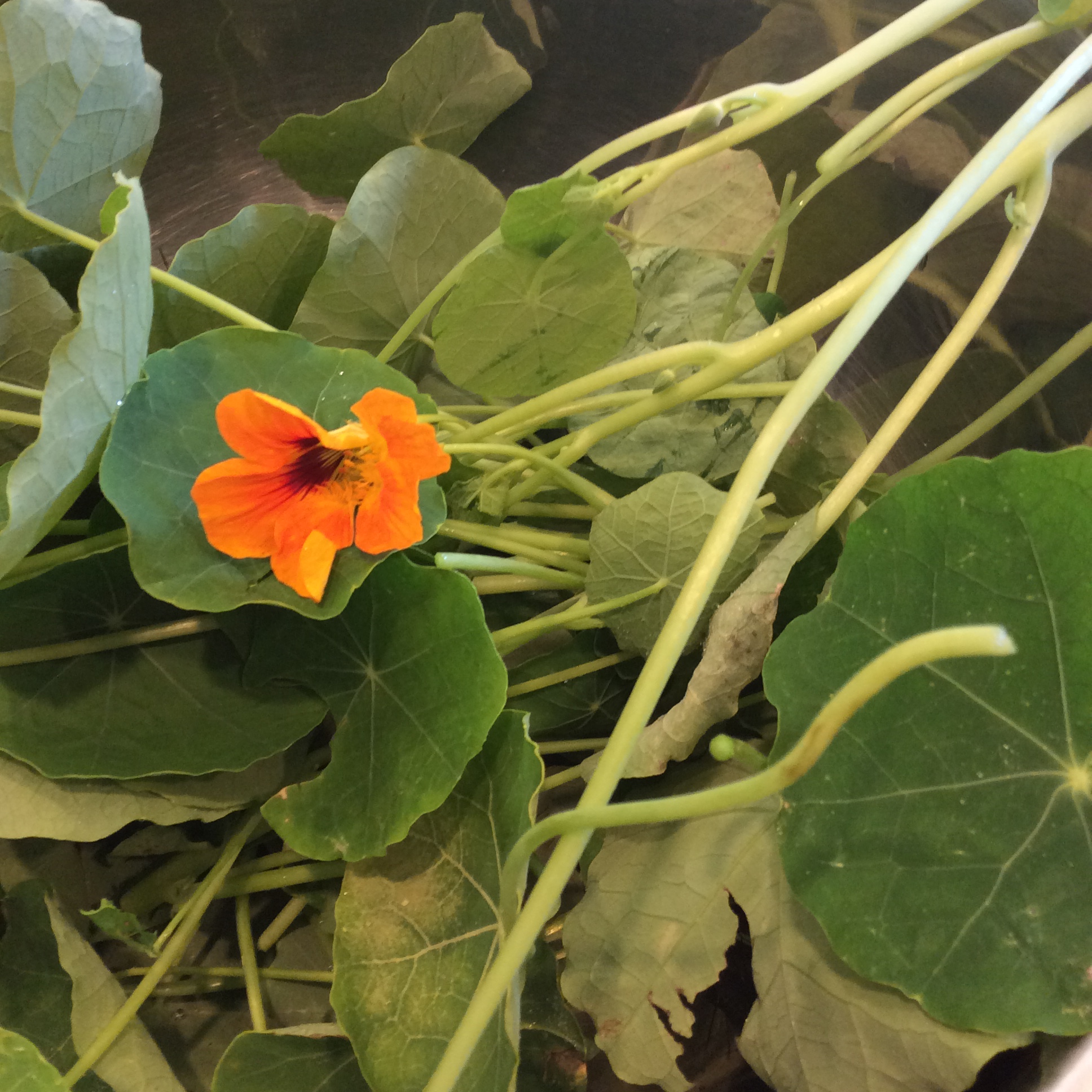
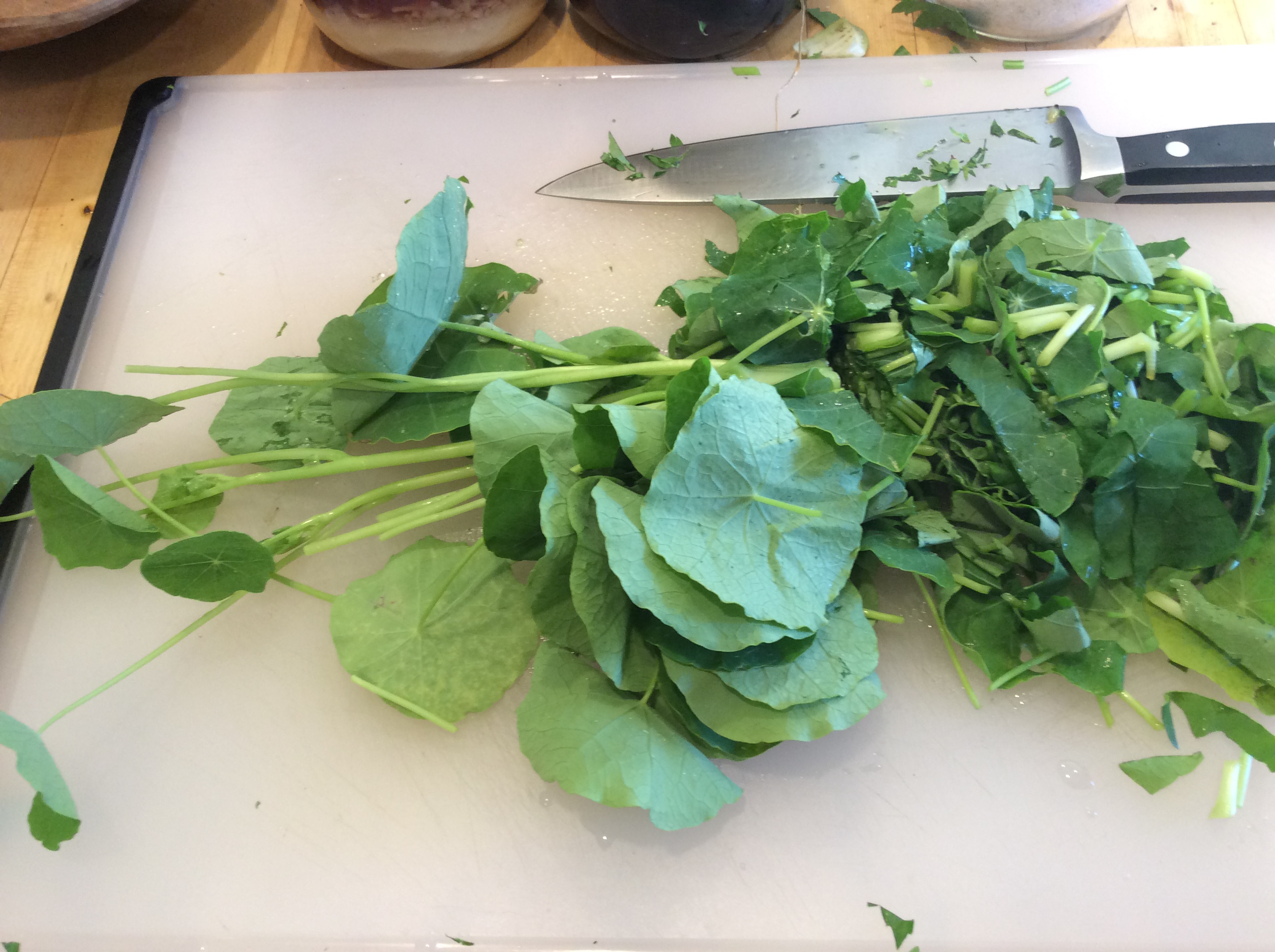
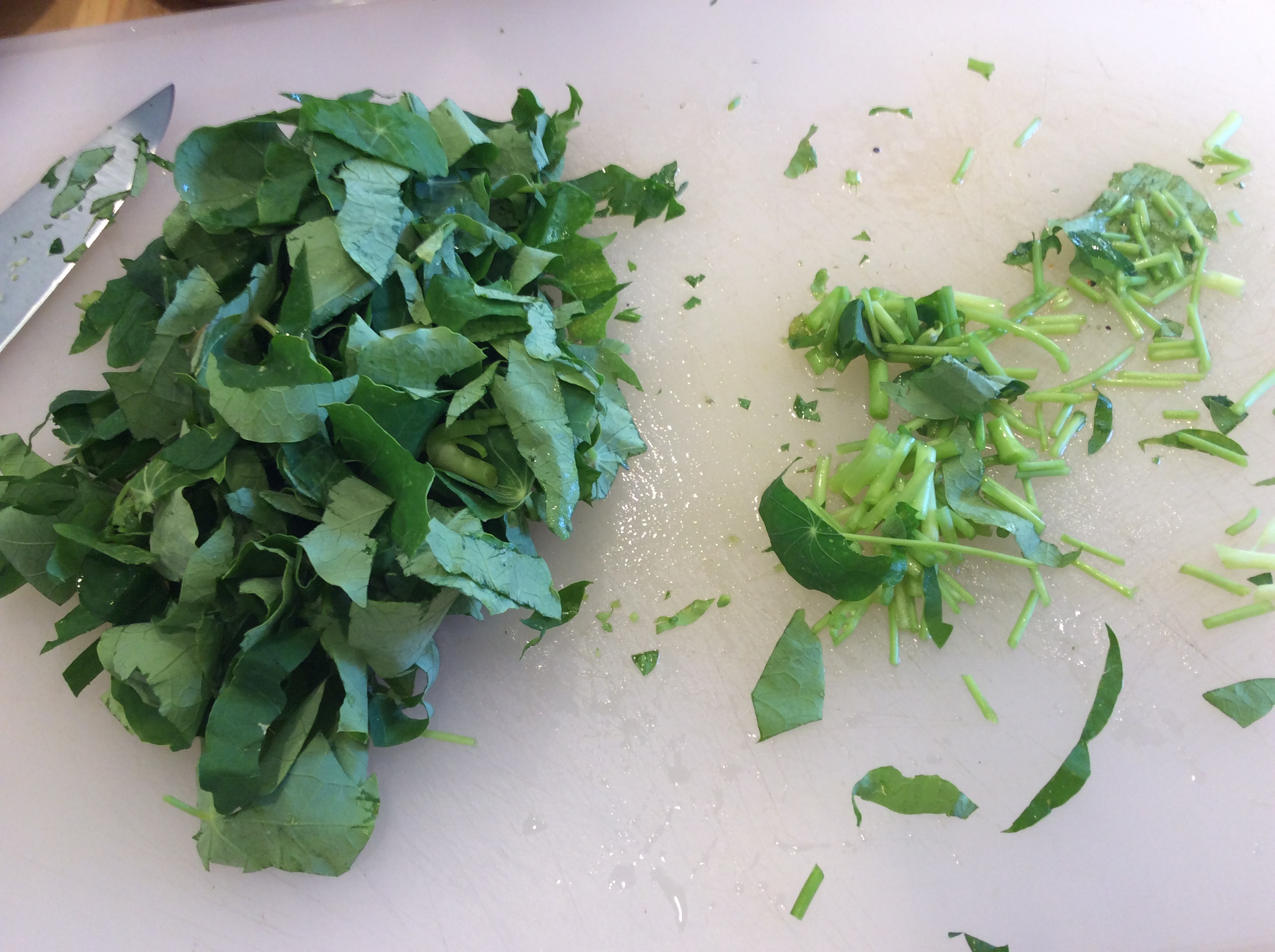
I grow the trailing nasturtiums that wind so nicely among other things in the bed, and at this time of year I grab about the last foot of stem. I snap them off wherever the stem snaps cleanly, which is usually while they are still smaller than a pencil. I take everything above that into the kitchen  for cleaning. I wash them and lay them out on the cutting board. The flowers are devoured on the spot as a cook’s treat, or can be saved for the top of a salad.  What remains is cut crosswise into half-inch segments. It’s important to keep them out about this length, or the stems can seem fibrous.
image

Now  stir the sections around a bit with your fingers, then lift off the leaves which are mostly on top and set them to one side, leaving most of the stem segments on the other. There will be a few of each item in the pile of the other, and it doesn’t matter.  This step is so you can give the stems a bit more cooking than the leaves.
image

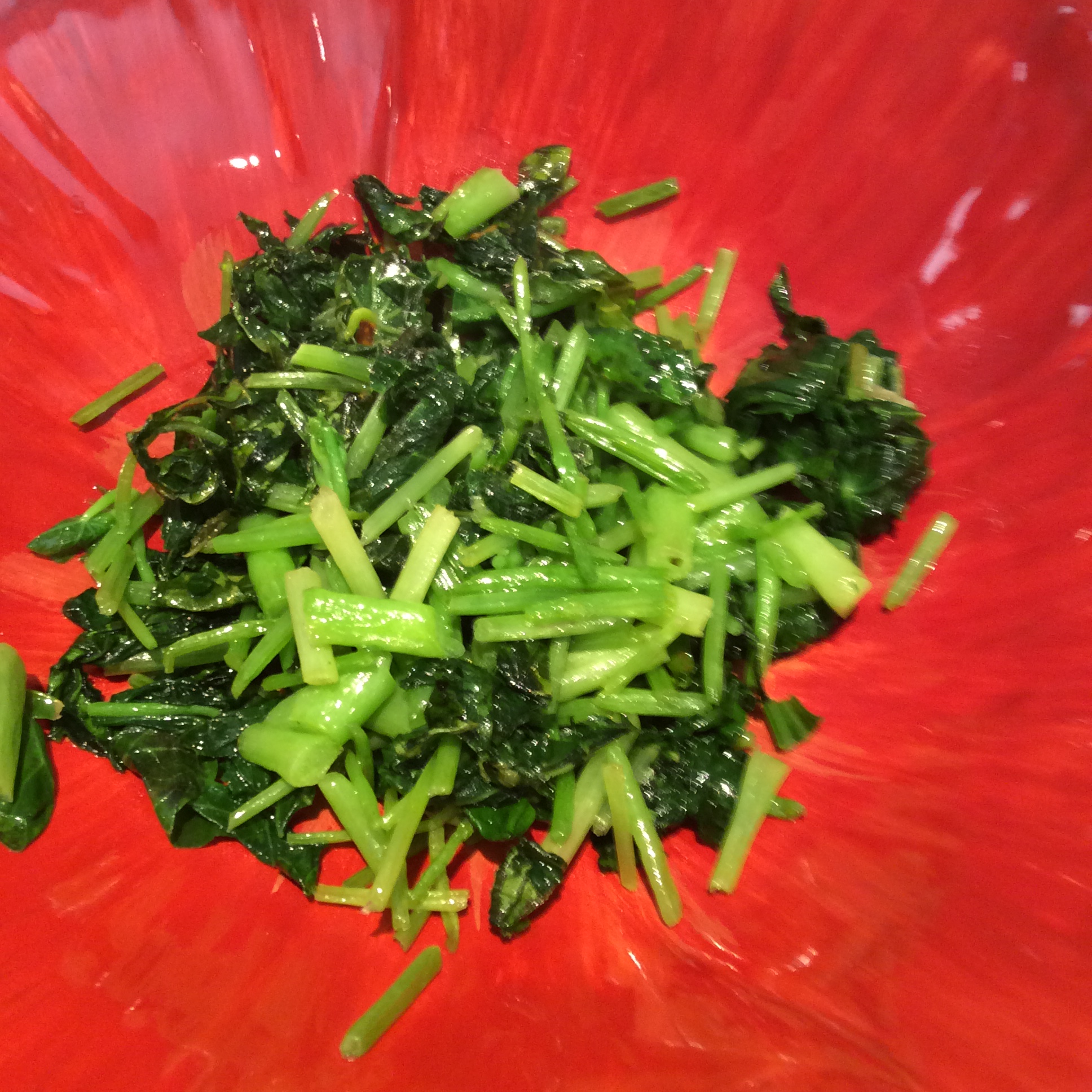
Now, cook them in any way that you would use other greens, cooking the stem sections for a couple of minutes longer than the leaves. I have two favorite ways. One is to sauté them fast in a tablespoon or so of hot flavorful olive oil, putting the stems in, sautéing for two minutes, then add in the leaves and sauté in for another minute.  Serve with salt and freshly ground pepper. Simple and good.
image

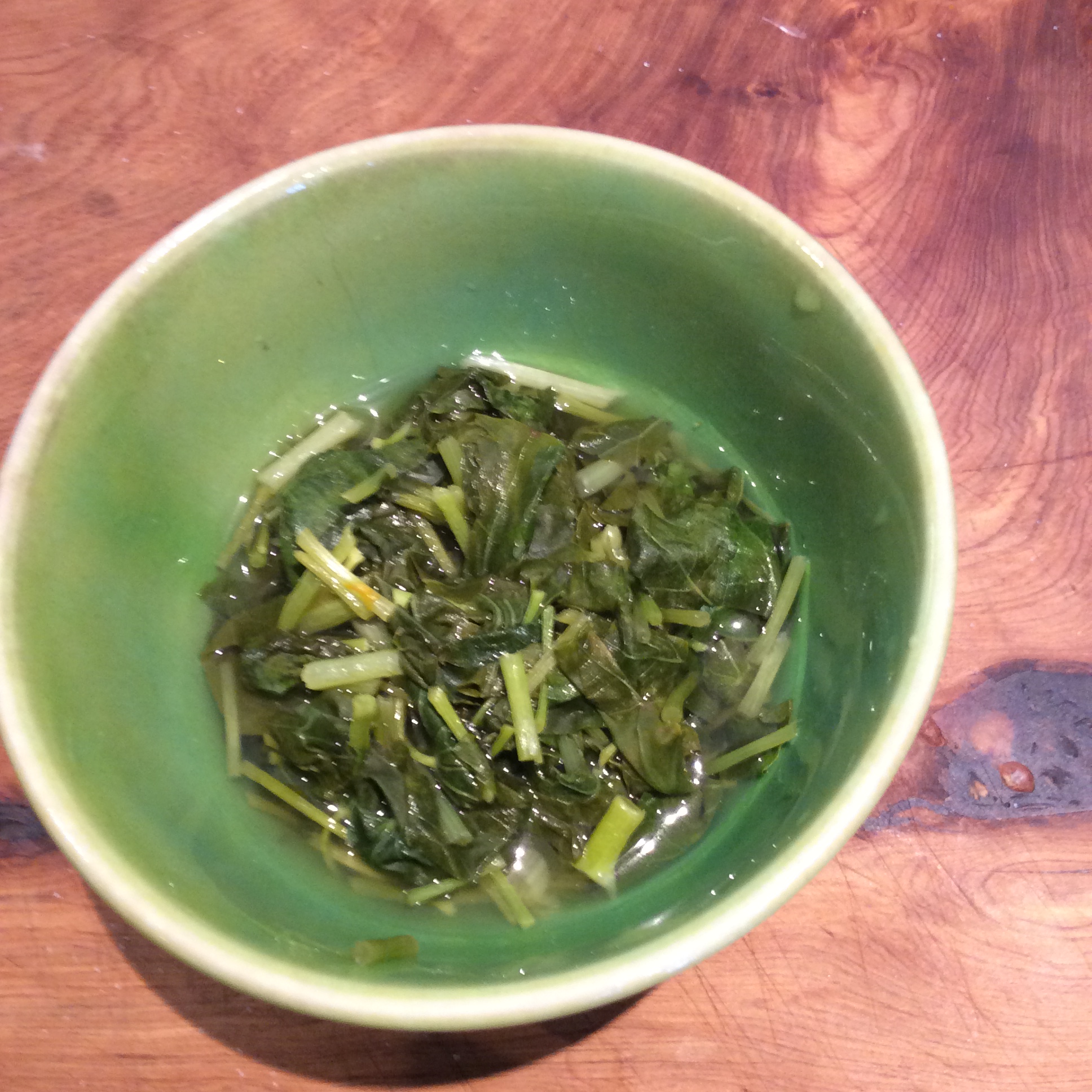
My other favorite use for them is a quick sort of sweet and sour pickle, which I like with grilled meat or dishes in the Japanese fashion.   For a heaping a handful of chopped nasturtium, eat half a cup of water in a small saucepan with 2 tablespoons of rice vinegar and 1 tablespoon of sugar or to taste, or you can use artificial sweetener if it is one that does well with cooking.  And a scant teaspoon of salt and bring to a boil. When it is boiling, put in the stems, boil for about two minutes, and the leaves, and take off the heat immediately and let it sit in the “pickling liquid” until room temperature.  serve immediately or keep in the refrigerator for a day or two.
image

For my taste the flavors in this quick “pickle” are too strong to use it as a side dish, but you could always use less vinegar and sweetening and salt, and use it as a side dish if you prefer that. When I was growing up in the south, collards were sometimes cooked this way, and I seem to remember that they were good.

Some people think highly of the nasturtium as a medicinal herb. If you wish to research this, please keep in mind that the nasturtium flower we are dealing with here is Tropaeolum majus, while  Nasturtium officinale is actually watercress.  This is why we use botanical names; in the long run, it avoids a lot of confusion.   In my view, the fact that they are green and lovely in cold weather and taste good is reason enough to eat them.
 

A Hot Treat

image
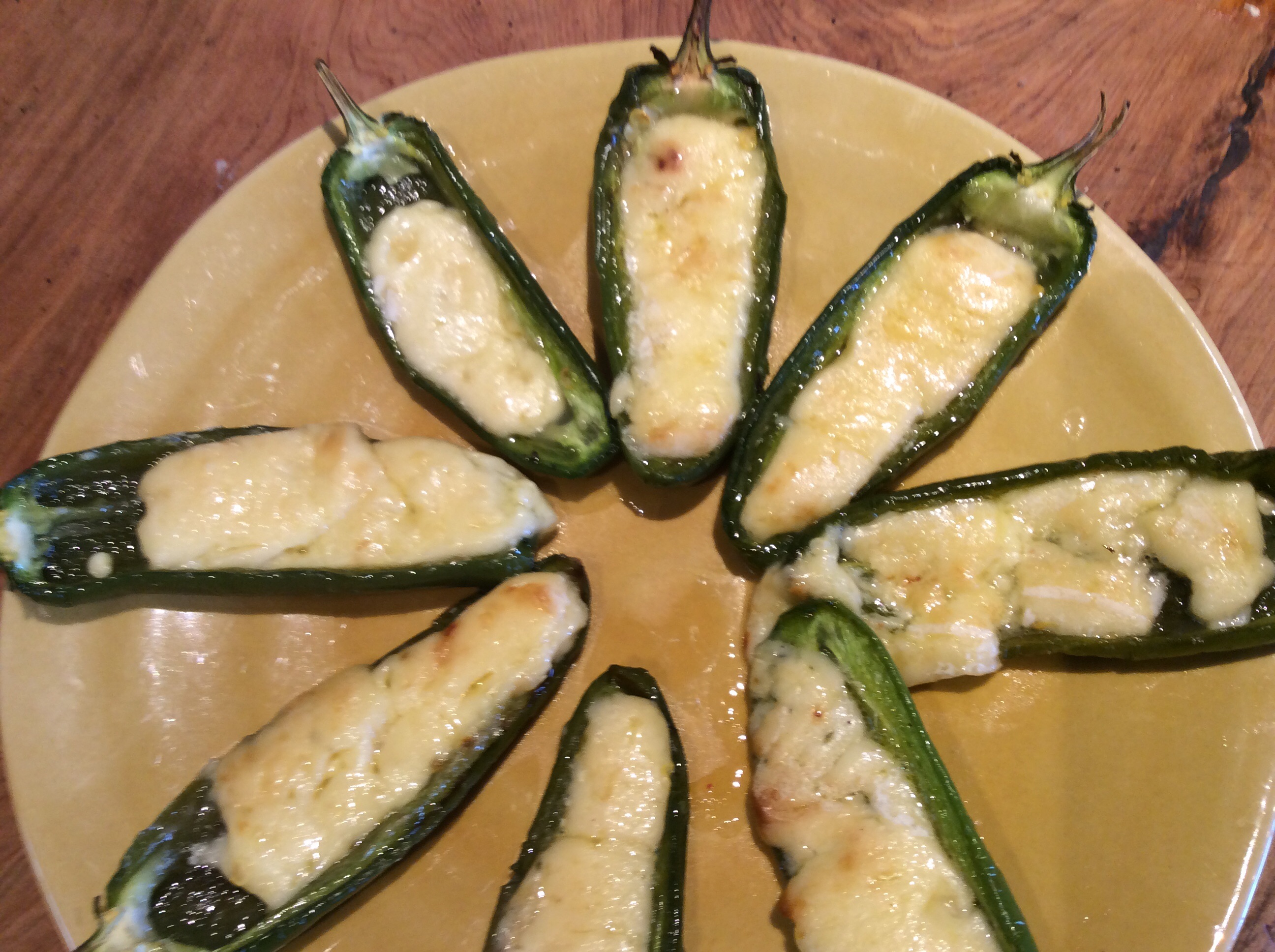
I love hot food, and one of my favorite snacks when other heat-lovers are around is stuffed jalapeños. Couldn’t be easier: slice 2 or 3 jalapeño chiles in half lengthwise, pull out the seeds and veins, salt liberally ( helps keep the heat in check,) put a piece of good cheddar about 1/2 inch square and two inches long in each half, and bake at 425 until done or cook on a part of the grill that you’re not cooking something else on, being careful not to burn the jalapeños. Eat with fingers. This amount of cheese will overflow a bit, causing crisp cheese crust to form on the baking pan. Yum. It’s low-carb and suitable for ketogenic eaters.
One split pepper makes a good cook’s treat when you have things in the oven anyway, and if you have a willing sous-chef don’t forget to roast a second one.
Jalapeños are good for growing in the front yard because they are sturdy and attractive. They may need a little judicious staking to keep them upright. They can get hot as blazes. The longer they’re left on the plant, the hotter they get. 1 or 2 plants per person are plenty.

Small Miracles

image
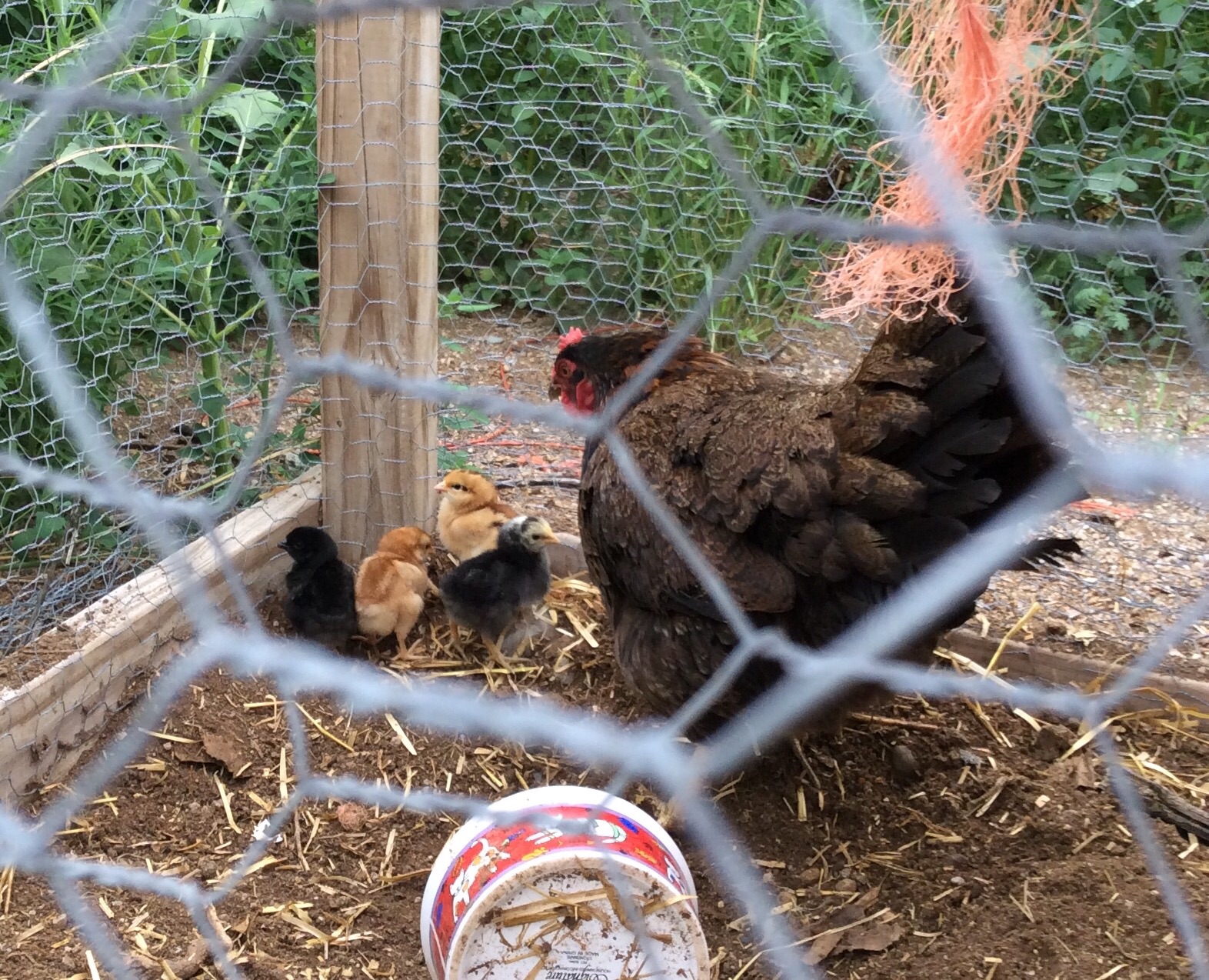
Two of my laying hens, both old heritage breeds, are in my flock because they lay lovely deep-brown eggs but give me very few eggs because they are broody most of the time. “Broody” is the condition that occurs when the hen is determined to hatch out some chicks and spends all day in the nesting box, ruining eggs for eating purposes and pecking your hand painfully when you try to get her out of there. It happens to many hens at some point, but these two are broody more or less continually from May to October. Finally I decided to put them in small separate coops with their eggs (which are fertile because I keep a rooster) and see what happened.
Both hatched out small broods of chicks, and it is a real pleasure to watch them care for their families. They have a wide array of vocalizations, and can tell the chicks “run to me,” ” freeze,” or “this is delicious!” They will not hesitate to attack me if I get too near their babies. They are complete helicopter mothers, always close and always watching, and in a chicken this is endearing rather than annoying.
If you decide to hatch out chicks, be aware that about half will be males and you have to have some plan for what to do with them. Most city ordinances prohibit more than one rooster if they allow any at all, and roosters are unbelievably noisy. So think ahead. But a mother hen caring for her chicks is a heartwarming sight. Urban homesteading isn’t just about food production. It’s about quality of life, and these little families have added greatly to my QOL.

The Eggplant Chronicles IV

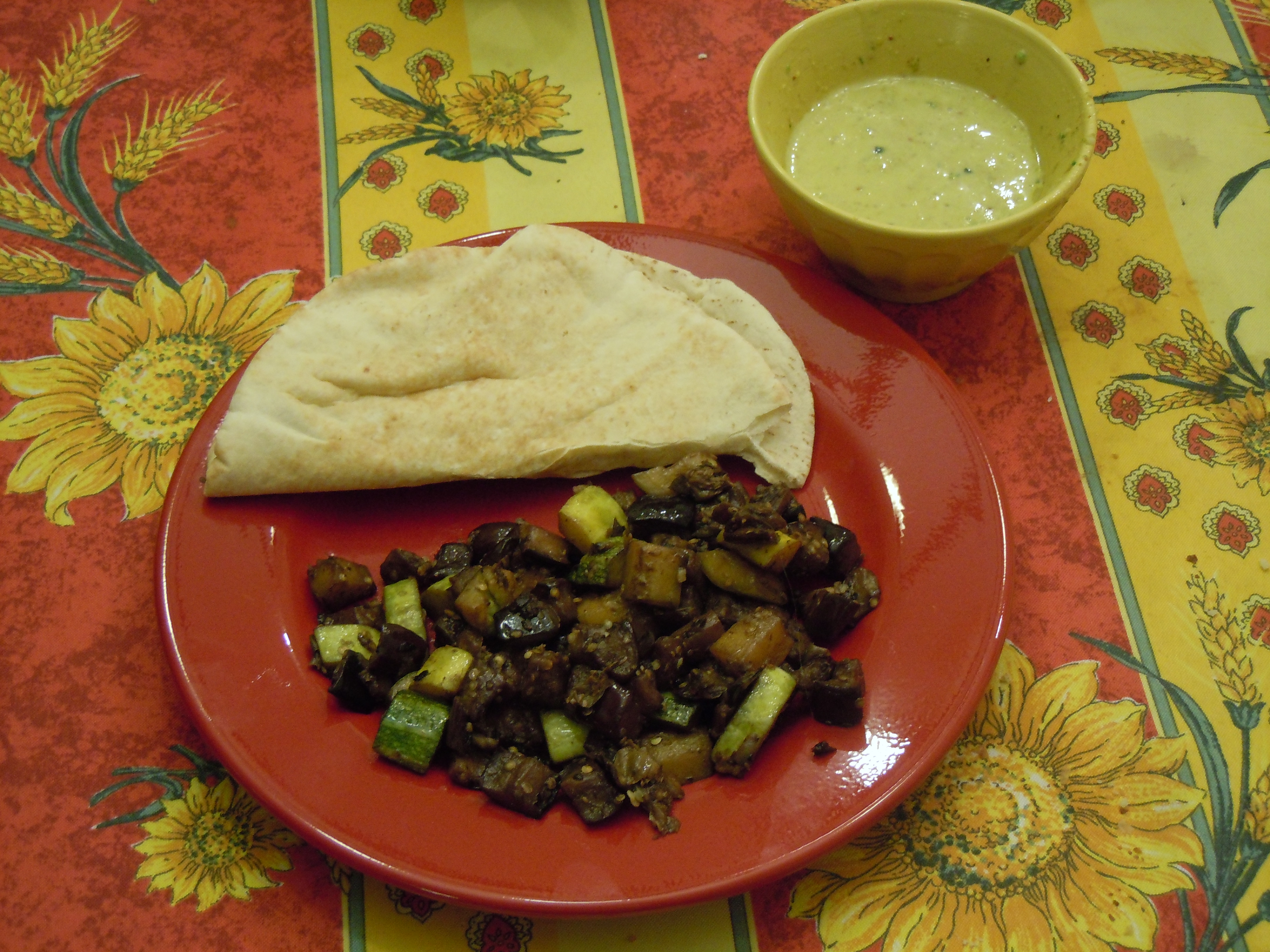
DSCN0199
Summer vegetables are at their peak now, and in my home most of our meals are based on them. This one makes a great lunch or light dinner. I used to wrap this mixture into a pita as shown above but now that I am low-carb I just pile it on a little plate, drizzle with the sauce, and eat it. I like it warm, but it is also very tasty served at room temperature. It can be made ahead, and keeps a few days in the refrigerator. Oil-cured black olives are used to add a meaty savor to eggplant and zucchini, and capers add an herbal note. This meal is vegetarian, and can be made vegan if you alter the sauce recipe a little. You can use all eggplant or all zucchini if that’s what you have, although I think that the mixture is best.

Eggplant and Zucchini with Olives and Capers

2 small or one large eggplant, fresh and firm
2 small zucchini
12-20 oil-cured black olives depending on your taste for them (no other kind of olive will do here)
3 tablespoons salted capers, rinsed and then soaked in cold water for an hour and squeezed dry
1/4 cup good olive oil
2 large or 3 medium cloves garlic
chopped parsley to taste, probably a couple of tablespoons
Cut the eggplant in cubes 1/2 inch or a little larger on a side. Whether you peel it first is up to you. The finished dish has a more tender texture if the eggplant is peeled, but has less fiber and fewer antioxidants, so take your pick. Personally, I leave the peel on for this dish as long as the eggplants are young and tender. Cut the zucchini in quarters and slice each quarter into segments on the small side of 1/2 inch. Toss the vegetable cubes together in a bowl with 2 teaspoons of salt and let sit at least 1 hour, tossing occasionally. This step is important for this dish and shouldn’t be shortened. Don’t worry about the quantity of salt; if you do the squeezing step well, most of it will be removed with the liquid. You can soak the capers at the same time. Pit the olives and chop them coarsely, and chop the garlic finely. At the end of an hour, drain off exuded liquid and squeeze the veggie chunks in a clean kitchen towel, a few handfuls at a time, until as much liquid as possible has been squeezed out. Squeeze the capers dry and chop them coarsely. In a clay cazuela or 10″ skillet, heat a few tablespoons of the olive oil and add the garlic. Cook until opaque and cooked but do not allow it to start to brown even a little. Now add the olives, capers, and veggie chunks, toss to coat with the oil, and cook over low heat for about an hour, tossing occasionally and making sure it doesn’t burn on the bottom. Add a little water if needed to prevent burning.
Texture is very important. Start tasting a little after 45 minutes or even 30 if it looks like it’s cooking quickly. When the zucchini is just tender but not mushy, and the eggplant is melting in texture, it’s done. Also check for salt, but the seasonings are salty and you are unlikely to need any. Stir in the parsley just before serving. Serve with the sauce below.

Lemon-garlic sauce
This sauce is like an aioli but looser and less rich. The egg yolk just binds it and thickens it a little. If you leave out the egg yolk the whole dish is vegan, and the flavor is less rich but still very good. The texture of the vegan version will be liquid, not thick, and it will need to be stirred up by each diner before taking any.
1 egg yolk
1 large clove garlic
juice of half a lemon
1 Jalapeno pepper, seeds and veins removed unless you are a heat freak
olive oil as needed, usually about 1/4 cup.
salt to taste
1-2 teaspoons fresh thyme leaves
In a small food processor, chop the garlic clove and the chile pepper. I always mince fresh chiles before putting them in the processor to make sure that big chunks don’t startle diners. Add the egg yolk and lemon juice, process briefly, and slowly drip in the olive oil until it’s as thick as you want. I like it to be liquid and spoonable, but velvety. Taste and salt as needed. Add the thyme leaves and stir in. For the vegan version, proceed the same way except leave out the egg yolk, and be aware that it won’t thicken in the same way but will be more like a vinaigrette.
This dish is suitable for a low carb diet. All veggies have some carbs but not enough to worry about.
As far as portions, I think this quantity only serves two, maybe even just one on a hungry day. Daintier eaters might get three or four portions.