Archive for the ‘urban homesteading’ Category

Perennial Saag Paneer


Yesterday I wrote about making Paneer with my grass-fed goat milk. Today I’ll talk about making saag paneer, one of my favorite dishes, and for a permaculture twist I’ll make it with perennials as much as possible. If you don’t have a weed patch, you can use a bunch of spinach. You will also need fresh ginger, cumin seeds, garam masala, heavy cream, and butter.
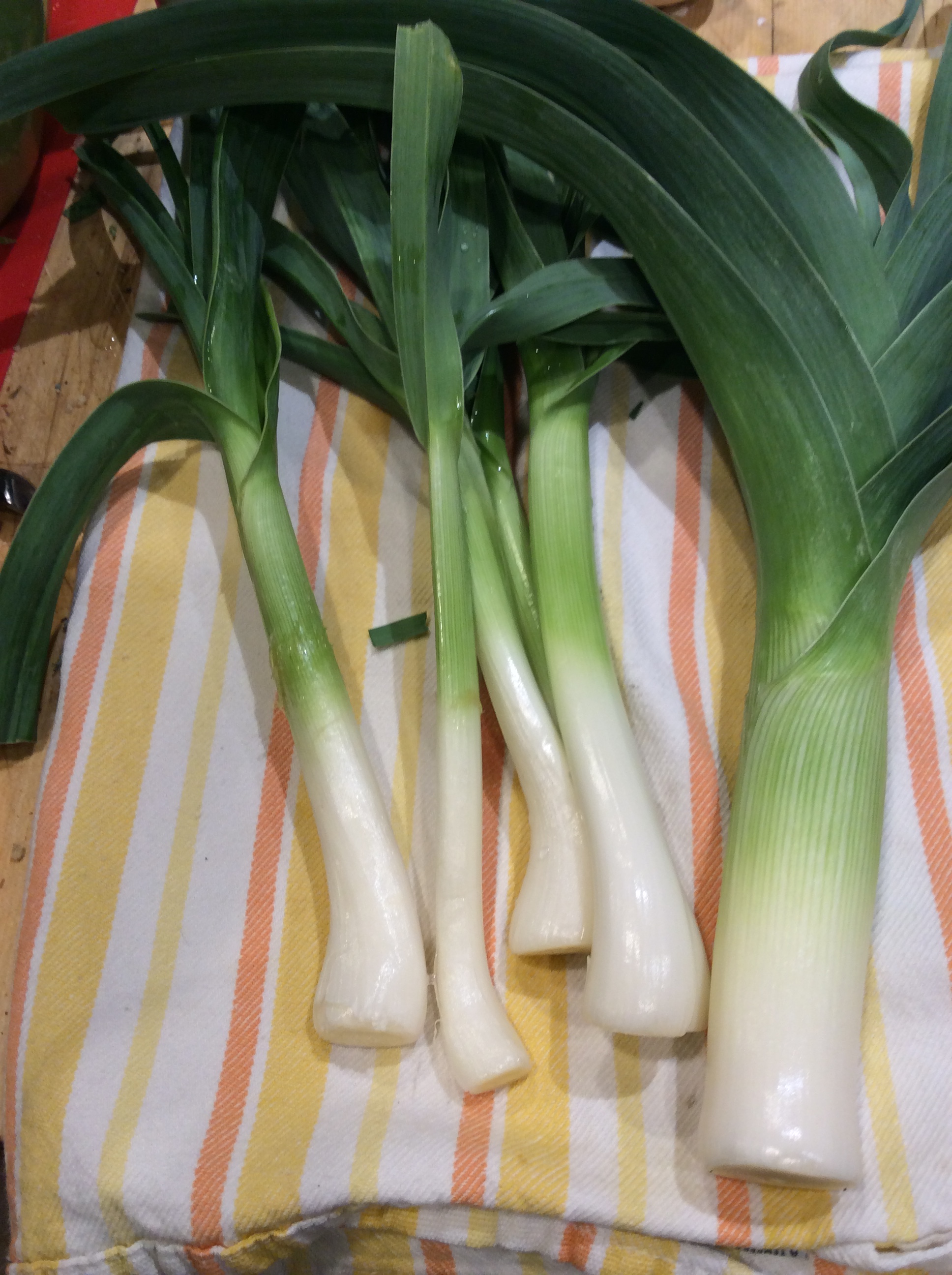
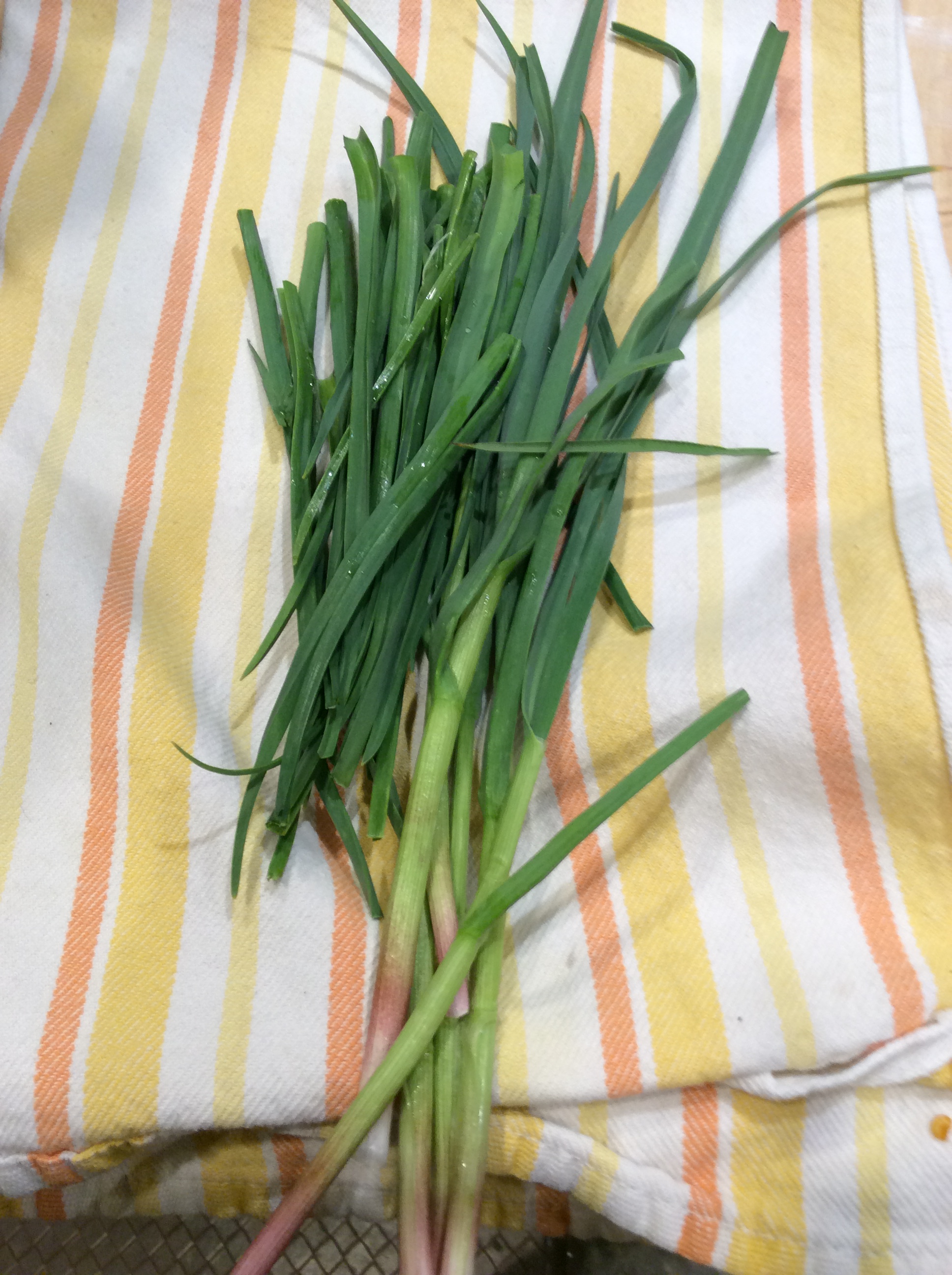
Assuming that you have the paneer, the next step is to catch your greens and alliums. I used equal parts each of nettles and bladder campion, and 4 stalks each of green garlic and perennial Welsh onions. The nettles and bladder campion were blanched for about 90 seconds so that the nettles could be handled easily, then drained, pressed, and chopped. The alliums were cleaned, trimmed, and sliced in 1/4″ cross section.

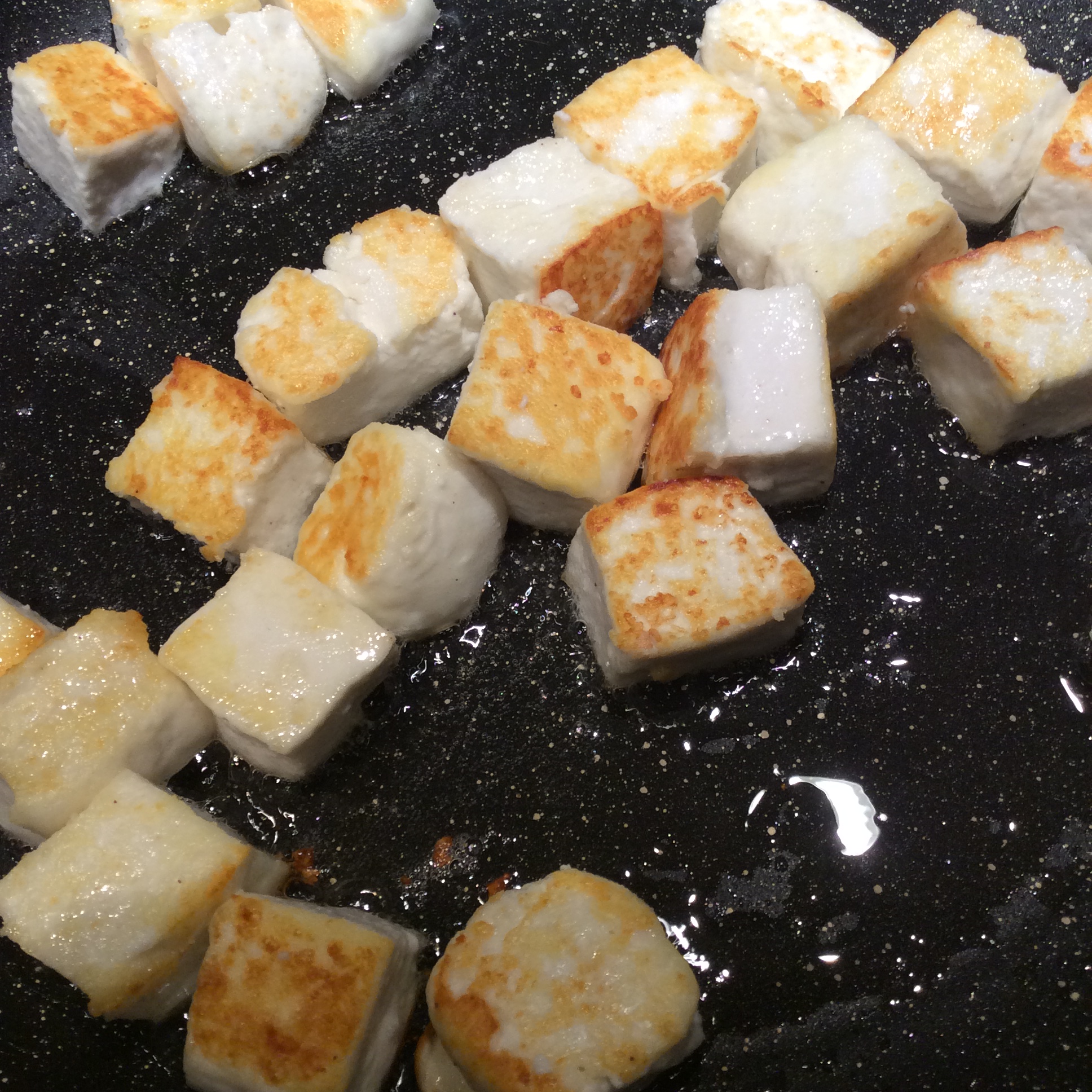
When ready to cook, heat a nonstick skillet, cut the paneer in 1″ cubes and salt it, and fry in mild oil of your choice (I like Macadamia nut oil) until browned. Set aside.

Chop a piece of fresh ginger about an inch square finely, and have ready a teaspoon of whole cumin seed and a heaping teaspoon of garam masala.
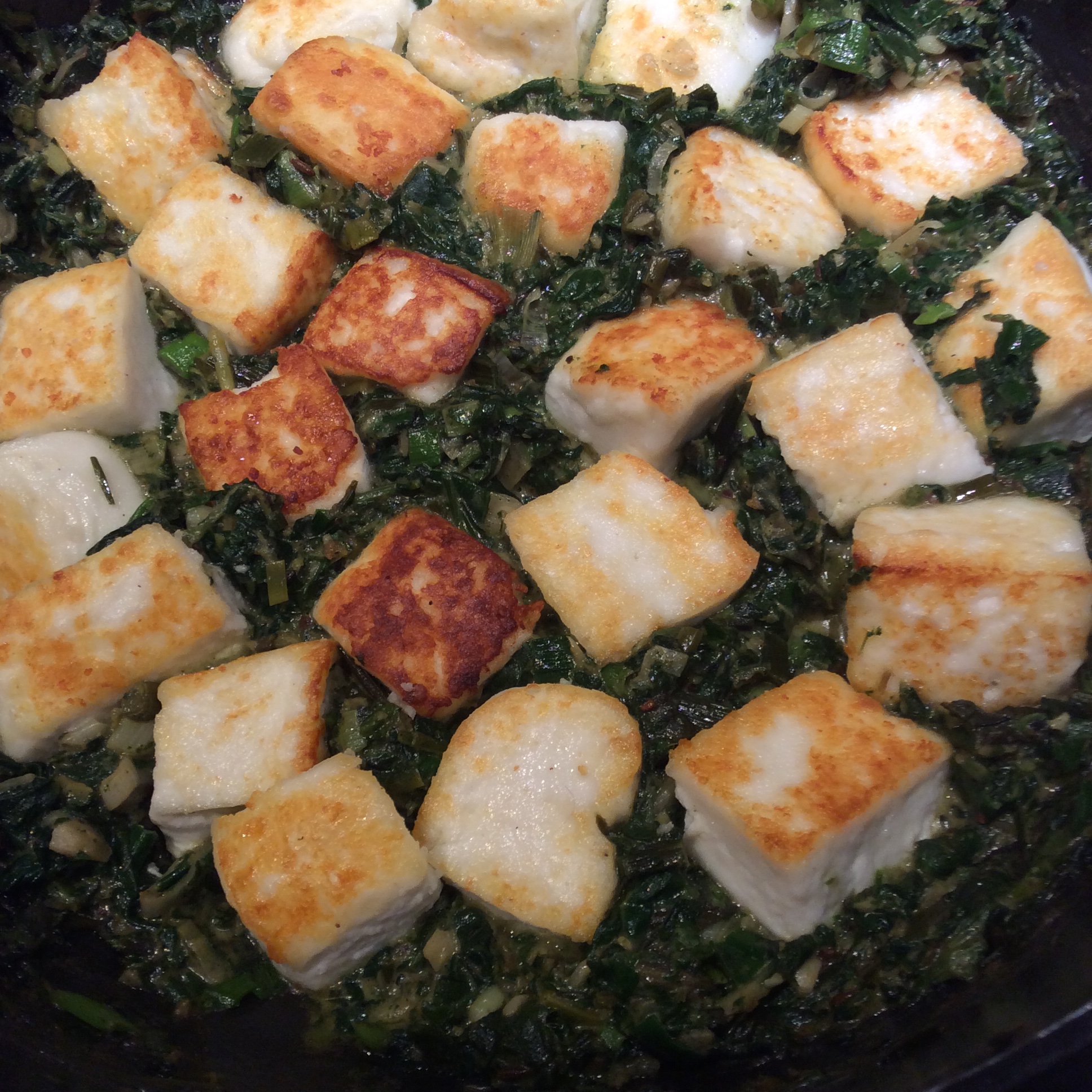
Heat a saucepan, put in a couple of tablespoons of mild oil, and fry the cumin seeds briefly until they darken a couple of shades. Immediately add the chopped ginger, stirfry furiously until it is cooked but not browned, and add the chopped alliums and lower the heat to medium-low. Add a half teaspoon of salt and sauté the alliums until they are softened, lowering the heat if necessary to keep them from burning. Add the garam masala, cook another minute or two, and add the cream. Add the blanched chopped greens and cook over low heat until they are thoroughly cooked, probably about another 10 minutes. Put the paneer cubes on top, pushing them into the greens mixture a bit, and cook over low heat until they are heated through. Serve with rice or, if you are a low carb eater, gloriously naked on the plate. Drizzle some melted butter or ghee over the top.
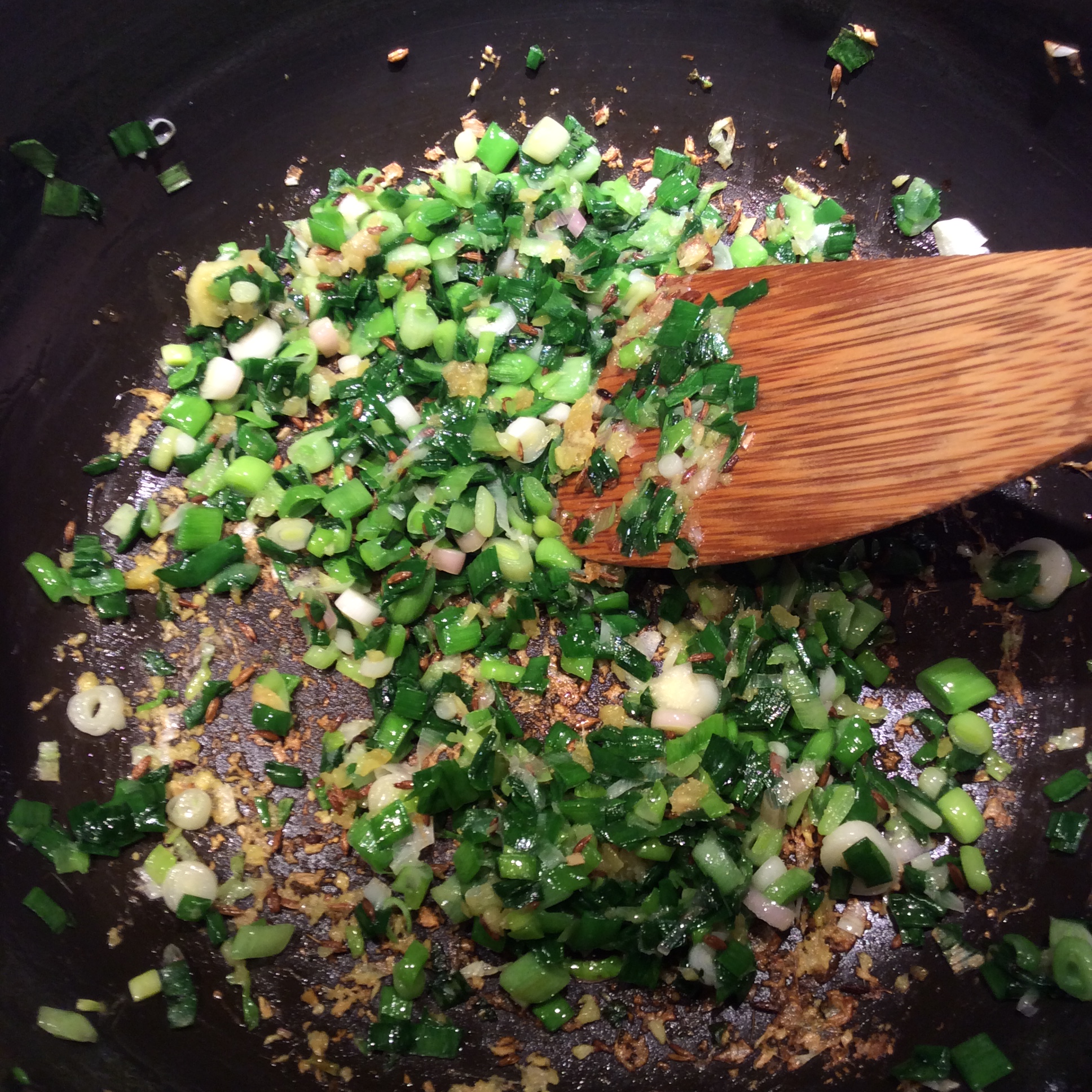
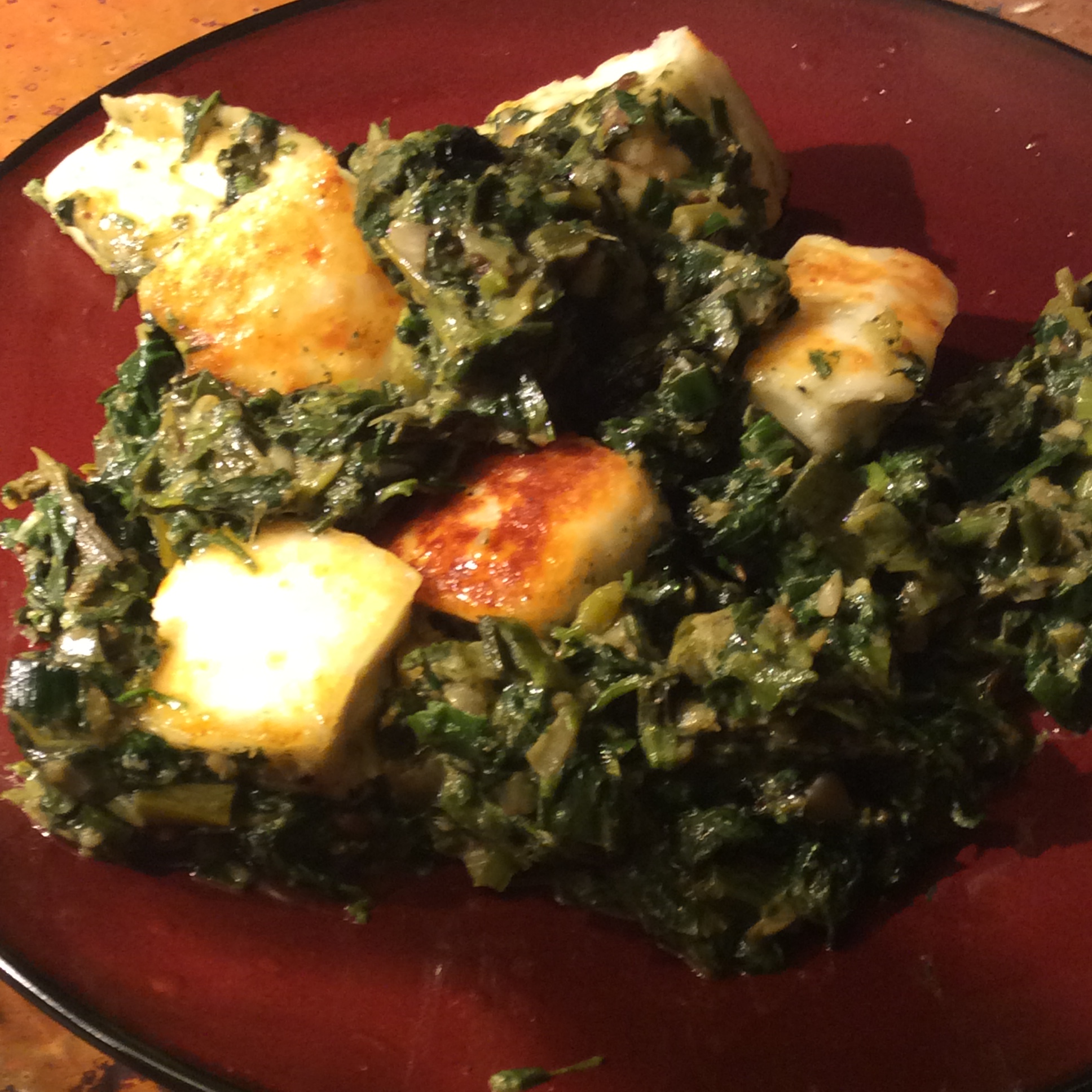
I was taught to make this dish a few decades ago by an Indian woman in Manhattan, and I am pretty flexible about the greens used as long as they’re mild. No bitter green has a place in this dish. The green garlic and onions are great in season, but chopped garlic and onion are traditional.  I’m very rigid about the seasoning, though. Sometimes I add a chopped hot pepper but that’s my only variation. The whole cumin seeds fried quickly in hot oil are not negotiable, and burning or scorching any of the seasonings or alliums  means you need to start over, so work carefully.
Goat Paneer

Goats are wonderful hardy friendly animals to have around,  and the amount of milk that they give is very considerable relative to the input required, but many people do not like the taste of most goat cheeses. If you are one of these people, or even if you like goat cheese, you may still want to know about some alternatives that avoid the goaty taste. Fresh ricotta and fresh paneer,  when made with fresh goat milk, are not distinguishable from cows’ milk products.  You need to use the milk within a day of milking, or at most two days, and it goes without saying that it has to be refrigerated all that time.

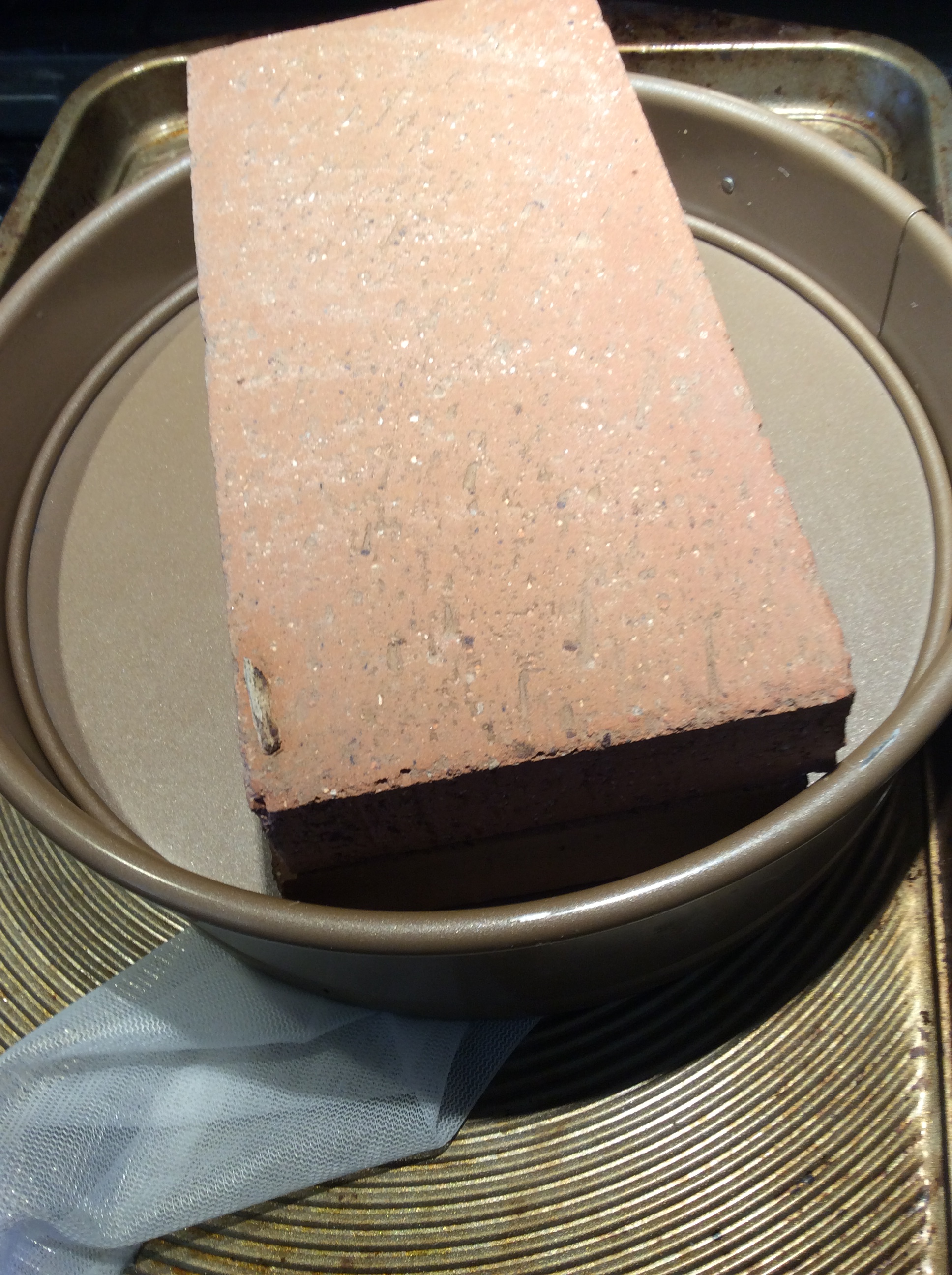
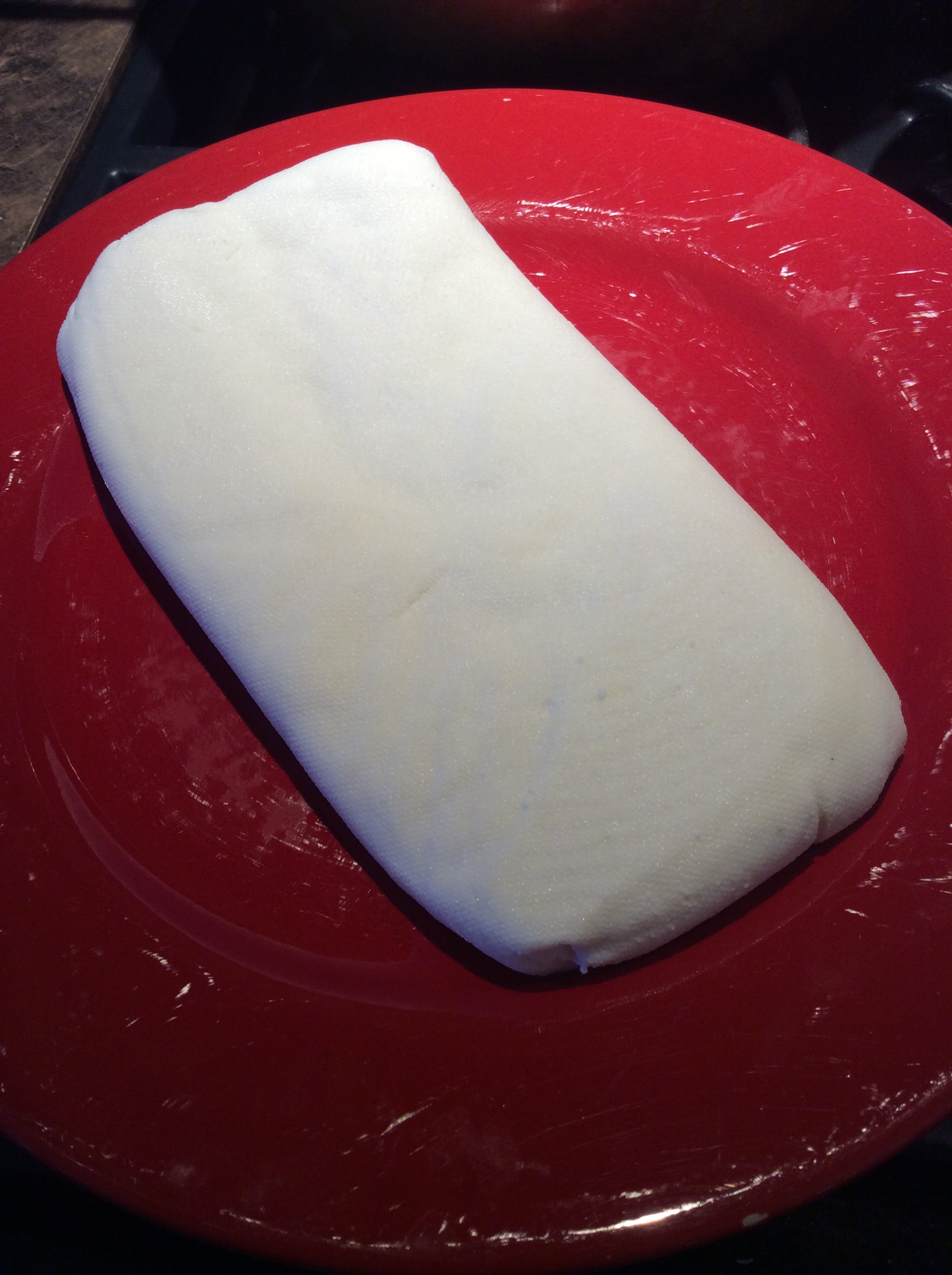
I have written elsewhere about making ricotta and you can review that page because the directions are the very same up to the pressing. Making paneer is every bit as easy but requires just a bit of forethought to have some simple equipment on hand. It has to be strained and then pressed. You can buy a cheese press for this, if you want it for some other purpose, but if you just want to  make paneer, all you need is  real cheesecloth (not the kind sold for dusting and polishing) for the straining, a  baking sheet,  a saucer, and a couple of bricks or other suitable weight. I use a springform pan and a nylon mesh bag made for straining fruit for cider.  A gallon is about the minimum amount of milk that is worth fooling with, and will produce about 8 ounces of finished paneer.

Heat the milk to almost boiling, watching it carefully because it wants to boil over. Add the vinegar, stir in, watch for the formation of curd, and add a little more vinegar if needed until you have white curdled curds in greenish whey.   Put a strainer in the sink or over a bowl if you wish to catch the whey and use it for some other purpose. Line with cheesecloth, pour the curdled milky mixture in, and let it drain for at least 30 minutes.  Within an hour, wrap the largely drained curds up in the cheesecloth with the idea of forming a block that will be about an inch thick. The other dimensions will depend on how much milk you were working with. For a gallon of milk, I plan a block of paneer about  3″ x 6″.  Put it on a baking sheet so that the remaining liquid can drain away, put the saucer upside down on top, and put the weight on the saucer. Or, if you are using my method, put the ring of the springform pan on the sheet, the cloth wrapped curds inside, and use the base of the springform pan on top  to hold the weight and “follow” the curd block as it shrinks in pressing.  Either way, leave your set-up for about eight hours.  You then have paneer, which can be used in many Indian dishes. It browns beautifully, and if the milk came from a grass fed animal, it is superbly  healthy.  It is the backbone of sa’ag paneer, one of my favorite dishes.  It also freezes well, so it’s a good way to preserve your precious grass fed milk.
img_5277

Spring Ricotta

img_5246

This  time of year we are having some warm sunny days and the heavy meaty dishes of winter no longer feel quite right, but I still want something warming  and filling.

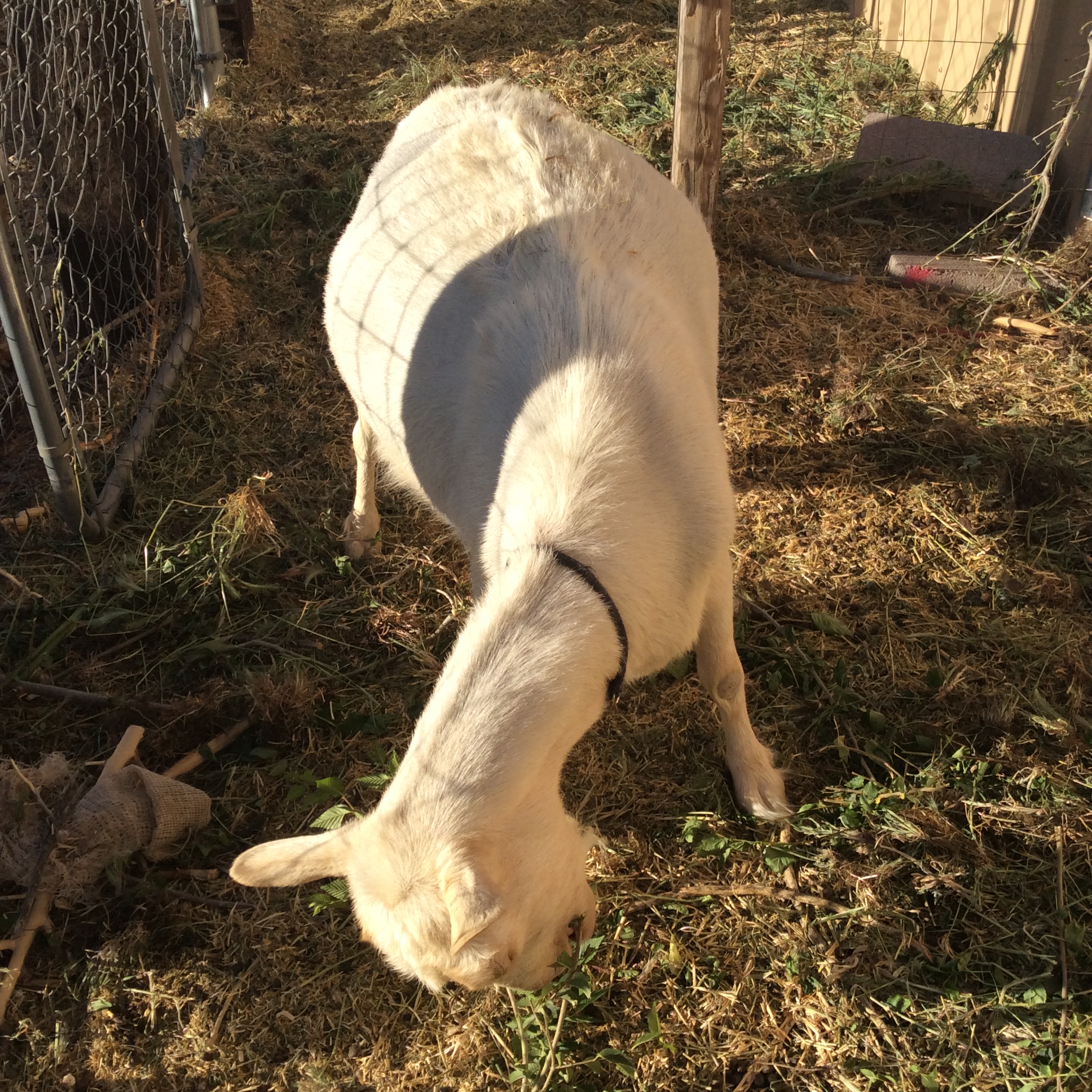
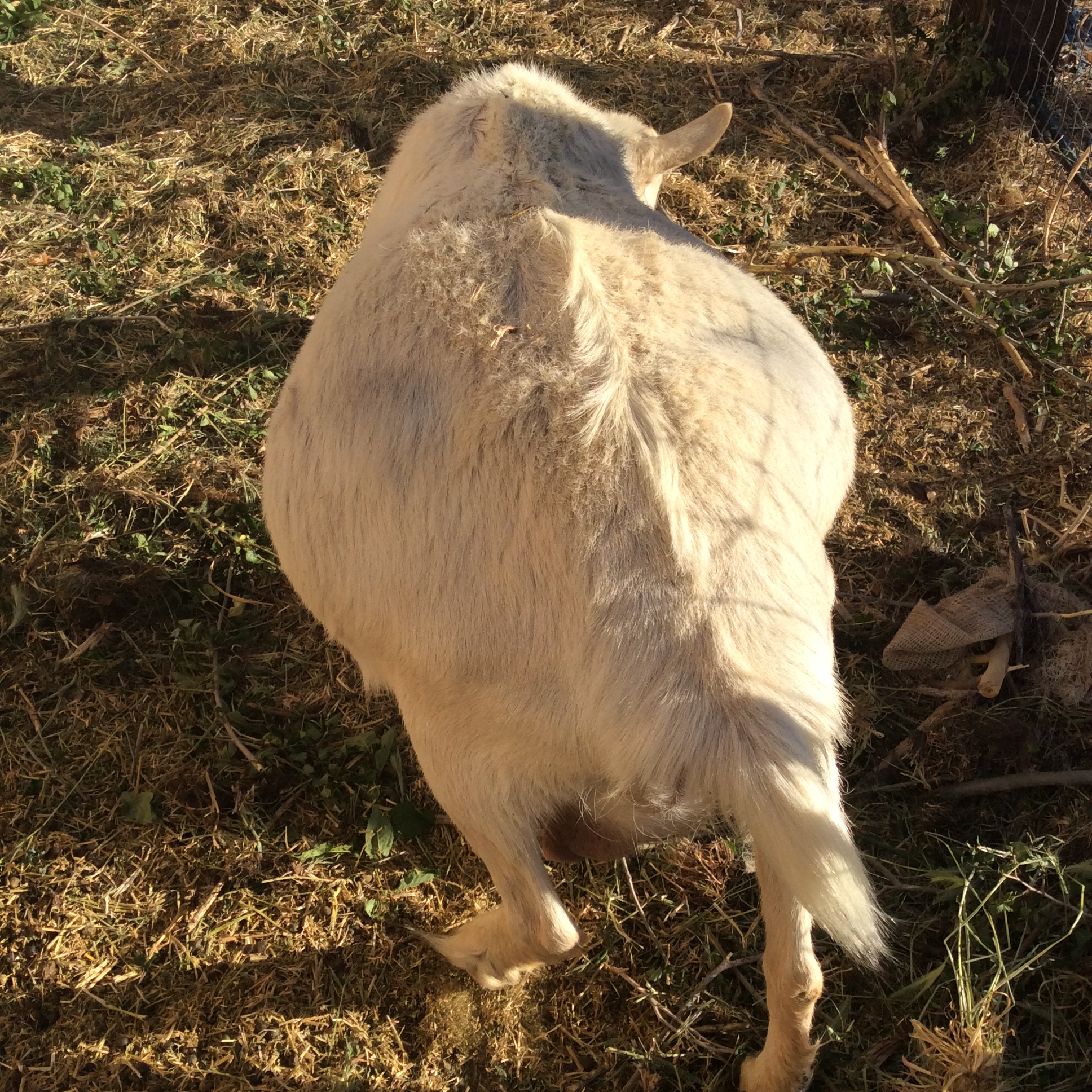
At the same time, my doe goat Magnolia is nearing the end of a lactation, getting ready to deliver kids in six or seven weeks. At this point she’s producing just a quart a day, but it’s still rich milk produced entirely on alfalfa and I’m not about to waste it.

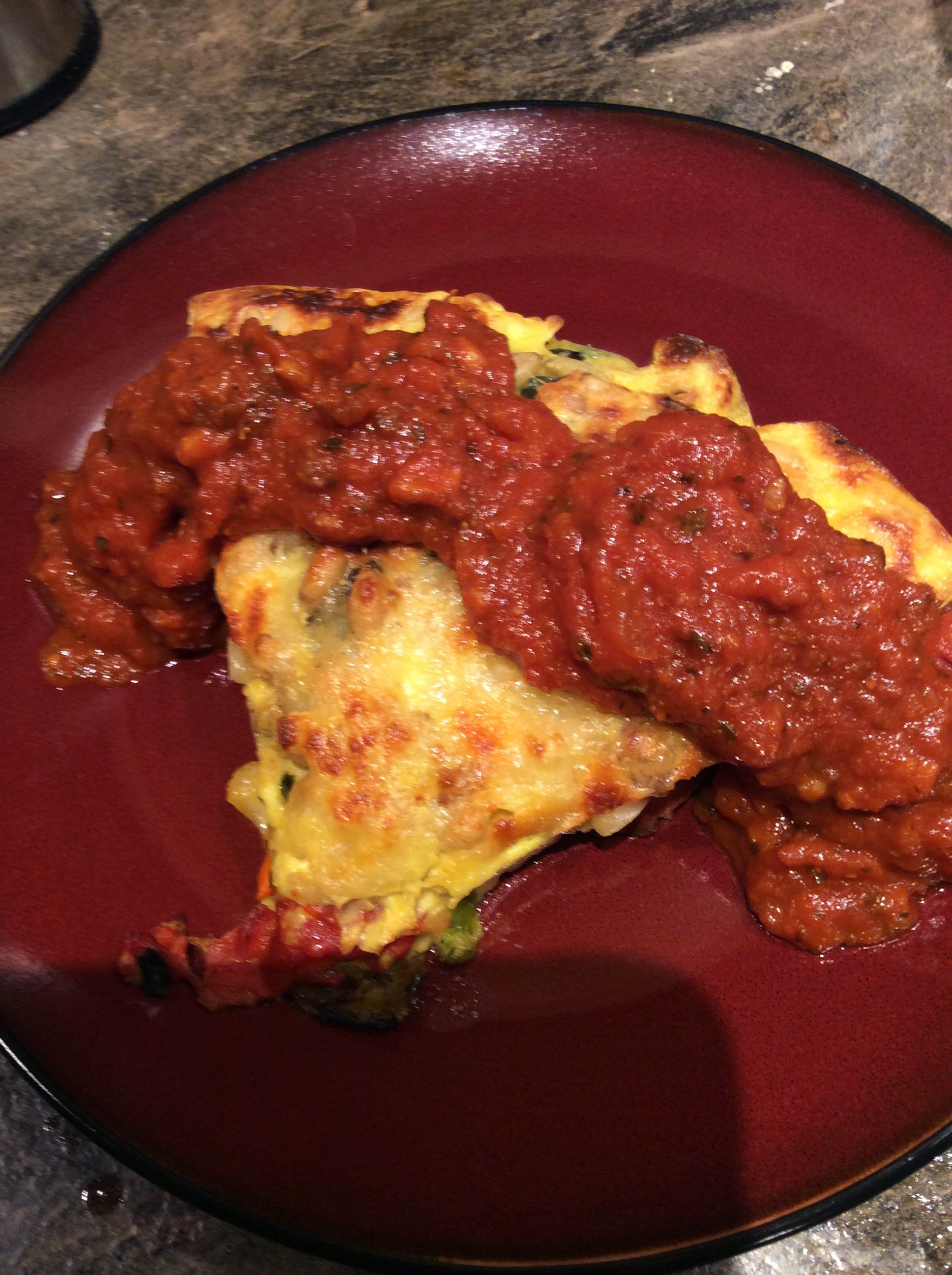
So every evening, after filtering the milk, I make ricotta, and when I have a few days’ worth of ricotta saved up I make ricotta al forno. I stole the recipe from Sarah Raven many years ago, and I haven’t tweaked it very much over the years because it’s perfect as is. The main change is that I use egg yolks instead of whole eggs. Yum.

Ricotta, about 1 and a half cups, but a bit more or less won’t hurt.
Yolks of 5 eggs
Salt to taste
Half a cup of heavy cream
Half a cup of grated Parmesan
Half a cup of pine nuts
Cooked veggies as desired. Or none.

Kitchen note: homemade ricotta is drained until quite dry. If you are using store-bought ricotta, you might need to hang it in the sink in cheesecloth or a clean towel for a few hours and let it drain. Otherwise, the resulting dish can be watery.  Another alternative, if you don’t want to take time to drain, is to add one additional whole egg to help it firm up a bit, or leave out the cream.

Put the ricotta in the blender with the cream and add the egg yolks one at a time while blending.  Blend in the grated Parmesan just for a second or two. Add salt to taste.  Decide whether you want vegetables. This is an endlessly versatile way to use leftover but good cooked vegetables. The version shown above has a couple of cups of leftover grilled zucchini, red bell pepper, and eggplant.  In the early summer, fresh cooked peas are absolutely delicious in this dish.  A good handful of chopped fresh herbs may suit your taste.  Just be sure that the cheese mixture is already seasoned properly.  Pour it into a buttered 8 inch baking pan, adding any cooked vegetables or herbs that you wish as you go. Top with pinenuts and push them in a little bit so that they don’t burn. Bake at 350 for 25 minutes or until done.  Let it consolidate and settle down for 15 minutes, then serve in  generous wedges.    A topping of your best homemade tomato sauce adds pizzazz.  My husband likes it with a sprinkle of extra finally grated Parmesan on top and run under the broiler for a minute, which produces the brown spots you see above. Just keep an eye on it because it does burn very quickly.

In June this is absolutely glorious made with some chopped fresh herbs and topped with homemade pesto.  For those of us who eat low-carb, it is something to put pesto on.  This lactation will only last two or three more weeks, but by June I will have fresh glorious grass fed milk again and be back in the ricotta business.

img_4114


Spring Alliums

img_5237

One of the many reasons that I love green garlic and green alliums generally is that they are among the earliest things to come out of the garden, assuming that you planted in early fall. I have plenty of summer veggies in my freezer, but as the days start to lengthen I get ravenously keen for the first real, fresh greens, and by mid-February I’m eating out of the garden again.

For early green alliums, plant some in a block that you can cover with Agribon or other frost blanket material. I like to put a short row of my regular yellow storage onions in this block in September, and each will divide and make four or five superbly sweet green onions in early spring.

Garlic is another must, and my favorite for early green garlic is Chinese Pink, because it is super-early and is eight inches tall and half an inch in diameter by mid-February if frost protection is used. Plant your early block with the cloves about three inches apart each way. When I’m ready for green garlic I pull alternate stalks, and leave the rest 6″ apart to mature for my earliest garlic bulb harvest.

In the case of leeks, there isn’t even any need to replant in fall. Plant extra in spring, cover with frost blanket in late fall, and they will winter over nicely for February eating.

Contrary to much popular advice, I don’t suggest that you even think about cutting the green leaves off and discarding them. They are delicious. They are also the healthiest part of the plant, full of the antioxidant allicin which has multiple health benefits. Do cut them in fine cross-sections, about a quarter inch long, to  eliminate  any possible stringiness  in the leaves.

image

I love a good assortment of green alliums chopped up and sautéed in butter with salt to taste until they are succulent and sweet. Keep the heat medium-low and let them cook at least twenty minutes for best flavor. I eat them as a side dish, but they would also be great on slices of crisp baguette, in an omelette, over scrambled eggs or rice,  on a broiled fish fillet, or nearly any other way that you can imagine.

img_5236

Two years ago I stuck some garlic cloves in a flower bed planning to harvest them for green garlic, but forgot all about them in spring. After two growing seasons they’ve divided so much that the leaves are as fine as grass. I’ve started harvesting the tops and chopping them finely to use as a fresh seasoning. They have a stronger but cleaner flavor than garlic chives. I love them over egg salad, green salad, broiled or grilled meats, on soup, or anywhere that you might crave a hit of freshness and garlic. They give some distinction to a regular or low-carb pizza.