Archive for the ‘sustainable’ Category

Backyard Mushrooms

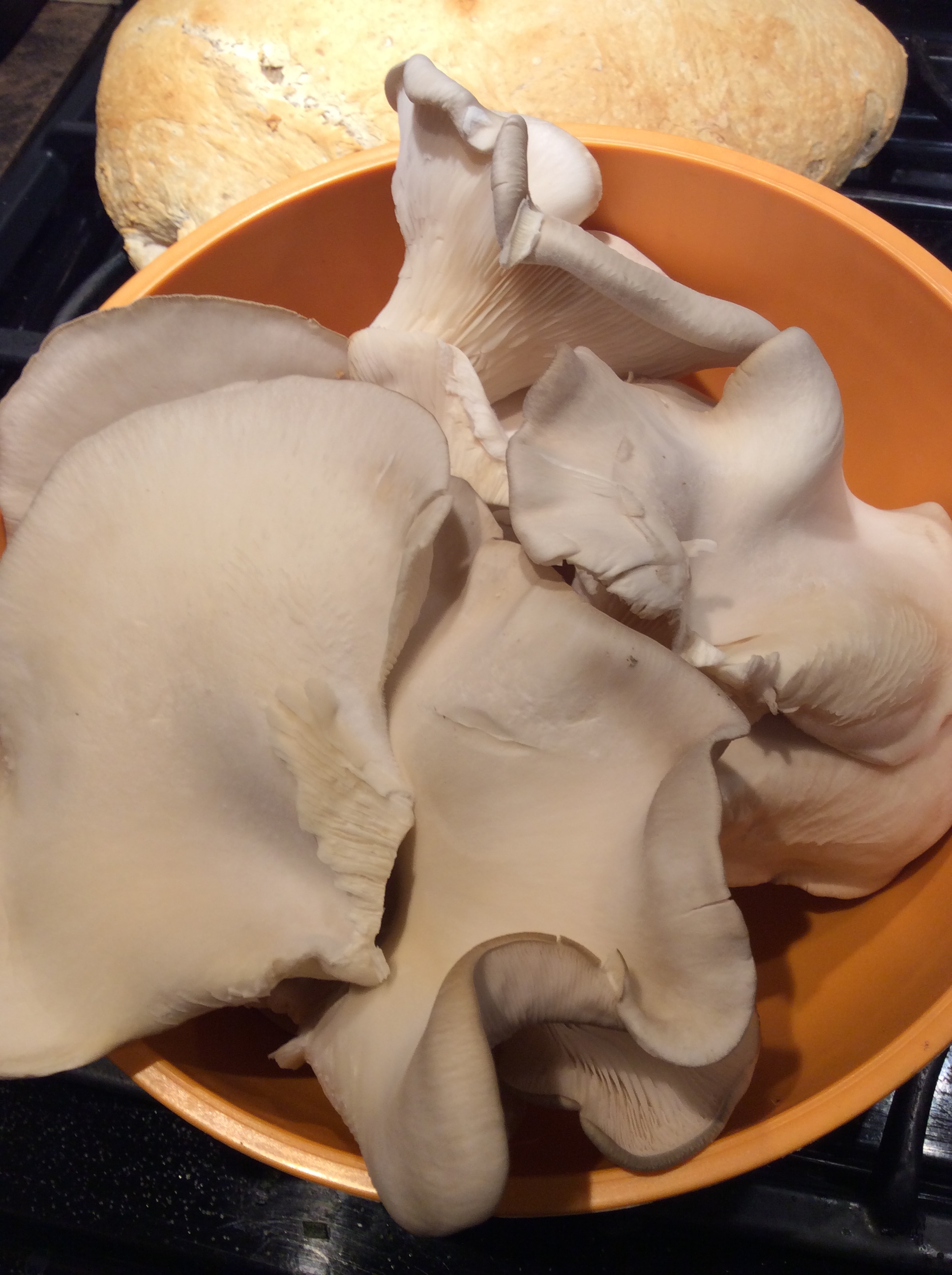
For years I moaned and carried on about my inability to grow mushrooms as an integrated part of my urban homestead, and now I can’t stop them. All winter I grew oyster mushrooms in the garage on a substrate of recycled paper, and last month I put the theoretically depleted basket of substrate outside in the shade with the thought that when I got around to it, I would break up the broken-down paper and incorporate it into my mulch. Instead, the basket was within range of a sprinkler that I was using every other day to help some new plants get started, and produced another three pounds of mushrooms. So this might not  exactly be the Pacific Northwest around here, but the adaptable oyster didn’t care.

So my point is, as the Gangsta Gardener says, just plant shit. Plant what you would like to eat and don’t give up. Plants and fungi are resilient survivors and may astonish you at some point, even after initial disheartening failures.

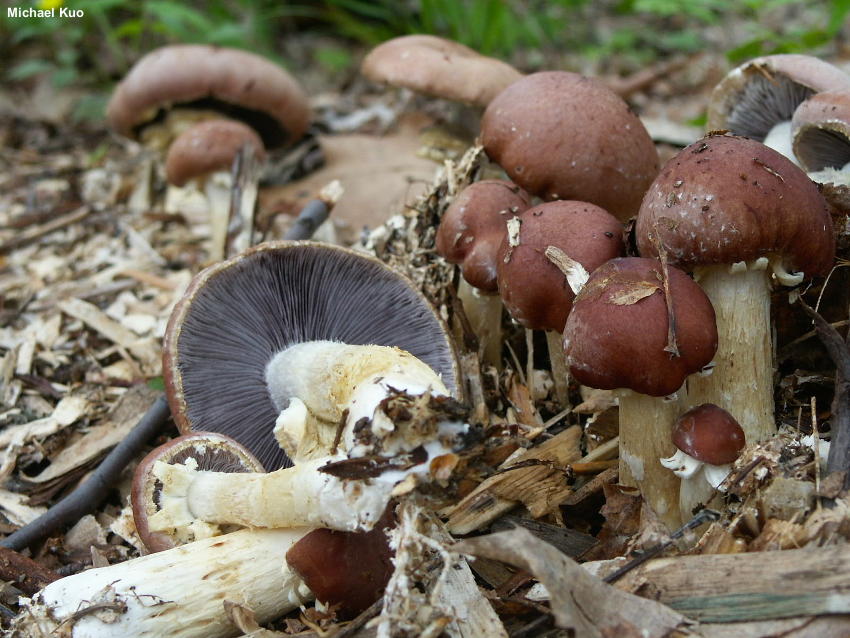
The role of fungi in a healthy ecosystem is far-reaching and worth reading about. They are valuable beyond measure whether you can directly eat them or not. But my greed and gluttony makes me most interested in the edibles. Pleurotis ostreatus, the common oyster mushroom,  is vigorous and highly adaptable and also delicious, which works out well for my purposes. But I am experimenting with some other types. In an area of deep straw and mulch I put spawn of the wine cap mushroom, Stropharia rugosa-annulata, and it seems to be sending mycelia out through the straw. In August I’ll find out if it will fruit for me.
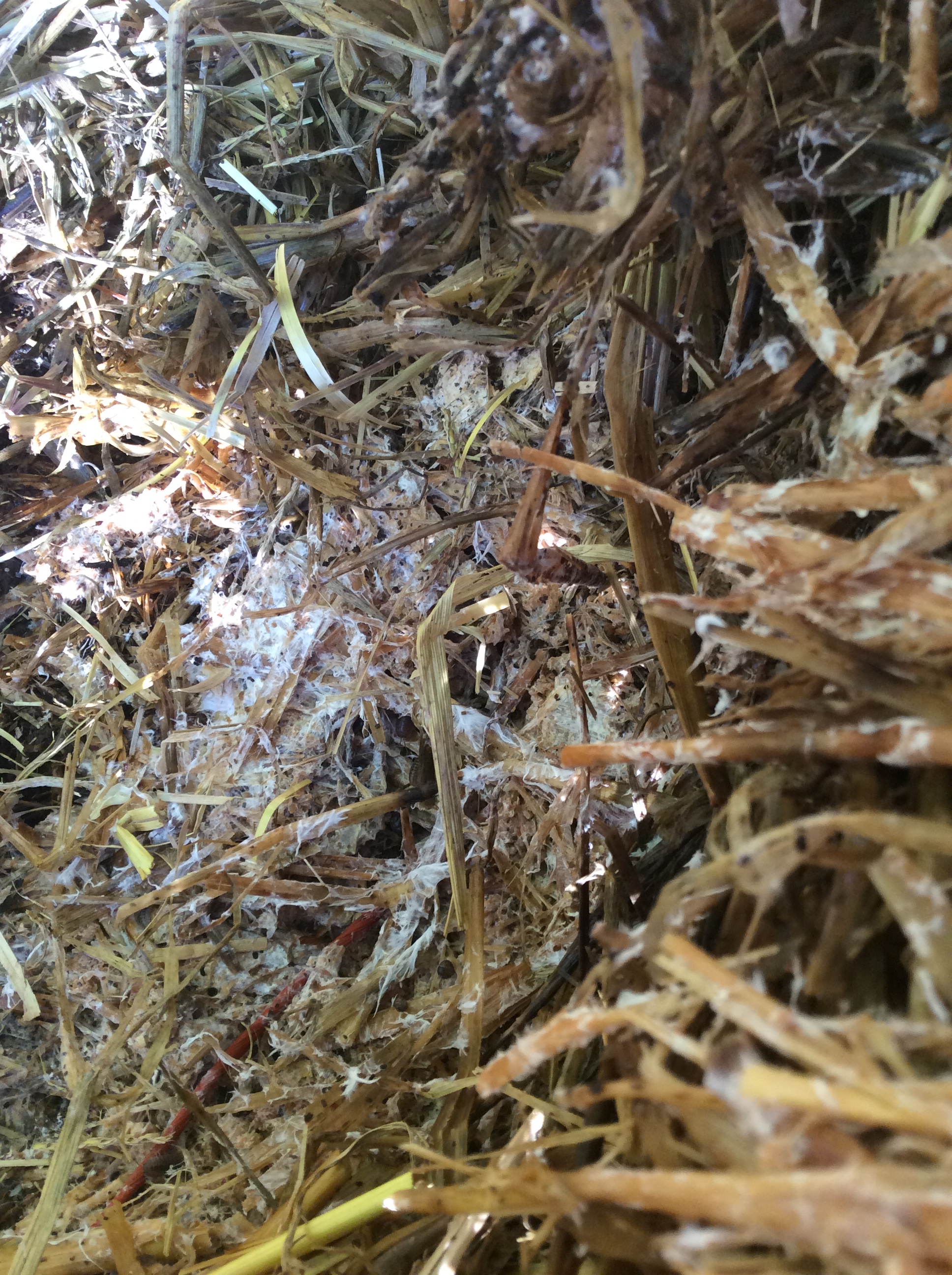
The mycelium above may grow into the mushrooms below:
DCF 1.0

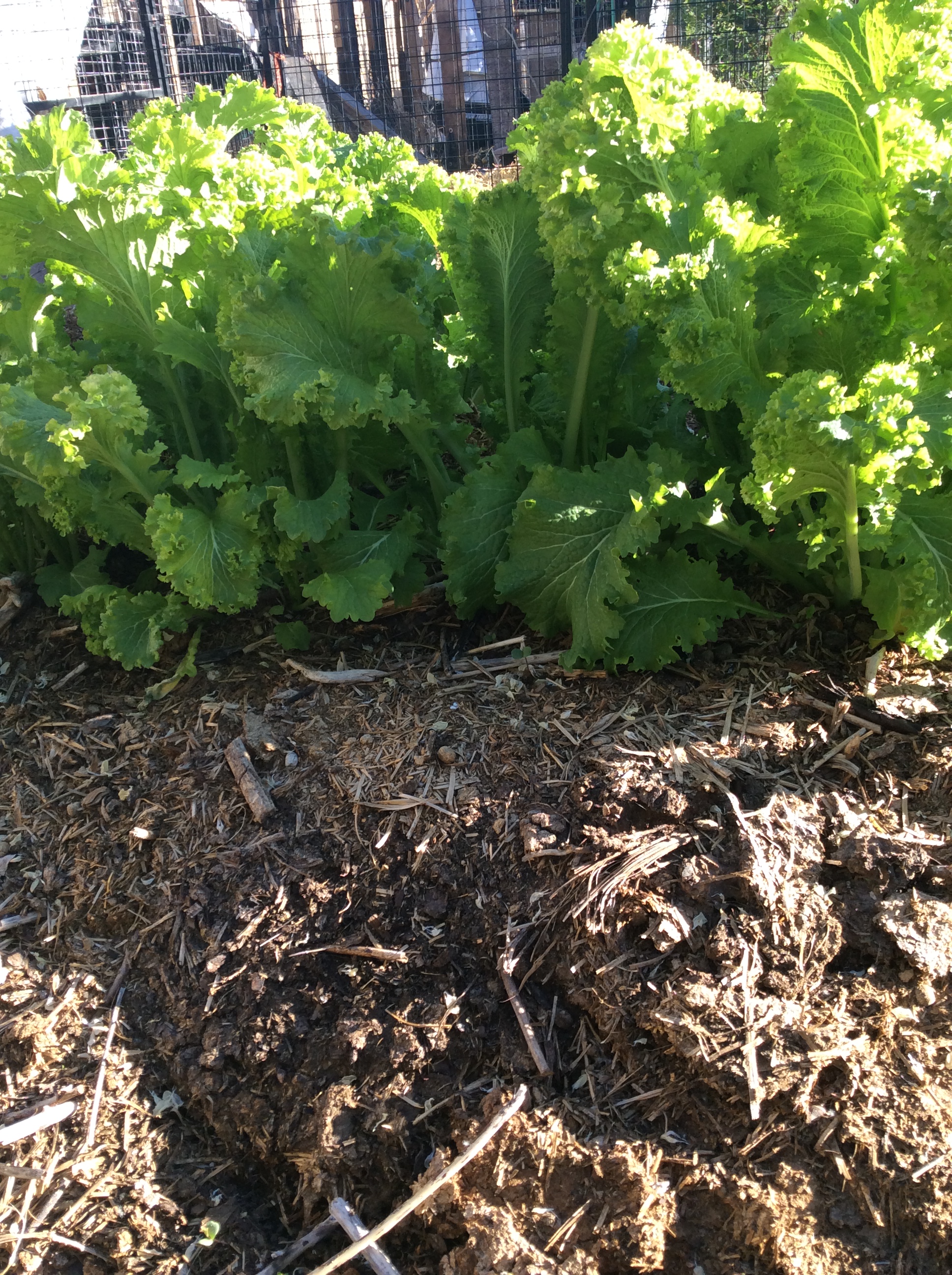
Every year I make a new bed by putting down layers of cardboard and nontoxic paper recyclables and piling up a year’s worth of goat bedding on top. This is a mixture of goat manure and the alfalfa that she eats, and is as hot a compost material as you will find, so I do this in late fall or early winter, wet it down thoroughly, and let it compost in place over the winter. In spring, I start planting into it.  Generally, the first year I use hearty healthy unstoppable plants, such as mustard for greens and summer squash. They always flourish, and by the second year of the compost is finely broken down and will grow pretty much anything. This year I planted spawn of the almond agaricus mushroom, a compost-loving mushroom, into a first-year bed and will see what happens. But I was interested to note that a small shelf of oyster mushrooms poked out the side a couple of weeks ago. The oyster mushroom is not “supposed” to tolerate full sun or hot compost. To which I can only say, tell that to the oyster mushroom.
If you’re interested in learning more about offbeat ways of growing mushrooms, Mycelial Mayhem is a delightful romp through the casual side of mushroom growing. Mycelium Running is a classic about the role of fungi in ecology.
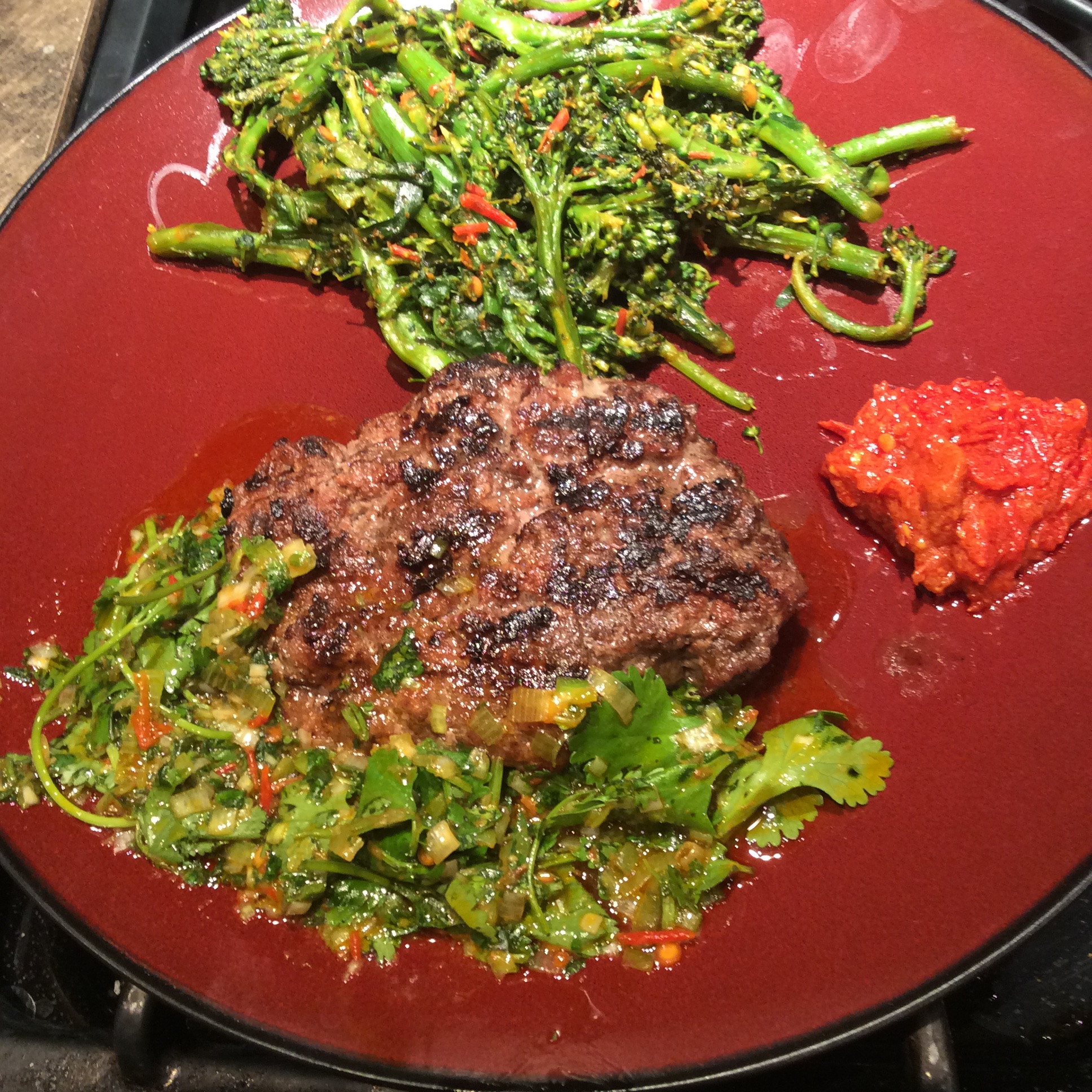
A Hundred Kinds of Chimichurri

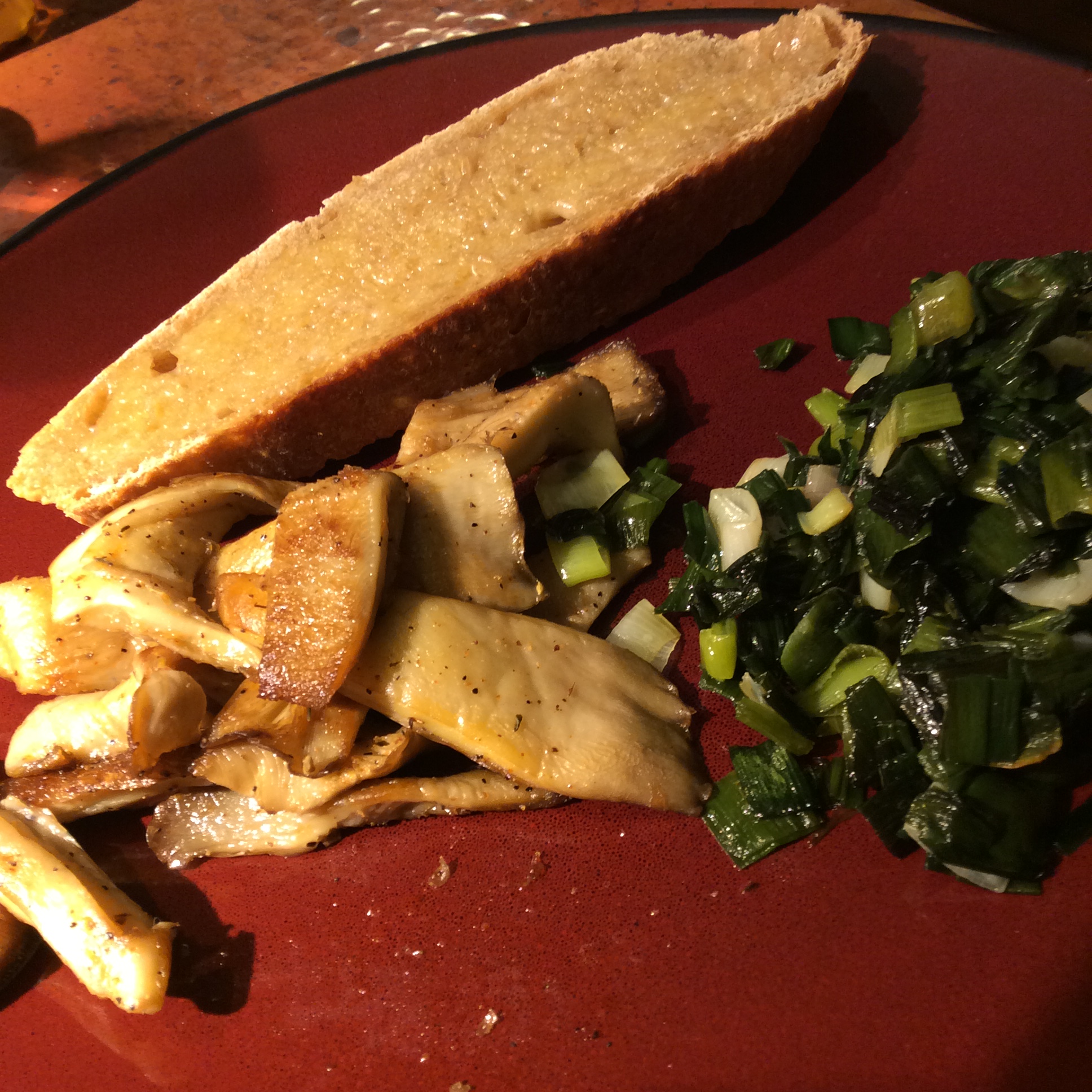
I love chimichurri, the ground herb table sauce of Argentina, but I am by no means faithful to the Argentinian version. If you have an active garden, spring offers the first of infinite variations of chimichurri to accent any grilled meat or poultry. These savory herbal sauces also dress up baked and roasted foods, and are a great way to perk up hard-boiled or fried eggs. People who don’t have to stay low-carb may like them drizzled on bread or rice. Vegetarians will like chimichurri on roasted vegetables, and for that matter ardent carnivores would love it on roasted carrots, broccoli, and other meaty veggies. I can imagine it freshening and enlivening roasted or grilled oyster mushrooms.

The basic necessary ingredients are olive oil, garlic, an acid, salt, herbs, and embellishments. Variables are the herbs, the texture, and the embellishments and degree of heat, if any.

So here’s a menu for infinite improvisation:

Oil: I say very good olive oil is a necessity. If you choose to fool around with other oils, feel free. Plan on between a half cup and one cup.

Garlic: green in spring, mature cloves later on. 2-3 large stalks of green garlic or 3-4 cloves of mature garlic.

Acid: vinegar is traditional but lemon juice is delicious with the more delicate spring versions. Consider wine vinegar or sherry vinegar.  Plan on about 2 tablespoons and have extra available to add if needed. Please, don’t use sweet caramelized ersatz “balsamic” vinegars. Yech.

Salt: “Plenty” is the important concept here. Some chimichurris that seem like failures come alive when enough salty element is added. Remember, this is a seasoning sauce, not a main dish.Your salt element may be sea salt, but a good dab of anchovy paste or a glut of the salty-lemony fermented liquid from preserved lemons may attract you.

Herbs: parsley is traditional and great, but don’t feel bound. Cilantro is a great alternative for the “bulk” herb, of which you’ll need a bunch (from the store) or a large handful (from the garden.) Oregano, sweet marjoram, summer savory, thyme, and lemon thyme are great options for the subsidiary herb, of which a small chopped handful (combined if using multiple herbs) is plenty. Combos are potentially wonderful. I don’t recommend tarragon for this sauce, but feel free to prove me wrong, and I think rosemary should be limited to a chopped teaspoon or two if used at all. Some mint is a possibility if used judiciously. Sage is difficult to use and, in my view, not a good possibility.But suit yourself, as long as you are pursuing a coherent taste-vision. Wander your garden, be seducible, and work it out later.

Embellishments: Heat is an important possibility. Hot sauce, harissa, and ground dried chiles can all work wonders, and fresh chopped jalapeños (seeded or not per your preference for fire) can do real magic. Anchovy fillets mashed can add a savor and tang that are the making of rich meats like roasted  lamb or goat. Preserved lemon peel, finely chopped, is highly nontraditional but extraordinary in the right circumstances. A pinch  of toasted cumin seeds, finely ground, can give an earthy, sweaty, quintessentially masculine note that makes a simple grilled steak or chop memorable.

Texture: can be anywhere from medium-fine grind to as coarse as a chopped salad. It all depends on your mood and your main dish.

Procedure:

Chop your garlic coarsely or slice finely crosswise if using green garlic and put in a large mortar or small food processor; I invariably use my little stoveside Mini-prep. Chop or pound to desired degree. Add herbs, salt,  and embellishments and process only until you like the texture. Add the acid and salt, process briefly, and work in the oil. Now taste, and think. If you are sure it didn’t work, think about how to rebalance and save it. Sorry to harp, but insufficient salty element is a common fault. Increase the salt, anchovy paste, or preserved lemon juice, or add a bit of the latter two if you didn’t use them before. If overly salty or acid, add more oil to smooth it out.  If bland, add a little more acid. If just not that interesting, consider stirring in more chopped herb or some heat.

This sauce can be refrigerated overnight and may be even better the next day, although cilantro-based versions tend to lose freshness and pizazz and are best consumed on sight.

Permaculture Salad, and Notes on the Siberian Elm

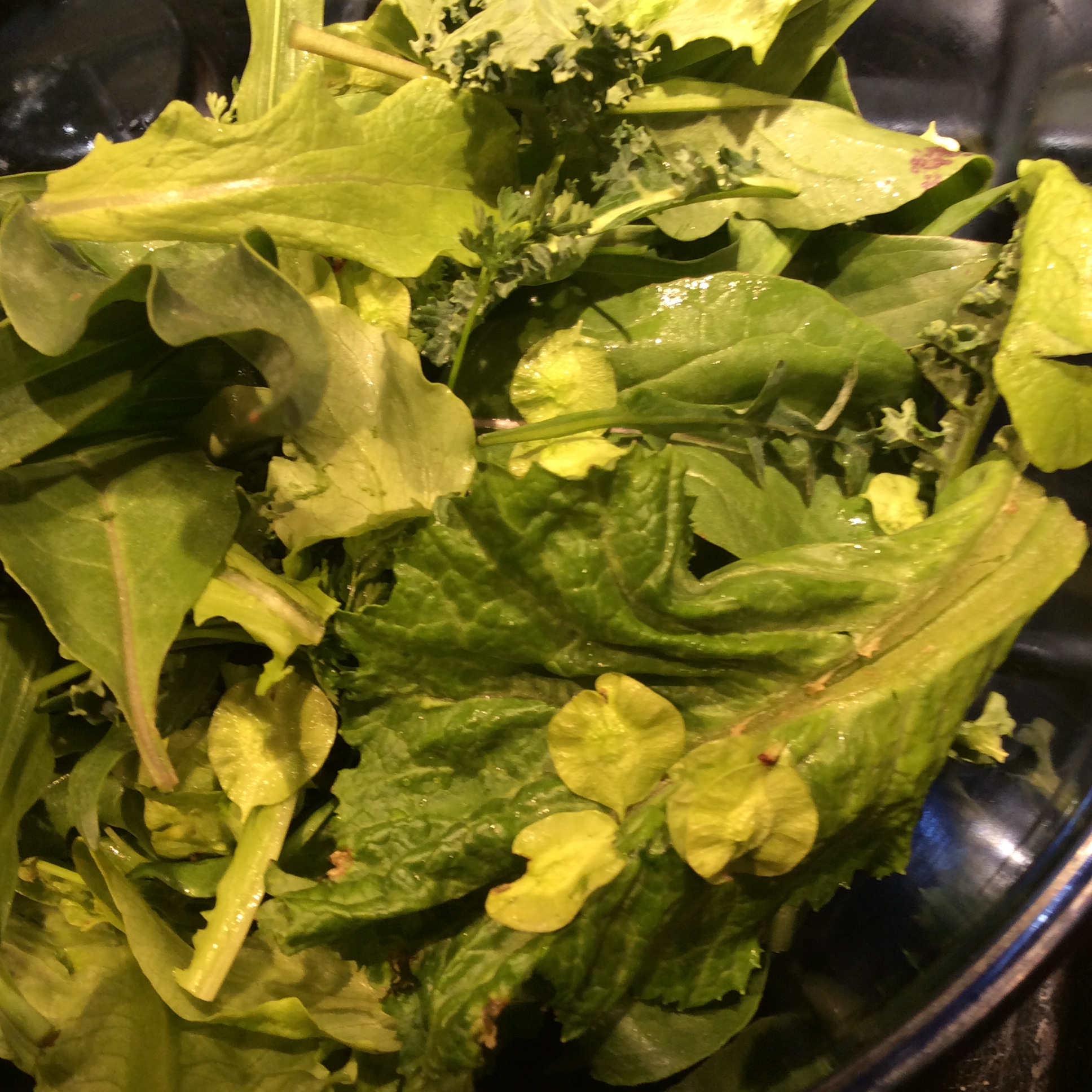
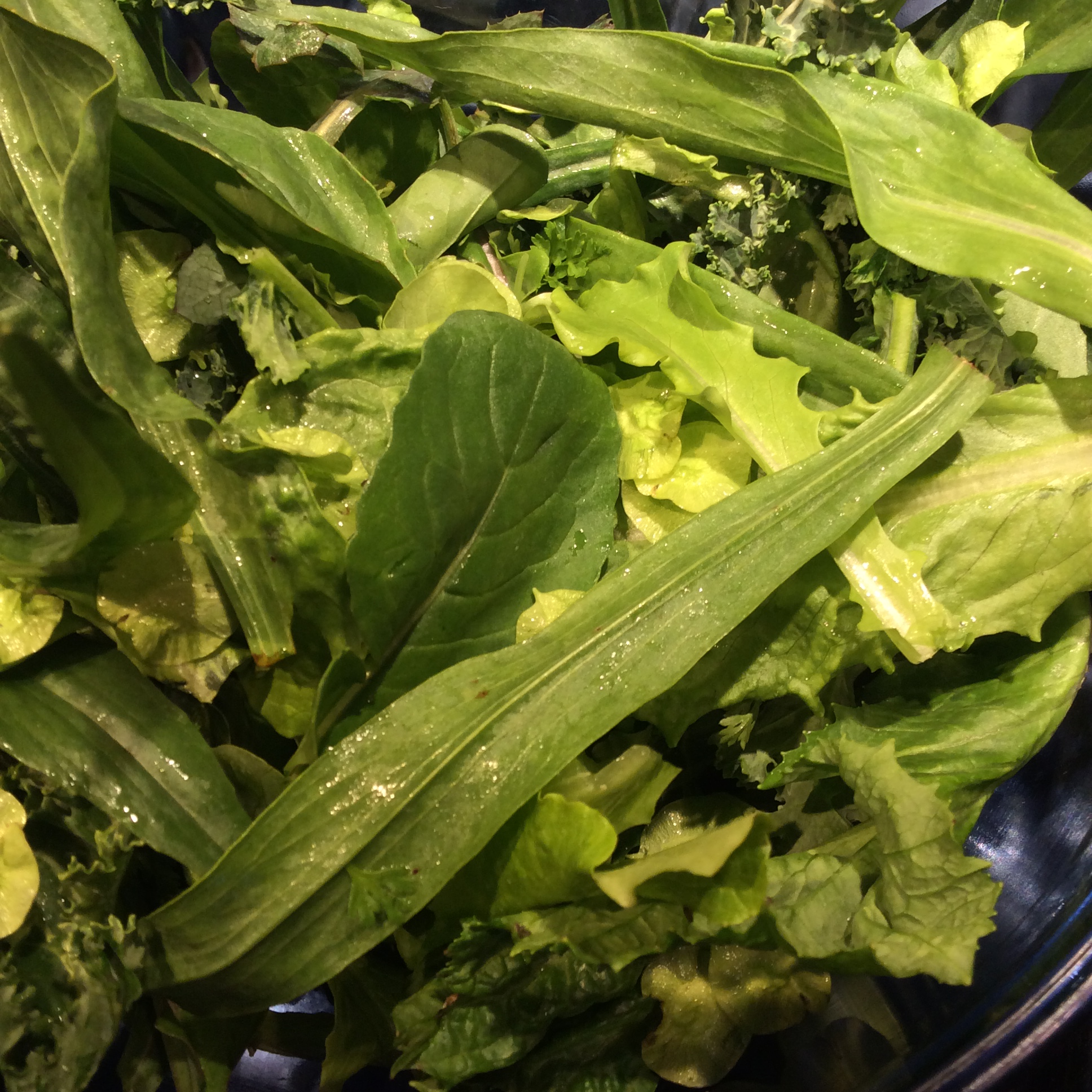
Spring on the urban homestead is so beautiful and bountiful that I can hardly believe it, and I spend more time than I care to admit just wandering around dazed with the wonder and joy of it all.  But there is a practical aspect to my trance, because while giving thanks to the cosmos for the life that surrounds me, I am noting what can go in the salad bowl that evening.

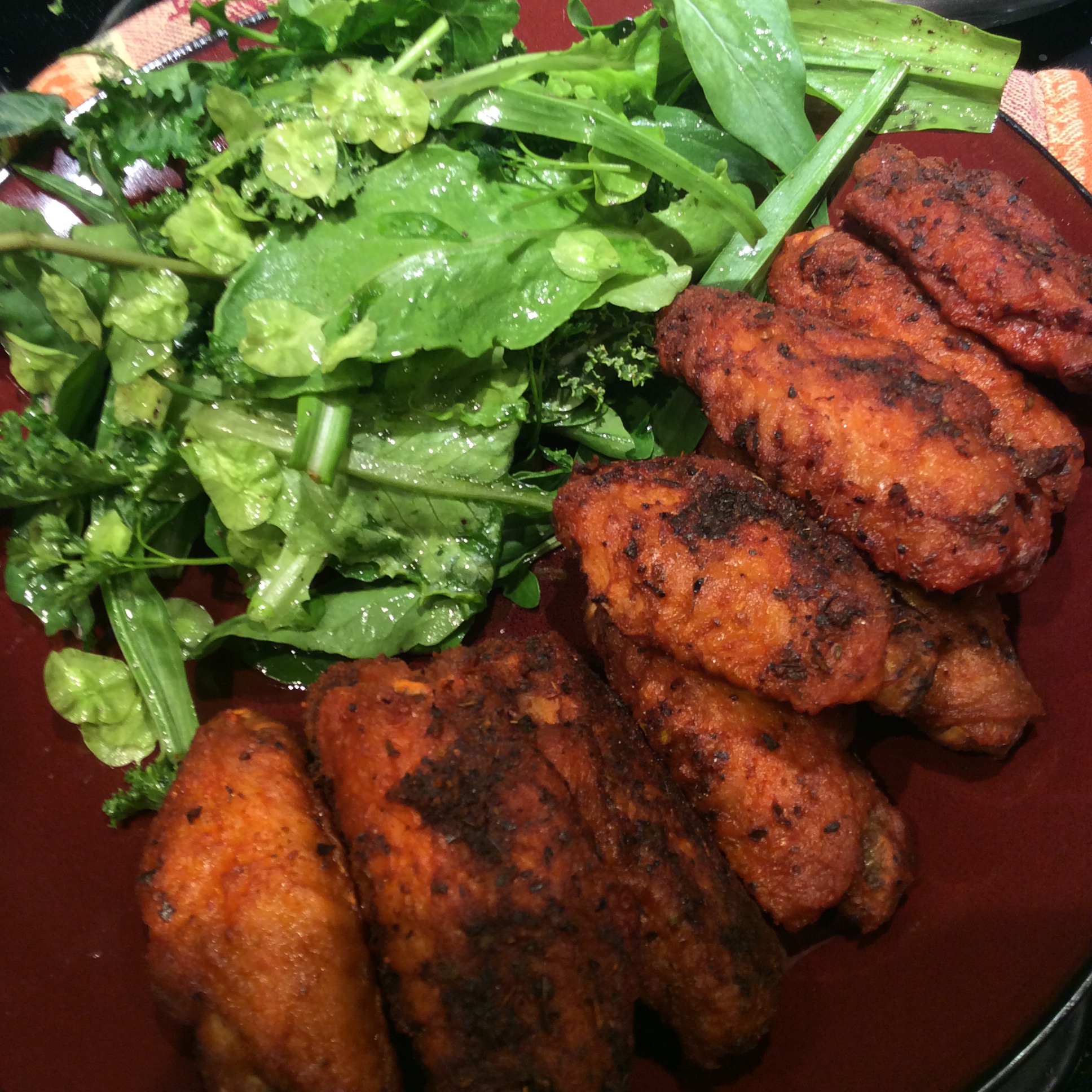
The salad shown above is a pretty typical urban homestead salad. It contains a handful of lettuce, some early arugula, and a lot of biennials and perennials that wintered over and got an early start.   Tiny leaves of curly kale that began to leaf out as soon as the weather got warm are good salad material, still sweet from night frosts, although I don’t like older kale in salads.  There is a little chervil because I threw the seeds around in warm spots last fall.

So here’s the species list for tonight:

Lettuce

arugula

chervil

scorzonera

salsify

wild lettuce

sow thistle

dandelion

Siberian elm samaras

Bladder campion

tarragon

mustard (one Southern Giant plant overwintered somehow)

Green perennial onions

A few further notes on the ingredients: in the past I had tried cooking scorzonera greens and thought they were fairly uninteresting, but for some reason I never tried them as salad material until this year. They are very mild in flavor and have a nice slightly substantial and tender texture, and I am using them a lot now.  They make a good base for some more flavorful greens like dandelion and mustard and arugula.  I have written in the past about how much I love the elongating flower stalks when pan grilled in olive oil, so this is a very good dual purpose vegetable. I plan to plant more of it.

In the past I have mostly used Siberian elm samaras as a “hand salad” eaten spontaneously on walks when  they presented themselves.  They are too mild to be of much interest cooked, although I do use them in greens mixtures sometimes, but I have found that I like them in salads in rather substantial amounts, probably a cup of washed samaras in a salad for two.  There is something about the texture that I enjoy, provided you pick them at the right stage, when they are about the size of a dime and the edges are still fresh green and have not yet grown at all papery.  They need a little bit of cleaning, but most of the debris can be floated off once you have broken up the clumps with your fingers, and 15 minutes of preparation is not too much for a vegetable that cost you no effort or money whatsoever in the growing.

Have a  look at what’s available to you in field and forest and in your own yard.  Learn how to make a really good vinaigrette. Use common sense, and don’t eat plants unless you are completely sure that they are edible.

Spring Miscellany

Tonight I find myself eating a lovely and satisfying dinner out of the yard, and reflecting on a series of happy surprises.

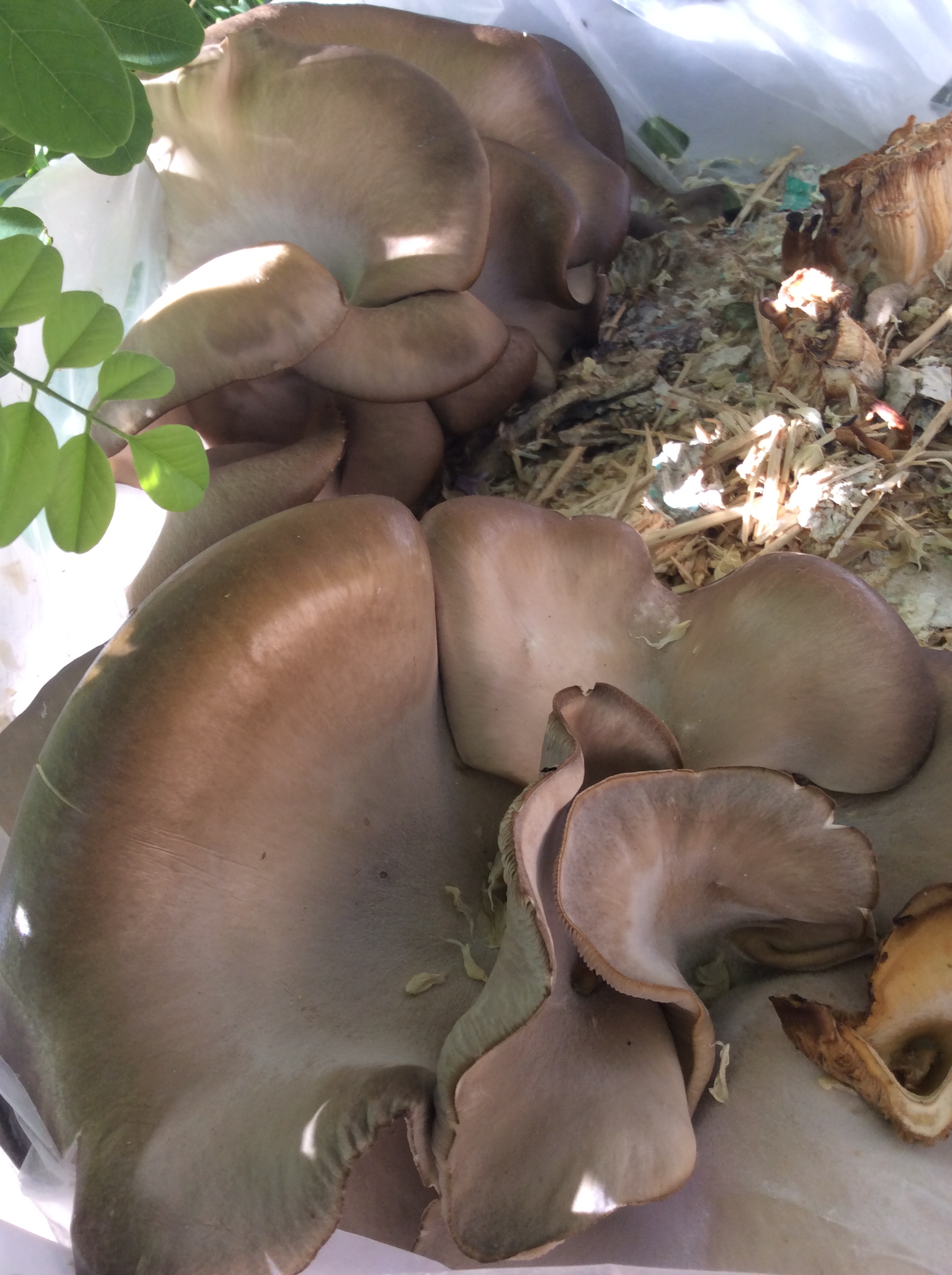
First, I went to the shed to get a tool, and my latest mushroom laundry basket had a gorgeous huge clump of oysters across the top.

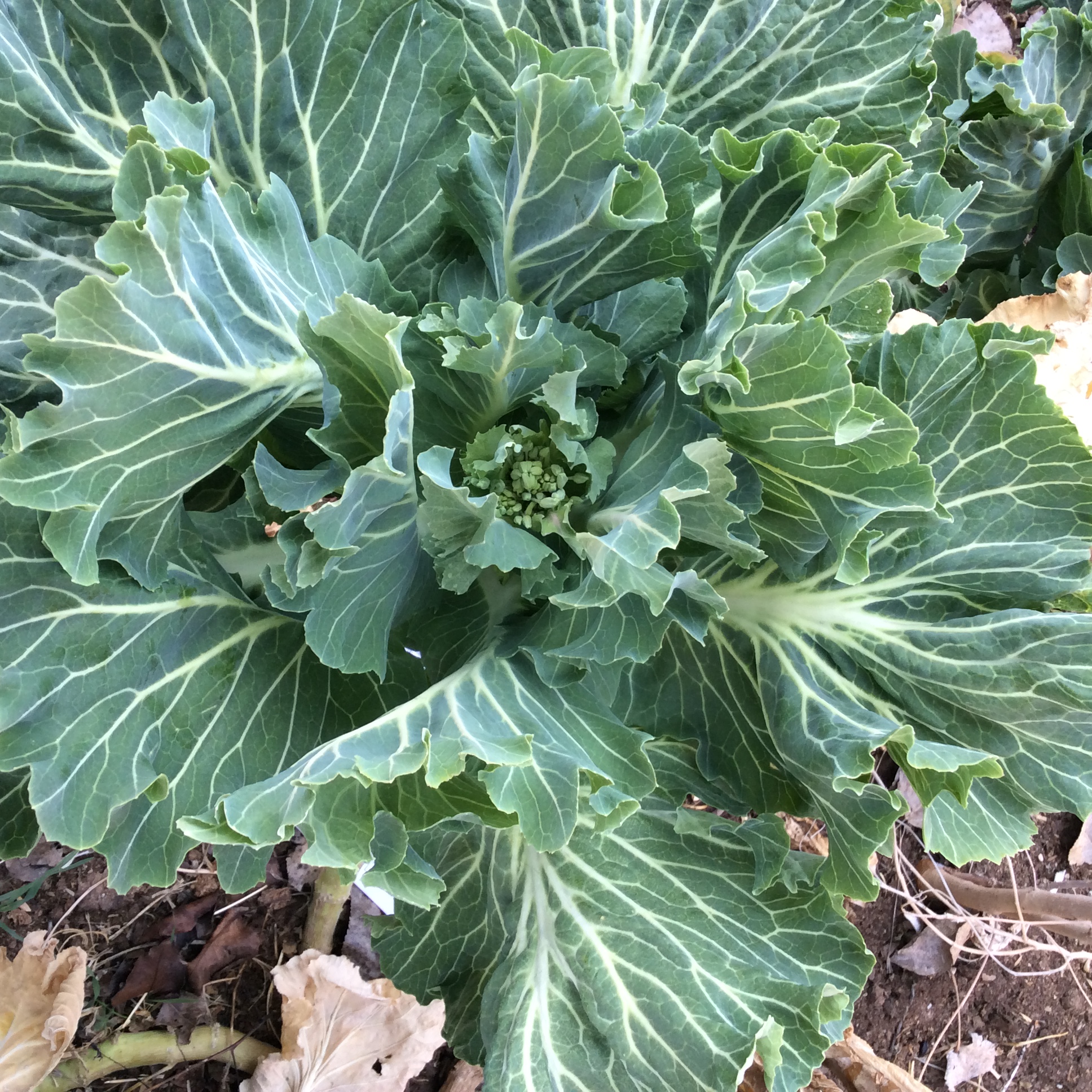
The tronchuda, or Portuguese kale, was still tender and sweet from night frosts, and there was a wild abundance of green garlic to cook with it because I finally planted enough to satisfy my taste for it.

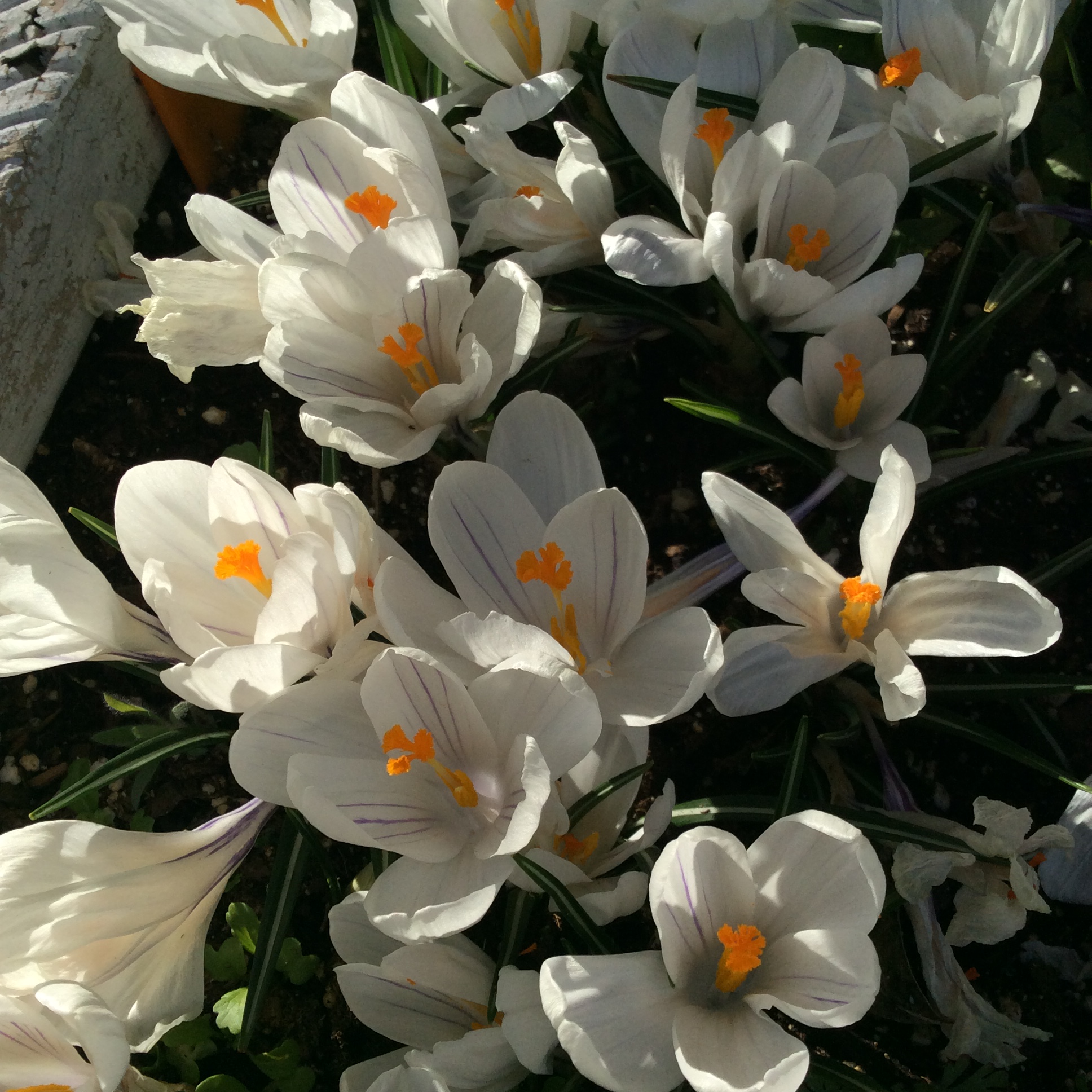
The exquisite late Jeanne d’Arc crocuses were finishing the crocus season.

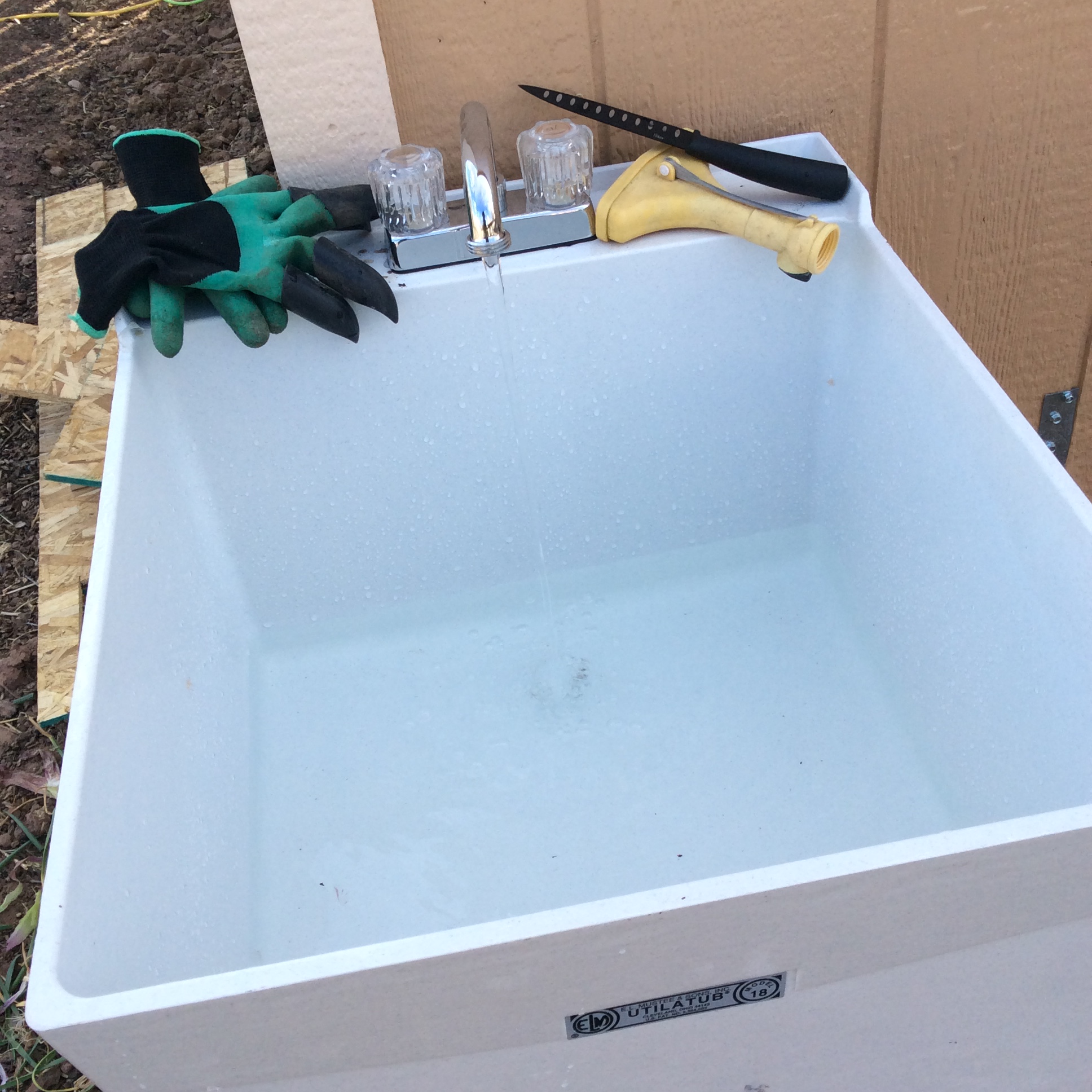
And the garden goods could be washed and prepped right in the garden where the water could do some good. This is an ordinary laundry sink, but I asked the nice man at the plumbing supply store to sell me the correct fittings to hook a garden hose to it. So the water can be turned on and off, and the water drains out into a bed that can really use the moisture. My ingenious yard man got me a 3 foot piece of hose with the correct fittings to attach to the fawcet at one end and the hose at the other, so there is no fumbling underneath when I want to use the sink. And it could be lifted and moved if I wanted the water to land somewhere else.

Life is good, and spring is good.