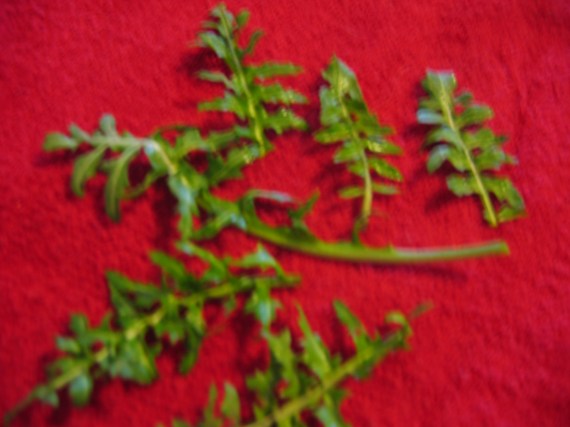
Right now, the wild mustard is free for the picking in our region. I find it in unexpected places in my yard, including the middle of the lawn, and along acequias closer to the river. Needless to say, you don’t want to pick any that’s growing where it’s exposed to walking dogs, or where chemical spraying may have taken place.
When the weather is still very cold and the wild mustard is still young, it’s a great green to spice up a salad, adding a wasabi-like heat when combined with milder greens. Taste it, and if it’s too hot for salads cook it, which lowers the heat. I love to mix it with spinach, chard, or other mild greens about half and half: saute’ some chopped garlic in olive oil in a skillet, add the well-washed greens and a couple of tablespoons of raisins, and braise over medium heat until done. Garnish with toasted pine nuts, and eat.
These potent, highly flavorful greens were the “spring tonic” of our ancesters, and today we still need those vitamins, minerals, and antioxidants. We may not be recovering from a winter without fresh vegetables, but we still need the connection with the awakening earth that its first green shoots can provide. If you were thinking ahead last fall, you made sure to have plenty of herbs, and now you can sprinkle your cooked greens with the shoots of parsley and fennel that are coming up from last year’s plants. They’ll shoot to seed soon, so use them up now.
Archive for the ‘sustainable’ Category
5 Feb
Foraging: wild mustard
1 Feb
More winter treats: the Peruvian Purple Potato
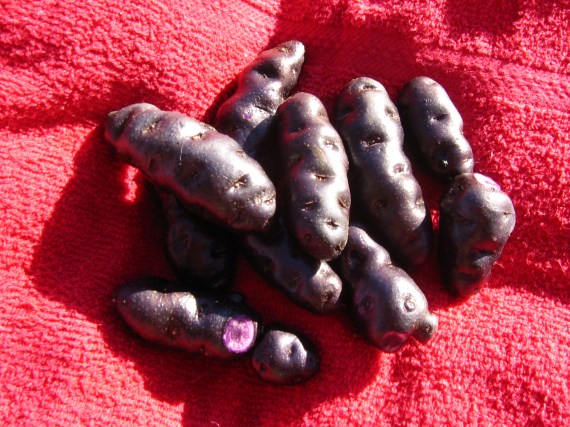
When I first ordered Peruvian Purple seed potatoes, I thought of them more as a curiosity than as a real crop. I was curious about how this native of the Peruvian highlands would adapt to our own high-desert conditions. I was also aware of their very high anthocyanin content, and I’m never one to turn down a good source of antioxidants. I’m still digging them for winter use, and they are one of my most successful crops this year and fill an interesting niche in my household menu: they’re readily available when nearly everything else is dormant.
I planted mine in a strip at the side of my house, which gets very hot in the summer. I did water them but not as much as they might have liked. Even so, they flourished and looked very pretty in their season. Incidentally, this brings up the fact that much gardening information on the Web is clearly written by non-gardeners. Now that edible landscaping is hot, I see recommendations to use the potato as an ornamental, which sounds fine if you don’t know that the vegetative parts die off in late summer and look just awful. So plant them where some other big pretty plant will spill over and fill the empty space in late summer, or put them in an out-of-the-way place where you can admire them in their season and not see them as much when they die back. Do keep them weeded.
When they flowered I scrabbled under themn to look for new potatoes, as I do with all my potatoes, but didn’t find any, and thought they were probably a loss. However, in November when I dug up the space for the winter, I found a treasure trove of earth-amethysts. They were blemish-free and looked very lovely after scrubbing, with deep purple skins that glistened like jewels when wet. I left them in the ground and dug them as I needed them, and on February 1st I’m still digging them and they’re still in perfect condition. They have been completely free of disease and haven’t shown any sprouting yet.
They’re very tasty cut in chunks and roasted in nearly any kind of fat (olive oil and goose fat are probably my favorites) in a 400 degree oven with some coarse salt and a good sprinkling of chopped herbs added near the end of cooking. Chopped garlic added late in the cooking period when it won’t scorch is nice too. A hot potato salad made of chunks of Peruvian Purple boiled in salted water until tender, drained, and dressed with a vinaigrette dressing and a little chopped green onion, parsley, ands celery (plus a good dose of bacon crumbles for non-vegetarians) would be delicious and very decorative. This potato is a survivor, which is probably why it was valued as part of the Peruvian mixed potato patches. It doesn’t demand intensive care and makes do with less water than other potatoes I’ve grown. I recommend it. You can get it at Ronnigers. Formerly I recommended Seed Savers Exchange, and although they don’t have this potato for the 2010 season, I do still recommend them for almost everything else.
For more on growing potatoes. Click here
26 Jan
salmon with a Thai touch
Here in Albuquerque we don’t have local fish, but we do have a local couple, the Fishhuggers, who sell Alaskan salmon and other fish, sustainably fished in Alaska by the Fishhugger himself. It’s frozen shortly after being caught, and when thawed and promptly cooked, is a lot closer to fresh than anything we can buy in the stores. You can find it at the Corralles farmers’ market. I keep frozen blanched greens in my freezer in one-cup portions, ready when I need a winter pick-me-up.
When I cook salmon I usually use their wild-caught sockeye, which is a brilliant red-orange tone and loaded with omega-3s. I like to use other brilliant colors, usually bright greens, to complement the lovely fish. Today I combined the salmon with Thai accompaniments, and the green coconut-milk curry set off the plainly pan-grilled fish beautifully. Whenever you eat fish, remember to support sustainable fishing! The Seafood Watch card is a handy way to decide what to buy. Click here to print one out.
22 Nov
fiesta de pimientos
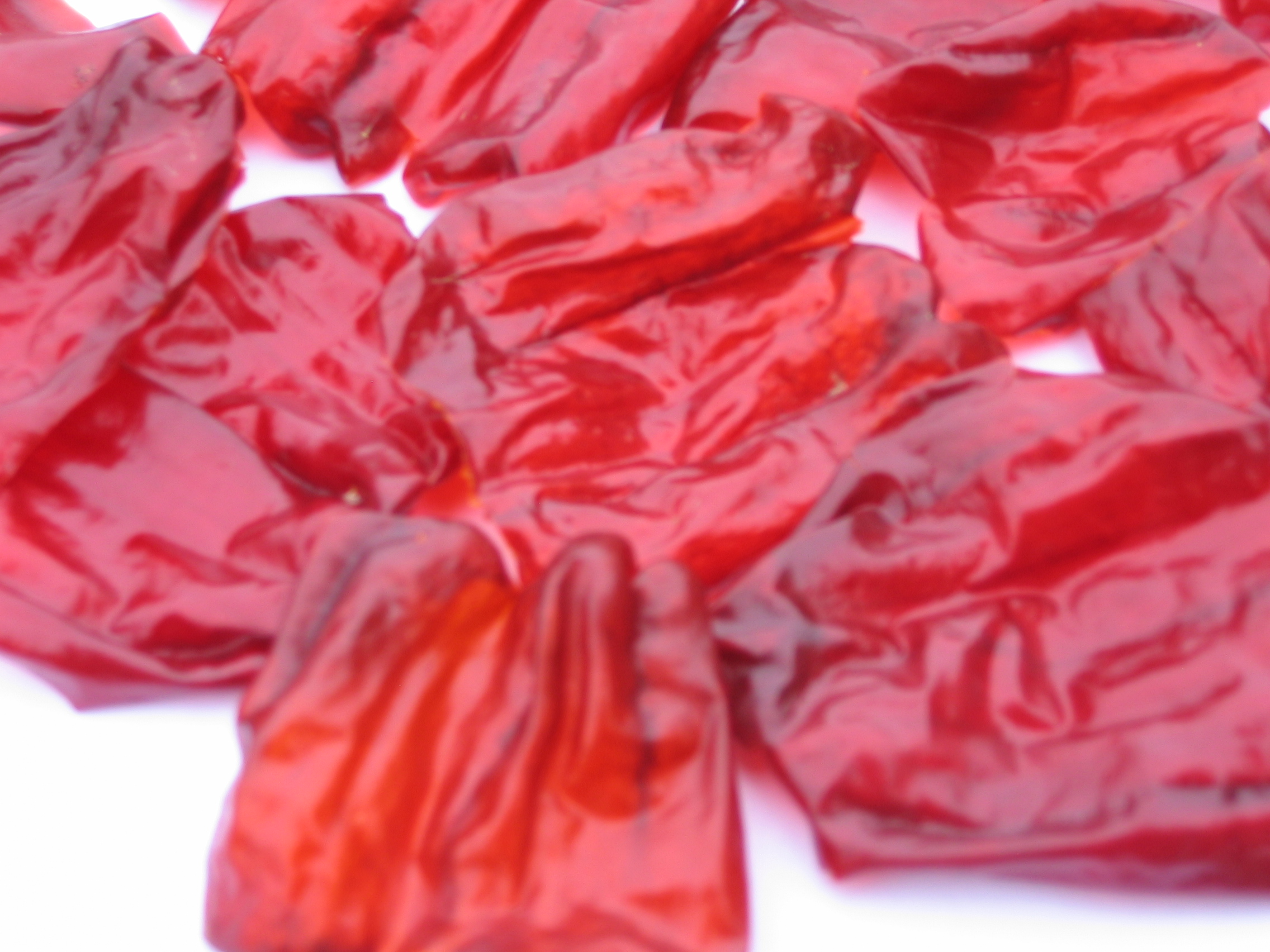
Here in New Mexico, we’re rich in chiles of all kinds. However, I seldom see or hear about one of the best, the Spanish Pimiento de Padron. In northern Spain, there’s a festival devoted to them when they come into season. The peppers are picked green, when about the size of large olives, and saute’ed whole in olive oil with some sea salt, then eaten hot as a tapa. About one in 8-10 is fiery hot, while the rest are pretty mild. Eating them is called Spanish Roulette, but we New Mexicans are up to it. After a summer of chowing down the green ones, I let the last flush turn red and dry on the plant, and make my year’s supply of wonderfully flavorful red pepper. I pick the somewhat dry, leathery peppers and slit each one open, lay it flat, and remove all the stem, seeds and veins. The sensitive will want to wear latex gloves for this. Spread them out in single layers on one or two large baking sheets and dry them in a very slow oven, 170 degrees if possible. Drying time varies with weather conditions and oven temp. Usually I dry them at 170 for about 4 hours, then leave them in the turned-off oven overnight. When dry, they are shiny and translucent and look like Chinese enamel; see above. Grind them to a powder in the blender and keep them in an airtight container until you need them. I keep a shaker of “yard pepper” on my dining room table, and love the way it adds snap and piquancy to a variety of foods. try it on fried eggs. The plants are very attractive, about 3′ high at maturity and fairly compact, so I like to grow them where they can be seen. You can get seeds at our New Mexico source, Gourmet Seeds.
 My urban homestead