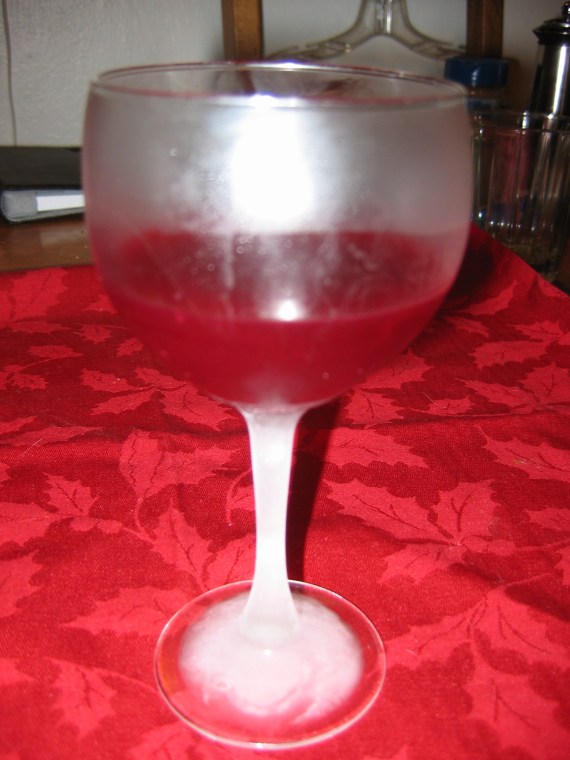
Over the holidays my husband devised a pomegranate margarita which is deliciously fresh. Drink it only when beautiful fresh organic pomegranates are in the market. The bottled juice won’t do. They’re a popular ornamental in our area, and if you have a bush of them in your yard, all the better. You can juice the pomegranates with a citrus juicer, but my own favorite method is to cut them in half, hold each half over a bowl, and scrape it with the back of a spoon until all the juice has run out. The juice is loaded with antioxidants and has as beautiful a color as nature offers. We are all working toward a more sustainable life, but there can be (and should be) color, freshness, and fun along the way. Click here for the recipe
Archive for the ‘home food production’ Category
8 Jan
A colorful and delicious toast to 2009
1 Jan
Red Wine Vinegar
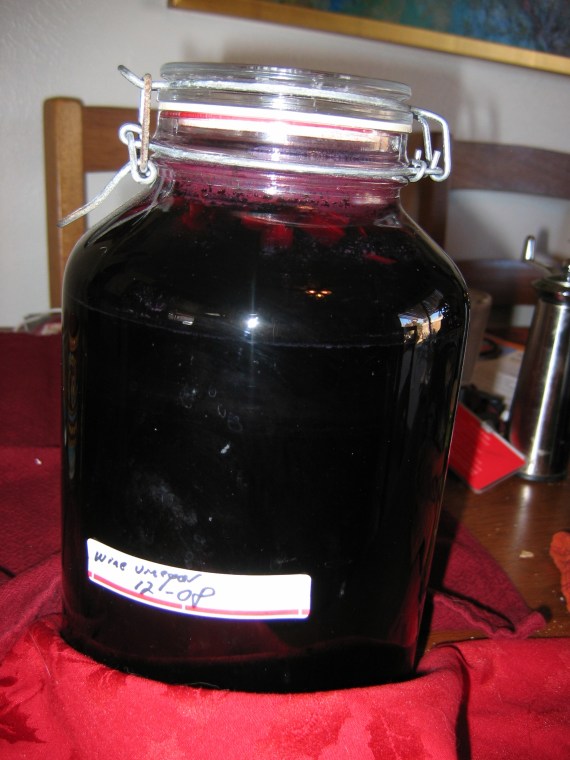
There’s a very good reason to make your own red wine vinegar at home: it will be about twice as good as any you can buy, because the wine you put into it will be twice as good as that in commercial vinegars. If you want a more formal process, you can find excellent directions in Paul Bertolli’s book Chez Panisse Cooking. My own more rough-and-ready process goes something like this:
1. Get a large glass jar (anywhere from quart to gallon-size, depending on how much vinegar you want) with a glass lid and rubber sealing gasket. They are widely sold as canisters. Buy enough good red wine to (eventually) fill it. The wine must be good enough that you would thoroughly enjoy drinking a glass of it. The best vinegar I’ve made so far was made with J. Lohr cabernet, which is widely available.
2. Get some vinegar mother. Some winemaking supply stores sell them, but I got mine from a bottle of Bragg cider vinegar, which is available at La Montanita co-op.
3. Add one bottle of wine to the jar, add the mother or about 1/4 cup of the Bragg vinegar, put the lid of the jar someplace where you can find it later, cover the jar loosely with a dish towel held on tightly by a rubber band, and set it in a dark place. Check it every few days. Somewhere between a week and a month later, depending on temperature and other factors, you will notice light grey wispy streaks on the surface of the wine. This is the developing mother.
4. Once the mother starts to grow, you can add more wine, but it has to be done carefully. You want to leave the surface as undisturbed as possible. I use a short length of clear tubing from our local winemaking supply shop, Victor’s Grape Arbor. I put one end of the tubing below the surface of the developing vinegar and use a funnel to pour wine slowly into the tube. That way, wine can be added without drowning the mother. Be sure not to add too much at once. Adding about two cups every week or two works well, until you have filled the jar that you plan to fill. Be sure to fill it right to the top; I’ll go into the reason for this later.
5. When the jar is full, keep it in the dark place and, every week, taste a little with a spoon, being sure to disturb the surface as little as possible. Keep it tightly covered with the dish towel between tastings. When it tastes like vinegar, you’re ready to proceed to step 6. It will still taste sort of rough and raw. Don’t worry.
6. There is no question that wine vinegar needs oak aging to taste its best. If you want to fill an oak cask that’s fine, but it isn’t necessary. Use a wide spoon to carefully remove all the mother and a little of the vinegar under it. Put this in a small jar. Scrape the bottom of your vinegar jar with a slotted spoon to see if a gelatinous substance has formed. This is a submerged part of the mother. If it’s there, add it to your removed mother in a small jar and store in the refrigerator for the next time you want to make vinegar. Now for the oak aging part. At winemaking supply stores you can get small bags of oak chips. Carefully add the oak chips to your vinegar. You will have lost a little volume removing the mother, so the chips should bring it back up to brimming full. Make sure all the chips are wet (Over the next few weeks, they will gradually absorb vinegar and sink to the bottom.) Now put on the lid, not the dish towel, and seal it. Make sure that the vinegar doesn’t touch the gasket when the jar is sitting level. If it does, remove a little vinegar until it doesn’t.
8. Now let the vinegar age in a dark place for as long as you can stand. It gains mellowness with age. Richard Olney says it needs 2-3 years to reach its best, but I’ve never held out that long. In six months it will be very good.
9. When ready to use it, funnel it into empty wine bottles and cork them tightly. At this point you don’t want it exposed to the air any more than necessary. You can store it in the refrigerator if you have room. I usually keep it on the counter.
10. Start to use it. It will make a great vinaigrette dressing, of course, but you’ll find lots of other uses. Click below for some recipes.
click here for recipes
22 Nov
fiesta de pimientos
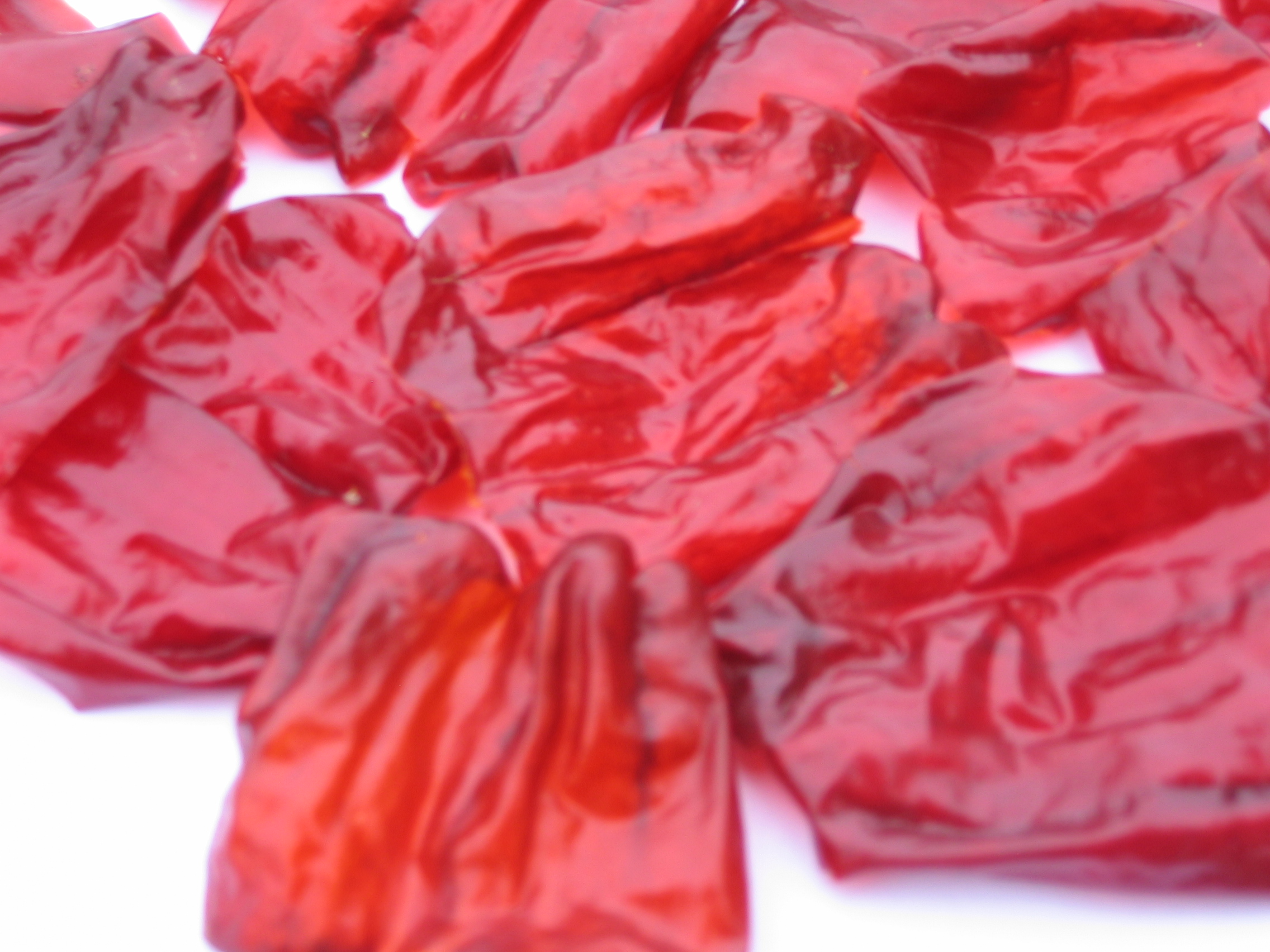
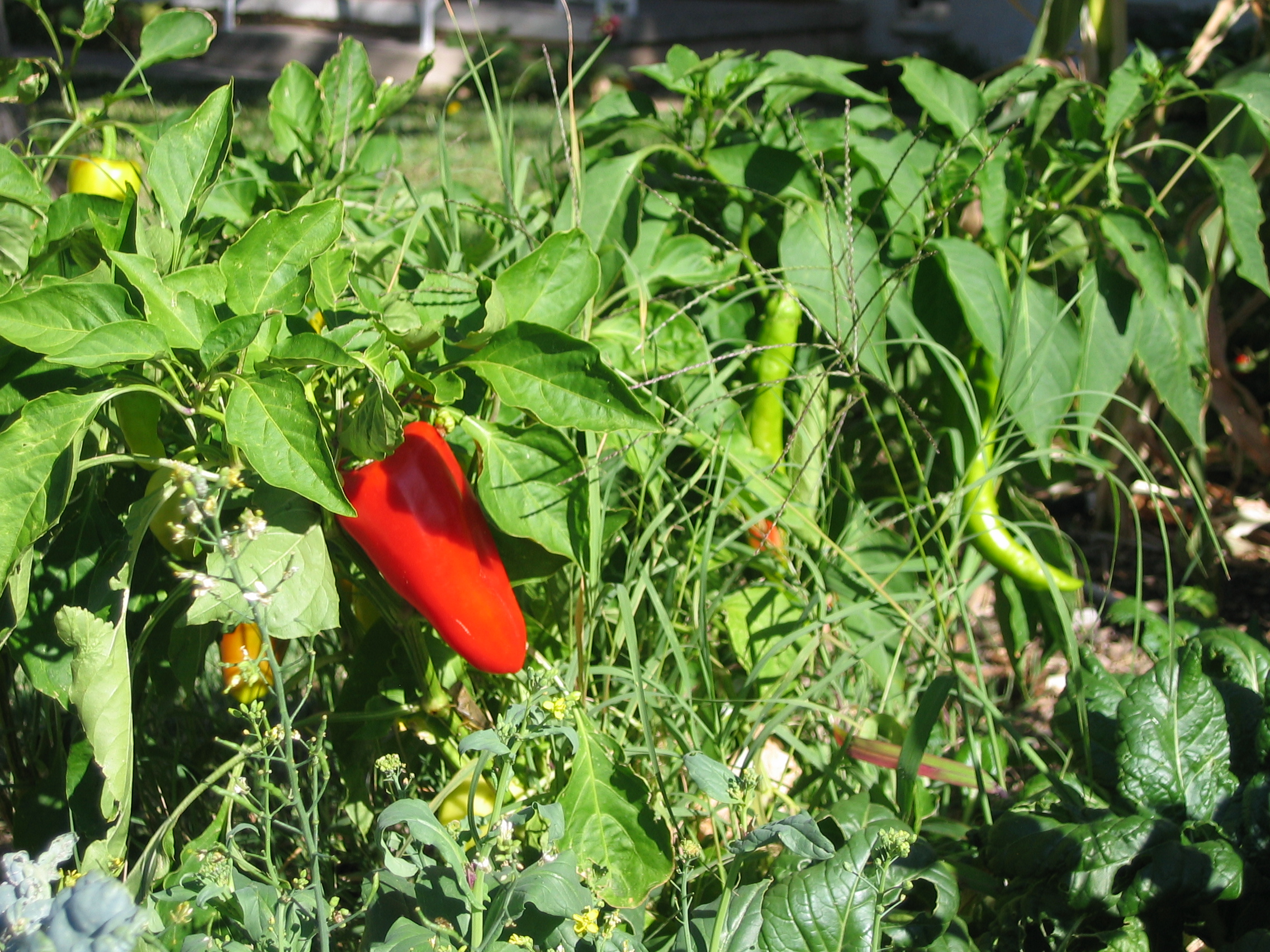
Here in New Mexico, we’re rich in chiles of all kinds. However, I seldom see or hear about one of the best, the Spanish Pimiento de Padron. In northern Spain, there’s a festival devoted to them when they come into season. The peppers are picked green, when about the size of large olives, and saute’ed whole in olive oil with some sea salt, then eaten hot as a tapa. About one in 8-10 is fiery hot, while the rest are pretty mild. Eating them is called Spanish Roulette, but we New Mexicans are up to it. After a summer of chowing down the green ones, I let the last flush turn red and dry on the plant, and make my year’s supply of wonderfully flavorful red pepper. I pick the somewhat dry, leathery peppers and slit each one open, lay it flat, and remove all the stem, seeds and veins. The sensitive will want to wear latex gloves for this. Spread them out in single layers on one or two large baking sheets and dry them in a very slow oven, 170 degrees if possible. Drying time varies with weather conditions and oven temp. Usually I dry them at 170 for about 4 hours, then leave them in the turned-off oven overnight. When dry, they are shiny and translucent and look like Chinese enamel; see above. Grind them to a powder in the blender and keep them in an airtight container until you need them. I keep a shaker of “yard pepper” on my dining room table, and love the way it adds snap and piquancy to a variety of foods. try it on fried eggs. The plants are very attractive, about 3′ high at maturity and fairly compact, so I like to grow them where they can be seen. You can get seeds at our New Mexico source, Gourmet Seeds.
17 Nov
The Greens of Summer: sweet potatoes
This year, for the first time, I learned that there’s more to the sweet potato than its tuber. It came as news to me that throughout Africa and southern Asia the vine that we know as the sweet potato (Ipomea batata) is often grown for its leaves. Mine were started by putting an organic sweet potato in a pot of dirt in a warm place. It needs to be organic, because the grocery-store kind are treated with chemicals to stop them from sprouting. I planted a few in a pot thinking that they would be lush and green and heat-resistant, and any tubers that they produced would be a bonus. After reading about the use of their leaves in other countries, I cautiously broke off one and nibbled on it. It had a crisp texture and a mild pleasant flavor, and I started adding them to salads. As the vines grew, I had enough to start cooking them. I used them in greens mixtures (see the “recipes” page on my website, www.localfoodalbuquerque.com) and found that they balanced the stronger-flavored greens very well. I especially liked using them to make Hawaiian creamed greens. Here in the high desert, a source of fresh green leaves that takes our summer sun and heat in stride is a valuable commodity, and even after a summer of snipping them to bits, I got some roots in the fall. Not as many as if I’d left them alone, of course, but the total harvest of salads, greens, and tubers over 3 months was considerable, and all from one 19″ pot.
By the way, I couldn’t find any exact assays, but I’ve read that they are unusually high in protein for greens, high in lutein, and full of all the other vitamins, minerals, and antioxidants typically found in leafy greens.
Hawaiian Creamed Sweet Potato Leaves
Pick over and wash well about 6 quarts of sweet potato leaves. This measure is the very loosely packed leaves just as they come off the vine. Chop 2 cloves of garlic and a 1X2″ peeled section of ginger into fine bits. Heat about 2 tablespoons of coconut oil (preferable) or canola oil in a pan and when hot, add the garlic and ginger bits. As soon as the fragrance comes up, but before the bits brown or burn, toss in the leaves, a can of coconut milk, a small green chile (Serrano or similar) chopped up, and a tablespoon of Asian fish sauce. Bring to a boil, simmer about 10 minutes, check whether any salt is needed, and serve. To make a full meal you can serve with a good turmeric rice pilaf, and if you aren’t a vegetarian, some good peeled shrimp simmered with the rest are really delicious. I like a squeeze of fresh lemon juice over the top, too.
If you have the energy to make your own coconut milk, well, more power to you. I used to be that sort of purist but tend to use organic canned these days. Just make sure it’s pure coconut milk (no sugar), and avoid the “lite” low-fat versions, which lack both creaminess and flavor.
 My urban homestead