Archive for the ‘herbs’ Category

Turkish Rocket in garden and kitchen

Last year I finally got around to planting  the perennial vegetable Turkish rocket, Bunius orientalis, and this year I was able to experiment with it in the kitchen. I had read that it was invasive and so I limited myself to five plants that I could watch carefully, meaning that my experiments were on a very small scale. So far, here’s what I found:

As so many have discovered before me,  the leaves are so strongly mustardy that they create quite an unpleasant burn in the back of the throat, and they are not a culinary object as far as I am concerned. Even my goat wouldn’t  eat them.

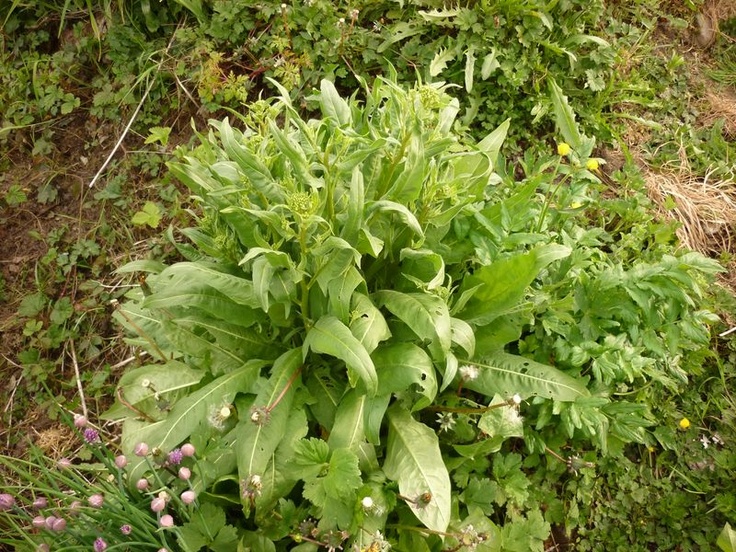
The bud clusters are used like broccoli rabe.  They can be very delicious, but timing is everything. The proper stage is shown in the photo above, when each stalk has one small bud cluster and the buds themselves are green, not yet showing the edges of bright yellow petals.  At this point, they can be blanched in boiling water for a minute or two, drained well, and then sautéed in olive oil with garlic and chili flakes and have the slight nutty-mustardy quality of good rabe,  with no burn as you swallow. You would need several well-established plants to get enough for a few servings, as far as I can tell, but they would certainly deserve their space.
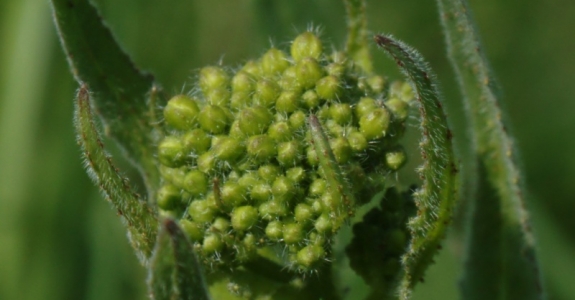
Here’s a close-up of a stalk in the perfect stage for eating. Snap off the top few inches of stem with the buds and it will cook up beautifully.
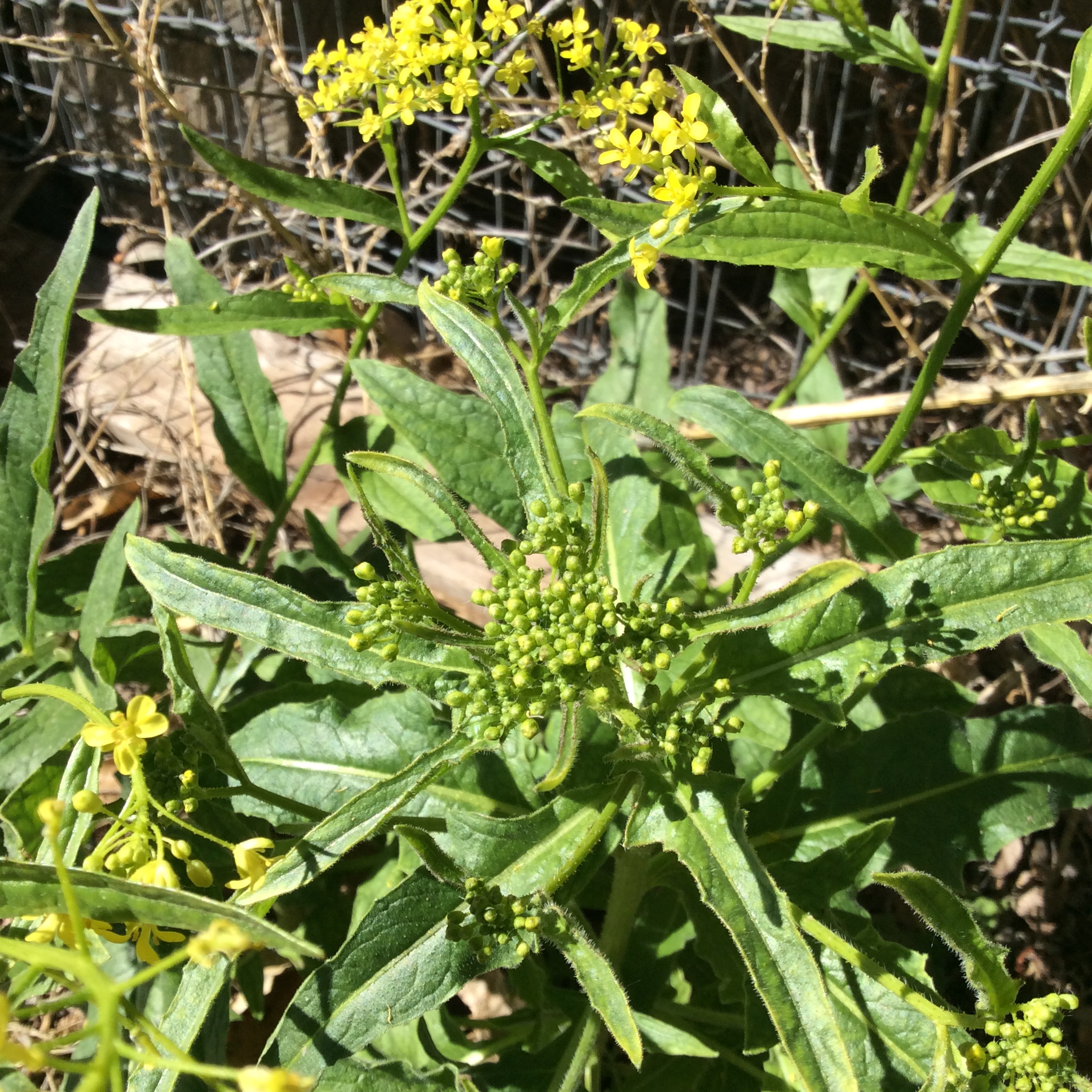
This picture shows the next stage in the stalk’s development.  The stem has elongated and the small original cluster has spread into sub clusters. I had hoped that this would be a good stage for harvesting, since you would get more material than at earlier stages, however it was not to be. At this stage, even when  cooked, there is a very unpleasant mustardy burn that continues to build in the back of the throat for a few minutes after swallowing. Not a pleasant experience. Once the subclusters have started to show and some yellow shows on the outermost buds, don’t bother.  It is possible that they could be  cooked longer, cooled, and ground with olive oil, salt, and maybe a little lemon into a sharp mustard-like condiment, but I have not experimented with that and throw it out as a purely theoretical idea, possibly similar to a green horseradish sauce.  Because of the throat burn factor, if you choose to experiment with that idea, try it out privately before you foist it on hapless guests.
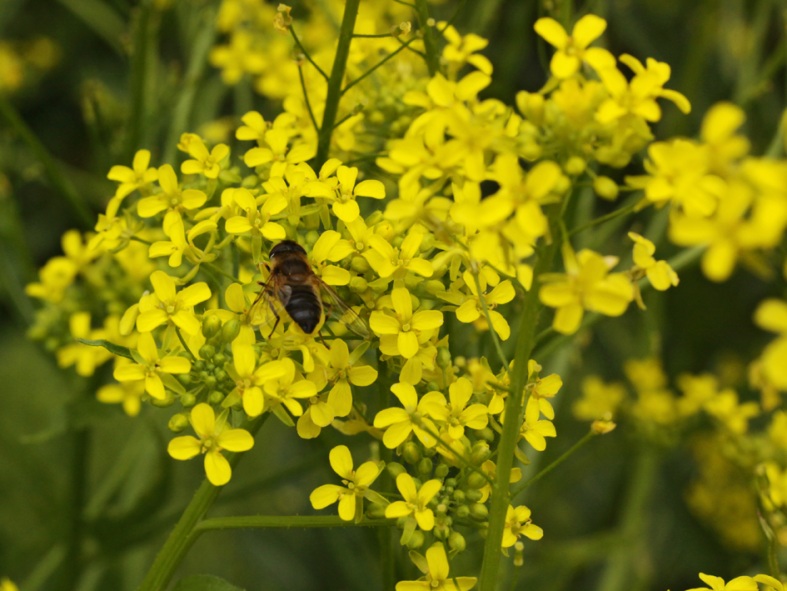
Then there is the flowering stage at which it is a bright cheerful yellow and is a fair bee plant, not highly preferred but certainly visited.
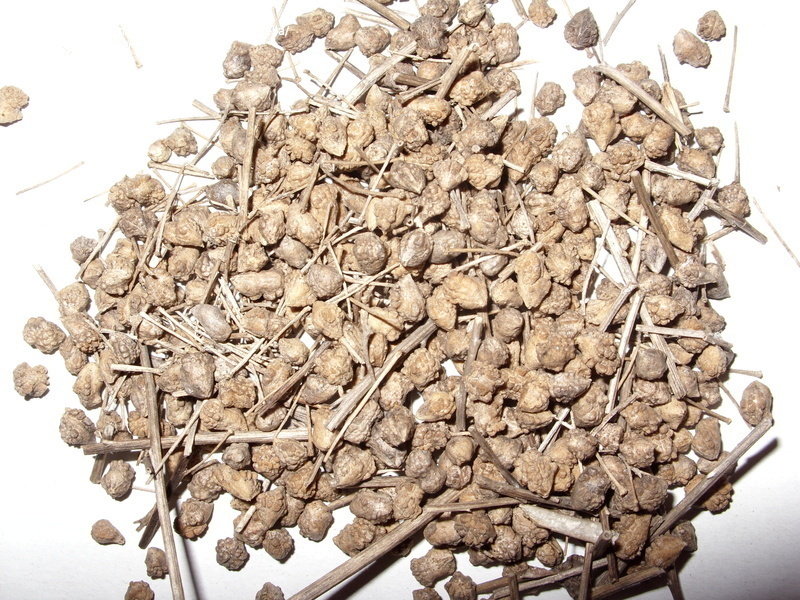
This is the stage that I am waiting for, so that I can plant a whole row of it and have a lot more to cook in the future.

For me this perennial vegetable fills a good niche  after the winter broccoli is gone, but before the spring broccoli begins producing. This time of year there are a lot of edible leaves in my garden but not too much else, so some textural variation is very welcome.

Regarding the claims of invasiveness, I am sure that this is true in many areas, but in my desert climate it requires a fair amount of water to grow well, so I doubt that it could grow outside the confines of my fence.
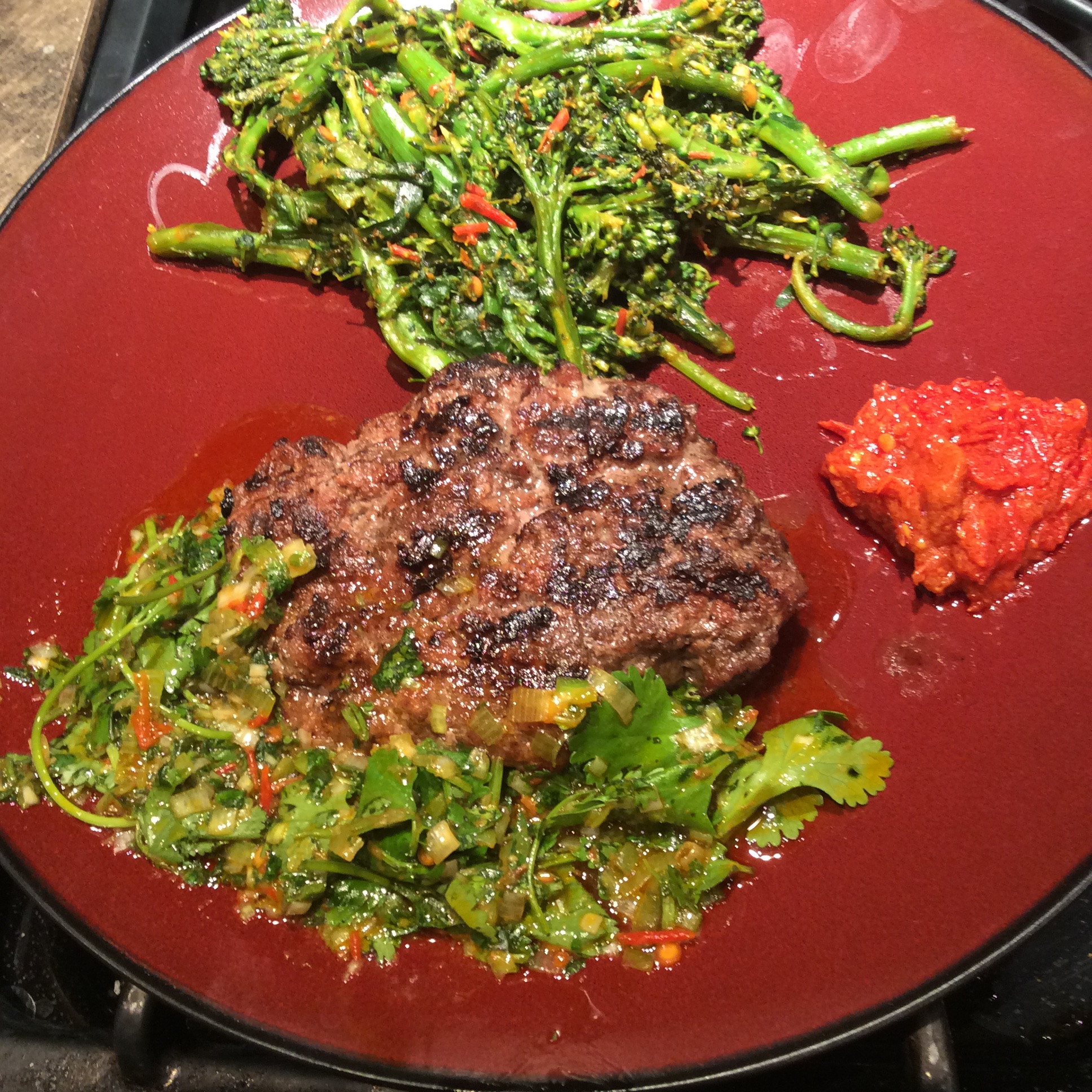
A Hundred Kinds of Chimichurri

I love chimichurri, the ground herb table sauce of Argentina, but I am by no means faithful to the Argentinian version. If you have an active garden, spring offers the first of infinite variations of chimichurri to accent any grilled meat or poultry. These savory herbal sauces also dress up baked and roasted foods, and are a great way to perk up hard-boiled or fried eggs. People who don’t have to stay low-carb may like them drizzled on bread or rice. Vegetarians will like chimichurri on roasted vegetables, and for that matter ardent carnivores would love it on roasted carrots, broccoli, and other meaty veggies. I can imagine it freshening and enlivening roasted or grilled oyster mushrooms.

The basic necessary ingredients are olive oil, garlic, an acid, salt, herbs, and embellishments. Variables are the herbs, the texture, and the embellishments and degree of heat, if any.

So here’s a menu for infinite improvisation:

Oil: I say very good olive oil is a necessity. If you choose to fool around with other oils, feel free. Plan on between a half cup and one cup.

Garlic: green in spring, mature cloves later on. 2-3 large stalks of green garlic or 3-4 cloves of mature garlic.

Acid: vinegar is traditional but lemon juice is delicious with the more delicate spring versions. Consider wine vinegar or sherry vinegar.  Plan on about 2 tablespoons and have extra available to add if needed. Please, don’t use sweet caramelized ersatz “balsamic” vinegars. Yech.

Salt: “Plenty” is the important concept here. Some chimichurris that seem like failures come alive when enough salty element is added. Remember, this is a seasoning sauce, not a main dish.Your salt element may be sea salt, but a good dab of anchovy paste or a glut of the salty-lemony fermented liquid from preserved lemons may attract you.

Herbs: parsley is traditional and great, but don’t feel bound. Cilantro is a great alternative for the “bulk” herb, of which you’ll need a bunch (from the store) or a large handful (from the garden.) Oregano, sweet marjoram, summer savory, thyme, and lemon thyme are great options for the subsidiary herb, of which a small chopped handful (combined if using multiple herbs) is plenty. Combos are potentially wonderful. I don’t recommend tarragon for this sauce, but feel free to prove me wrong, and I think rosemary should be limited to a chopped teaspoon or two if used at all. Some mint is a possibility if used judiciously. Sage is difficult to use and, in my view, not a good possibility.But suit yourself, as long as you are pursuing a coherent taste-vision. Wander your garden, be seducible, and work it out later.

Embellishments: Heat is an important possibility. Hot sauce, harissa, and ground dried chiles can all work wonders, and fresh chopped jalapeños (seeded or not per your preference for fire) can do real magic. Anchovy fillets mashed can add a savor and tang that are the making of rich meats like roasted  lamb or goat. Preserved lemon peel, finely chopped, is highly nontraditional but extraordinary in the right circumstances. A pinch  of toasted cumin seeds, finely ground, can give an earthy, sweaty, quintessentially masculine note that makes a simple grilled steak or chop memorable.

Texture: can be anywhere from medium-fine grind to as coarse as a chopped salad. It all depends on your mood and your main dish.

Procedure:

Chop your garlic coarsely or slice finely crosswise if using green garlic and put in a large mortar or small food processor; I invariably use my little stoveside Mini-prep. Chop or pound to desired degree. Add herbs, salt,  and embellishments and process only until you like the texture. Add the acid and salt, process briefly, and work in the oil. Now taste, and think. If you are sure it didn’t work, think about how to rebalance and save it. Sorry to harp, but insufficient salty element is a common fault. Increase the salt, anchovy paste, or preserved lemon juice, or add a bit of the latter two if you didn’t use them before. If overly salty or acid, add more oil to smooth it out.  If bland, add a little more acid. If just not that interesting, consider stirring in more chopped herb or some heat.

This sauce can be refrigerated overnight and may be even better the next day, although cilantro-based versions tend to lose freshness and pizazz and are best consumed on sight.

“Processed” Food

IMG_5298

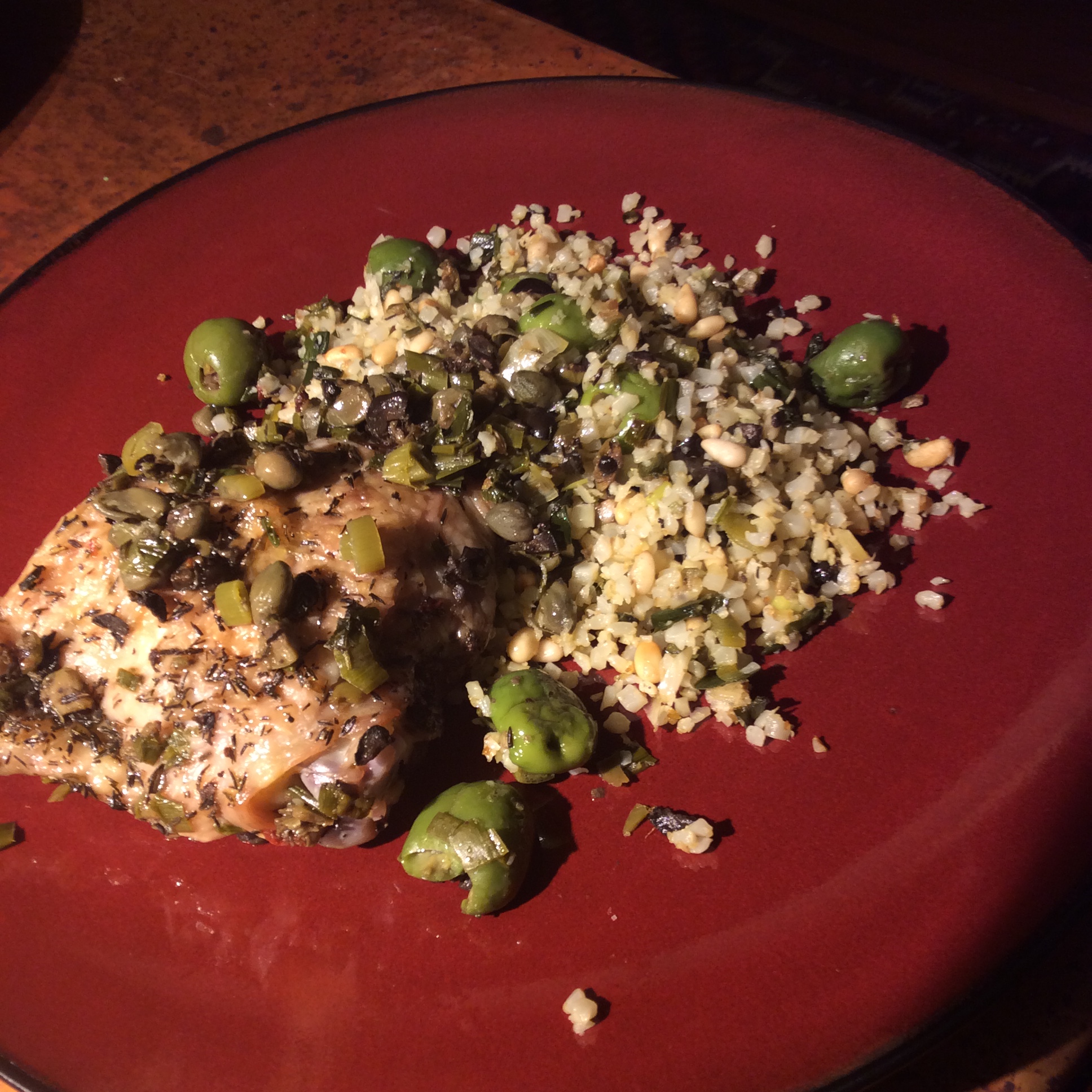
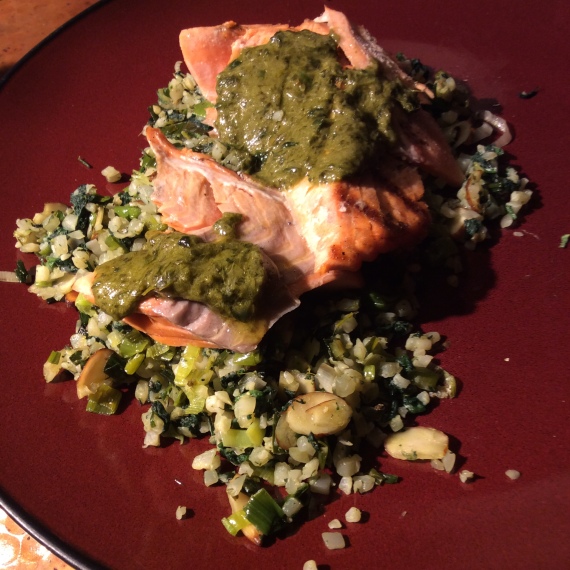
Like everyone else who works, I have a lot to do when I get home and some nights I need help to get a healthy dinner on the table. I eat a ketogenic (low carbohydrate) diet and don’t have pasta and rice and bulgur to fall back on. For those nights I keep some “fast food” in the freezer, like riced organic cauliflower. If I’m thinking ahead, I leave a bag out to thaw in the morning. More often I didn’t think ahead and need to thaw it quickly in the microwave. Either way, if you just cook it as is, you are going to have a rather damp mess on your hands, in my opinion anyway. So take the thoroughly thawed cauliflower, bundle it in a dish towel, and squeeze the water out of it. You’ll get a surprising amount out. Now you can throw it in a skillet with some salt, sliced green onions, chopped herbs, olive oil, and sliced almonds, and cook over medium heat for about 20 minutes with regular stirring. Don’t add water back. Cauliflower loves to go soggy if it gets a chance. It’s done when the cauliflower grains are done to your preference. I like mine a bit on the firm side, holding their shape briefly to the tooth without any hint of raw crunch.  Check whether it needs more salt before you serve. Meanwhile, grill some salmon as shown here, or warm up leftover chicken thighs, or slice up some warmed leftover meat. Land it on your cauliflower pilaf and flavor it with finishing butter (Montpellier butter with green garlic is shown here) which also lives in the freezer in convenient individually wrapped portions, or just drizzle with your best olive oil.
Some would say that I should grow, grate, and freeze the cauliflower myself if I’m going to use it, and when such people get hold of me, I always suggest that they invite me over for a meal 100% produced from their yard so that I can write about it😉. So far, those invitations haven’t arrived. I am not a believer in making the perfect the enemy of the good, and we are not full-time yard farmers and have to make our modern lives work. Besides, grating cauliflower is one of the few kitchen jobs that I hate and one that I outsource whenever possible. I grow things that are unobtainable at markets or distinctly better when home-grown, and cauliflower is neither. So let somebody else do the work for you.
Regarding the finishing butter above, I am used to horrified shrieks of “It’s GREEN!” Indeed it is, and so are a lot of other good things. Expose yourself (and your family and friends) to green food until you get used to it, and your health will benefit. After all, nobody has ever looked at wild-caught Alaskan salmon at my table and said “Ugh, it’s PINK!” Good food is good food. Close your eyes if you really must, but getting over biases about green is better.

Here’s another version tricked out with capers, green garlic, thyme, pine nuts, and castelvetrano olives.

Spring Alliums

img_5237

One of the many reasons that I love green garlic and green alliums generally is that they are among the earliest things to come out of the garden, assuming that you planted in early fall. I have plenty of summer veggies in my freezer, but as the days start to lengthen I get ravenously keen for the first real, fresh greens, and by mid-February I’m eating out of the garden again.

For early green alliums, plant some in a block that you can cover with Agribon or other frost blanket material. I like to put a short row of my regular yellow storage onions in this block in September, and each will divide and make four or five superbly sweet green onions in early spring.

Garlic is another must, and my favorite for early green garlic is Chinese Pink, because it is super-early and is eight inches tall and half an inch in diameter by mid-February if frost protection is used. Plant your early block with the cloves about three inches apart each way. When I’m ready for green garlic I pull alternate stalks, and leave the rest 6″ apart to mature for my earliest garlic bulb harvest.

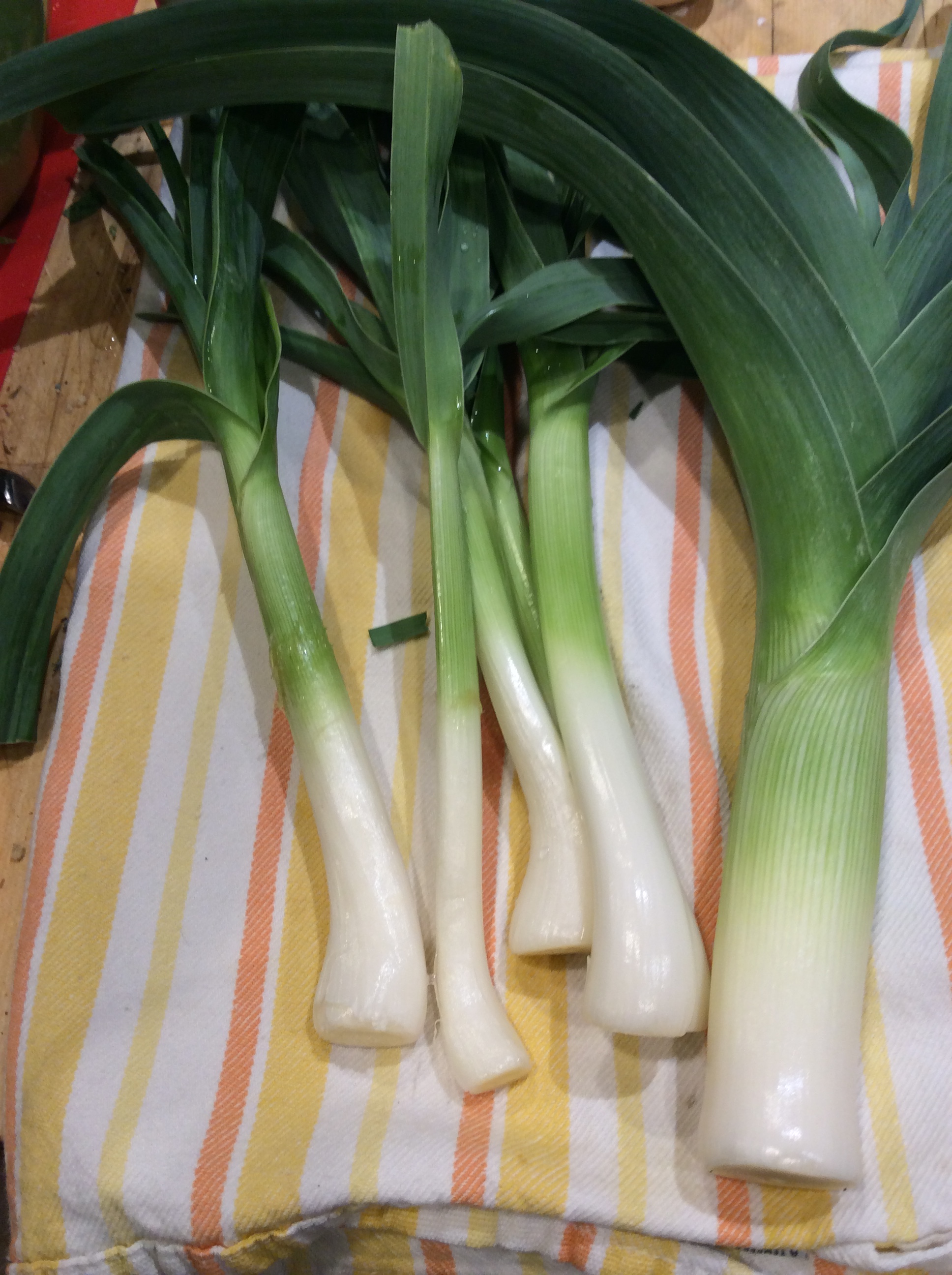
In the case of leeks, there isn’t even any need to replant in fall. Plant extra in spring, cover with frost blanket in late fall, and they will winter over nicely for February eating.

Contrary to much popular advice, I don’t suggest that you even think about cutting the green leaves off and discarding them. They are delicious. They are also the healthiest part of the plant, full of the antioxidant allicin which has multiple health benefits. Do cut them in fine cross-sections, about a quarter inch long, to  eliminate  any possible stringiness  in the leaves.

image

I love a good assortment of green alliums chopped up and sautéed in butter with salt to taste until they are succulent and sweet. Keep the heat medium-low and let them cook at least twenty minutes for best flavor. I eat them as a side dish, but they would also be great on slices of crisp baguette, in an omelette, over scrambled eggs or rice,  on a broiled fish fillet, or nearly any other way that you can imagine.

img_5236

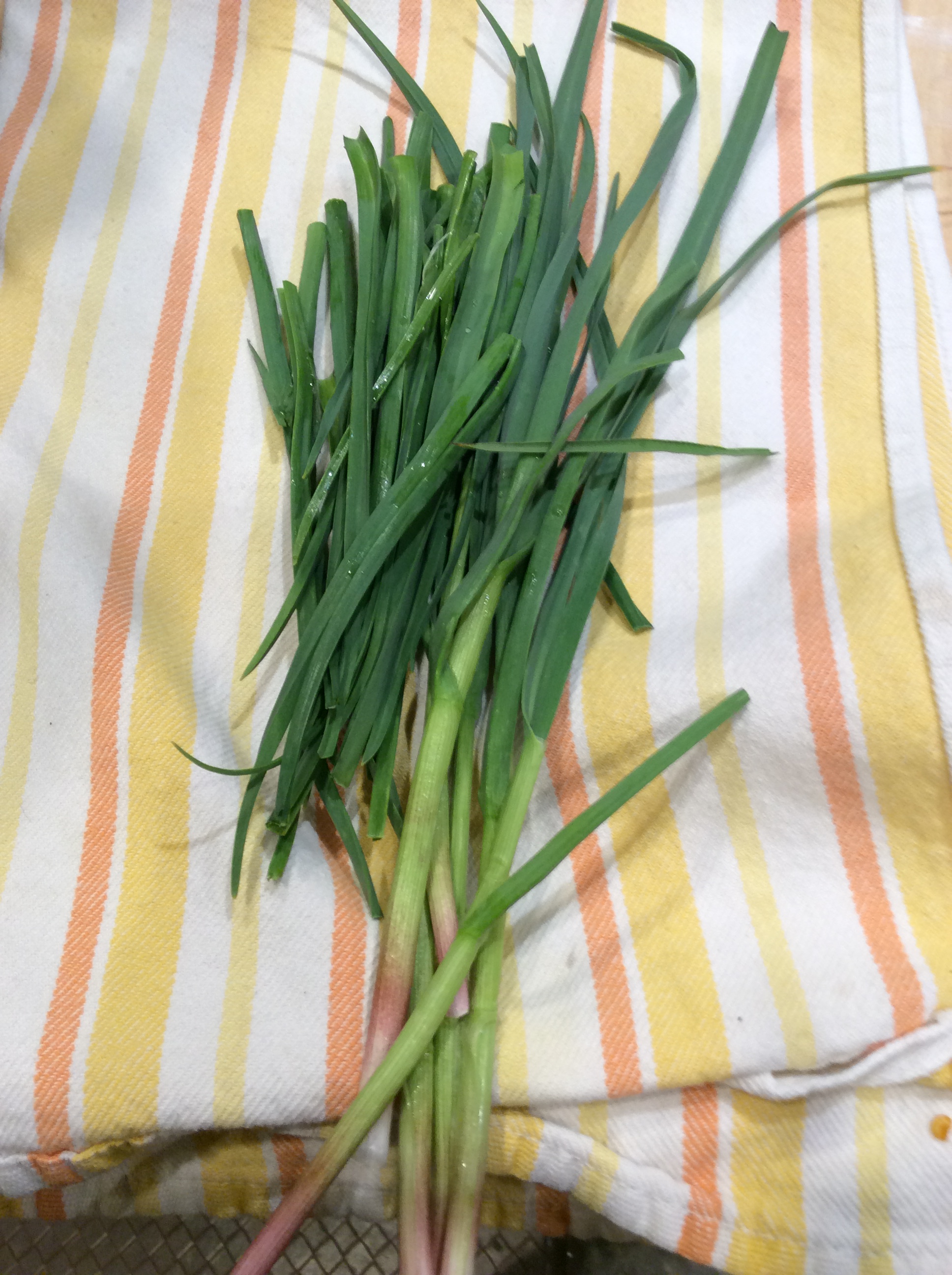
Two years ago I stuck some garlic cloves in a flower bed planning to harvest them for green garlic, but forgot all about them in spring. After two growing seasons they’ve divided so much that the leaves are as fine as grass. I’ve started harvesting the tops and chopping them finely to use as a fresh seasoning. They have a stronger but cleaner flavor than garlic chives. I love them over egg salad, green salad, broiled or grilled meats, on soup, or anywhere that you might crave a hit of freshness and garlic. They give some distinction to a regular or low-carb pizza.