Archive for the ‘greens’ Category

The Greens of Summer: Frisee’

may 2009 027
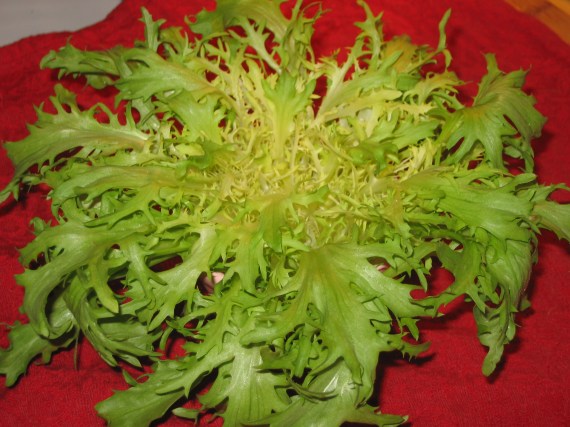
This is one of my favorite members of the chicory family to use in salads, and is a rugged and tolerant plant besides. Planted at the same time as lettuce, it comes along a little later. I start my early crop indoors for use in late April, and the later crop from seeds planted outdoors as soon as the ground unfreezes. Deep containers work fine, and it tolerates a little shade without fuss. Thin the plants to at least 8″ apart each way so that they have room to grow. When you have a big green fuzzball about 9″ across, it’s time to blanch. Simply invert a dinner plate on the plant and leave it there anywhere from 3 to 5 days, depending on how blanched you want it. I like mine only moderately blanched, as shown above, because at that stage the underlying chicory bitterness is still detectable. If you want yours milder, wait the full five days before cutting.

     Remove the plate, harvest the whole plant about 1-2 inches above the ground with kitchen shears, wash well, and enjoy. When cutting, avoid injuring the crown, and leave the plant in place. Most of the time it will produce another somewhat smaller head, which you can blanch and eat in its turn.

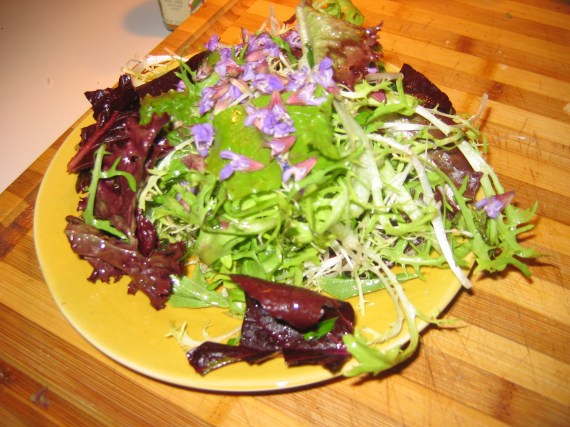
     When dressing a frisee’ salad, I prefer bold vinaigrettes. This is an occasion for a little roasted garlic in the dressing, or slice a small shallot very finely and marinate it in the vinegar for 15 minutes before completing the vinaigrette. This is a good place for your flavorful homemade red wine vinegar (see my post on making vinegar.) Bold and peppery Tuscan-style olive oils are good. A little crumbled bacon or crisped proscuitto on top is wonderful. And consider a dash of colatura (garum) in the dressing; see the “notes on specialty ingredients” section on my website.I like sturdy romaines in these salads, but this is not a place for tender butter lettuces. Thyme or the new, tender leaves of winter savory or (best of all, in my view) the exquisite blue blossoms of common sage are good herbal flavorings. Just for fun, I’ll add a pictture of a recent frisee’ and romaine salad, made in the brief sage blossom season.
may 2009 038

The Greens of Summer: curly mallow

June 08 014

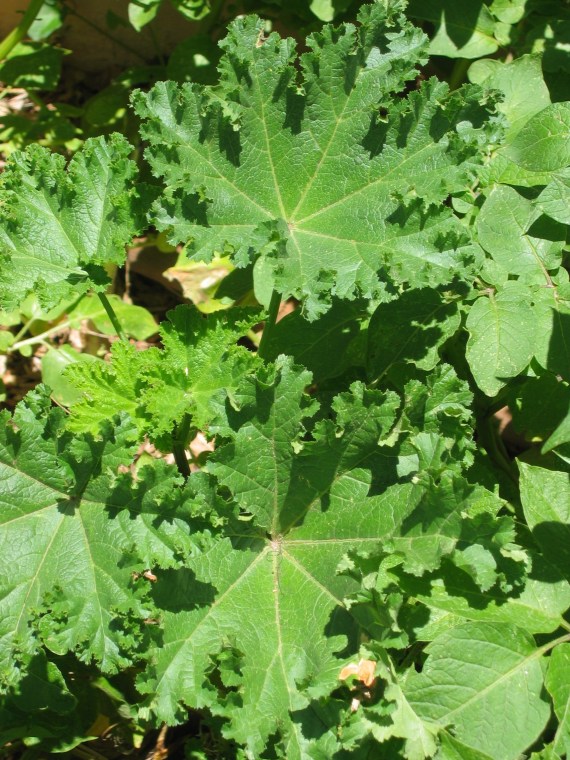
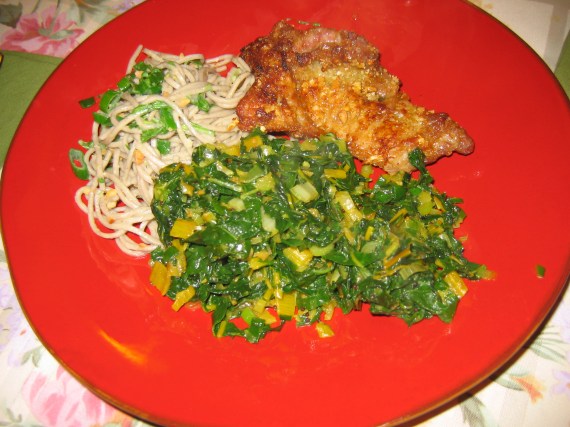
As our days heat up, our spring greens lose their luster, and we need green vegetables that can thrive in our intense sunlight. Fortunately, there are a lot of them. Curly mallow, Verticilla crispa, is one of the best in my opinion; it’s productive, disease-free, and hits its stride just as the spinach is bolting and goes on until a hard frost. The flavor is very mild, and the leaf has a demulcent “thickening” quality that gives body to greens mixtures. The plants can reach 5′ tall. I got seeds from Nichols Garden Nursery a few years ago, and it has seeded itself around nicely ever since. I often mix it half and half with Swiss chard, as I did here in an Indonesian recipe that I love and cook often.
april 2009 012
Continue reading

The Greens of Spring: cutting celery and lovage

march-2009-0441
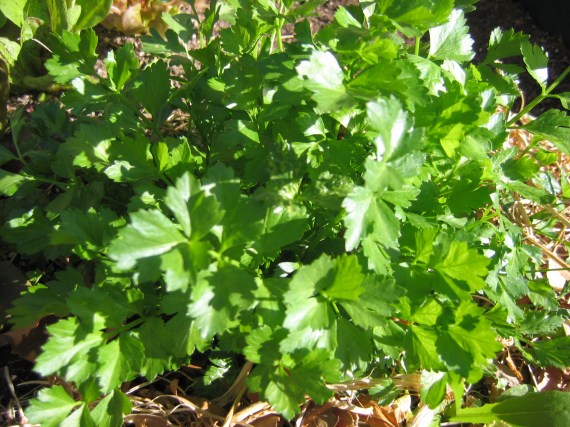
Cutting celery is one of the most underutilized herbs that I know of. It has the flavor of stalk celery without its potential aggression, and can be used in almost any herb mixture. It grows like a weed and can be snipped at for nine months of the year. It seeds itself like a weed, too, so once your clump is established, keep cutting it back to prevent seeding. Throw a few stalks in the pot every time you make broth or stock, chiffonade it into rice or bulgar pilafs, throw a chopped handful into nearly any mixed greens dish. It seems to support the other flavors without taking over.
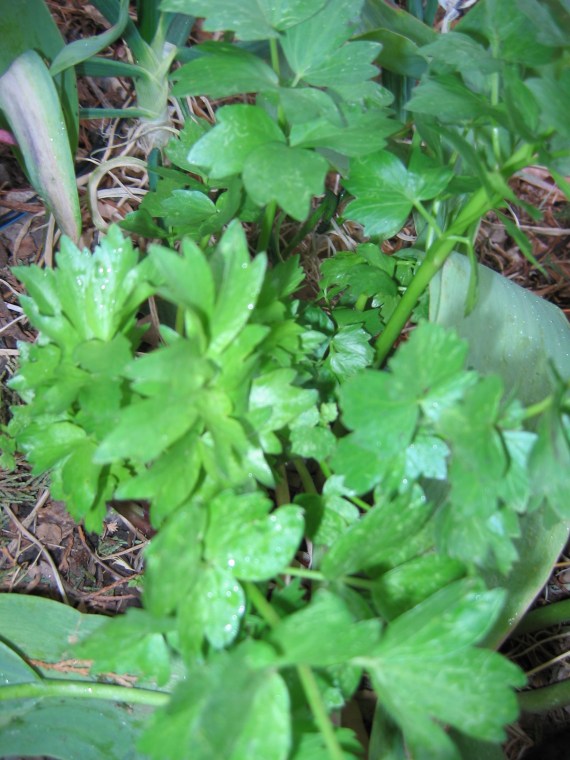
Lovage, shown below, is another matter. It grows best in semi-shade in our sunny climate. It’s loaded with quercetin and other antioxidants and has a fascinating celery-juniper flavor, , and I wouldn’t be without it, but the flavor is insidious and can dominate a dish. A few leaves are plenty for most dishes and a leaf or two chiffonaded into a vinaigrette will give it more complexity. More will unbalance the flavors, at least to my palate. My favorite way to use it is in Lovage Pesto, where it is used lavishly but the garlic keeps the lovage under control. Lovage will shoot to seed and die if you let it, so keep cutting if you want to keep it. Also, bear in mind that the plant gets pretty big, and site it where it can have a couple of square feet to itself when it matures.

Lovage Pesto
4 large cloves garlic, chopped
About 6 cups of lovage leaves, no stems, loosely packed
1and ½ cups full-flavored olive oil
1 cup walnut pieces
1½ teaspoons sea salt

For this recipe, the food processor is okay. Chop the garlic in your food processor, then add the lovage leaves and half the oil and process until the leaves are coarsely chopped. Add the salt, the rest of the oil, and the walnuts, and process only until the nuts are coarsely ground. Let mellow for an hour before use. It can be tossed with pasta and parmesan like other pestos, or makes a good marinade for fish (add a squeeze of lemon if you wish.) It can be brought to the table with roast lamb as a sauce to dip into sparingly. A spoonful is a good addition to a simple vinaigrette. Tightly covered, it will keep about 2 weeks in the refrigerator.
For more on herbs, visit the “recipes” page of my website and click on “herbs.”
april-2009-013
Lovage in early spring. It gets three times this size in a couple of months.

The greens of spring: scapes

may-2009-014
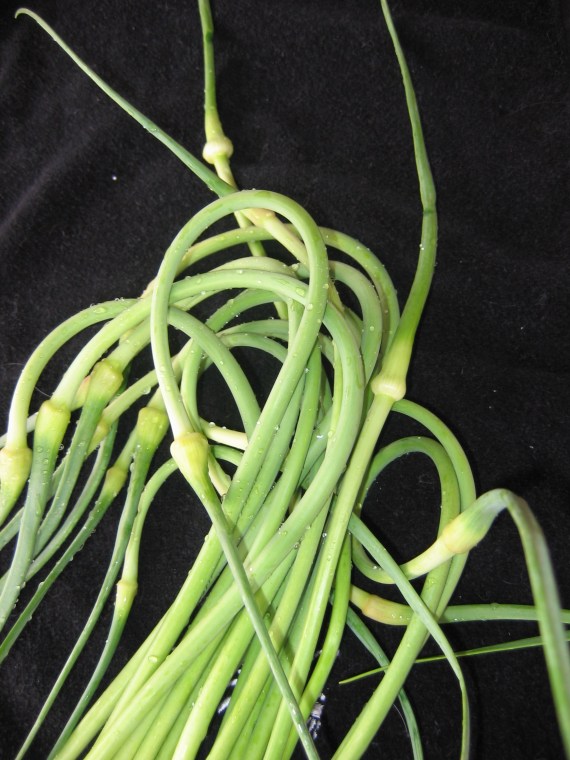
Garlics of the hardneck type have a wonderful array of flavors and are easy to grow. Separate cloves and plant them in early fall. Earlier in spring, green garlic could be harvested if you planted extra for that purpose, and it certainly is delicious. Please see my earlier post on alliums for more on green garlic. Now, though, the underground cloves are swelling and forming fibrous skin between divisions and aren’t good to eat as green garlic. But your garlic plants have sent up scapes, thoughtfully providing you with a pleasant garlicky green vegetable to tide you over until the “heads” are ready to harvest. You need to cut off the scapes, since they take energy from bulb formation, so this harvest is guilt-free pure bonus.

The scapes may have coiled into fantastical seaweedy coils. Make sure that you harvest them while the entire stem is still green, with no withering or yellowing. There may be a small touch of yellow around the blossom-sheath at the tip, but the stem should be all green. Cut them at the base of the highest leaf on the plant. Now wash well and cut each scape into one inch pieces, including the bulging part of the blossom sheath but discarding the long skinny tip above it. Now you are ready to cook them. See below for recipes and suggestions.

may-2009-015

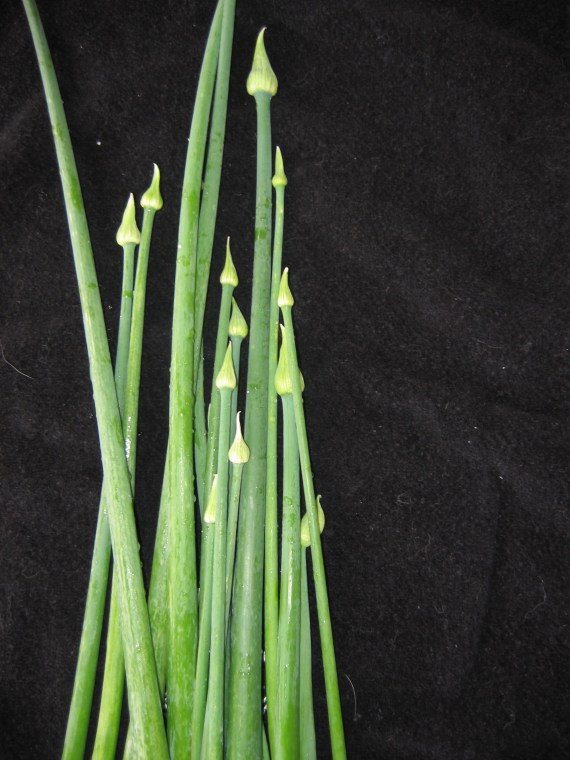
Onion scapes, shown above, are also a nice kitchen bonus. When green onions (see my last post) start to go to seed, this is what you get. Pick them while the blossom-sheath is still the size of the tip of your finger or smaller. Wash them and cut in segments as for garlic scapes, above. They need different handling at the stove. Click here for recipes and suggestions