Archive for the ‘greens’ Category

Planning Your Garden: the Weed Patch, and more on the Peruvian Purple Potato

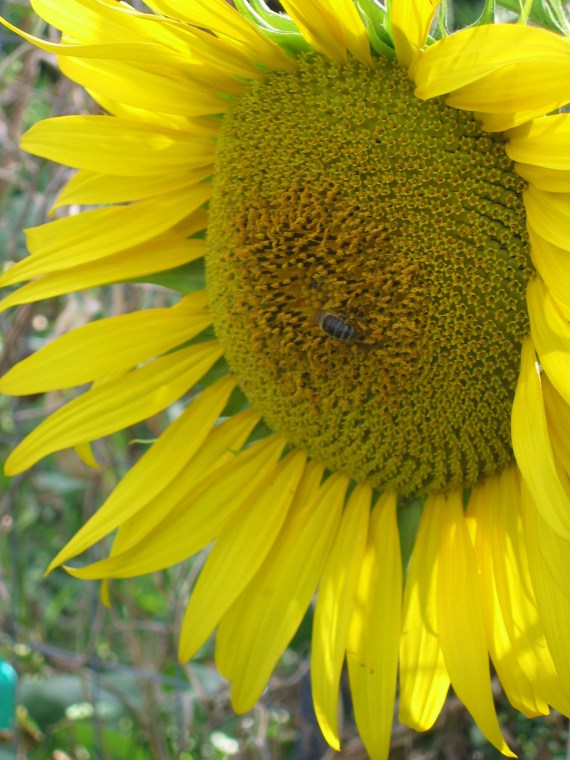
Those of you who have been following my blog for a while know about my interest in useful weeds, ie plants which thrive on neglect, spread rapidly, and are often overlooked, but offer good eating. Now that I’m planning a brand-new garden from scratch, I’m planning a “weed patch” as part of it. This will be out of the path of garden traffic so that I can have milk thistles and nettles, and screened from the rest of the property with a row of sunflowers so that nobody but me has to look at it much, and there all my favorite edible thugs can slug it out together. If you have room for a weed corner, you might consider some of these:

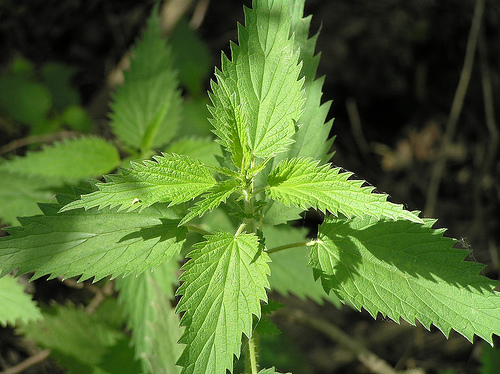
1. Stinging nettle. The nettle offers some of the best early-spring greens to be found. You can start them from seed (try Johnny’s Selected Seeds) or from plants (Richter’s is the only source that I know of.) They spread like wildfire, so underground barriers or a spot that you can mow all the way around are essential. See my post for harvesting and cooking details, and treat this plant with great respect, because the sting is pretty painful.
2. Curly Mallow. I like the leaves as part of a mix of greens, and it thrives on heat and doesn’t need too much water. I got the seeds from Nichols Garden Nursery years ago, and it’s been happily self-seeding ever since.
3. Milk thistle. THis will be a new one for me, but I’m told that the young shoots make good cooked greens when the prickles are trimmed off, so I’ll give it a try.
4. Sorrel. This might not seem like a weed, but it’s a healthy, vigorous, weedy-looking plant, so it can stay in the weed patch, out of the way. You can get seed almost anywhere, even from seed racks. It’s best to let it grow the first year, just removing flower stalks as they appear, and then start harvesting in early spring the second year.
5. Curled dock. This comon roadside weed is sour and bitter at most stages of development, but in the late fall and very early spring it’s one of the best greens around. Like its relative sorrel, it turns brownish-green when cooked, so I use it in mixtures of cooked greens rather than by itself. I don’t know of any source for the seeds. I picked mine by the roadside years ago, and this robust perennial has been with me ever since.
6. Dandelions. Like dock, they are actively distasteful most of the year, but in very early spring they offer delicious lightly bitter leaves which give a wild tang to a mixed salad or a little zip to a cooked greens mixture.

An alert reader let me know recently that the source I gave for the Peruvian Purple Potato no longer offers them. I save my own starter potatoes from year to year, but you can get the Peruvian from Ronnigers. They also have a splendid assortment of garlics, and some other plants of interest.
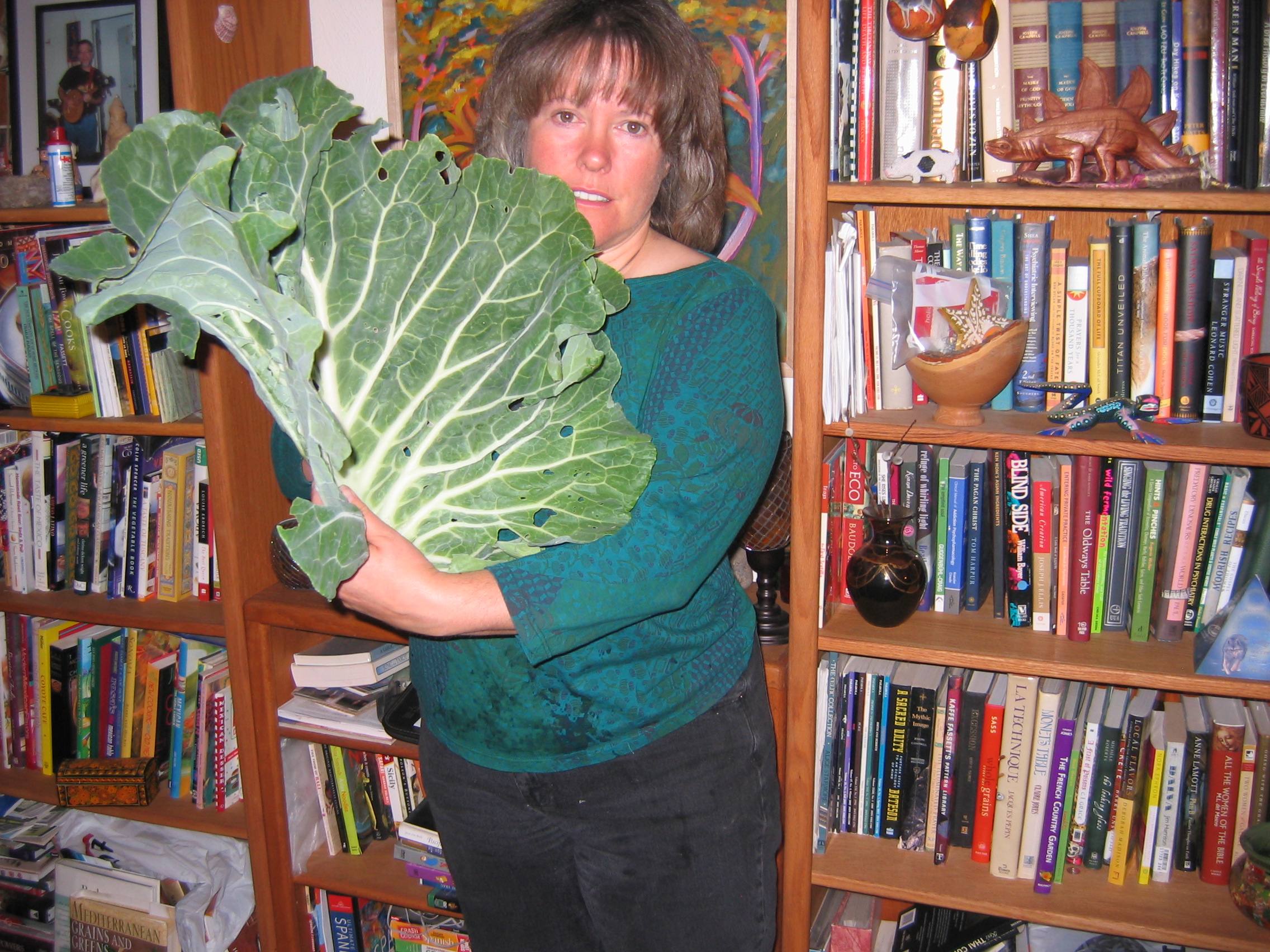
Tronchuda, and some thoughts on planning urban homesteads


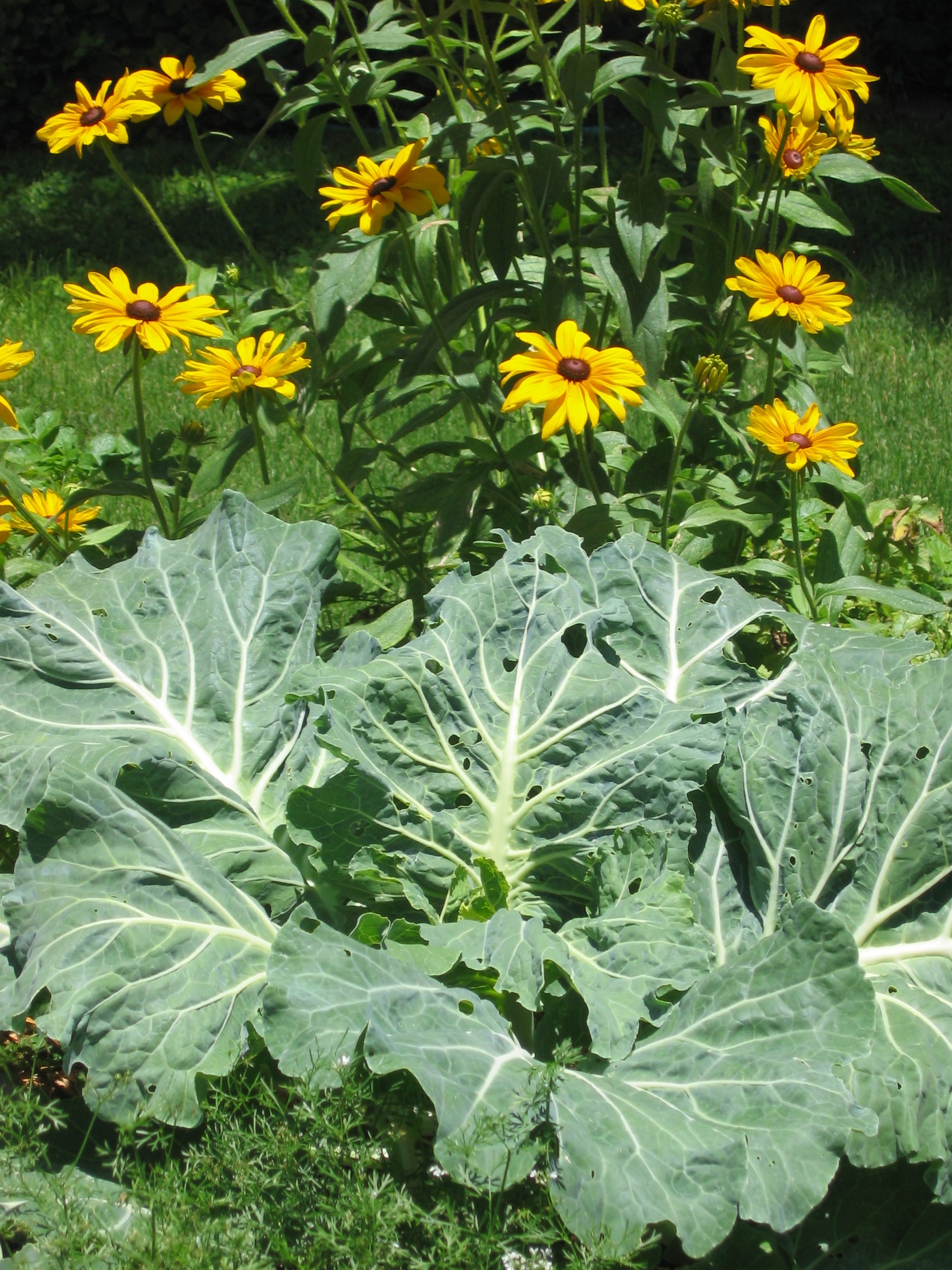
Every year I try a few vegetables that I haven’t tried before, and for 2009 one of the clear winners was Tronchuda, a giant non-heading cabbage from Portugal. I grew only one plant, and it ultimately reached over four feet across, with leaves almost 2 feet from side to side. The leaves were pleasant to eat cooked at any point, but especially good after a few frosts. I used it in the same ways as collards or kale, and also made a soup with sauteed onions and garlic, Spanish chorizo (not the Mexican soft chorizo,) good chicken broth, salt to taste, and chopped tronchuda, all simmered together until the tronchuda tasted good. By the way, this is an overlooked method for determining when green leafies are sufficiently cooked: keep tasting them, and when they start to taste good, they’re done.
I will definitely be growing it again this year, and that’s the real test of any vegetable: is it worth the garden space? Tronchuda delivers. I’ve read that the wide white leaf ribs can be cooked as a vegetable in their own right, but I didn’t care for them and composted them instead, keeping the green parts and the narrow ribs to cook. I recommend it highly for any garden. You can get seeds at Nichols Garden Nursery, a wonderful source for all sorts of odd delights.
Our own New Mexico seed company, Gourmet Seed International, offered seeds for two of my new experiments, rampion (the famous “rapunzel” of the fairy tale) and bladder campion. I’ll keep you posted.
This is the time of year to plan your homestead garden and order what you need. I’m dealing with a brand new property with no planting in place, so I’ll be starting a new mini-orchard, and I would highly recommend dwarf fruit trees for eager would-be urban homesteaders. They produce relatively quickly, look charming, and allow harvesting with feet planted firmly on the ground.
Every yard-farm should reflect what the owner and family like to eat and drink, and with this in mind I’ve decided to plant wine grapes. It will be a few years before I’m making my own wine, but the thought of my very own mini-winery has already given me a lot of pleasure and the vines aren’t even planted yet. In anticipatory value, it’s the best garden bargain I’ve had, and this may be the most overlooked benefit of urban homesteading; you spend so many happy expectant hours. The same applies to my backyard chickens, which are not yet purchased but are already clucking quietly in the back of my mind.
By the way, if you have any interest in adding livestock to your homestead, it’s worth reading Farm City . Author Novella Carpenter created a little squatter farm in Oakland, and it isn’t what most of us would want, but her descriptions of raising and killing animals for meat are accurate and unromantic (but reverent.) If you have never harvested meat animals, this is a test. If you can’t stand to read her descriptions, you probably don’t want to go into livestock. If you do go on to raise a little of your own meat, I can guarantee that you will no longer allow meat to be wasted. Once you really understand where it comes from, waste is not an option. On the other hand, you will understand the fascinated reverence with which good farmers and hunters view meat animals.

My Southeast Asian Summer: Turmeric

_Media Card_BlackBerry_pictures_IMG00146

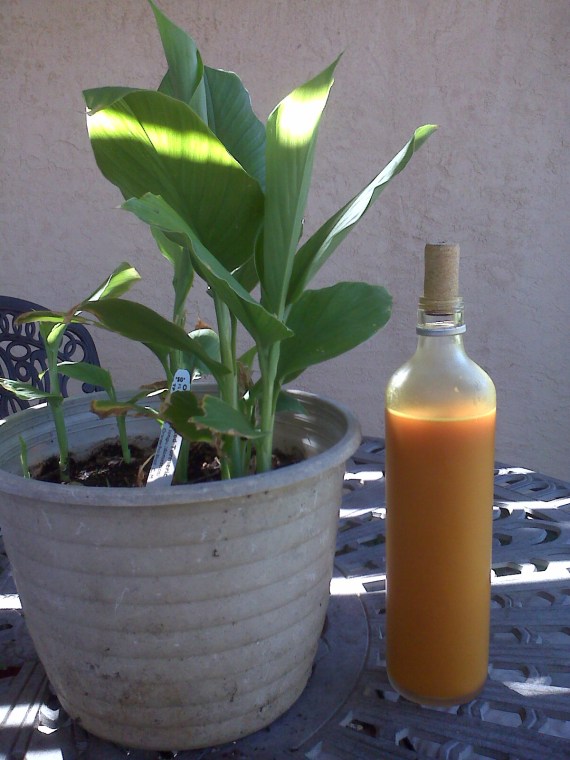
      Turmeric and its constituent components the curcuminoids, a complex of antioxidant and anti-inflammatory compounds, are getting attention and medical research dollars these days. But this blog is not about disease treatment or medical research, it’s about healthy and delicious food, and turmeric is here for its culinary qualities.  Both the roots and the leaves are a common seasoning in many parts of southeast Asia, and the leaves are impossible to buy in this area, which led to my experiments in growing them. It’s a tropical and needs to be brought indoors when the nights start to cool off, and during the summer it needs light shade and plenty of moisture. Initially I bought plants from an herb supplier, but since then have done better with plants I started at home.

       You need some roots from the store to get started. Put them on top of a pot of good organic potting soil and press them into the soil. Put in a warm place (a seed-starting warming mat will really speed things up,) keep moist, and within a month you’ll see small buds growing off the roots. In another month or so, you’ll have turmeric leaves to use.  It will prosper in a sunny window over the winter, but does best if it can go outdoors in the summer. Remember, part shade is important.

     To begin with the root, it can be grown in a pot but you are unlikely to get enough to use it freely. I don’t recommend the dried powder for most applications; to my palate if lacks the fresh vibrancy of the fresh root. I advise buying organic root, and you can often find it among the other fresh vegetables at La Montanita Co-op. Ask the produce manager if you don’t see it. It’s used in a lot of the seasoning pastes that I make for my southeast Asian cooking, so you’ll notice it in several of the recipes on this blog (use the search function to find them). But one of my favorite ways to use it is as a brilliant yellow-orange “juice” concentrate which I keep in a corked bottle in the refrigerator and add to water to make “sun juice.” The color alone is irresistible and cheers me up just to look at it.

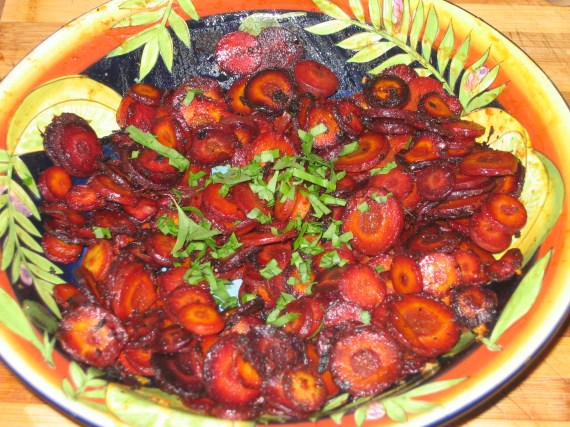
     The leaves are large, glossy and handsome, and look attractive when the pot is brought indoors for the winter, but remember that any plant you’re always snipping at for kitchen use won’t look great for long. When cut they smell very like a fresh, sweet carrot, and I love to season carrots with them. Clich the link below the picture for recipes.

august 09 007

Click here for recipes! Continue reading

The Jewels of Summer: flowers and local food

june 2009 026

Now that the idea of local food is popular, a backlash is detectable. I’m beginning to see comments and articles attacking the  idea of obtaining all your food locally. I’m familiar with the debate technique of building a straw man and knocking him down, so this doesn’t especially surprise me; caricaturing your opponents’ views is a way to make them seem ridiculous. All I will say in this context is that few of us obtain all our food locally, or want to. Coffee, chocolate, wine, and olive oil are among the foods that I love dearly and will happily buy from other areas. On the other hand, local fruits and vegetables are fresher and superior, and we have some truly superb grass-fed local meats available. If you aren’t ready to make a big lifestyle change, try shopping at one farmers’ market a week and cooking what you find. If you want the cooking done for you, try one of the prepared foods, cheeses, or breads.  Don’t go there with strong notions about what you should eat. Instead, look around and see what you want to eat.  Local farmers and artisans will benefit, and so will you.

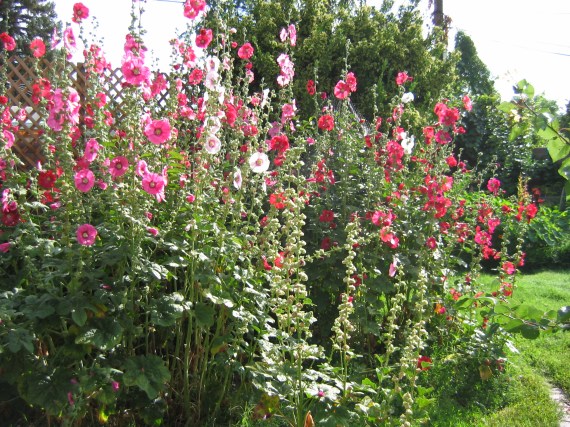
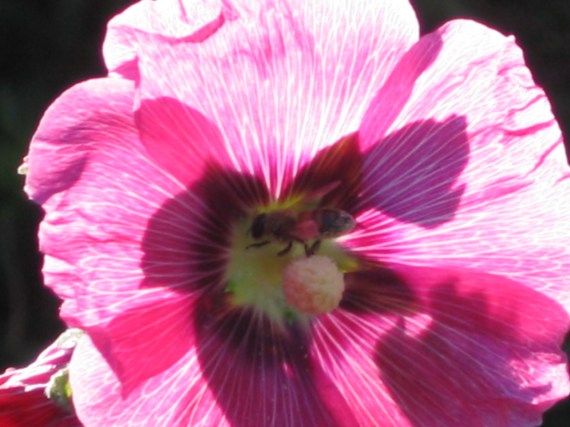
If you don’t want to try any  local foods, buy some local flowers. One of the greatest pleasures of my gardening  lifestyle is eating my own food on my patio among my own flowers. Beauty feeds the spirit as surely as vegetables feed the body, and our local seasonal flowers didn’t require greenhousing, pesticides, fertilizer, petroleum fuel, or poorly paid labor to reach us. The flowers are the fringe benefits of  growing locally, and sometimes they are beautiful enough to stop you in your tracks, which can only be good for your health.

june 2009 035

june 2009 036

june 2009 024