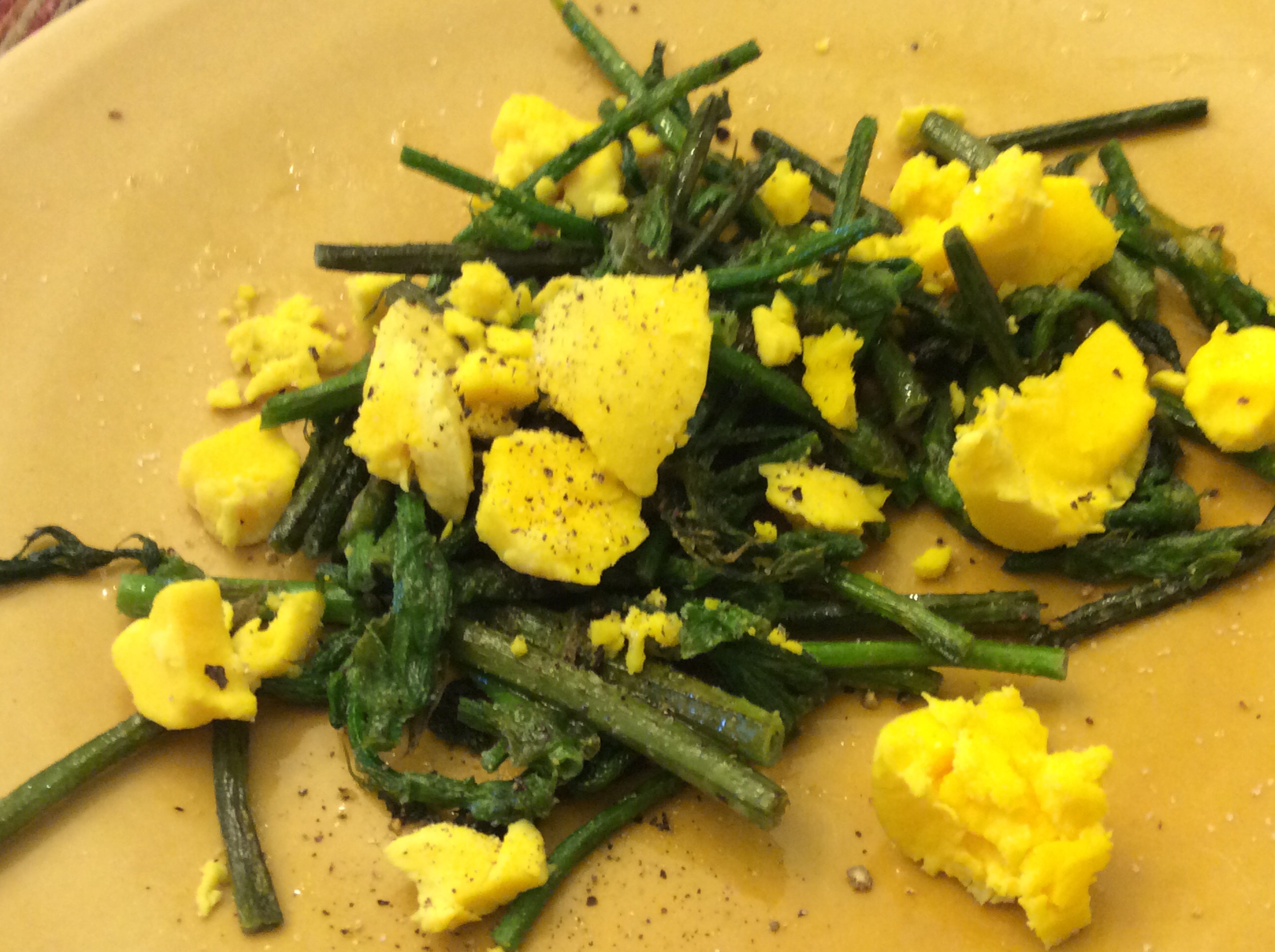
Two posts ago I wrote about learning to use spring hops shoots as a vegetable, and a couple of weeks after my first taste, they are nearly over for the year. I hit a tiny second harvest by breaking off the tips when the vines were as tall as I wanted. These “upper shoots”have even more of the wild, feral, slightly bitter flavor than the first emerging growth has, and are quite addictive. My favorite preparation so far is to cut them into segments about an inch long, sizzle them in butter or olive oil over medium-high Heat until the stems are crisp-tender and the infant leaves are fried crisp, salt to taste, and crumble the yolk of a hard-boiled egg over the top. The egg yolk smoothes the bitterness beautifully. This method works well with bitter greens as well.
Incidentally, the only thing I dislike about hops shoots is that there aren’t all that many of them. I have five large hops hills and only get enough shoots for my husband and I to share them a couple of times. I’m thinking of planting more hills just for the shoots. The vines are fairly handsome and almost indestructible, and will cover an ugly fence ( summer only) within a couple of seasons.
Archive for the ‘front yard gardening’ Category
28 Apr
Passing Pleasures: more on hops shoots
26 Apr
A Glory of Greens, and notes on Turkish greens soup
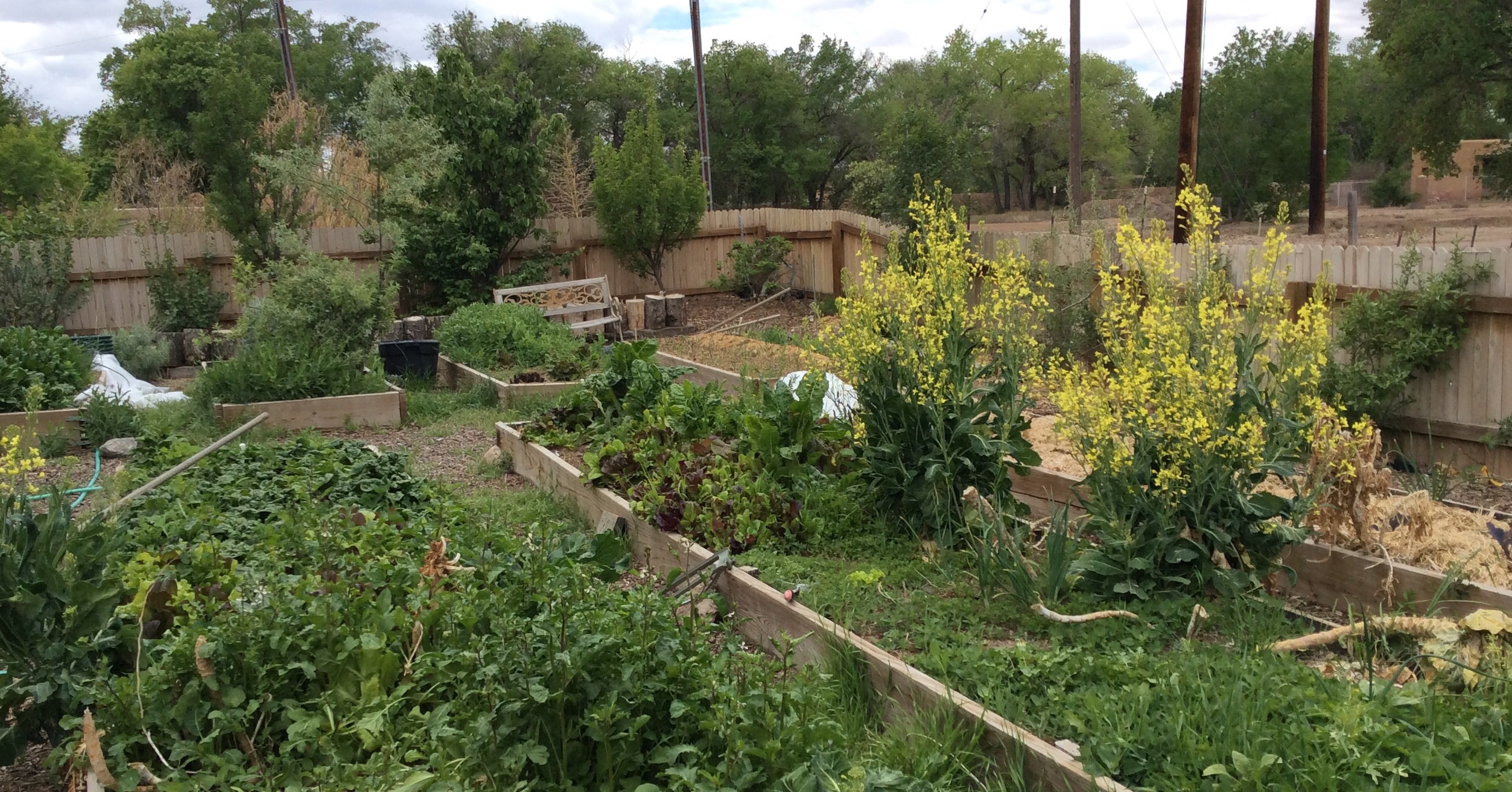
There is nothing more vibrant than a garden full of greens in the spring, all growing like mad, offering you a million healthy possibilities. During the two unfortunate years that I couldn’t garden, I did at least rogue out all the weeds that weren’t edible, and now nearly everything that sprouts in my beds is delicious, whether I planted them intentionally or not. And everybody, every one of us, would do well to eat more greens. Our health would improve and we would feel so damn good. Remember, the REAL Mediterranean diet, the one that was originally studied on Crete and that produced a long-lived and healthy population, was based on a huge variety of cultivated and wild greens.
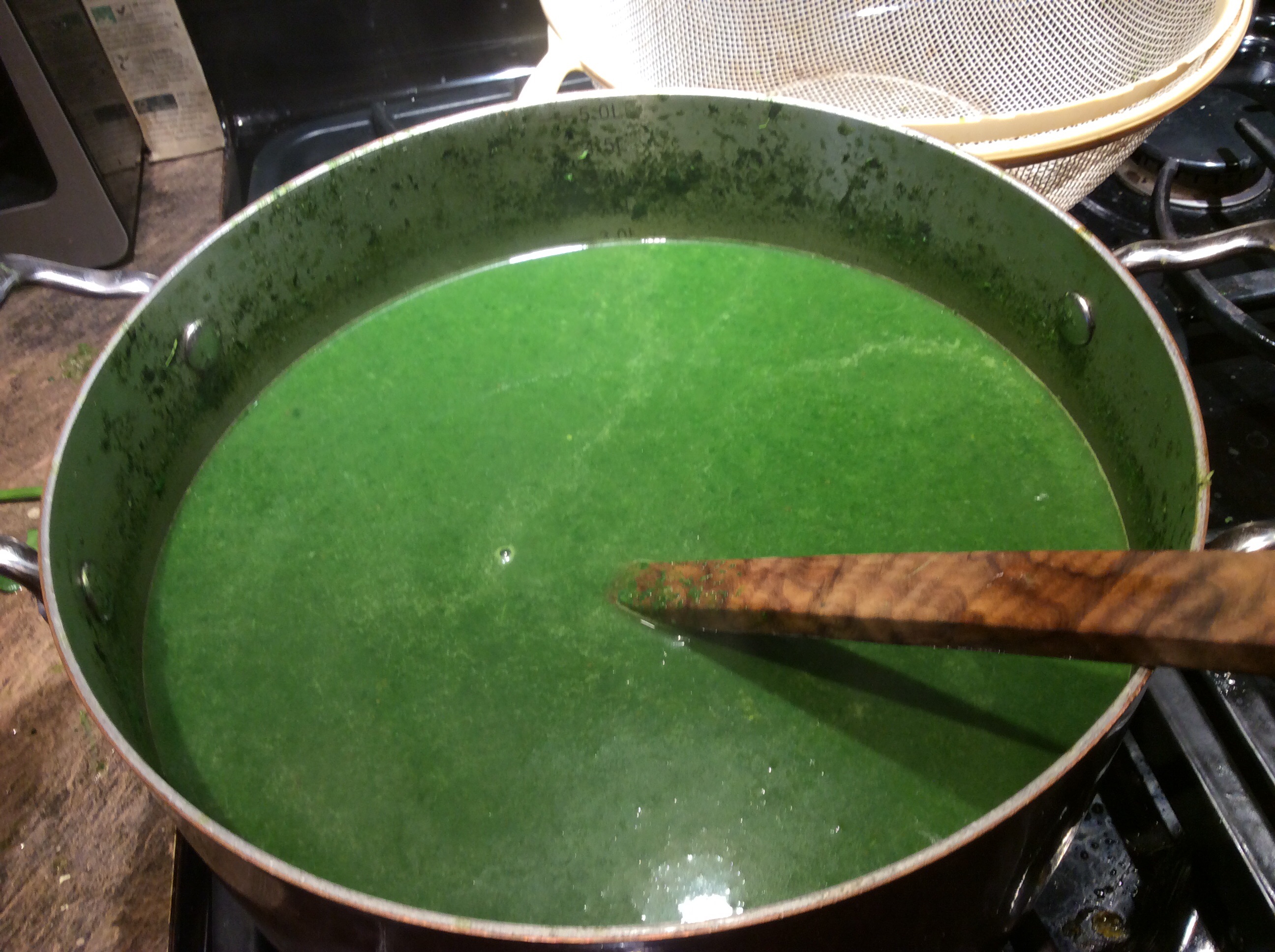
Today I noticed nettles, spinach, and lambs-quarters that needed to be harvested pronto. I also had lively green garlic ready to harvest. I picked a three-gallon pail to the brim, but loosely filled as I threw the bounty in, not packed down. I washed them ( it goes without saying that when nettles are in the mixture, you use gloves whenever handling them and stir in the washing water with a big wooden spoon, not your hand,) and decided to make a Turkish greens soup for dinner.
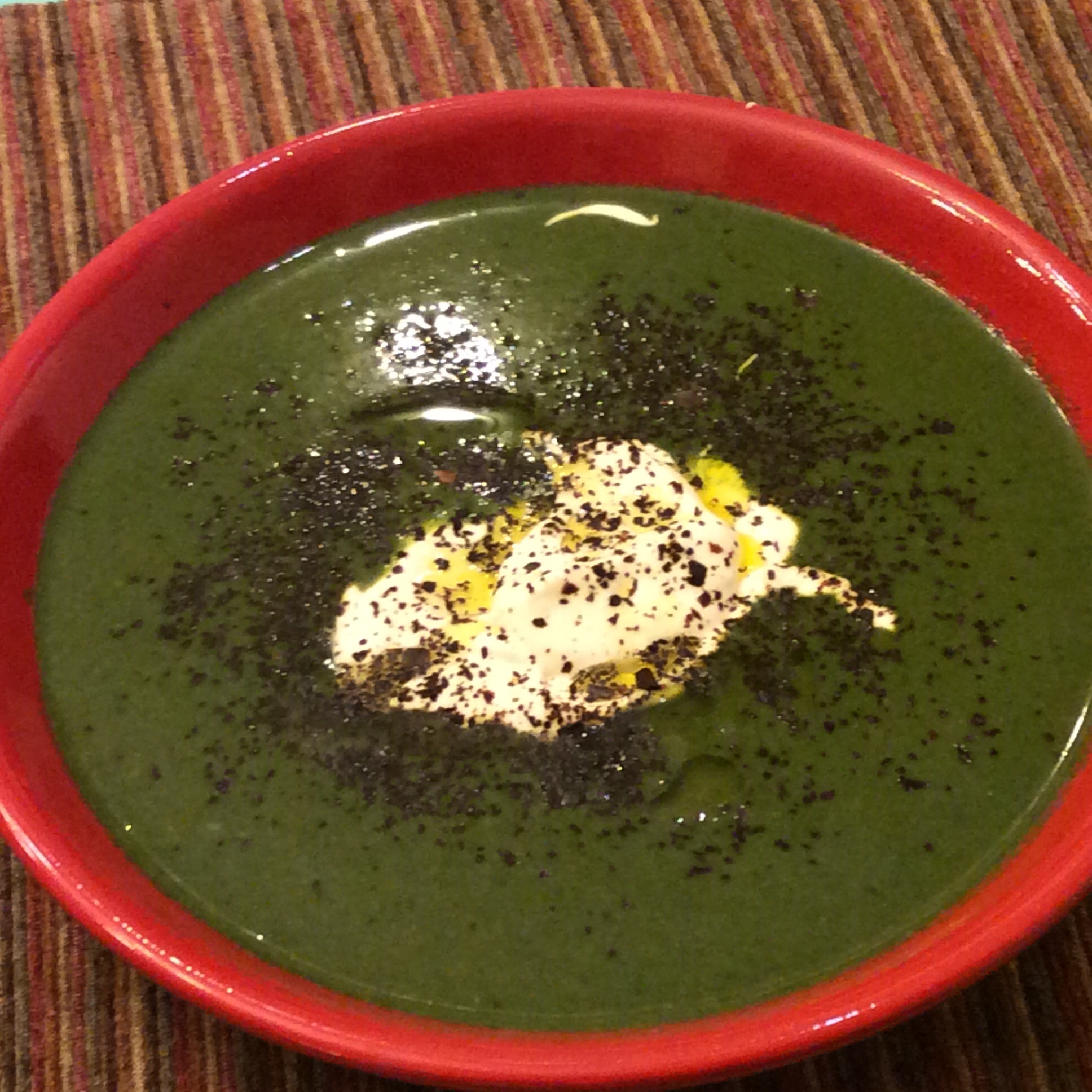
This is a soup that I have been making variations of since a lovely trip to Turkey nearly thirty years ago. It is based roughly on a soup that my guide described his wife making, but it’s interpreted by me and changes every time I make it, so I don’t vouch for its authenticity. This time it was a thick velouté; other times it’s a rough potage, and sometimes it resembles gumbo z’heirbes. So here’s how this one happened:
Prepare and wash three gallons, loosely packed, of assorted greens. No bland store-bought baby spinach! If you don’t have a garden, consider chard, adult spinach, and Tuscan kale, one bunch each.
Pull a quart of good rich chicken stock out of the freezer (it is in there, isn’t it?)or procure a quart of good chicken stock from somewhere.
Set the chicken stock to melting over medium heat in a gallon pot.
Chop three large stalks of green garlic, stems, leaves, and all, and sauté them in a quarter cup or so of excellent olive oil in a sauté pan. OR use a small onion and two cloves of garlic, chopped, for the sauté step. Make sure they are cooked through, and soft but not colored, before proceeding.
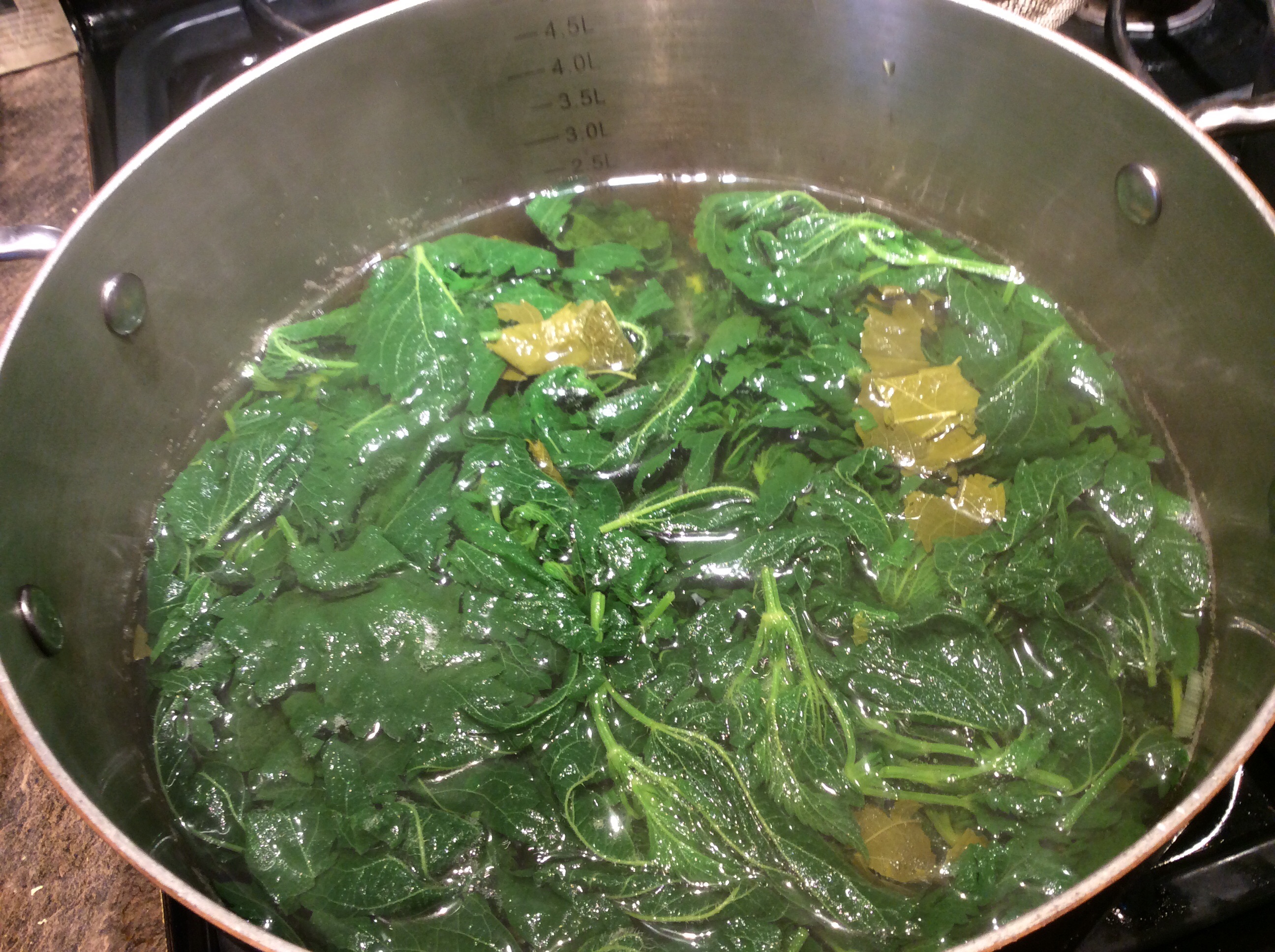
When the garlic mixture is ready and the stock is boiling, begin adding the greens to the stock, stirring, and remembering not to touch those nettles. Boil for about a minute after the last of the greens is added. Now add the garlic mixture to the soup pot and simmer for five minutes.
Now purée with a stick blender. Add salt to taste (I think it needs to be on the salty side)and add a teaspoon of Urfa pepper flakes, Aleppo pepper flakes, or mild red pepper flakes. I like a bit of oregano and thyme. Taste and correct the seasoning carefully.
Mix some full-fat Greek yogurt with salt to taste and have it ready.
Put six egg yolks in a bowl, whisk them up, and slowly add a cup of the hot soup, whisking furiously all the time. Slowly pour the egg mixture into the soup over lowest heat, and whisk another minute or two until it’s lightly thickened and smooth.
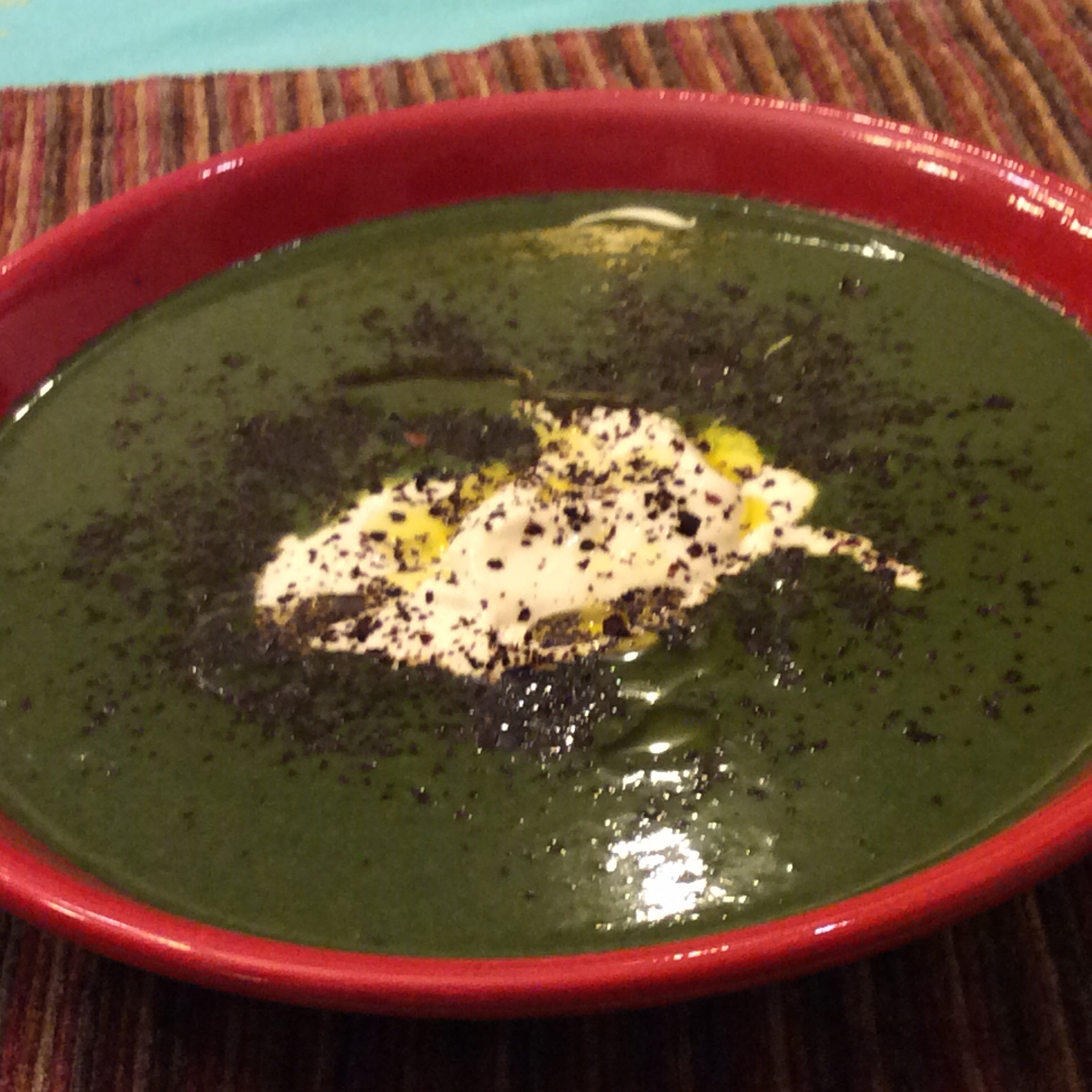
Serve into bowls, pile a half cup of salted yogurt in each bowl, drizzle lavishly with your best olive oil, and sprinkle heavily with more Urfa or red pepper flakes. Eat, and flourish.

29 Mar
An Unexpected Vegetable: Hops Shoots
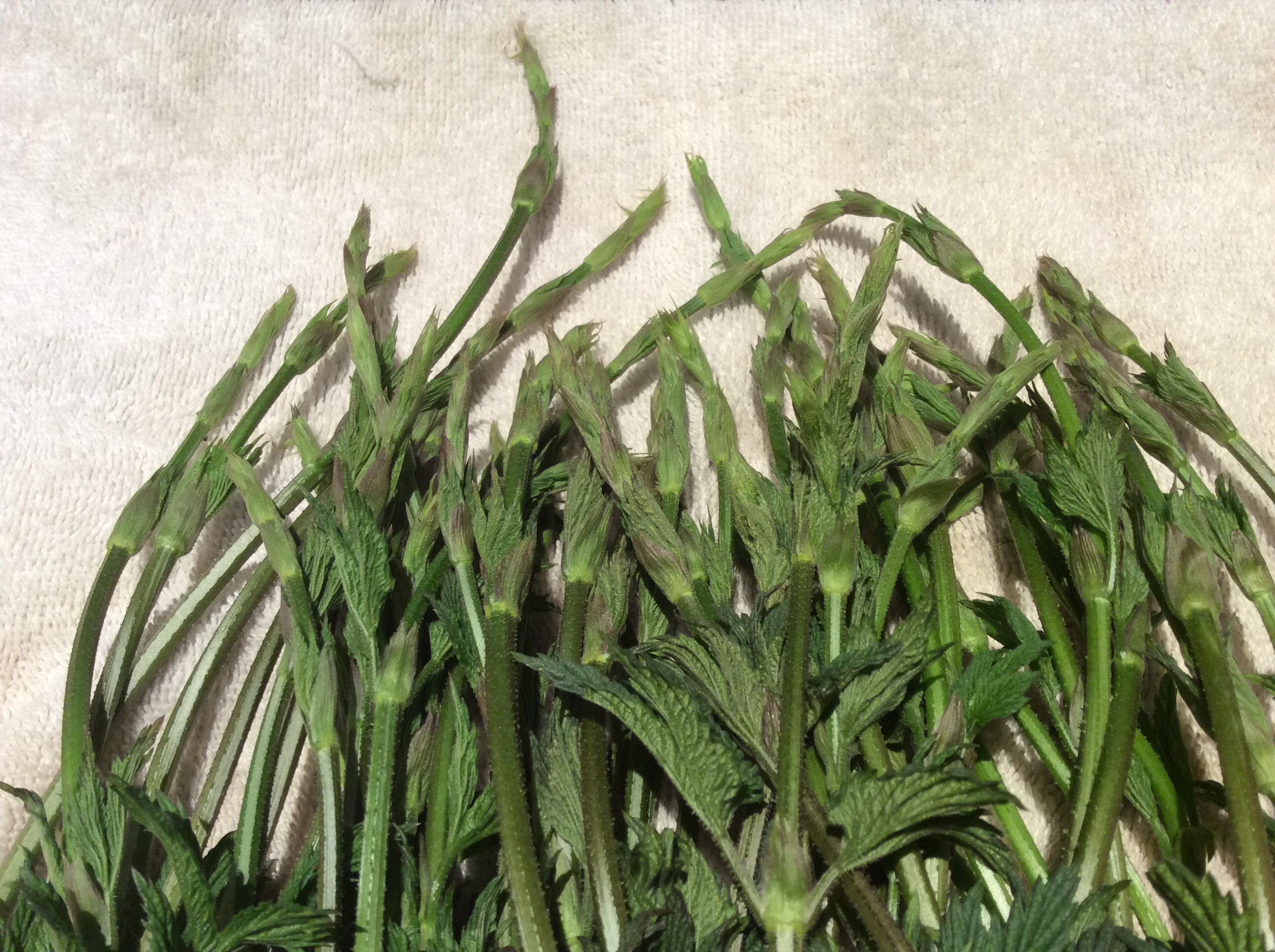
When I first started gardening at my current property, I was an enthusiastic brewer and it seemed natural to plant hops vines where they could climb on my fences. Now I have been low-carb for three years and no longer brew beer, but this winter I learned from a British cookbook that hops shoots could be cooked and eaten like asparagus. They don’t taste like asparagus, of course, but they have their own wild, slightly bitter taste that I thoroughly enjoy. I wouldn’t start picking at them until the vines are about three years old. Then start watching for the shoots to emerge from the ground in the spring and, when they are about a foot high, snap off the top six inches. Rinse, sauté in some good butter, and enjoy.
They are small and slender and it’s hard to get enough to serve at dinner unless you have an awful lot of hops, but a handful of them cooked crisp makes a lovely “cook’s treat” to eat in the kitchen while you’re doing other tasks.
By the way, if you are a brewer you will still be able to harvest hops for your brewing, because as long as you leave about six inches of each shoot intact, they will branch within a few weeks and continue growing.
28 Mar
A Succession of Lettuce
Gardeners tend to love the first salads of spring, and many of us long for greenhouses so that we can harvest all winter. But until I get the greenhouse of my dreams, I scheme about ways to have lettuce and salad fixings as early as possible.
This year I bought a roll of frost-blanket fabric from Johnny’s Selected Seeds, and on a bright day in early February I dug up my lettuce beds and pots, composted them heavily, and planted them with various lettuces, planting broadcast-style rather than in rows. Half of the garden bed of lettuce I covered with a double layer of frost-blanket, secured with stones as weights. The other half was left open to the elements, and some was planted in big black pots about 2 feet high but wasn’t protected in any other way.
I supplied them with water (no need to remove the frost-blanket to sprinkle that bed) and otherwise left them alone.
On March 28th, about 6 weeks later, here’s what the beds look like:
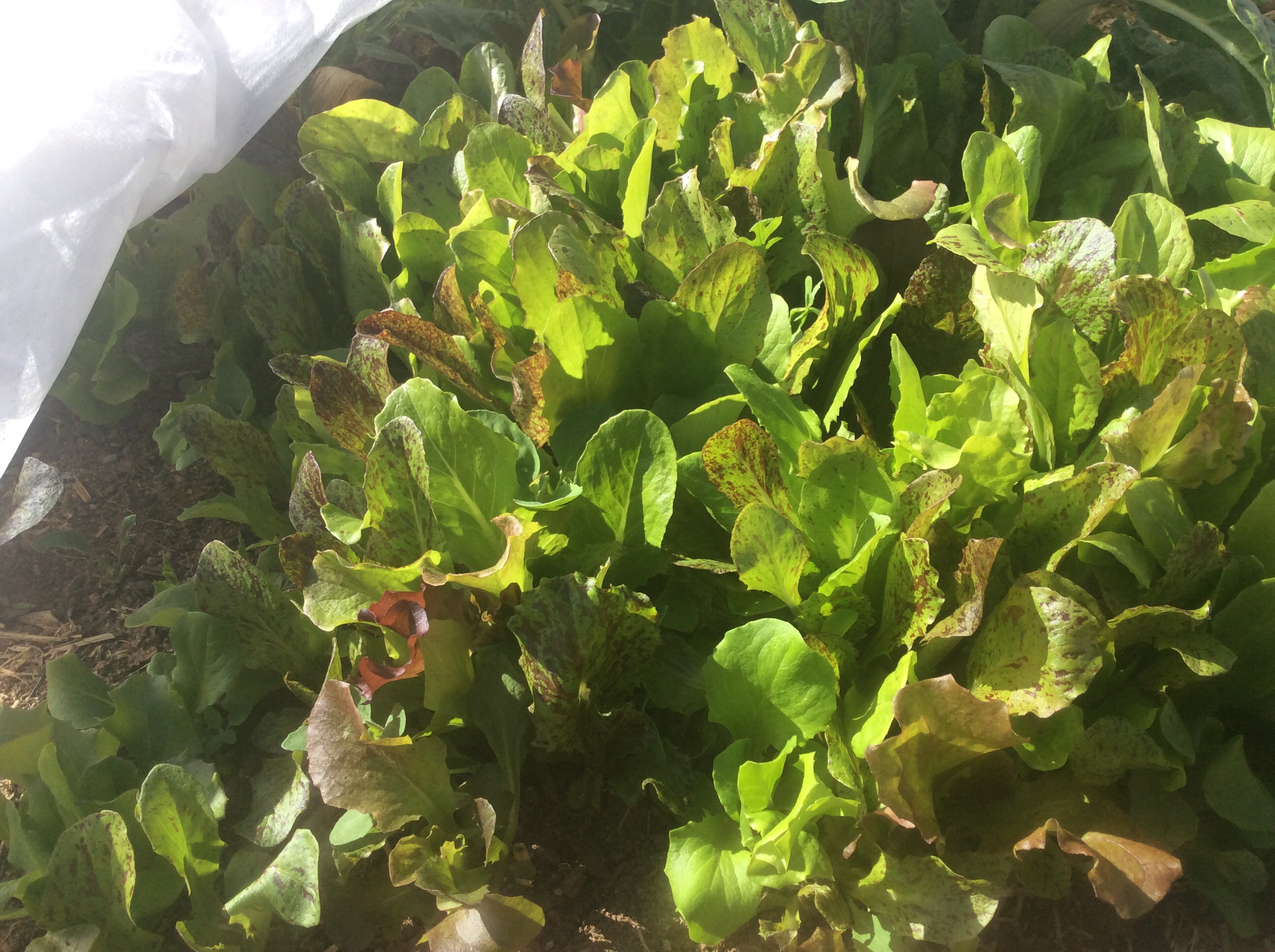
This bed was under the frost-blanket. The little lettuces are over 4 inches high, and harvesting can begin.
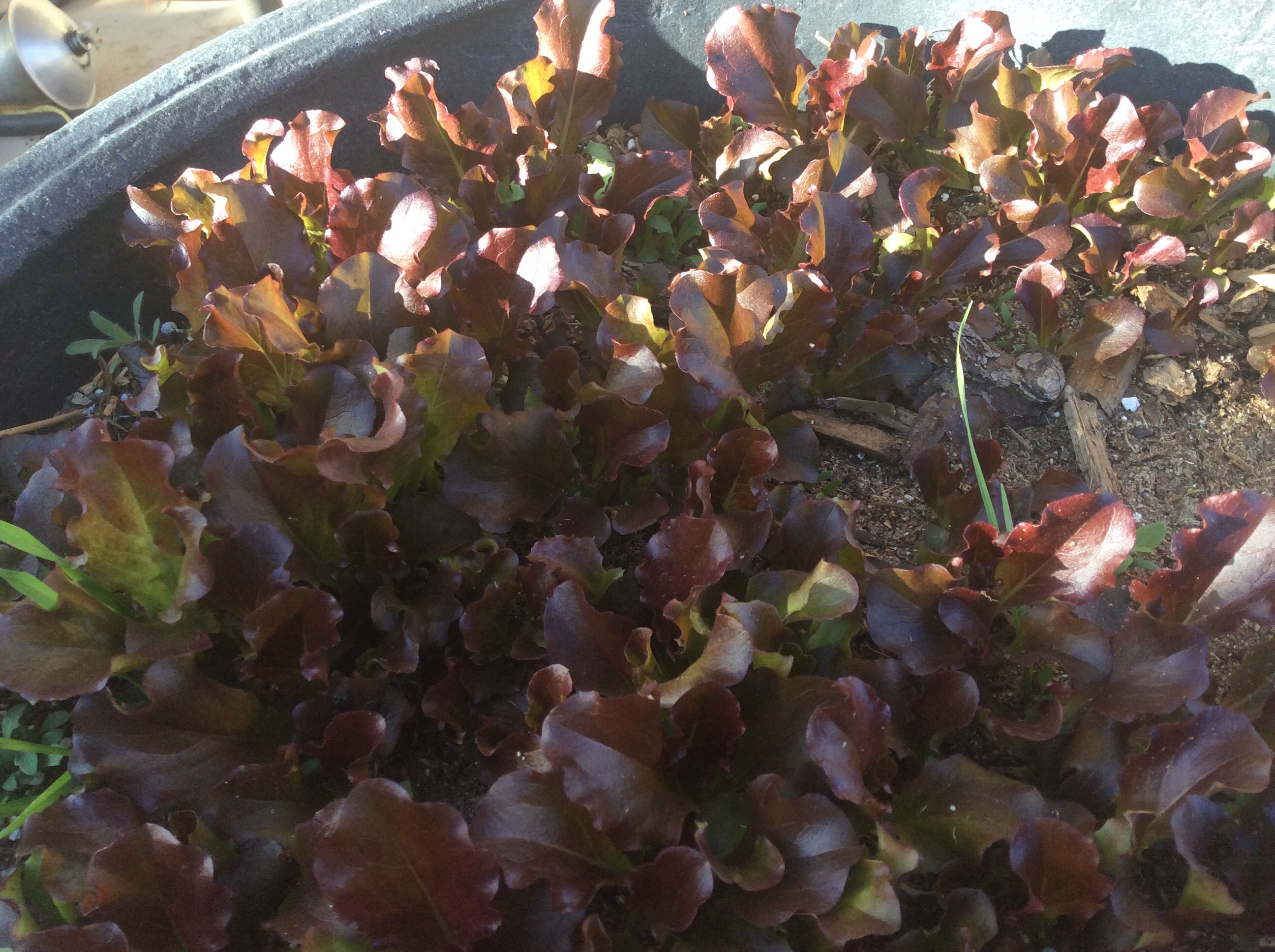
This one is in one of the large pots. The lettuce is about 2 inches high, and won’t be ready to harvest for a few weeks.
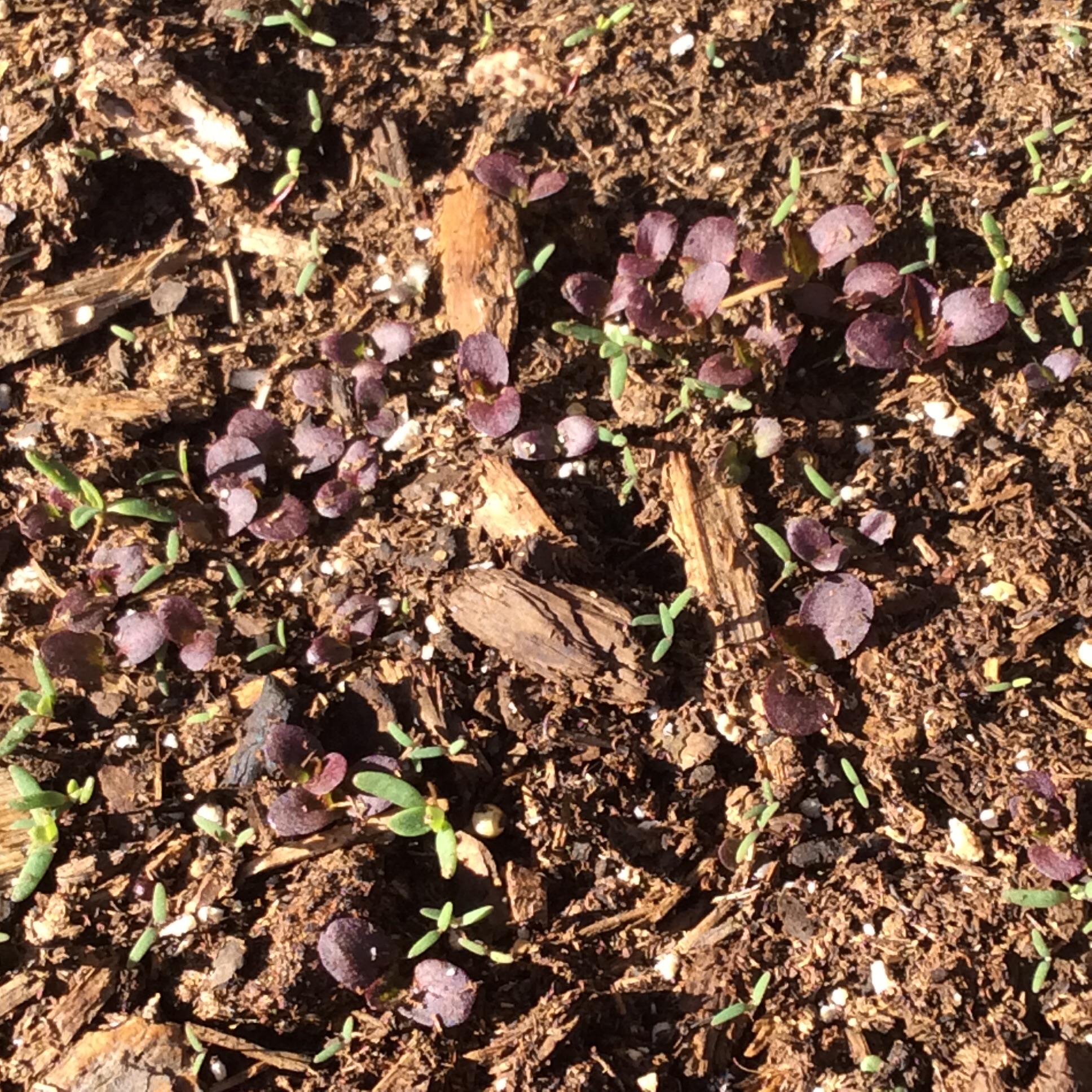
These are planted in the open ground. They have survived hard freezes and an 8″ snowfall and are very small, but undaunted.
From one afternoon of planting, I will be able to harvest lettuce from late March through May, with minimal effort. I will be doing this again next year, and will also plant a bed in October and try to hold it under frost blanket through the winter, to get a jump-started bed in the spring. We urban yard-farmers have day jobs and minimal free time, and this is one way to make the most of it.
 My urban homestead