Archive for the ‘front yard gardening’ Category

Indolent Pest Management

image

There is a semi-organic, thought-intensive mode of pest management called Integrated Pest Management. It has occurred to me lately that I could spearhead an alternative IPM called Indolent Pest Management. It has two phases:

  1. I notice a pest problem.
  2. I wait to see what happens.

The most recent example started last fall, when I noticed a proliferation of large garden snails from who knows where, leaving slime trails on the chard. I read about preparation of escargot out of curiosity but never did anything effective about the snails, because I was busy and there were so many other things to eat.

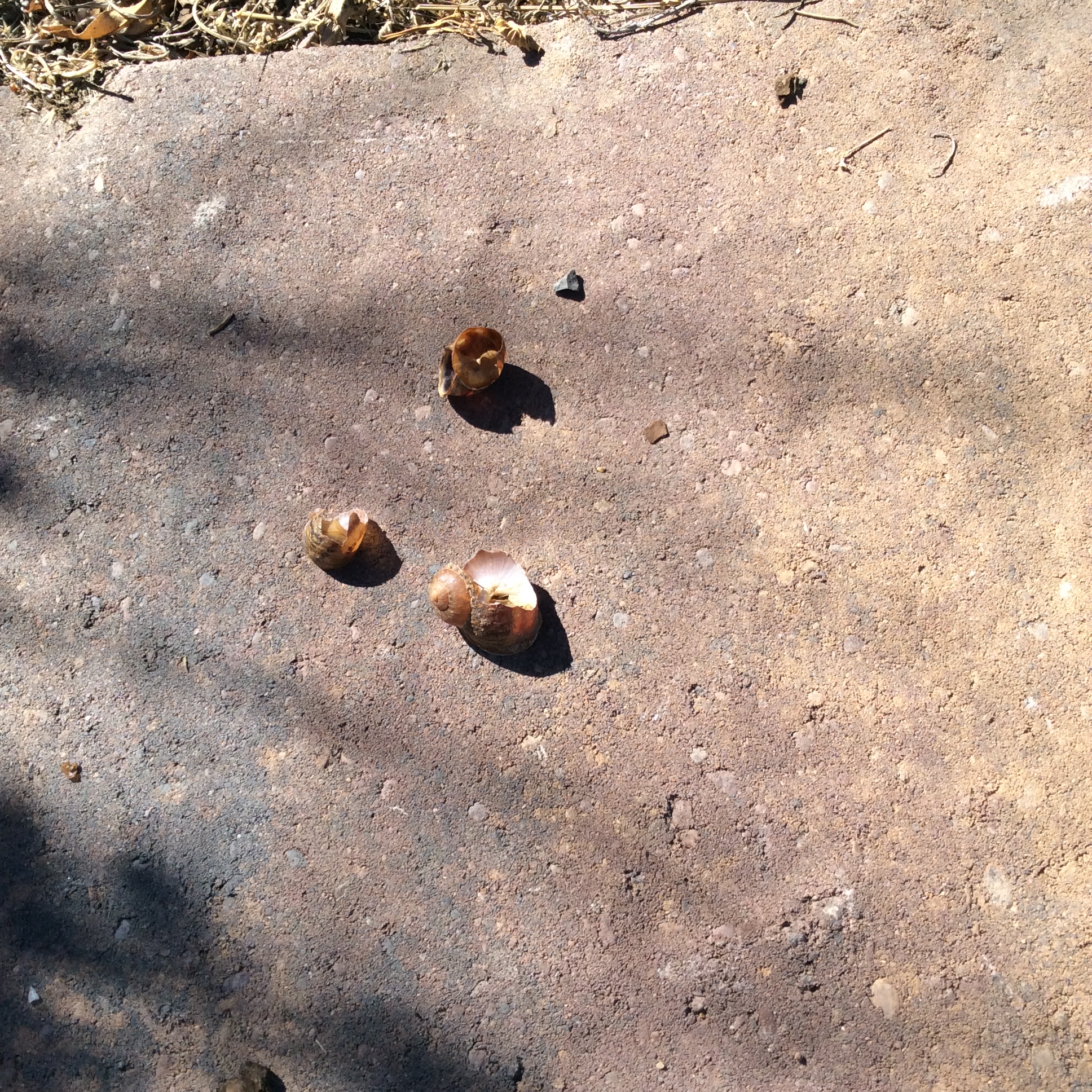
After a month or so, I started to see these everywhere:

image

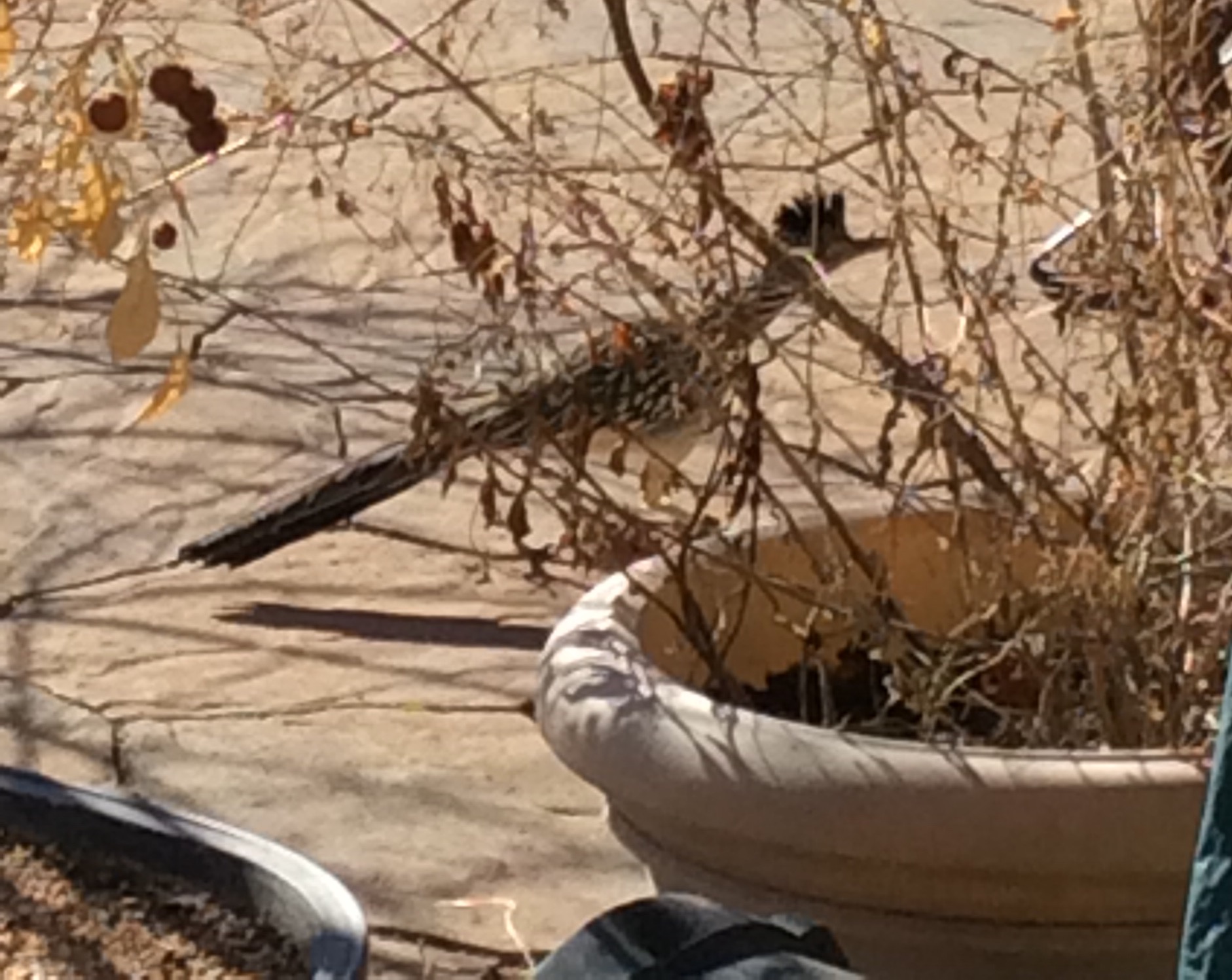
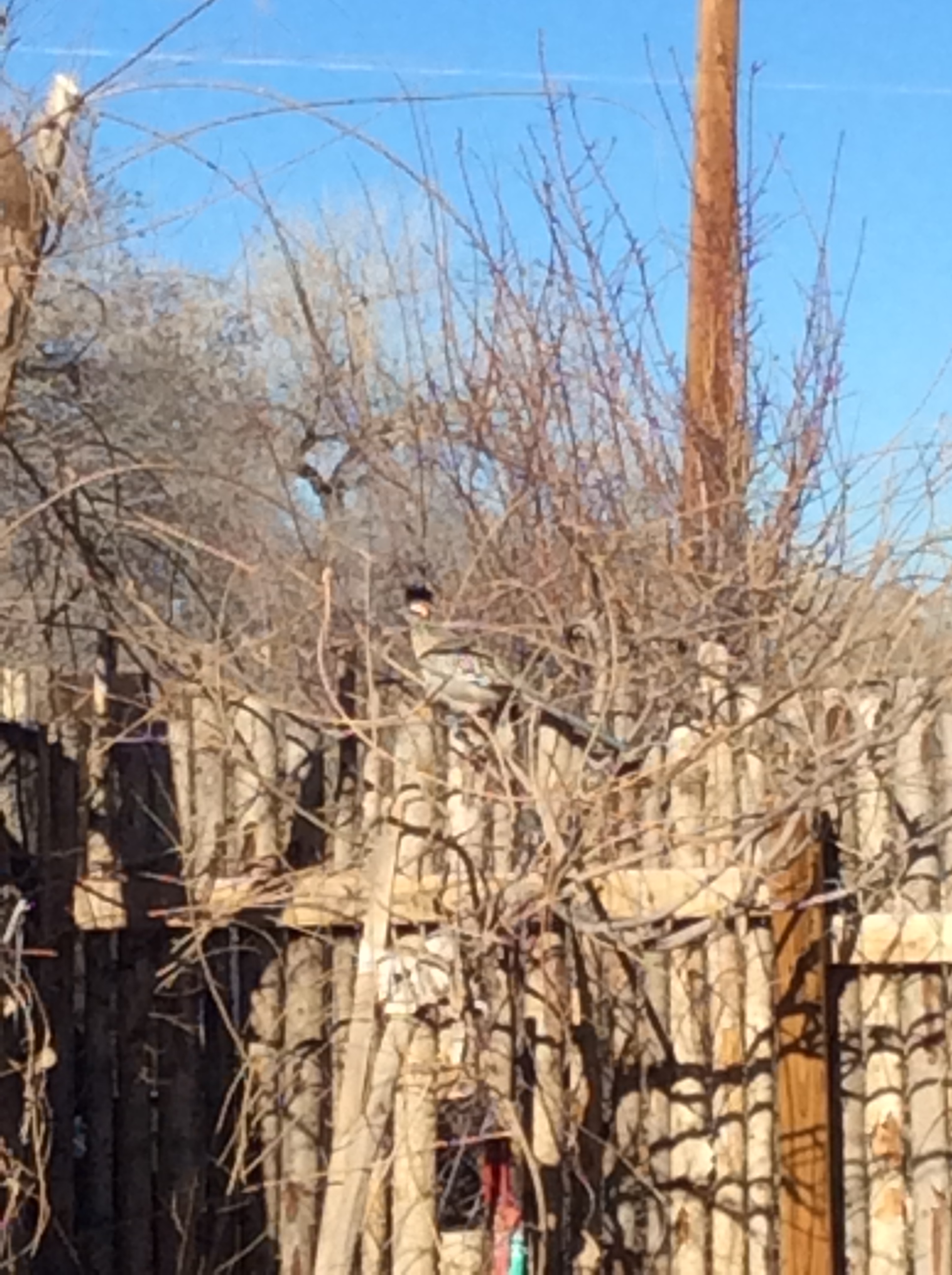
Snail shells, broken open and empty, appeared all over the place. Further observation revealed that a roadrunner, our local little feathered velociraptor, had taken over my yard and was exploring the mulch and eating all the snails, as well as a few stray mice. With the first warm day of spring he began strutting on my roof, calling for eligible females. I keep trying to photograph him, but roadrunners are wary and fast. Most of my photos of him are just a blur. The ones at the top and bottom of this post, where at least you can sort of see him, are the best I could do.

A sharp-shinned hawk has started nesting nearby and this helps keep the mice and English sparrows down. Yes, he hunts at my bird feeder occasionally. Hawks have to live too.

My much-loved Toka plum tree gets an aphid infestation every year after leafing out, although none of my other plums do. Ladybugs move in and decrease them, and the remaining aphids are certainly unattractive but don’t diminish yield in the slightest and are gone by early June.

Cabbage loopers put a few holes in my collard leaves every year. No issues. I feed those leaves to the chickens and eat the others.

Squash bugs spread viruses that are hard on my zucchini. But I am no worse afflicted than people who spray.

My point is that we are gardeners and urban homesteaders, not commercial farmers. Also, we typically have day jobs and limited time to attend to our crops. So why spend it trying to exterminate things that don’t do that much harm? Wait and see, and if a planting fails, other plantings will succeed.  Before fixing, wait to see if it’s really broken. Meanwhile, eat something else. There’s plenty.

image

Early Harvest: Green Garlic

image

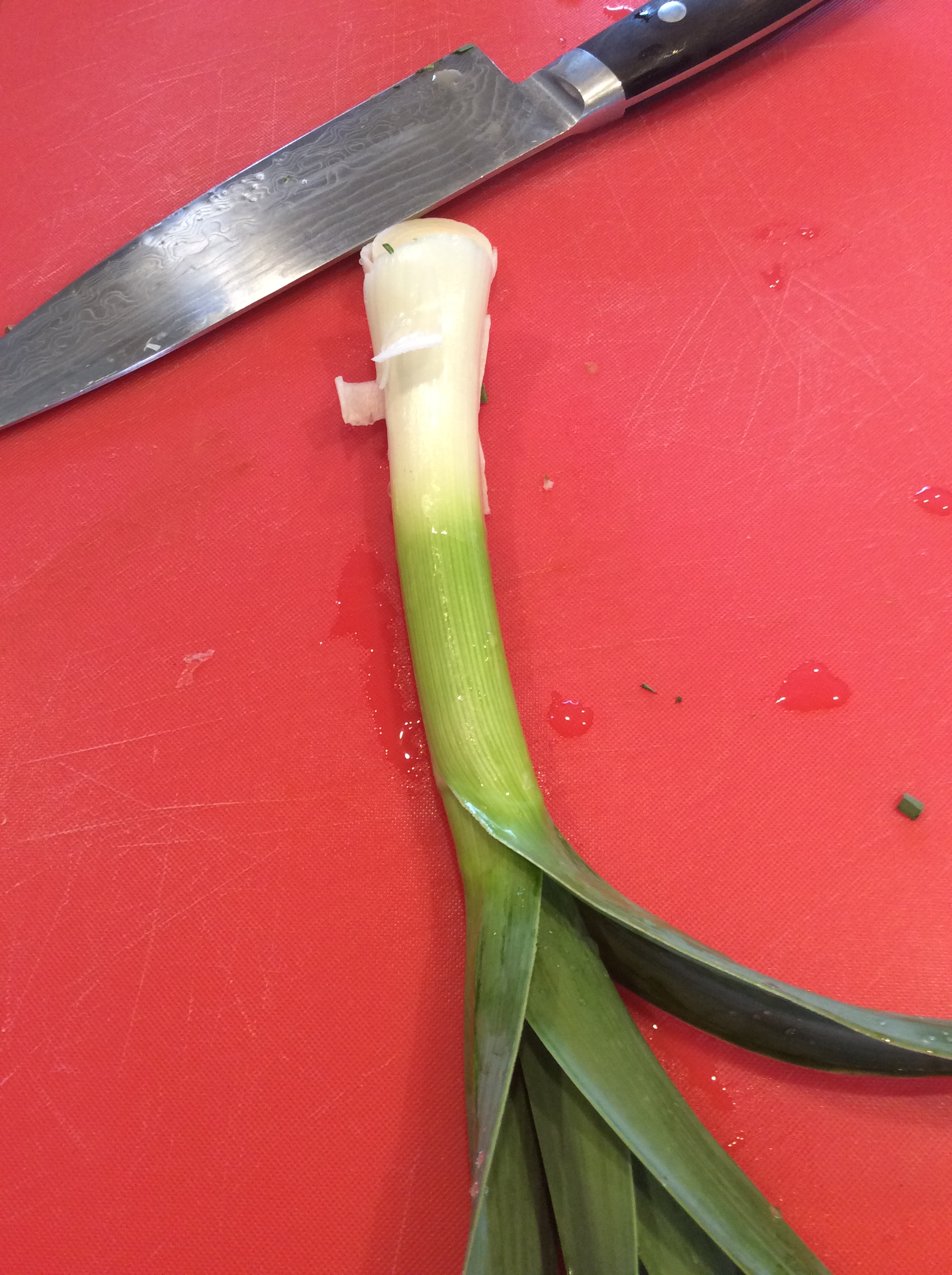
Other than herbs and alfalfa tips for my chickens, green garlic is always the first thing that I harvest from the garden.  In my climate, which is more or less USDA zone seven, I plant in October and nearly always harvest green garlic the first week of March.  The part of the garlic patch that I plan to harvest green is planted very closely, about 2 inches apart each way, which is plenty  of room for this purpose.  Every year I plant more. It is really good stuff. For a long time I thought that it might not really be worth the trouble, because I was harvesting and eating only the white stem and incipient bulb and composting the greens.  Duh. The greens are the best part, as well as being full of allacin and other antioxidants, and any part that is bright green rather than yellow or brown can be used. You can grow a useful amount in a few square feet if your soil is rich, and it is harvested and out of the way in time to plant something else for the summer.

In the picture above you see a stalk of green elephant garlic, which is really a leek relative rather than a true garlic.  It is typically a foot or more tall and an inch or so in diameter at the green stage.   It has a slightly different flavor from true green garlic but is equally delicious.  I once bought green garlic at a farmer’s market that was bitter, but I have never tasted any other that was bitter. It may have had to do with growing conditions or variety. I have heard of people chopping garlic leaves into salads as a seasoning, but personally I don’t care for the taste raw and only use them cooked.

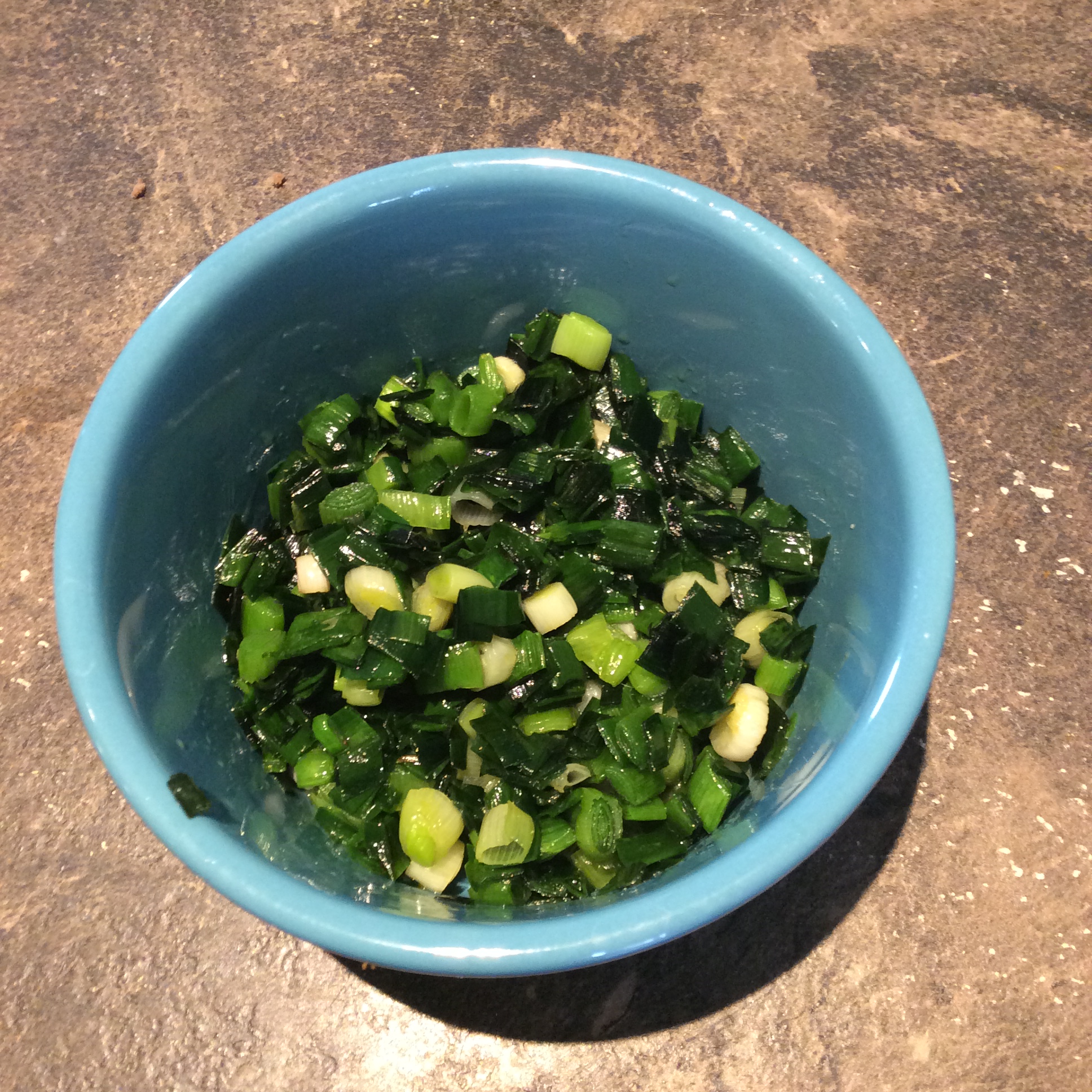
With all green garlic, I trim the roots and leaf tips and wash, then line them up and cut them in cross-section into slices about a quarter inch thick.  I sauté  in either butter or olive oil, whichever will suit the rest of the meal, slowly until the greens are tender. A little salt is thrown in along the way. They become soft and sweet and delicious, and I enjoy eating them as a vegetable on their own.  They also go very nicely into all kinds of other vegetable dishes.  If you are a carb eater, they would be delicious with fresh handmade egg pasta, butter, and a discreet amount of Parmesan, or tossed with new potatoes and butter. I love them in mixtures of cooked greens, too, and they are a lovely complement for fried eggs.  I plan to make a cream of green garlic soup  at some point this spring.  A few stalks sautéed in your smallest skillet while you are cooking other things also make a very nice cook’s treat  to eat standing in the kitchen, as a sort of tapa for one. After all, the laborer is worthy of her hire.

image

Like all the rest of us, green garlic will lose its youthful bloom sooner rather than later.  When the bulb is swelling and the leaf tips are turning progressively more yellow, it is past the point of being worthwhile to eat green.  In its brief season I harvest 10 or 12 stalks whenever I have some free time, clean and sauté them, and have them waiting in the refrigerator.  If I haven’t use them within a day or two, I vacuum seal them into neat little packets and keep them in the freezer to go in summer dishes.

Animals, Waste, and the Urban Homestead

december08-005
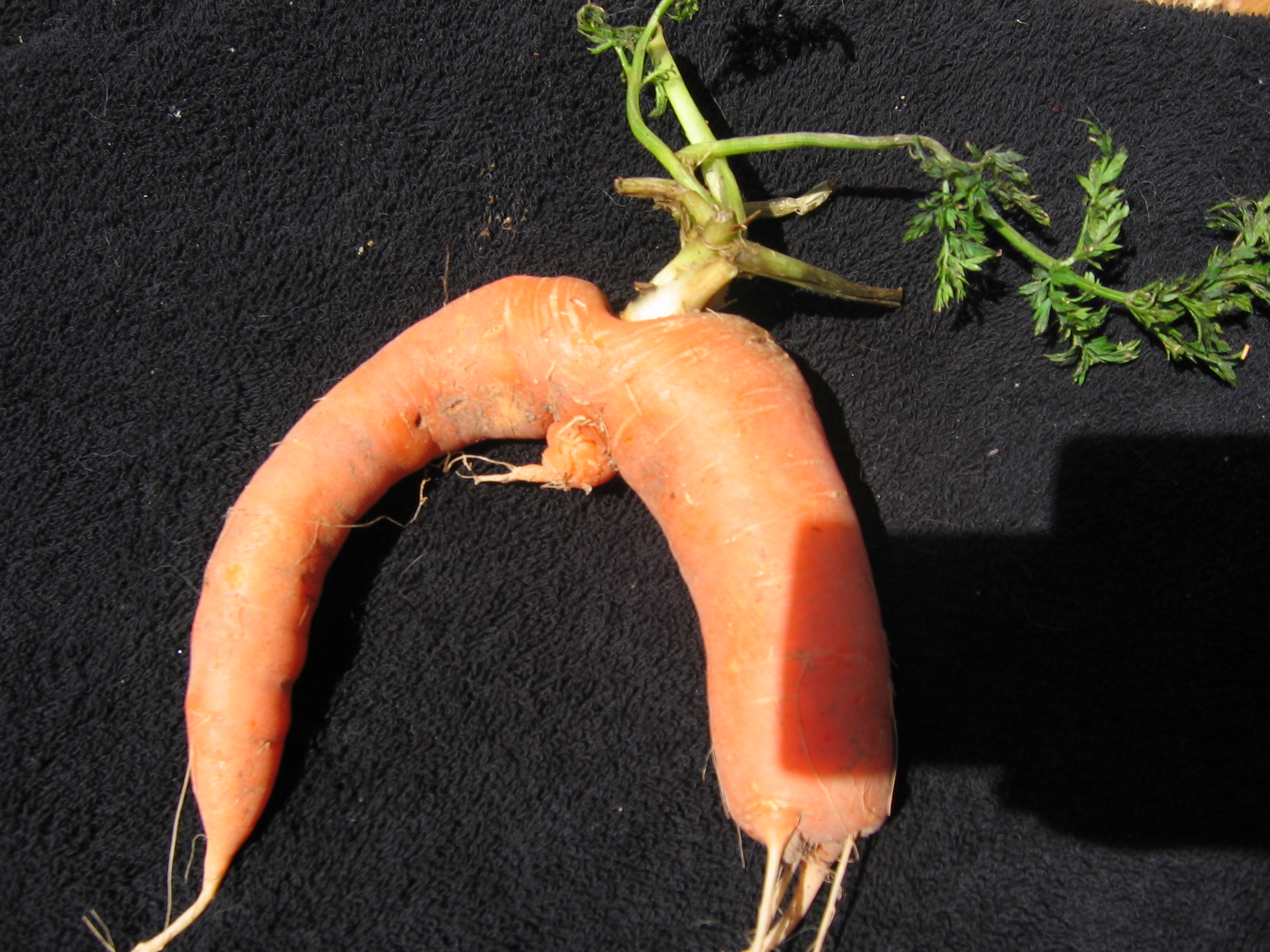
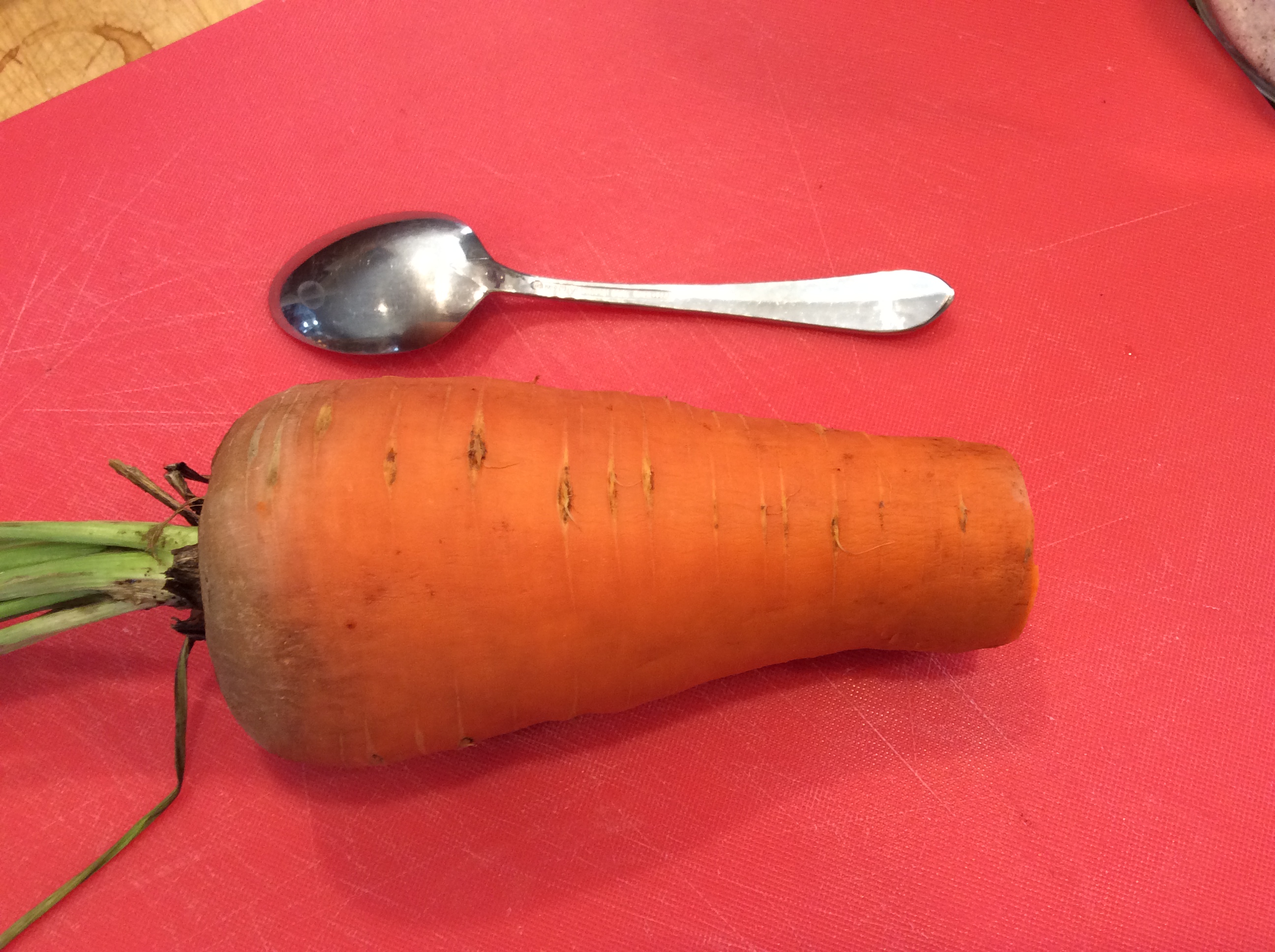
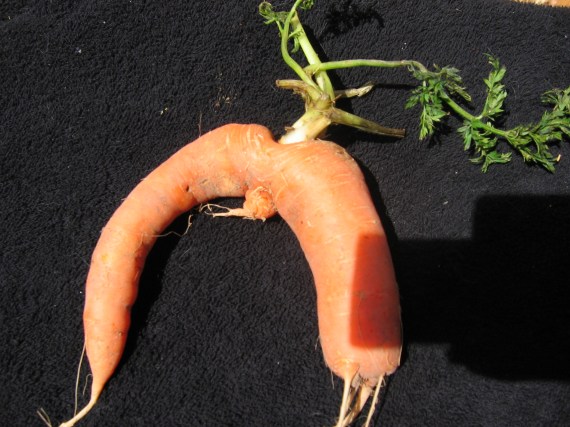
Many years ago now, in one of my earliest blog posts ( hard to imagine that I’ve been doing this for eight years now,) I posted the picture above of a carrot from my hard soil, because I thought it was funny and I had little else to talk about that day. Now, I think that my ardent carrot is part of a much bigger picture, and that picture is the ugly landscape of food waste.
Globally, unbelievable amounts of food are wasted, enough to feed a lot of hungry people, and you can read about that and about what one lively activist is doing about it in this article.
My own interest in the subject is smaller and more local. What can be done to reduce waste around our homes and neighborhoods? Start with the carrot above, and with imperfect produce in general. Are you willing to buy it and eat it? If your favorite grower at the farmer’s market sold imperfect stuff at a somewhat reduced price, would you buy it? Let them know.
When you are the grower, the task can be more satisfying, and small livestock can help. Eat what you can yourself, and share with others. People have been so market-conditioned to demand perfect produce that I can end up giving my friends the most perfect specimens and eating the imperfects myself. Get yourself a good nose-to-tail vegetable cookbook to help you eat and like the “nasty bits” of your veggies. Then look at what’s left and who will eat it, because a lot of it isn’t ready for the compost yet.
image
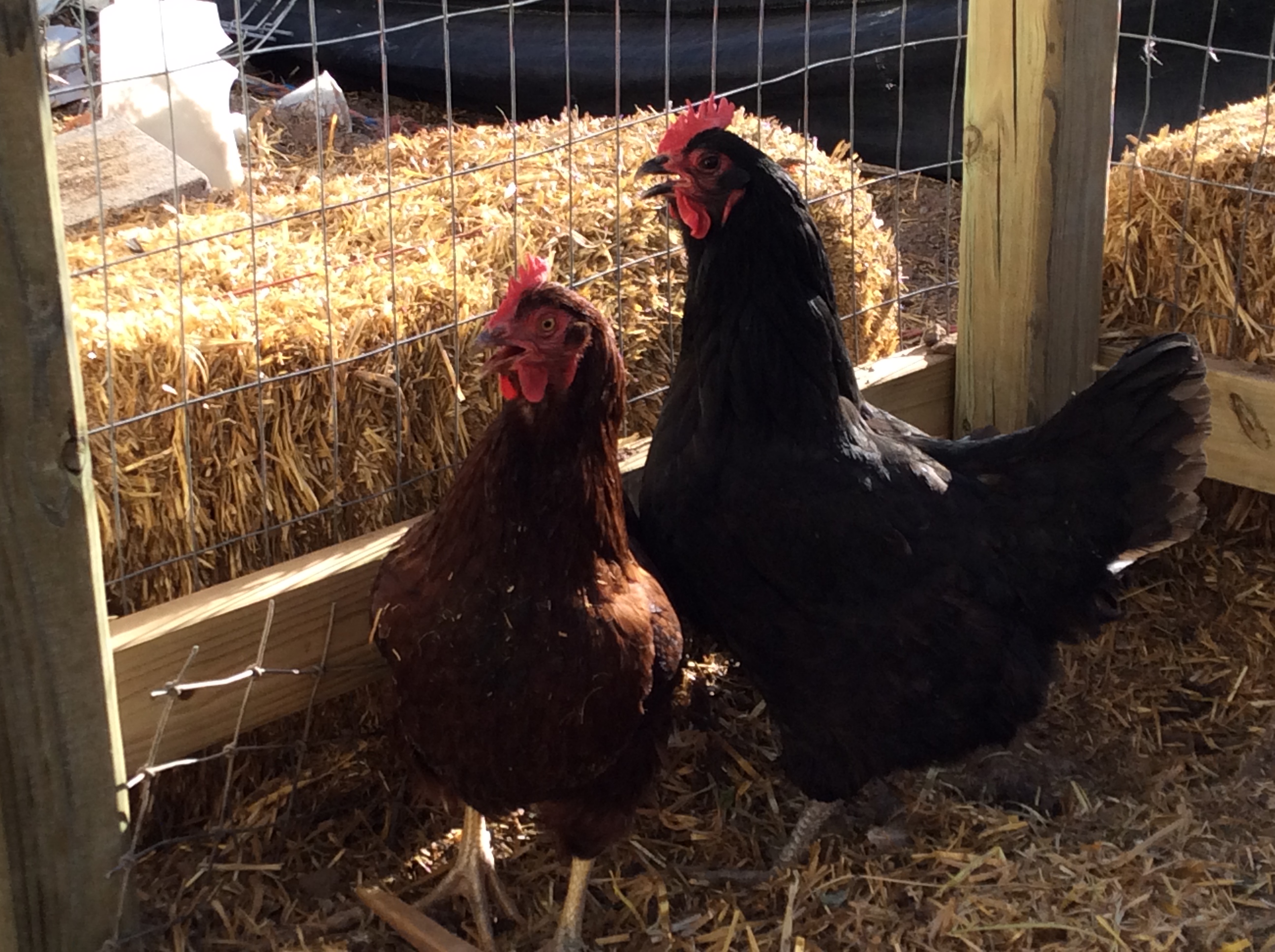
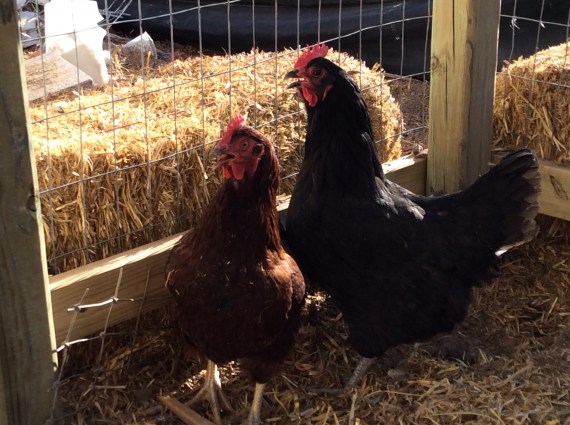
Chickens are your best friends when it comes to reducing waste. They will eat and relish greens in huge quantities, and will eat carrots, winter squash, and other chunky things if they’re cooked soft or ground in the Cuisinart. They love the residue out of the juicer, and will dispose of most of your table scraps if they are chopped finely. Personally I do not limit my chickens to a vegetarian diet because chickens are among the most profoundly omnivorous animals around, along with pigs and we ourselves. Any arguments that feeding them “garbage” is inhumane are absurd when said “garbage” was on my own plate and would have gone down my own gullet if my appetite had lasted a bit longer. They scratch over, poop on, and compost what they don’t eat, providing you with increased bounty down the road. I have read the argument that feeding them in this informal way malnourishes them, and can only reply that as long as extra calcium is supplied, my little flock shows admirable vigor and my hens lay industriously through age 4. A good laying pellet is available to them free-choice.
image

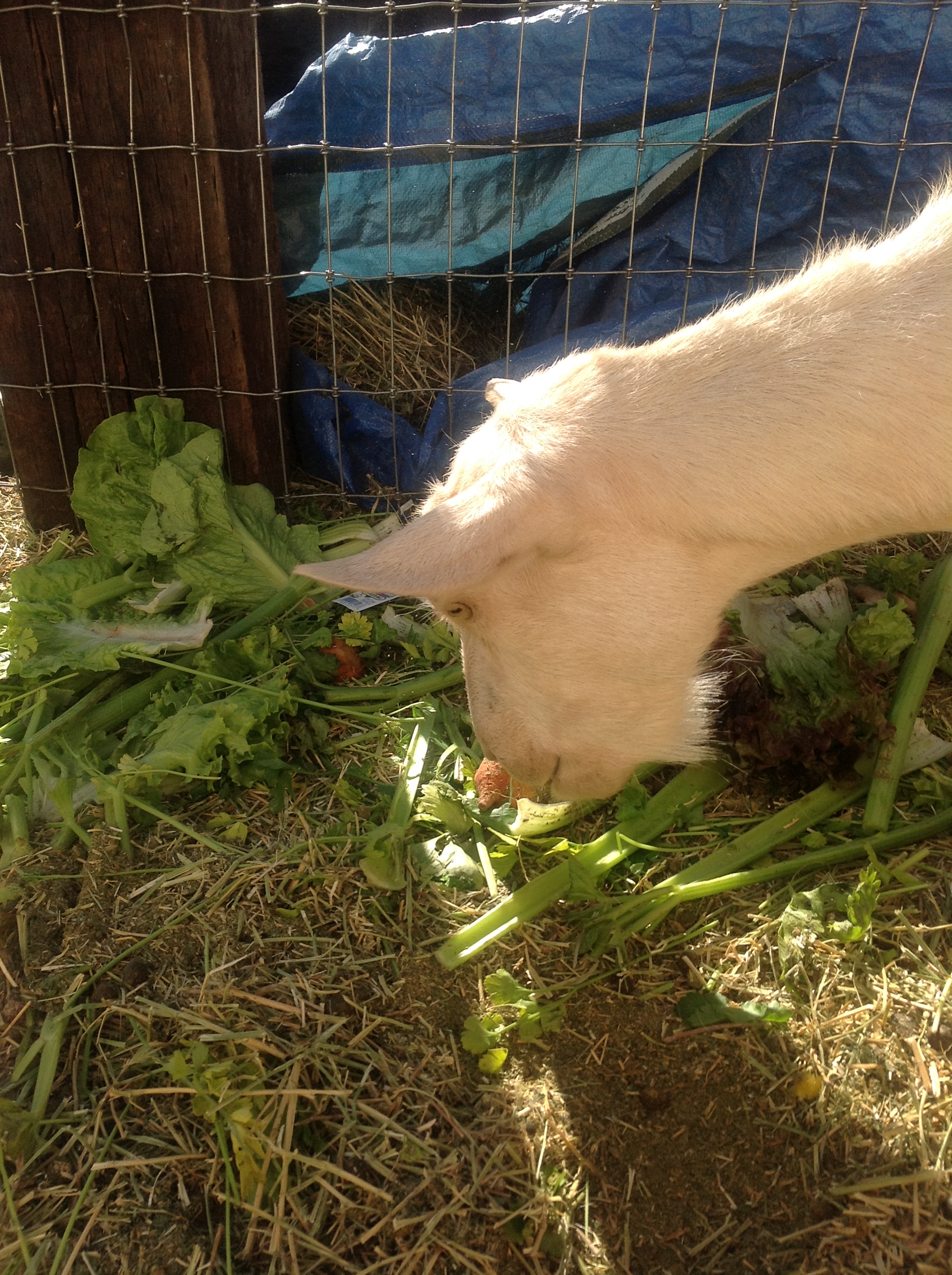
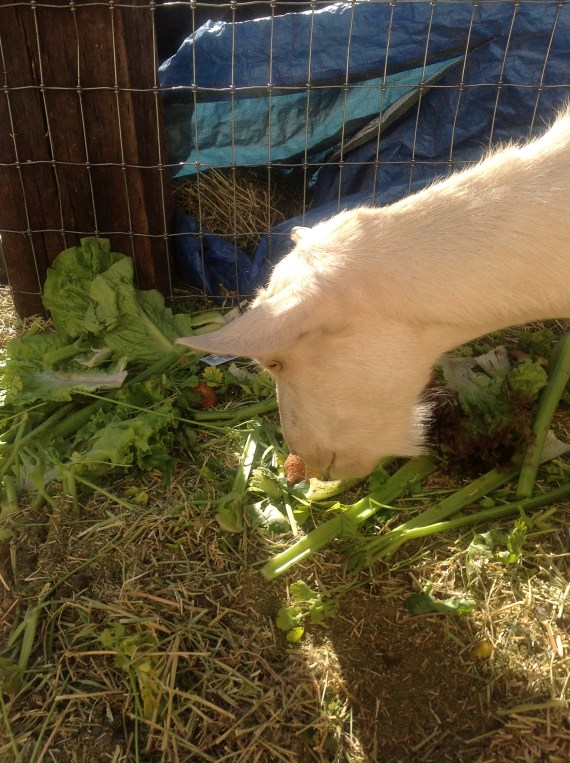
Goats occupy a different place in the waste-eating structure. Contrary to general belief they are fussy eaters and will nose at and play with anything but will only eat things that are choice in goat terms.  Goat treats include anything that’s woody and fresh, which is why you don’t keep them loose in your yard: all trees and shrubs will be killed in short order. It is also why they effortlessly absorb things that you have no other use for, such as rose prunings (unsprayed, of course.) My goat loves rose trimmings, corn stalks, carrots, pumpkins, celery and other things that the chickens have no use for, eats all my fruit tree trimmings and some excess fruit, gnaws every edible bit off broccoli stems and other large coarse plants that are otherwise hard to dispo, and will eat some large coarse weeds but only the ones that she personally selects. Amazingly, she rejects kale, lambs-quarters, and other things that I consider delicious. We do have a major trash tree in my area, the Siberian elm, and she adores them, so I cut down the ones that are growing where I don’t want them and leave the stumps in place, coppicing them for future goat food. She also eats a lot of expensive alfalfa, so believe me when I say that there is no such thing as a free goat. On the contrary.
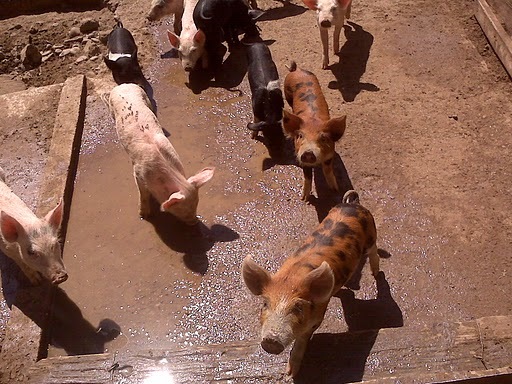
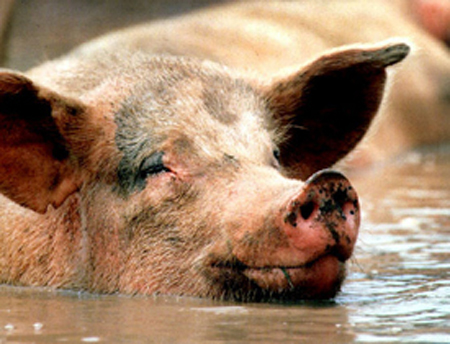
image image

Pigs are among my favorite animals, and throughout the third world they are prized for turning waste into human food.  I wish that I could recommend them for the urban homestead, but they smell too bad when kept in small areas and get too big. A full-grown hog of breeding age is practically the size of a dining room table but stronger and more determined. Urban Farm Online has a good brief summary of why  they don’t recommend pigs. I have heard it suggested that the much smaller Vietnamese pig might be good for urban bacon, but I don’t know anything about that and don’t know if anybody has tried it. If it could be made to work, it could be interesting.

I would not want any of the above to be taken as saying that you can feed animals free on household scraps. If you have animals, you can plan to spend plenty of money on feed. You will also spend time learning to care for them, and then attending to their daily needs. But they will utilize some garden and kitchen leavings and supply you with a nice end product.
 

More on Carrot Steaks

A few days ago I wrote at some length about purple carrots and you can find that post here.

Today I want to talk about the common orange carrot which I also grow, for its vivid color on winter plates as well as flavor and nutritional value.
image
I don’t grow the tiny baby carrots. My preference is for the immense Chanteney-style variety Autumn King. I plant them at some point in May and let them grow all summer. By late fall they have reached the proportions shown. They are very tender and flavorful as long as they get enough regular watering during the growing season. I store them for winter by doing exactly nothing. They stay right where they grew. This works because this variety is quite hardy and because I live in a relatively mild climate where the ground doesn’t freeze more than an inch or so deep, and I can break the frozen ground with a shovel when I want to harvest. Dig up at will, scrub, and eat. In colder climates further protection would have to be given. I would experiment with putting straw bales a layer or two deep over and around the carrot bed rather than fuss with a root cellar. Readers in colder climates, please let us know what methods you like
image
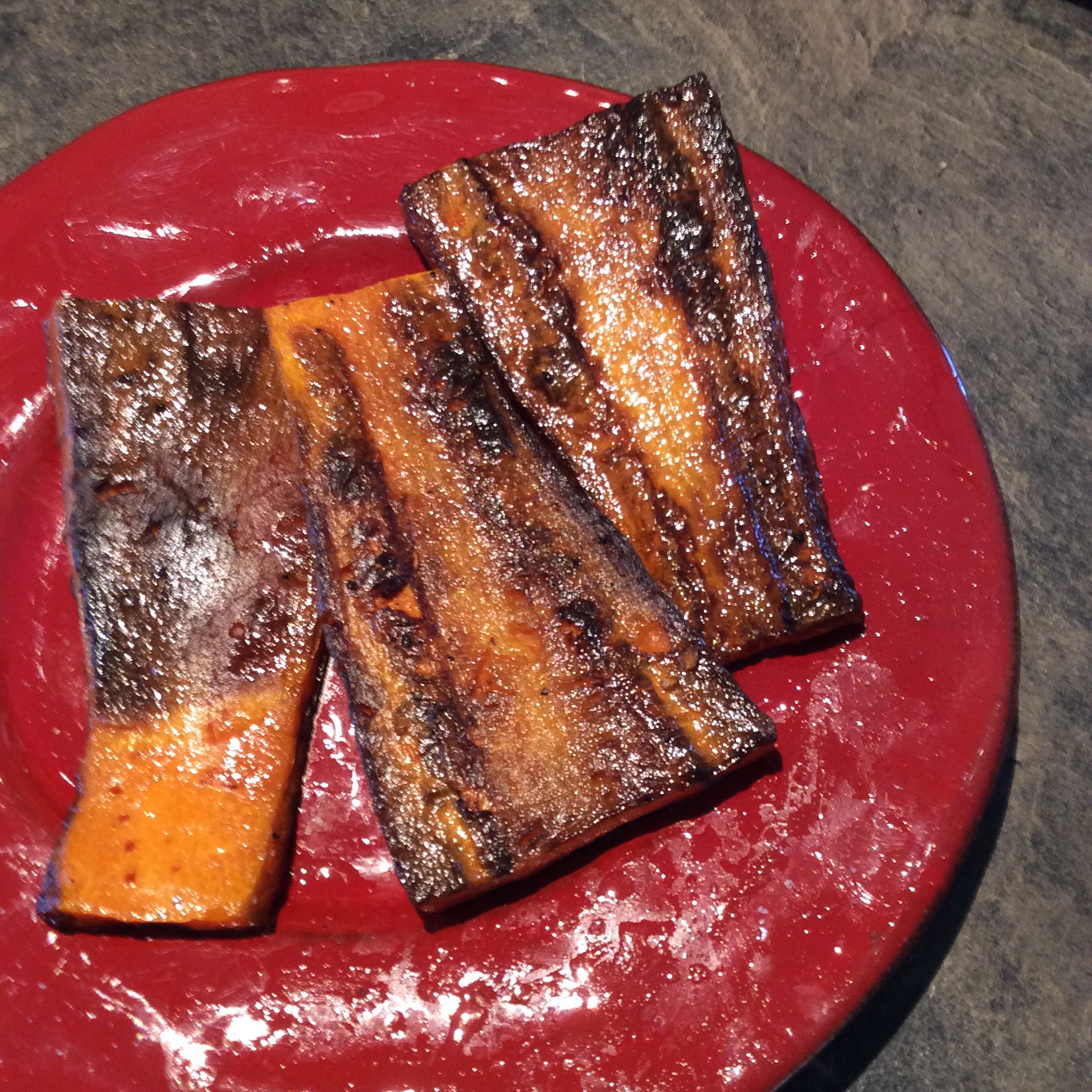
For cooking, I’m very fond of the carrot steak method that I wrote about yesterday as well as other, more conventional methods. The immense Autumn King can be sliced into carrot steaks that are about the size of  porterhouses. They can be seasoned in a lot of different ways. My default seasoning is olive oil and salt for the grilling or pan-grilling, then a glaze of thyme butter before eating.  It has recently occurred to me, though, that Carrot Steak Tandoori could be really wonderful. The only carrot dishes that I really dislike are those that are sweetened. Carrots are loaded with natural sugar and don’t need any added. Just let them shine.

If there are leftovers, carrot steaks are wonderful brought to room temperature, sliced into julienne, and dressed with a good vinaigrette.

I have often read that carrots left in the ground become woody. I have found this to be true only if they are left there until they resprout in the spring. So any carrots that are left when new tall green fronds start to emerge go to my goat and not to my kitchen. She couldn’t be happier. If you are goatless, chickens will scarf up carrots if they are chopped up finely in the Cuisinart. A carrot is also a necessary ingredient in the broth pot and woody cores don’t matter in that context.