Archive for the ‘front yard gardening’ Category

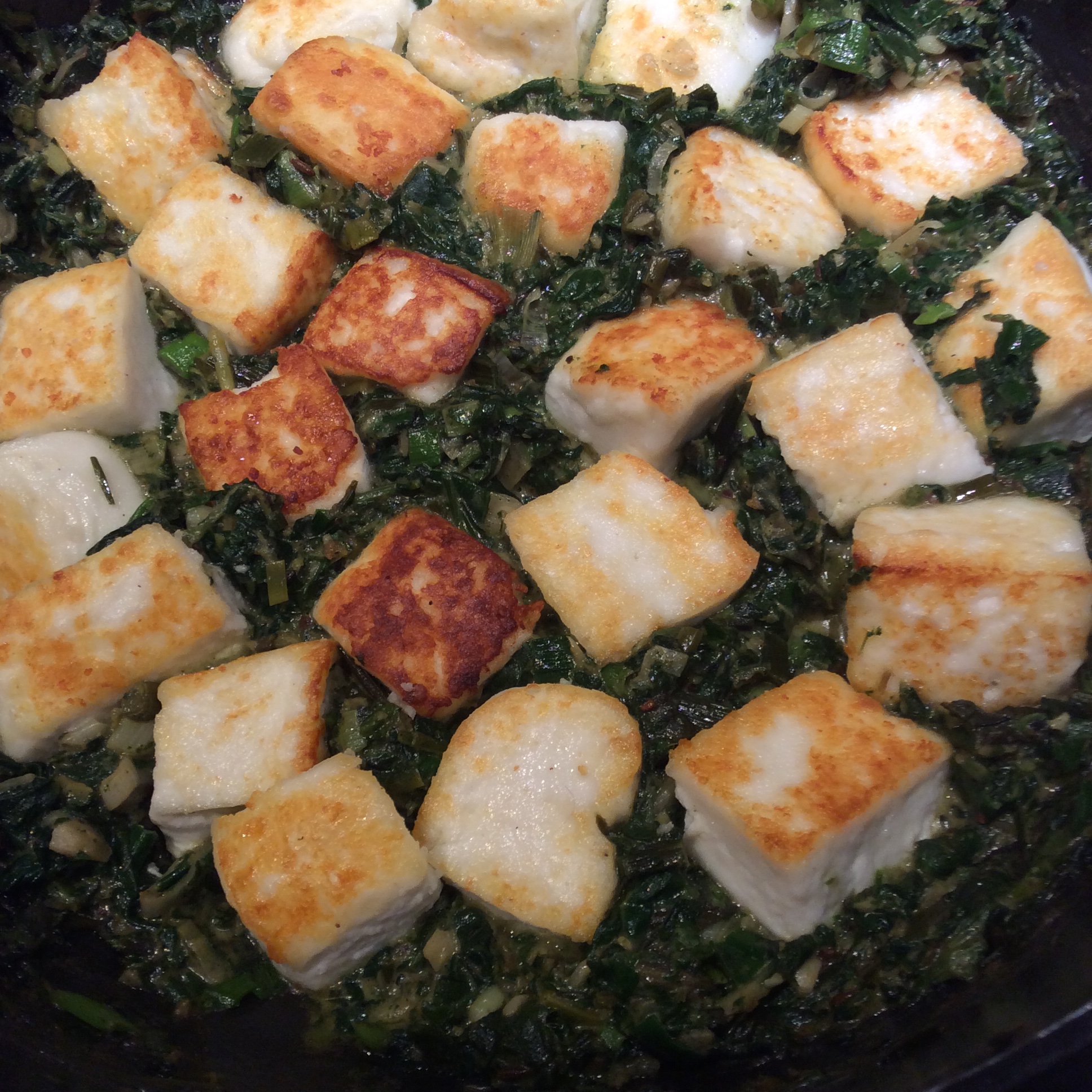
Perennial Saag Paneer


Yesterday I wrote about making Paneer with my grass-fed goat milk. Today I’ll talk about making saag paneer, one of my favorite dishes, and for a permaculture twist I’ll make it with perennials as much as possible. If you don’t have a weed patch, you can use a bunch of spinach. You will also need fresh ginger, cumin seeds, garam masala, heavy cream, and butter.
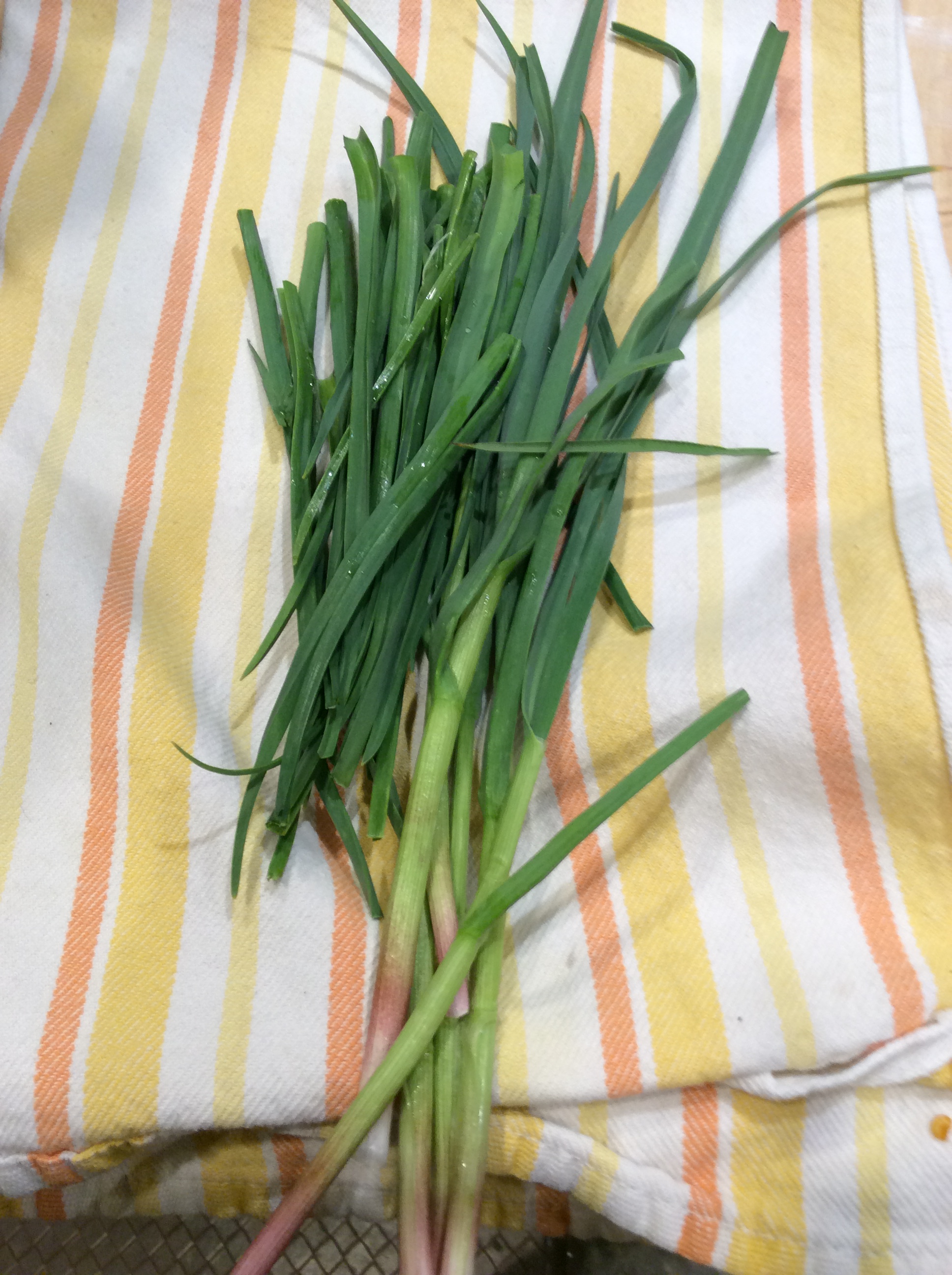
Assuming that you have the paneer, the next step is to catch your greens and alliums. I used equal parts each of nettles and bladder campion, and 4 stalks each of green garlic and perennial Welsh onions. The nettles and bladder campion were blanched for about 90 seconds so that the nettles could be handled easily, then drained, pressed, and chopped. The alliums were cleaned, trimmed, and sliced in 1/4″ cross section.

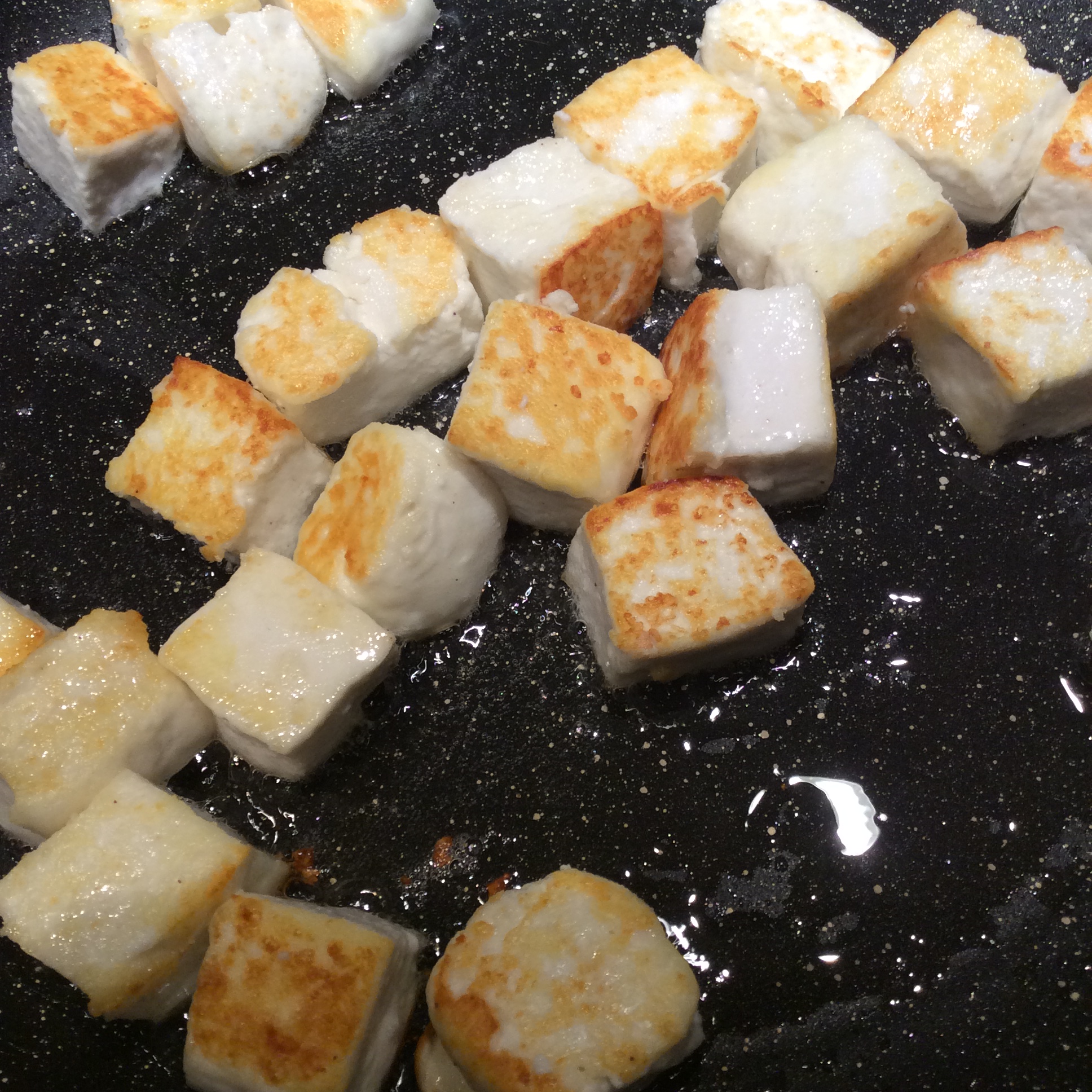
When ready to cook, heat a nonstick skillet, cut the paneer in 1″ cubes and salt it, and fry in mild oil of your choice (I like Macadamia nut oil) until browned. Set aside.

Chop a piece of fresh ginger about an inch square finely, and have ready a teaspoon of whole cumin seed and a heaping teaspoon of garam masala.
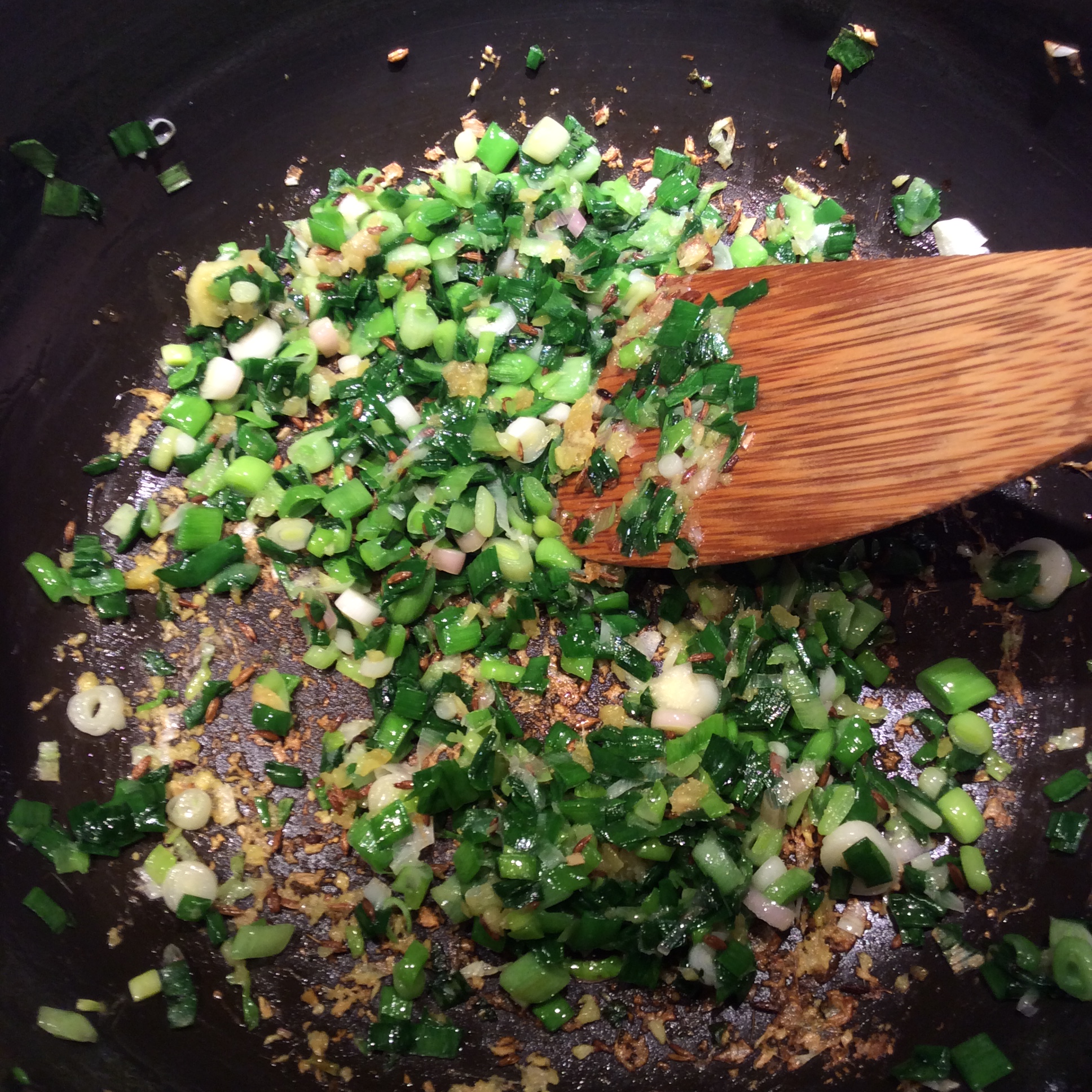
Heat a saucepan, put in a couple of tablespoons of mild oil, and fry the cumin seeds briefly until they darken a couple of shades. Immediately add the chopped ginger, stirfry furiously until it is cooked but not browned, and add the chopped alliums and lower the heat to medium-low. Add a half teaspoon of salt and sauté the alliums until they are softened, lowering the heat if necessary to keep them from burning. Add the garam masala, cook another minute or two, and add the cream. Add the blanched chopped greens and cook over low heat until they are thoroughly cooked, probably about another 10 minutes. Put the paneer cubes on top, pushing them into the greens mixture a bit, and cook over low heat until they are heated through. Serve with rice or, if you are a low carb eater, gloriously naked on the plate. Drizzle some melted butter or ghee over the top.
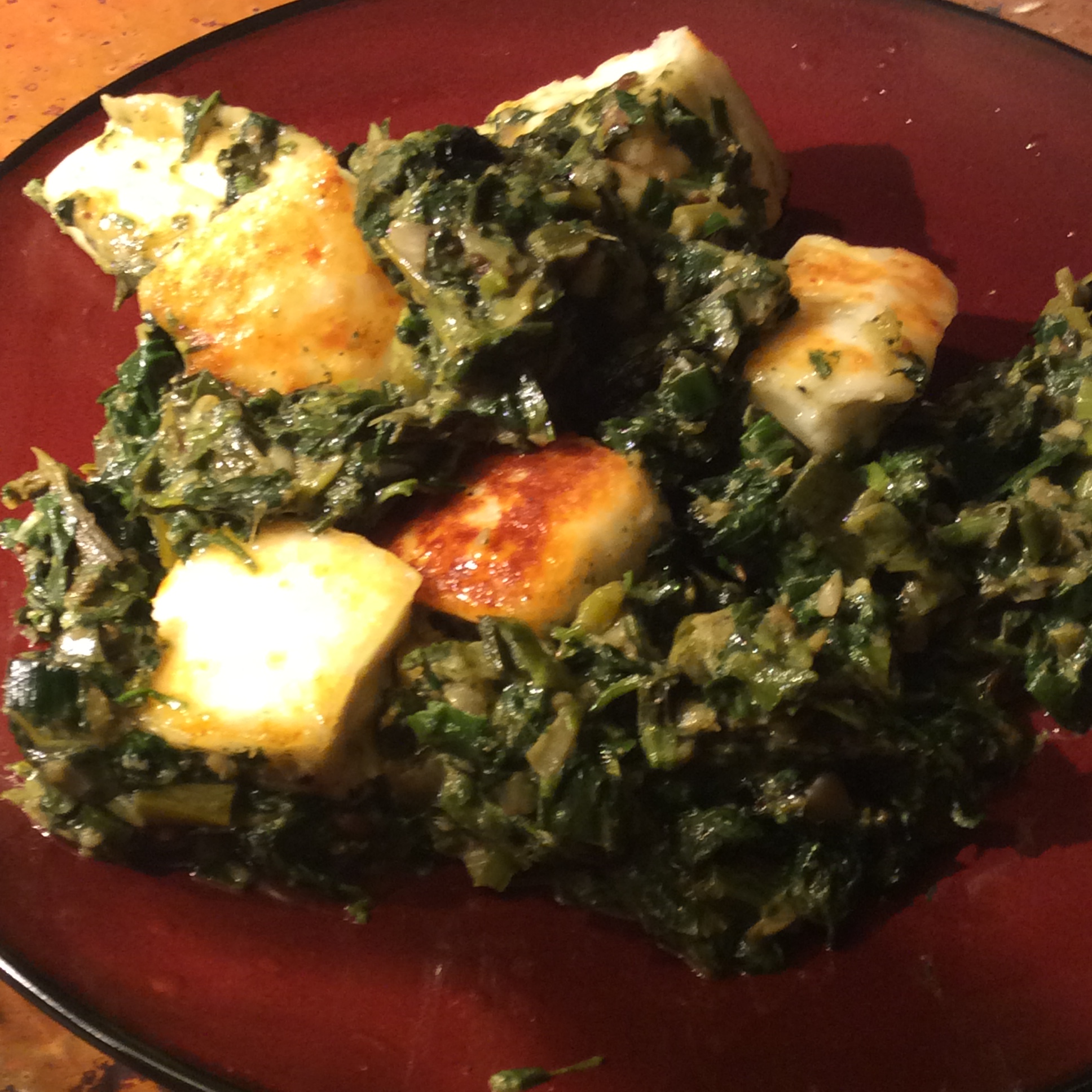
I was taught to make this dish a few decades ago by an Indian woman in Manhattan, and I am pretty flexible about the greens used as long as they’re mild. No bitter green has a place in this dish. The green garlic and onions are great in season, but chopped garlic and onion are traditional.  I’m very rigid about the seasoning, though. Sometimes I add a chopped hot pepper but that’s my only variation. The whole cumin seeds fried quickly in hot oil are not negotiable, and burning or scorching any of the seasonings or alliums  means you need to start over, so work carefully.
Flowers of Spring

img_5258

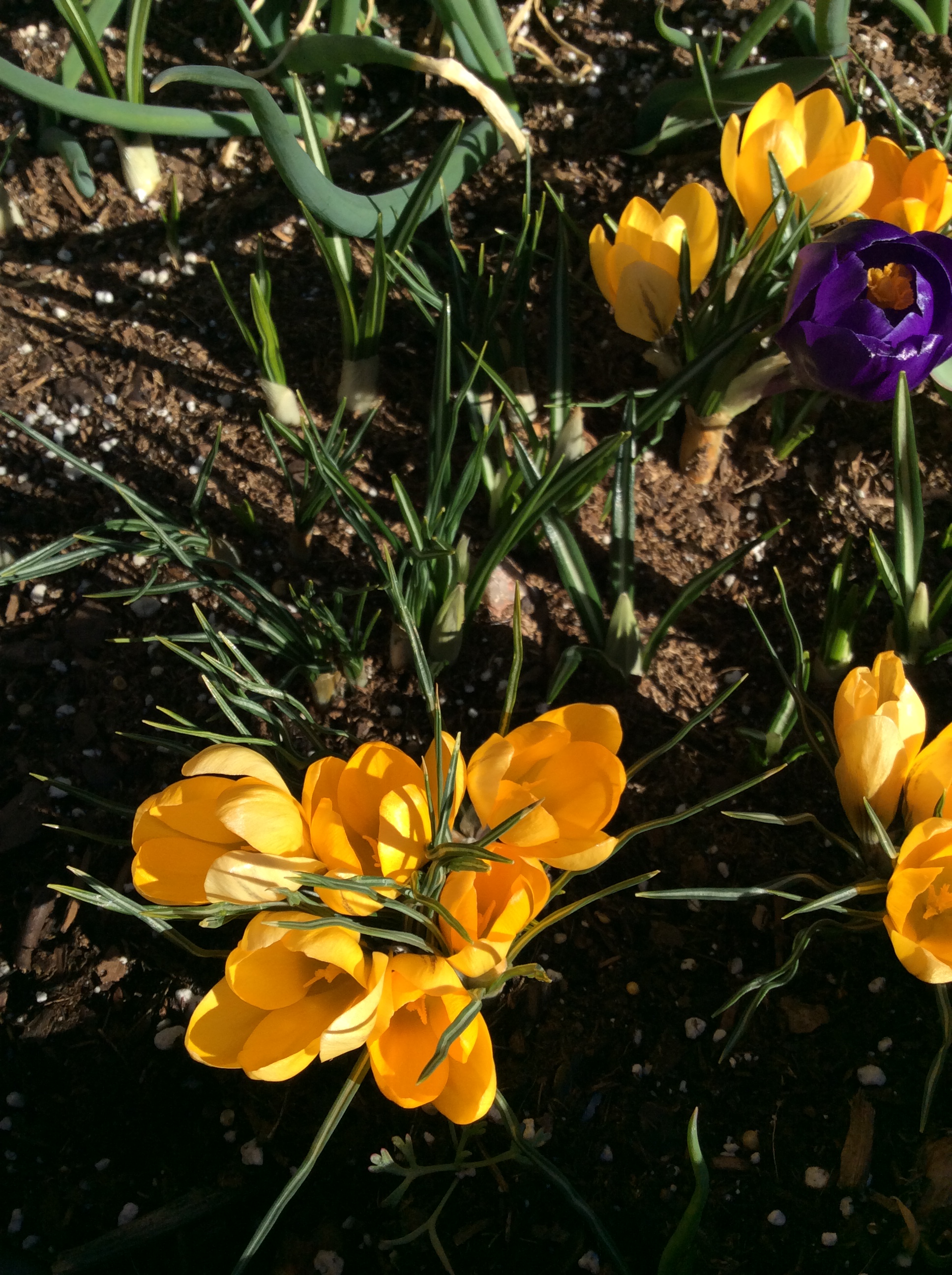
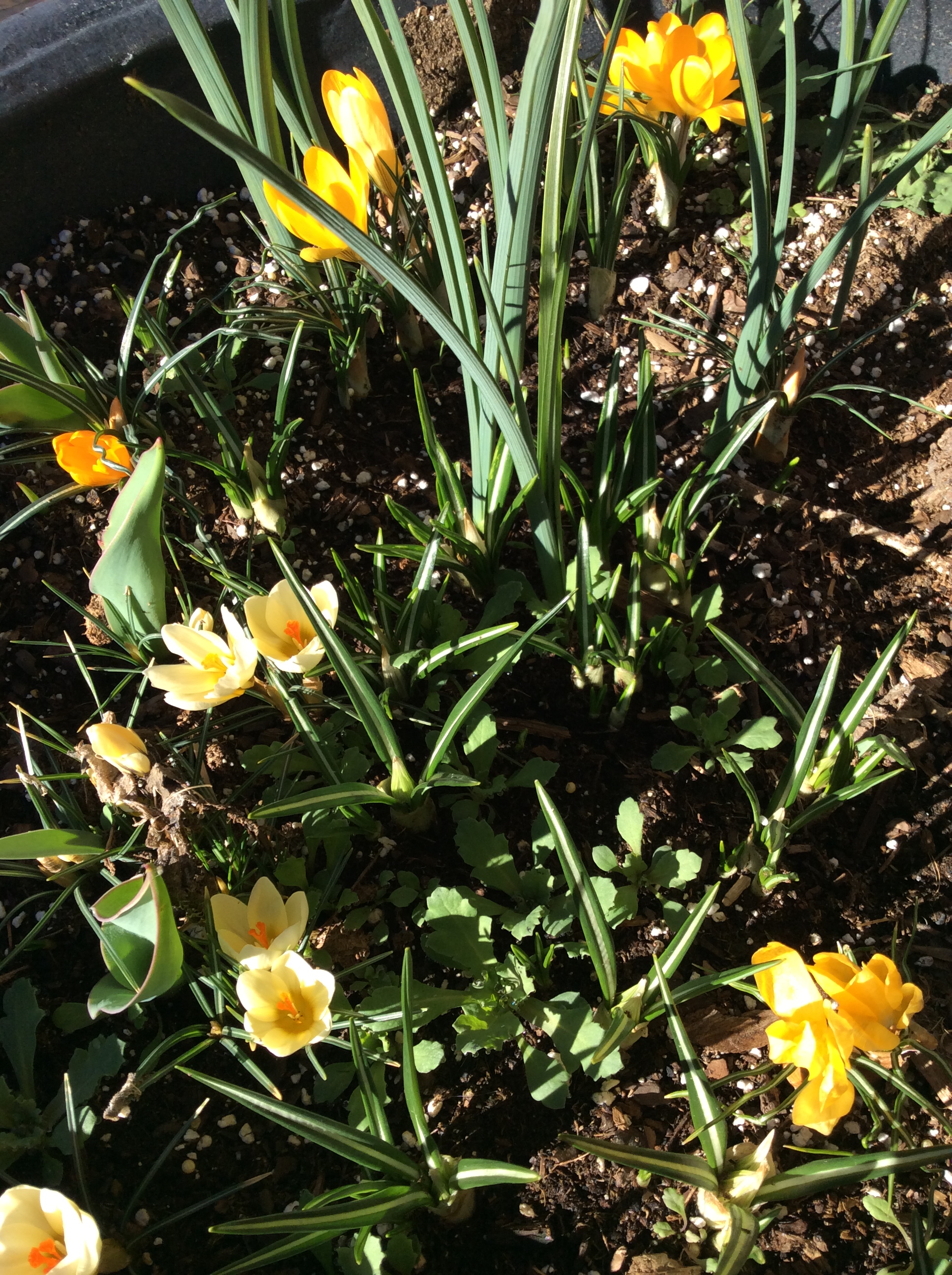
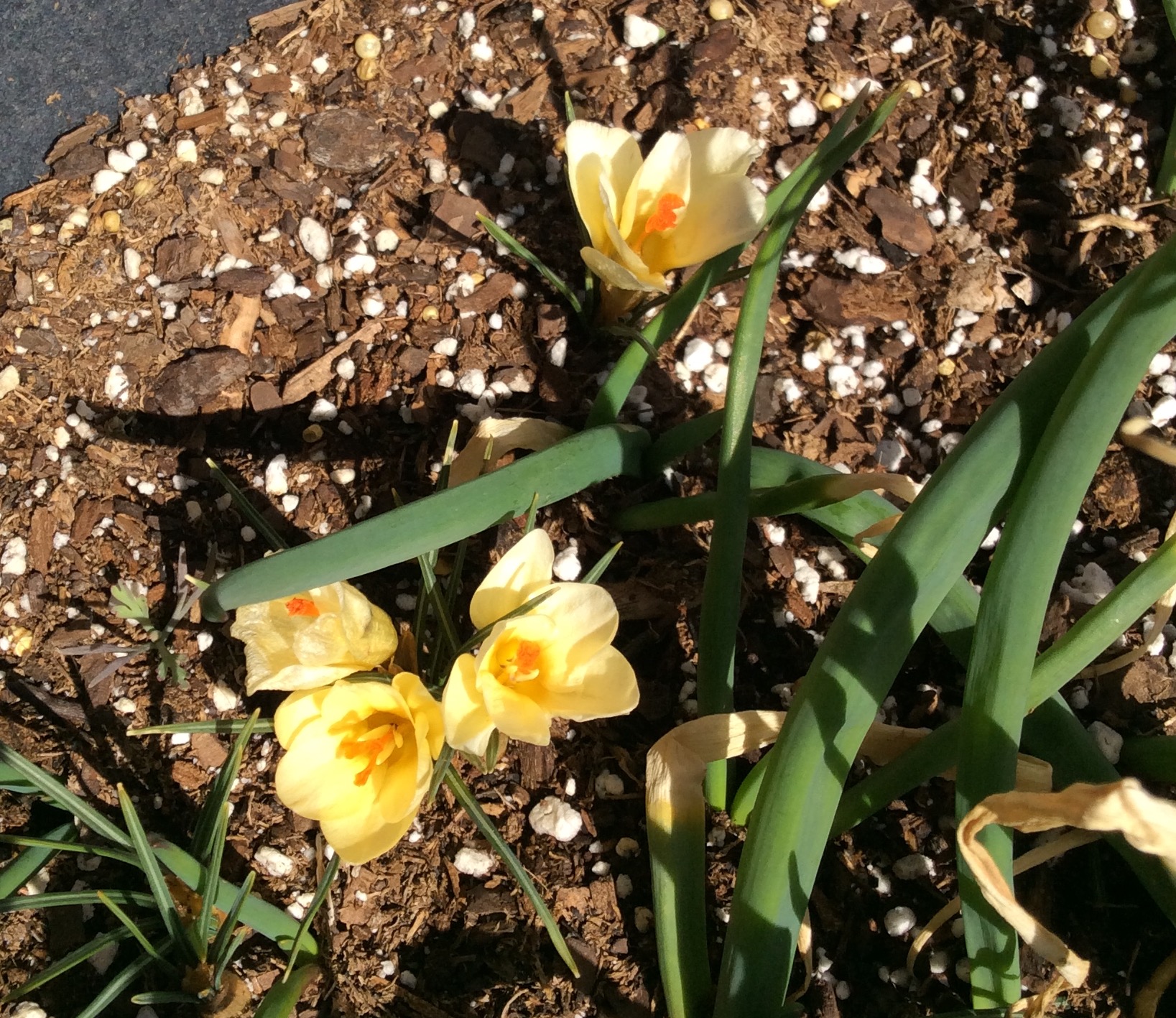
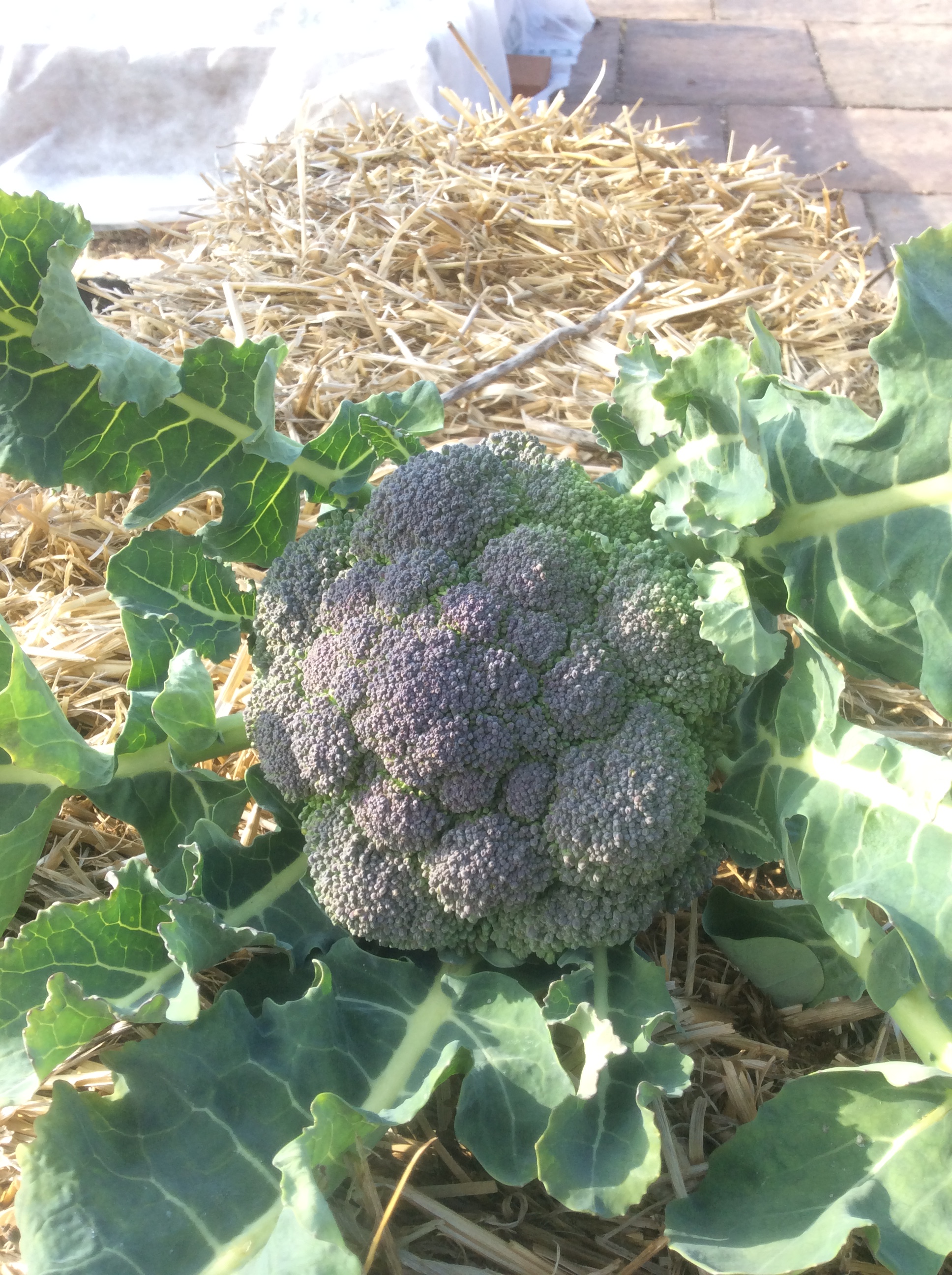
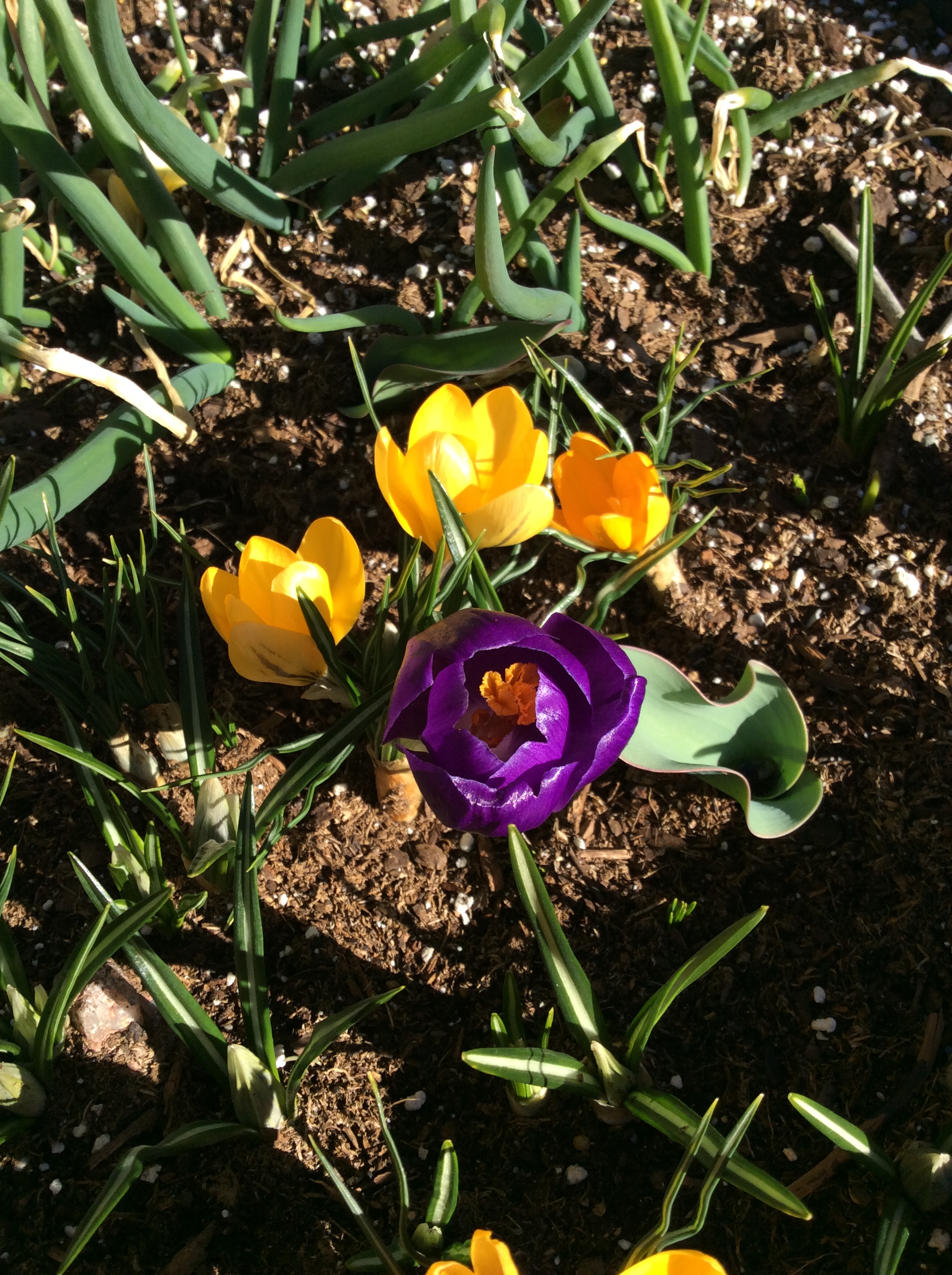
This year, for the first time, the blooming crocuses were not the first exciting gardening event of spring. Thanks to experiments with Agribon frost blanket, I started harvesting huge beautiful heads of broccoli in January. But the crocuses are still very exciting. Their rich intense stained-glass hues seem almost defiant on a winter day, and in morning sun they are a reassurance that you made it through another winter and it was all worth it. Last fall I finally remembered to buy enough of them to plant the big black pots on the sheltered east side of my house, and here they are blooming happily in mid February.
Even if you are mostly a food gardener, as I am, don’t forget to plant a few things that brighten your property and gladden your heart. I call it endorphin farming.  These early minor joys draw you outside in any scrap of pretty weather, and cause you to notice that green onions are sprouting, new shoots of fennel and tarragon and peas can be seen, fruit tree buds are swelling, and yes, the coming season will be beautiful and worth working for.

I remember some garden writer who moved to the Pacific Northwest writing about asking his new neighbor what he needed to know about winter gardening in Seattle, and the neighbor looked at him and replied bleakly “Prozac.” A few crocuses are a lot less expensive than a season’s worth of antidepressants, and have no side effects whatsoever.
img_5257

img_5255

img_5244

Spring Alliums

img_5237

One of the many reasons that I love green garlic and green alliums generally is that they are among the earliest things to come out of the garden, assuming that you planted in early fall. I have plenty of summer veggies in my freezer, but as the days start to lengthen I get ravenously keen for the first real, fresh greens, and by mid-February I’m eating out of the garden again.

For early green alliums, plant some in a block that you can cover with Agribon or other frost blanket material. I like to put a short row of my regular yellow storage onions in this block in September, and each will divide and make four or five superbly sweet green onions in early spring.

Garlic is another must, and my favorite for early green garlic is Chinese Pink, because it is super-early and is eight inches tall and half an inch in diameter by mid-February if frost protection is used. Plant your early block with the cloves about three inches apart each way. When I’m ready for green garlic I pull alternate stalks, and leave the rest 6″ apart to mature for my earliest garlic bulb harvest.

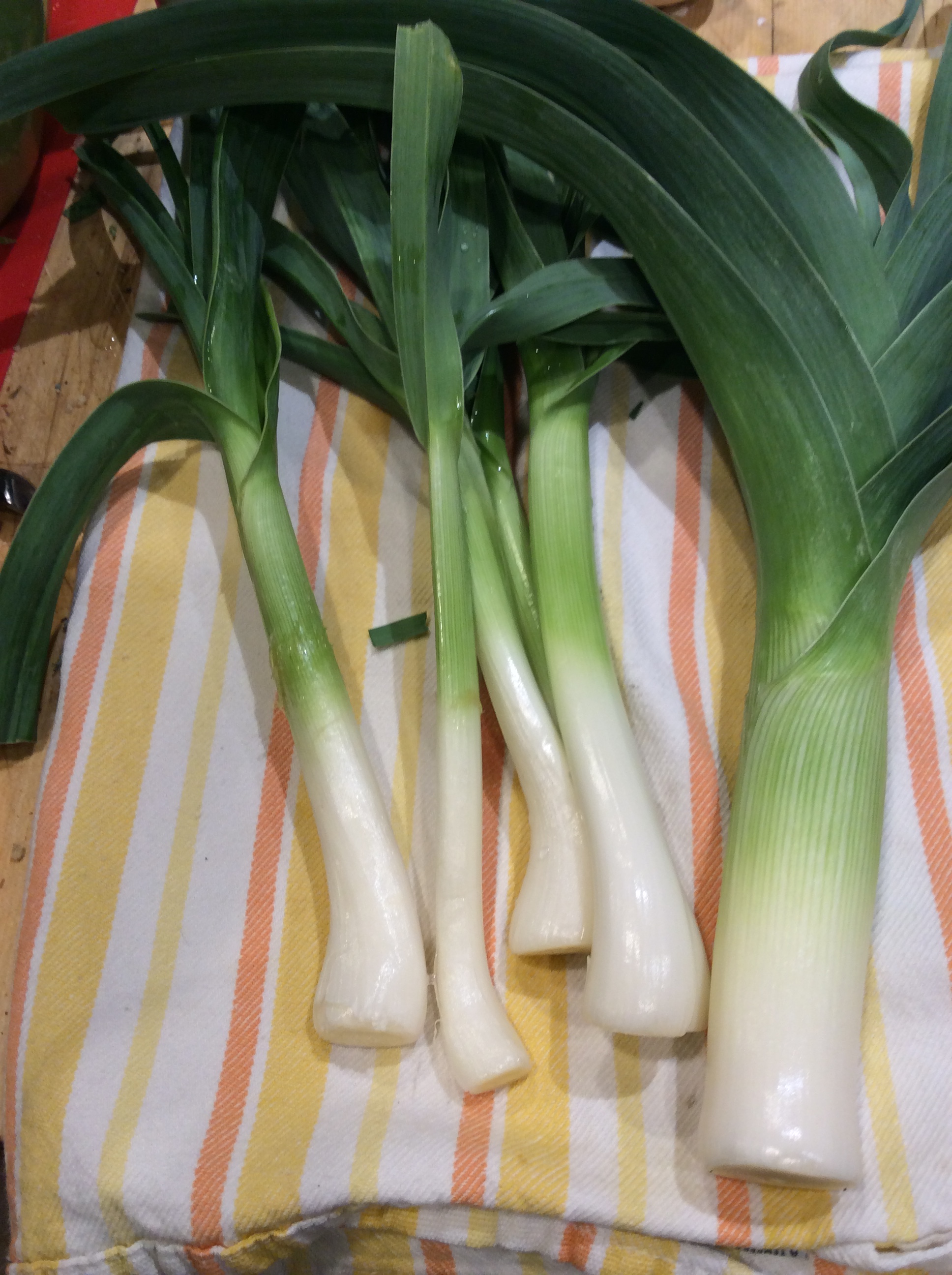
In the case of leeks, there isn’t even any need to replant in fall. Plant extra in spring, cover with frost blanket in late fall, and they will winter over nicely for February eating.

Contrary to much popular advice, I don’t suggest that you even think about cutting the green leaves off and discarding them. They are delicious. They are also the healthiest part of the plant, full of the antioxidant allicin which has multiple health benefits. Do cut them in fine cross-sections, about a quarter inch long, to  eliminate  any possible stringiness  in the leaves.

image

I love a good assortment of green alliums chopped up and sautéed in butter with salt to taste until they are succulent and sweet. Keep the heat medium-low and let them cook at least twenty minutes for best flavor. I eat them as a side dish, but they would also be great on slices of crisp baguette, in an omelette, over scrambled eggs or rice,  on a broiled fish fillet, or nearly any other way that you can imagine.

img_5236

Two years ago I stuck some garlic cloves in a flower bed planning to harvest them for green garlic, but forgot all about them in spring. After two growing seasons they’ve divided so much that the leaves are as fine as grass. I’ve started harvesting the tops and chopping them finely to use as a fresh seasoning. They have a stronger but cleaner flavor than garlic chives. I love them over egg salad, green salad, broiled or grilled meats, on soup, or anywhere that you might crave a hit of freshness and garlic. They give some distinction to a regular or low-carb pizza.

The January Garden

img_5178

Here in agricultural zone 7 we have a fairly short winter, and I have never gone in for winter gardening.  I don’t have a greenhouse, for the simple reason that I have never been able to make up my mind what kind to get or where to put one. By late fall I have a freezer full of summer food, and I spend the long nights by the woodstove, catching up  on my reading and deciding what to try next.

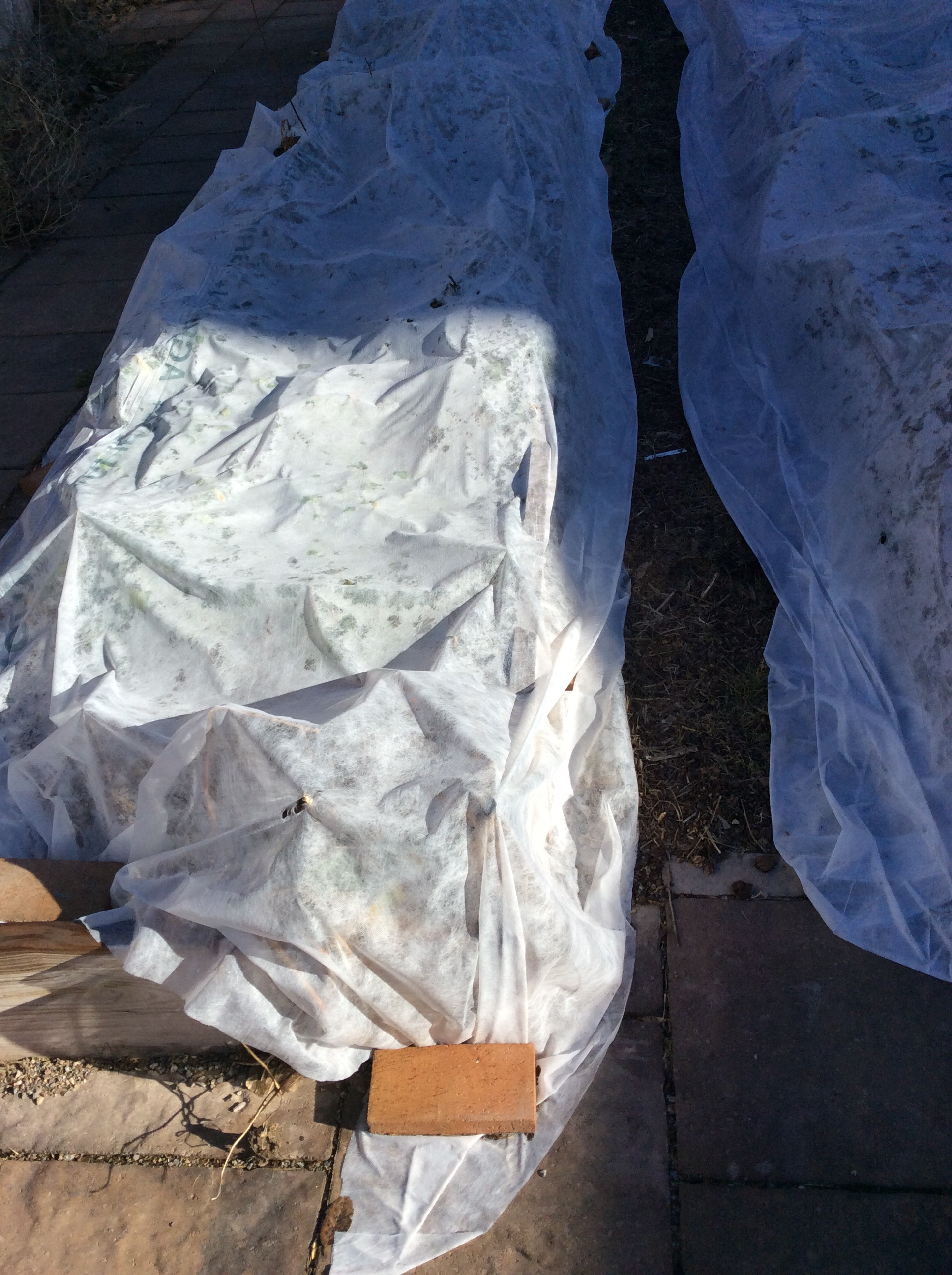
This year, though, I decided to try some very low-tech strategies to prolong my season.  This came about largely because in September I happened to visit a local nursery for supplies and saw a single lonely six pack of young broccoli plants going begging.  It seemed a shame to let them become trash, so I brought them home and planted them with the vague idea that they might winter over. After a little more thought, I ordered  a roll of Agribon-19 plant protection fabric, a lightweight nonwoven fabric that conveys about 2 degrees of frost protection.  It is 13 feet wide and comes folded double, so I put a double layer over the 10′ row of little plants and held it down with stones and bricks around the edges. I did not use hoops or any other kind of support, just left plenty of room for the little plants to grow. (Please note that you cannot do this with tomatoes, peppers, and other plants that have a “growing point” at the top of the plant. In those cases you have to support the fabric and keep it off the growing tip. But the majority of cold-weather garden plants do just fine this way. )  I watered periodically, but did not pay any other attention to the plants until I noticed small heads of broccoli forming. Then I  started checking more regularly. Naturally, because of the cold, the plants grew more slowly and the heads formed more slowly than they would in warm temperatures. This was an advantage.  I found that the heads would hold for up to a week before harvesting with no loss of quality.

The heads were unusually tender and sweet. I liked them best just steamed with a little butter or olive oil and salt. Not every plant produced well. Two of the six plants began to form heads, then the infant head “browned out” and died, although the rest of the plant looked healthy.  I am not sure if this was a disease or what it was, and hope that maybe one of my knowledgeable readers can clue me in.  But I harvested four beautiful heads, and they are continuing to form healthy side shoots, including the two plants that did not form heads.  Not a bad return for my minimal effort, with an investment of $2.99 for plants and about $10 worth of frost protection fabric which can be reused.

Two weeks ago, after the encouraging broccoli results, I planted three beds of salad greens, cooking greens, and more broccoli. Two beds are covered with a single layer of the lightweight Agribon-19 and the other with the much heavier Agribon-70, which gives about 8 degrees of frost protection but lets less light through. So far, all the beds have germinated well. I will be reporting on results. I still want a greenhouse, but this is looking good as a cheap way to keep fresh food on the table.

Good candidates for  growing this way are lettuces of all kinds, chicory, practically everything in the brassica family including broccoli, kale, and collards, arugula, green onions, green garlic,  and who knows what all else.  One of the beds that I covered is one where I have let edible weeds go to seed in the past, so I will watch with interest to see if I get an early crop of those too.  I have planted some snow peas undercover as well, to see if I get a substantially earlier crop this way.  In my climate we have a lot of wind storms in the spring, and just giving some protection from wind might speed them along.

image

This picture is a cautionary tale: you can see here that before using the lighter cloth, you do need to cut away any old stems etc. that are sticking up, since they can tear the fabric.

Also, because of the decreased light transmission, the plants growing under fabric are essentially hothouse plants and will have to be hardened off to full sun gradually in the spring.  I speculate that the more bitter greens such as dandelion would be tastier and less bitter when grown this way, but don’t know for sure yet.  I am greatly looking forward to finding out.