Archive for the ‘cooking’ Category

My Southeast Asian Summer: Turmeric

_Media Card_BlackBerry_pictures_IMG00146

      Turmeric and its constituent components the curcuminoids, a complex of antioxidant and anti-inflammatory compounds, are getting attention and medical research dollars these days. But this blog is not about disease treatment or medical research, it’s about healthy and delicious food, and turmeric is here for its culinary qualities.  Both the roots and the leaves are a common seasoning in many parts of southeast Asia, and the leaves are impossible to buy in this area, which led to my experiments in growing them. It’s a tropical and needs to be brought indoors when the nights start to cool off, and during the summer it needs light shade and plenty of moisture. Initially I bought plants from an herb supplier, but since then have done better with plants I started at home.

       You need some roots from the store to get started. Put them on top of a pot of good organic potting soil and press them into the soil. Put in a warm place (a seed-starting warming mat will really speed things up,) keep moist, and within a month you’ll see small buds growing off the roots. In another month or so, you’ll have turmeric leaves to use.  It will prosper in a sunny window over the winter, but does best if it can go outdoors in the summer. Remember, part shade is important.

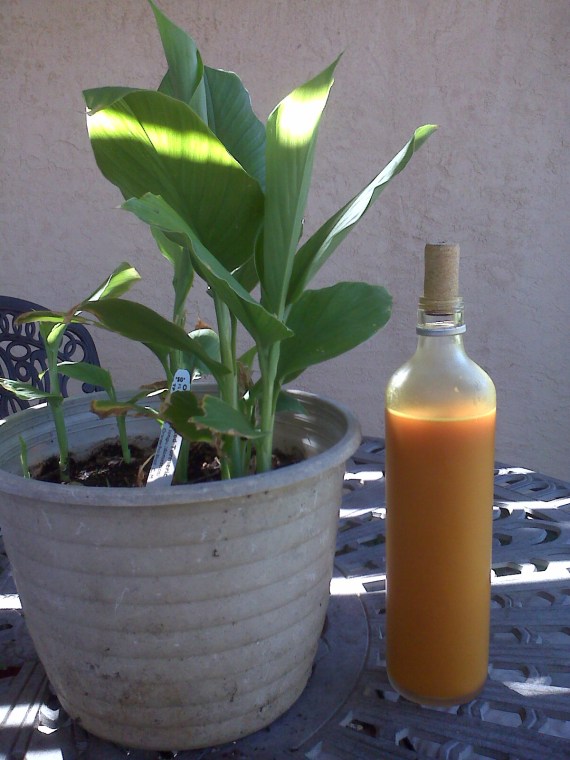
     To begin with the root, it can be grown in a pot but you are unlikely to get enough to use it freely. I don’t recommend the dried powder for most applications; to my palate if lacks the fresh vibrancy of the fresh root. I advise buying organic root, and you can often find it among the other fresh vegetables at La Montanita Co-op. Ask the produce manager if you don’t see it. It’s used in a lot of the seasoning pastes that I make for my southeast Asian cooking, so you’ll notice it in several of the recipes on this blog (use the search function to find them). But one of my favorite ways to use it is as a brilliant yellow-orange “juice” concentrate which I keep in a corked bottle in the refrigerator and add to water to make “sun juice.” The color alone is irresistible and cheers me up just to look at it.

     The leaves are large, glossy and handsome, and look attractive when the pot is brought indoors for the winter, but remember that any plant you’re always snipping at for kitchen use won’t look great for long. When cut they smell very like a fresh, sweet carrot, and I love to season carrots with them. Clich the link below the picture for recipes.
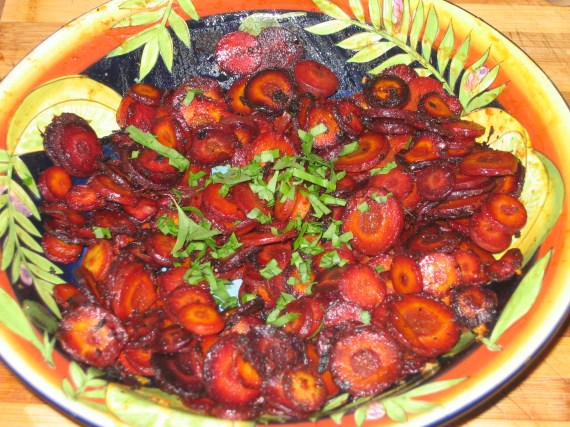
august 09 007

Click here for recipes! Continue reading
The Joys of Summer: fruit crumbles

september 2009 004
The stands at the farmers’ markets are full of fruit right now, and after you’ve eaten all that you can eat raw, it’s fun to make a special dessert here and there. This one is delicious, healthy as desserts go, and nearly as easy as eating the fruit raw.
Currently I’m experimenting with chia seeds in cooking and have found that, unlike many whole grains, they can actually taste good in desserts. I use them lightly toasted, and they add a pleasant nutty flavor as well as an extra nutritional punch to many dishes. Please see the end of this post for directions on toasting them.
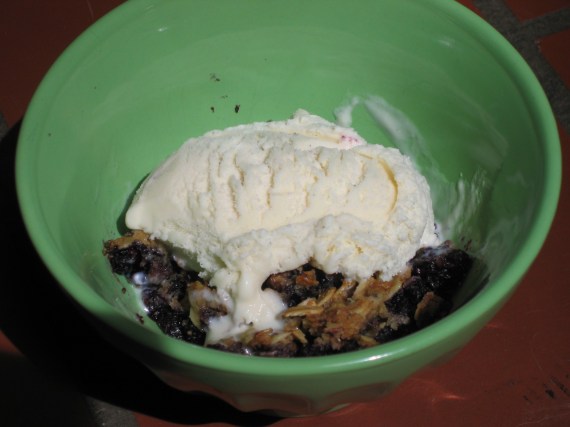
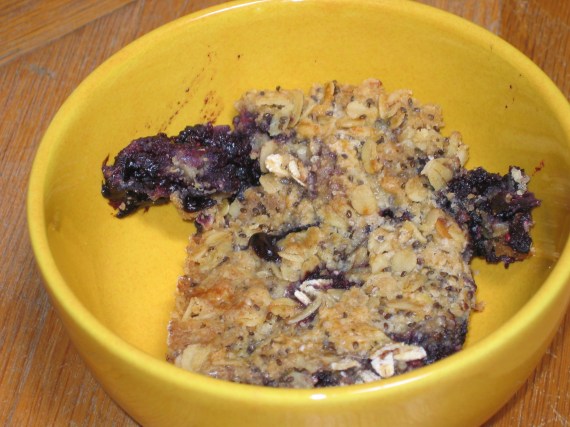
This crumble is good with nearly any fruit. Apples, berries of all kinds, plums (especially the dry-fleshed prune plums that are showing up in the farmers’ markets right now)and figs are all successful. Click the link below the next photo to get the recipe. This photo shows a hot serving hidden under organic vanilla ice cream. After all, summer doesn’t last forever.
september 2009 002
Clich here for the recipe Continue reading

More vegetable-centered meals

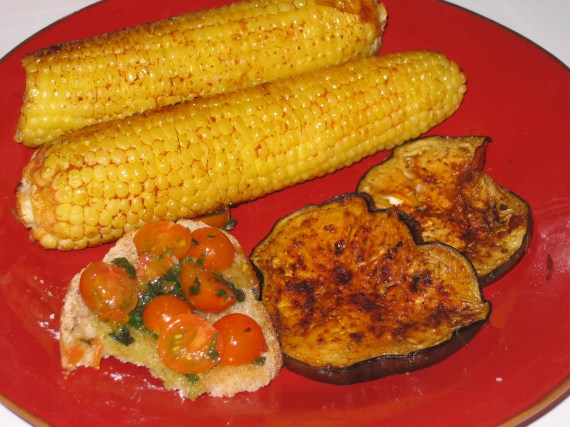
july 2009 012
This time of year, vegetables are abundant and make up the bulk of our diet. Recently I wanted to put together a meal cooked on the grill using only vegetables that can easily be found at the farmers’ market. The kitchen stays cool, and people who don’t have a garden aren’t left out. If you need to accomodate vegetarians and vegans at your table, this meal can have everyone at your table happily eating the same thing, with no need for special plates.

The only remotely exotic seasonings that you’ll need are Spanish smoked paprika, readily available as Pimenton de Vera at The Spanish Table and other specialty grocers, and some capers, preferably the kind preserved in salt.
Click here for the recipe Continue reading

Kitchen staples: granola with chia seeds

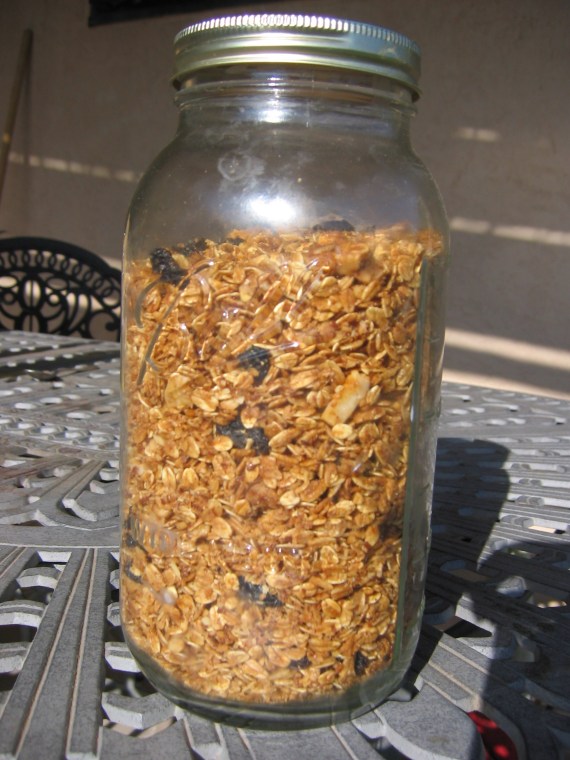
may 2009 032

Kitchen experimentation is a lot of fun, but early in the morning on a busy workday I don’t feel very experimental. I want something comfortable and familiar, quick to prepare, healthy, and tasty. Oh yes, and I also want it to keep me feeling good all morning, not just give me a sugar rush to get me out the door.

       My homemade granola fits the bill perfectly. It offers whole grains, fruit, nuts, lots of fiber and antioxidants, and good flavor. If you eat it with yogurt, as I do, you get a good dose of healthy bacteria too. One easy kitchen job every 3-4 weeks keeps two people supplied with good breakfasts, plus an occasional handful out of the jar as a snack.

     I use agave nectar as the sweetener due to its low glycemic index and good flavor. I used to use vegetable oil but now use a light-flavored olive oil. This is a great vehicle for chia seeds, too. If you’ve read Christopher McDougle’s interesting new book Born to Run, you know about how the Tarahumara tribe uses chia seeds as an energy source. Personally, I won’t eat anything just because it’s good for me; it also has to taste good. In this recipe, chia seeds taste good.

Click here for the recipe! Continue reading