Archive for the ‘Cook’s treat’ Category

The Cook’s Treat: Lambs-quarters

image image

I am the cook in our household, and one of the reasons that I love my kitchen work is that I can have cook’s treats, little experimental dishes that I cook up while working on something else and eat standing up in the kitchen. They are something like impromptu tapas for one.

Recently I was preparing large quantities of tender lambs-quarters tips for the freezer, and began to speculate about how a handful of the tops could be turned into a cook’s treat. I have been very happy with some recent experiments that involved pan-frying hops shoots or scorzonera shoots over medium-high heat with just olive oil and salt, but hadn’t tried it with a leafy green vegetable.

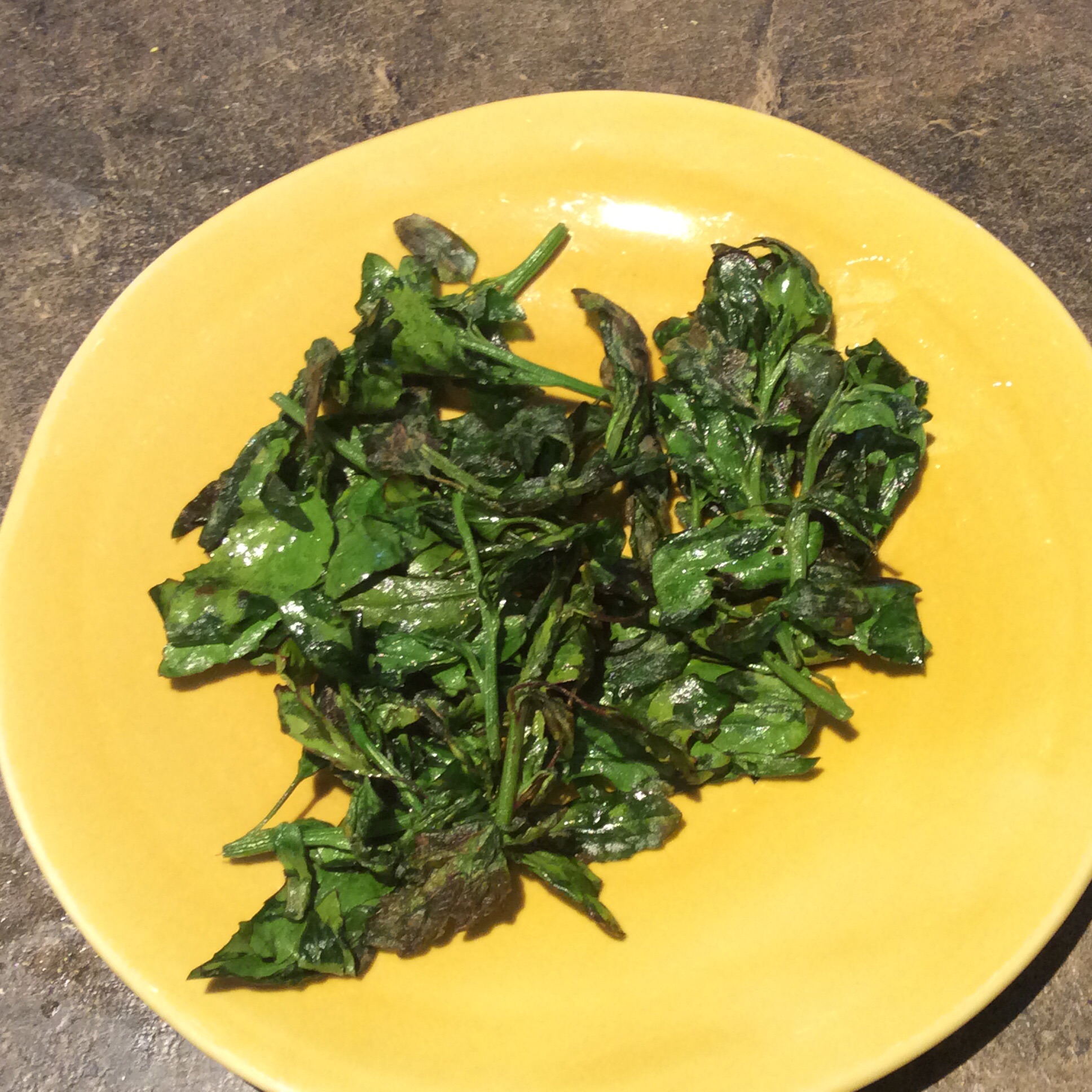
I was delighted with the results. I chose about a dozen small tender tips, maybe three inches long on average, and washed them but didn’t make any special effort to dry them beyond setting them on a towel to drain.  While washing them, I set my little 7 inch skillet over medium high heat to heat up. When the pan was hot, and my greens were washed and drained, I put in a glug of good olive oil. I never measure olive oil, but I would guess that the glug that looks right in my small skillet is about 2 tablespoons. You do need enough oil in the pan for the greens to be able to fry in spots. Wearing an apron and standing back a bit from the stove, I threw the greens into the skillet. They spat and hissed ferociously. After a minute, I sprinkled on a generous pinch of salt and turned them roughly. After another minute I turned the heat down to medium and continued to turn them over every minute or two until the stems were tender enough to eat and many ( but not all) of the leaves were browned and crisp. I turned them out onto a small plate, sprinkled on a bit of Fleur de Sel, and ate them hot in between other kitchen tasks. Yum. The flavor is fuller and maybe slightly more bitter than mild lambs-quarters can usually reach, and the crisped leaves crunch delicately between your teeth, like very thin ice.
They have to have enough space in the pan to crisp up and not steam each other into softness. I think that my large skillet would probably hold enough for three people, but not more. To serve more people, possibly one batch could stay hot in the oven while the next was frying, but I haven’t tried it yet. I do know that from thought to finished cook’s treat took about seven minutes, and that the cook, thus treated, returned to her kitchen tasks very happily.

Addendum: I did try making it for more people, and the hold-in-the-oven idea doesn’t work, I regret to say. The greens rapidly go soft, and taste fine in a toasty way but the delicate crunch is lost. So this is a treat for one or two people. But then, it’s very romantic to have a special treat that simply can’t be shared with a larger group.

Scorzonera Finds Its Purpose

image

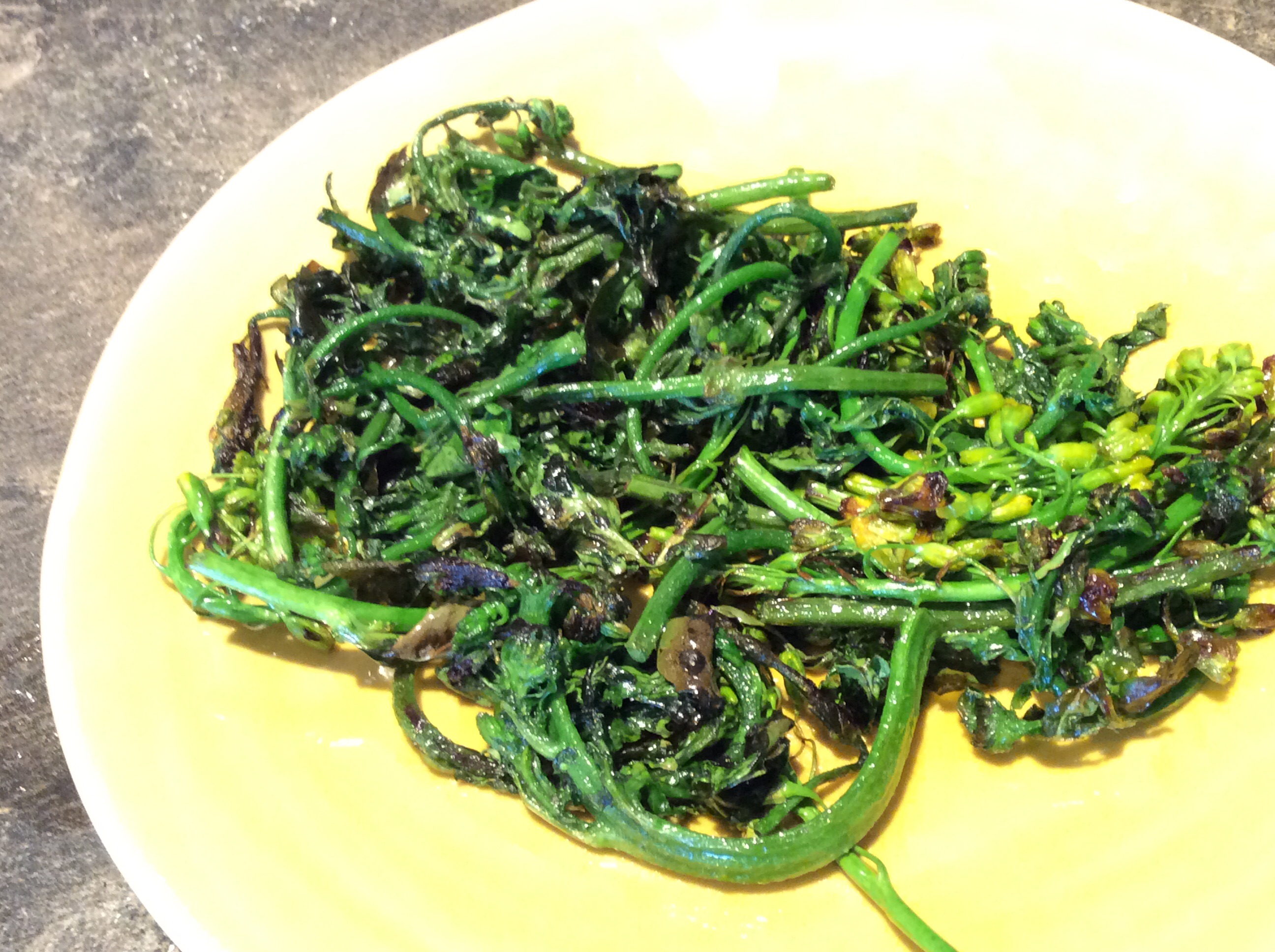
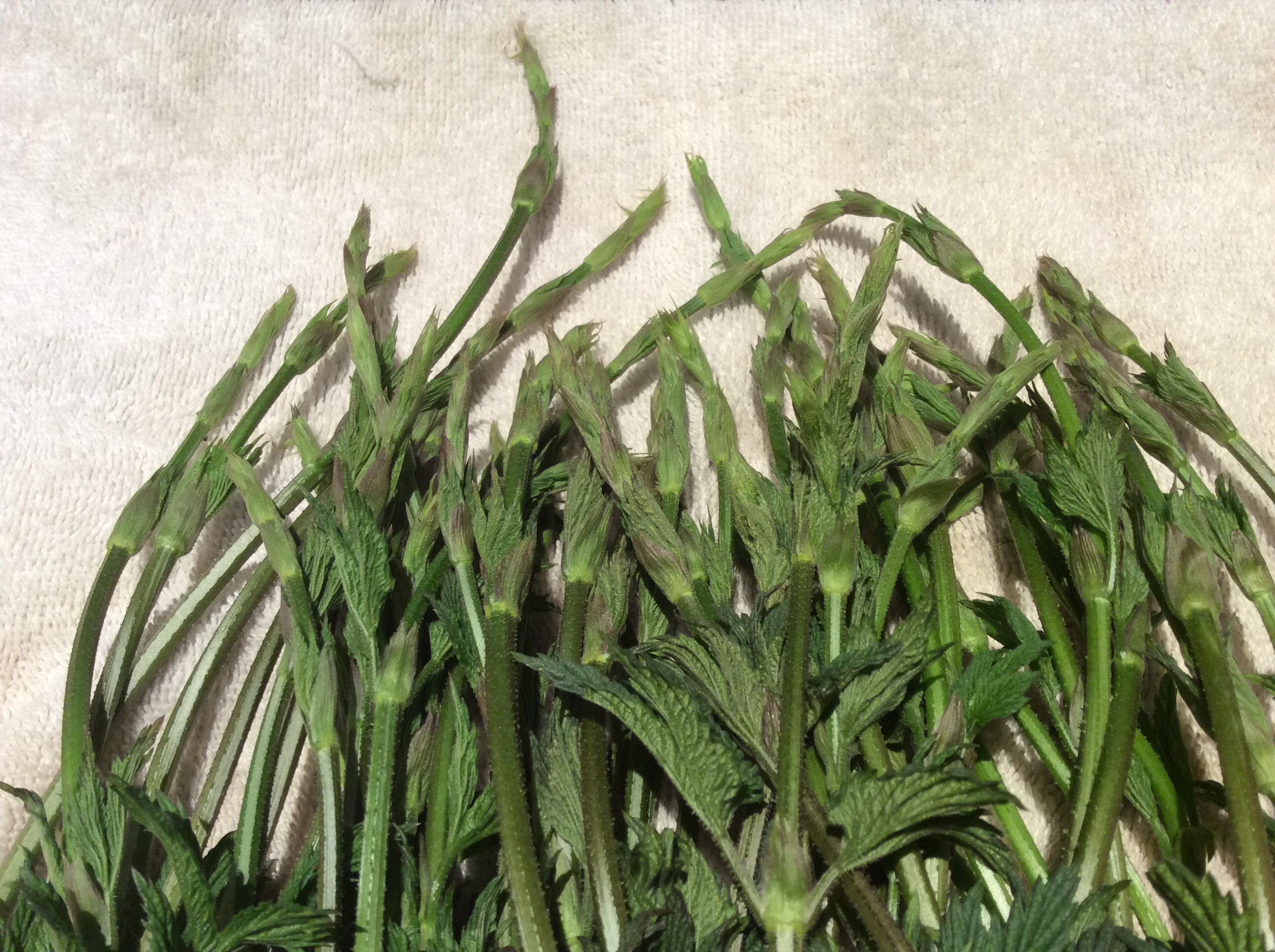
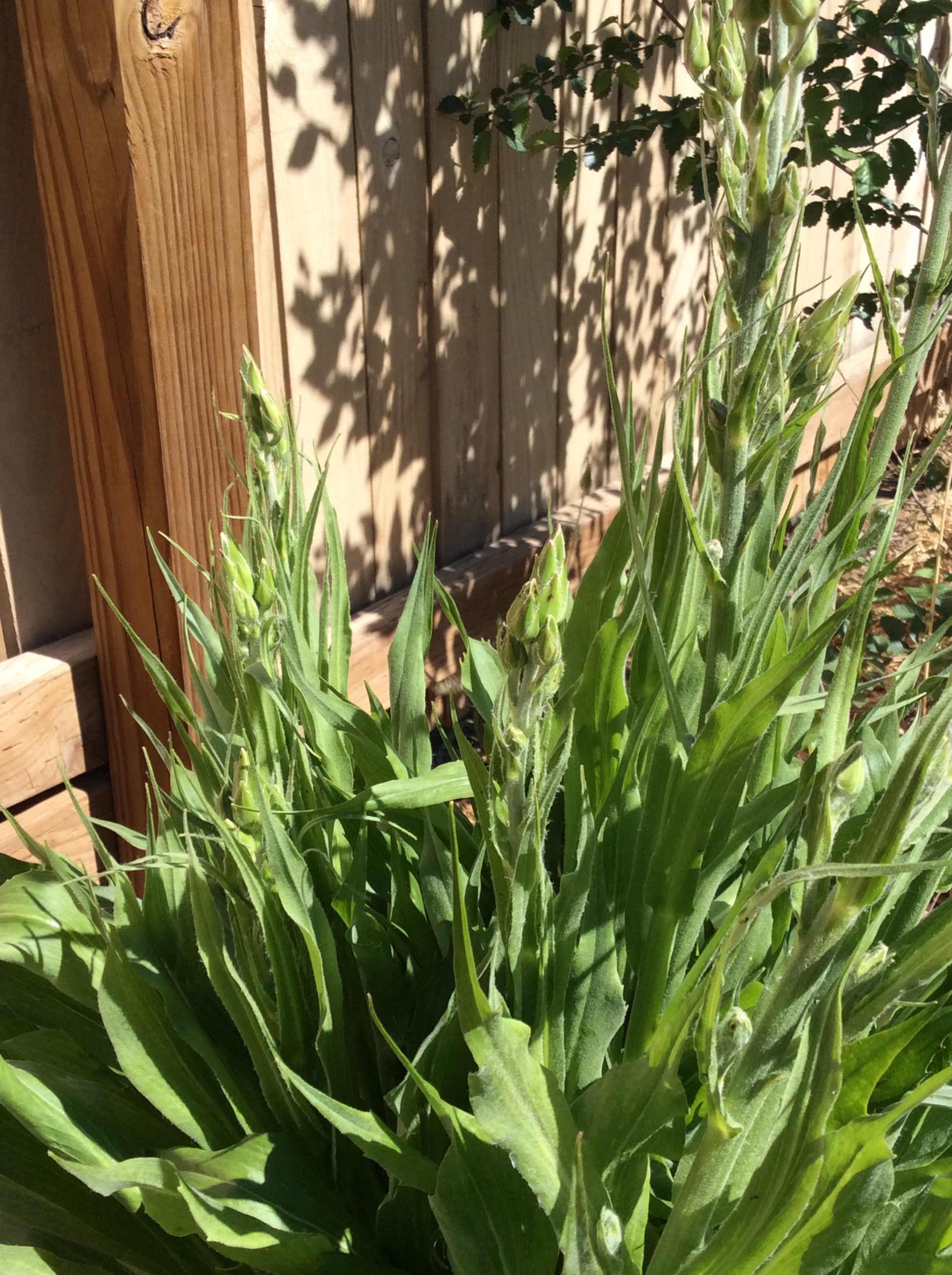
Five years ago, when we first moved to our current property, I planted some scorzonera with the idea that it would be a good root vegetable for fall. When fall came, I dug up a root and prepared it, and found it stringy, hard to prepare, and not all that interesting to eat. I had two good-sized plants, and I never got around to digging up the second one. The next spring it sent up attractive green leaves, and although it was in a spot that I never remember to water, it flourished all summer on the 11″ of rain that we get in an average year. Impressed with its stamina, I left it in place. By the time it came up the third year I had read that the leaves were edible, so I tried them but found them undistinguished and didn’t bother with them again. The plant continued to earn its place by being bright green and trouble-free. This year, its fifth year,  the plant began to send up bloomstalks at a time when I had a free afternoon and a propensity to experiment, and I discovered scorzonera asparagus, the plant’s culinary reason for existing. Gather the top 4-5 inches of each scape while the buds are still tightly closed and held close to the stalk, wash well, and toss into a hot skillet with a generous glug of good olive oil and salt to taste. Turn the heat down to medium now. Turn them often so that they brown in spots but don’t blacken. Don’t walk away from the stove! They are done when the leaf tips are fried brown and crispy, and the stalks are just cooked through. Eat promptly, as the semi-wild treasure that they are. I made a little plate of them to be a “cook’s treat” in the kitchen while I was cooking something else, and unwisely offered my husband a taste, which resulted in him eating most of them. They’re good.

This tough-as-nails perennial grows in the desert with little care besides the initial planting and weeding when it’s small, and I plan to plant more. I do offer it some water to make it grow big and bountiful.  I may have called the leaves “undistinguished,” but if other spring greens ever fail me, I guess I’ll be glad to have them. It took me a while to learn to use it well, but this plant earns its place in the food garden.


image

The Offbeat “Broccolis:” brocolettas in the spring garden

image
Broccoli is widely touted for its nutritional content and culinary versatility, and my garden beds are full of broccoli-in-waiting, but there is also “broccoli” to be had right now. All the common garden crucifers produce bud clusters when they shoot to seed, and all of them are good to eat when snapped off before the flowers open. Some go to seed the first year, and some have to go through a winter before they bolt. I try to use cover crops that will be edible as greens and also offer me a “second harvest” of bud clusters. Currently I am harvesting bud clusters from arugula, daikon, and the collards that I over-wintered for seed production (they make a huge amount of buds, and a few clusters will never be missed). Arugula is especially good for this purpose, because first you get those exquisite nutty-peppery salad greens, second the top-bud harvest with its wild, unimproved, bitter-edged flavor, then the remaining buds open and are wildly attractive to bees, and finally the remainder of the plant enriches your soil when chopped and dug in, all in the span of a few months. I buy the seed in bulk and cover-crop it whenever a piece of garden bed is going to be empty for a little while. You can also harvest buds from bolted radishes and wintered-over kale, and probably a lot of things that I haven’t tried yet. Be aware that they are tiny, and you need a lot of plants to have enough to cook. I have heard these offbeat buds referred to as “broccolini” or “brocoletta.” I call them brocolettas, because “broccolini” really refers to a form of domestic broccoli with long, small stems.

When I call the flavor “unimproved,” I am referring to the fact that our common domestic vegetables are bred for the mildest flavor possible. The things that I grow and forage for are not. They have very pronounced flavors from their protective phytochemicals, and can stand assertive seasoning. Think garlic, red pepper, thyme, and other strong flavors.

My favorite way of cooking the washed bud clusters is to throw them in a hot pan of very good olive oil with a little washing water still clinging to them, salt them, turn frequently and keep the heat fairly high, and serve them when the green parts are crisp-tender and there are crisp brown areas but no blackened spots, and eat them in their feral glory with some extra olive oil on top and a twist or two of the pepper-mill. They can be a “hot salad” on their own, or complement a flavorful entree. Take that, flavorless baby spinach!

Nose-to-tail vegetable eating stretches over each vegetable’s growing season, in my view, rather than meaning that every single part of the vegetable is edible and choice. Arugula’s leaves and buds are very desirable eating, the flowers are excellent bee forage, and then the remaining plant offers biomass for mulch and compost, or you can let them self-seed first and have your next crop planted. Now that’s multi-purpose.

An Unexpected Vegetable: Hops Shoots

image
When I first started gardening at my current property, I was an enthusiastic brewer and it seemed natural to plant hops vines where they could climb on my fences. Now I have been low-carb for three years and no longer brew beer, but this winter I learned from a British cookbook that hops shoots could be cooked and eaten like asparagus. They don’t taste like asparagus, of course, but they have their own wild, slightly bitter taste that I thoroughly enjoy. I wouldn’t start picking at them until the vines are about three years old. Then start watching for the shoots to emerge from the ground in the spring and, when they are about a foot high, snap off the top six inches. Rinse, sauté in some good butter, and enjoy.
They are small and slender and it’s hard to get enough to serve at dinner unless you have an awful lot of hops, but a handful of them cooked crisp makes a lovely “cook’s treat” to eat in the kitchen while you’re doing other tasks.
By the way, if you are a brewer you will still be able to harvest hops for your brewing, because as long as you leave about six inches of each shoot intact, they will branch within a few weeks and continue growing.