Posts Tagged ‘vegetable gardening’

Arugula, my favorite weed

december08-001

At times I’m very surprised by what grows well in my high desert garden. I wouldn’t have guessed that arugula would not only grow well but would naturalize and happily spread itself about. Arugula is my favorite salad green, and I’ve learned to love it for cooking too. Something about its tender nutty sharpness is like watercress gone to heaven. It likes cold weather, and manages with surprisingly little water.

First, get your seed. I don’t recommend the wild-type often sold as “sylvetta” because the leaves are small leading to low yield, and in dry conditions it can get too sharp to be pleasant. Try to get the type designated as ‘cultivated” or the named variety Apollo, although the latter lacks the frilly leaves that make such a nice show on the salad plate. In winter or very early spring, scatter the seed in drifts on prepared ground and rake them in lightly, or scatter them in prepared containers and scratch the seed in a little with your fingers. Water occasionally and keep an eye out. Early in the spring, you’ll notice the little plants struggling up bravely. Give them a little water when the soil is dry, and thin them out to stand about 4-6″ apart. Throw the washed thinnings in your salads, of course. When the plants are about 6″ tall, harvest them heavily for salads, but don’t cut the crown or pull the roots up. Use dressings containing nut oils and good olive oil. Never dress the arugula more than a couple of minutes before eating, because it wilts easily. Eventually the plants will start to bolt to seed. Do nothing to stop them. The next phase of the arugula season is starting.

The maturing plant will now stand about 2 feet high, with small clusters of buds. It’s perfect for cooked greens now. Leave one or two plants to bloom and make seed, and cut the rest down to about 3″ high, and bring the cuttings into the kitchen. Pull off and save all leaves, and break the bud sections off wherever the stem will snap without resistance. These are your cooking greens. Wash them carefully. If you want to use the large stems that are left over, cut them in cross sections no more than 1/4 inch long, because they contain strong  stringy fibers. I compost them instead of eating them. blanch the washed greens in a large quantity of rapidly boiling water for 1 minute, no more. Drain and proceed as desired toward dinner. They have a flavor a little like broccoli rabe, and I love to eat them with pasta. See recipe below, and for other recipes see my website, www.localfoodalbuquerque.com, go to the “recipes” page, and click on “greens.”

Now, what about the plants you left alone? They will develop into great wispy clouds of small white flowers, a little like annual baby’s breath. Bees adore them. Then they’ll set hundreds of tiny seed pods. When these dry out, let some spill around the mother plant (which can now be pulled up, and should be, because it looks pretty scruffy by now) and toss the rest around wherever you want more arugula. Usually these seeds will be dry and ready for seeding in late summer, will sprout by September, and will be in the salad stage by late October. Leave them over the winter, and the cycle continues.
clich here for the recipe

Thanks Giving

july-08-0323

What a deeply joyful Thanksgiving I was privileged to have: here in New Mexico we had both a new president and a good long soaking rain, and in the high desert it’s a little hard to say which is more exciting. The garden is still providing some lettuce, arugula, herbs, and carrots, but I have more time to reflect on what I’m doing. This has led to thinking about what, exactly, my urban homestead means. It certainly doesn’t mean self-sufficiency. That won’t happen until I can grow coffee and olive oil. It doesn’t mean grimly making do. It’s a happy celebration of what one small piece of city dirt can produce. I have a medical practice and a number of hobbies, but growing my own food in the most space-intensive way possible is a lot of fun, and I have a website and blog to let other people know that, if they want to provide for themselves a little more, they don’t need to quit their job and move to the country. I don’t even think that’s the best way to start. Start where you are, with what you have. People with no land at all can bake sourdough bread and brew beer, and those are indoor “yeast gardens.” People with a balcony can grow herbs in pots. People with a tiny yard can utilize it. In the quest for local food, we can have the most local food of all, and if we have more garden space at other points in our lives, we’ll know more about how to use it if we’ve practiced in small ways. Please go to my website, www.localfoodalbuquerque.com, for more about urban gardening, and look at my blog entries on other pages for details about the many small pleasures that crop up along the way.

Most of my winter posts will be about canning, preserving, and using what was made during the summer. That’s also a way of remembering the abundant season and being grateful for what I received. So, here’s a fond look backward at

the colors of summer.   august-08-029

pansies- more than an edible flower

november08-004

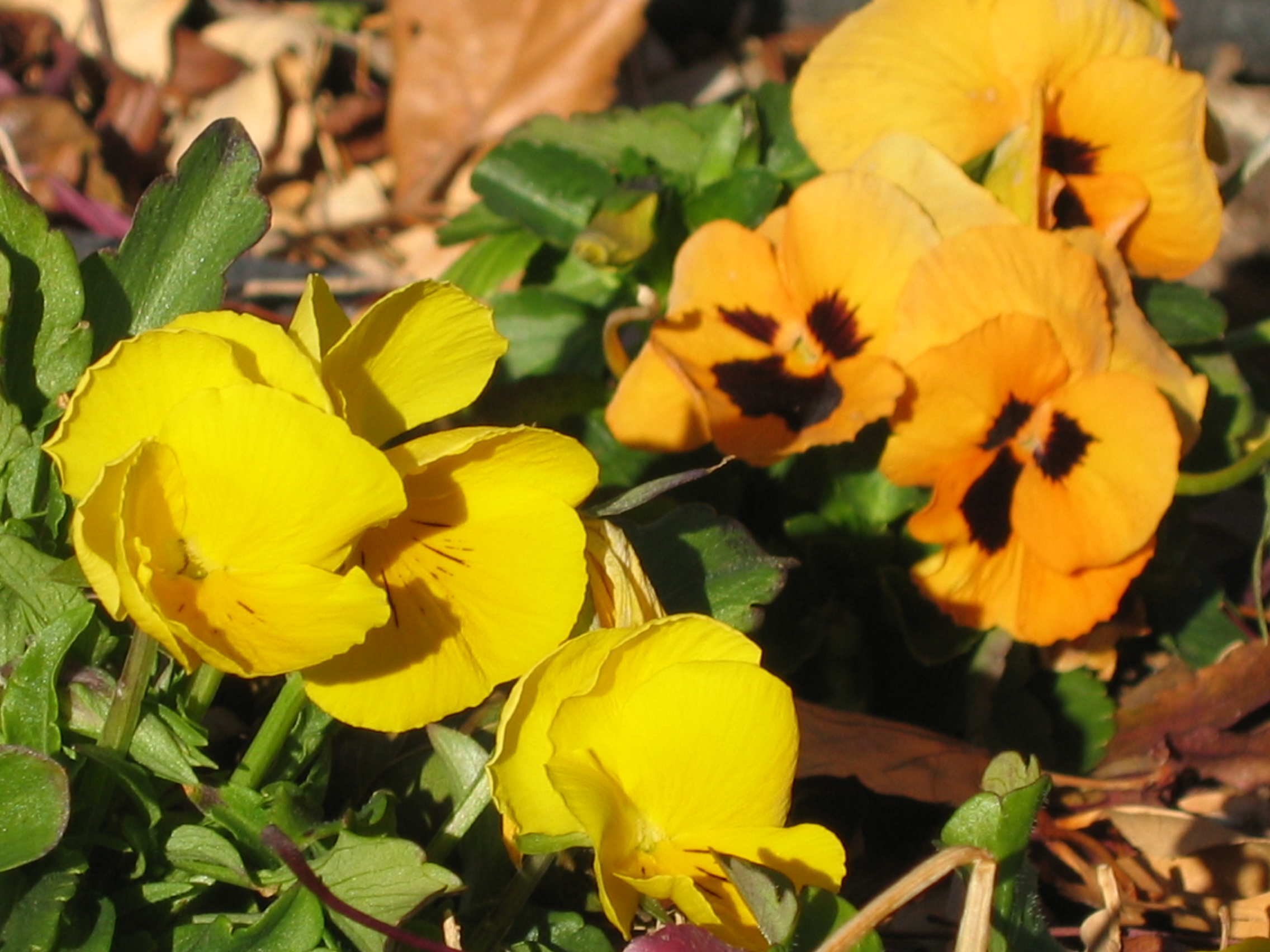
Here in Albuquerque, pansies are a pretty presence during the fall, take a brief break in the coldest weather, and then bloom themselves silly in the spring. The hot weather finishes them off. For years I’ve enjoyed their beauty and have used the edible and mild-tasting flowers to beautify my salads. It was only this year that I learned that the leaves are edible too, and in fact are very tasty, with a substantial but tender texture and a cool, slightly minty taste rather like mache’. Now I put in pansy plants in late September, let them establish themselves for a month, and begin plucking leaves and flowers at will until late November. After that I leave them alone until they show fresh growth in the spring. When making mixed salads, the mildly sweet flowers and leaves go better with lettuces than with the wilder-flavored greens like arugula or any of the chicories. Keep the flowers on top where they can be appreciated. I like to lay them on after the greens have been dressed. Gently floral olive oils like the ones from Provence and mild vinegars or a little lemon juice let these subtle flavors shine.

It’s worth noting that this triple-purpose quality makes pansies a good use of space in the cold months, and means that you can get some local food even from a pot of flowers by your door.

Some people make derisive noises about edible flowers, and think that the trend was a 1980’s California phenomenon and is now long over. Well, edible flowers have a culinary history several hundred years old at a minimum, and not likely to be over any time soon. Anything that both beautifies food and makes it taste better is worth learning about and preserving. The best culinary list of flowers that I know of is an appendix in John Ash’s From the Earth to the Table, which is a delightful cookbook in other respects as well. Second-hand copies are often available. Check it out.

If you get your plants from a nursery, ask whether they’ve been sprayed or fertilized, and wait a month or more to make sure they’re safe to eat.

fiesta de pimientos

october08-015

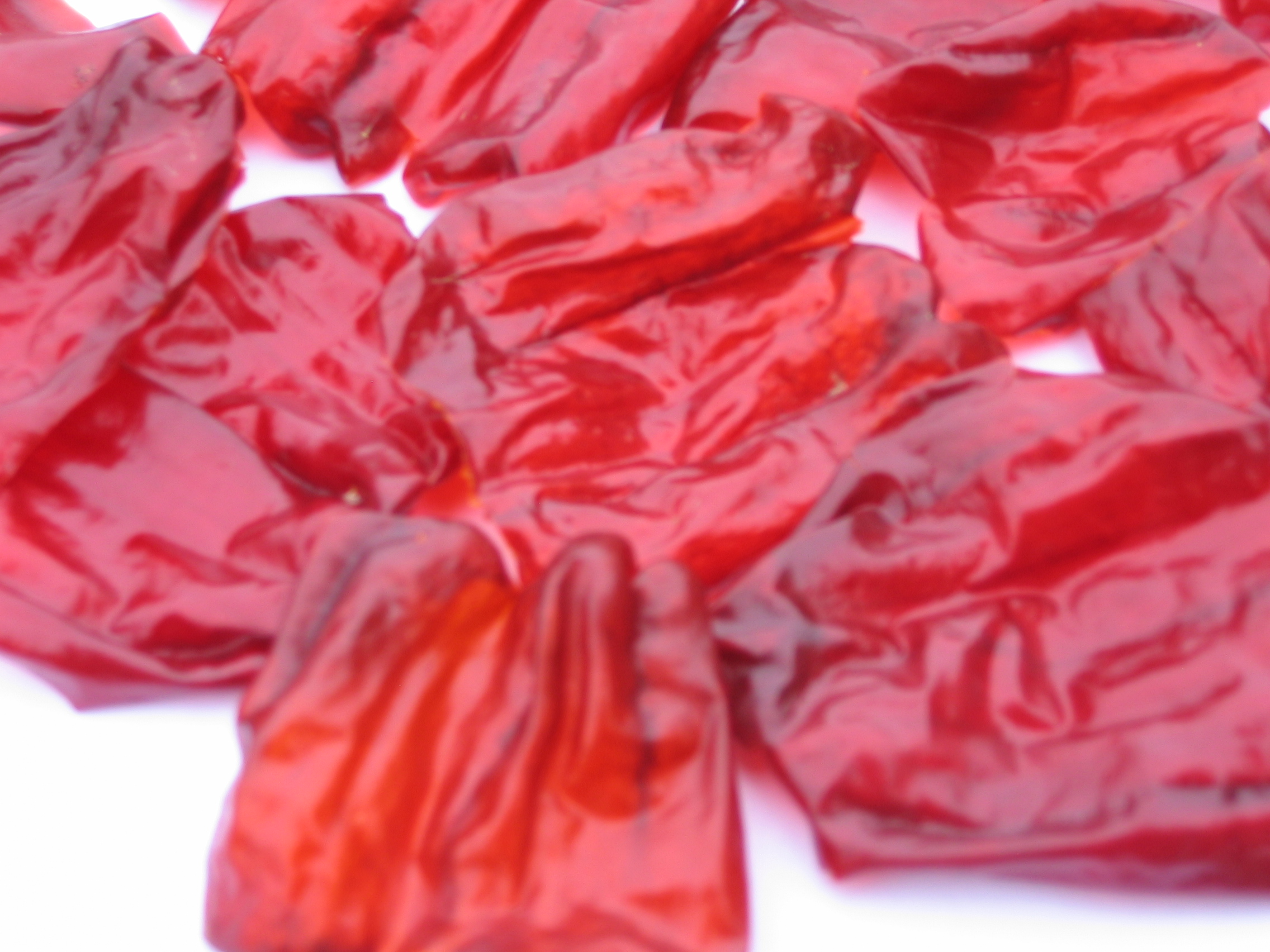
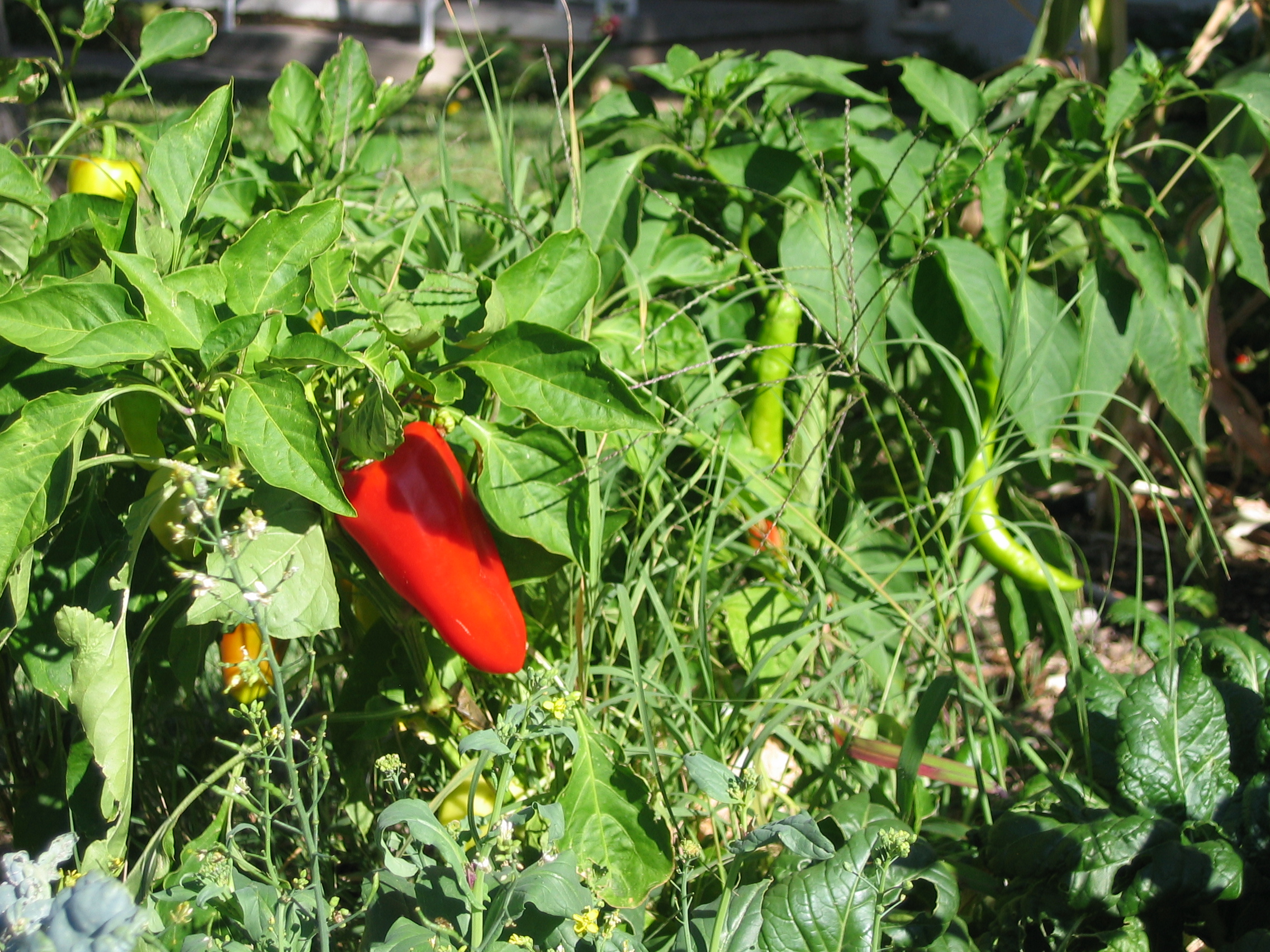
Here in New Mexico, we’re rich in chiles of all kinds. However, I seldom see or hear about one of the best, the Spanish Pimiento de Padron. In northern Spain, there’s a festival devoted to them when they come into season. The peppers are picked green, when about the size of large olives, and saute’ed whole in olive oil with some sea salt, then eaten hot as a tapa. About one in 8-10 is fiery hot, while the rest are pretty mild. Eating them is called Spanish Roulette, but we New Mexicans are up to it. After a summer of chowing down the green ones, I let the last flush turn red and dry on the plant, and make my year’s supply of wonderfully flavorful red pepper. I pick the somewhat dry, leathery peppers and slit each one open, lay it flat, and remove all the stem, seeds and veins. The sensitive will want to wear latex gloves for this. Spread them out in single layers on one or two large baking sheets and dry them in a very slow oven, 170 degrees if possible. Drying time varies with weather conditions and oven temp. Usually I dry them at 170 for about 4 hours, then leave them in the turned-off oven overnight. When dry, they are shiny and translucent and look like Chinese enamel; see above. Grind them to a powder in the blender and keep them in an airtight container until you need them. I keep a shaker of “yard pepper” on my dining room table, and love the way it adds snap and piquancy to a variety of foods. try it on fried eggs. The plants are very attractive, about 3′ high at maturity and fairly compact, so I like to grow them where they can be seen. You can get seeds at our New Mexico source, Gourmet Seeds.
october08-016