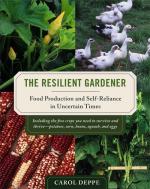
There are a lot of gardening books out there, and a lot of books on urban/suburban homesteading and on self-sufficiency. Many of them draw heavily from one another or from older books rather than from actual experience, but every now and then I come across a gardening book that I’m eager to share with others. Carol Deppe’s new book, The Resilient Gardener, is clearly based on years (decades?) of personal hands-on experience and is a must-read for anyone interested in the issue of personal food security. It is not a general gardening how-to book. Ms. Deppe discusses the best ways to improve your own food security by producing your own staple crops, and what makes a staple suitable for home food production with no unusual harvesting, threshing, or milling equipment. This isn’t one of the obnoxious-survivalist manifestos about how to be a country and a law unto yourself. It’s a sensible discussion of how ordinary people can direct their efforts to make themselves better equipped to endure the hiccups that life throws at us, whether environmental or health-related. As I read it, I found myself thinking about the spreading problems in my native Louisiana after Hurricane Katrina devastated New Orleans. Nearby cities like Baton Rouge weren’t hard hit by the storm. But Baton Rouge would nearly double in size in a week as evacuees poured in, grocery stores there would be nearly emptied of staple foods and anything fresh, streets would be filled with excess traffic and often impassable, and water and sewer systems would be strained. People with prudent habits were better equipped to help themselves and others through a difficult time.
No book about someone else’s needs and choices will ever be completely applicable to your own situation. Ms. Deppe includes a section on her own nutritional needs and decisions that can best be considered idiosyncratic. But then, as a doctor I believe that everyone’s needs are to a degree idiosyncratic, i.e. unique to themselves. Some basics apply to nearly everyone, but there’s a lot of individual variation. Her choices may have no applicability to you or me. They are, however, an encouragement to think carefully about our own needs and start doing more of what works for us.
I have no desire to be completely food-independent, even if such a thing were possible. But I do get great pleasure from contemplating the winter squash, potatoes, and sweet potatoes that came out of my own soil and will help feed me through the winter, and on winter evenings by the stove I’ll be studying Ms. Deppe’s ideas and planning how to be a more prudent member of my community next year.
Posts Tagged ‘urban homesteading’
23 Nov
Books Worth Reading: The Resilient Gardener
30 Aug
Sudden changes of plan
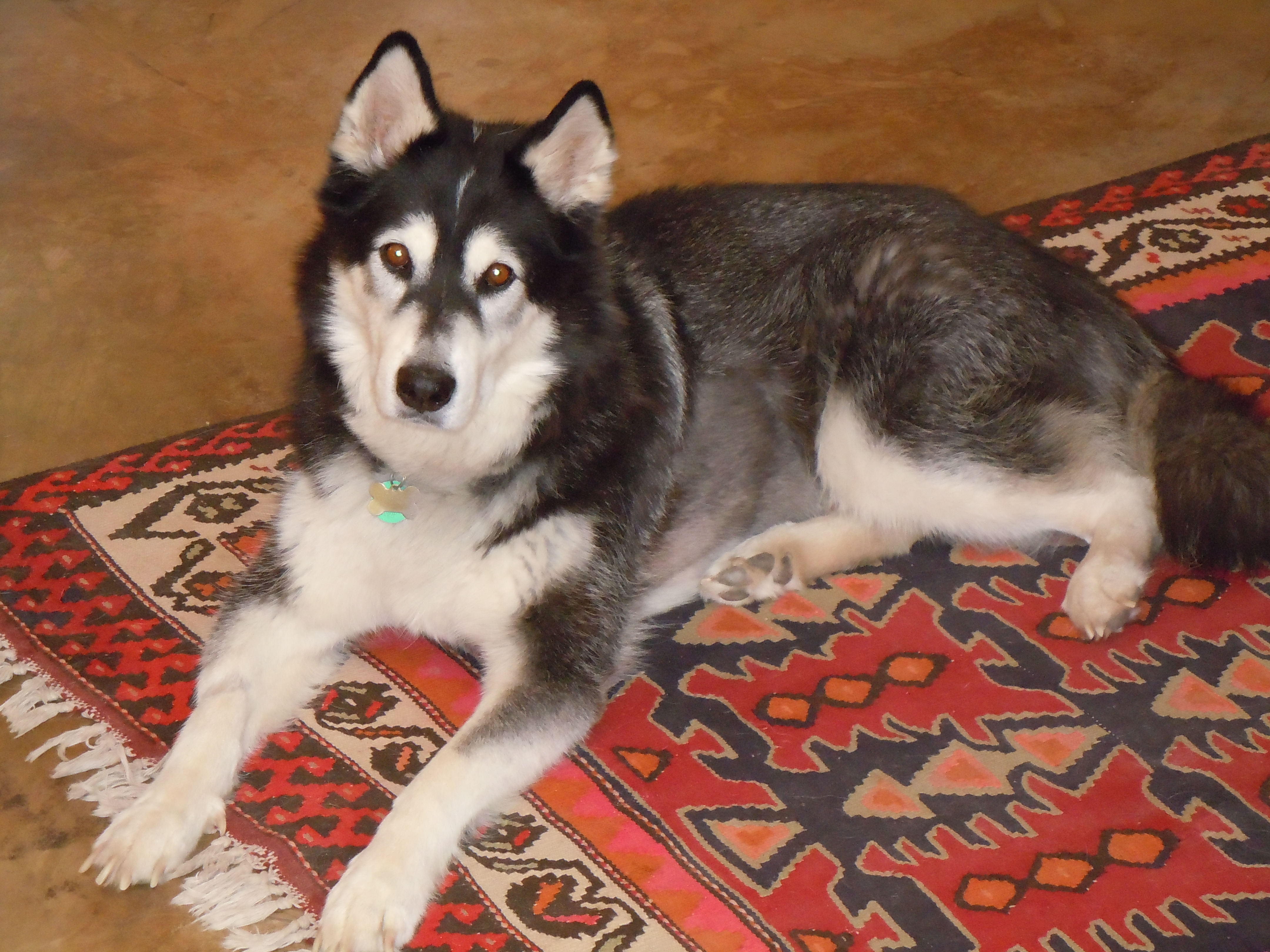
In urban homesteading as in the rest of life, it’s never possible to know what the future holds. In early July as I was planning and starting my fall/winter garden, my very beloved husky was diagnosed with metastatic cancer and a short life expectancy. Thanks to the care of a wonderful canine oncologist he is free of pain and enjoying his last weeks, but it rapidly became clear to me that the fall garden was not going to be a priority after all, both because of his care needs and because I want to spend all the time that I can with him. Weeding, planting, and the constant ongoing care that a garden needs came to a sudden halt.
So, what to do about the garden? I was soon able to identify the vegetables that flourish on neglect. Corn did well, and we gorged on fresh sweet corn regularly, although the last planting was too young to take the neglect and so our corn season ended early. Sweet potatoes have been unstoppable. Swiss chard has done well, and the winter squash is out to eat the world. We have a problem with borers in our area, so this year I limited myself to squash of the C. moschata variety, which are rumored to be resistant to them. The vines are producing well and not a single one has shown that sudden disheartening wilting that heralds the squash borer. My enthusiasm for edible weeds really paid off, as we ate greens dishes full of lambs-quarters, mallow, amaranth, and purslane. I always let some of my spring crop of arugula go to seed, and a self-sown fall crop is coming up to supply our salad bowl. Self-sown chicory is showing up here and there. Dandelions have grown a foot across, and are too bitter to eat now but after a few frosts they’ll be perfect for braising. Mallow enjoys heat and neglect and even offers pretty purple flowers if you grow the Malva sylvestris type. The wild-type daylilies are spreading happily and will supply spring shoots. Peruvian purple potatoes are healthy and strong. They form tubers late, but in a couple of months we expect to be eating a lot of them. Cherry and paste tomatoes are winding their way through the general melee and producing a surprising number of tomatoes.
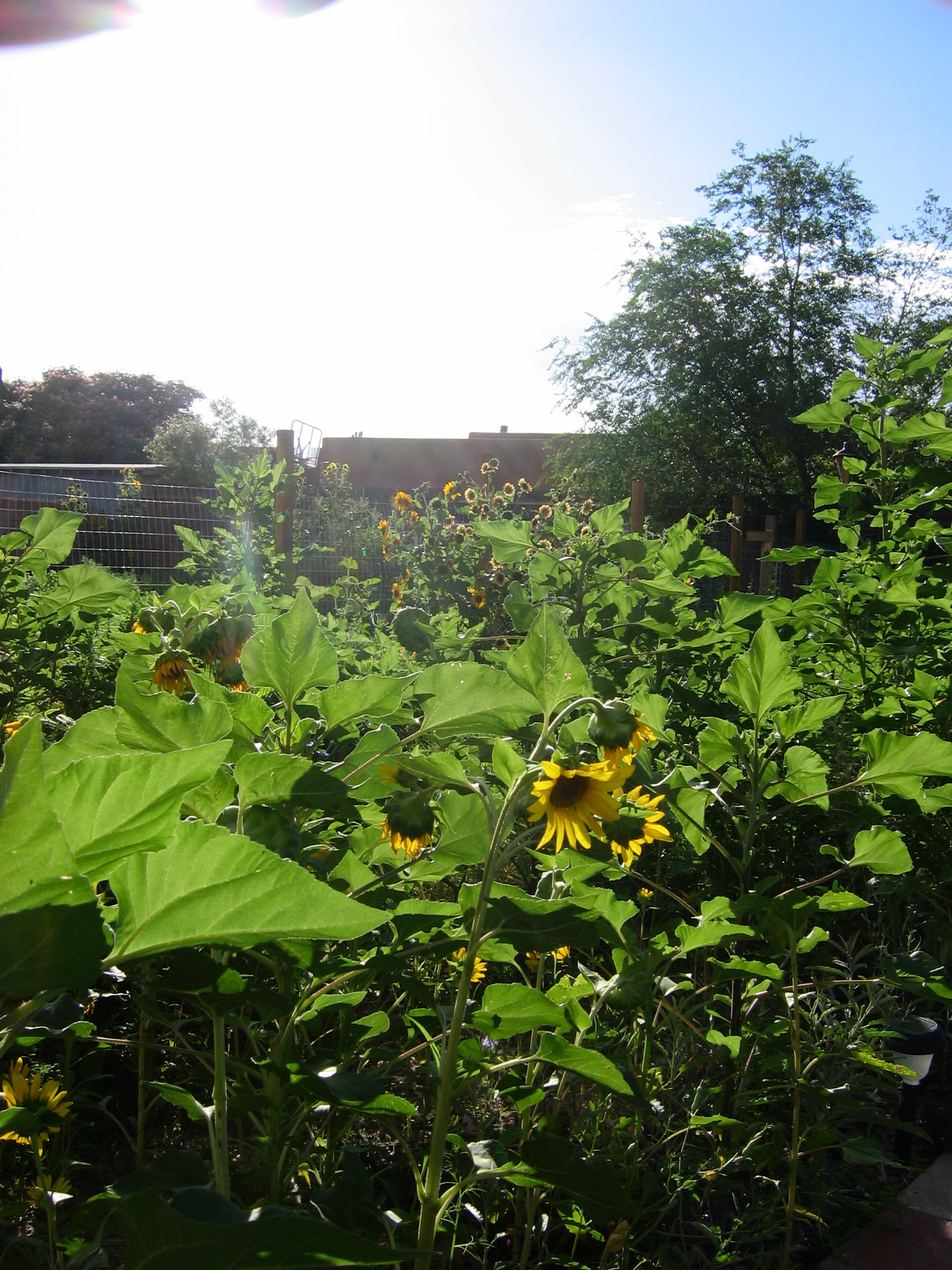
At the time that my dog was diagnosed there were hundreds of wild sunflower seedlings all around the property, and I decided to let them grow unmolested, thinking that they would eventually supply green matter for mulch and would keep worse weeds from taking over. We now have a sunflower forest twelve feet high on two sides of the house, and the beauty of the flowers lights up the days. They also attract thousands of bees to the open flowers, and the ripening seeds have drawn hundreds of goldfinches to my yard. Hummingbirds strafe each other over my head, and my husky spends his good days wandering in his own private jungle.
To me the spirit of urban homesteading is one of making do as best we can despite uncontrollable circumstances. It’s a spirit that sets priorities and says “First things first.” My priorities right now are clear, and there are more important things then a carefully planned winter garden. To feed the bees and birds and to find my life unexpectedly full of bright color, flashing movement, wild life,and even good homegrown food although not the food that I had planned on is a gift that I hope I won’t forget.
1 Mar
The Greens of Spring: Broccoli Raab, and a brief note on spring flowers
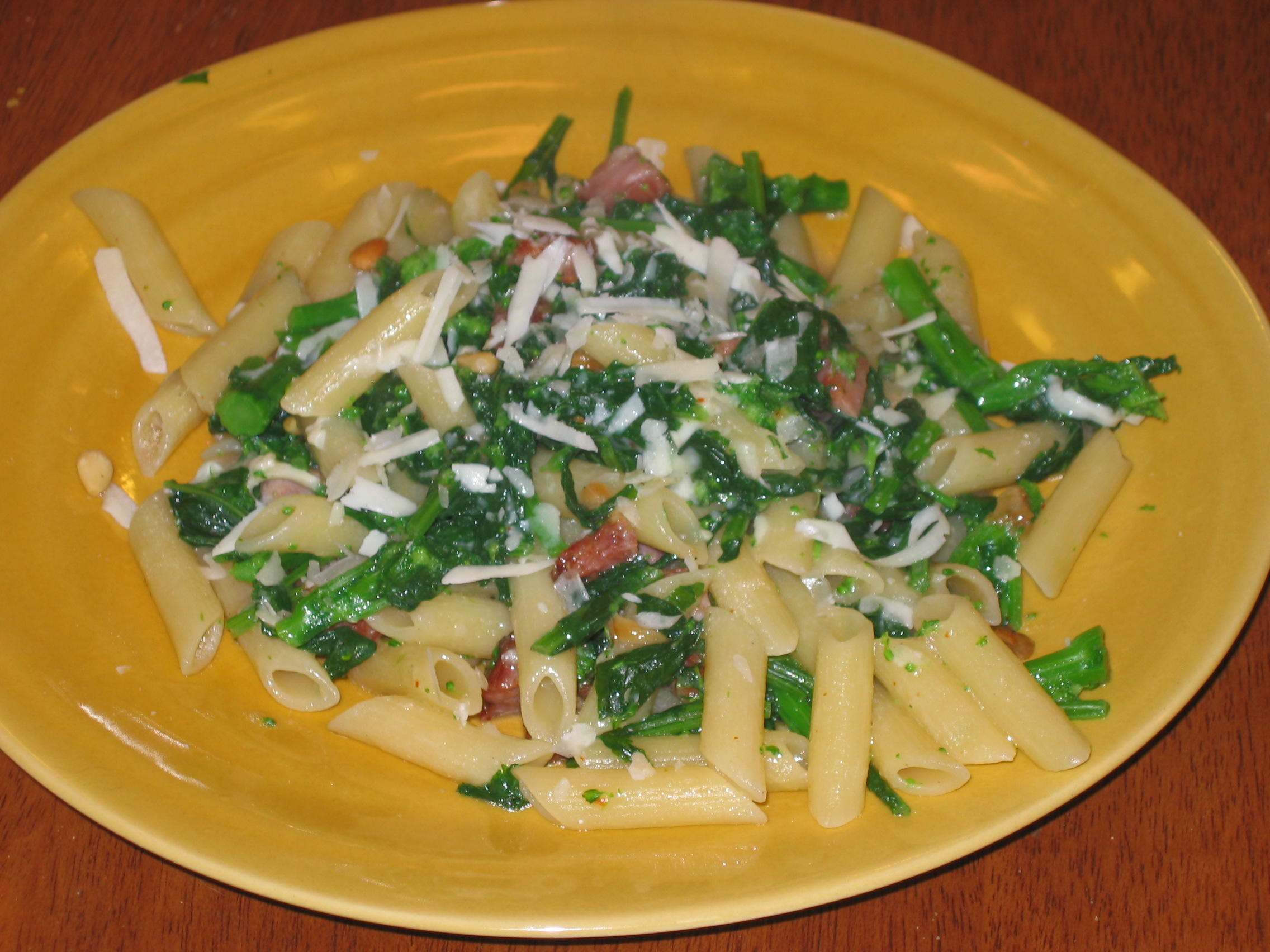
This is a good time of year to eat some broccoli raab from the store, because you may well be convinced to plant your own while there’s still time. You may find the seeds sold as broccoli rabe, broccoli raab, or rapini. This is a vigorous grows-like-a-weed kind of vegetable, but it won’t tolerate hot weather, so get it in the ground now. Direct seeding works well as long as the ground is well prepared and you keep it weeded until it’s big enough to compete. Harvest as soon as it shoots to seed; you’ll notice broccoli-like heads which can vary from the size of a nickel to 3 inches across, depending on variety and weather conditions. Harvest while the buds are still tight, before any blooms appear. Just whack off the top 6-8 inches, leaves and all, compost the rest, and you have time to grow another crop in that space. It’s a close relative of the turnip, but instead of the pronounced (some would say extreme) earthiness of turnip leaves, it has a lovely clean flavor with a slight bitterness that makes it the perfect companion for mellow pasta.
Usually I like greens in mixtures, but I prefer this one by itself. My favorite way to cook it is so simple that it isn’t really a recipe, and it’s on the plate within fifteen minutes of the water coming to a boil. The various steps fit in so well with one another that I prefer to write this as a brief kitchen story rather than a recipe. Read it through before beginning, so that the kitchen logic and logistics will be clear.
You will need: half a pound of good dried pasta, a large bunch of broccoli raab, good olive oil, red pepper flakes, a couple of ounces of good ham, Italian sausage, or pancetta (a small handful when chopped into cubes), an anchovy fillet if you like them, and a few ounces of good cheese, either Parmesan or part Parmesan and part Romano. Toasted pine nuts can be added as a bonus of you have any on hand.
Put on a pot of water to boil for the pasta. Don’t forget to salt it.
While the water is coming to a boil, chop up a small chunk of ham, or some good Italian sausage, or some pancetta, or a little slab bacon if it isn’t too smoky. Chop two large or three small cloves of garlic. Throw them in a small hot skillet with some olive oil, probably 2-3 tablespoons. Stir frequently. As soon as the garlic and meat are cooked, put in half a teaspoon of red pepper flakes and, if you like, a chopped rinsed anchovy fillet or a dash of colatura. Add a tablespoon or two of water, just enough to stop the cooking, and take the skillet off the heat. Wash a bunch of broccoli rabe, using a bunch as big as you can hold in two hands, and set it in a strainer to drain a little.
Meanwhile, the water should have come to a boil. Put in half a pound of good dried pasta. I think penne goes especially well with chunky greens. If you like whole wheat pasta, this is an especially good place to use it. Don’t reduce the heat. Keep it at a hard boil until after you add the greens.
While the pasta is boiling, cut the bunch of rapini in cross section across the bunch, slicing about every half inch. Discard the stem ends if they are more than half an inch in diameter. Five minutes after the pasta went in the water, put the chopped rapini in the water to boil with it. Once the water returns to the boil you can turn it down a little, but be sure to maintain a boil, not a simmer. Grate about 2/3 cup of good Parmesan and 1/3 cup of good Romano, or use all Parmesan if that’s what you have. These measurements refer to loosely packed measuring cups. My trip to Florence convinced me that Americans over-sauce and over-cheese their pasta. Personally I don’t meaure grated cheese in any formal way, and prefer to think in terms of two loose, scant handfuls of grated cheese.
When the pasta is ready, pour out into a strainer, return to the pan, toss with a glug of good olive oil, toss in the meat mixture and half the cheese, plate, sprinkle with the rest of the cheese, and toss some toasted pine nuts on top if you like. Eat and savor this splendid green.
By the way, I estimate that a “glug” is about two tablespoons. But in a dish like this, use kitchen sense rather than measurements. How much olive oil do you need in the skillet to keep the meat and garlic from sticking, and how much olive oil do you need to give a light delicious sheen to your pasta and greens? Your eyes are a better guide than a measuring spoon.
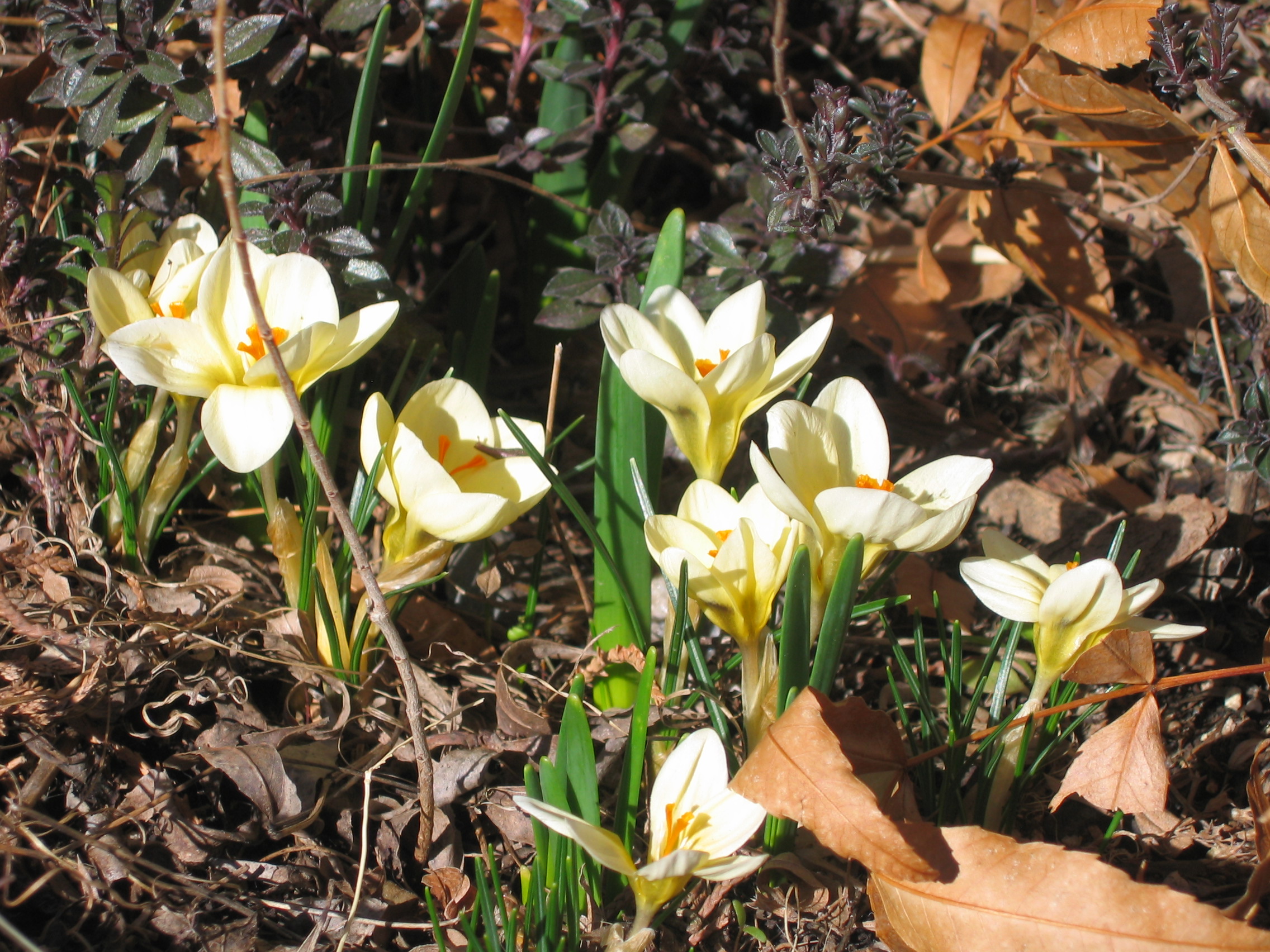
My garden is intended as a food garden, but there’s no reason why it can’t be a treat for the senses as well, and nothing lifts my spirits in late winter like bright crocuses blooming away in whatever appalling circumstances the season hands them. I strongly recommend at least a dozen bulbs of the cream-yellow Crocus crysanthus “Cream Beauty.” It’s always the first to bloom for me, and if you put it in the warmest part of your yard it will bloom in February in the Albuquerque area, a visible harbinger that your garden, like you, has survived another winter.
10 Jun
The Jewels of Summer: Cherries
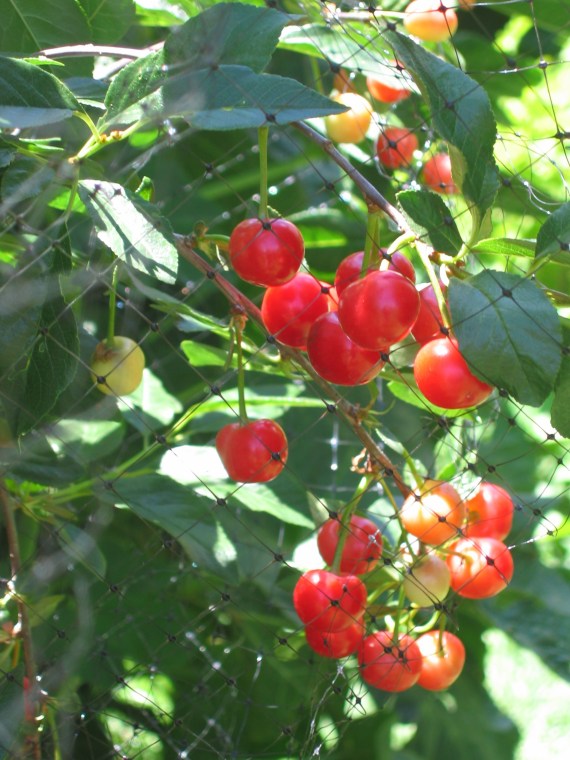
The single best reason that I know of to grow a pie cherry tree is to stand and gawk at it in full fruit on a sunny day. Even my dwarf North Star cherry, which is only two years old and no taller than I am, looks so stunning in the summer sun, with cherries glowing like Russian enamels, that I spend some time just standing there taking it in. But once you’re ready to stop looking and start eating, there are the cherries. Sour or pie cherries are of course perfect for pies, and they also make excellent jams, cobblers, etc. If you want a lot of good well-tested recipes, get yourself a copy of the British classic Jane Grigson’s Fruit Book. But I decided to make cherry liqueur this year, and so far the results are very promising. Remember, besides being economical and ecological and virtuous, this urban homesteading stuff is an awful lot of fun.
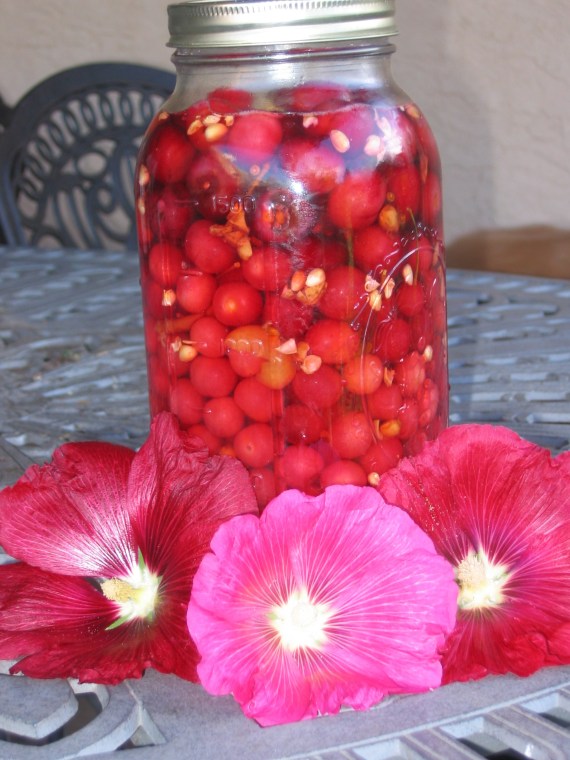
Click here for the recipe! Continue reading
 My urban homestead