
Stinging nettles are a pernicious weed in damp parts of the country. The sting is painful and the plant is weedy-looking. So why did I make an effort to have them here in New Mexico? Well, because the greens are delicious and extremely nutritious and they come up with no effort once established.
I had no luck starting from seed, and bought plants from Richter’s in Canada. They are a wonderful source for rare herbs, and well worth knowing about. The plants arrived last spring. I put them in a piece of waste ground where nothing much would grow and where they would be prevented from excessive spreading by walls and mown paths . This is very important, because once established, they turn their forces toward world domination. I watered them deeply once a week and mulched them heavily.
This spring, each little plant from last year is surrounded by dozens of offspring. They sting fiercely, so don’t go near them without gloves and long pants. When they’re about six inches high, use heavy gloves and a pair of scissors to harvest them. Wash in a few changes of water, using wooden spoons to swirl them in the water and lift them out to avoid the thousand tiny painful injections of formic acid that they are trying to give you. Until they are cooked well, they can sting. Now cook them any way you like. My favorite way to cook the first batch of spring is to put them in a hot skillet with some water still clinging to them, add a knob of good butter and a little salt, turn the heat down, and saute’ until cooked. Turn out on a cutting board, chop well (I hate long stringy stems in greens, and since nettles have stringy stems, I strongly recommend that you don’t skip this step) and serve with a little more butter on top. They are a startling deep iron-green and very, very good. Later in the season, I use them in greens mixtures and boreks and all the ways I love to eat greens. For more of my favorite greens recipes, visit my website’s recipe page.
Within six weeks of the first picking, they will be coarse and no longer taste good, and their texture will become gritty and unpleasant. This is why you want them in an obscure spot. Control their spread, avoid being stung, let them do their weedy thing, and turn your attention to other vegetables. Early next spring, when you’re sick of cold winds and desperate to reconnect with the awakening earth,they’ll be there.
Posts Tagged ‘sustainable’
9 Mar
The Greens of Spring: Stinging Nettles
26 Jan
salmon with a Thai touch
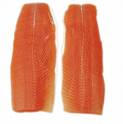
Here in Albuquerque we don’t have local fish, but we do have a local couple, the Fishhuggers, who sell Alaskan salmon and other fish, sustainably fished in Alaska by the Fishhugger himself. It’s frozen shortly after being caught, and when thawed and promptly cooked, is a lot closer to fresh than anything we can buy in the stores. You can find it at the Corralles farmers’ market. I keep frozen blanched greens in my freezer in one-cup portions, ready when I need a winter pick-me-up.
When I cook salmon I usually use their wild-caught sockeye, which is a brilliant red-orange tone and loaded with omega-3s. I like to use other brilliant colors, usually bright greens, to complement the lovely fish. Today I combined the salmon with Thai accompaniments, and the green coconut-milk curry set off the plainly pan-grilled fish beautifully. Whenever you eat fish, remember to support sustainable fishing! The Seafood Watch card is a handy way to decide what to buy. Click here to print one out.
12 Dec
Arugula, my favorite weed

At times I’m very surprised by what grows well in my high desert garden. I wouldn’t have guessed that arugula would not only grow well but would naturalize and happily spread itself about. Arugula is my favorite salad green, and I’ve learned to love it for cooking too. Something about its tender nutty sharpness is like watercress gone to heaven. It likes cold weather, and manages with surprisingly little water.
First, get your seed. I don’t recommend the wild-type often sold as “sylvetta” because the leaves are small leading to low yield, and in dry conditions it can get too sharp to be pleasant. Try to get the type designated as ‘cultivated” or the named variety Apollo, although the latter lacks the frilly leaves that make such a nice show on the salad plate. In winter or very early spring, scatter the seed in drifts on prepared ground and rake them in lightly, or scatter them in prepared containers and scratch the seed in a little with your fingers. Water occasionally and keep an eye out. Early in the spring, you’ll notice the little plants struggling up bravely. Give them a little water when the soil is dry, and thin them out to stand about 4-6″ apart. Throw the washed thinnings in your salads, of course. When the plants are about 6″ tall, harvest them heavily for salads, but don’t cut the crown or pull the roots up. Use dressings containing nut oils and good olive oil. Never dress the arugula more than a couple of minutes before eating, because it wilts easily. Eventually the plants will start to bolt to seed. Do nothing to stop them. The next phase of the arugula season is starting.
The maturing plant will now stand about 2 feet high, with small clusters of buds. It’s perfect for cooked greens now. Leave one or two plants to bloom and make seed, and cut the rest down to about 3″ high, and bring the cuttings into the kitchen. Pull off and save all leaves, and break the bud sections off wherever the stem will snap without resistance. These are your cooking greens. Wash them carefully. If you want to use the large stems that are left over, cut them in cross sections no more than 1/4 inch long, because they contain strong stringy fibers. I compost them instead of eating them. blanch the washed greens in a large quantity of rapidly boiling water for 1 minute, no more. Drain and proceed as desired toward dinner. They have a flavor a little like broccoli rabe, and I love to eat them with pasta. See recipe below, and for other recipes see my website, www.localfoodalbuquerque.com, go to the “recipes” page, and click on “greens.”
Now, what about the plants you left alone? They will develop into great wispy clouds of small white flowers, a little like annual baby’s breath. Bees adore them. Then they’ll set hundreds of tiny seed pods. When these dry out, let some spill around the mother plant (which can now be pulled up, and should be, because it looks pretty scruffy by now) and toss the rest around wherever you want more arugula. Usually these seeds will be dry and ready for seeding in late summer, will sprout by September, and will be in the salad stage by late October. Leave them over the winter, and the cycle continues.
7 Nov
Si se puede! Starting to sum up my garden year.
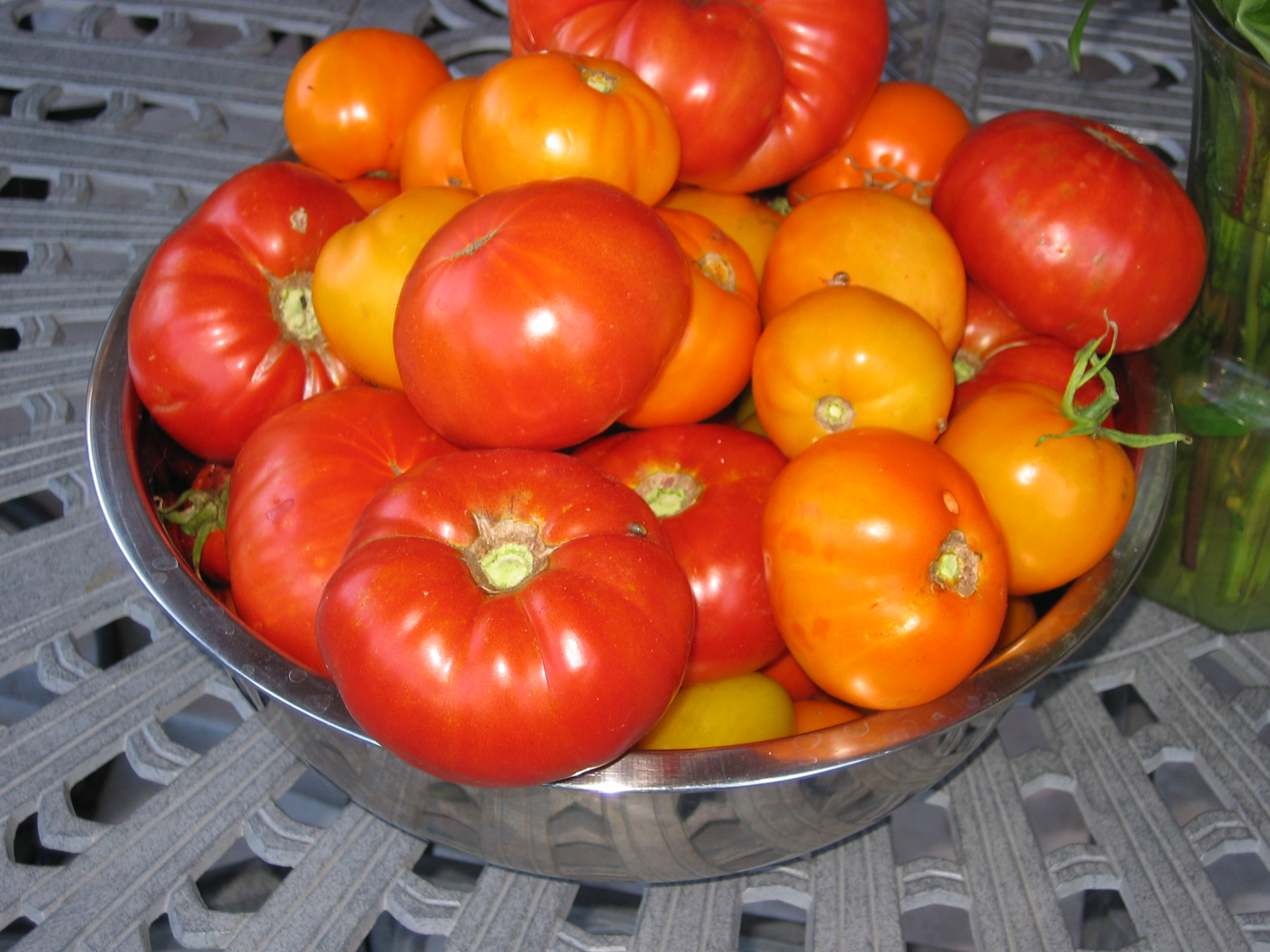
The very last tomatoes of the season are simmering into a sauce on the stove, waiting to be canned later today. The freezer is full and the shelves are bending slightly under the weight of canned sauce, salsa, chutney, and broth. Carrots, leeks, chard, chervil, the last potatoes, and some herbs are still outside. Not bad, given that we live on about 1/8 acre.
My interest is in encouraging more people to grow and cook at least a little of their own food. I have a website to promote “yard farming,” and I invite you to visit it at www.localfoodalbuquerque.com. The purpose of this blog is to explore and report some of the small pleasures that come up along the way.
Learning new things about familiar plants seemjs to have been the theme of my harvest season. Nasturtiums are high on the list. I started growing them because, in our fierce sun, they grow well in light shade. They go through a slightly ratty period in midsummer, but then come back strong in the fall and bloom until there’s a really hard frost. I’ve always loved the blossoms on salads, for their watercress sharpness with a sweet nectar twist as well as for their beauty. But until this year, I didn’t grasp the culinary possibilities of the leaves.
They bear a strong resemblance to watercress, although with a thicker meatier texture. Raw, they add bite to a sandwich or can be slivered into chiffonade and dressed with a fairly strong vinaigrette to make a nice sharp small salad to lighten a plate of pasta or steak. Cooked, they mellow a lot. I love to cook extravagant mixtures of greens, and nasturtium leaves can be up to half the total as long as the other half is milder-flavored material like spinach or chard. They also make wonderful stuffed dolmas, and bring a fresher quality to the dish than brined grape leaves. I consider leafy greens some of the healthiest vegetables that you can eat, and the wider the variety the better. See the “recipes” page on my website and click “greens” for some simple and good recipes, and the not-so-simple Nasturtium leaf dolmas. Or, just see below for the simplest way you can use this versatile plant.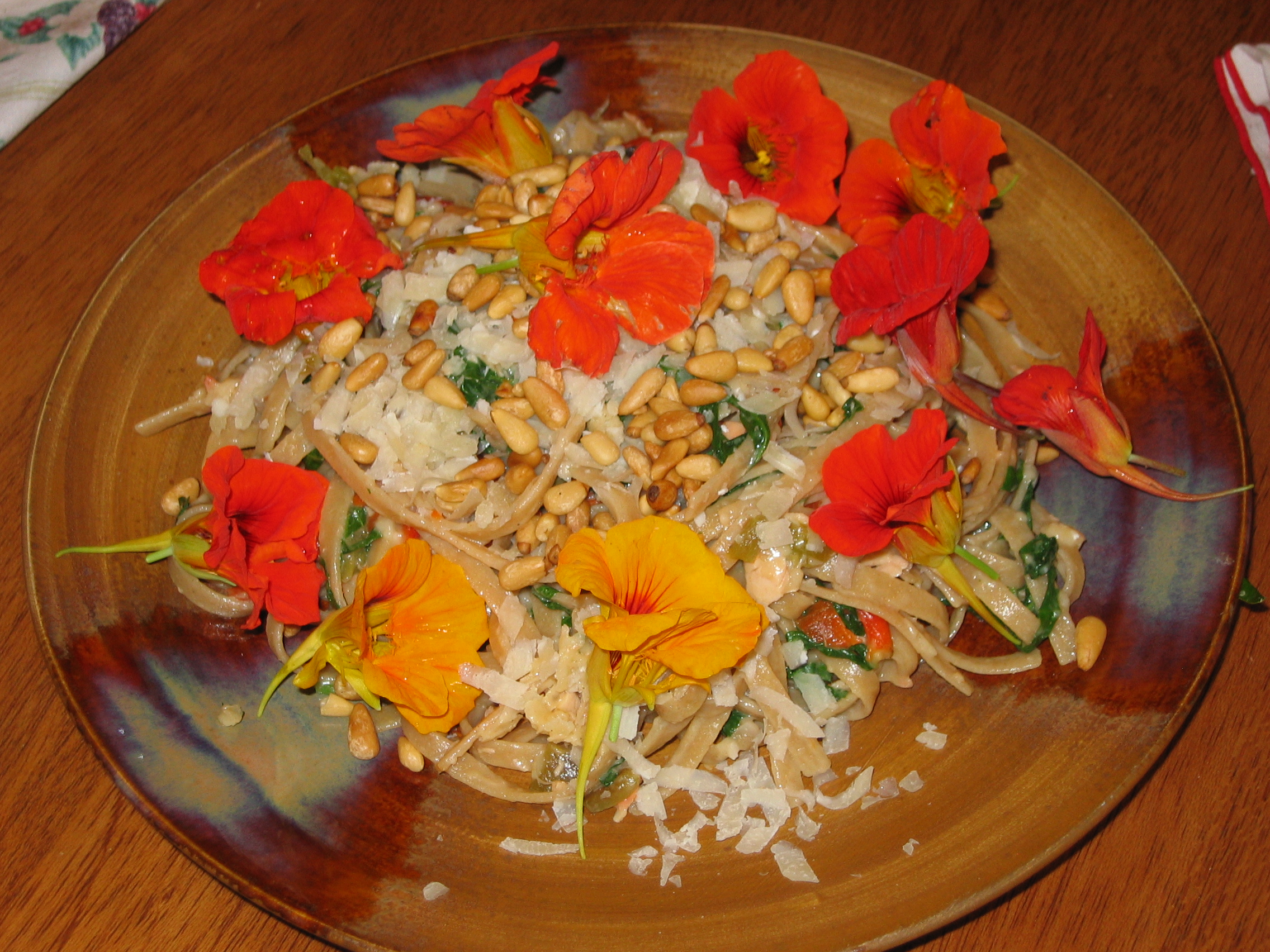
 My urban homestead