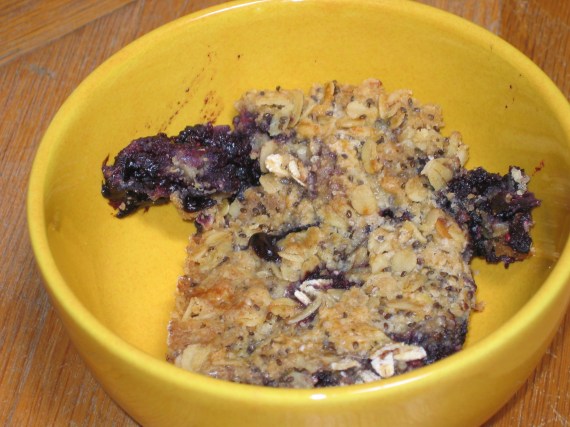
The stands at the farmers’ markets are full of fruit right now, and after you’ve eaten all that you can eat raw, it’s fun to make a special dessert here and there. This one is delicious, healthy as desserts go, and nearly as easy as eating the fruit raw.
Currently I’m experimenting with chia seeds in cooking and have found that, unlike many whole grains, they can actually taste good in desserts. I use them lightly toasted, and they add a pleasant nutty flavor as well as an extra nutritional punch to many dishes. Please see the end of this post for directions on toasting them.
This crumble is good with nearly any fruit. Apples, berries of all kinds, plums (especially the dry-fleshed prune plums that are showing up in the farmers’ markets right now)and figs are all successful. Click the link below the next photo to get the recipe. This photo shows a hot serving hidden under organic vanilla ice cream. After all, summer doesn’t last forever.
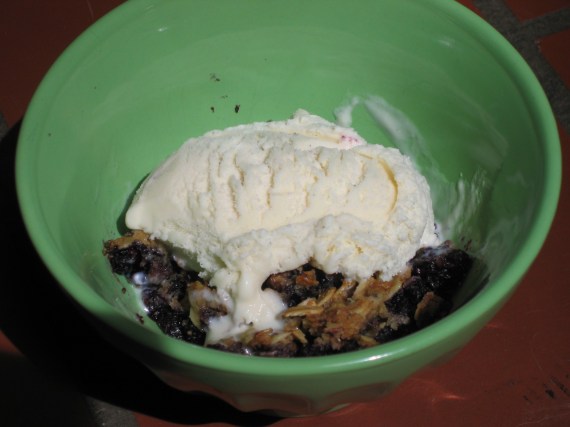
Clich here for the recipe Continue reading
Posts Tagged ‘recipe’
6 Sep
The Joys of Summer: fruit crumbles
6 Jul
The First Tomatoes
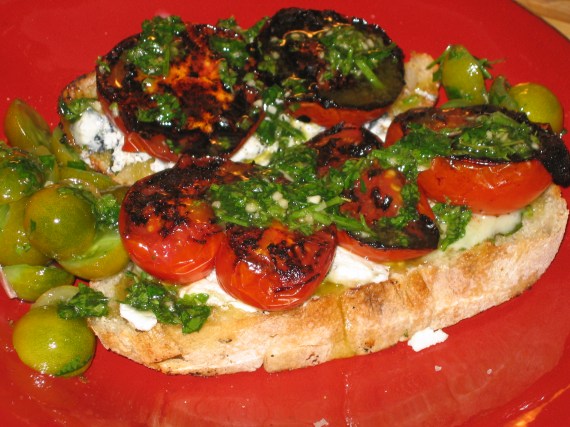
A grill offers wonderful vegetable cooking options. It’s a pity that most people only cook meat on their grills, because grilled vegetables make wonderful and satisfying summer meals. If you are a grilling enthusiast, or would like to become one, I highly recommend the elegant cookbook by Francis Mallmann Seven Fires: Grilling the Argentine Way. My husband, the family grill-wallah, was intrigued by the directions for Burnt Tomatoes, and set out to make a great tomato sandwich. All the hot work stays outside, and your kitchen is spared. Of course you can buy tomatoes at the Farmers Market if you don’t grow them yourself, but if you plant a few around your house, you’re likely to realize why they were grown as an ornamental even back when they were thought to be poisonous.
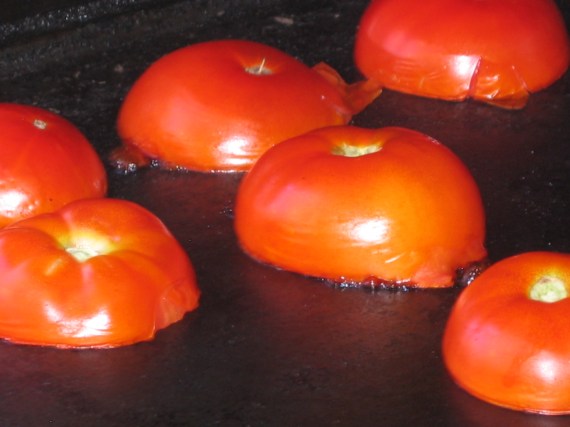
Click here for the recipe! Continue reading
14 May
The Greens of Spring: cutting celery and lovage
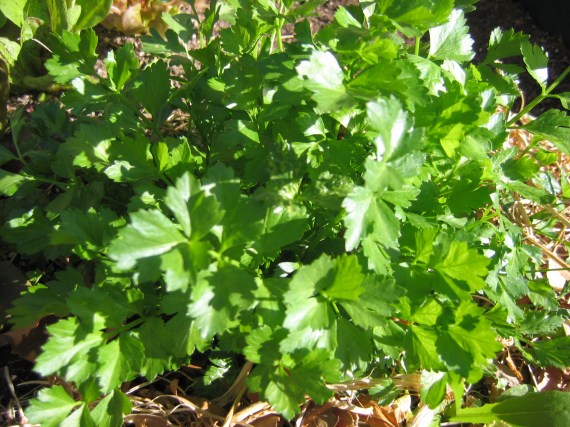
Cutting celery is one of the most underutilized herbs that I know of. It has the flavor of stalk celery without its potential aggression, and can be used in almost any herb mixture. It grows like a weed and can be snipped at for nine months of the year. It seeds itself like a weed, too, so once your clump is established, keep cutting it back to prevent seeding. Throw a few stalks in the pot every time you make broth or stock, chiffonade it into rice or bulgar pilafs, throw a chopped handful into nearly any mixed greens dish. It seems to support the other flavors without taking over.
Lovage, shown below, is another matter. It grows best in semi-shade in our sunny climate. It’s loaded with quercetin and other antioxidants and has a fascinating celery-juniper flavor, , and I wouldn’t be without it, but the flavor is insidious and can dominate a dish. A few leaves are plenty for most dishes and a leaf or two chiffonaded into a vinaigrette will give it more complexity. More will unbalance the flavors, at least to my palate. My favorite way to use it is in Lovage Pesto, where it is used lavishly but the garlic keeps the lovage under control. Lovage will shoot to seed and die if you let it, so keep cutting if you want to keep it. Also, bear in mind that the plant gets pretty big, and site it where it can have a couple of square feet to itself when it matures.
Lovage Pesto
4 large cloves garlic, chopped
About 6 cups of lovage leaves, no stems, loosely packed
1and ½ cups full-flavored olive oil
1 cup walnut pieces
1½ teaspoons sea salt
For this recipe, the food processor is okay. Chop the garlic in your food processor, then add the lovage leaves and half the oil and process until the leaves are coarsely chopped. Add the salt, the rest of the oil, and the walnuts, and process only until the nuts are coarsely ground. Let mellow for an hour before use. It can be tossed with pasta and parmesan like other pestos, or makes a good marinade for fish (add a squeeze of lemon if you wish.) It can be brought to the table with roast lamb as a sauce to dip into sparingly. A spoonful is a good addition to a simple vinaigrette. Tightly covered, it will keep about 2 weeks in the refrigerator.
For more on herbs, visit the “recipes” page of my website and click on “herbs.”
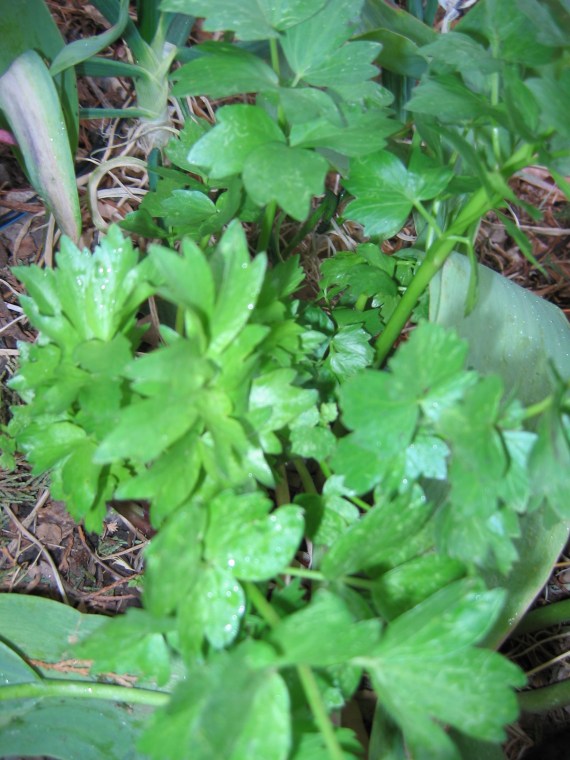
Lovage in early spring. It gets three times this size in a couple of months.
3 May
The Greens of Spring: Alliums
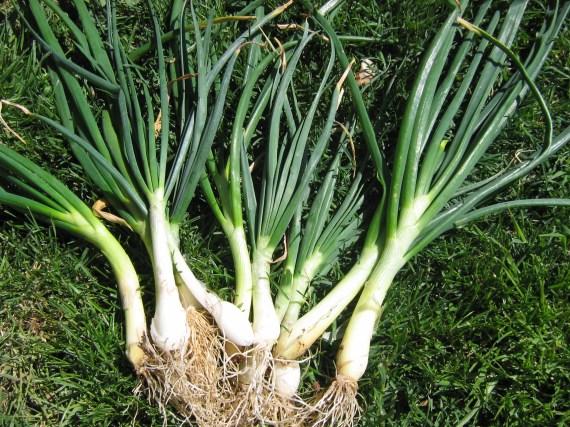
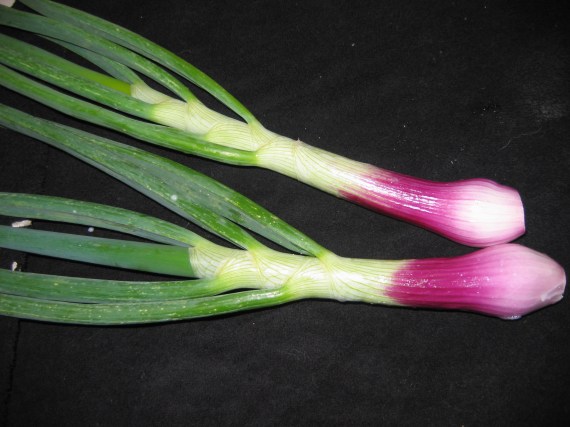
Onions and garlic are among the most common and useful seasonings worldwide, as well as in my kitchen. In spring my garden is full of green fresh forms of these lovely vegetables, and this is the time to plan for the green onions you’ll want later in the year. Start now, because they won’t be ready for a while. I suggest starting some long red onions from seed. They are available under several names. At Gourmet Seeds International in Tatum, New Mexico, they’re sold as Rossa lunga de Firenze. Also get a packet of the lovely Japanese green onions. My favorite is Shimonata. Don’t worry about the late start; you’re planting for the future. Start them now, and plant them out in fertile soil when they’re big enough to take care of themselves. I plant mine in clusters of 3-5 plants, with at least 8″ between clusters. They will grow slowly through the summer, and some of the Shimonata will be big enough to eat in the fall. In early fall the red onions will seem to mature and die at a small size. Don’t panic. Leave them in place. Both types will sit motionless, sulking, through the winter and will burst into lively growth in early spring. Usually the red onions will divide, and you will get two or even three beautiful mother-of-pearl-colored spring onions like the ones below from each. The shafts of both types will be thick, sometimes an inch in diameter. Harvest them as soon as they’re big enough to be usable, and keep harvesting until the flowerscapes appear.
They are useful in all kinds of cooking, and I love the shafts trimmed, rubbed with olive oil, and grilled slowly until sweet and softened. Slice up with a good sharp knife (very messy eating if you skip this step) and serve with sea salt and a little of your best olive oil.
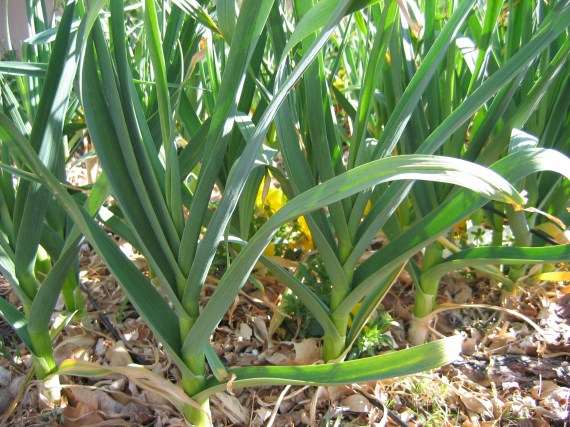
To have green garlic next spring, stick cloves in the ground about 6″ apart in the fall. For this purpose, any good organic garlic from the store is fine. Harvest when they just begin to form a bulb swelling, trim the roots and peel, slice finely, saute in good butter, and season with sea salt. Good with pasta, on good toasted sourdough bread, or as a sauce for fish.
A few years ago I ordered some “French gray shallots,” which the catalog claimed were the only real shallot to use in French cooking. I was unimpressed: the shallots were strong-flavored, garlicky, small, and maddening to peel. I left a lot of them in place out of disinterest, and discovered that in late winter and spring their foliage makes great greens. Cut and use like chives, but they are significantly stronger in flavor. They add zip scattered in a salad, or add them to greens dishes for the last few minutes of cooking.
Sauteed green onions are a great addition to hortapita fillings and other greens dishes, so please check out my “greens” category on the sidebar for more recipes. Or, for a recipe in which green onions are the stars, click here!
 My urban homestead