Posts Tagged ‘leafy greens’

A Grand Mess of Greens

image

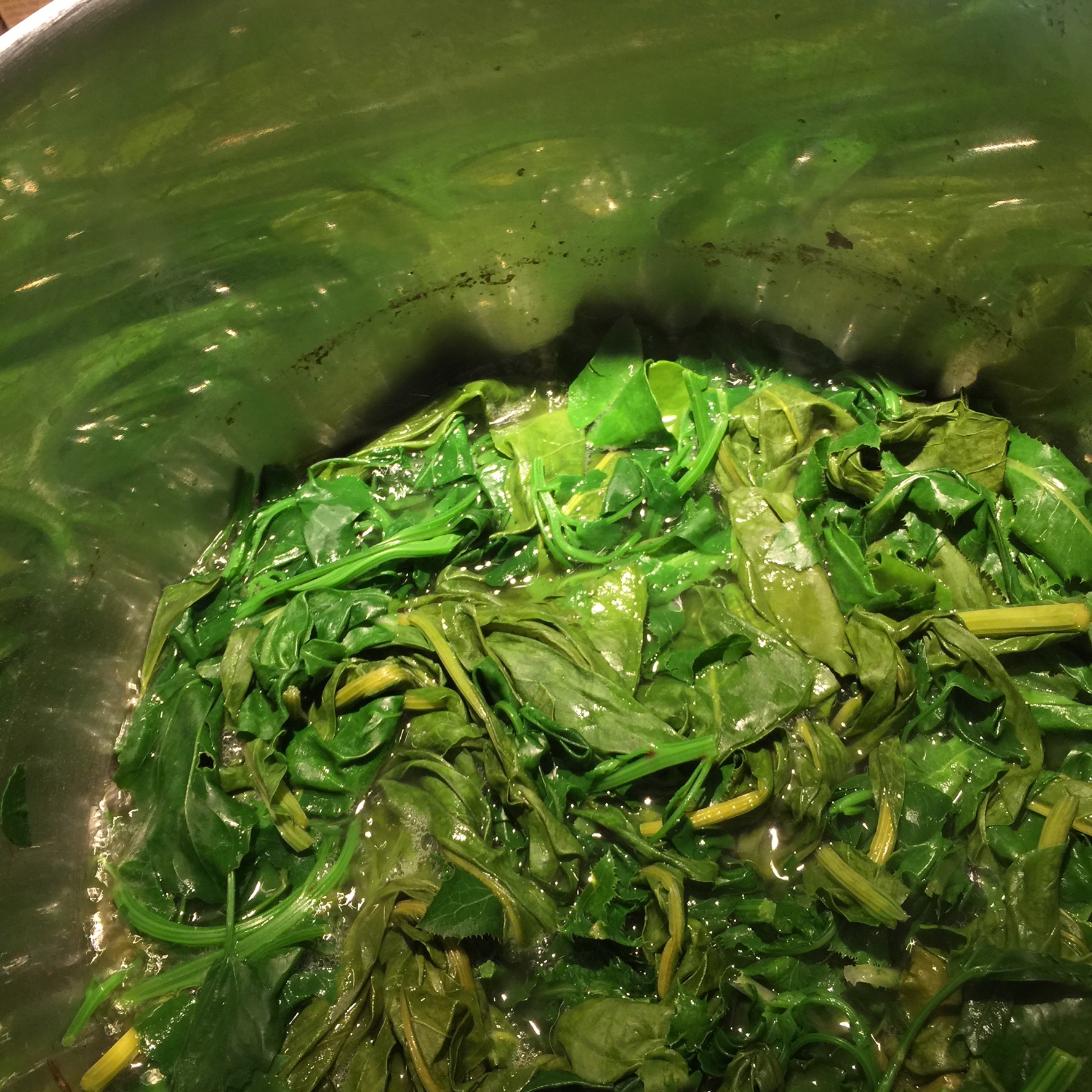
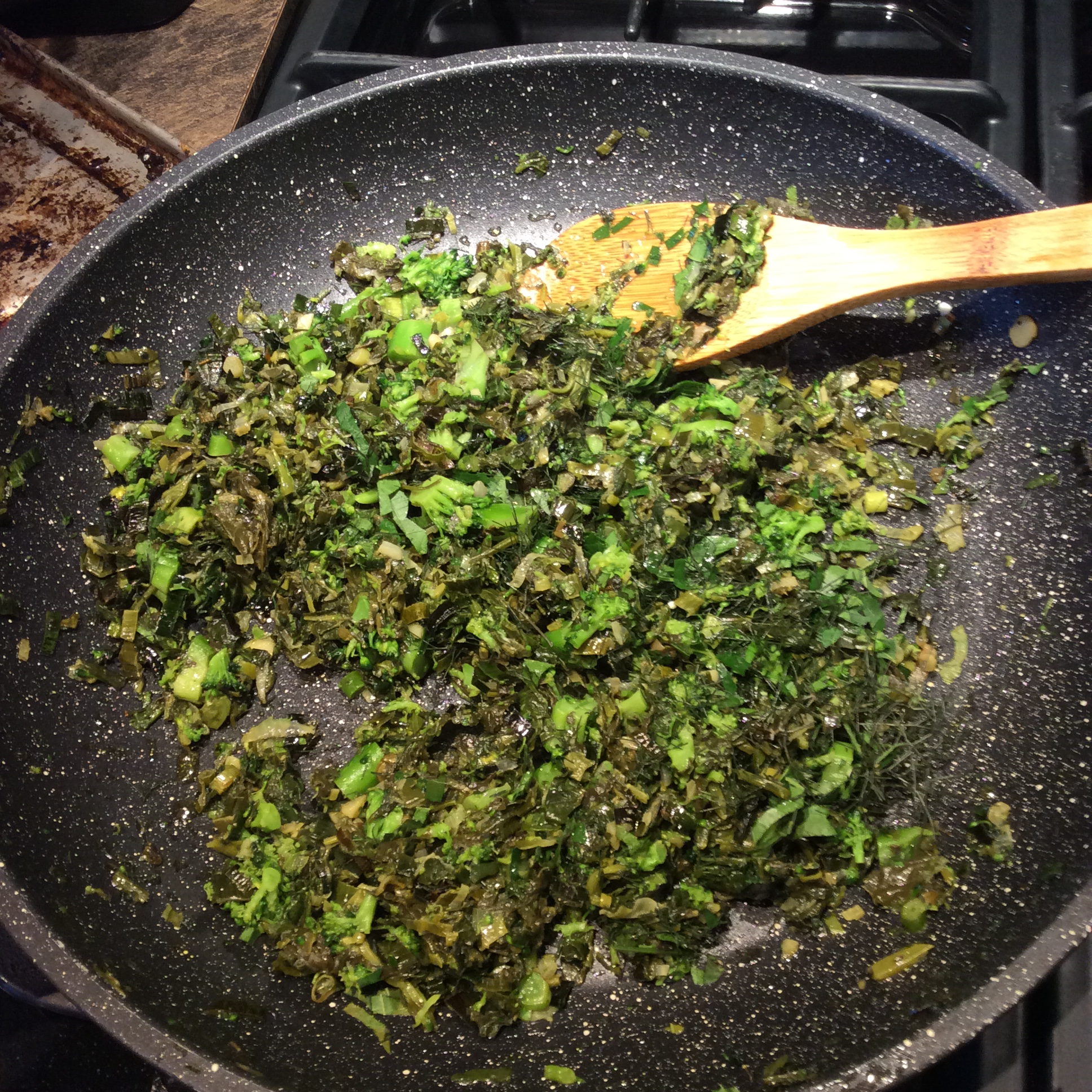
I love the various vegetables that the seasons offer me, and for the most part prefer to eat what my environment is offering me fresh that day. I do freeze greens mixtures, though, so that I never run short and have them all winter. Recently I came across a forager’s description of his “56 species calzone” and it made me want to count up the number of species in the large batch of cooked seasoned greens for the freezer  that I’m working on today.

The main components: chard, dock, lambs-quarters, spinach, nettles

Seasonings and minor components: mulberry leaves, hops shoots, lettuce ( about to bolt,) dandelion,  scorzonera, salsify, sunflower, green onion, young leeks, elephant garlic, corn poppies, young grape leaves, marjoram, mint, fennel, mustard, cattail shoots, pea vines, broccoli leaves,  arugula, sow thistle, wild lettuce

Sauteed separately and added: chopped broccoli stems, grape leaves, green garlic

So, 30 species, a thoroughly respectable count for an average early summer morning,  and a potential treasure on winter days when I need to be flooded with the antioxidants of summer. In general I blanch the bulk greens in a fairly small amount of water which I later drink or make soup from, saute the chopped alliums and seasonings, then combine all and saute together for five-ten minutes or until the flavors have blended.
image
image

The true Cretan diet, the one that nourished some of the healthiest and longest-lived people in the world, was based on huge numbers of wild mountainside greens. It’s said that over 300 edible greens grow on Crete, and the average citizen can recognize over a hundred, making my 30 seem limited. But be assured that if you can learn to recognize ten of your local edible weeds and know when to harvest them and how to prepare them, your health and table will improve.  I’ve been tracking the preferences of a vegetable-despising friend, and he will eat greens, sometimes even second helpings, if they don’t look like greens on the plate. An example is the horta egg cake that I make often. He will even eat plain greens if they have a sweet component and a bit of texture, and an easy way to provide this is to douse them in the Quasi-Korean Sauce that I always have in the refrigerator and put a handful of roasted peanuts on top. If you eat bread, toasted sourdough bread crumbs provide delicious crunch on greens sautéed with garlic and chile flakes.
Be aware that greens have a remarkable capacity to absorb and mute flavors, and may need more seasoning than you think. Salt seems to disappear into them, and enough seasoning may be key to getting your loved ones to eat them and even like them. So keep tasting and adjusting until the flavor is right.
If you want to learn to identify some wild greens, gather them at the right stage, and cook them well, there is no better foraging author than John Kallas.
Kitchen staples: the pantry (and freezer) of the low-carb home

image
There are ingredients and seasonings that I have to have on hand at all times or I get nervous. With them, I’m ready to make a meal out of whatever foodstuff comes to hand. All such lists are intensely personal and idiosyncratic and I make no claims for universality, just usefulness. Due to my very low-carb eating, staples like pasta and flour aren’t on the list for me.

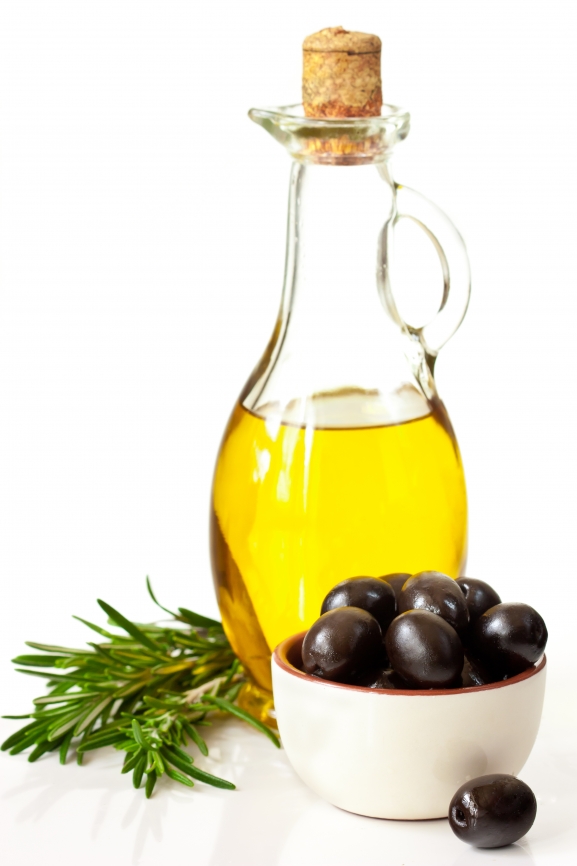
1. Really good fresh olive oil. Olive oil oxidizes fairly rapidly and, in my opinion, should not ever be used if more than a year old. Rather than take chances on freshness, I belong to the Fresh Pressed Olive Oil club; every three months they ship you three (or more if you choose) bottles of olive oil guaranteed to have been harvested and produced within the last 3 months; sourcing from the Southern Hemisphere as well as more traditional source areas makes this possible. I have belonged for years and hope they go on as long as I live and cook. A wide range of olive varieties and oil styles is represented. Pour it over cooked vegetables, dress salads, drizzle it on meat dishes, use as a base for a sauté of veggies. The Cretans and Ikarians thrive on it and so can we. I also keep oil-cured olives around at all times for their meaty umami belt in mixed greens.
2. Red Boat fish sauce. This is not only the best fish sauce available for Asian cooking, but pinch-hits very nicely for Italian colatura (garum.) A dash in vinaigrette gives a wonderful savor.
3. Dried mushrooms. I keep dried shitake, maitake, and porcini on hand at all times, and others at times as the mood takes me. With them, I am always prepared to add texture and flavor to cooked veggies, give a fitting garnish to a good piece of meat by soaking and sautéing them, or make a really good soup on short notice. I am ketogenic and don’t use flour, bread crumbs, or any other starch product, so I intend to try grinding them to powder and using them to “bread” and fry chicken, but that’s still on my to-do list.
4. Eggs. The best eggs I can get. Most of the time I have eggs from my own chickens, and in midwinter when my hens take a rest, I buy from a local co-op. Beyond the obvious omelet, frittata, and scramble, a fried egg is a wonderful way to make vegetables into a complete meal, and egg yolks are a wonderful velvety thickener for sauces.
5. Grass-fed butter. Grass-fed because it’s better for the cows and the planet as well as for me. Butter because there is nothing like it for improving flavor.
6. Coconut milk, which in my book is a joint pantry item with Hand brand Thai curry pastes. On days when I am short of time, energy, and verve, I can pick up some fresh fish or thaw a couple of pastured chicken thighs, soak and slice a few shiitakes, and pull together a healthy meal in under twenty minutes.
7. Freezer item: Wild-caught Alaskan salmon. I pay whatever I have to pay to get good fish, and I always buy Alaskan because their fisheries are well managed. The fillets are thin and thaw rapidly when I haven’t thought ahead about dinner. After a workday that ran later and harder than I expected, I’ve been known to take a frozen fillet still in its vacuum seal into the hot tub with me. Fifteen minutes later, I feel rejuvenated and the salmon is ready to cook.
8. Freezer item: homemade broth from grassfed beef and pastured chickens. I have written at length elsewhere about homemade broth. I really feel that nothing else will do as much to instill food thriftiness and improve your soups and sauces.
9. Nuts of various kinds. Almonds and Macadamias always, others here and there. Because they taste good and you can run for hours on a handful of them if you need to and they add flavor and crunch and specialness to all kinds of dishes.

10. Freezer item: blanched and chopped greens. Mine are a mixture of whatever was fresh and vibrant in the garden and field on any given day. If I had no garden and didn’t forage, I would use mixtures of spinach, chard, and Tuscan kale, and blanch and chop them and vacuum-seal before freezing. I find that I eat a lot more greens if I have them available in a handy form, and can make horta or whatever in a matter of  ten minutes rather than having a more prolonged process to go through.

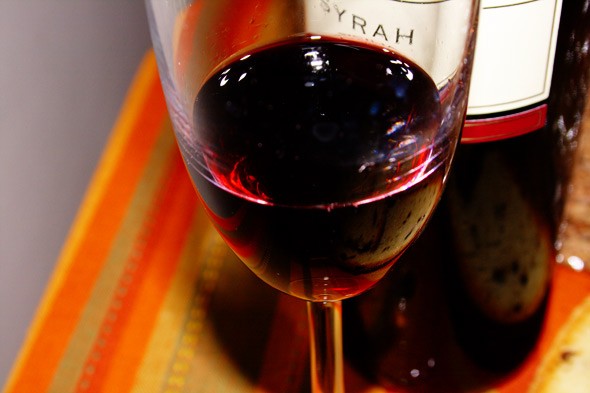
11. Good red wine. Because life contains joy and is worth celebrating.

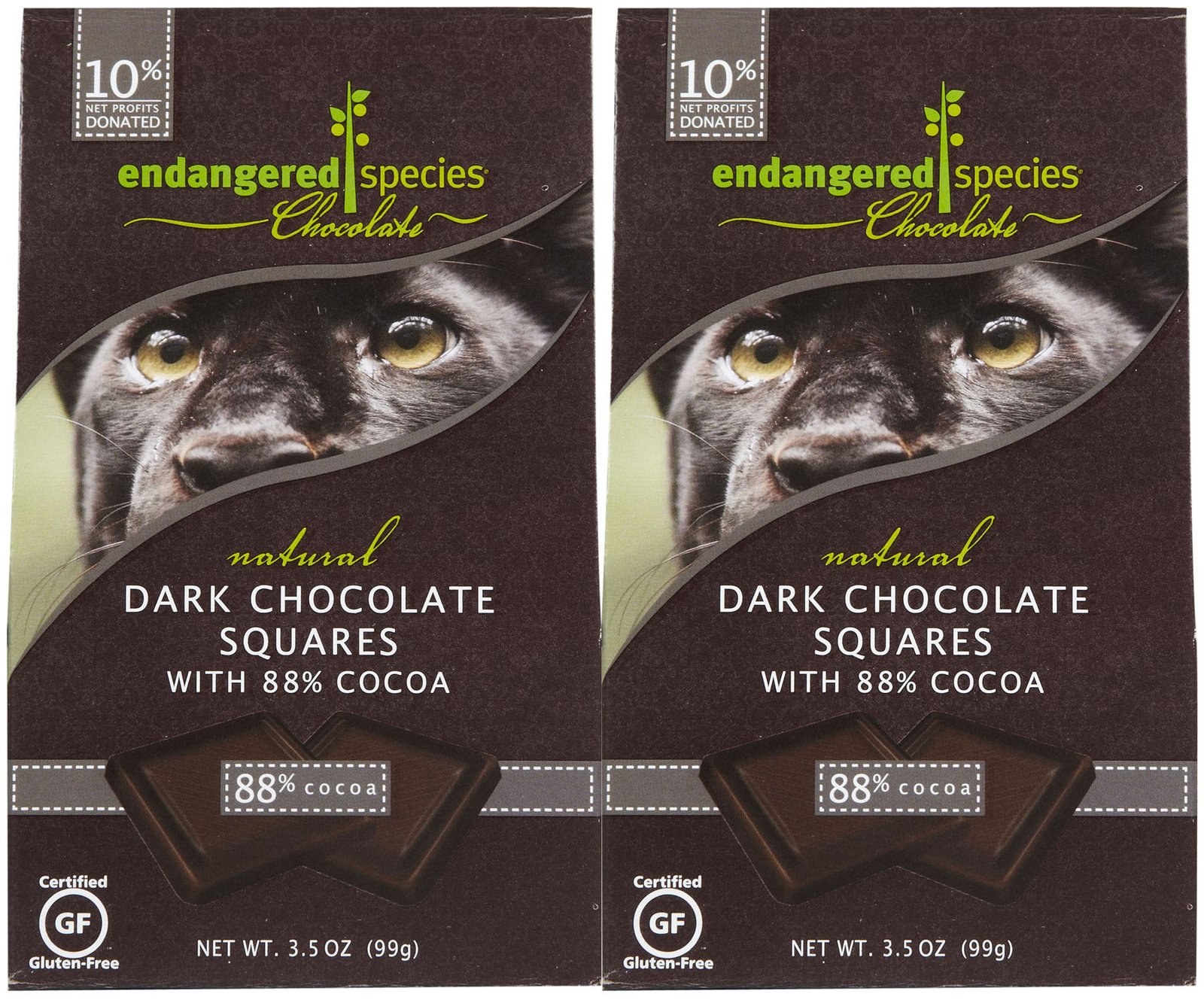
12. Very dark chocolate. Because see #11.
image
image

My 200th post: Celery, Nose to Tail

image
My WordPress dashboard brought to my attention that I have been yapping endlessly about home food production for 199 posts. Naturally, I decided to make my 200th post about a green vegetable, the very thing that I am forever droning on about.
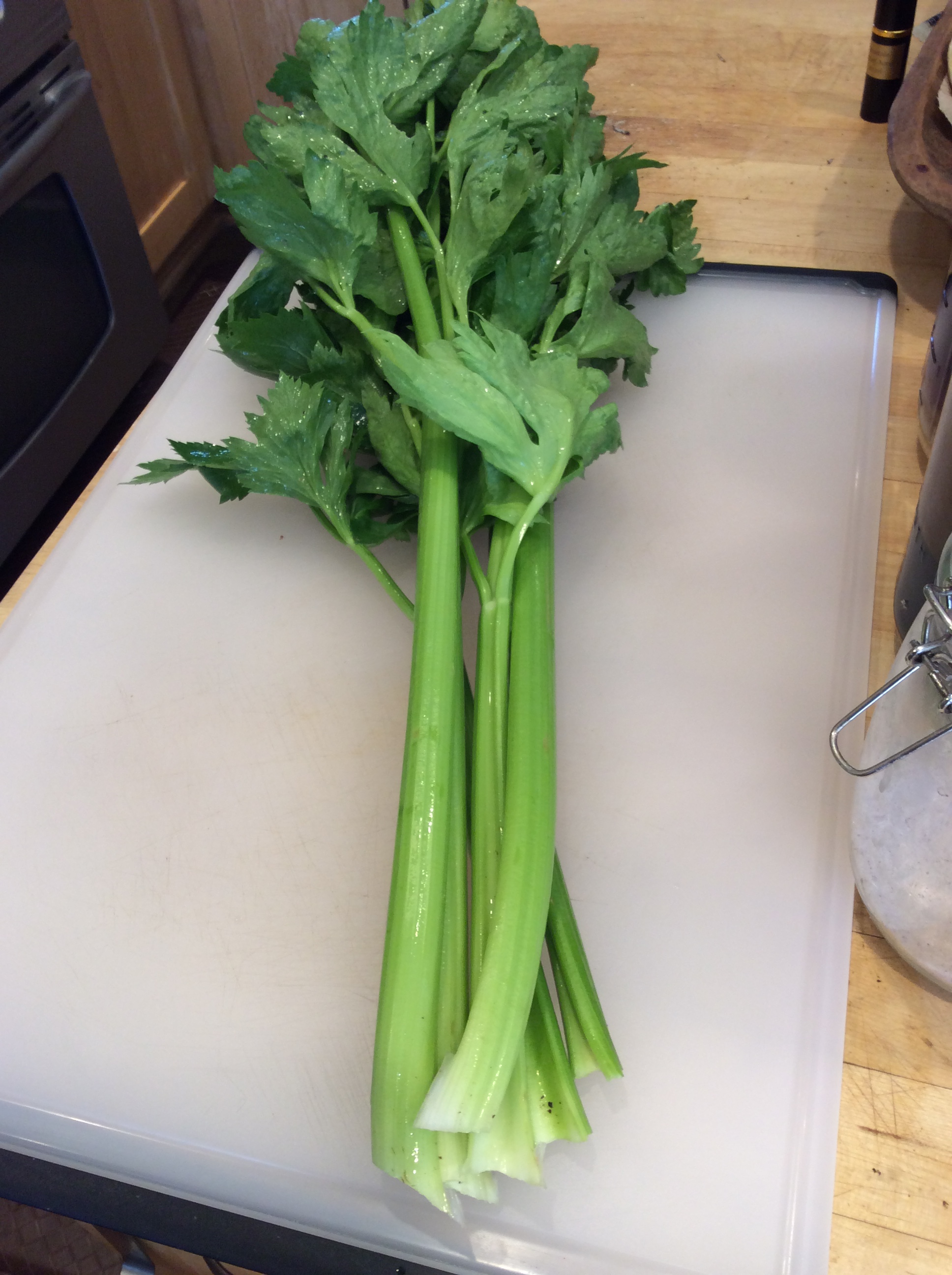
I never tried growing celery because I never ate that much of it. I crunched an occasional stalk, and as a homegrown Louisiana cook I cooked it in the mirepoix that begins so many Cajun dishes, but a bunch a year pretty much met my needs. Then last spring I noticed that a supplier had celery plants at the same time that I noticed I had a bed about to be empty. So I ordered a dozen plants as a lark.
As it turns out, celery is highly versatile in the kitchen as well as easy to grow. It needs your best soil and some elbow room, and here in the desert it has to be watered regularly. Given those conditions it will grow into a wonderful mound of greens.
For general snacking, stalks can be harvested as soon as they’re big enough. Break or cut near the base, but don’t damage the plant. The stalks are a little less tender than grocery store celery, and also a lot less watery and have a full delicious flavor of their own. I snacked away about four of my twelve plants and had eight big plants left by fall. After several frosts when the rest of the garden was over, the celery was green and robust and I finally got around to harvesting it. I never blanched the plants. Blanching produces lighter, yellower, and more tender stalks, but it is also a fair amount of trouble and I am as lazy a gardener as there is.
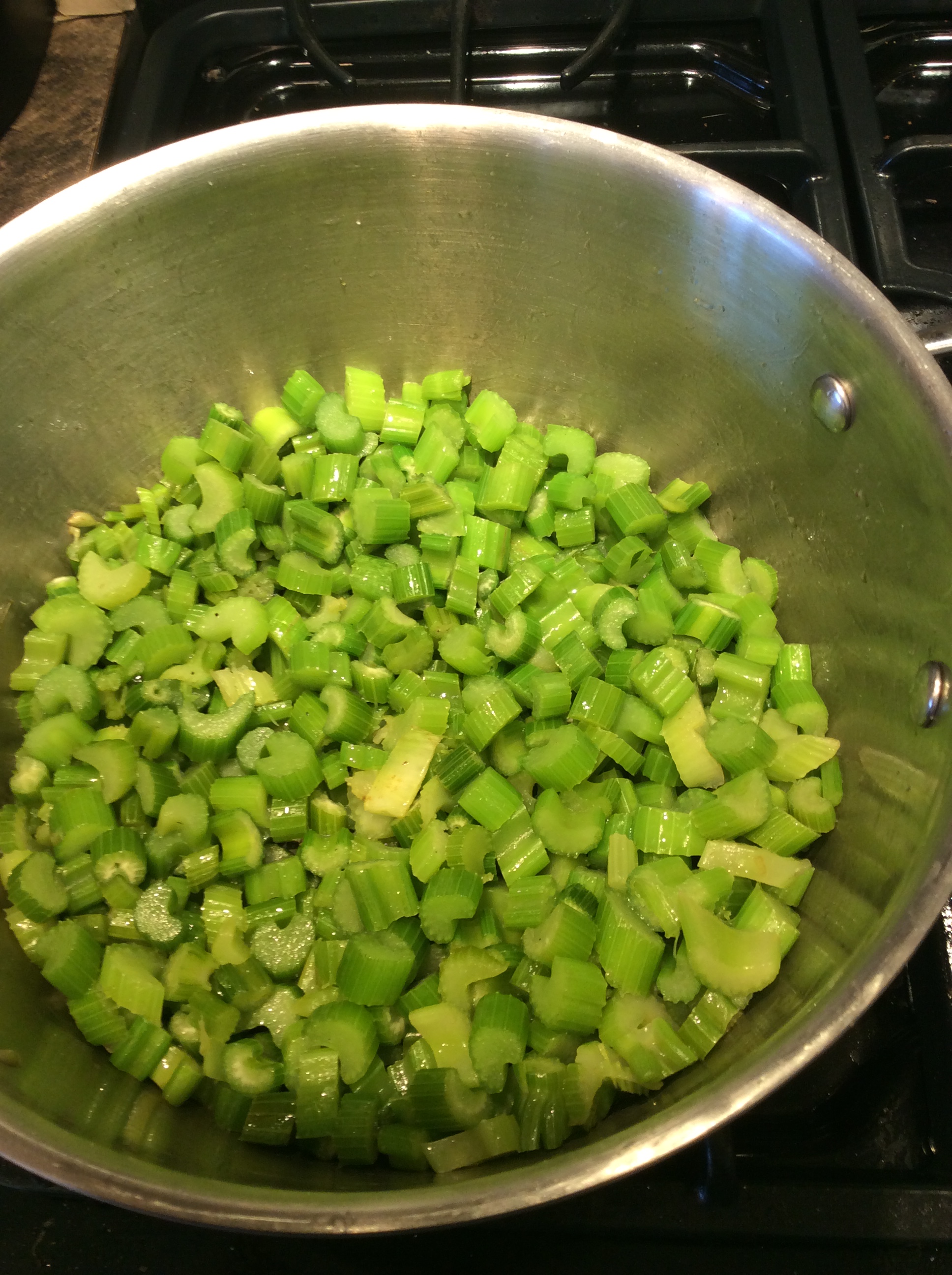
I cleaned the stalks thoroughly and cut them in 1/2″ cross sections and sautéed them in batches in very good olive oil. I thoroughly enjoyed eating them as a green vegetable, with salt and bits of fried guanciale on top. I froze a lot in vacuum-sealed bags to eat this way and to use in mirepoix and soup all winter.
image
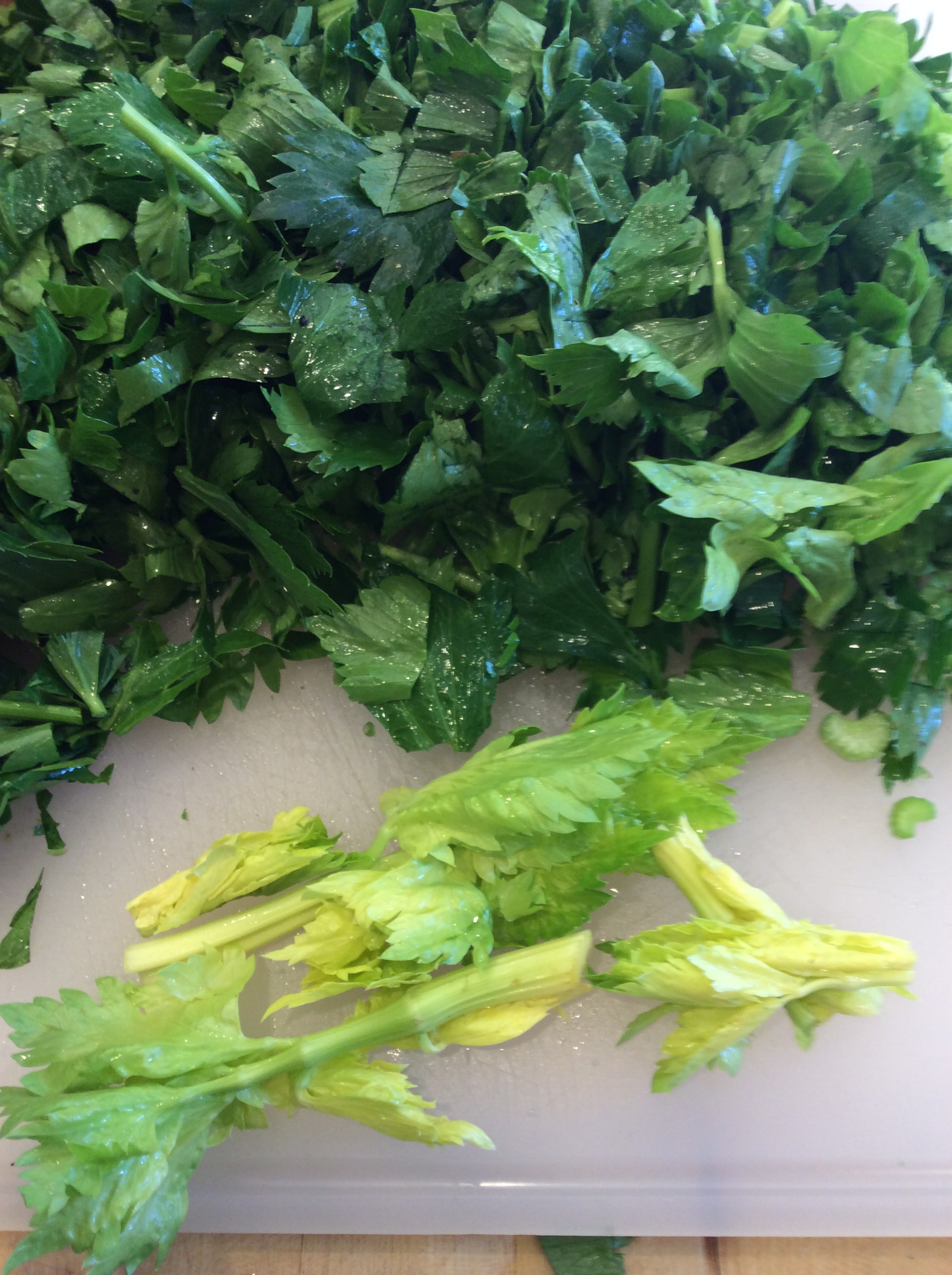
I was left with a counter full of the upper halves of the plants, all thin stalks and dark green leaves. I sorted out the pale self-blanched leaves in the middle, ate some dipped in olive oil as a cook’s treat, and refrigerated the rest for use in salads.
image
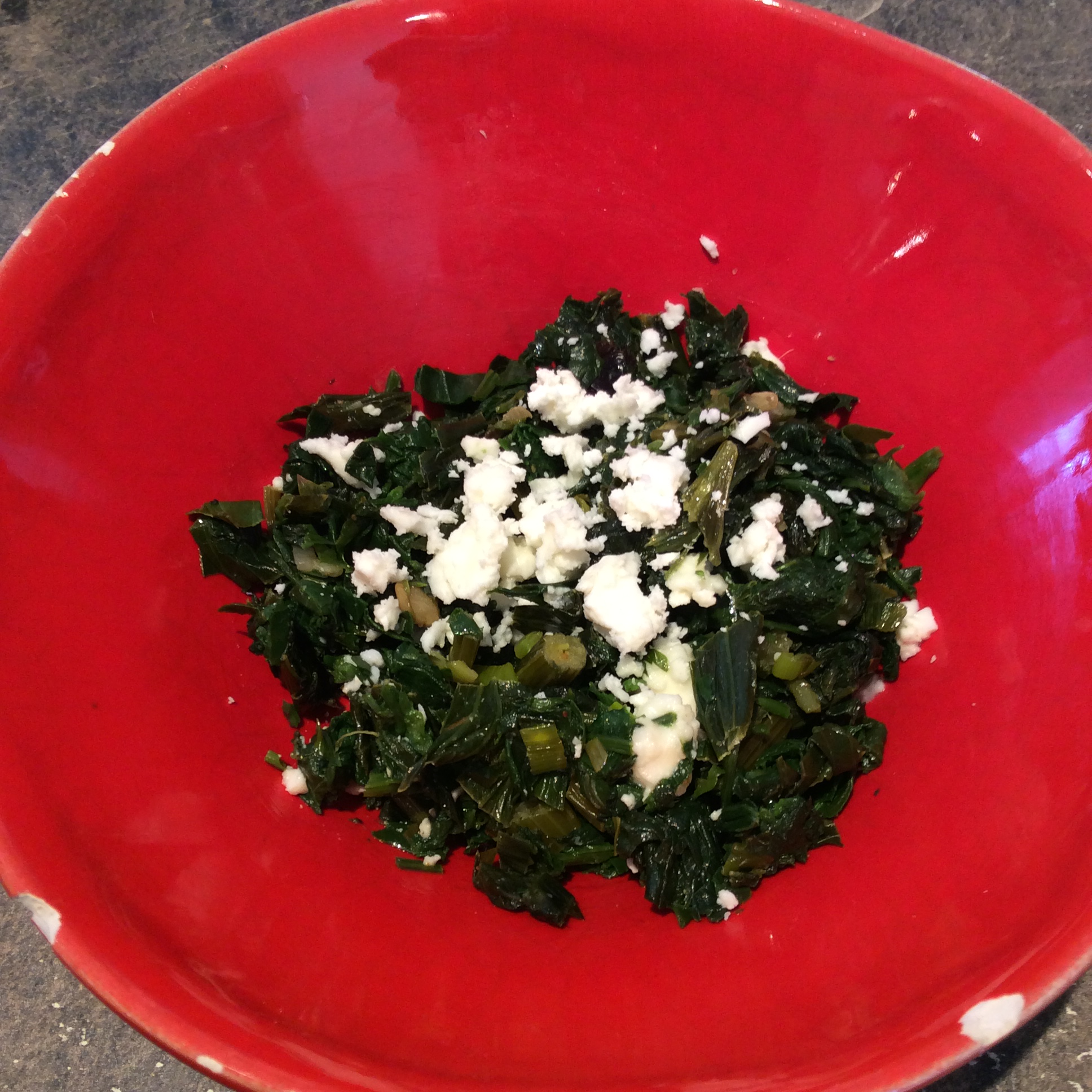
I was left with heaps of dark leaves like the ones toward the top of the picture above. I am not one to waste leafy greens, so I cut them in the same half inch cross sections, leaves and all, and sautéed them in olive oil until cooked. I put a bit of the cooked tops in a skillet with more olive oil and added a chopped clove of garlic, some salt, several chopped black oil-cured olives, and a squeeze of lemon to make a Horta of pure celery leaves. I ate it with crumbled feta and greatly enjoyed it, but have to say that this is a bitter green and probably only real greens-lovers will enjoy it. But when I made a horta with celery tops as about a quarter of the total greens and used milder greens to make up the bulk, I was surprised how much the bitter leaves added to the savory nature of the dish.
image
I sealed and froze the rest of the cooked tops and am using them with my frozen lambsquarters and amaranth to make horta that meets with general approval. I think that a bit of the pure celery-top horta would be good as a sort of herb salad next to roast duck to cut the richness, but I haven’t tried it yet.
I want to say once again, when cooking leafy greens, don’t be afraid to cook them. I often find the stronger greens tough and revolting when lightly cooked but delicious with 10 or 15 more minutes on the stove. As long as you are sautéing there is minimal nutritional loss. The thing I no longer ever do is blanch them and toss out the blanching water. If a sauté method isn’t appropriate, I blanch in a very small amount of water with frequent stirring, sort of half-steaming in effect, and drink the bit of water after it’s been drained off and cooled.

Just as a point of interest, a phytochemical found in celery called luteolin is being studied for neuroprotective effects. If true, one more reason to eat your celery, and your green veggies generally. You can find an abstract here.

The Eggplant Chronicles II: cooking eggplant

image
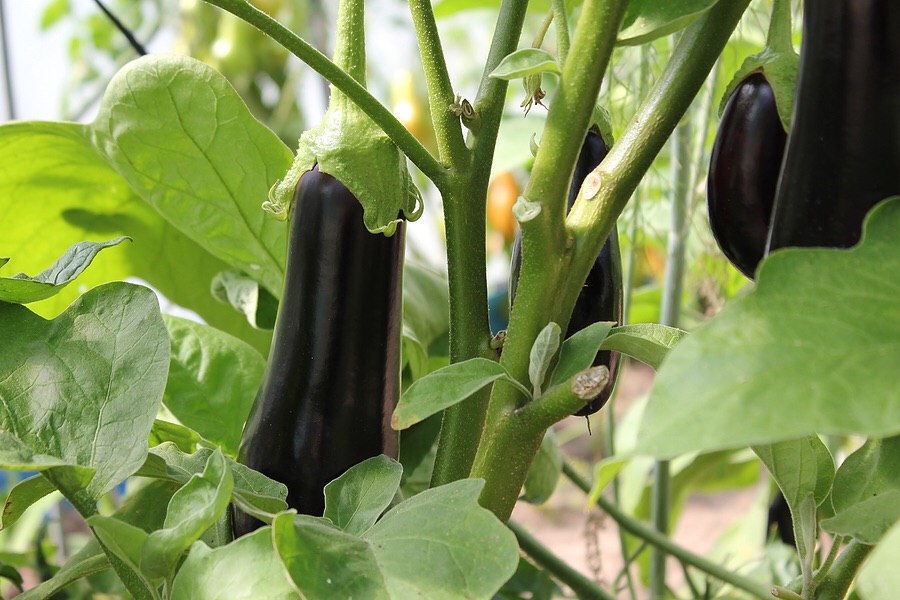
Like most Louisiana natives I love eggplant, and I have fervent opinions about how it should be prepared for cooking. For any application in which it is to be sautéed, I believe that it must be salted and drained first. This is not to get out bitterness, as some cookbooks say; a well-grown eggplant of a good variety doesn’t have bitterness. The disgorging process gives the eggplant a better texture, almost silky, and in my view is not optional.
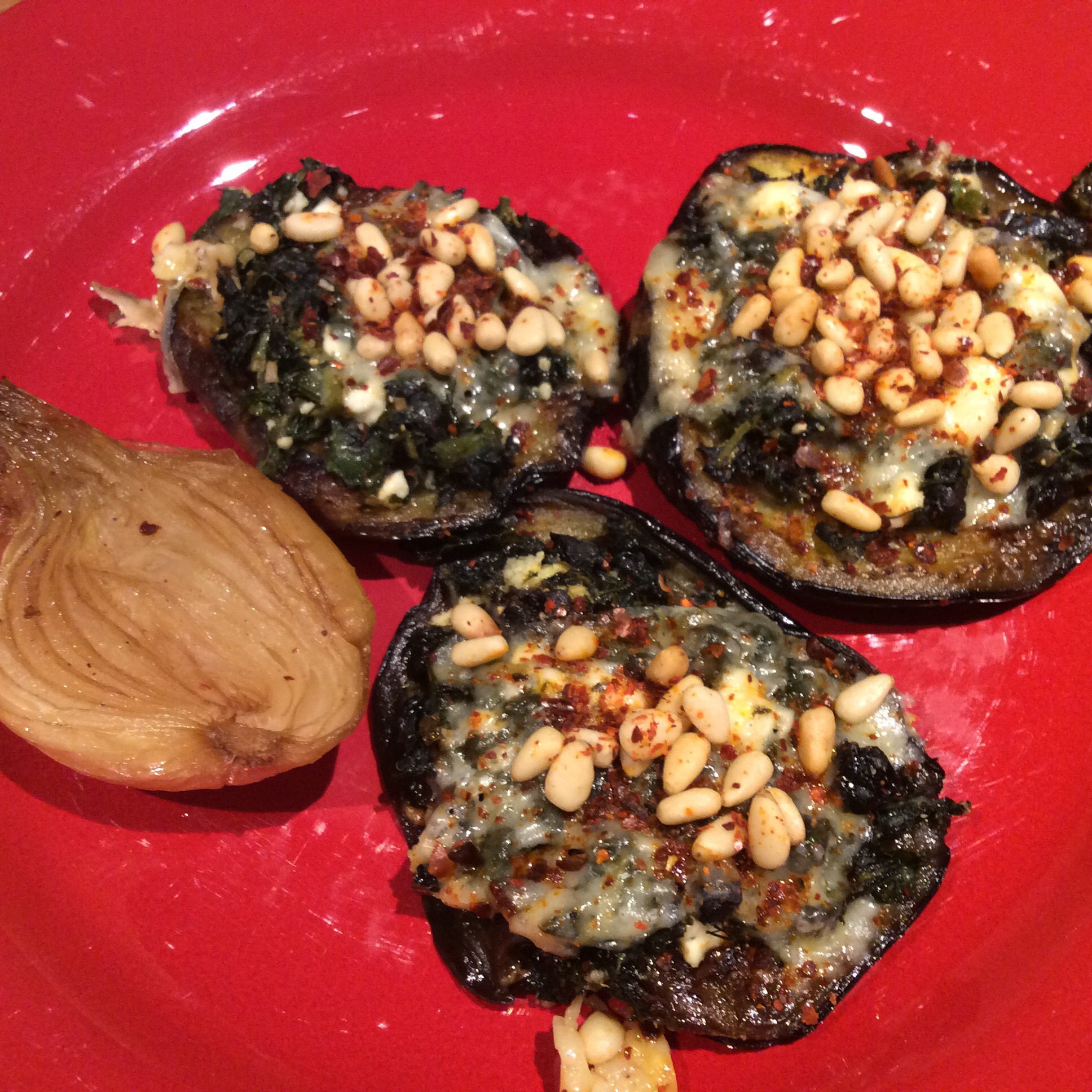
For this dish, I cut an enormous yet still young Black King eggplant into thick meaty slices about half an inch thick. I salted them liberally on both sides in the morning, stuck them in a bag in the refrigerator, and in the evening laid them out in a single layer on half of a clean towel and pushed down hard on the slices with the other half of the towel, pressing out as much liquid as possible. Now sauté them in olive oil over medium-high heat, laying them out on a baking sheet as they finish cooking, and making sure to cook them until they can easily be penetrated with a fork. Meanwhile, decide what you want to put on them. I had some horta (cooked greens mixture) made according to the description in my amaranth post, liberally flavored with garlic, fennel fronds, and salt-cured olives, and decided to use that. Other possibilities include leftover cut-up meat or chicken with herbs, scrambled eggs highly seasoned with herbs, tomato sauce, or whatever. I mixed the horta with crumbled feta for a little pizazz. Top with cheese ( I used an artisanal cheese similar to Parmesan) and pop in a 425 degree oven for 25 minutes or so. Pull them out, top with pine nuts or your own favorite nuts and a lavish sprinkle of Maras pepper flakes or other good red pepper flakes, and put back in the oven for a minute or two. I added some roasted onion halves on the side. Serve. Eat.
This sort of dish screams for a good smooth red wine and has to be eaten with a carefree attitude. Laissez les bon temps roulez, after all.
image

image