
Our recent sunny warm days have brought the happy little Crysanthus crocuses up, and when they bloom I know that I’ve survived another winter and we are well on toward spring. But we are still in the time of year called the “hunger gap,” when in leaner times you would have eaten most of your preserved and stored food and fresh food would be a distant memory. In those days, just about the time that scurvy threatened, there would be a precious few fresh foods that would come through for you. I am no longer that interested in eating preserved foods, so the fresh greens of the hunger gap are increasingly important to me.
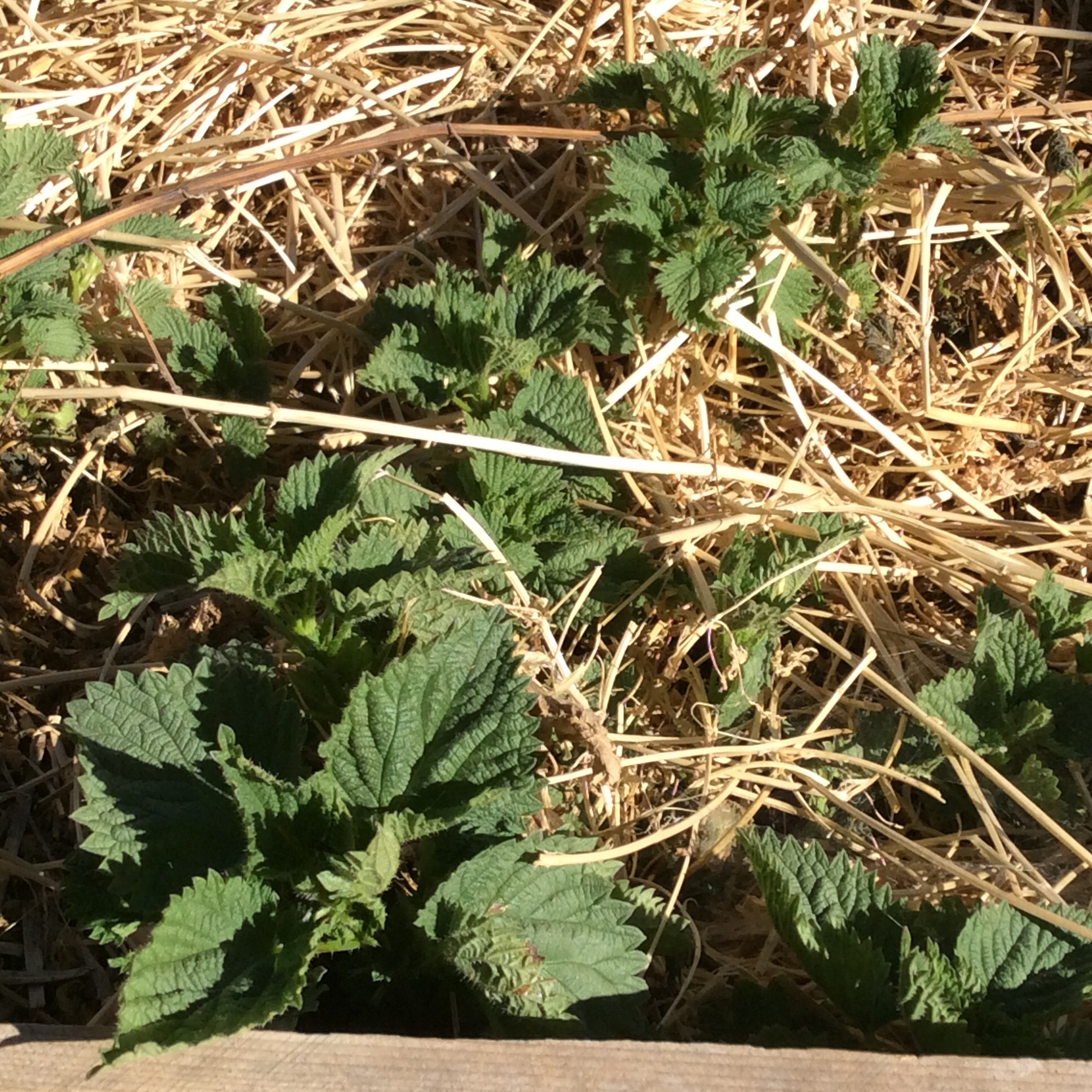
Stinging nettles are not just a fresh green in earliest spring, they are a nutritional powerhouse. Vitality and well-being seem to course through your body as you eat them. Also, they’re delicious. They don’t occur naturally in Albuquerque, and I had to buy plants in order to have them, but I have two nice patches now. They need some water and mulch in our desert area, but given those they spread rapidly, so be ready to control them by digging out excess roots when they spread too far. They sting fiercely at any age, so don’t plant them near paths and have good heavy leather gloves (they sting right through fabric) ready for harvesting. Pick any time after they reach about 5-6 inches high, harvesting the top 2 or 3 inches. You will have about a month to harvest before they get tough, gritty, and nasty. Keep your gloves on while you wash them and drop them into boiling water. Once blanched for 1-2 minutes, their spines are softened and their venom is broken down, and you can treat them like spinach or any other mild green. I love them in omelets or just blanched and chopped with some butter and cream. Be aware that the raw nettles can sting animals as well as people, and severe allergic reactions to the sting are possible, so please do site them responsibly.
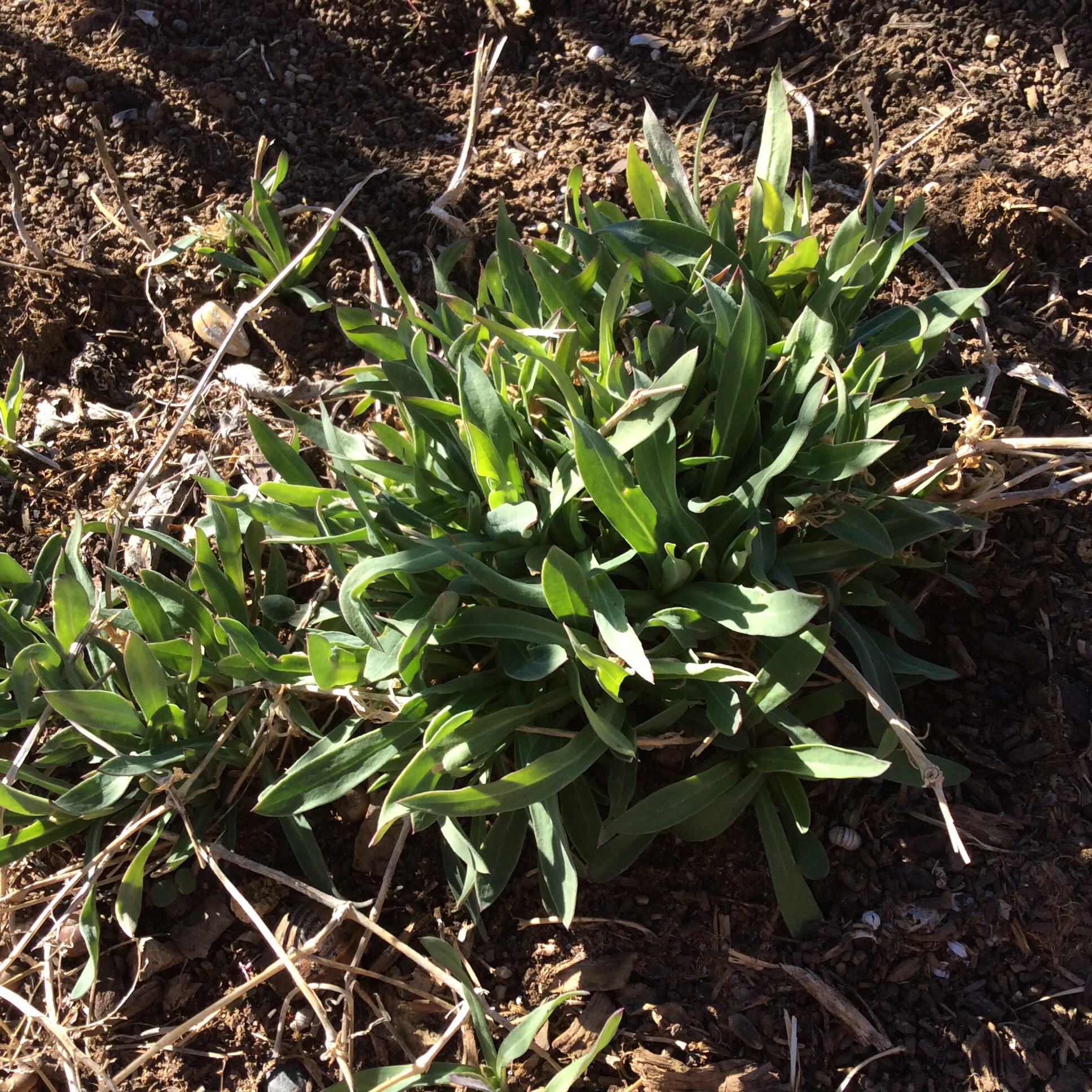
Bladder campion is another weed that doesn’t occur naturally in central New Mexico. I bought seeds from an herb supplier. Sprinkle them in a place that you can keep watered in late winter. In hot sunny areas they will appreciate a little shade. They will be scant and spindly the first year, and there won’t be anything to harvest. The second year you can pinch off the tips when they are 6-8 inches tall to add to salads, and by the third year you should get enough to cook. They are among the tenderest and mildest of wild greens, and I prefer them in salads, but a quick sauté in a little good butter is nice too.
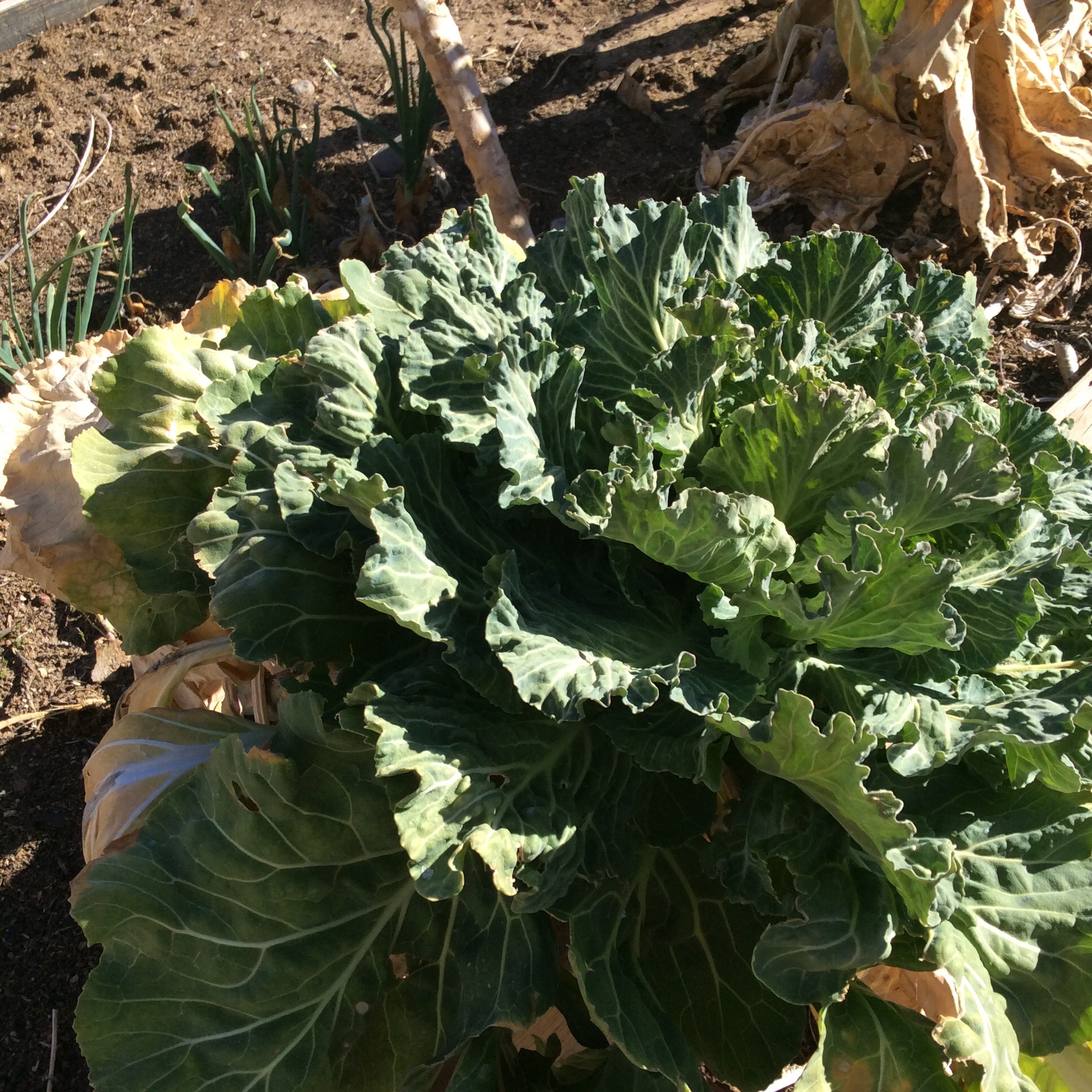
Tronchuda is not a weed, but a Portuguese kale with a cabbagey but mild flavor and enough vitamins, minerals, and antioxidants to make you crow. I bought my seeds from Nichols Garden Nursery a couple of years ago, and am selecting the ones that live through the winter for my Hunger Gap crop. You plant them in the spring, harvest the huge leaves for greens in summer and fall ( my chickens appreciate them too), and then leave the stem and the tuft of leaves at the top over the winter. They won’t survive if you don’t leave some leaves on. Those that survive will begin to leaf out again in February and provide you with thick, substantial leaves for stir-fries and cooking by early March. They are biennial and begin to shoot to flower by late March, and you can harvest the buds as a broccoli-like vegetable. Do bear in mind that if you want to save seed, you have to leave plenty of clusters to go to flower. Bees love the flowers and they are a nice early source of nectar. Collect the seed, dry them, and start the cycle over again.
Posts Tagged ‘greens’
12 Mar
Filling the Hunger Gap
21 Feb
The Seeds You Need
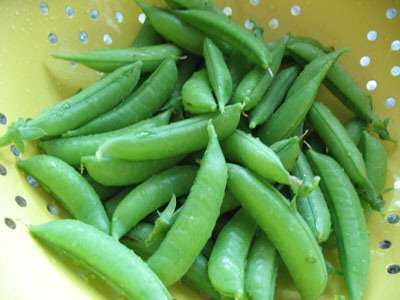
Here in the high-desert Southwest, our cold-weather vegetables need to be planted by mid-March, and so late February is my last good chance to review my seed box and order what I need. This resulted in my sending off a frantic order for sugar snap peas. My attachment to them is strong, largely because I love English (shelling) peas but never find time to shell them. My favorite snap pea is the original Sugar Snap. This variety has some disadvantages: it climbs 5-6 feet and has to be provided with support, the pods have strings and need to be de-stringed before cooking, and it doesn’t have much in the way of disease resistance (although I have had no problems with disease.) It has a single incomparable advantage: flavor that none of the newer, neater varietals can live up to. For best flavor, the peas inside the pod have to be allowed to develop. Don’t pick them in the flat snow-pea stage. Then rinse and string the pods, which is a very quick job, and steam them to eat with butter, stir-fry with some scallion and ginger, or cook them in your own favorite way. Yum.
In my opinion they develop a soapy taste when frozen, so I don’t recommend “putting them by.” Eat mountains of the fresh article and give any extra to people you really like.
The important thing is, order those seeds now.
And don’t forget to plant extra so that you can cut pea shoots. Cut when they are 6-8 inches high, pea shoots are delicious in salads and stir-fries.
13 Jun
My Favorite Spinach

For some reason, probably simple curiosity, I tried an old spinach variety called Giant of Viroflay this spring. It was a hot, early spring with lots of wind and duststorms, and I didn’t think that this European antique would survive our high-desert climate, but in fact I have never had such a good crop of spinach. The leaves are smooth and about 10″ long,and in the current June heat I’m still picking from the row that I started harvesting in early May. The particular strain that you have can make a big difference. I got mine from Nichols Garden Nursery. I have seen seeds around labeled “Giant Noble,” which may or may not be the same thing. The maintenance of a good line of seed takes a lot of attention, and it pays to get your seed from the best source that you can find.
The flavor is wonderful, full of the richness that good spinach has, with no metallic or bitter flavors. The texture is smooth and melting when cooked properly, and wonderful in salads too. When I have spinach this good, I like plain creamed spinach more than any other way of cooking it. I think that the French method of blanching first produces the best flavor, and I make up for any diminishment of water-soluble vitamins by eating a great deal of it.
Pick a lot of spinach, since it shrinks greatly when cooked. I use a 5-gallon food-grade pail to pick into, and pick it 2/3 full (loosely filled) to serve 4. Wash very well three times in sinkfuls or pailfuls of cold water. Don’t neglect the washing step. Any bit of grit will spoil your perfect spinach. Then bring a gallon of water to a rolling boil in your big stockpot, toss in the spinach, DON’T cover the pot, and stir with a wooden spoon to get all the leaves exposed to boiling water. When the water returns to a full boil, stir and boil for another minute, then drain in a colander and press ALL the excess moisture out. Turn out on a clean cutting board, chop rapidly with your big chef’s knife, and put in a saucepan with a few tablespoons of butter, half a cup of heavy cream, and salt to taste. Cook over high heat, turning regularly, until the cream is reduced and there’s no drippy liquid. Serve forth promptly, with a little more butter on top. If you know someone who has a Jersey cow, your cream can be thick raw Jersey cream, which is the best cream there is. Shave a few shreds of fresh nutmeg on top just before it goes to the table (I do mean a few, 1/8 teaspoon or thereabouts.) Some fresh pepper is nice too. Sometimes I add some sauteed shallot or green onion, and sometimes I feel that alliums impair the delicacy of the thing.
I like to eat this as a meal all by itself, with a few slices of good baguette alongside. It also makes a great base for poached eggs, and accompanies delicately seasoned chicken and fish dishes beautifully. It is one of the joys of late spring, to be enjoyed lavishly in its season.

6 Mar
Spring in the food garden
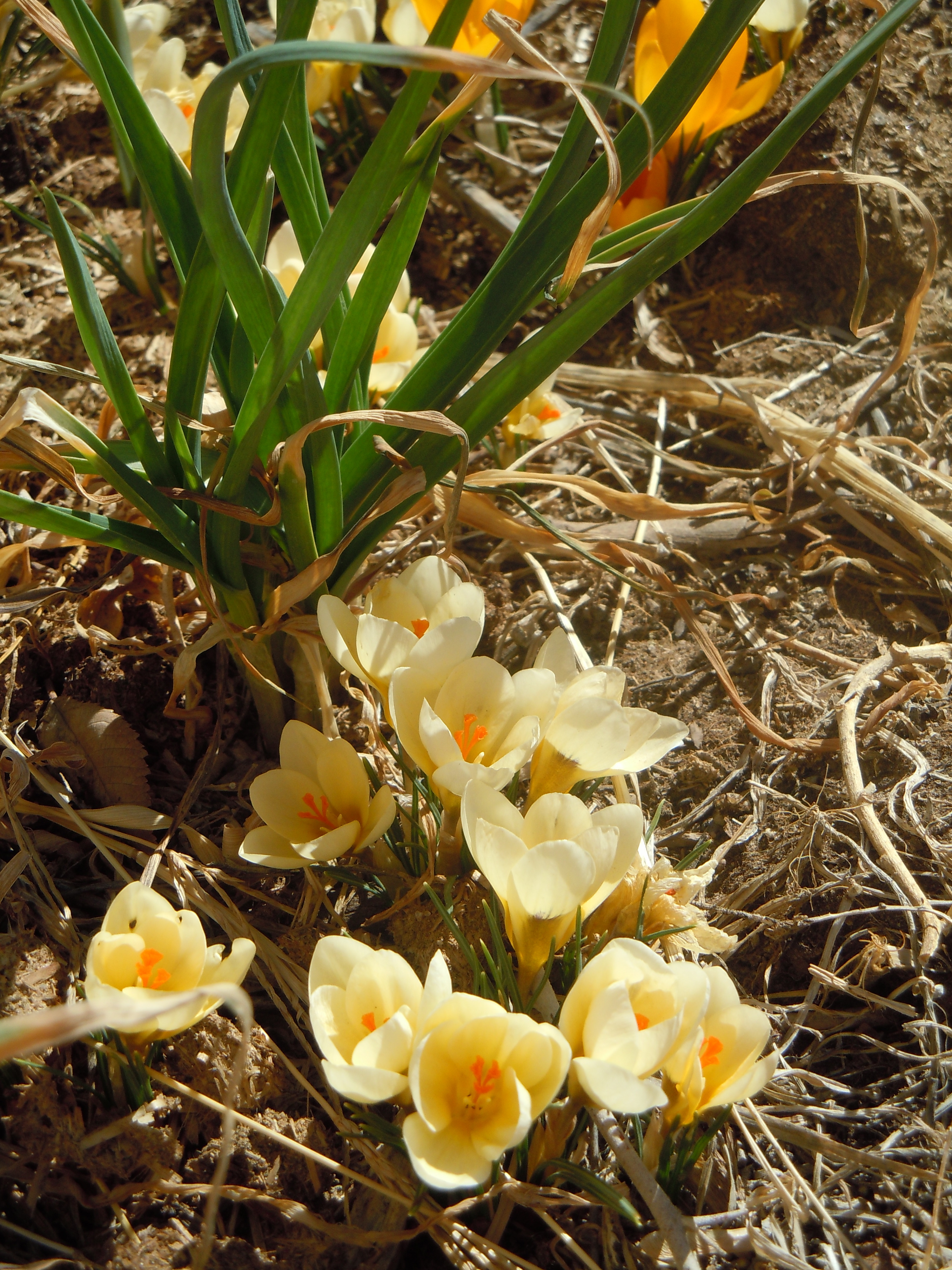
I’m not a winter person, so wherever I move, I always plant a patch of the early little species crocus “Cream Beauty” in my garden. When I see the first glowing blooms, I’ve officially survived another winter.
“Cream Beauty” is also a kind of floral nag, reminding me that there’s no time to hang around luxuriating in the sunlight; I need to be prepping and planting furiously. It’s one of the ironies of garden writing that, just when you actually have something to say, you have no time in which to say it. So here are a few spring tidbits in no particular order:
Last fall I coated all my “greens” beds thickly with horse manure, and dug it in as soon as the ground thawed in early February. Fresh manure needs to go on in the fall, but you can apply well-aged manure or finished compost now. Now the beds are ready to plant, and I put in three kinds of lettuce, several types of mustard, two kinds of spinach, snap and shelling peas, and a wide assortment of chicories, both leaf and heading. It’s important to get them in early so that they don’t fry in overly hot summer sunlight. Chard, parsley, and potatoes will be planted within the next week or two. Leeks and scallions were started in seed trays last month, and the multiplier onions, garlic, and shallots planted last fall are sprouting. I planted grey shallots once and didn’t find the bulbs useful- too small and too much work to peel- but they provide generous cuttings of sharp shallot greens every spring to season salads and soups. They are like chives but with a distinctly stronger flavor.
Every year I try a few things that are completely new to me, and one of my newbies this year is bladder campion, which, according to the catalog, provides young greens that taste something like green peas. It’s a common weed in wetter parts of the country, but here it needs some shelter and encouragement. Bear in mind that many plants which need full sun elsewhere prefer some shade from our high-desert sun. If you fail the first time, as I did with bladder campion last year, try giving a little afternoon shade.
Don’t forget to plant more peas than you need so that you can cut the sweet young greens for spring stir-fries.
If you’re going to try chickens this year, build the coop and make a brooder set-up now, BEFORE you buy the adorable baby chicks. I’m going to try a few meat chickens this year, so I’m building a large open-bottom cage to keep them in. It’s my first effort at carpentry, and I don’t think that there is a perfect 90 degree angle anywhere in it, but the chickens are unlikely to care. Make your chicken construction sturdy and raccoon-proof, not beautiful.
Gardening is a natural process, with all the entropy of any other natural process. Success does not pile upon success in an automatic fashion. Our freakishly cold snap is likely to result in some garden disappointments. My artichokes all seem to be dead, a sad event because they are offshoots of the first plants I grew from seed, many years ago. But that’s a reminder that nature is under no obligation to respect our sentiments. If you are very fond of getting your own way, gardening might not be for you. Nature offers some consolations too, like the glut of big brown eggs with deep orange yolks flowing out of the henhouse. There are a million ways to enjoy them, but while I’m waiting for the spring bulbs to bloom I enjoy eating what I think of as Daffodil Salad. The name comes from the colors, which remind me of the exquisite Poet’s Narcissus. Please know your edible flowers if you use them, and remember that daffodils are NOT edible.
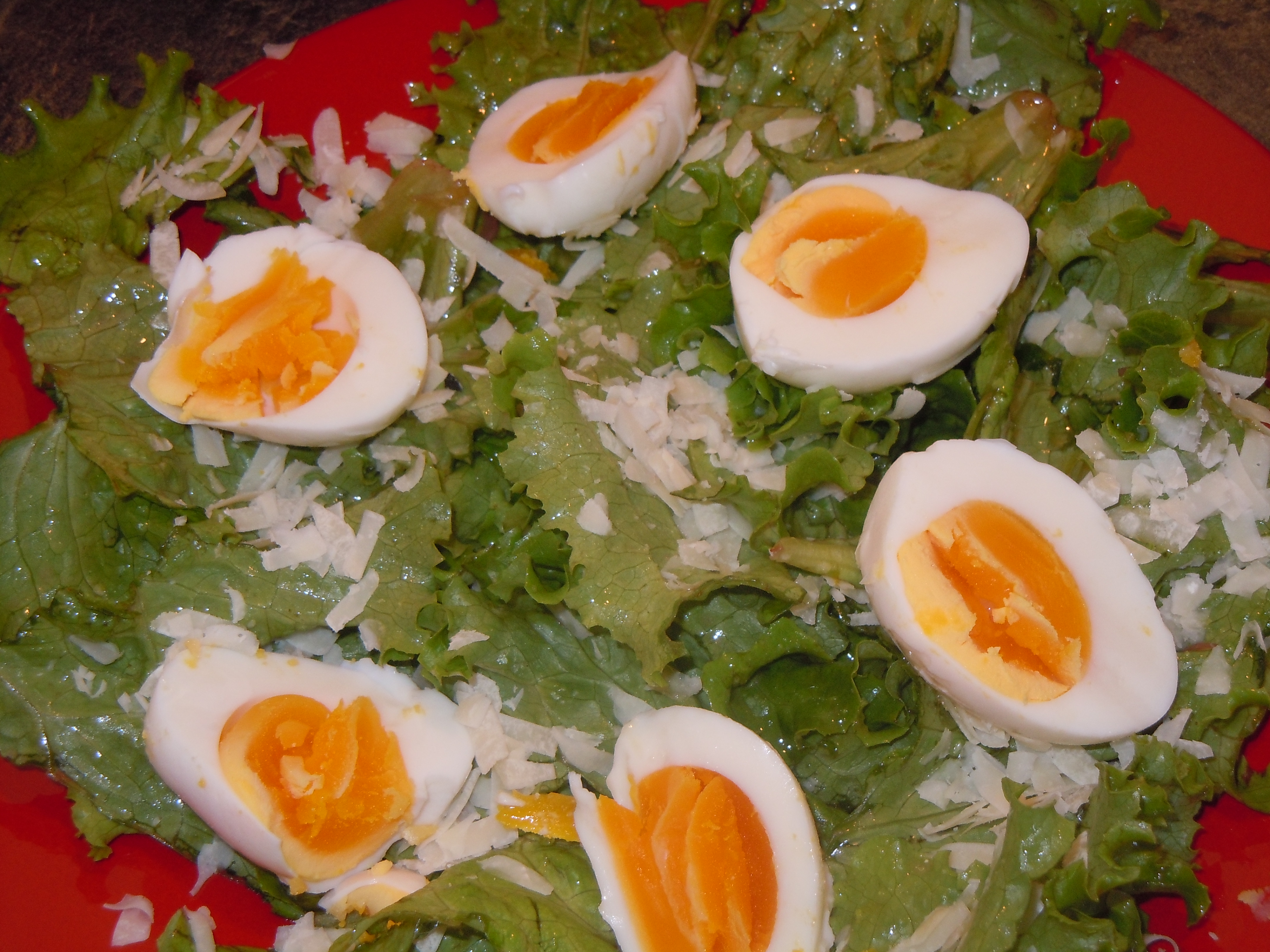
To make a main dish, put three eggs per person in cold water, bring to a boil, simmer 10 minutes, and cool quickly in cold water. If you have your own hens, the eggs need to be at least a week old to peel cleanly. With store eggs this is seldom a problem. The ten-minute simmer gives yolks as shown, just barely solid in the center and a rich orange. Peel the eggs and cut them in half. Put the amount of salad greens you prefer in a big bowl; I use about three good-sized single handfuls per person. Toss with the dressing below or your own favorite vinaigrette. Pile on plates, top with the egg halves, and drizzle a little more dressing over the eggs. Scatter on some thin shavings of your best Parmesan and enjoy.
Spring dressing
1 small shallot or the white part of one scallion or the white part of one stalk of green garlic
juice of one lemon
1/2 cup best olive oil
2 tablespoons roasted hazelnut oil
half a teaspoon of salt, or to taste.
fresh pepper, about 15 turns of the mill
a small handful of chopped chives or about 2 tablespoons very thinly sliced shallot greens
Chop the shallot bulb, scallion, or green garlic bulb very finely and marinate in the lemon juice for fifteen minutes, with the salt added. Don’t skip the marinating step. After fifteen minutes stir in the other ingredients, shake in a jar, taste for seasoning, and use. Any not used immediately will last a day or two in the refrigerator.
 My urban homestead