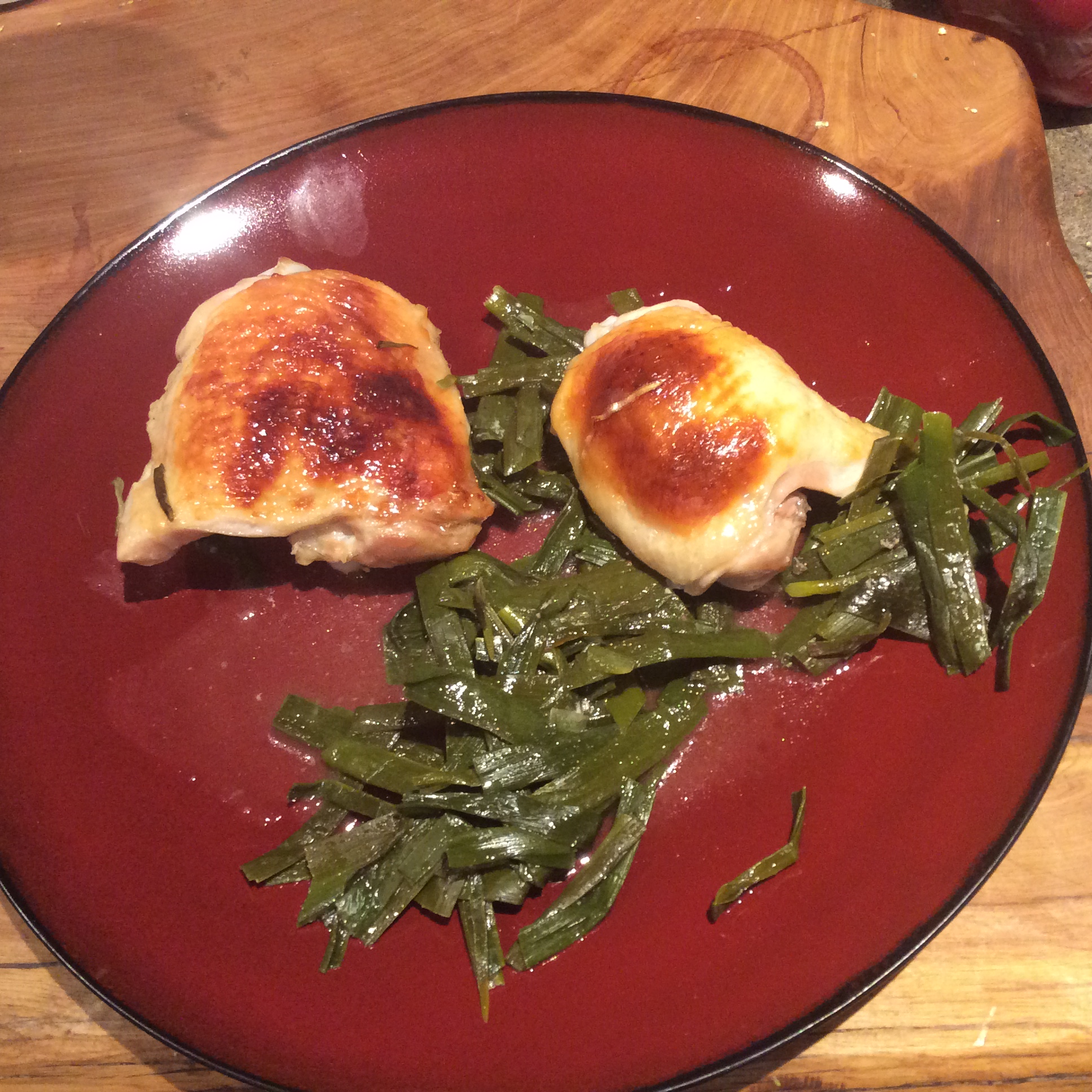
My patient readers might be wondering by now why I have so damn many posts this year on the uses of green or immature garlic. The reason is simple: last summer I ordered my garlic sets as usual, forgot about it, and a few weeks later placed the same order again. When a LOT of garlic sets arrived in fall I decided to treat this as serendipity and planted them all, and the result is that I have hundreds to thousands of stalks of green garlic right at the moment. Since I have become interested in the health benefits of alliums, especially the green parts, I am thoroughly enjoying experimenting with ways to use them. Right now they are just beginning to send up scapes, and the stalk of the plant is hard and difficult to use well. But when I pull a few plants for the newly bulging bulbs, I find that the leaves are still green, and I decided to try using them as a leafy green vegetable. I washed a bunch of them, cut them in 1 inch sections crosswise, and blanched them in boiling water for two minutes. This initial blanching seemed to tenderize them a lot, but if you insist, try cooking them without pre-blanching and see how it goes. Then I slowly roasted in butter with a little salt and rich chicken broth for about 20 minutes, taking care that they did not dry out. I roasted them only because I was also roasting some chicken, and it would be easier to slowly sauté them on the stovetop. Make sure that there is enough broth that no part of the leaves dries out. Kept a little moist, they develop a lovely plush texture. This turned out to be a delicious vegetable, full of flavor but not excessively garlicky. The only thing I’m going to do differently in the future is cut them in shorter sections, about half an inch, since there is a suggestion of fiber in the mouth when cut to the longer length. I did not identify any actual fibers of the nasty kind that stick between the teeth, but I just think the mouthfeel would be better if cut shorter.
I am increasingly delighted to find that every part of the garlic plant is edible, versatile, and delicious, a true nose to tail vegetable with a boatload of health benefits besides. Right now garlic, shallots, onions, and multiplier onions occupy about a third of my total available garden space, and I think this is how it should be and will do the same again next year.
Incidentally, once the emerging scape begins to show at the top of the plant, the stalk is not worth trying to use except as a flavoring for broth, in my opinion. It is just too fibrous and tough. But soon the scapes will be elongating and they are eminently edible when young, so a couple of weeks of patience will provide you with a whole new vegetable.
Posts Tagged ‘garlic’
3 May
Garlic Leaves
7 Mar
Early Harvest: Green Garlic
Other than herbs and alfalfa tips for my chickens, green garlic is always the first thing that I harvest from the garden. In my climate, which is more or less USDA zone seven, I plant in October and nearly always harvest green garlic the first week of March. The part of the garlic patch that I plan to harvest green is planted very closely, about 2 inches apart each way, which is plenty of room for this purpose. Every year I plant more. It is really good stuff. For a long time I thought that it might not really be worth the trouble, because I was harvesting and eating only the white stem and incipient bulb and composting the greens. Duh. The greens are the best part, as well as being full of allacin and other antioxidants, and any part that is bright green rather than yellow or brown can be used. You can grow a useful amount in a few square feet if your soil is rich, and it is harvested and out of the way in time to plant something else for the summer.
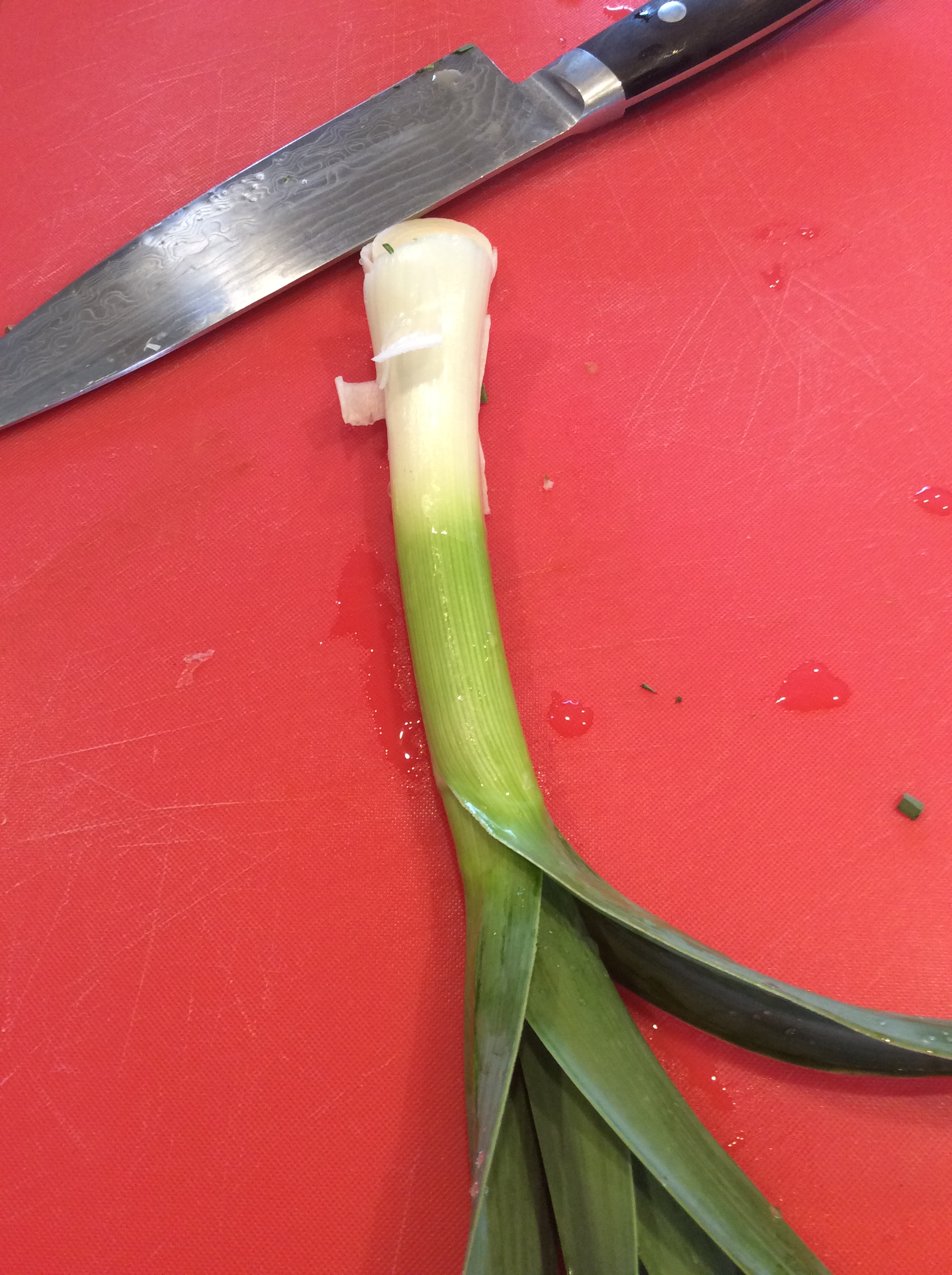
In the picture above you see a stalk of green elephant garlic, which is really a leek relative rather than a true garlic. It is typically a foot or more tall and an inch or so in diameter at the green stage. It has a slightly different flavor from true green garlic but is equally delicious. I once bought green garlic at a farmer’s market that was bitter, but I have never tasted any other that was bitter. It may have had to do with growing conditions or variety. I have heard of people chopping garlic leaves into salads as a seasoning, but personally I don’t care for the taste raw and only use them cooked.
With all green garlic, I trim the roots and leaf tips and wash, then line them up and cut them in cross-section into slices about a quarter inch thick. I sauté in either butter or olive oil, whichever will suit the rest of the meal, slowly until the greens are tender. A little salt is thrown in along the way. They become soft and sweet and delicious, and I enjoy eating them as a vegetable on their own. They also go very nicely into all kinds of other vegetable dishes. If you are a carb eater, they would be delicious with fresh handmade egg pasta, butter, and a discreet amount of Parmesan, or tossed with new potatoes and butter. I love them in mixtures of cooked greens, too, and they are a lovely complement for fried eggs. I plan to make a cream of green garlic soup at some point this spring. A few stalks sautéed in your smallest skillet while you are cooking other things also make a very nice cook’s treat to eat standing in the kitchen, as a sort of tapa for one. After all, the laborer is worthy of her hire.
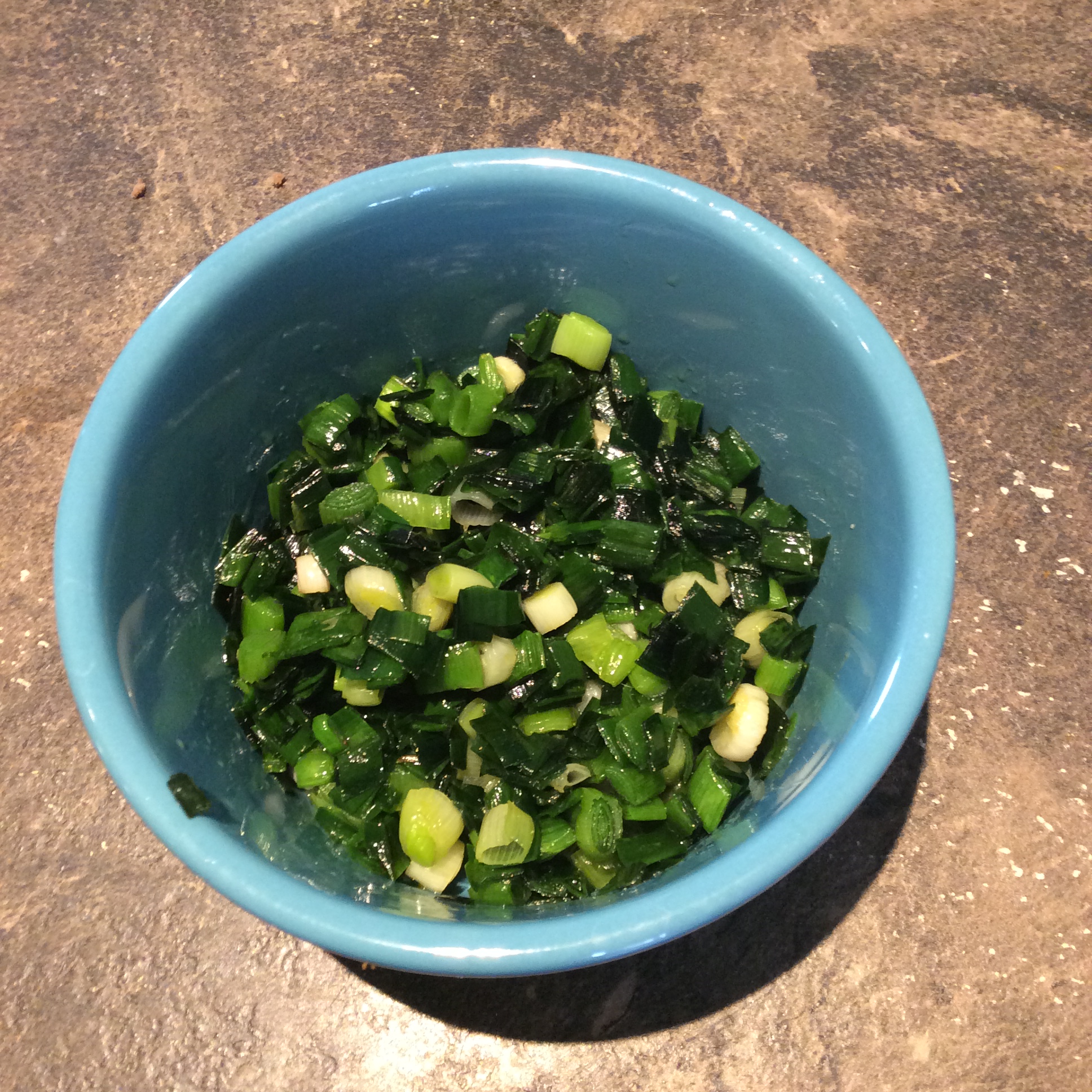
Like all the rest of us, green garlic will lose its youthful bloom sooner rather than later. When the bulb is swelling and the leaf tips are turning progressively more yellow, it is past the point of being worthwhile to eat green. In its brief season I harvest 10 or 12 stalks whenever I have some free time, clean and sauté them, and have them waiting in the refrigerator. If I haven’t use them within a day or two, I vacuum seal them into neat little packets and keep them in the freezer to go in summer dishes.
5 Sep
More vegetable-centered meals
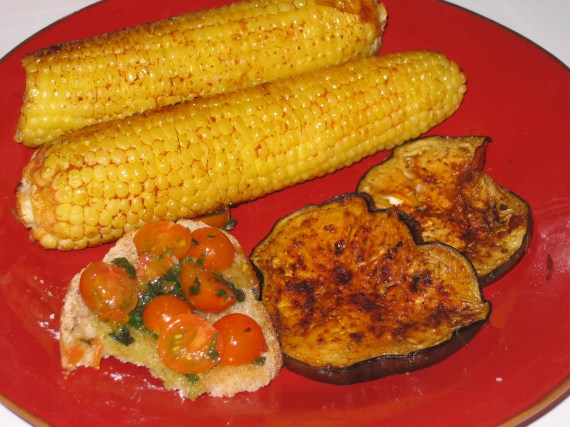
This time of year, vegetables are abundant and make up the bulk of our diet. Recently I wanted to put together a meal cooked on the grill using only vegetables that can easily be found at the farmers’ market. The kitchen stays cool, and people who don’t have a garden aren’t left out. If you need to accomodate vegetarians and vegans at your table, this meal can have everyone at your table happily eating the same thing, with no need for special plates.
The only remotely exotic seasonings that you’ll need are Spanish smoked paprika, readily available as Pimenton de Vera at The Spanish Table and other specialty grocers, and some capers, preferably the kind preserved in salt.
Click here for the recipe Continue reading
2 Aug
My Southeast Asian Summer: lemony herbs
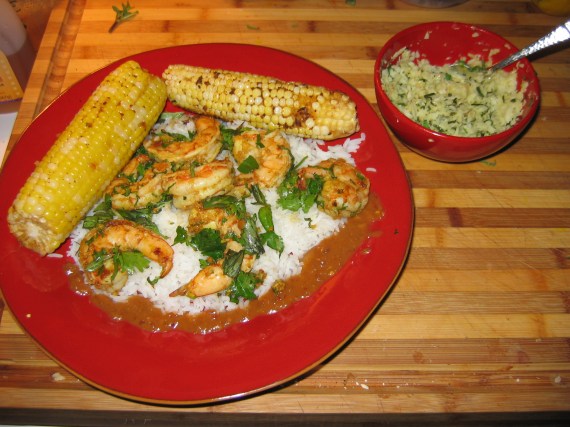
Some of the most delightful herbs used in Southeast Asia have a strong, clean citrus scent. Here we’ll consider lemongrass and lemon basil, along with a Western taste-alike, lemon verbena. My love affair with the piquant and flavorful food of Southeast Asia continues, and I’m putting more and more thought into which herbs and roots to buy and which to grow. There’s an excellent reason to grow rather than buy: these herbs are almost never available organically grown. My experiments are aimed at seeing which ones I can grow in useful quantities without a greenhouse or other specialized setting.
They are very delicious with fish and seafood. For the Lemon Shrimp above, go to the very end of the post, after the growing info.
For more about growing and using the lemony herbs, click here. Continue reading
 My urban homestead