Posts Tagged ‘foraging’

Clove Currants

image

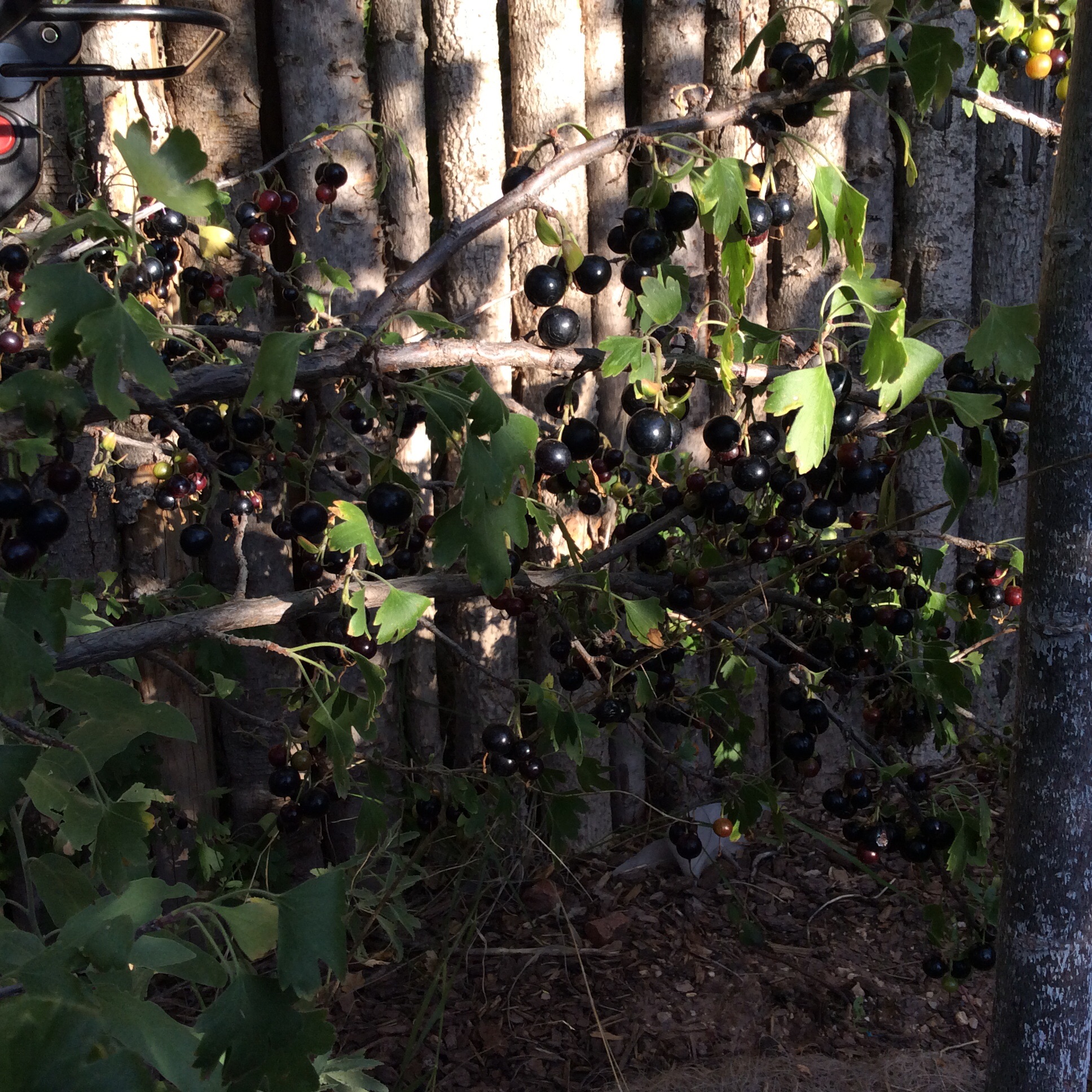
The native clove currant, Ribies odoratum, grows beautifully in my area. It is sturdy, healthy, drought-tolerant, will tolerate some shade, suffers from no bugs or diseases, and is reasonably attractive, especially in spring when covered with thousands of tiny yellow flowers that have a soft pleasant scent. I haven’t found them growing wild in my area but I have a bush that was planted by birds; they grow that easily, and start to bear within three years.  I have several large bushes and would have planted more if not for one major disadvantage: I thought the fruit tasted awful.  The fruits, like most berries, are relatively low-carb for fruits and probably contain a good set of antioxidants, but eating things prescriptively rather than for pleasure is just not my style.

But sometimes plants just have to hang around my yard until I learn to use them well. This year, after living with clove currants for five years, I finally figured out (duh) that the fruits are not ready to eat when they turn black. Don’t grab those first black shiny fruits. Leave them on the bush for another couple of weeks. Taste every few days, and when they taste sweet and spicy (still very tart but with a balance of acid and sweetness) they’re ripe. The fruits actually get a little smaller as they ripen, and some will look a bit wrinkled. Don’t worry. Don’t use any that are dry and shriveled, but a little loss of turgor just intensifies the flavor.

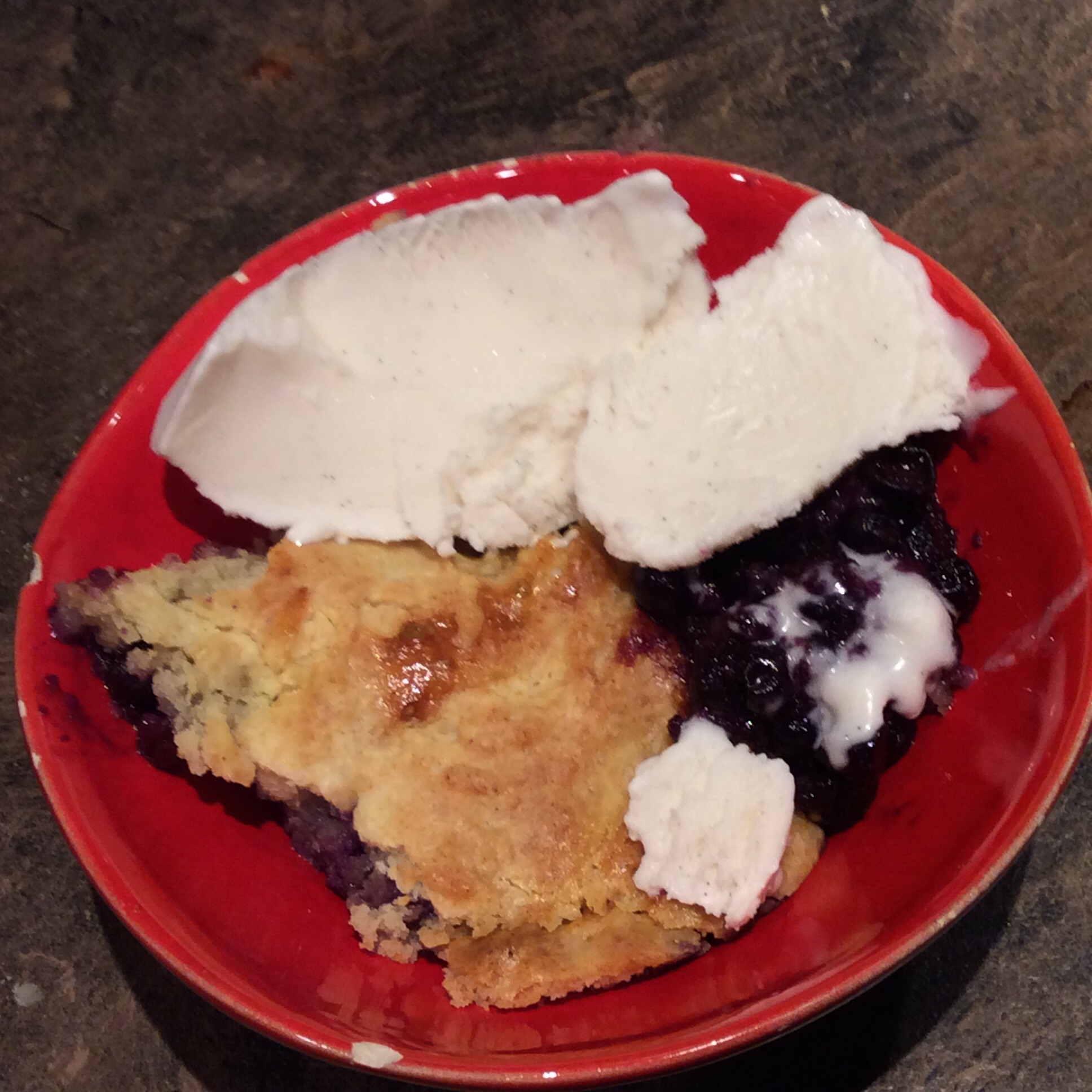
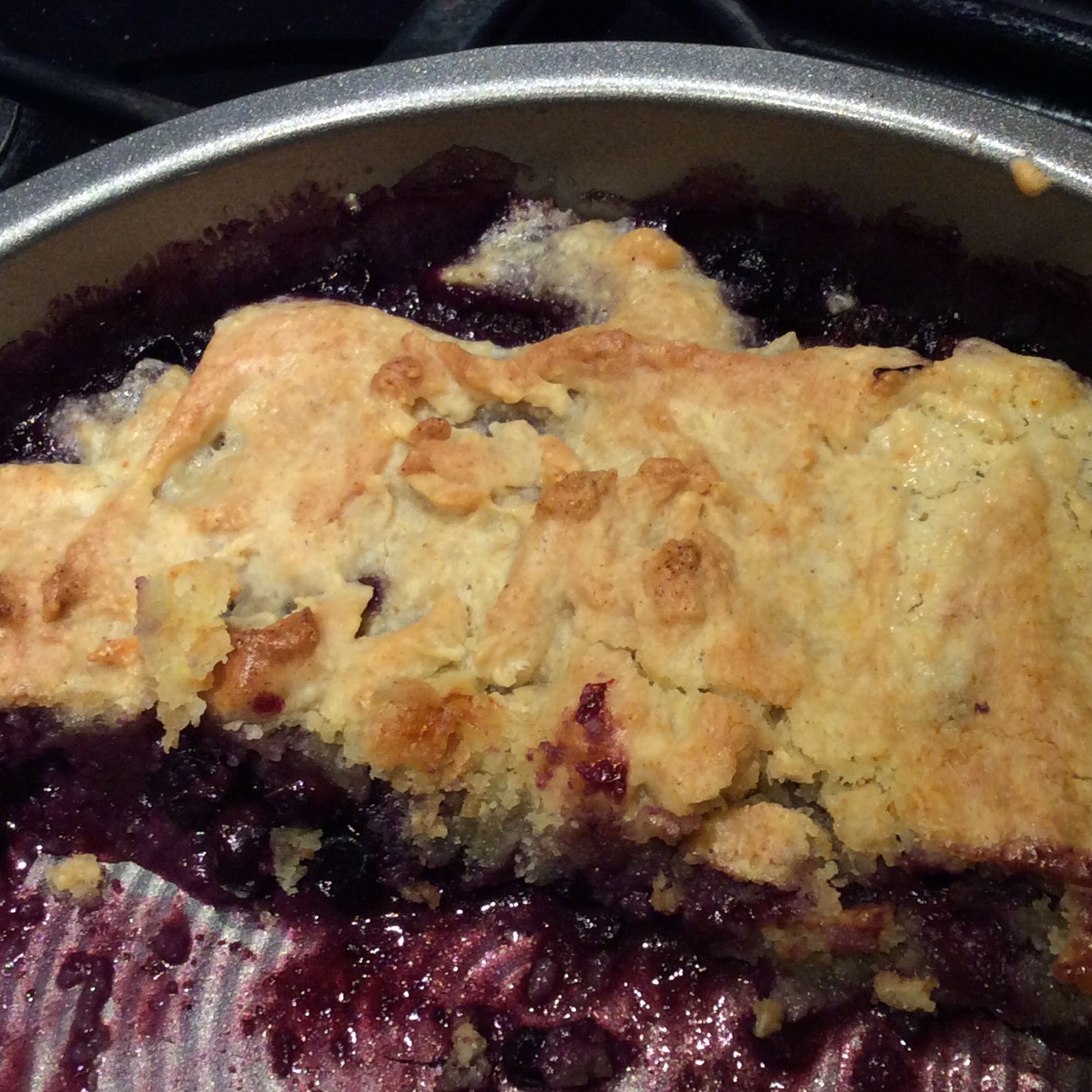
I enjoy eating a handful in the garden when I make my morning rounds, but my favorite use for them is in cobbler. If you are low-carb, use my recipe for red, white, and blue cobbler, using clove currants alone or adding in some frozen wild blueberries to make up the fruit volume if you don’t have enough clove currants. Work the sweeteners into the fruit with your fingers, crushing the fruits a bit as you go. If you eat sugar and flour, just use your own favorite cobbler recipe. Be sure to grate a little fresh nutmeg into the fruit mixture to bring out the spiciness.
image
The fruit clings to the stems and often has a little wiry “tail” clinging to the blossom end which has to be removed, so harvesting them is a bit tedious. I wait until early evening and then sit comfortably under the bushes with a bowl, pulling off stems and tails as I go so that fruits that hit the bowl are ready to use. I eat a few along the way. The laborer is worthy of her hire, after all.

I’ve been thinking of other ways to use them, and I think that they might be good in sauces for meat and game. I can recall reading a British recipe for a blackberry sauce for venison, and along those lines I plan to try using clove currants for a sauce for roasted pork. But right now they are going into cobbler or disappearing straight down my greedy gullet.
image

I also have a couple of bushes of Golden currant, also known as wax currant, but they are slower to bear and I haven’t had enough fruit to experiment with yet. More on that later.
 

Mulberry Heaven II: Mulberry Leaf Dolmas

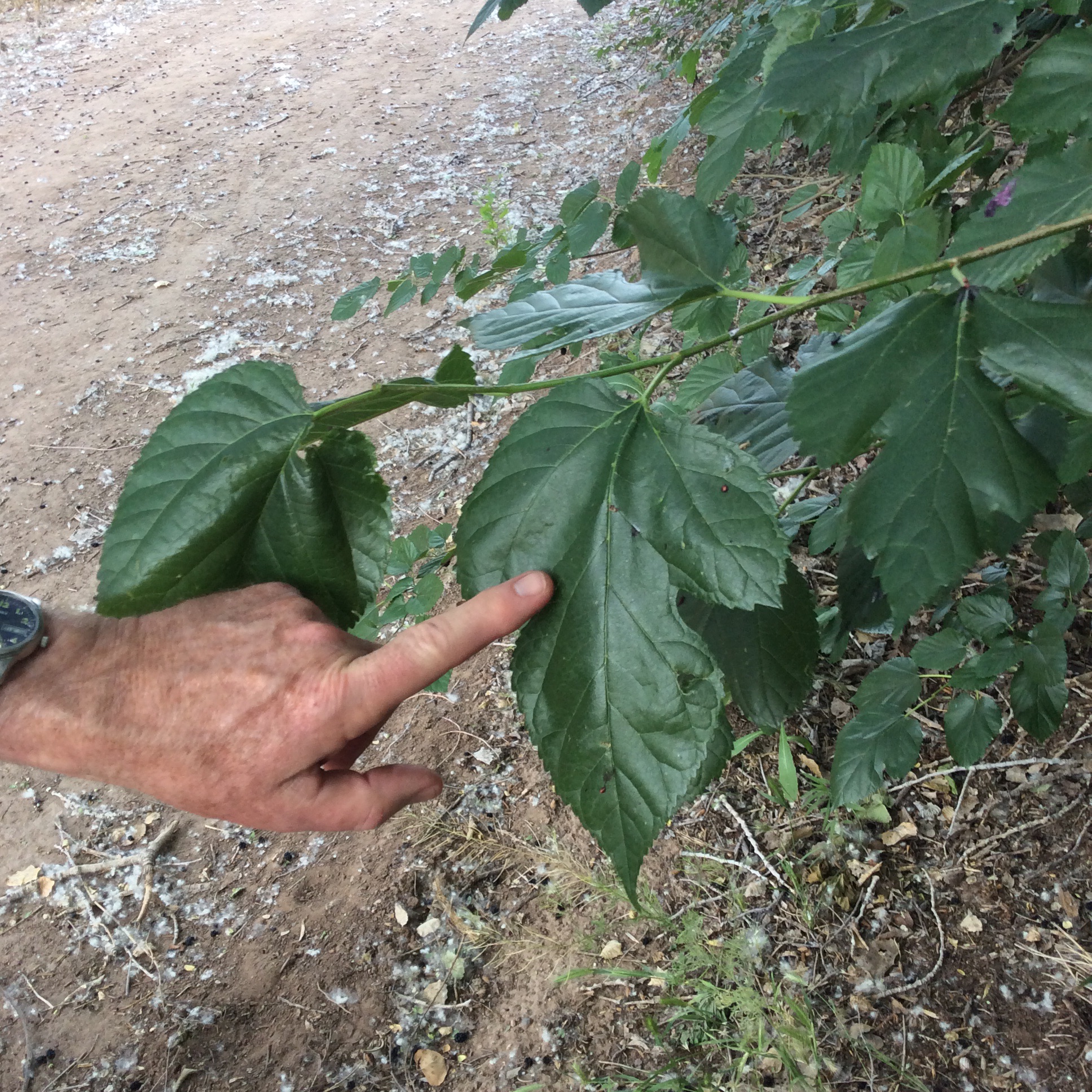
As I mentioned in my last mulberry post, I’m fond of eating very young mulberry leaves in cooked greens mixtures, and recently I was inspired by a post on TC Permaculture to think about mulberry leaf dolmas. I had located a mulberry tree with big and fairly tasty leaves, perfect for dolmas:
image
I asked my friend to stick his hand in the picture so that you can see that these leaves are big, over 7 inches long in many cases.
Be aware that if you are going to cook with mulberry leaves, they have to be young and you have to taste them first. Some are quite tasty, some are okay, and some are awful. Chew up a little bit. It will taste raw and green, but if there are acrid awful flavors, don’t go further. Use grape leaves instead in that case.
I foraged a couple of dozen big mulberry leaves, rinsed and blanched them for a minute in boiling water, and set out to make a meat filling. Mine was very improvisational, so I’ll describe it casually. For more specific and concrete recipes, you can google “dolmas” and find hundreds. I wanted to use what was fresh and good in my garden.
I started with a pound of ground beef from our local grassfed beef people. Don’t use beef that’s very lean; it will be dry when cooked. I chopped up three large green onions, greens and whites chopped separately, and four cloves of garlic. I put the white onion parts and the garlic to sauté over medium-low heat in a glug of good olive oil. While they cooked, I chopped a handful of parsley, a large sprig of cutting celery, a few large sprigs of thyme, a large handful of cilantro with stems, and a sprig of sweet marjoram, and mixed them with the chopped onion greens. To the beef I added a heaping teaspoon of salt and a heaping teaspoon of Maras pepper flakes. The Maras pepper was courtesy of a friend who kindly muled it back from Turkey for me, but you can use any mild red pepper flakes, or leave them out. Work the sautéed mixture and the chopped herbs into the beef very well with your hands. Now work in a cup of toasted pine nuts, chopped toasted almonds, or chopped toasted walnuts. Let the mixture rest in the refrigerator an hour or two if possible, or up to overnight, to let the flavors develop.
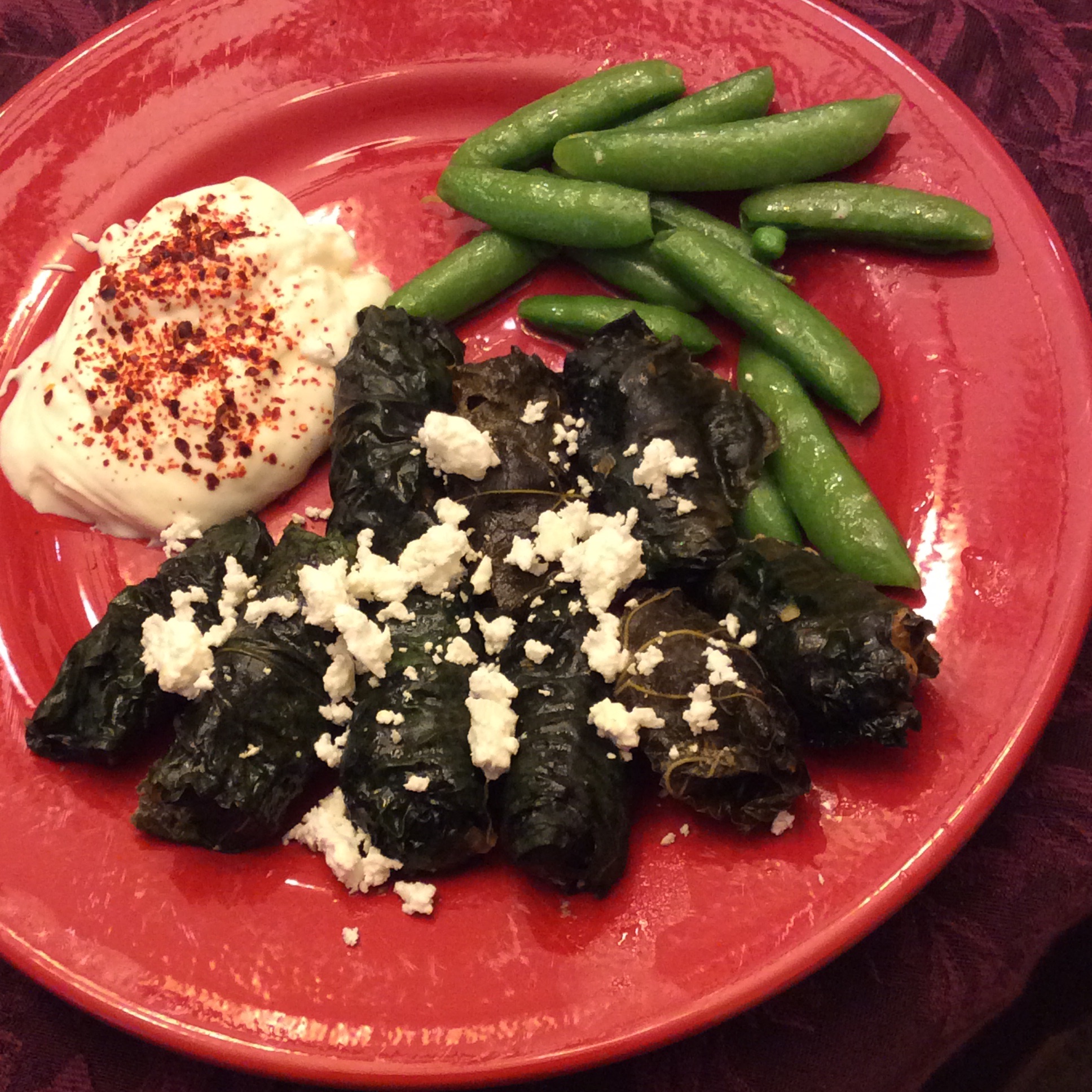
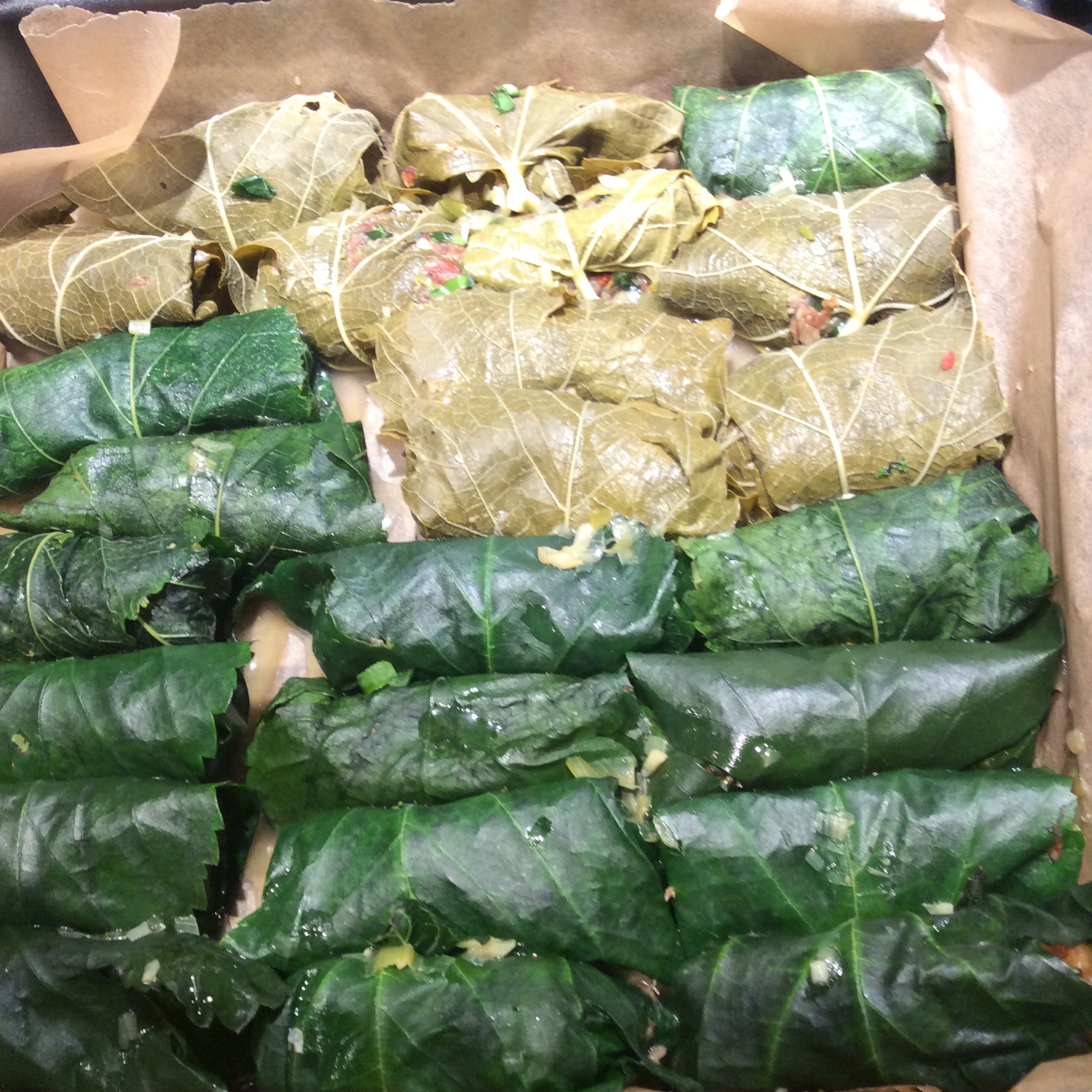
Fill the dolmas; again, there are a thousand visual tutorials online if you are unfamiliar with the process. Fit them tightly into a pan lined with parchment paper. In the photo below you can see some made with grape leaves among the vibrant dark green mulberry dolmas.
image
Put about a quarter cup of water in the pan, and cover loosely with foil. Bake at 350 for about 25 minutes. Boil down the pan juices in a little saucepan to make a sauce, if it tastes at all watery right out of the oven, which it probably won’t because of all the herbs. Serve them forth, with well-strained or full-fat Greek yogurt. I like to salt the yogurt to taste. Ornament the yogurt with a drift of pepper flakes or a scattering of paprika if you like. Scatter crumbled feta over the dolmas if that suits your taste.
image
I don’t add rice to the filling because I’m a ketogenic eater, but if you aren’t, feel free to add rice for a more traditional filling, or you could add bread crumbs for a less dense filling.  If you want to take the trouble, you can make an avgolemono sauce or a tomato sauce to go over the dolmas. But do keep the field-and-garden improvisational nature of the thing.

Appearing now in your salad bowl: Chickweed


Funny how things cycle. When I first learned to forage as a child, I was distressed because I couldn’t find any chickweed near my Louisiana home. Later, when I had a farm in upstate New York, I had plenty of chickweed and came to curse its abundance. Now, in the desert southwest, nature doesn’t offer any chickweed and I had to buy seeds in order to have it again.
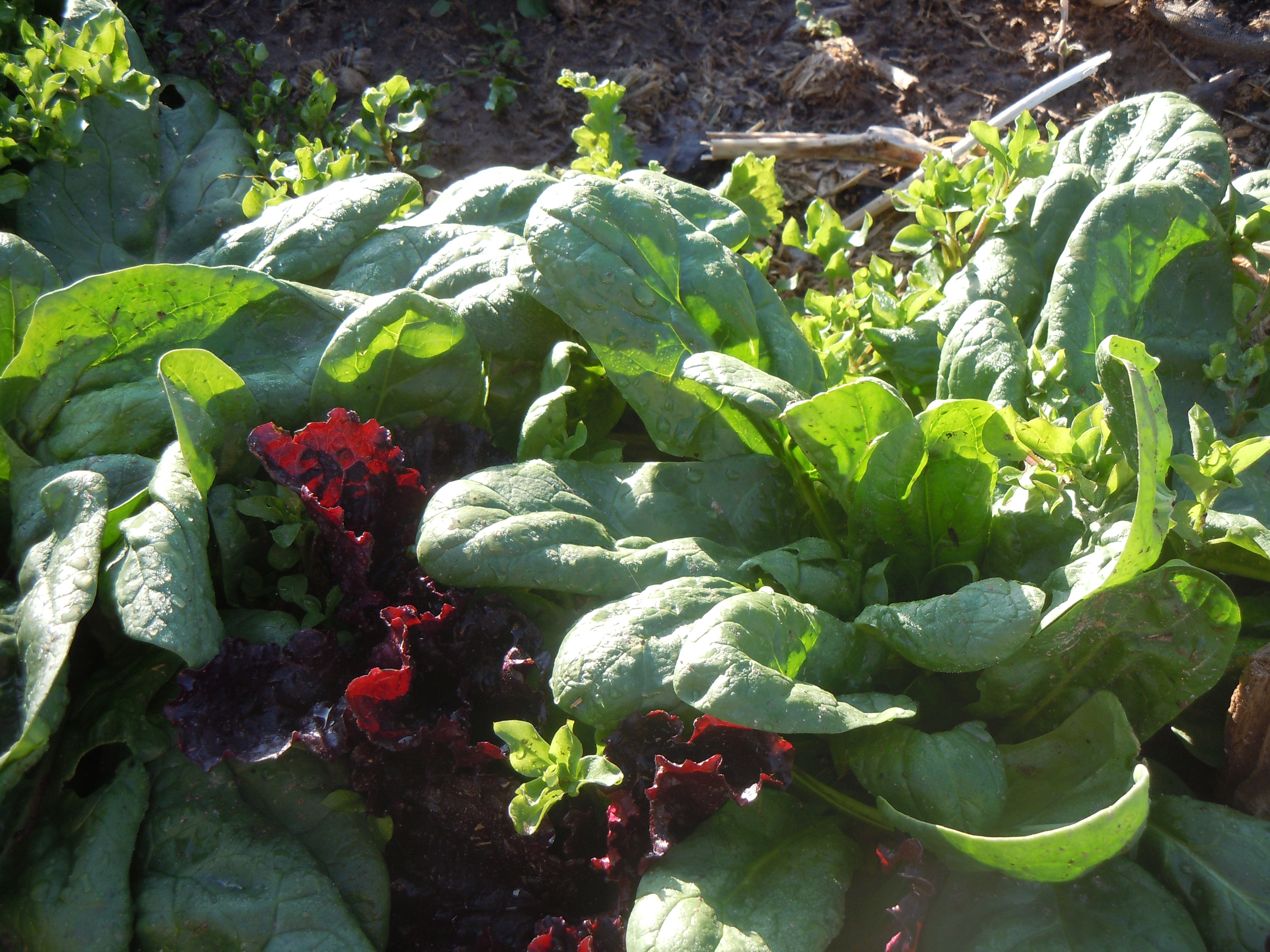
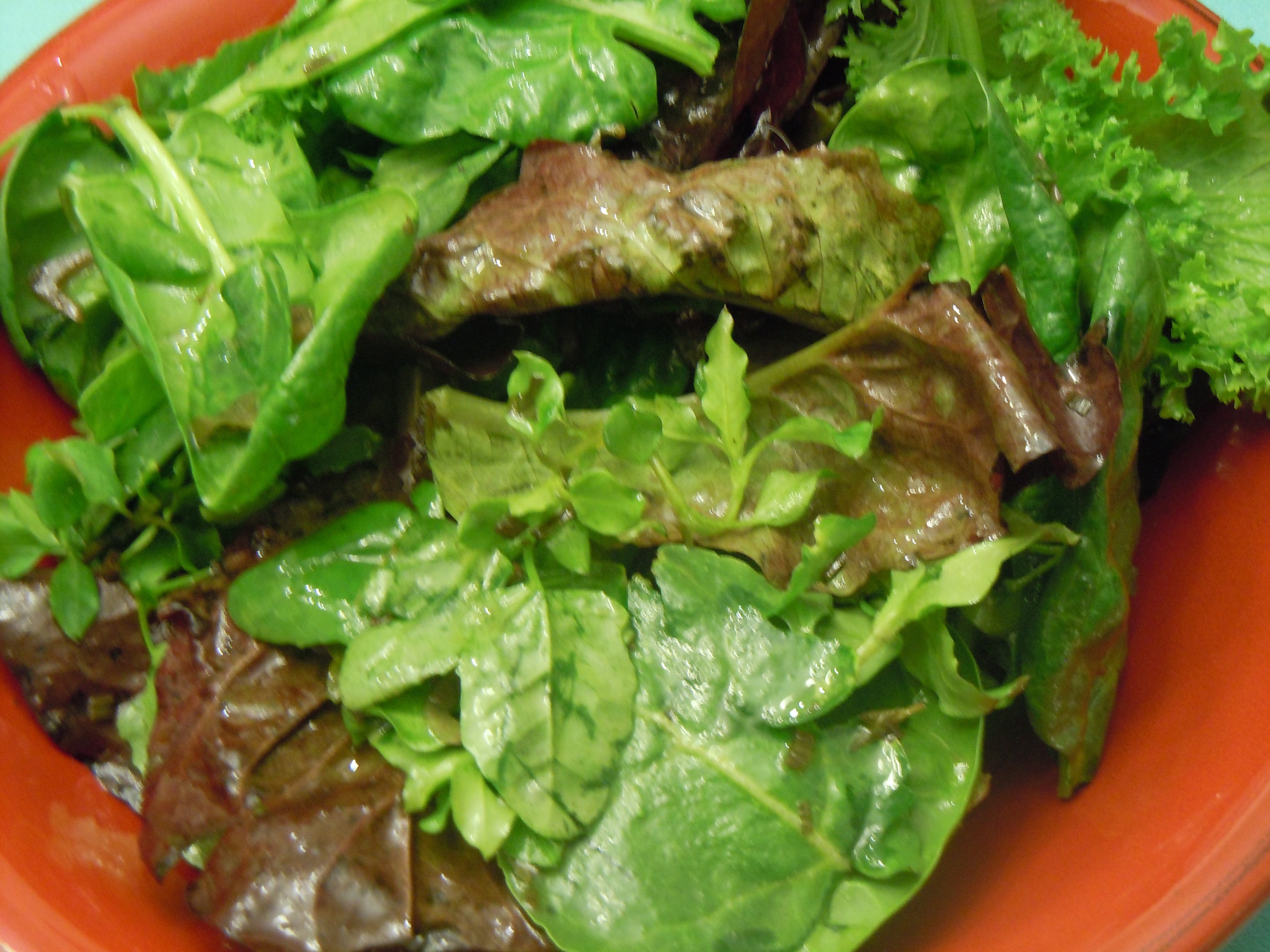
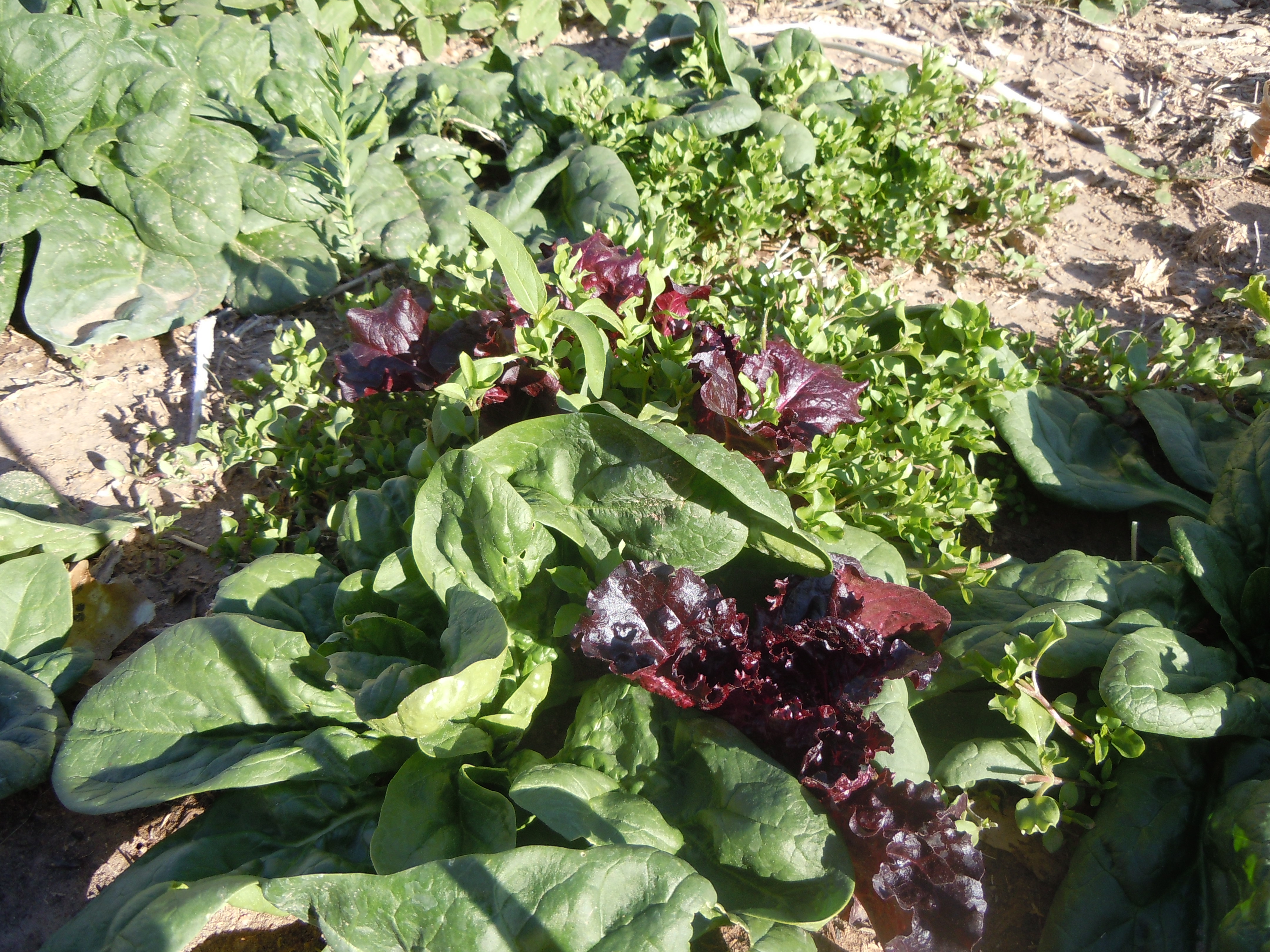
Stellaria media, the common chickweed, is a mild and tasty wild salad green, with more nutritional value than many domesticated salad greens. I had to look hard for seed, because it tends to be assumed that everybody has it and wishes they didn’t. I finally found it at Wild Garden Seeds. It appreciates some shelter from our blazing sun, which I provided by planting it in the same row as lettuce and spinach (right in the same tiny trench) so that it could nestle under the larger leaves and stick its head up for picking. The picture above shows this. In my opinion, only the tip of each sprig is worth eating, so I cut one or two inches off each little branch and leave the rest. Eaten alone with no dressing it has a somewhat grassy flavor, but mixed with other greens it’s delicious and adds a certain airiness and lift to the texture of a mixed salad. I use it up for anywhere up to half the bulk of a salad, depending on how much of it I have available at the moment. I have often read that it can be used as a cooked green, but I don’t care for it that way- too bland- and use it only in salads. I plan to let some go to seed, and will also make another planting in the fall, because it loves cool weather.

Mild Wild Greens:the Siberian elm


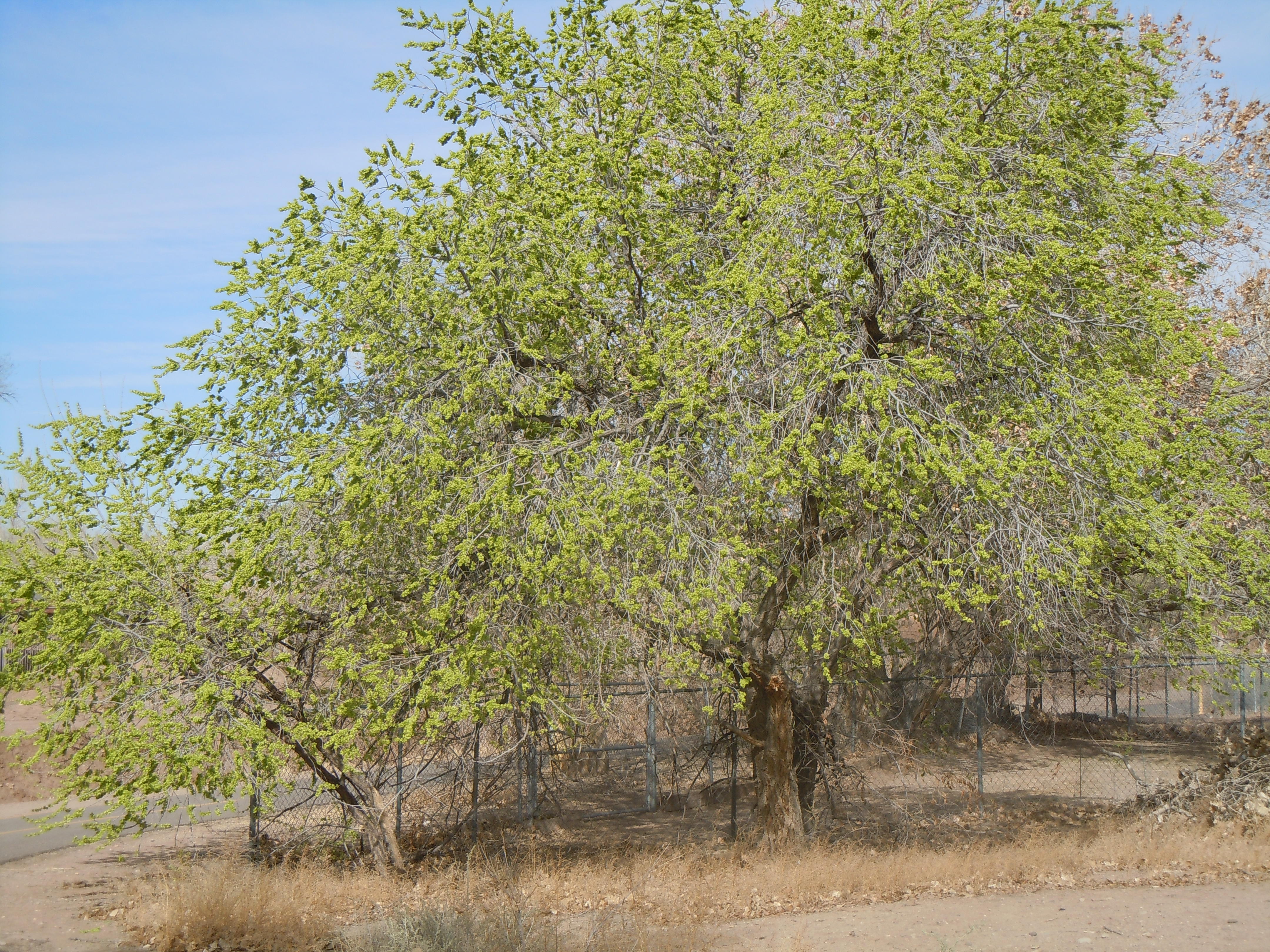
There are some plants for which I have an intense and personal dislike, and the Siberian elm is close to the top of the list. It’s one of our more common trees, because it’s so highly adapted to invade and crowd out more desirable trees. The seeds come up everywhere, and their hold on life is astoundingly tenacious. Even as tiny seedlings, they have a deep root system. If you don’t get the whole thing out, they will come up from the root, they spread by root, and they produce, by scientific measure, a trillion skillion seeds per tree per season.

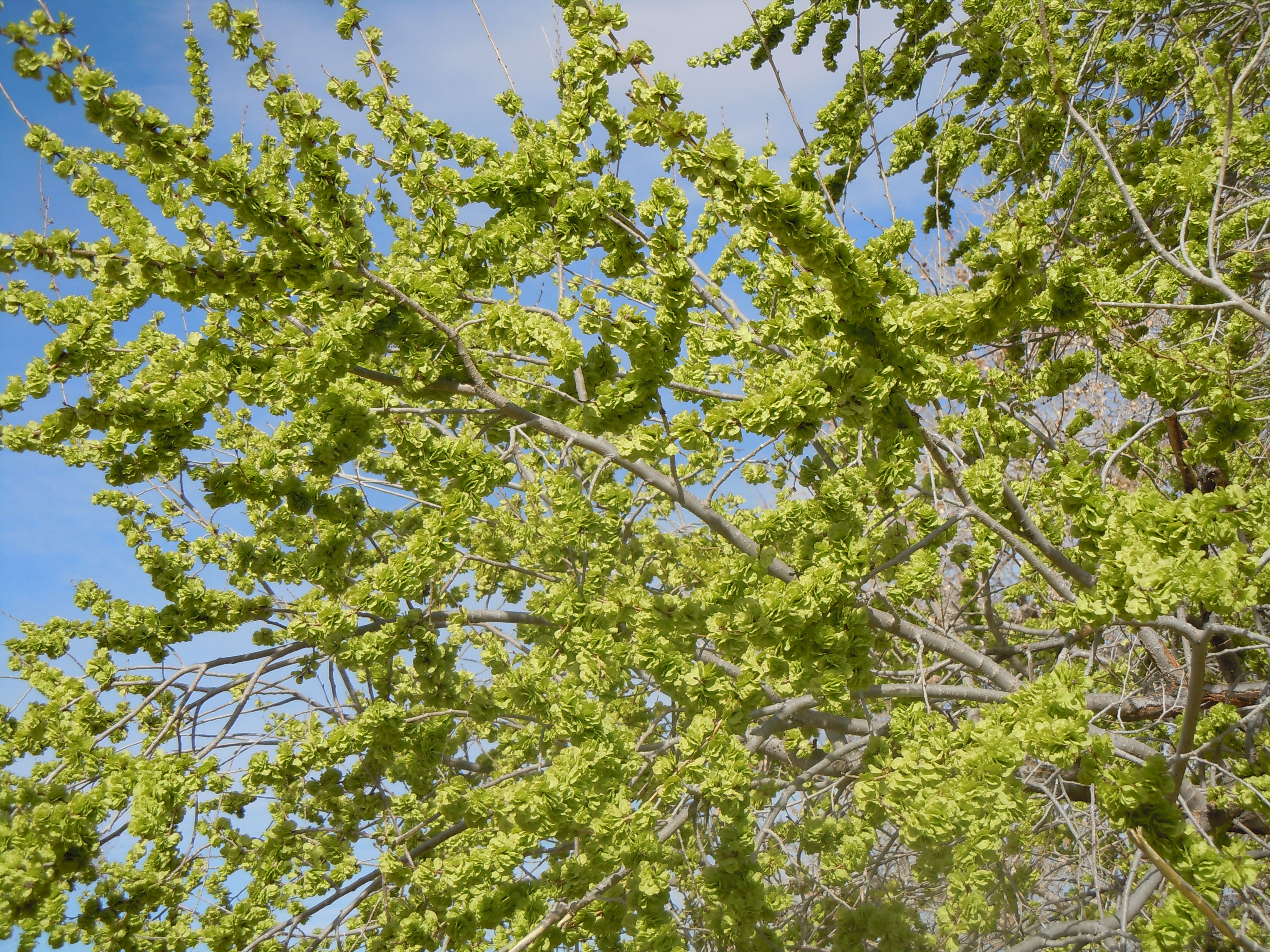
But this time of year, they have two good qualities. The first is that they cover their branches early in spring with bright lime green samaras, the casing within which the seed develops. They look fresh and green before anything else, which lifts my spirits toward spring. And, the samaras are edible and quite good, and available in mind-bending quantities. The samaras are round and paper-thin. Just pull them off the branches by the handful and add to salads or eat on the spot for a quick snack. Be sure to get them young, when fully expanded and a little over half an inch across but before the edges have started to dry and lose their intense greenness. Taste a few. If there is a “papery” feeling in your mouth, they’re too old. Use only those that are tender. The flavor is pleasant, mild, a little “green,” and very slightly sweet. They don’t have the texture or character to endure cooking. Just eat all you can, and if you have chickens, goats, etc., give them some too. There’s plenty.

Whenever you eat a food that is completely new to you, use good sense. Eat a little, wait a day, eat a little more only if you had no reaction to the first try. It goes without saying that you don’t put any wild plant in your mouth unless you are 100% sure what it is. For more on wild foods and foraging common sense, read anything by Samuel Thayer or John Kallas. Please don’t use my blog to identify plants, since identification is not my emphasis. You need a couple of good field guides for that. Start with Thayer’s Nature’s Garden and Kallas’s Edible Wild Plants: Wild Foods from Dirt to Plate and you may end up with an intriguing new hobby.

Addendum: when I wrote this post 6 years ago, I forgot to mention that the samaras are a great addition to spring salads, too. I had a little more to say about them this year, and you can read it here.