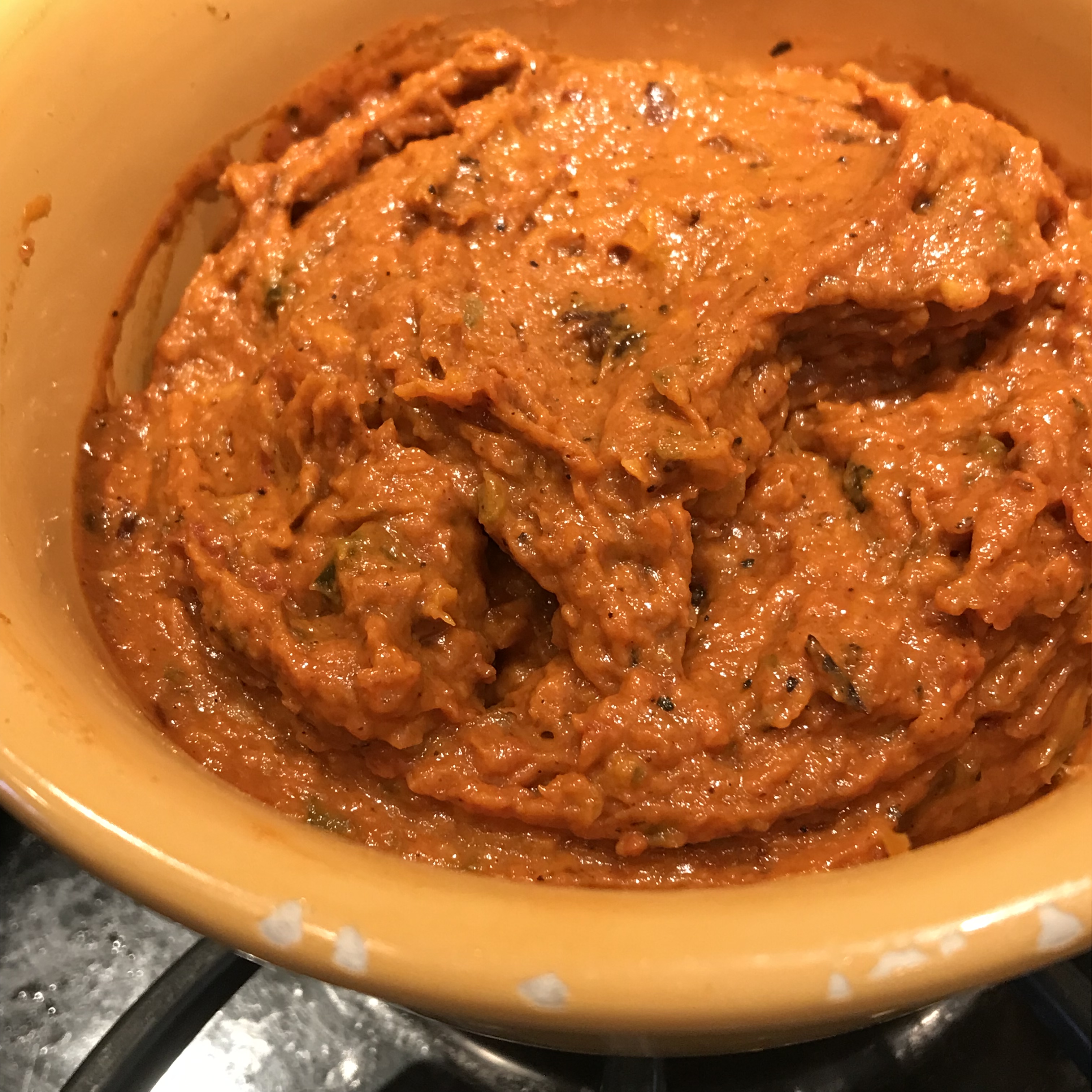
Roasted Vegetable Harissa

Anyone who enjoys the foods of northern Africa is familiar with harissa, the chile-based condiment that often accompanies the meal. It comes in innumerable variations, from a chile-hot thick “broth” ladled into soup or over couscous to a thick paste of chiles (either toasted or not,) vegetables (cooked or not,) seasonings, and oil.

This particular iteration is rather like a thick, textured mayonnaise with the emulsion based on roasted vegetables instead of egg. It‘s a variation on the recipe for Mo’s Harissa in Wild Flavors by Didi Emmons, but Ms. Emmons’s version just dries out the vegetables in a warm oven for a little while, while I like them actually roasted. 
For the hot element, I dip into a small canning jar kept in my refrigerator in which I keep one large or two small cans of chipotles in adobo that have been put through the blender with just enough olive oil to keep the blades turning. It adds a mildly smoky garlicky hot element that makes the harissa taste as if the vegetables were roasted over a wood fire. But you can also use a few toasted ground Guajillo chiles, or a couple of fresh jalapeño chiles roasted with the peppers, or even a heaping spoonful of Kashmiri chile flakes.

I make this in larger batches because we eat a lot of it and I give some away, but you can cut the recipe in half easily.

First, put a teaspoon of cumin seed and half a teaspoon of caraway seed in a small skillet and toast briefly over a medium flame just until the scent comes up. They shouldn’t darken more than a shade. Grind in a spice/coffee grinder or pound thoroughly in a mortar and pestle. Set aside.

Coarsely chop 3-4 cloves of garlic, and chop the stems of a bunch of cilantro. Save the leaves. Set aside.
?

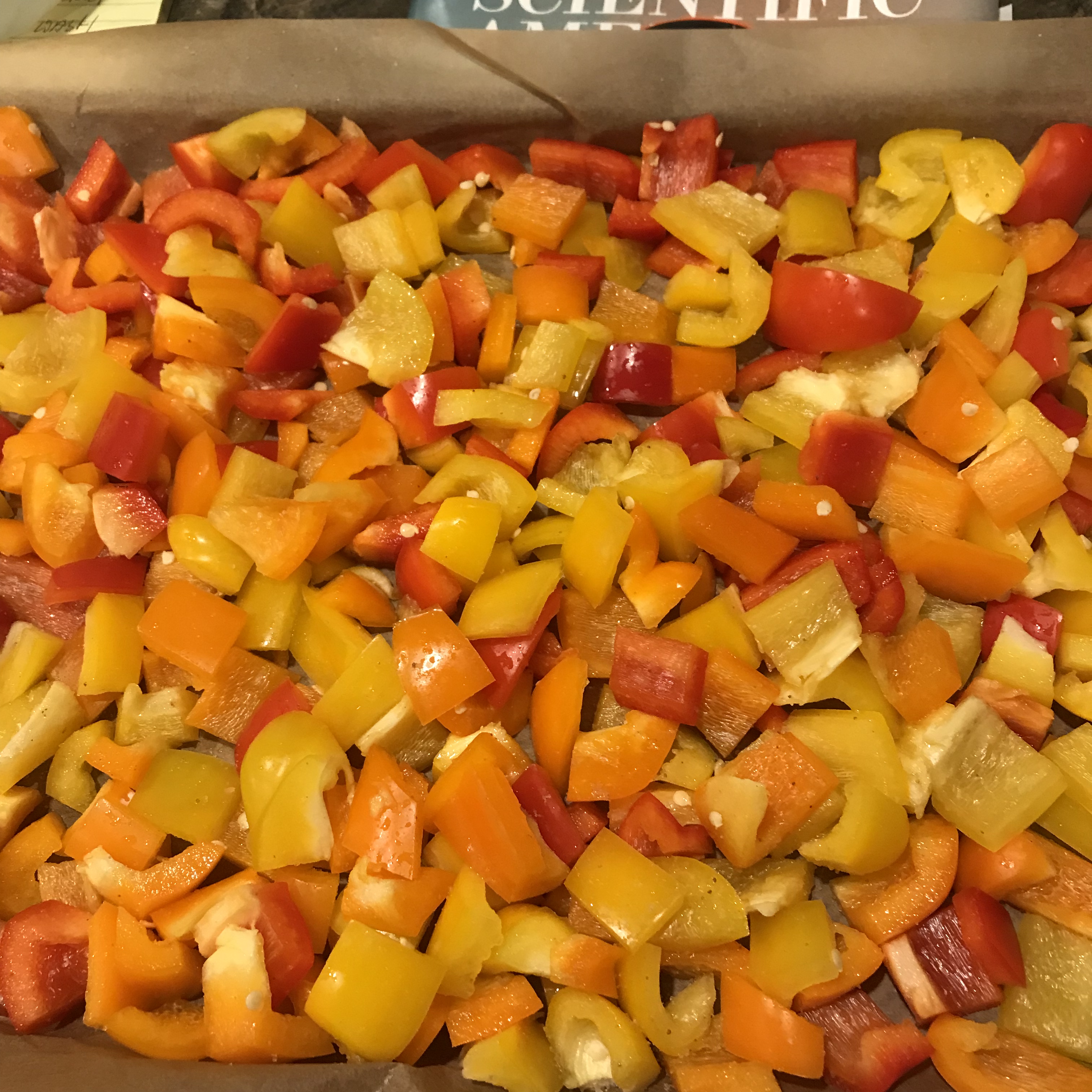
Then, start with your bell peppers. While making a run through a big box store I picked up a bag of six bell peppers, two each of red, orange, and yellow. You can use any combination of these colors that you want, and you can substitute a green bell pepper for one of the ripe ones if you want to. Wash the peppers, seed and core them, and cut them in chunks. Put them on a baking sheet. If you want to use fresh jalapeños for the hot element, seed and core one or two, cut in chunks, and add to the bell peppers. If you line the baking sheet with baking parchment, it will make your life easier later on. Roast at 325° for 30 minutes, then put the chopped garlic and chopped cilantro stems on the sheet too and continue roasting to your preferred degree of doneness, which for me is when they have a definitely roasted look as shown below. Keep the garlic by itself so that you can take it off the sheet if it’s browning too fast. Be sure not to let the garlic turn brown or burn.
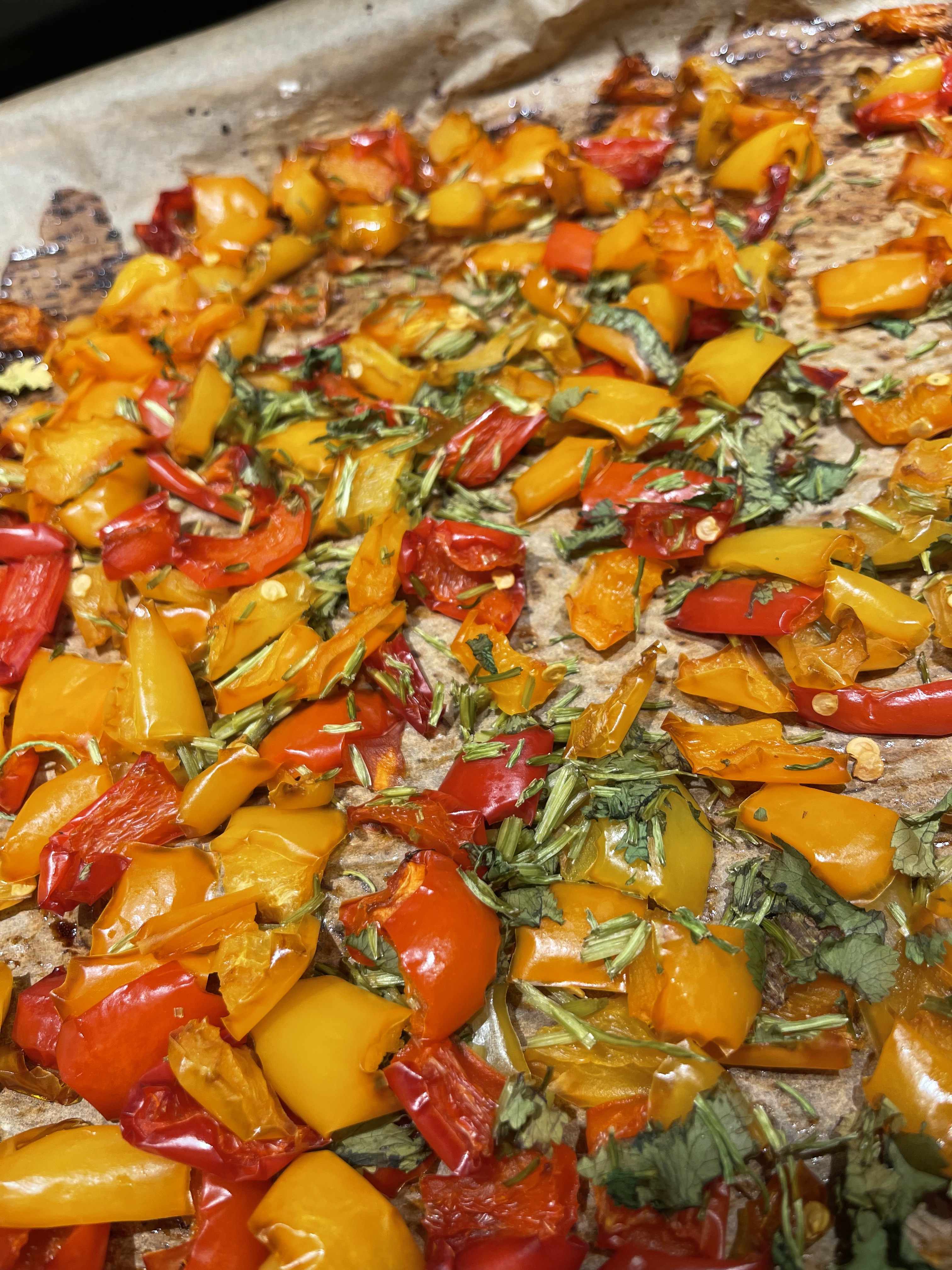
Now put the roasted peppers, cilantro stems, and garlic in a food processor and process to a chunky paste. Add 2 tablespoons of lemon juice or a chopped quarter of a preserved lemon and a teaspoon of salt, more or less. Add your chipotle paste or toasted ground chiles if you didn’t use jalapeños. With the processor running, pour in very good olive oil in a slow stream until the texture is the way you want it. It’s hard to say how much oil you will use. Have at least a cup handy, and if you use less, no harm done. I aim for a smooth but textured gloppiness as shown in the top photo, but you could also make it in a blender instead of a food processor and blend it completely smooth if you wanted. Add the ground spices and taste for heat and salt. Adjust if needed. Scrape into a bowl and start putting it on stuff. 
I love cilantro leaves chopped over the top but don’t like the leaves blended into the harissa at all; it makes the texture odd and it doesn’t keep as long. But suit yourself.
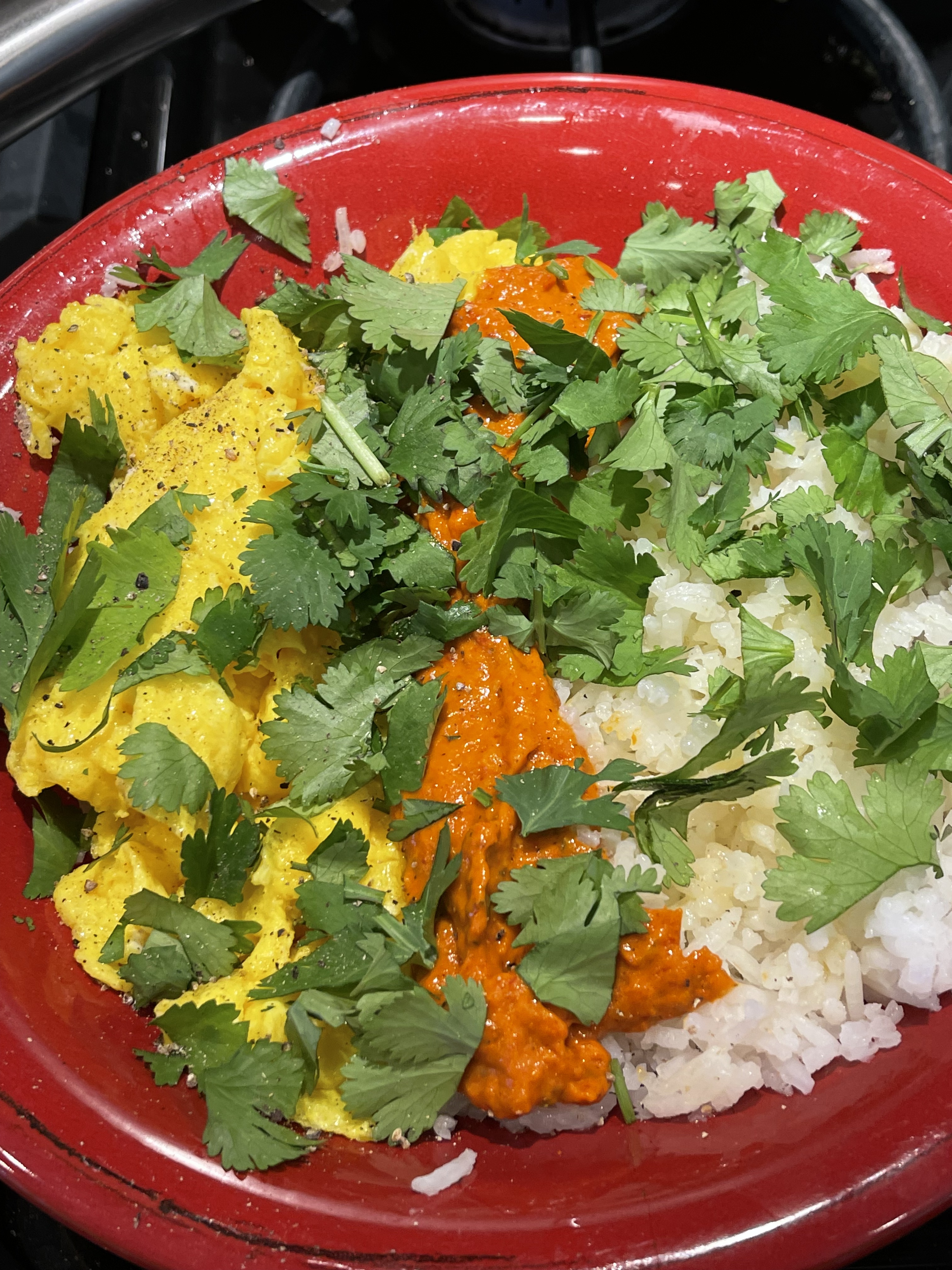

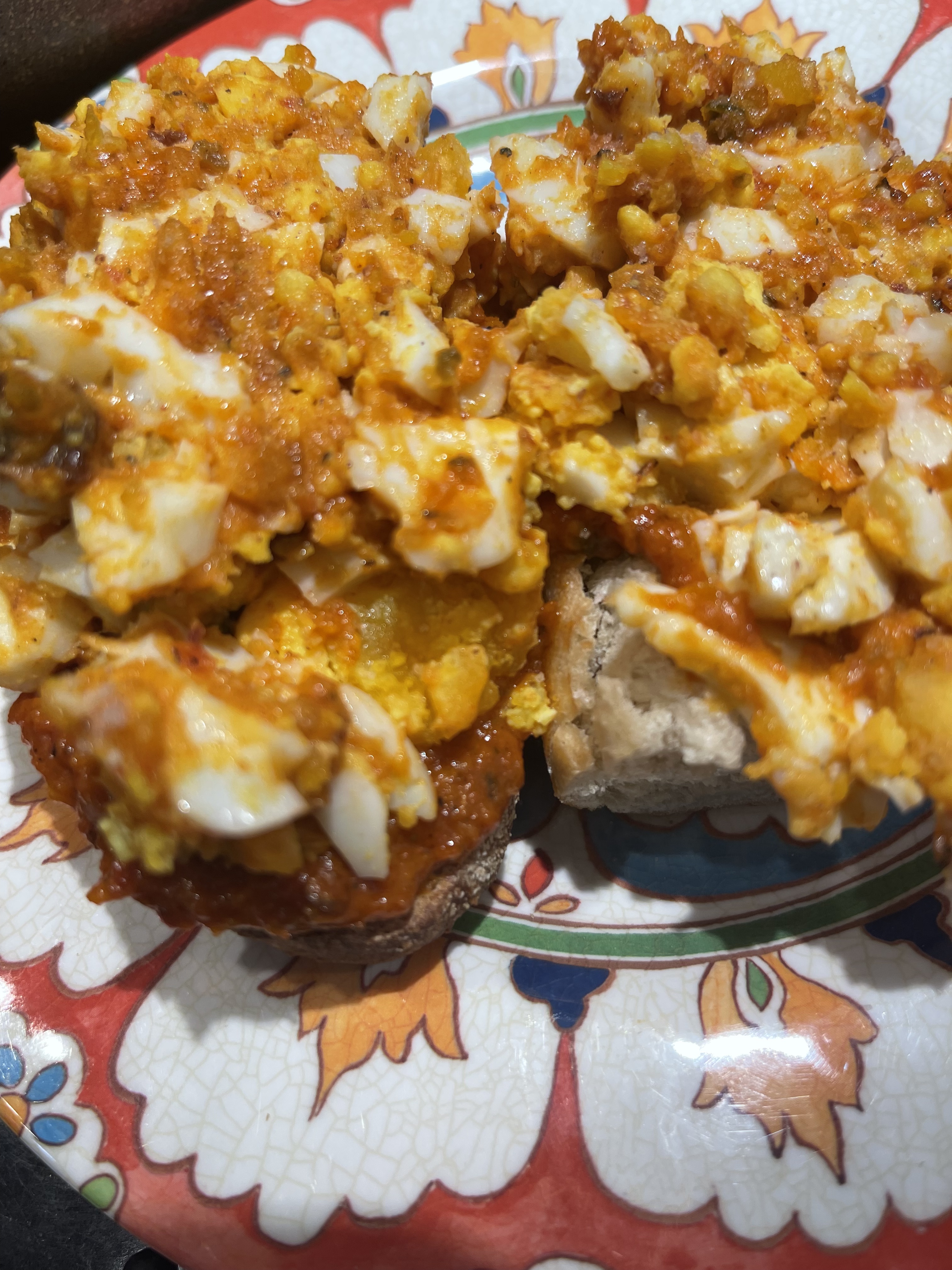
I think this harissa has a particular affinity for eggs, and we recently made a quick meal of scrambled eggs and hot buttered basmati rice in a bowl with a lavish amount of harissa and chopped cilantro leaves. Delicious. I also like to make a spicy egg salad with hard-boiled eggs and harissa and pile it on a chunk of good baguette. 
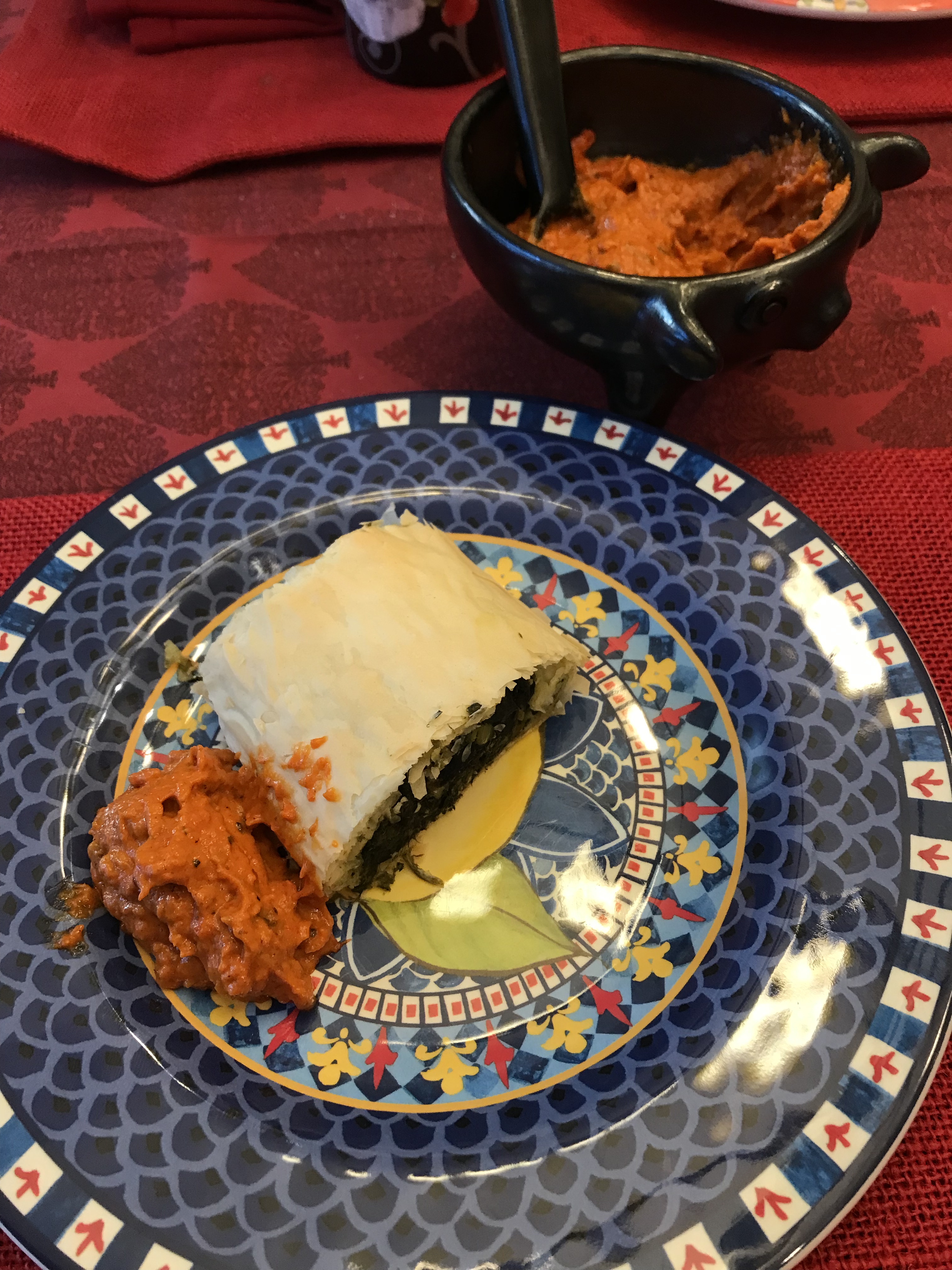
Put a good spoonful alongside a greens borek or on top of horta. Or nearly anywhere else.
Re-upping the Stirfry

I have been in touch with a discerning eater who is teaching himself to cook, and I decided to repost two posts on stir-frying that I wrote in the heart of the pandemic. This quickest and most frugal method of cooking might be daunting to approach, because of the prep and the high heat and speed required. but gather all your ingredients and have them ready to use beforehand, have a good wok and waiting rice, and it goes like lightning and lets you make tasty meals out of all kinds of vegetables.

Fall Renewal


It’s been an unusual growing season at my place, with the strangeness in the larger world reflected in strange events that affected my gardening. First, a hard freeze two weeks later than I have ever had at my property before. Then after things were replanted, a heavy hailstorm in late spring that tore all the vegetable plants to tatters, shredded the tree leaves, and knocked little green fruit off the fruit trees. Then lots of clean-up and a new round of replanting. Then, about five weeks later, an even worse hailstorm. This one had hailstones an inch in diameter, and was followed by flooding rains. Replanting was a real issue this time, because there were lots of supply problems and many seed companies were out of the seeds that I wanted.


All this was followed by the hottest driest summer that I have experienced, so hot that I couldn’t water enough to keep things growing and no amount of mulch kept plants from desiccating. Broccoli and sugar peas and all my other favorite early-summer crops were lost completely. And in late summer when the fruit, even though scarred and pockmarked by hail, did start to ripen, squirrels moved in. These were intense, driven squirrels, with the focus and aggression of shoppers trying to score the last pack of toilet paper. My European plum tree was loaded with fruit and one day I tasted one and decided that they were almost ready to pick and I would start picking the next day. By 9 o’clock the next morning, there were exactly 5 plums left on the tree. I have never seen anything like it. I think that the squirrels were running a wholesale operation somewhere. If I knew where, I would’ve bought my own fruit back rather than lose it all, but that did not seem to be an option. I did get a few peaches and apples, and they left the quince tree strictly alone, but everything else was gone.

Sometimes I think really hard about moving to a more garden friendly climate zone, but then October comes. October in New Mexico would make a convert out of anybody. Long walks along the acequias in cool crisp air under the gold cottonwoods make me intensely grateful for where I am, and we get gorgeous sunsets year round but especially in fall.

So I gave up my musings about moving and started thinking about what did work this year.

The bramble fruits were a loss but the small fruit like elderberries and pie cherries bore abundantly, so I made lots of crisps and fermented lots of wine. The perennial greens like nettles and scorzonera were unfazed, and the collards lost all their leaves to hail but grew a new crop despite the heat. Mulberries bore beautifully all over town. Fennel’s threadlike leaves just giggled at the hail. Butternut and Tahitian melon squash   lost their leaves to hail but kept growing, and by the end of the season some 30foot vines had climbed the apple trees and large squash hung among the apples. I picked some immature ones to use as summer squash.  Potatoes held onto enough foliage to grow a beautiful crop of tubers.
I also learned some things. In the southwest, if you want to have dandelions you have to water them. All but three of my cherished dandelion plants died because I had underestimated their water needs. This is good information for next year. The local edible weeds like lambsquarters and amaranth are adapted to our seasons, so if you just give them a reasonably fertile piece of ground, water some, and don’t disturb them, you will get a good greens crop and can put enough in the freezer for winter. Always order more seeds of your favorite varieties than you think you need, in case you have to replant once or even twice. Be prepared to be flexible about what you eat. When a really bad season comes along be glad of what it does produce, because it could be worse and may yet be. If you eat meat, please seek out and support your local farmers.

Do less of what doesn’t work and more of what works, and plan your meals for the conditions you’re in and not the conditions you wish prevailed. Right now, the three surviving dandelions have grown to a huge size, and with a few late sprigs of lambsquarters and some Berkshire bacon from the freezer, they’ll make a delicious meal.


Passing pleasures: Hops shoots

I decided to re-up this post on hops shoots without change because this is their brief season and because I still think that this is the best way to cook them.

Many years ago I planted hops vines along my fences, planning to use the flowers for brewing. Not long afterwards, I gave up beer for weighty reasons, but in my difficult climate I’m not likely to get rid of plants that grow lustily with no attention. There was also the delightful bonus of hops shoots every spring. Gather the young shoots by snapping them off at the point where they snap easily. This is usually about the terminal 6-7 inches of the vine.

When it comes to cooking them, I’m very opinionated. After trying other ways, I’m convinced that this way suits their rich-bitter flavor best. Rinse the bundle of shoots and cut them in cross section, 1.5-2 inches long. Heat a large skillet over medium-high heat. You don’t want to crowd the pan too much. A 12” skillet is right for one large bundle of shoots.  When the pan is hot through, add a glug of good olive oil, swirl it around, and add the shoots. Toss them around, sprinkling them with a good pinch of salt. Toss the shoots every couple of minutes.

Here’s the part that many find difficult. When they look like this, keep going. Taste them at this stage and, if you like them you can stop here, but I think that you haven’t yet tasted hops shoots at their best. Instead add a pat of butter, at least a tablespoon, and keep cooking.The butter will brown a bit and is important to the flavor.

This stage, in my opinion, is their point of perfection. They have shrunk considerably. The stems are browned in spots and many of the little leaves are brown and crisp. Taste for salt and serve. I find them delicious. They are especially good alongside ham or bacon, and I like them with fried eggs for lunch.

Hops plants are known to contain an estrogenic compound and chalcones. The latter are an interesting group of chemicals with anti-tumor properties, and you can read more about them here. What this means in practice is anybody’s guess, and my own opinion is that it means very little, since the shoots are only in season for about 3 weeks and no one person will eat enough of them to make much difference one way or another. They are a springtime gift of the earth, thrown up exuberantly in great quantities with no effort on the gardener’s part except providing them with something to climb on, and I cherish them as such.

If you plan to grow them, remember that hops are intent on world domination and need a sturdy support. Also, they spread and come up in unexpected places. This is fine with me, since I keep a very untidy yard anyway, but if you like things to stay neatly in their assigned places, the bold independent nature of hops may not be to your taste.